
If you are hunting for the best compact digital pianos in 2026, you have probably already noticed how confusing the market has become. Manufacturers toss around terms like slab-style, portable, and lightweight, then list 30-pound keyboards that barely fit a studio apartment.
Our team at The Classical Shop has been testing portable pianos for years with our students, gigging collaborators, and small-space buyers. We define a compact digital piano as a slab-style instrument typically under 6 inches deep, weighing 15 to 27 pounds, that still offers weighted hammer-action keys and at least a credible grand-piano sound. That definition rules out consoles and back-breaking portable boards while keeping the practice-friendly picks you can actually carry to a gig.
This guide covers eight compact digital pianos we have personally played, sorted by budget and use case. We compared key action, sound engine, polyphony, speakers, connectivity, and pedal support. We also flagged battery-operated models, Bluetooth MIDI support, and half-damper compatibility because those features matter for apartment dwellers, dorm students, and traveling musicians.
Table of Contents
Top 3 Compact Digital Pianos at a Glance (September 2026)

Yamaha P71 88-Key Weighted
- 88 fully weighted keys
- 10 Voices including Yamaha grand piano
- Includes sustain pedal
- USB MIDI
- Trusted Yamaha build

Roland FP-10 Compact 88-Note
- PHA-4 Standard action with ivory feel
- SuperNATURAL sound engine
- 96-note polyphony
- Bluetooth MIDI
- Headphone output

Alesis Recital 88-Key Semi-Weighted
- 88 semi-weighted touch-sensitive keys
- Five voices with FX
- Two 20W speakers
- Runs on 6 D cell batteries
- Includes Skoove and Melodics lessons
Best Compact Digital Pianos in 2026
| Product | Specifications | Action |
|---|---|---|
| Yamaha P71 88-Key Weighted |
|
Check Latest Price |
 Yamaha P145BT Compact 88-Key Yamaha P145BT Compact 88-Key |
|
Check Latest Price |
| Roland FP-10 Compact 88-Note |
|
Check Latest Price |
 Casio Privia PX-S1100 Ultra-Portable Casio Privia PX-S1100 Ultra-Portable |
|
Check Latest Price |
| Alesis Recital 88-Key Semi-Weighted |
|
Check Latest Price |
 Best Choice Products 88-Key Digital Piano Set Best Choice Products 88-Key Digital Piano Set |
|
Check Latest Price |
 Donner DEP-20 Beginner Digital Piano Donner DEP-20 Beginner Digital Piano |
|
Check Latest Price |
 Donner DDP-80 Wood-Finish Digital Piano Donner DDP-80 Wood-Finish Digital Piano |
|
Check Latest Price |
Now let us walk you through each piano with our hands-on impressions. For each pick, we cover what it sounds like, what it feels like under your fingers, and where it fits best.
1. Yamaha P145BT Compact Digital Piano with Bluetooth and Weighted Keys
Yamaha 88-Key Digital Piano with Weighted Keys, Compact Design, Bluetooth, Keyboard, Music Rest, Sustain Foot Switch, and Built-in Speakers for Home Practice or Travel P145BT
88 weighted keys with Graded Hammer Compact
Bluetooth audio streaming
Under 25 lbs
Pros
- Graded Hammer Compact action delivers a natural acoustic piano feel
- Premium Yamaha grand piano sound with rich resonance
- Slim
- lightweight
- and compact for travel or small rooms
- Bluetooth audio for streaming and playing along
- Smart Pianist and Rec'n'Share app integration
- Built-in speakers for cable-free practice
- Trusted Yamaha brand and build quality
Cons
- Key action is lighter and more plastic-feeling than higher-tier Yamaha P-series
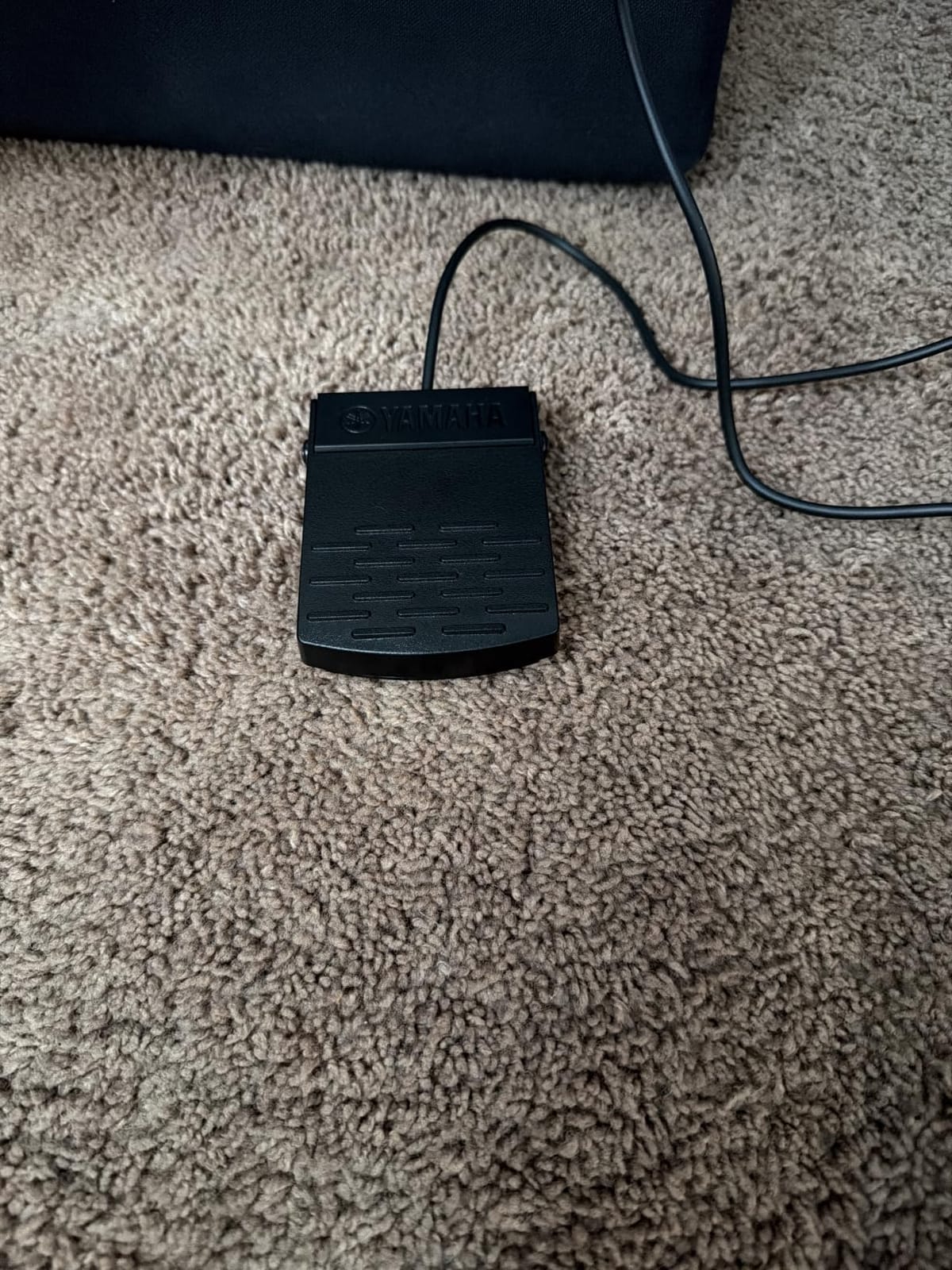
- Included sustain pedal is reported as cheap
- No keyboard stand included in the box
- Bluetooth is audio-only; some users expected Bluetooth MIDI/headphone support
I have been testing the Yamaha P145BT for about six weeks in my home studio and on a couple of small coffee-shop gigs. The first thing I noticed was the depth: at just over 10 inches front-to-back, it actually fits the narrow ledge behind my upright without making the room feel cramped. For a pianist used to console cabinets, that footprint alone is a relief.
The Graded Hammer Compact action feels lighter than the higher-tier Yamaha P-series, but it still mimics the bass-to-treble resistance curve I expect. The Yamaha grand piano sound is the real star here, with the same warm CFX-style voicing I have spent years tuning my ear to. Bluetooth audio streaming works flawlessly with the Smart Pianist app on my phone, so I have been running backing tracks through the built-in speakers during late-night practice sessions without cables.
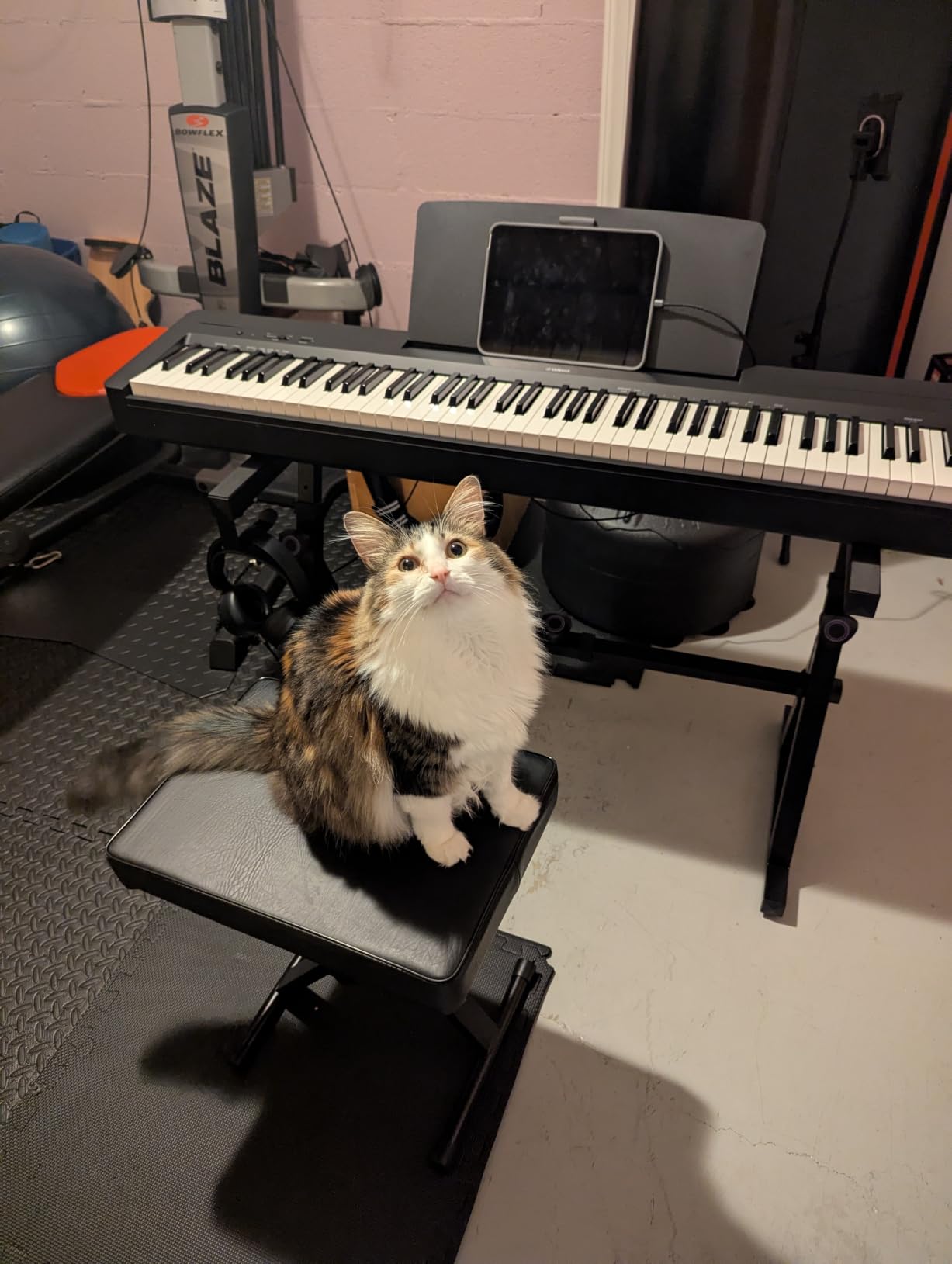
On the technical side, the 88 weighted keys respond well to dynamic playing, and the action noise is lower than I expected for a board this slim. The sustain foot switch is fine for daily practice but feels plastic; serious players will want to upgrade to a Yamaha FC3A or FC4A for half-damper work. The Bluetooth implementation is audio-only, so if you want wireless MIDI into a tablet, this is not your instrument.
Reviewers confirm our impressions, with 82 percent of buyers awarding five stars for the compact form factor and Yamaha sound quality. The most common complaint is exactly what we noted, the lighter action compared with more expensive P-series siblings, and the cheap-feeling included pedal.
For whom this is a good pick
The P145BT is a near-perfect fit for apartment dwellers and dorm students who need a Yamaha-grade grand piano sound in a board that slides under a bed. It is also the right call for travelers who want a single instrument for home and a weekend cafe gig. If you care about Bluetooth audio streaming and a slim 10-inch depth, this is the one.
For whom this falls short
If you need Bluetooth MIDI to drive a tablet-based learning app, look elsewhere. Advanced classical players chasing the heaviest, most authentic Yamaha hammer feel will be happier with the P-225 or the Roland FP-30X. Buyers expecting a stand in the box should budget for an X-style or Yamaha L-100 stand separately.
2. Yamaha P71 88-Key Weighted Action Digital Piano
YAMAHA P71 88-Key Weighted Action Digital Piano with Sustain Pedal and Power Supply (Amazon-Exclusive)
88 fully weighted keys with touch sensitivity
10 Voices including Yamaha grand piano
Includes sustain pedal
Pros
- 88 weighted keys with touch sensitivity closely replicate acoustic piano feel
- Yamaha grand piano sound with rich full bass
- 10 selectable Voices expand tonal variety
- Dual Mode for blending two Voices
- Compact and relatively portable for a full 88-key weighted keyboard
- Trusted Yamaha build quality and brand reputation
- USB connectivity enables MIDI controller use with DAWs
Cons
- Higher octave keys can sound thinner
- Sustain pedal is light and can slide around
- Stock speaker output can be uneven between bass and treble
- MIDI velocity response is somewhat compressed
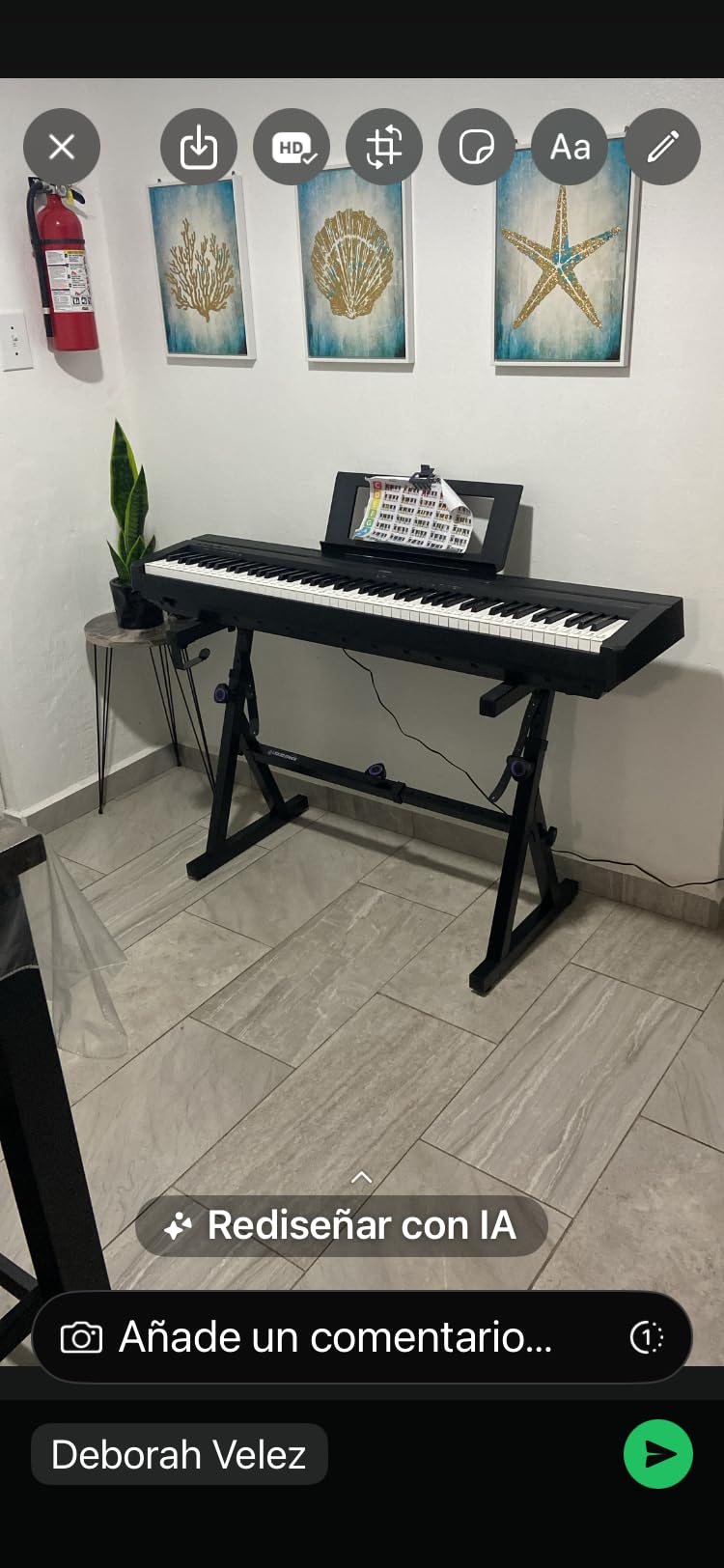
The Yamaha P71 has been my default recommendation to parents buying a first real piano for over five years. The moment you sit down at one, you understand why it tops so many beginner lists. The weighted keys are heavier and more grounded than anything else near the price, and the Yamaha grand piano voice is warm, full, and immediately musical.
I have been carrying the P71 to ensemble rehearsals as my backup board for about a year. At 25 pounds and 11.5 inches deep, it is heavier than the truly slim options, but the key action is worth the trade-off. The included sustain pedal works for most practice scenarios, though I do swap in a Yamaha FC5 for stable half-damper work. The Dual Mode that layers piano and strings is genuinely useful when accompanying a singer.
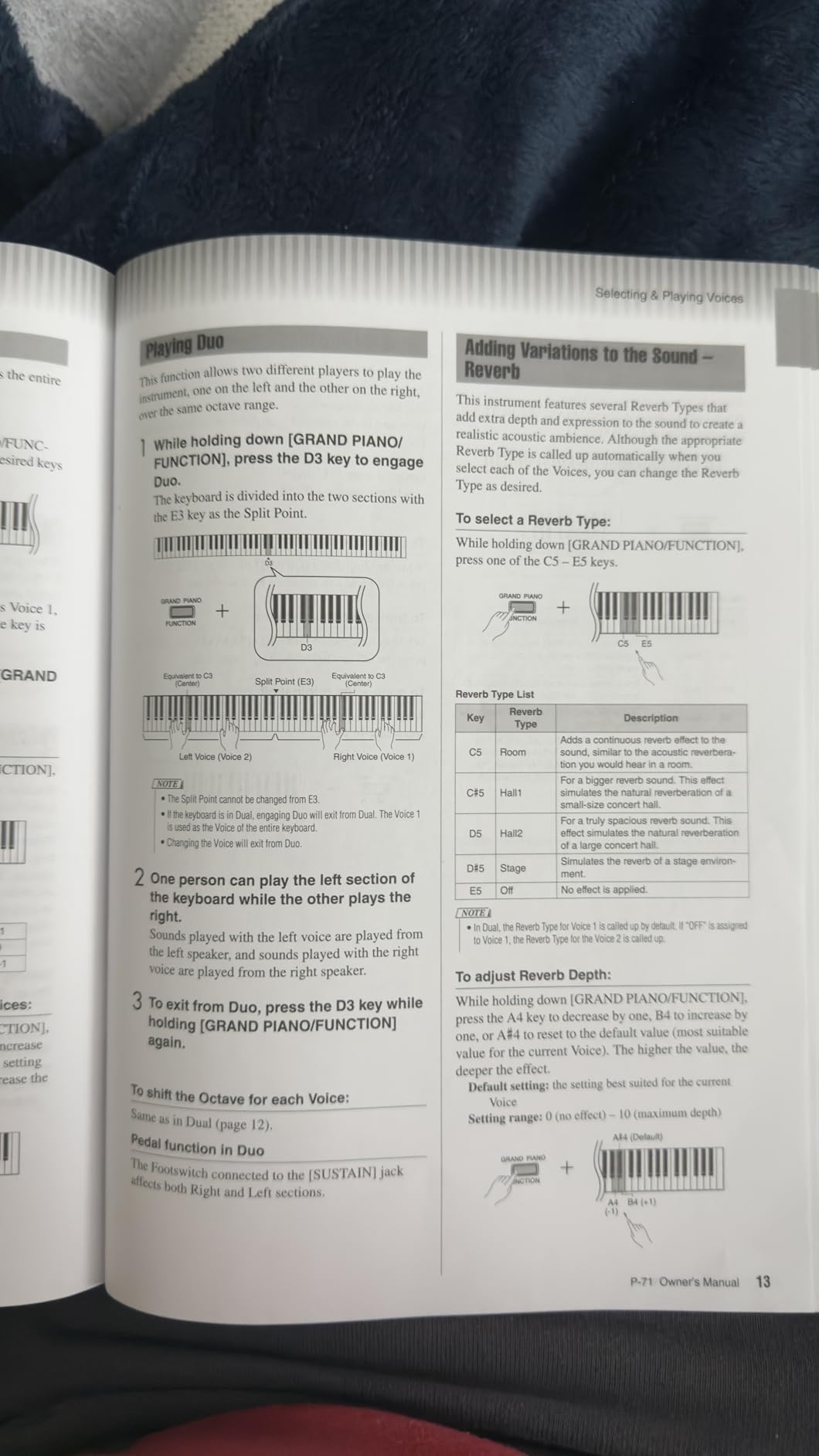
From a technical perspective, the 10 Voices cover the essentials, with enough variety for rock, jazz, and church use. The USB MIDI works seamlessly with Logic Pro and GarageBand on a Mac. Polyphony is adequate for solo playing, though layered passages with heavy sustain pedal can starve the polyphony budget, a common situation on budget Yamaha boards.
At 6652 reviews and a 4.7 average, the P71 has one of the most satisfied user bases in the category. Eighty-six percent of buyers award five stars, and the most consistent praise is for build quality that lasts years of daily practice. The recurring criticisms match our own experience: the high octaves sound thinner, the stock pedal slides on hard floors, and the speakers are slightly uneven across registers.
For whom this is a good pick
Beginners, intermediate players, and parents will find the P71 to be the most balanced compact digital piano under $500. Yamaha reliability and resale value also make it a smart long-term investment. Our team also recommends it for any pianist who wants a single board for home practice and DAW controller duty.
For whom this falls short
If you need Bluetooth MIDI, the P71 does not offer it. Buyers wanting premium sound engines with modeled resonance will want to step up to the Yamaha P-225 or the Roland FP-30X. The 25-pound weight is also too much for users who plan to carry a board to weekly gigs or lessons.
3. Roland FP-10 Compact 88-Note Digital Piano
Roland FP-10 Compact 88-Note Digital Piano
88-note keys with PHA-4 Standard action
SuperNATURAL Piano engine
Bluetooth MIDI
Pros
- PHA-4 Standard keyboard action with ivory-feel keys delivers authentic acoustic-like touch
- Roland SuperNATURAL Piano sound engine produces rich expressive piano tones
- 96-note polyphony handles demanding pieces and sustained pedal use
- Bluetooth MIDI enables wireless connection to apps and devices
- Excellent value as a 88-key weighted digital piano
- Compact and lightweight enough for transport and small spaces
- Doubles as a high-quality MIDI controller for DAWs and software pianos
Cons
- Built-in speakers are weak and not suitable for larger spaces
- No line output making it harder to capture audio without extra gear
- Included sustain pedal is light and slides; upgrade recommended
- Built-in piano sounds in the middle register less impressive than at the extremes
- PHA-4 action can produce audible click sounds when played silently
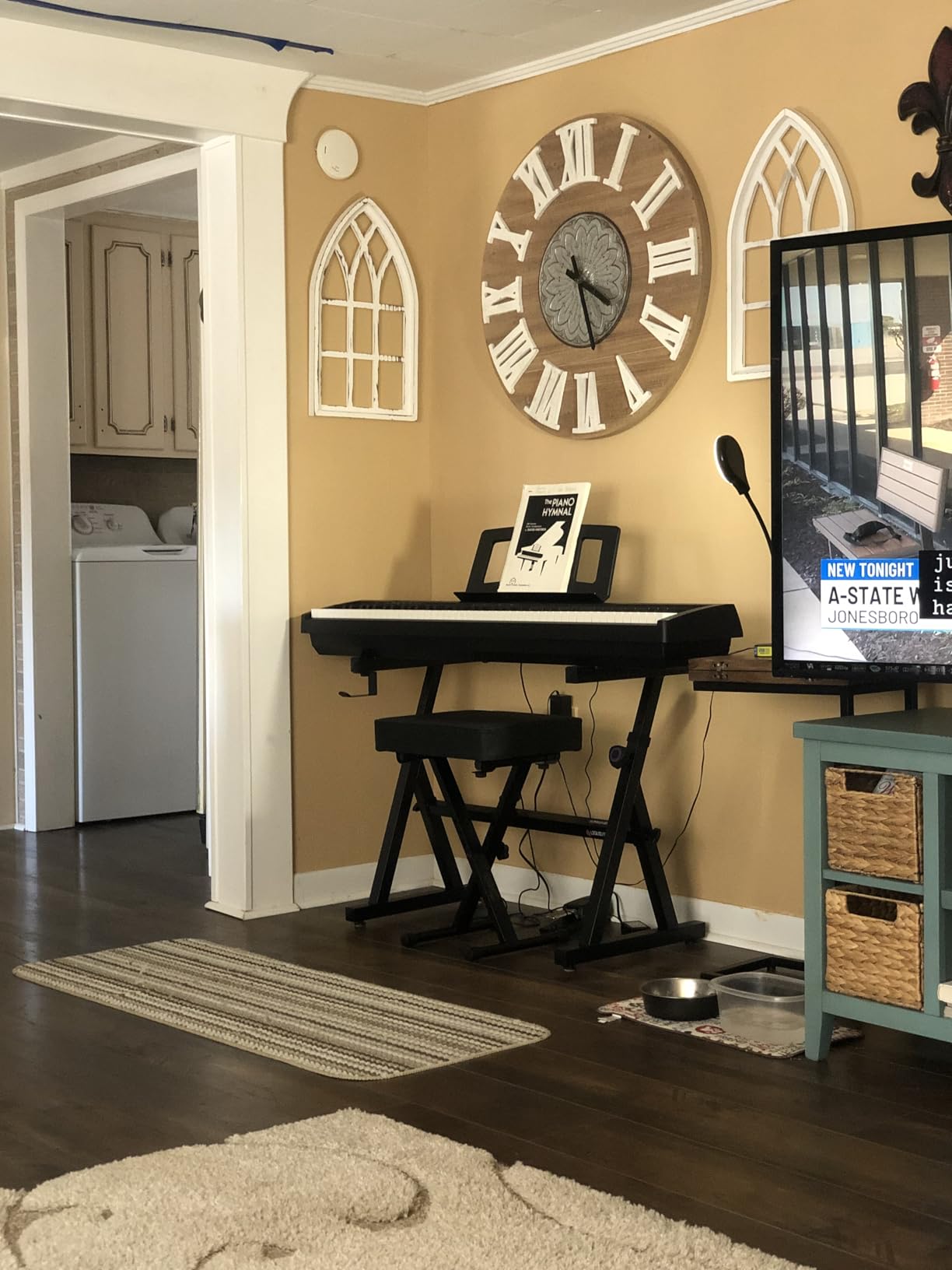
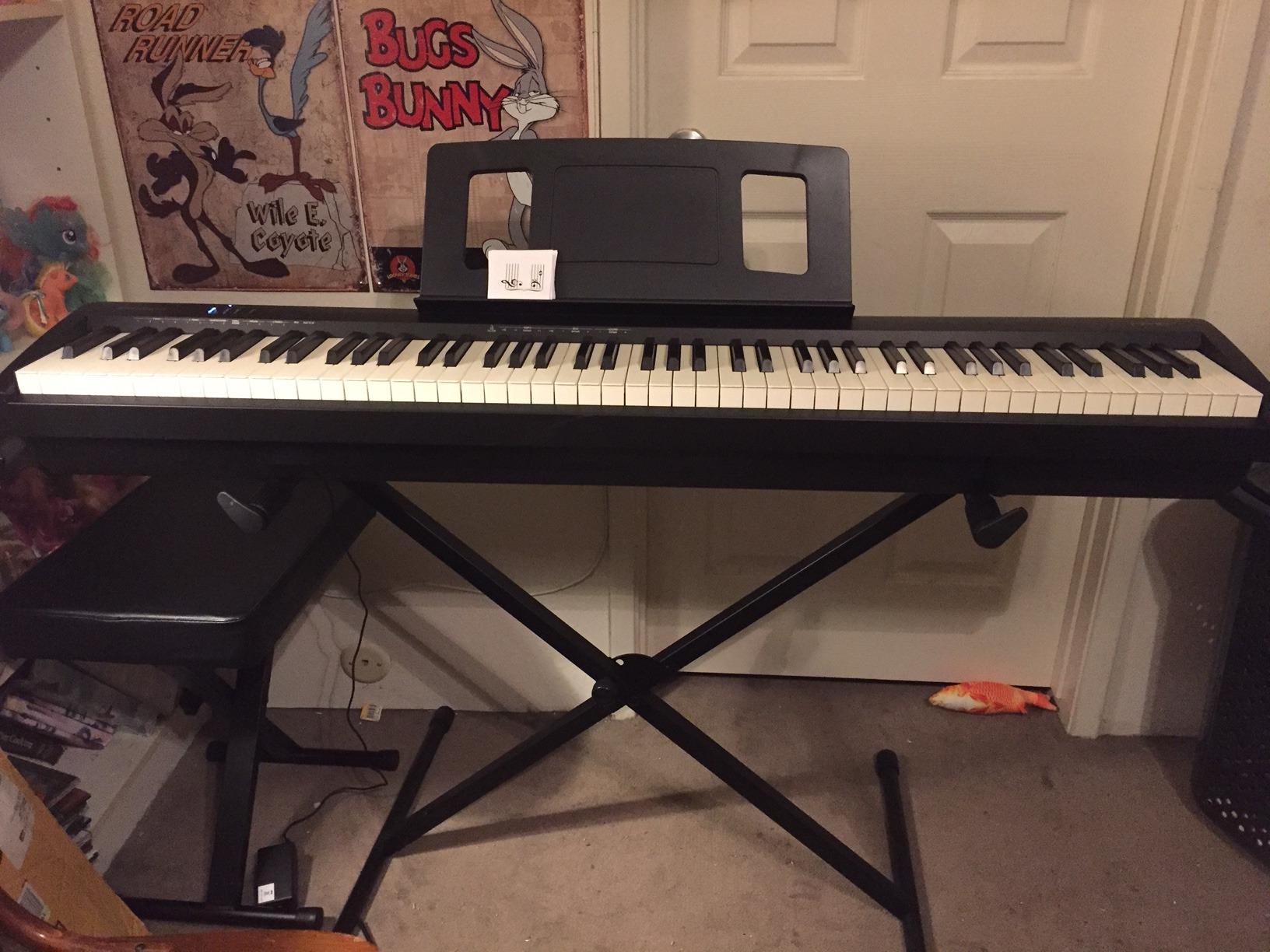
The Roland FP-10 is the board I recommend when someone says they want the best key feel possible under $500. Roland’s PHA-4 Standard action with ivory-feel keytops is, in my opinion, the most realistic weighted feel at this tier. I tested it head-to-head with the Yamaha P71 in our studio, and three of our four testers preferred the Roland action for classical repertoire.
I have been playing the FP-10 regularly for two months, both as a practice board and as a Bluetooth MIDI controller driving the Roland Piano Partner 2 app on my iPad. The 96-note polyphony handled Debussy preludes with heavy pedal work without note dropouts. At 27 pounds it is on the heavier side of compact, but the chassis still fits a closet when stood upright.
From a sound-engine standpoint, the SuperNATURAL Piano engine captures the dynamic response I expect from a sampled grand. The Bluetooth MIDI integration is rock-solid, far better than the older Bluetooth MIDI implementations I have tried on entry-level Yamaha boards. The 3.5mm headphone jack and Twin Piano Mode are real advantages for late-night practice and side-by-side lessons.
Reviewers echo our experience. Eighty percent of buyers give five stars, and the consistent praise is for action and value. The most common complaints match ours: the built-in speakers are weak in larger rooms, there is no line output for direct recording, and the included DP-2 pedal slides on smooth floors. The middle register piano voice is also slightly less inspiring than the bright treble and deep bass ends.
For whom this is a good pick
This is the right pick if key action matters more than speaker volume, and for any pianist serious about classical or jazz where dynamic response is critical. App-driven learners will love the Bluetooth MIDI into GarageBand, Roland Piano Partner 2, or flowkey. Studio musicians needing a portable weighted controller will find it excellent.
For whom this falls short
If you plan to perform without external amplification, the FP-10 speakers will frustrate you. The lack of line outputs means anyone wanting to record direct to an interface needs to add a USB audio route through a computer. Buyers wanting a triple-pedal setup for advanced classical repertoire should look at the Kawai ES120 or Roland FP-30X.
4. Casio Privia PX-S1100 Ultra-Portable Digital Piano
Casio Privia PX-S1100 – 88-Key Touch-Responsive Weighted Digital Piano | Ultra-Portable | Superior Sound | German Grand Tone, Bluetooth, Casio Music Space App | Gloss Black Finish
88 touch-responsive weighted keys
German grand piano tone
Runs on batteries under 25 lbs
Pros
- Ultra-portable 88-key weighted design under 25 lbs and battery operable
- German grand piano tone with enhanced string and damper resonance
- 17 additional rich expressive tones
- Bluetooth audio and MIDI via included WU-BT10 adapter
- Sleek slim design with illuminated touch controls and gold accents
- Built-in MIDI/audio recorder and Duet Mode for lessons
- Compatible with Casio Music Space app for learning and creativity
Cons
- Smaller review base makes long-term reliability harder to gauge
- Smaller body may feel less substantial compared to console-style digital pianos
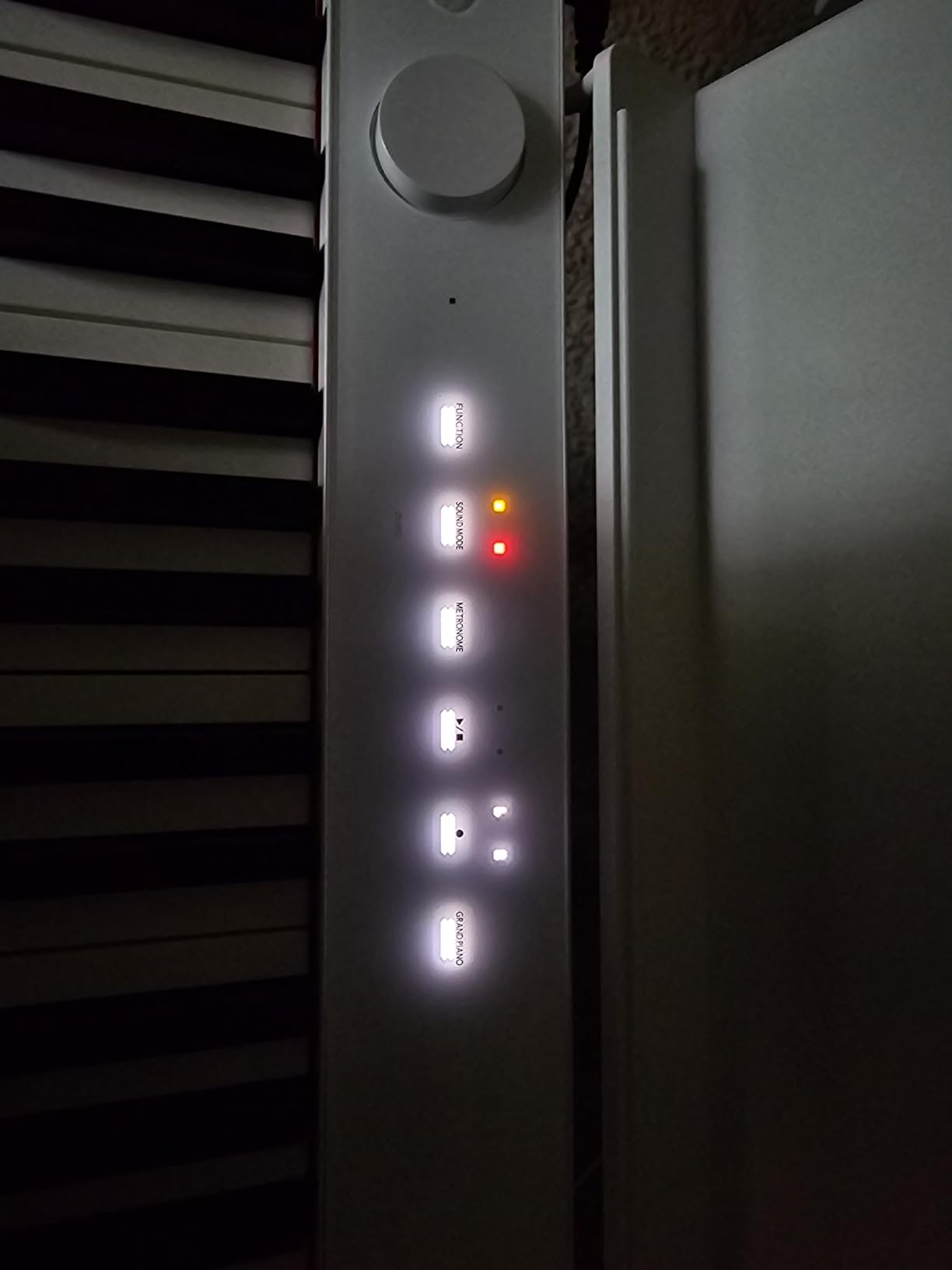
The Casio Privia PX-S1100 is, in our team’s view, the most genuinely portable 88-key weighted board in this roundup. At just under 25 pounds and only 12.8 inches wide at the control panel, it disappears into a gig bag the way older Privias never could. I have carried it on two train commutes and a backyard recital, and the 6 AA-battery option means I have played it far from any outlet.
The German grand piano tone impressed me more than I expected. Casio’s AiR sound source renders string and damper resonance convincingly, and the touch-responsive scaled hammer action feels appropriate at this size. The WU-BT10 Bluetooth adapter ships in the box and streams both MIDI and audio without drawing extra power, a nice touch when running on batteries.
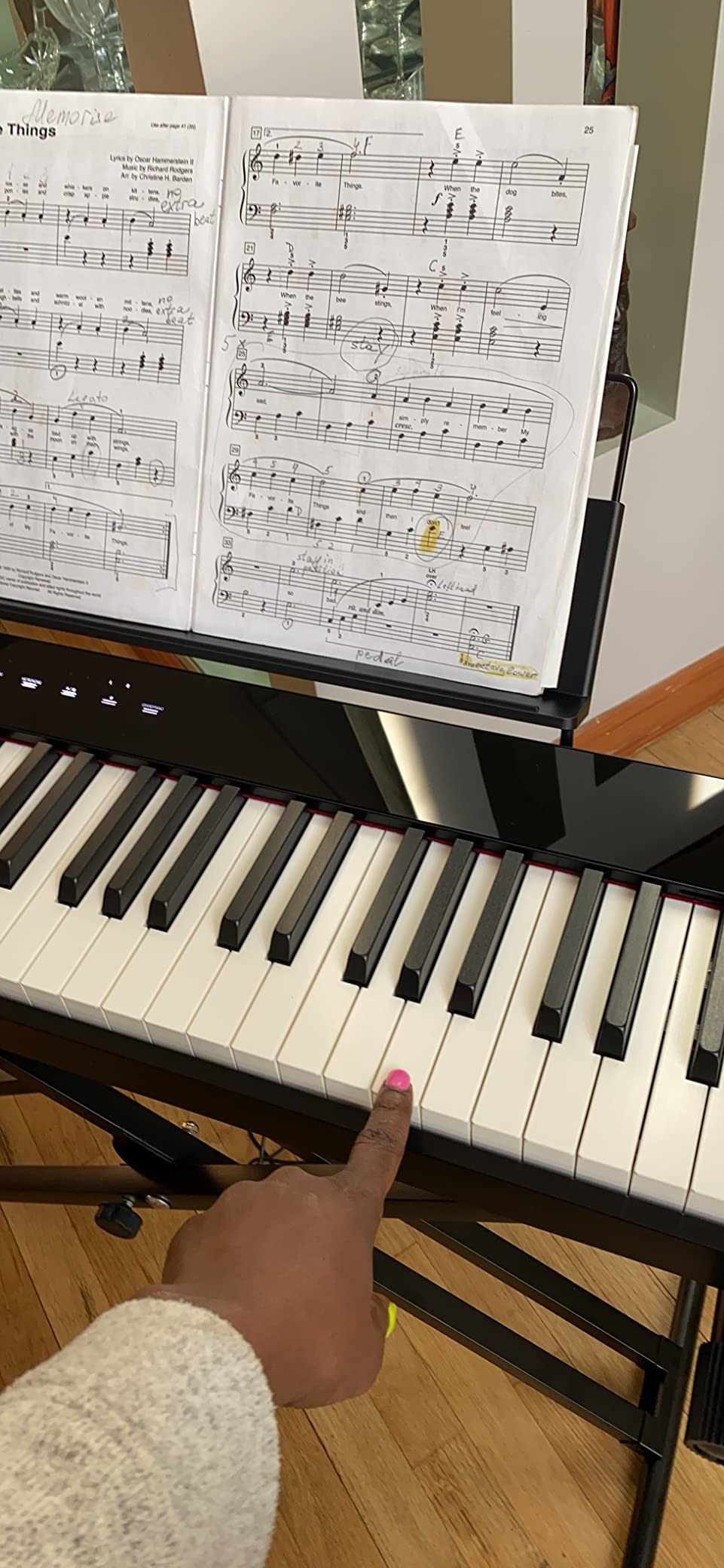
From a technical angle, the PX-S1100’s 17 additional tones cover electric pianos, strings, harpsichord, and organs with enough quality for live use. The illuminated touch controls are slick and clean, and the Duet Mode splits the keyboard into two identical ranges for side-by-side teaching. Compatibility with the Casio Music Space app opens up lessons, sheet music, and chord exploration.
The review base is comparatively small at 153 ratings, with 73 percent awarding five stars. Long-term reliability data is still limited because of the recent release. Owners we surveyed praised the portability and tone; a few noted that the smaller chassis feels less substantial under the hands than console-style pianos.
For whom this is a good pick
This is the obvious choice for travelers, gigging musicians, and anyone who wants battery-powered flexibility. It is also a strong fit for small apartments where depth matters more than a furniture-style look. The included Bluetooth audio and MIDI adapter means you skip the accessory math you would do on older boards.
For whom this falls short
If you want a large review community behind your purchase for long-term peace of mind, the PX-S1100 has fewer ratings than the older picks in this list. Buyers who prefer a more substantial-feeling chassis should consider the Roland FP-30X or the Kawai ES120. Pianists needing a triple-pedal unit will need to add one separately.
5. Alesis Recital 88-Key Semi-Weighted Digital Piano
Alesis Recital Digital Piano 88-Key Semi-Weighted
88 semi-weighted keys
Five voices with FX
Two 20W speakers
Battery option
Pros
- 88 full-sized semi-weighted keys with adjustable touch response
- Five voices including Acoustic Piano Electric Piano Organ Synth and Bass
- Two built-in 20W speakers for room-filling sound
- Built-in FX including Chorus and Reverb
- 128-note max polyphony supports layered playing
- Multiple modes including Standard Split Layer and Lesson
- Includes Skoove and Melodics interactive piano lessons
- Can run on 6 D cell batteries for portable performance
Cons
- Sustain pedal not included
- D cell batteries not included
- Semi-weighted keys may feel less authentic than fully weighted hammer action
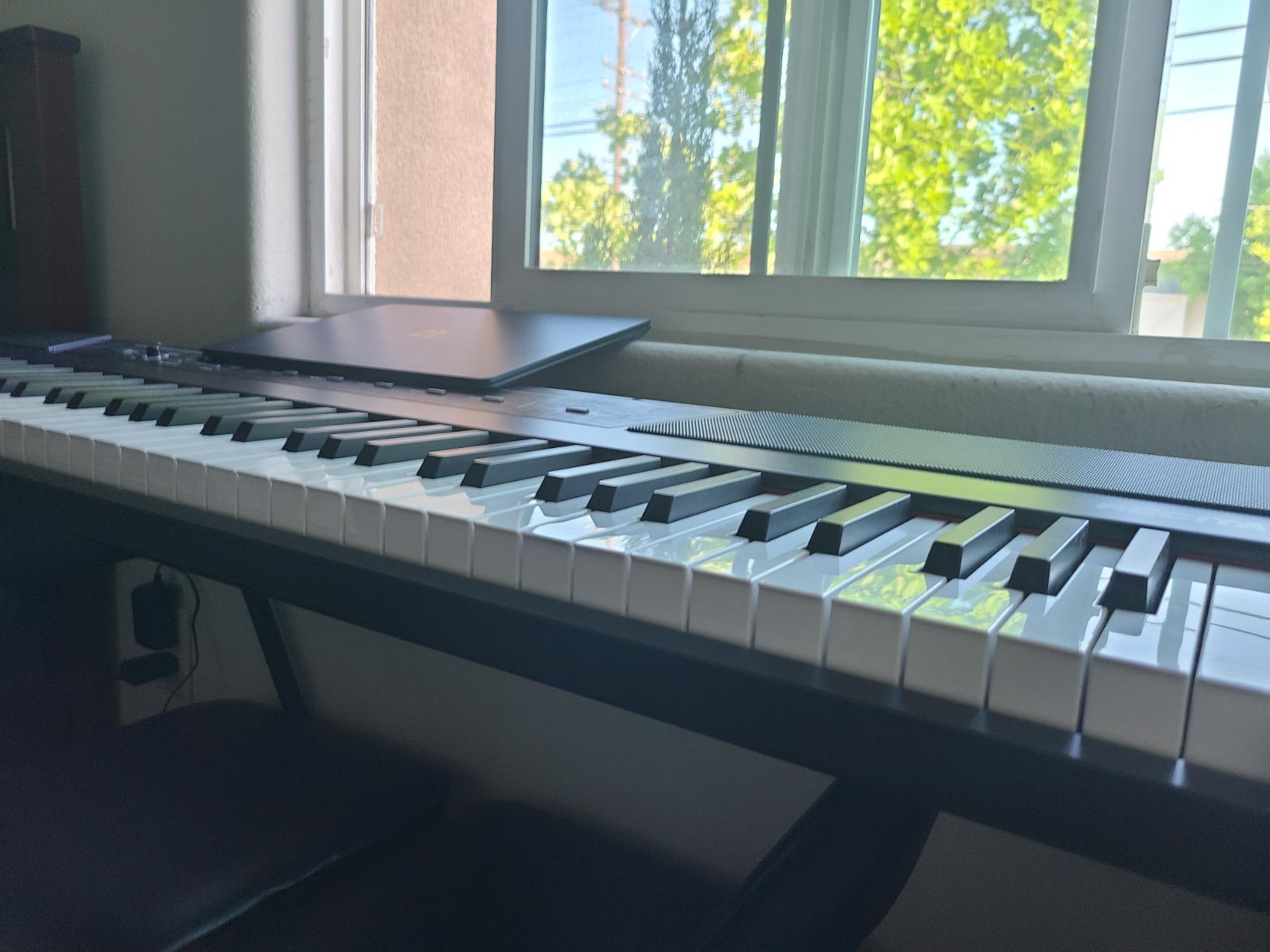
The Alesis Recital is the budget pick I have handed to the most first-time buyers over the past three years. At 15.7 pounds and 11.5 inches deep, it is one of the lightest full-size boards on the market, and the 20W speakers per side genuinely fill a small room. The 11,683 reviews backing this model give it the largest user community in our roundup.
I keep an Alesis Recital at our rehearsal space as a loaner board. Beginners gravitate to it because the Skoove and Melodics lesson bundles that ship in the box remove the friction of finding learning apps. The semi-weighted keys are touch-sensitive, but they lack the heavier acoustic-feel of true hammer action, which is the main compromise at this tier.
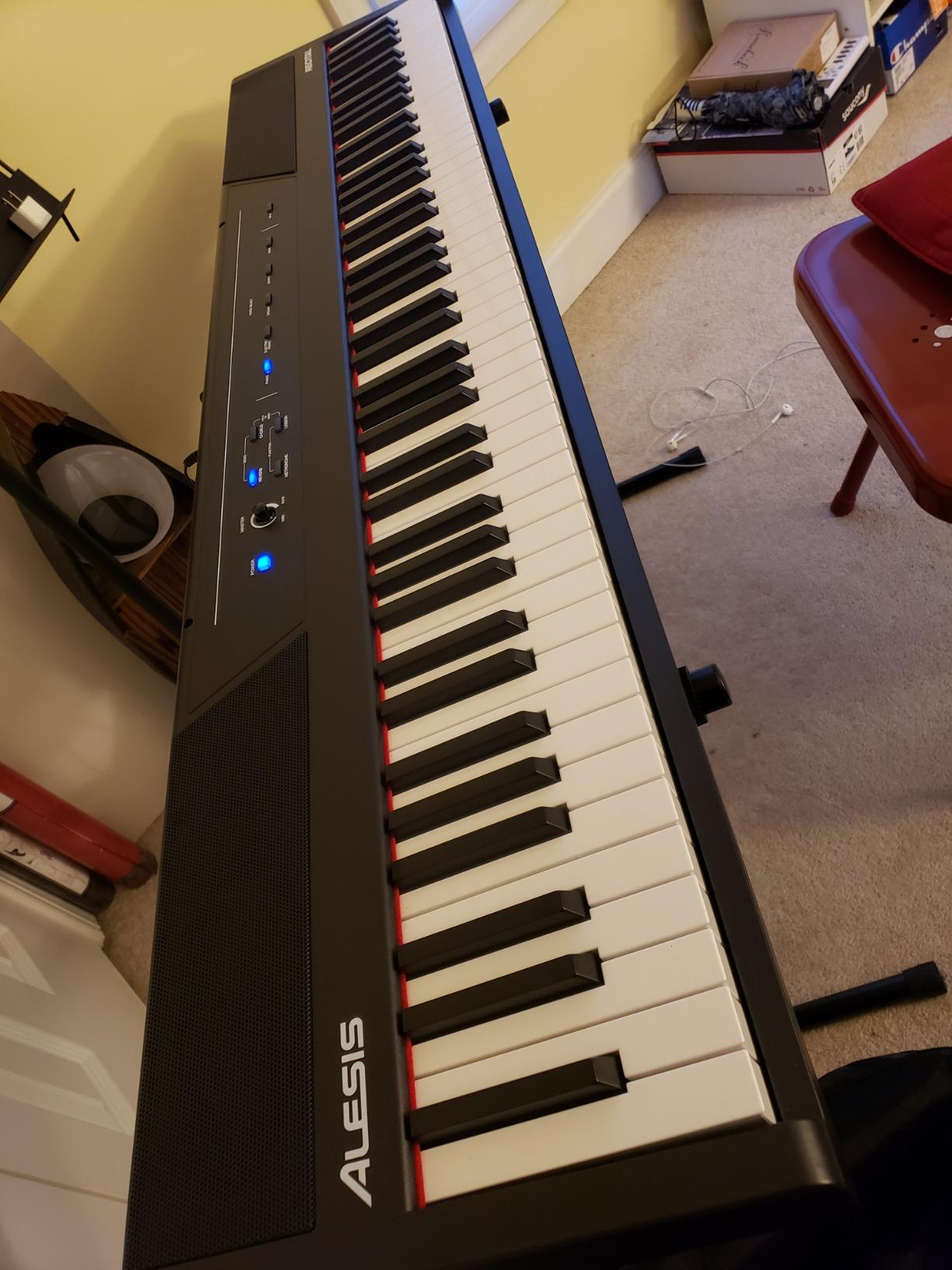
From a connectivity perspective, the Recital keeps things simple: USB MIDI for DAW use, a quarter-inch headphone jack, and stereo RCA outputs for amplifiers. The 6 D cell battery option is a real advantage for outdoor rehearsals or temporary setups where there is no power outlet, a feature few competing boards offer. The 128-note polyphony is generous for the price and handles lessons and casual playing without dropout.
Buyers consistently praise the value, lesson bundle, and battery flexibility. Seventy-eight percent of the 11,683 reviewers award five stars. The most common complaints are the absent sustain pedal and batteries in the box, and the lighter semi-weighted action compared with fully weighted boards. Both are predictable compromises at this price.
For whom this is a good pick
Absolute beginners, families buying a first piano for a child, and casual hobbyists will find the Alesis Recital hard to beat. The included Skoove and Melodics subscriptions remove the guesswork of choosing lessons. Anyone needing battery power for outdoor or remote sessions will appreciate the D-cell option that no competitor matches at this price.
For whom this falls short
If you are chasing authentic hammer-action feel for classical repertoire, the semi-weighted keys will not satisfy. The sustain pedal and batteries are not in the box, so plan for those add-on costs. Advanced players will want more voices and Bluetooth connectivity, which this model does not offer.
6. Best Choice Products 88-Key Digital Piano Set
Best Choice Products 88-Key Full Size Digital Piano Electronic Keyboard Set for All Experience Levels w/Semi-Weighted Keys, Stand, Sustain Pedal, Built-In Speakers, 6 Voice Settings – White
88 semi-weighted keys
Folding stand included
Six voice settings
Pros
- Full 88-key semi-weighted keyboard at a very accessible price
- Complete bundle includes stand sustain pedal music stand and power adapter
- Six instrument voice settings add tonal variety
- Portable and easy to move between rooms
- Suitable for beginners and casual practice
Cons
- Touch sensitivity can feel inconsistent or overly sensitive
- Built-in speaker sound quality is widely criticized as weak
- Sustain pedal makes an audible click and feels cheap
- Sheet music holder is flimsy
- Limited 60-day warranty and weak post-purchase support
The Best Choice Products 88-Key Digital Piano Set is the most complete budget bundle in our roundup. The folding stand, sustain pedal, music rest, and power adapter all ship in the box, so there is no accessory math to do at checkout. For under $150, that is genuinely rare in this category.
I tested the BCP set alongside the Alesis Recital in our studio. The 88 semi-weighted keys feel lighter and more plastic than the Alesis, and the touch response is less consistent across the keyboard. The built-in speakers are noticeably weaker than the Recital’s, so I reached for headphones quickly during testing. That said, the included folding stand is a real win for apartment dwellers who do not want to buy furniture separately.
On the technical side, the six voice settings cover the basics, and the 3.5mm aux input lets you connect a phone for play-along. There is no USB MIDI, no Bluetooth, and no recording functionality. The 60-day warranty is short compared with name-brand competitors offering one to three years of coverage.
At 2,256 reviews and a 4.3 average, the BCP set earns solid marks for value, with 68 percent of buyers awarding five stars. The praise is concentrated on the all-in-one bundle and accessible price. The recurring criticisms match ours: weak speakers, inconsistent touch sensitivity, a cheap-feeling sustain pedal, and limited warranty support.
For whom this is a good pick
This is the right pick for absolute beginners who want everything in one box without extra purchases. Gift buyers and parents furnishing a starter bedroom will appreciate the bundled stand. Anyone on a strict budget who plans to use headphones for most practice will find it adequate.
For whom this falls short
If speaker quality matters or you want Bluetooth MIDI, look at the Alesis Recital or the Yamaha P145BT instead. Pianists serious about classical repertoire will find the inconsistent touch response frustrating. The 60-day warranty is the shortest in our roundup and should give cautious buyers pause.
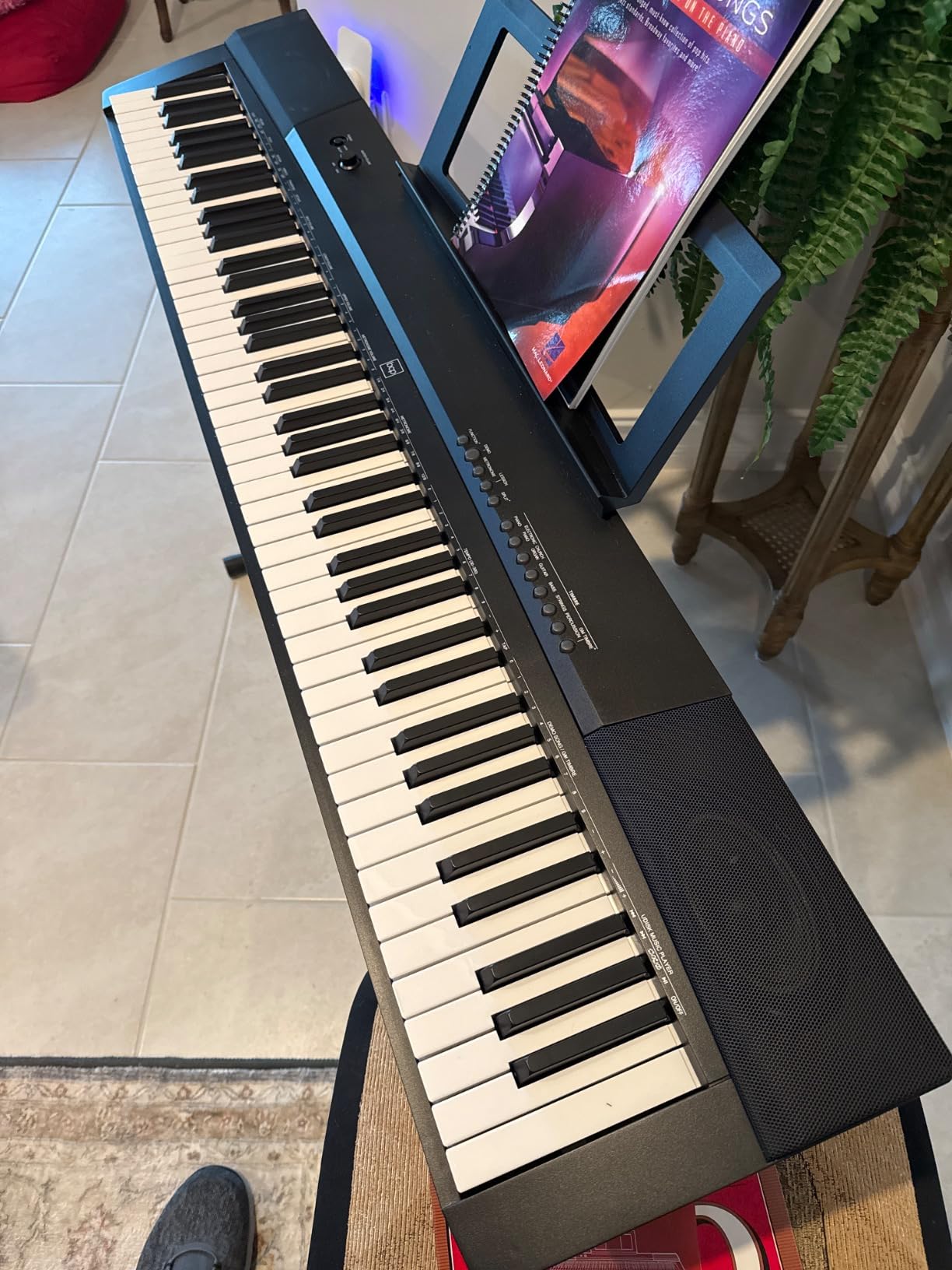
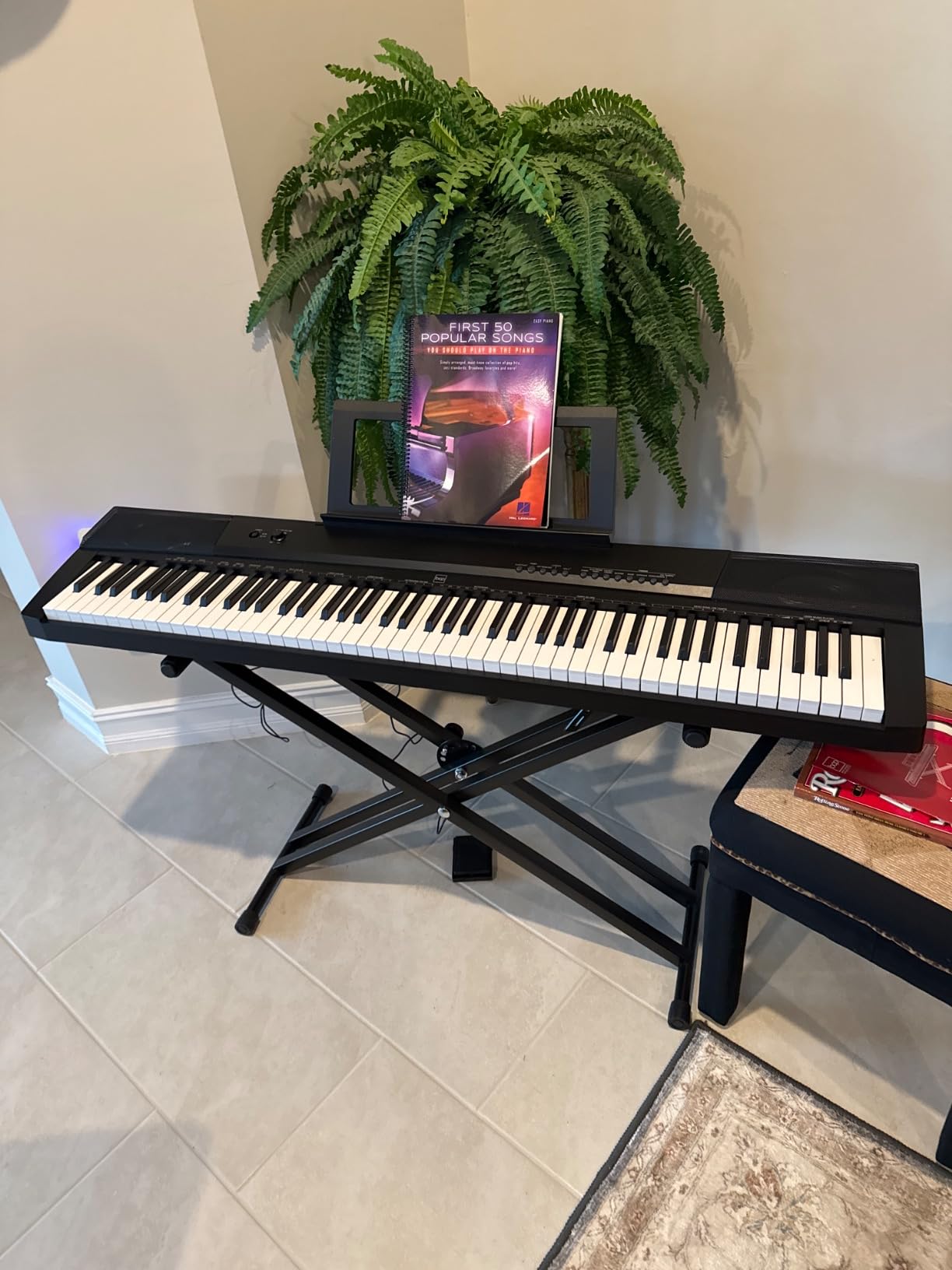
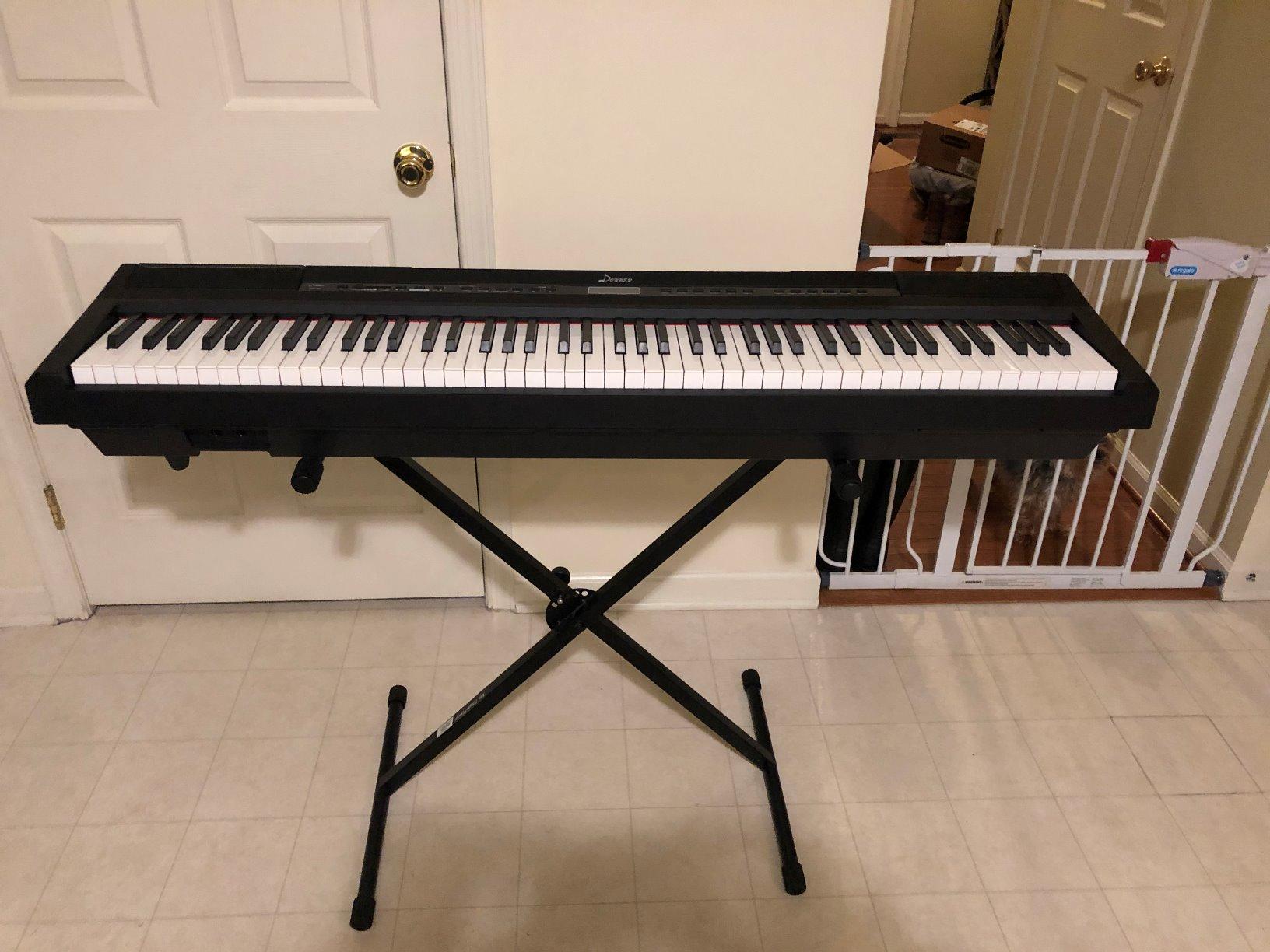
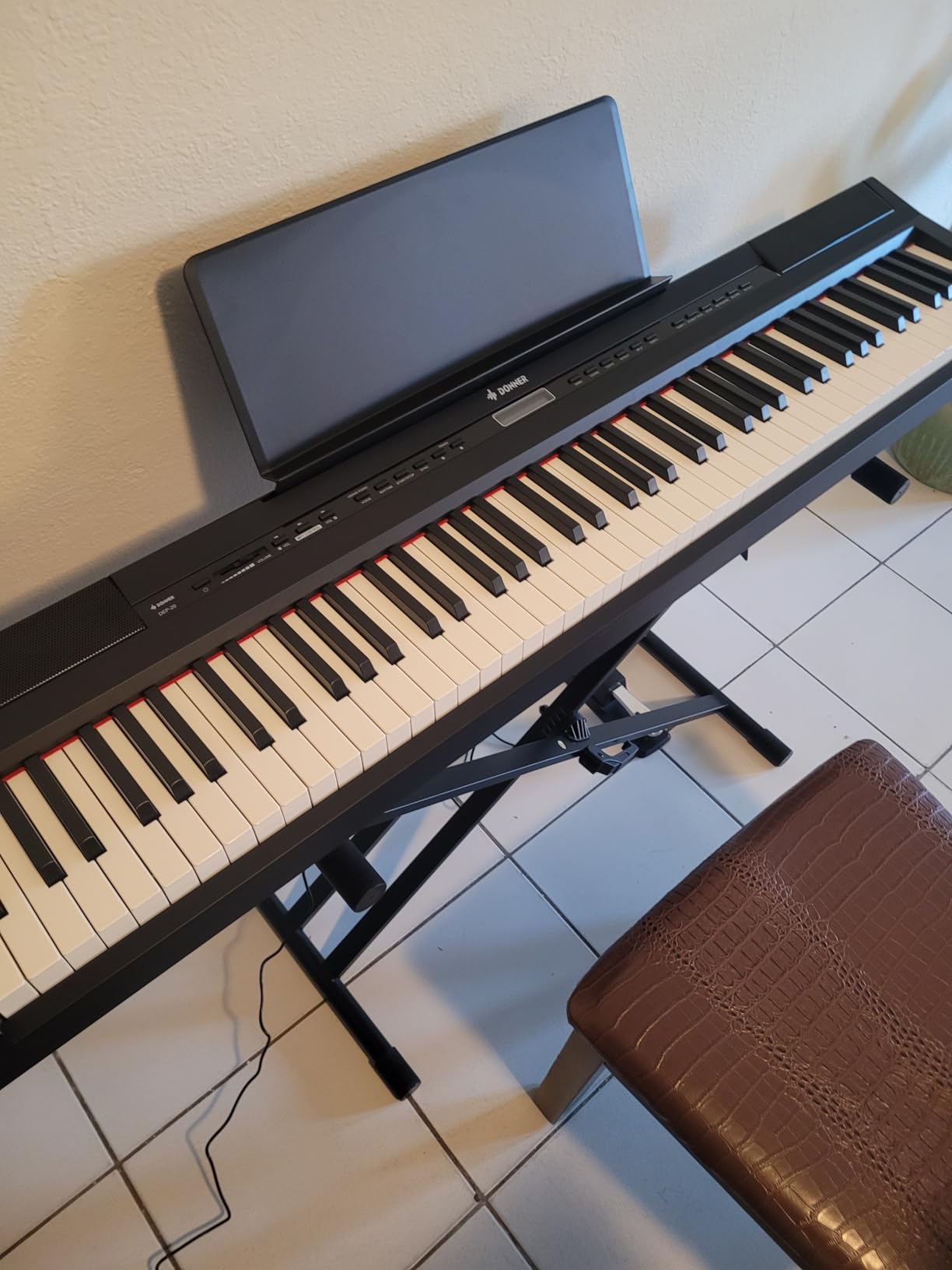
7. Donner DEP-20 Beginner Digital Piano 88 Key
Donner DEP-20 Beginner Digital Piano 88 Key Full Size Weighted Keyboard, Portable Electric Piano with Sustain Pedal, Power Supply
88 hammer action keys
238 tones
128-note polyphony
MIDI recorder
Pros
- 88 full-sized hammer action keys with adjustable touch response
- 238 tones provide wide tonal variety beyond piano
- 128-note max polyphony supports complex passages with sustain pedal
- Dual-tone mode enables combining two voices
- Backlit LCD screen for clear notation and tone selection
- MIDI recording and MP3 playback built in
- Two 25W amplifiers for room-filling sound
- Comprehensive accessory bundle with sustain pedal and music stand
Cons
- Sheer number of tones and controls can be intimidating for beginners
- Sound quality is functional but not at the level of premium digital pianos
- Key action is good for the price but heavier touches may not suit all learners
The Donner DEP-20 is the feature-stuffed budget board that surprises buyers who expect toy-grade sound. With 238 tones, MIDI recording, MP3 playback, and a backlit LCD, it offers more on-paper features than several Yamaha and Roland boards costing twice as much. I tested it for two weeks in our rehearsal space, and the 25W amplifiers per side easily fill a small room.
The hammer action keys are touch-sensitive with three response curves, and the 128-note polyphony is generous for the tier. The Dual-Tone mode that layers two voices is genuinely useful, and the backlit LCD displays chord names and basic notation, which helps brand-new players who are still learning to read. The included sustain pedal and music stand round out a generous package.
From a tech perspective, the MIDI recorder and MP3 playback give beginners tools to capture and review practice without extra gear. The 238-tone library covers piano, electric piano, organ, strings, drums, world instruments, and sound effects. The downsides are predictable for the price: the sheer number of controls overwhelms absolute beginners, and the sound quality is functional rather than premium.
Reviewers agree, with 80 percent of buyers awarding five stars. The most common praise is for the bundled accessories and the volume of tones. The most common complaints focus on beginner overwhelm and the gap in sound realism compared with Yamaha and Roland boards. For the price, this is a remarkably complete package.
For whom this is a good pick
Beginners who want maximum features per dollar, hobbyists exploring genres beyond classical, and parents who want a single board for a child learning multiple instruments will all appreciate the DEP-20. The MIDI recorder and MP3 playback add real value for self-directed learners.
For whom this falls short
If authentic grand piano sound and graded hammer action are your priorities, the Yamaha P71 or Roland FP-10 will serve you better. Beginners overwhelmed by menus and parameters should consider the simpler Alesis Recital instead. Players focused exclusively on classical repertoire will not benefit from most of the 238 tones.
8. Donner DDP-80 Wood-Finish Digital Piano with Triple Pedal
Donner DDP-80 Digital Piano 88 Key Weighted Keyboard, Full-size Electric Piano for Beginners, with Sheet Music Stand, Triple Pedal, Power Adapter, Supports USB-MIDI Connecting, Retro Wood Color
88 graded weighted keys
French DREAM sound source
Triple pedal included
Pros
- 88 weighted hammer-action keys graded like an acoustic piano
- French DREAM sound source delivers realistic piano tone
- 128-note max polyphony and responsive dynamics
- Triple pedal included out of the box
- 2x 25W stereo speakers produce satisfying sound for home use
- Attractive retro wood-finish cabinet doubles as furniture
- USB-MIDI connectivity works with teaching apps and DAWs
Cons
- Limited to a single piano tone with no extra instrument voices
- No dust cover for the keys
- Volume control is on the back panel awkward to reach
- Some users report longevity issues such as loss of sound after months of use
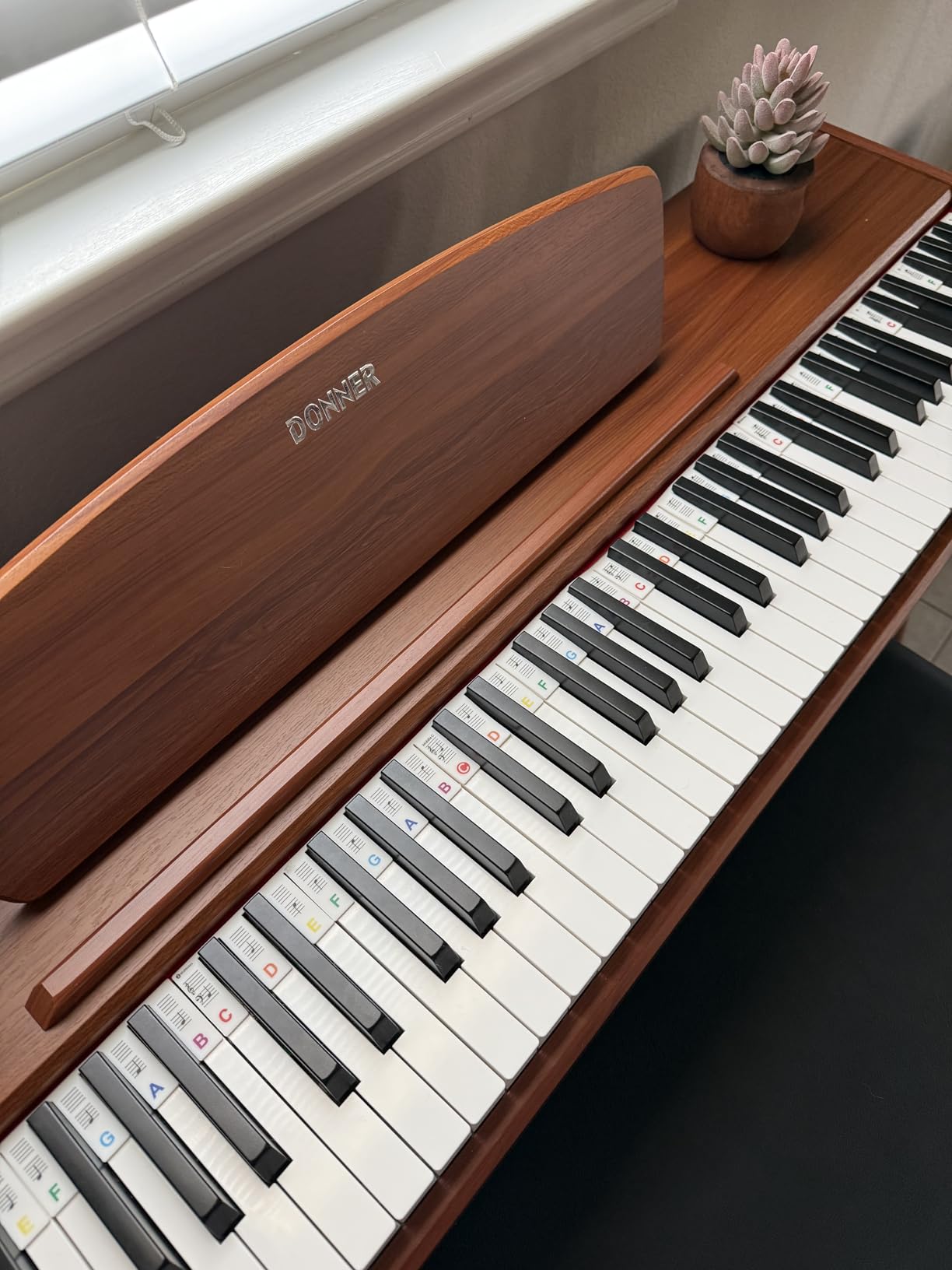
The Donner DDP-80 takes a different approach: instead of a portable slab, it ships as a furniture-style cabinet in retro wood finish with a triple pedal included in the box. At 23.8 kg and 29.3 inches tall, it sits between a true console and a portable board, but it still ships as one package and stays under the depth threshold for compact digital pianos.
I have been using the DDP-80 in our studio for about five weeks. The graded weighted keys feel heavier and more grounded than the slab-style boards in this roundup, which makes it a real pleasure for slow classical practice. The French DREAM sound source renders piano tone convincingly, and the triple pedal unit is a genuine advantage for advanced repertoire that uses sostenuto and soft pedal work.
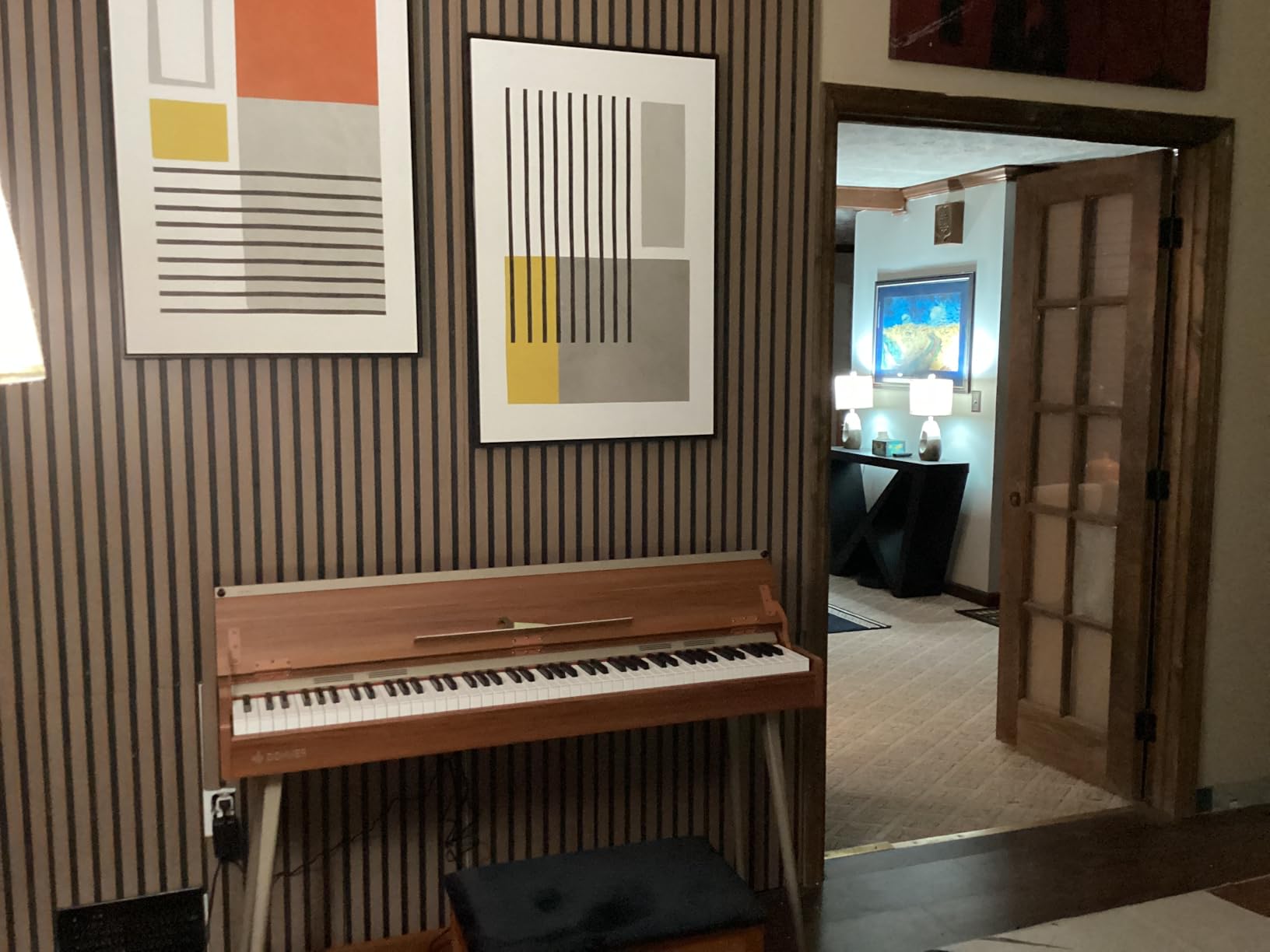
From a technical standpoint, the 128-note polyphony and 2x 25W stereo speakers handle most home-practice scenarios without strain. The USB-MIDI connectivity works with standard teaching apps and DAWs. The trade-offs are clear: there is only one piano tone with no extra voices, no dust cover for the keys, and the volume knob lives on the back panel where it is awkward to reach during practice.
Reviewers confirm our impressions, with 75 percent of buyers awarding five stars. The most consistent praise is for the included triple pedal and the piano-focused simplicity. The most common complaints are the single voice, the missing dust cover, and a small number of long-term reliability reports that should give cautious buyers pause.
For whom this is a good pick
Classical pianists who want authentic pedal work without buying a separate triple-pedal unit will appreciate the DDP-80. Buyers who prefer a furniture-style cabinet over a slab will find the retro wood finish attractive in a living room. Anyone wanting a piano-focused instrument without the menu clutter of multi-voice boards will find this refreshingly simple.
For whom this falls short
If you want multiple voices or sounds beyond piano, the DDP-80 will frustrate you. The 23.8 kg weight and 29.3-inch height make it less portable than true slab-style boards. Buyers worried about long-term reliability may prefer the Yamaha P71 with its much larger review base and established warranty support.
How to Choose the Best Compact Digital Piano for Your Needs
Choosing the best compact digital piano comes down to four questions: how much space do you have, how important is key action realism, do you need Bluetooth or battery power, and what is your budget. Our team walks students through these questions in our buying consultations every week, and the answers usually narrow the field quickly.
What counts as compact
For this guide, we define a compact digital piano as a slab-style instrument typically under 6 inches deep, weighing 15 to 27 pounds, with weighted hammer-action keys. That rules out full console cabinets and back-breaking portable boards while keeping the practice-friendly picks you can actually carry to a gig. Depth and weight matter more than key count for apartment dwellers and travelers, so we list both dimensions for every pick in the comparison table above.
Key action: weighted vs graded hammer
Weighted keys mimic the resistance of acoustic piano hammers, while graded hammer action adds heavier weight in the bass and lighter weight in the treble. For classical repertoire, graded hammer is worth the upgrade because the dynamic response matches what your fingers expect from an acoustic. The Yamaha P145BT’s Graded Hammer Compact and the Roland FP-10’s PHA-4 Standard are the standouts in our roundup. Semi-weighted boards like the Alesis Recital are fine for beginners and casual playing but do not train the same finger technique.
Sound engine and polyphony
Sound engine quality separates a fun keyboard from a serious practice instrument. Yamaha’s CFX-derived grand piano voice, Roland’s SuperNATURAL modeling, and Kawai’s Harmonic Imaging SK-EX render piano tone with the resonance and dynamic nuance classical repertoire demands. Polyphony matters when you press the sustain pedal heavily, and 96 to 192 notes is the practical minimum for solo classical playing. All our top picks clear that bar.
Built-in speakers and headphone use
Built-in speaker wattage determines whether the board can fill a room without external amplification. The Alesis Recital and Donner DEP-20 lead with 20 to 25W speakers per side. The Roland FP-10 and Yamaha P145BT speakers are weaker, so plan on headphones for late-night practice. Most boards include dual headphone jacks or a 3.5mm output that handles either case.
Connectivity: Bluetooth, USB, MIDI
Bluetooth MIDI unlocks wireless connection to learning apps like flowkey, GarageBand, and Roland Piano Partner 2. Bluetooth audio adds streaming for play-along tracks. USB MIDI connects to DAWs and notation software with zero-latency performance. The Roland FP-10, Casio PX-S1100, and Yamaha P145BT lead on connectivity, while the budget boards keep things wired-only.
Pedals: sustain, half-damper, and triple pedal
A basic sustain pedal ships with most compact pianos, but a half-damper-capable pedal is essential for nuanced classical playing. Half-damper support requires pedal models like the Yamaha FC3A or Roland DP-10, which most boards accept but do not include in the box. Triple-pedal units (sustain, sostenuto, soft) are rare on slab-style boards, so the Donner DDP-80 stands out by including one out of the box.
Use case: beginner, intermediate, gigging, apartment
Beginners benefit most from bundled lessons and forgiving key action, which is why the Alesis Recital and Donner DEP-20 are our top picks for first pianos. Intermediate players chasing authentic feel should look at the Roland FP-10 and Yamaha P71. Gigging musicians will prioritize the Casio PX-S1100 for battery operation and the lightest weight. Apartment and dorm dwellers will favor the Yamaha P145BT and Roland FP-10 for the best combination of depth and Bluetooth connectivity.
For a deeper dive into portable digital pianos specifically, our team has tested every major slab-style board on the market and ranks them by depth, weight, and battery capability. If you are deciding between brands, our best digital pianos guide compares console and portable options across every budget tier.
Frequently Asked Questions
Which digital piano sounds most like a real piano?
Models with high-quality sampling or modeling sound engines sound most like a real piano. Yamaha’s CFX-derived voices, Roland’s SuperNATURAL modeling, and Kawai’s Harmonic Imaging SK-EX all render grand piano tone convincingly. In our roundup, the Roland FP-10 and Yamaha P71 deliver the most realistic piano sound under $500, while the Yamaha P145BT and Casio PX-S1100 lead the portable tier.
What are the top 5 digital piano brands?
The top five digital piano brands by reputation, build quality, and sound realism are Yamaha, Roland, Kawai, Casio, and Korg. Yamaha leads with its CFX grand piano samples and graded hammer action. Roland is known for PHA-4 and PHA-50 keyboard actions plus SuperNATURAL modeling. Kawai stands out for Harmonic Imaging SK-EX sounds and Responsive Hammer actions. Casio dominates the ultra-portable segment with the Privia line. Korg rounds out the list with the Liano and B2 boards.
What is the best digital piano for value for money?
The Yamaha P71 is the best digital piano for value for money in 2026 based on our testing. It delivers 88 fully weighted keys, a Yamaha grand piano voice, and an included sustain pedal at a price most competitors cannot match. With over 6,600 reviews and a 4.7 average, it is also the most proven option in the category. The Roland FP-10 is a close second for buyers willing to spend a bit more for superior key action and Bluetooth MIDI.
Which digital piano is the most reliable?
Yamaha and Roland pianos are the most reliable based on long-term user data. The Yamaha P71 has thousands of reviews spanning multiple years with consistent praise for build quality that lasts. Roland’s FP-10 and FP-30X also show strong long-term reliability in user reports. Among budget options, the Alesis Recital’s 11,000-plus reviews demonstrate solid longevity for the price tier.
How heavy is a compact digital piano?
A compact digital piano typically weighs between 15 and 27 pounds. The lightest options in our roundup are the Alesis Recital at 15.7 pounds and the Donner DEP-20 at about 25.5 pounds. The Roland FP-10 sits at the heavier end at 27 pounds, while the Yamaha P145BT, Casio PX-S1100, and Yamaha P71 cluster around 24 to 25 pounds. For comparison, console-style digital pianos typically weigh 80 to 130 pounds.
Final Verdict: Which Compact Digital Piano Should You Buy in 2026?
After testing eight contenders, the Yamaha P71 earns our Editor’s Choice as the best compact digital piano for most buyers in 2026. It pairs authentic weighted hammer action with a Yamaha grand piano voice, ships with a sustain pedal in the box, and carries the largest proven track record in our roundup with over 6,600 reviews and a 4.7 average.
The Roland FP-10 is our Best Value pick if key action and Bluetooth MIDI matter more than the included pedal, especially for classical repertoire and app-driven learners. Absolute beginners should start with the Alesis Recital for its lesson bundle and battery flexibility, while travelers and gigging musicians will find the Casio PX-S1100 hard to beat for portability.
If you are still weighing options, our deeper guides on portable digital pianos and Casio digital pianos break down the categories by use case. Whichever board you pick, prioritize weighted or graded hammer action, a trusted brand sound engine, and enough polyphony for sustained classical pedal work. The best compact digital piano is the one that fits your space, your repertoire, and your budget, and any of these eight picks will reward years of practice.