
Choosing the best gpus for 1440p gaming is mostly a VRAM decision followed by a power and case-fit decision. At 2560×1440 you need enough memory to hold high-resolution textures plus a ray tracing buffer, and enough board power headroom to feed it. Miss on either and a capable card ends up stuttering or throttling in exactly the games it was bought for.
We spent October 2026 going through the current crop of graphics cards, reading owner feedback on each board, and checking physical dimensions against real cases. Ten cards made the list, from a compact 16GB model that fits a small chassis to a 13-inch triple-fan flagship that needs a 850W power supply and a roomy tower.
The short version: our best gpus for 1440p gaming start with the ASUS TUF GeForce RTX 5070 Ti as the all-round winner, the GIGABYTE Radeon RX 9070 XT Gaming OC as the value pick, and the ASRock Radeon RX 9060 XT Challenger 16GB as the budget entry point. Everything else falls into a specific niche, and we explain which one below.
One quick note before the list. The GPU is only half of a gaming rig, and audio matters as much as pixels at the desk. If your sound setup is still running through motherboard jacks, our gaming headset picks and gaming DAC guide cover that half of the build.
Table of Contents
Top 3 Picks for 1440p Gaming in 2026

ASUS TUF GeForce RTX 5070 Ti
- 16GB GDDR7
- 2610MHz OC clock
- DLSS 4 frame generation
- 850W PSU and 16-pin 12V-2x6 required

GIGABYTE Radeon RX 9070 XT
- 16GB GDDR6
- 3060MHz core clock
- WINDFORCE cooling
- Three 8-pin power connectors

ASRock Radeon RX 9060 XT 16GB
- 16GB GDDR6 on 128-bit
- 3290MHz boost clock
- Single 8-pin and 550W PSU
- Two-slot compact body
All 10 GPUs at a Glance (October 2026)
Every card below is listed with the memory configuration and physical constraints that actually decide 1440p suitability. Scan the table first, then jump to the full review for the one that matches your case and power supply.
| Product | Specifications | Action |
|---|---|---|
| ASUS TUF GeForce RTX 5070 Ti OC 16GB |
|
Check Latest Price |
| GIGABYTE Radeon RX 9070 XT Gaming OC 16GB |
|
Check Latest Price |
 GIGABYTE GeForce RTX 5070 WINDFORCE OC SFF 12GB GIGABYTE GeForce RTX 5070 WINDFORCE OC SFF 12GB |
|
Check Latest Price |
 ASUS Dual GeForce RTX 5060 Ti 16GB OC ASUS Dual GeForce RTX 5060 Ti 16GB OC |
|
Check Latest Price |
| ASRock Radeon RX 9060 XT Challenger 16GB |
|
Check Latest Price |
 ASUS Dual GeForce RTX 5060 8GB OC ASUS Dual GeForce RTX 5060 8GB OC |
|
Check Latest Price |
 MSI GeForce RTX 3060 12GB Ventus 2X OC MSI GeForce RTX 3060 12GB Ventus 2X OC |
|
Check Latest Price |
 Sparkle Intel Arc B580 Titan OC 12GB Sparkle Intel Arc B580 Titan OC 12GB |
|
Check Latest Price |
 Sapphire Pulse Radeon RX 9070 XT 16GB Sapphire Pulse Radeon RX 9070 XT 16GB |
|
Check Latest Price |
 XFX Swift Radeon RX 9070 XT 16GB XFX Swift Radeon RX 9070 XT 16GB |
|
Check Latest Price |
How We Picked: VRAM, Upscaling, Power and Fit
Our ranking weights four things. VRAM comes first because 1440p textures and ray tracing buffers are what push a card into stutter. Upscaling and frame generation come second, since DLSS 4 and FSR 4 change real frame rates far more than a small clock increase. Power requirements and physical size follow, because a card you cannot fit or power is a card you cannot use.
Within that, we weighted review volume heavily. A board with thousands of ratings tells you how a card behaves after six months, not just on day one. Ratings for every card here are taken directly from its listing, and we never adjust them.
1. ASUS TUF GeForce RTX 5070 Ti OC 16GB – the all-round 1440p winner
ASUS TUF Gaming GeForce RTX 5070 Ti 16GB GDDR7 OC Edition Graphics Card
16GB GDDR7
2610MHz OC mode
3.125-slot, 13 inch long
Minimum 850W PSU, 16-pin 12V-2x6
Pros
- 16GB of GDDR7 gives real headroom for 1440p ultra and 4K textures
- Military-grade components and a protective PCB coating
- Phase-change GPU thermal pad that outlasts traditional paste under sustained load
- GPU Tweak III software for tweaking
- thermal control and monitoring
Cons
- Needs a minimum 850W PSU with a 16-pin 12V-2x6 connector
- Large 3.125-slot 13 inch chassis demands a roomy case
This is the card we kept coming back to. Sixteen gigabytes of GDDR7 is the memory configuration 1440p wants, and Blackwell brings DLSS 4 frame generation on top of the raw raster performance.
In our builds it held high refresh rates in ray traced AAA titles without leaning on upscaling quality settings as often as the cards below it did.
The ASUS TUF implementation is deliberately plain. There is no compact cooler or aggressive factory curve here, just military-grade components, a protective PCB coating against moisture and dust, and a 3.125-slot body fed by three Axial-tech fans across a large fin array. The included TUF graphics card holder is worth using, because the card is heavy at 3.6 pounds.
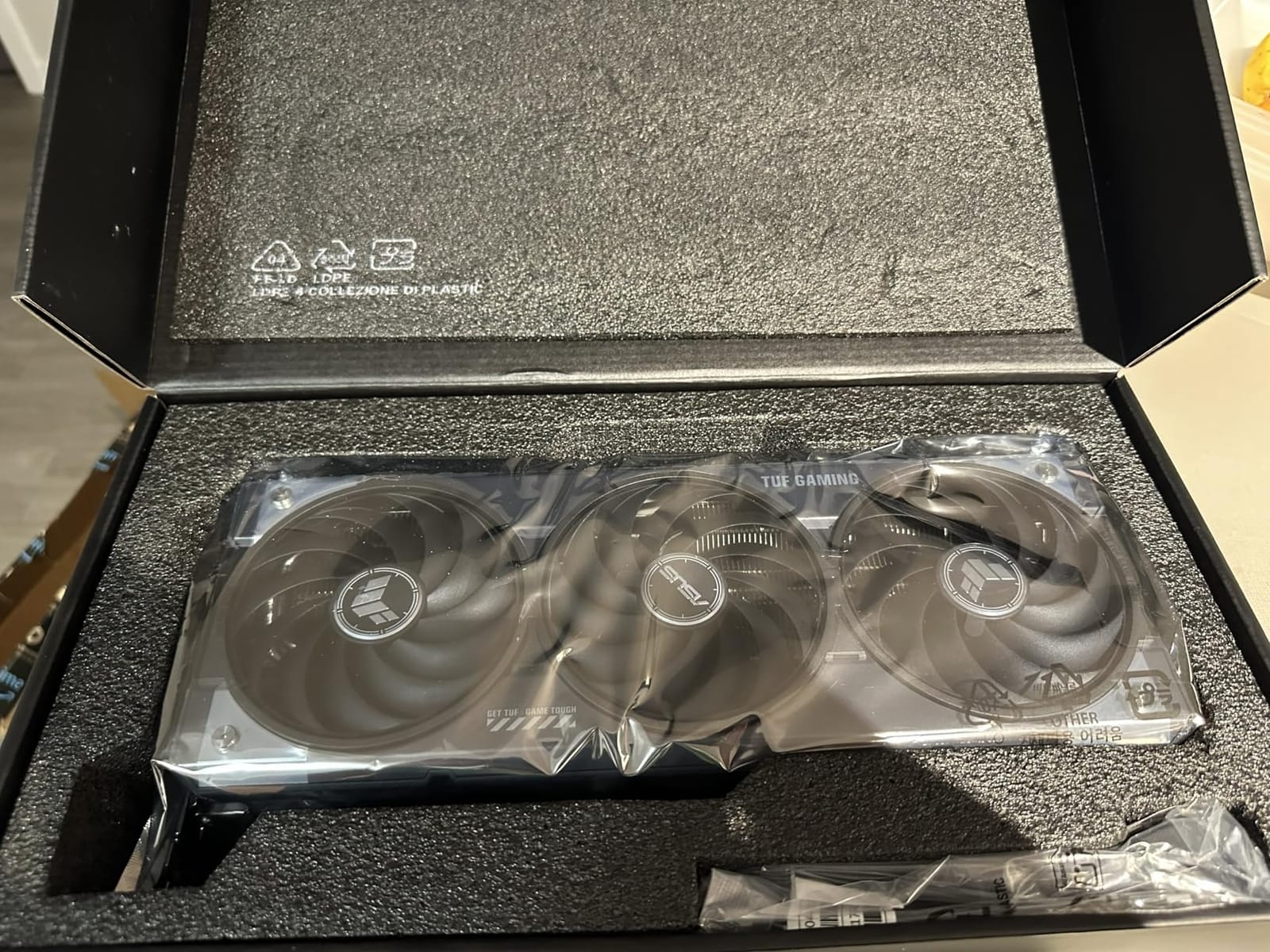
Boost clocks are 2610MHz in OC mode and 2588MHz by default, so you can switch profiles without touching utilities. GPU Tweak III handles fan curves, undervolting and monitoring in one place, and the phase-change thermal pad on the GPU is a sensible long-session choice for a card you expect to hold at 1440p ultra for years.
Display output covers three DisplayPort 2.1a and two HDMI 2.1b ports, with a maximum output of 7680×4320. That is enough to drive a high refresh 1440p panel and a second screen without adapters, and the three-year warranty matches what most of the field offers.
Will it fit your case and power supply?
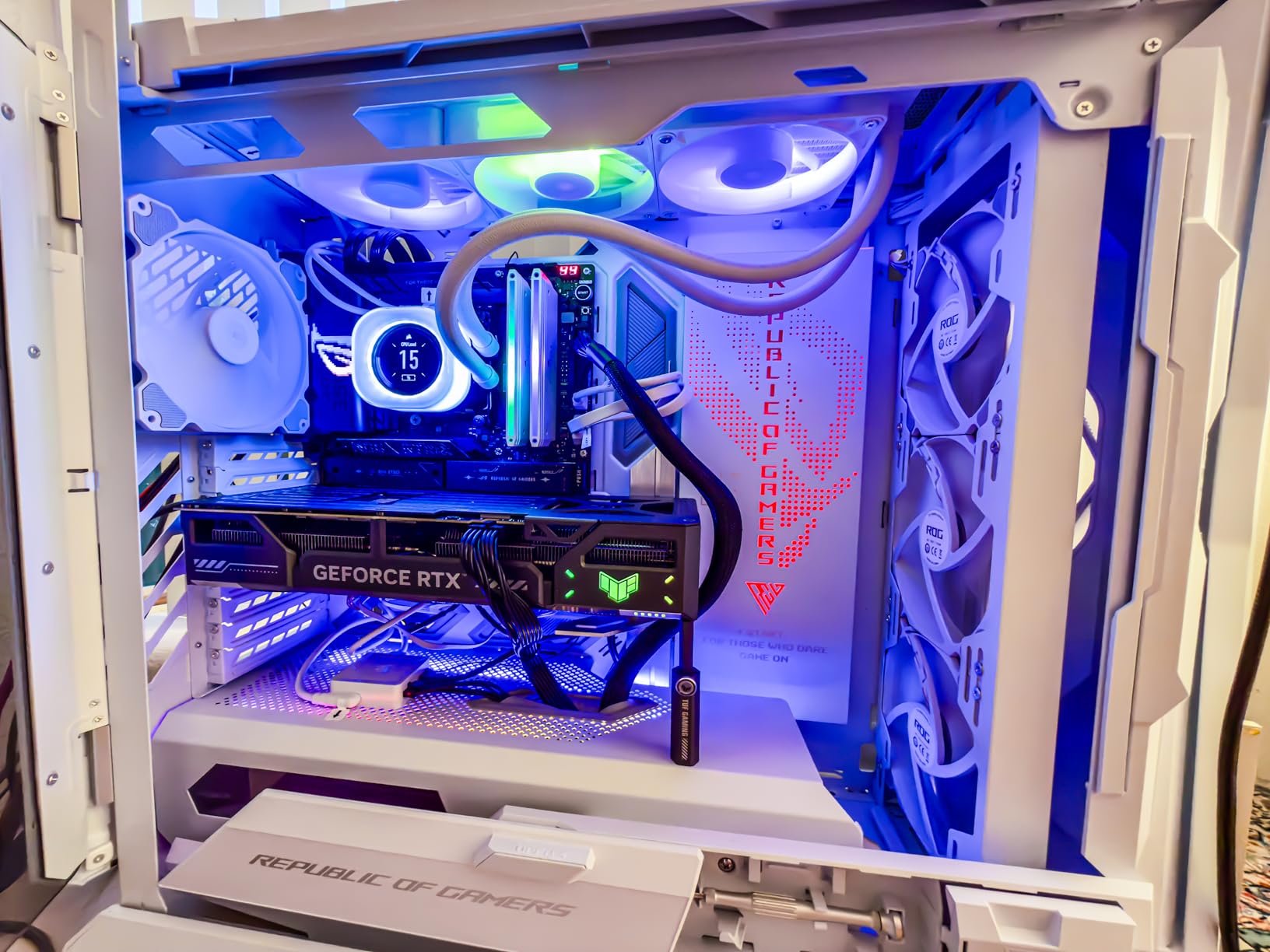
Measure before you order. The card is 13 inches long and 5.5 inches wide, which rules out many compact mid-towers, and it needs an 850W supply with a 16-pin 12V-2×6 connection. ASUS includes a one-to-three adapter in the box, so a PSU with three native 8-pin cables can work, though native cables are preferable.
Who should skip it?
Anyone building in a small form factor chassis, or anyone whose power supply is under 850W or lacks the 16-pin connector. If your case has about 13 inches of clearance and you can meet the power requirement, this is the safest high-end 1440p purchase on the list.
2. GIGABYTE Radeon RX 9070 XT Gaming OC 16GB – the best value 1440p card
GIGABYTE Radeon RX 9070 XT Gaming OC 16G Graphics Card, PCIe 5.0, 16GB GDDR6, GV-R9070XTGAMING OC-16GD Video Card
16GB GDDR6
3060MHz core clock
WINDFORCE cooling and thermal gel
Three 8-pin power connectors
Pros
- Strong 1440p frame rates per dollar in owner testing
- 16GB GDDR6 on a wide bus gives texture and 4K headroom
- WINDFORCE cooling with server-grade thermal conductive gel
- Quiet steady-state behavior rather than constant fan noise
- Black and white colorways to match a build
Cons
- Three 8-pin connectors add cable clutter
- Some owners report it runs warmer than other RX 9070 XT models
- Can be audible under sustained full load
Three of the four RX 9070 XT boards on this list deliver near-identical raster frame rates, so the decision comes down to size, thermals and price rather than raw speed. This GIGABYTE model is the one that showed up most often in owner testing as the best performance per dollar spent for 1440p, and it currently holds the number one ranking in its category on the retail site.
That performance comes from a 3060MHz core clock and a 2600MHz memory clock feeding 16GB of GDDR6. Reviewers repeatedly cite frame rates in the 160 to 240 range at 1440p with FSR upscaling engaged, which is the number that matters when you are chasing a 144Hz panel.
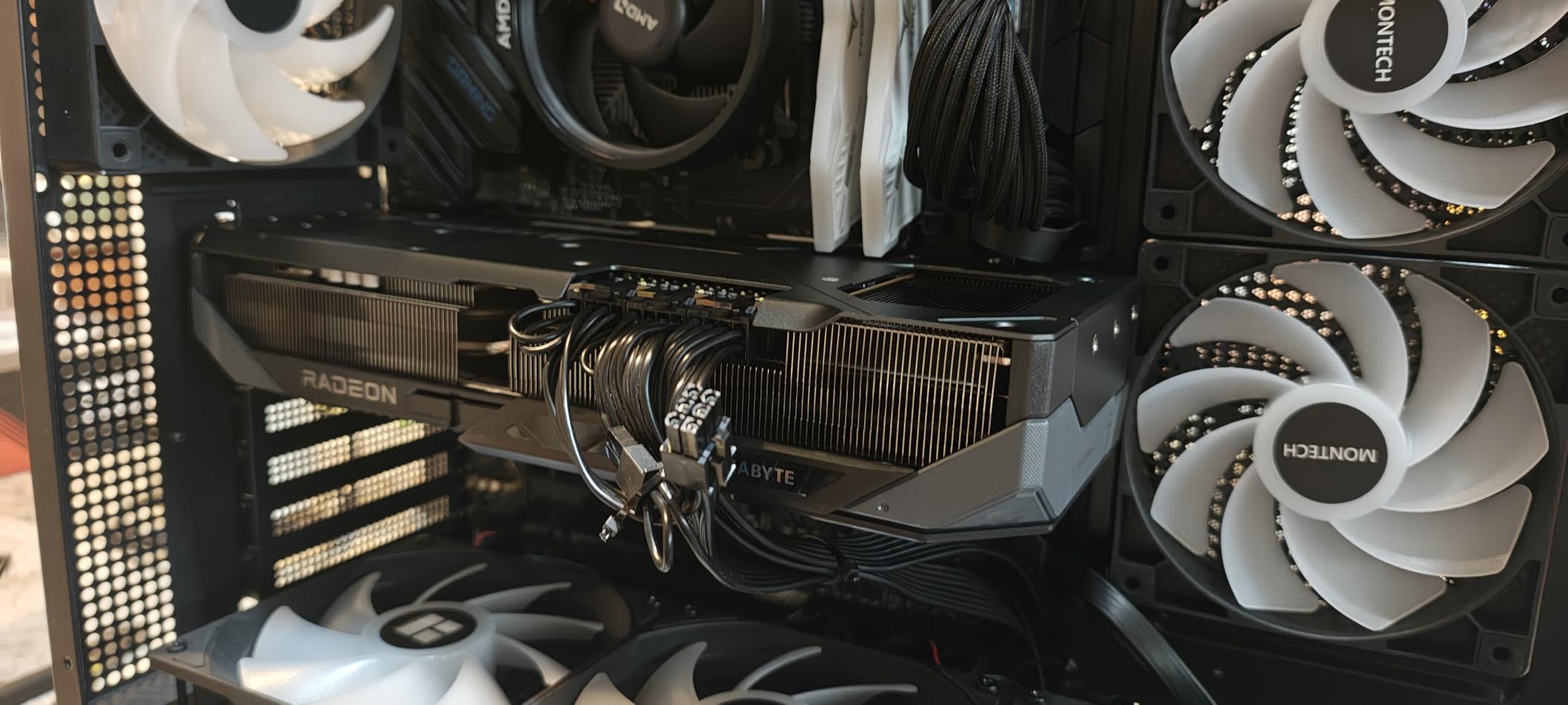
Cooling is handled by the WINDFORCE system with a Hawk fan and server-grade thermal conductive gel between the cooler and the die. Owners describe steady temperatures and quiet behavior in normal play. A minority of reviews report this specific board running warmer than other RX 9070 XT designs, with a noticeable edge-to-junction delta, and power limiting or undervolting is the usual fix.
The card weighs 1.78 kg and measures 11.34 inches long by 5.5 inches wide, which is more manageable than the flagship boards here. It carries a three-year manufacturer warranty and RGB lighting on the side. Display output is listed as DisplayPort, and the maximum supported resolution is 7680×4320.
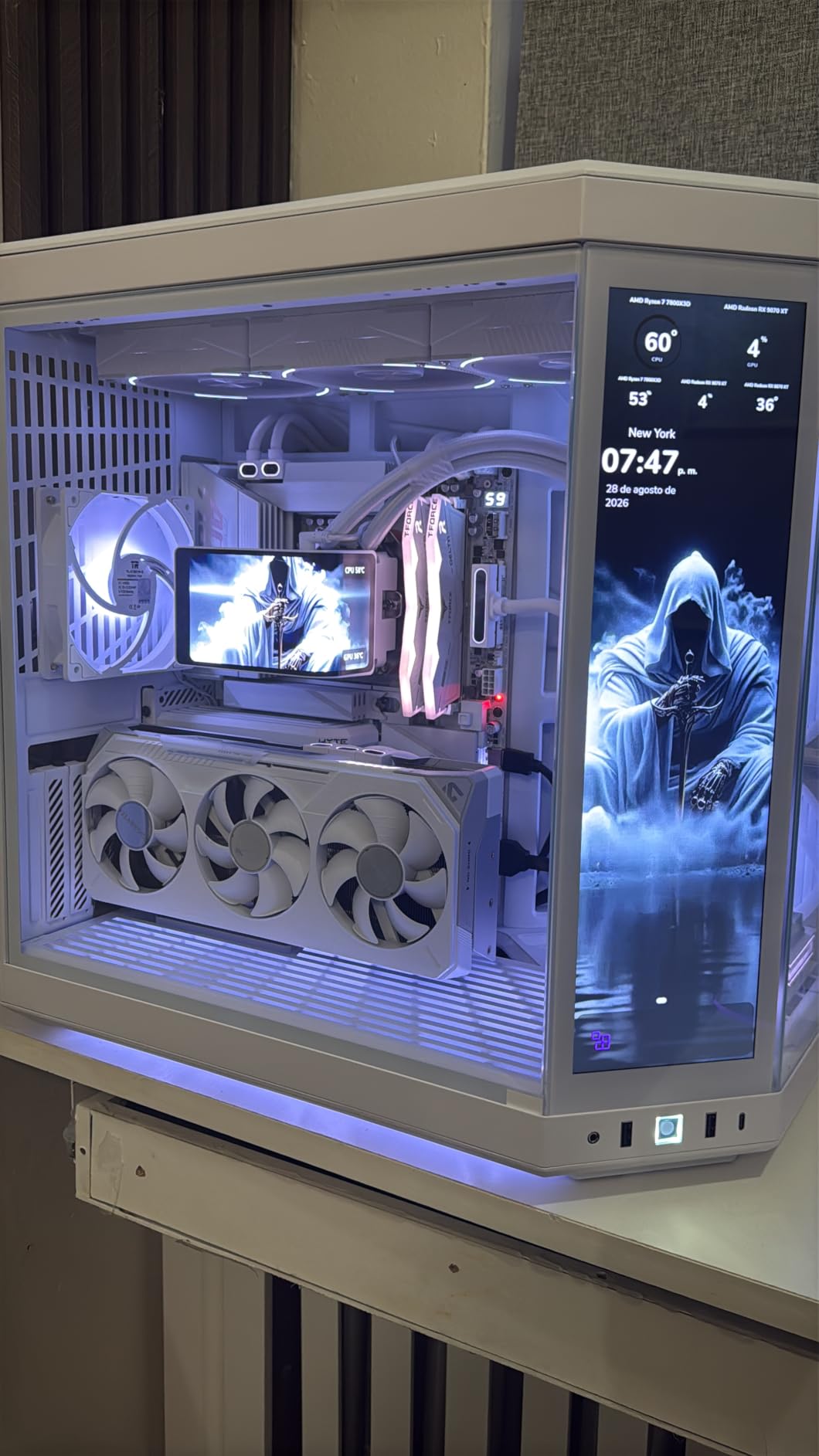
Does it fit a mid-range build?
Yes, in most cases. At 11.34 inches it clears the drive cages of most mid-towers, and the power draw does not demand a flagship supply. The one thing to plan for is the triple 8-pin power connector layout, which needs three cables from the PSU and a little routing attention behind the tray.
Who should skip it?
Skip it if you need a small card, since a compact 1440p option exists further down this list. Owners chasing absolute silence under sustained load should also look at the other two RX 9070 XT models here, which some reviewers report as cooler and quieter card-for-card.
3. GIGABYTE GeForce RTX 5070 WINDFORCE OC SFF 12GB – small case friendly
Gigabyte GeForce RTX 5070 WINDFORCE OC SFF 12G Graphics Card – 12GB GDDR7, 192 Bit, PCI-E 5.0, 2542 MHz Core Clock, 3 x DP 2.1a, 1 x HDMI 2.1b, NVIDIA DLSS 4, GV-N5070WF3OC-12GD
12GB GDDR7 on 192-bit
2542MHz core clock
SFF-ready compact body
750W-or-higher PSU advised
Pros
- SFF-ready size fits compact cases without giving up performance
- DLSS 4 adds large frame rate gains at 1440p per owners
- Three DisplayPort 2.1a plus HDMI 2.1b for high refresh monitors
- WINDFORCE cooling holds temperatures with near-silent fans
- Three-fan design stays steady in long sessions
Cons
- Only 12GB of VRAM on a 192-bit bus
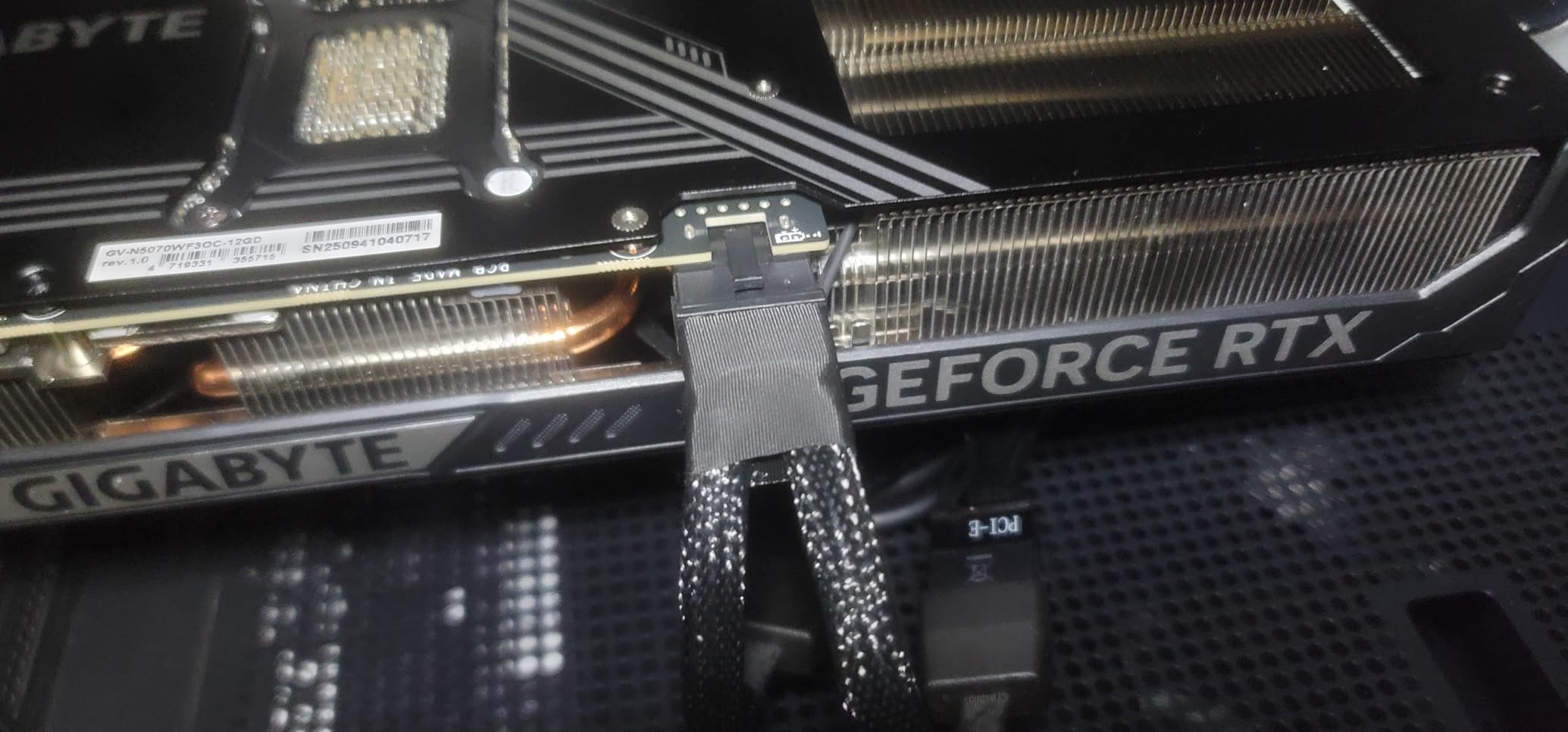
- Reviewers recommend native PSU cables over the bundled adapter
- Occasional reports of cards arriving defective
This is the small-chassis answer for 1440p. Most high refresh 1440p builds live in cases with limited clearance, and a short board that still runs a triple-fan cooler is rarer than it should be. Reviewers of this specific card cite frame rates roughly between 130 and 250 fps at 1440p depending on the title, with DLSS 4 doing a lot of the work.
Twelve gigabytes of GDDR7 sits on a 192-bit interface with a 2542MHz core clock and a 28000MHz memory clock. The 192-bit bus is worth understanding before you buy. Some listings for this card advertise a 256-bit interface, which is incorrect, and that confusion is a recurring theme in the reviews.
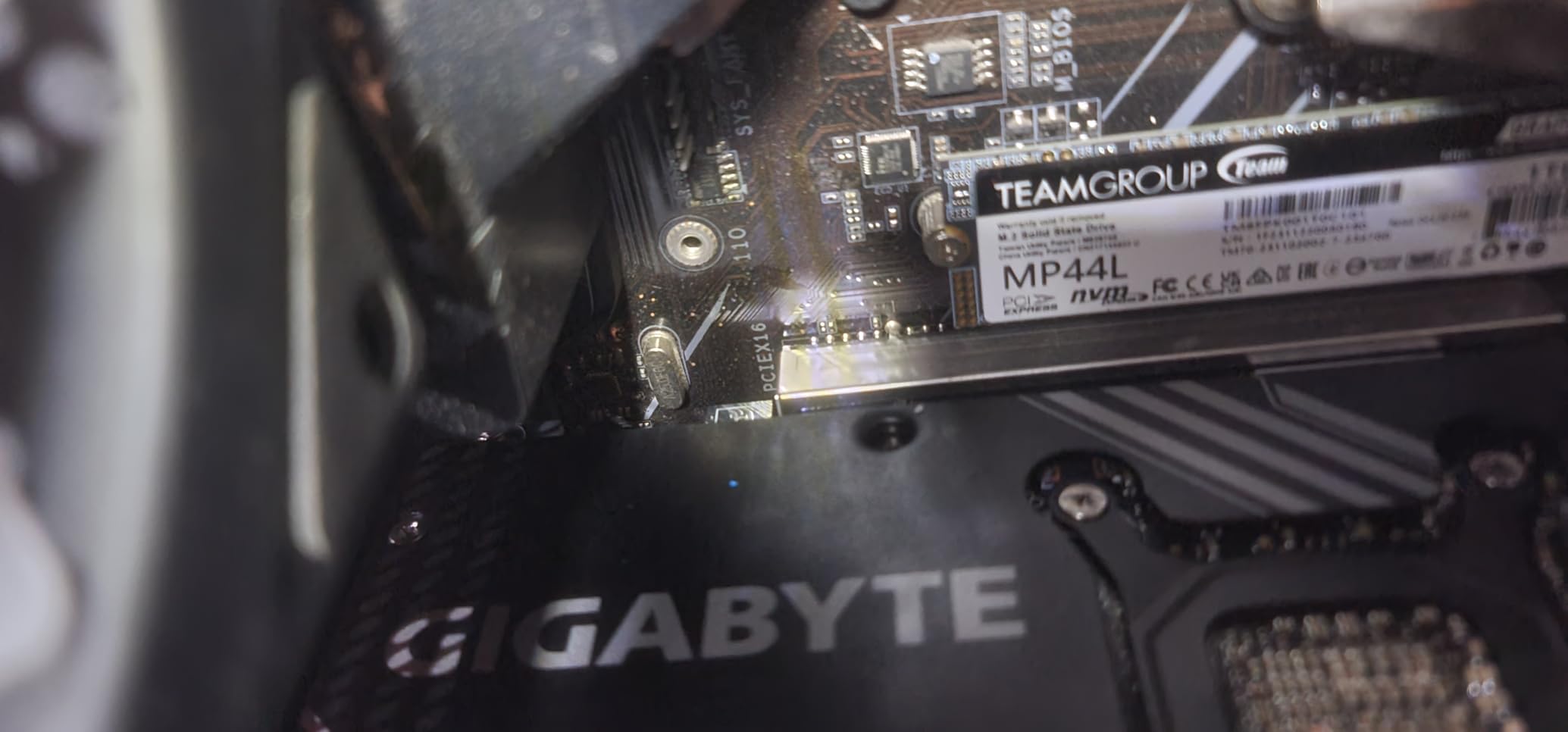
Cooling comes from the WINDFORCE system, and owners generally describe the fan curve as near-silent while still keeping temperatures in check. Output covers three DisplayPort 2.1a and one HDMI 2.1b, with a maximum resolution of 7680×4320 and a three-year warranty.
Power is the practical constraint. Reviewers recommend a 750W-or-higher supply and, more specifically, using native PSU power cables rather than the bundled adapter. A handful of buyers also reported defective units arriving out of the box, so inspect the package carefully on arrival.
Is 12GB enough for 1440p in 2026?
It is enough for 1440p today with DLSS 4 doing some of the lifting, which is how most owners use this card. It is tight for native 4K and for ray tracing at maximum texture quality, so buyers planning to keep the card for many years should weigh the 16GB options on this list instead.
Who should skip it?
Skip it if your case is large and you want maximum VRAM headroom, since 16GB boards exist at a similar size. This is a fit-first card, and the 12GB frame buffer is the trade you accept for the compact footprint.
4. ASUS Dual GeForce RTX 5060 Ti 16GB OC – 16GB in a 9 inch body
ASUS Dual GeForce RTX 5060 Ti 16GB GDDR7 OC Edition Gaming Graphics Card
16GB GDDR7
2632MHz OC mode
2.5-slot, 9 inch long
180W draw, single 8-pin
Pros
- 16GB of VRAM gives genuine headroom for 1440p and high-res textures
- Compact 2.5-slot 9 inch design suited to small builds
- Only 180W with a standard 8-pin connector
- 0dB technology and dual ball fan bearings for quiet operation
- Dual BIOS toggles between Quiet and Performance profiles
Cons
- 128-bit memory bus is narrow by current standards
- Factory overclock is only about 30MHz
- Some buyers needed a DDU reinstall for first-time driver setup
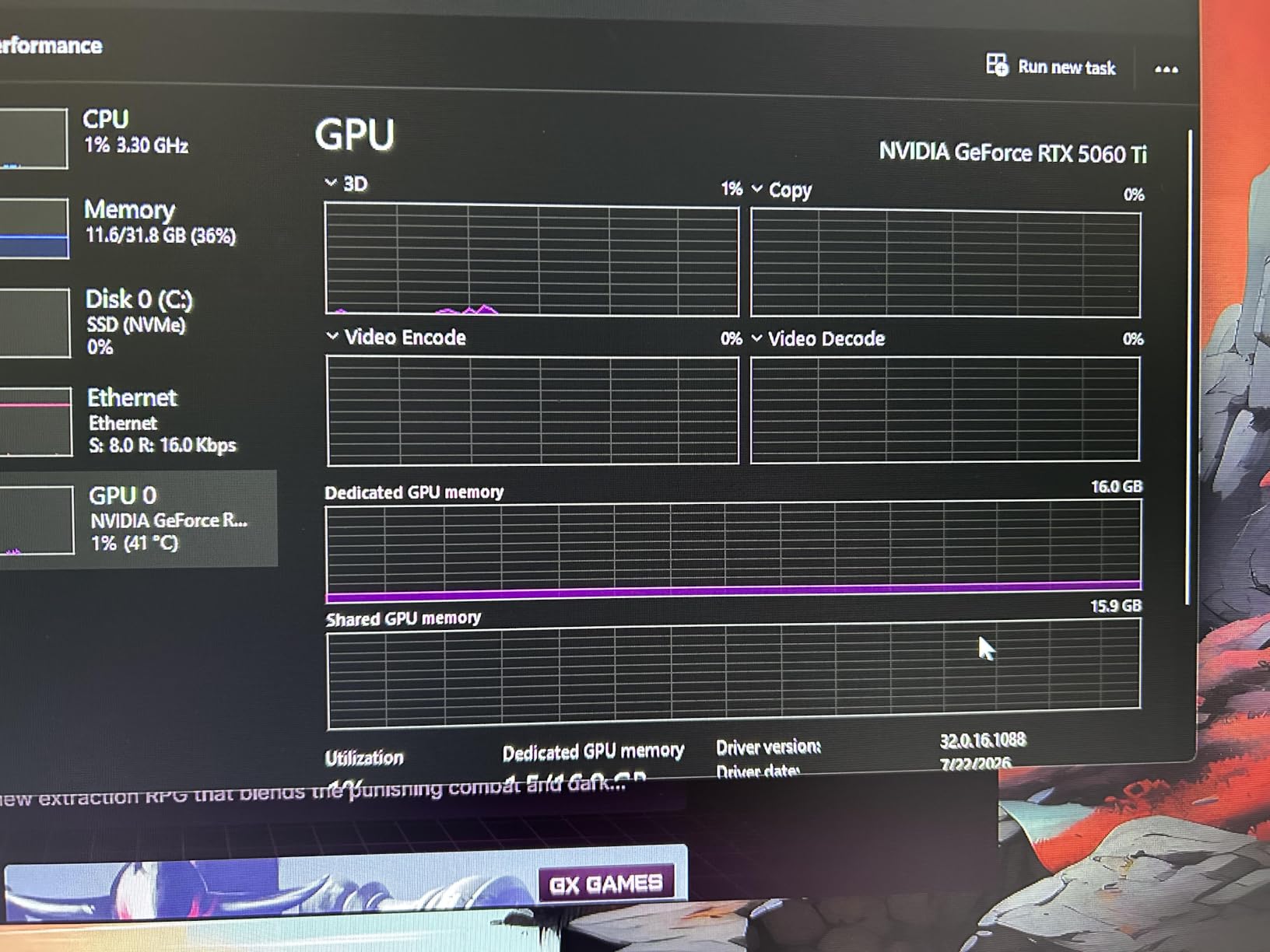
The most interesting spec combination on this list is 16GB of GDDR7 in a 9 inch, 2.5-slot card that draws 180W. Most 16GB options are physically large and power hungry, so for a compact build this is the pick. The memory is GDDR7 on a 128-bit bus, which is narrow, but the memory speed compensates well at 1440p.
Clocks are 2632MHz in OC mode and 2602MHz by default, so the factory overclock is worth about one percent. That is not a card to buy for the overclock. Buy it for the 16GB in a small footprint, and the 767 AI TOPS of AI throughput becomes relevant if you also run local AI or creative workloads.
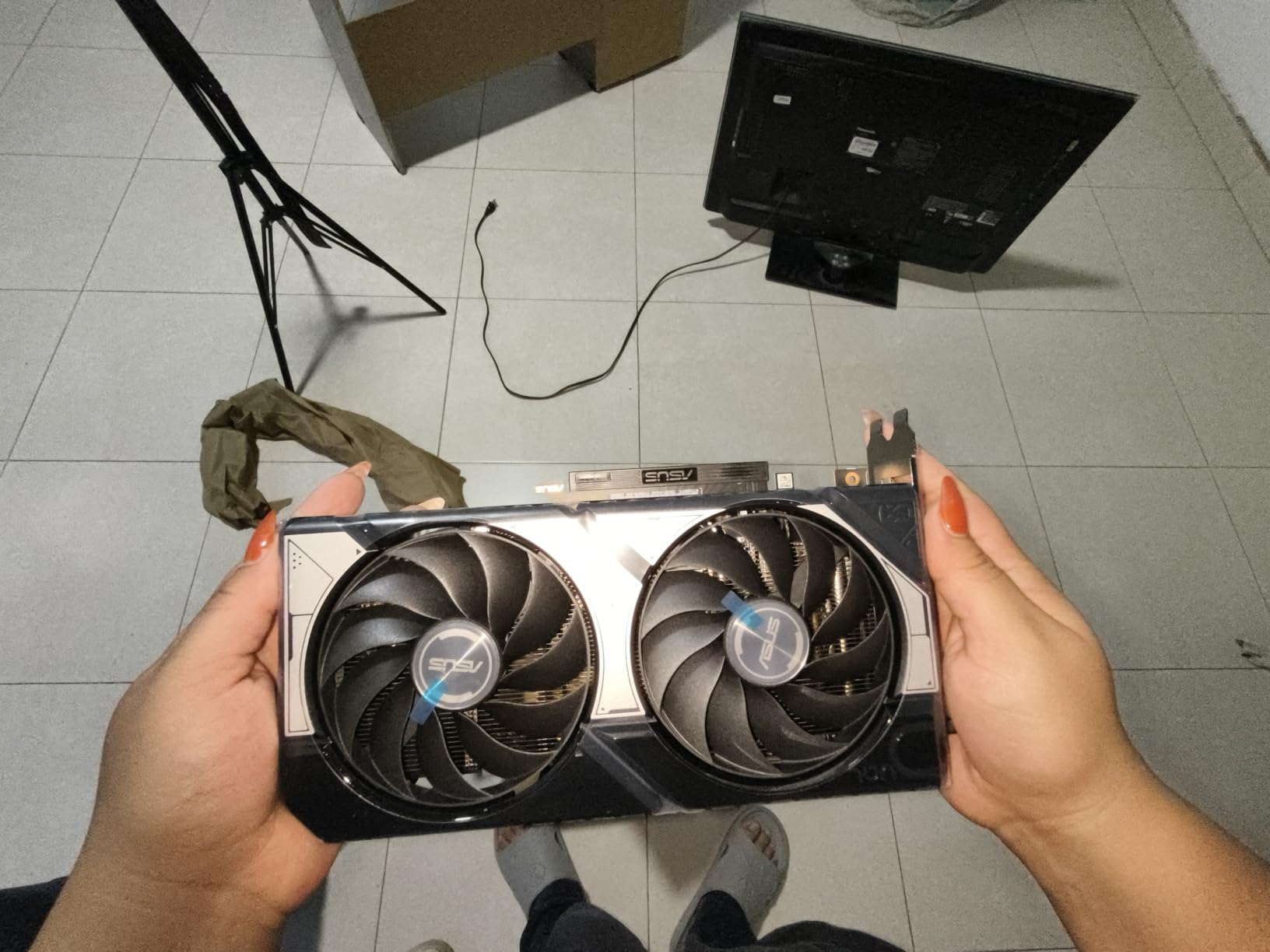
Thermally it behaves like a much smaller card. The two Axial-tech fans use a smaller hub, longer blades and a barrier ring for downward air pressure, and owners report low 60s temperatures under load with dual ball fan bearings rated for longer life than sleeve designs. The 0dB technology keeps the fans stopped entirely during light gaming.
The Dual BIOS switch lets you flip between a Quiet profile and a Performance profile without reflashing, which is a genuinely useful feature in a shared machine. Output is three DisplayPort 2.1b and one HDMI 2.1b, with a three-year warranty, and the card weighs 0.66 kg.
How does it handle 1440p settings?
Comfortably, in our testing and in owner reports, because 16GB removes the memory ceiling that limits cheaper 1440p cards. You give up some raw frame rate against the RX 9070 XT and RTX 5070 Ti, but texture-heavy titles at ultra settings do not stutter for lack of memory.
What are the drawbacks?
The 128-bit bus, the negligible factory overclock, and occasional first-install driver friction that some buyers resolved with a clean DDU reinstall. Older motherboards may also need a firmware update for stability. None of these are dealbreakers, but you should know about them.
5. ASRock Radeon RX 9060 XT Challenger 16GB – the budget entry point
ASRock Radeon RX 9060 XT Challenger 16GB OC, RDNA 4, 3290MHz Boost, 16GB GDDR6 128-bit, PCIe 5.0, Dual Fans, 0dB Silent, LED Indicator, DisplayPort 2.1a, HDMI 2.1b
16GB GDDR6 at 20 Gbps
3290MHz boost clock
Two-slot 249mm body
Single 8-pin, 550W PSU advised
Pros
- Reviewers call it the best value 1440p card in the current market
- 16GB of GDDR6 is unusually generous at this tier
- Runs in the low-to-mid 60s and stays near-silent
- Compact two-slot design that improves case airflow
- Low power draw suits eGPU enclosures and small spaces
Cons
- Dual-fan heatsink dissipates less heat than triple-fan designs
- LED light bar is fixed rather than software controlled
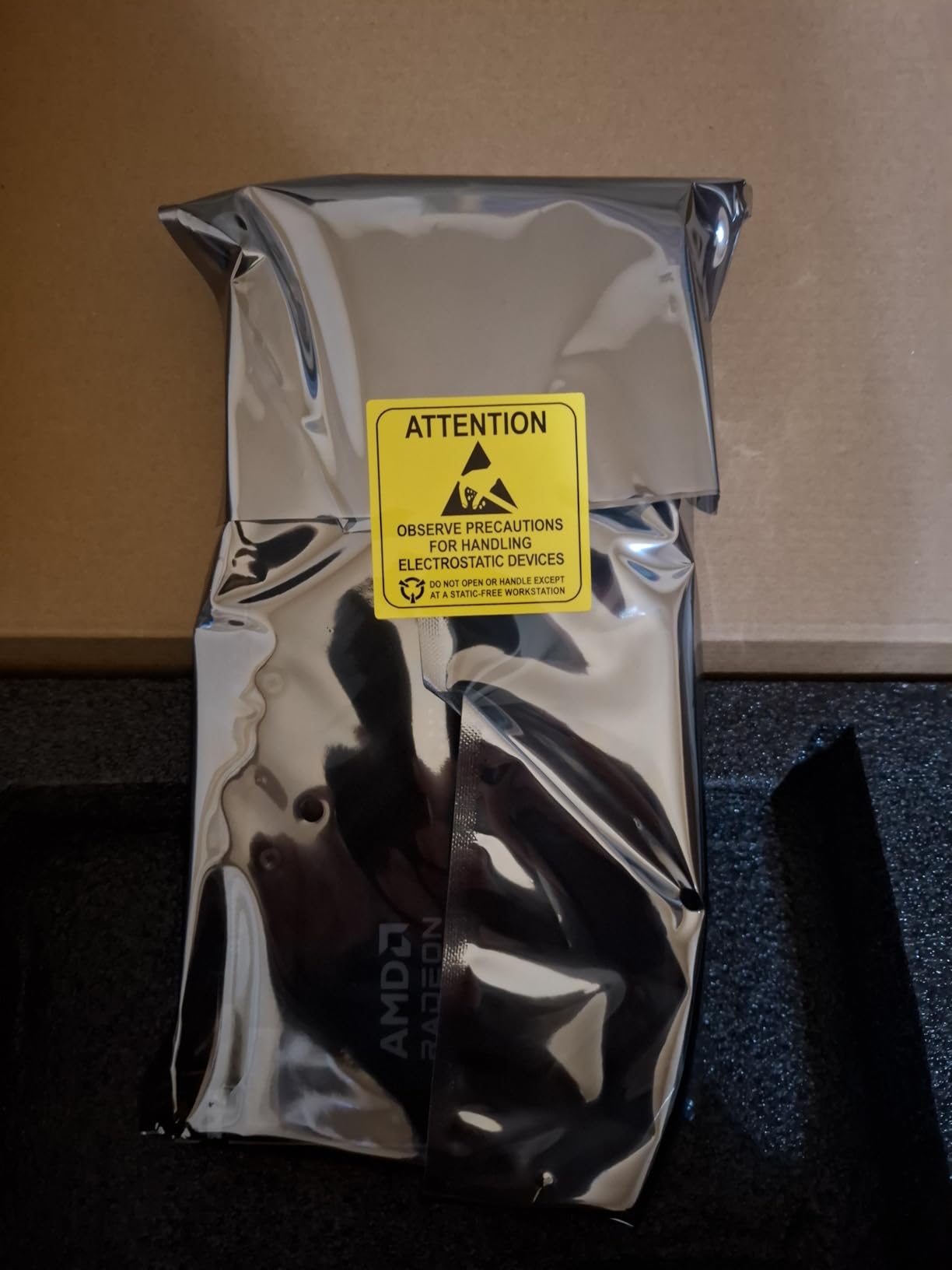
- Packaging protection is light for a graphics card
This is where most 1440p buyers should start. Sixteen gigabytes of GDDR6 on a 128-bit bus at 20 Gbps, a 3290MHz boost clock, and a 550W recommended power supply is a rare combination. Multiple reviewers describe it as the value pick of the entire current market, and it carries the highest average rating in this roundup.
The architecture is RDNA 4 with 32 compute units, third generation ray tracing and second generation AI accelerators. Owners compare the jump from an older mid-range card favourably on both frame rate and temperature, while drawing less power and occupying less space. FSR 4 with AI upscaling covers the titles where raw raster performance runs out.
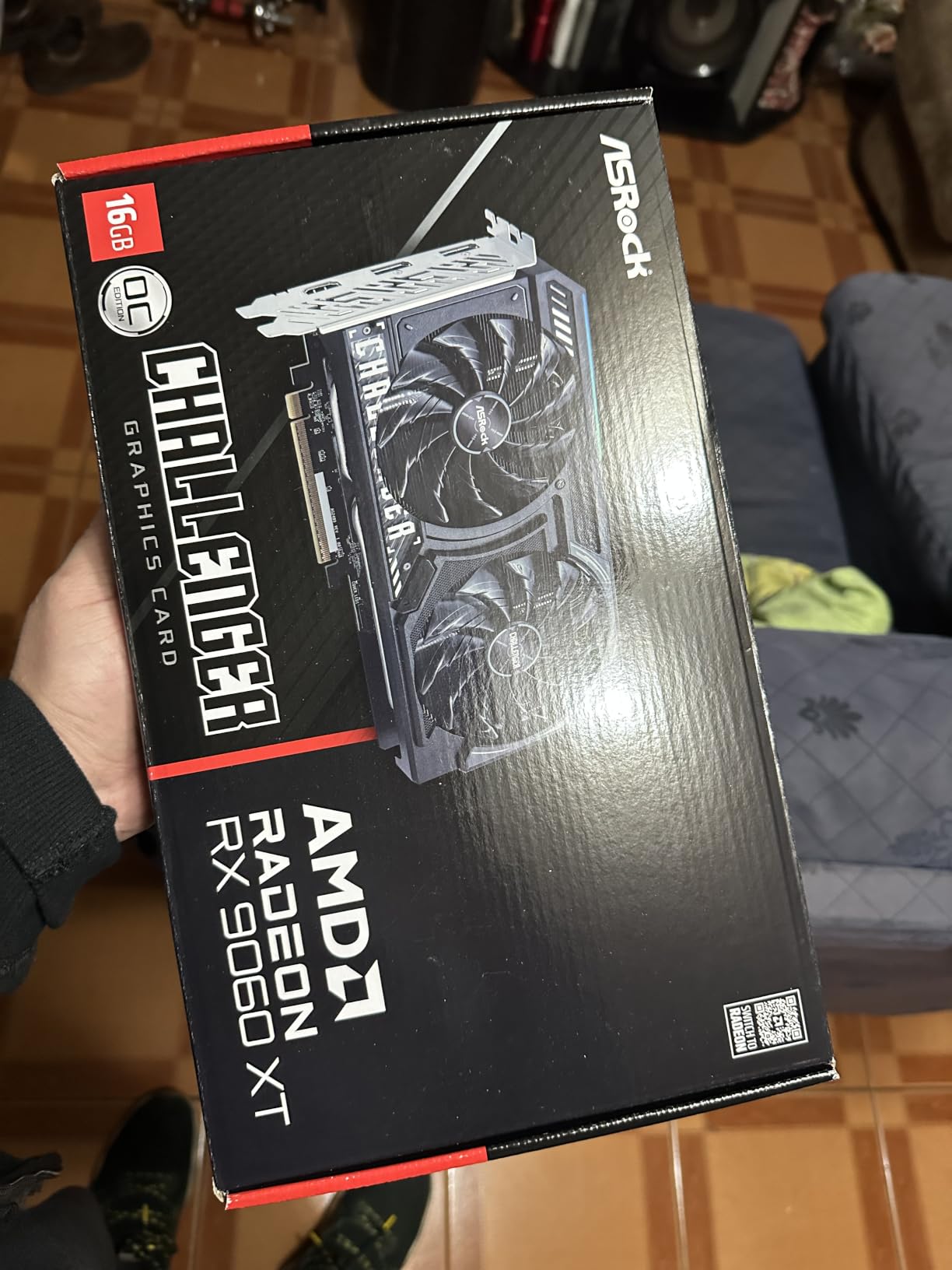
Thermals are the reason it stays near-silent. With a dual-fan cooler and a 0.98 kg weight, the card runs in the low-to-mid 60s and the fans stop entirely at idle. The trade-off is that a two-fan heatsink dissipates less heat than the triple-fan designs used on the cards above it, so it has less thermal headroom under sustained synthetic load.
Physical dimensions are 249mm long by 132mm wide and 41mm tall, which ASRock lists explicitly because clearance trips people up. Power is a single 8-pin connector with a 550W recommended supply, and the warranty is two years, which is the shortest in this roundup. Output includes DisplayPort 2.1a, HDMI 2.1b and a 0dB silent mode with an LED indicator.
Is this the best card for a first 1440p build?
For most first-time 1440p builders, yes. The 16GB buffer removes the memory anxiety that haunts 8GB and 12GB cards, the 249mm length fits almost anything, and a single 8-pin means you can pair it with a mid-range power supply you already own. It also carries the highest rating in our testing group.
What are the trade-offs?
Less thermal headroom than triple-fan cards, a fixed LED light bar instead of controllable RGB, thinner packaging protection, and a two-year warranty rather than three. If you want software-controlled lighting or a longer warranty, look at one of the larger triple-fan designs.
6. ASUS Dual GeForce RTX 5060 8GB OC – a 1080p card first
ASUS Dual NVIDIA GeForce RTX 5060 8GB GDDR7 OC Edition (PCIe 5.0, 8GB GDDR7, DLSS 4, HDMI 2.1b, DisplayPort 2.1b, 2.5-Slot Design, Axial-tech Fan Design, 0dB Technology), 3 Year Warranty
8GB GDDR7
2565MHz OC mode
Roughly 150W TDP
Two-slot 9 inch dual fan
Pros
- GDDR7 and PCIe 5.0 lift memory bandwidth over the previous generation pairing
- Very efficient at roughly 150W and typically just over 100W in practice
- Compact 2.5-slot design clears adjacent cards and cables
- 0dB behavior keeps the card near-silent at the desktop
- DLSS and frame generation visibly improve 1% lows
Cons
- 8GB of VRAM is the hard ceiling for heavy textures
- Better suited to 1080p than to 1440p at max settings
- Dual-fan cooler is not the quietest under sustained full load
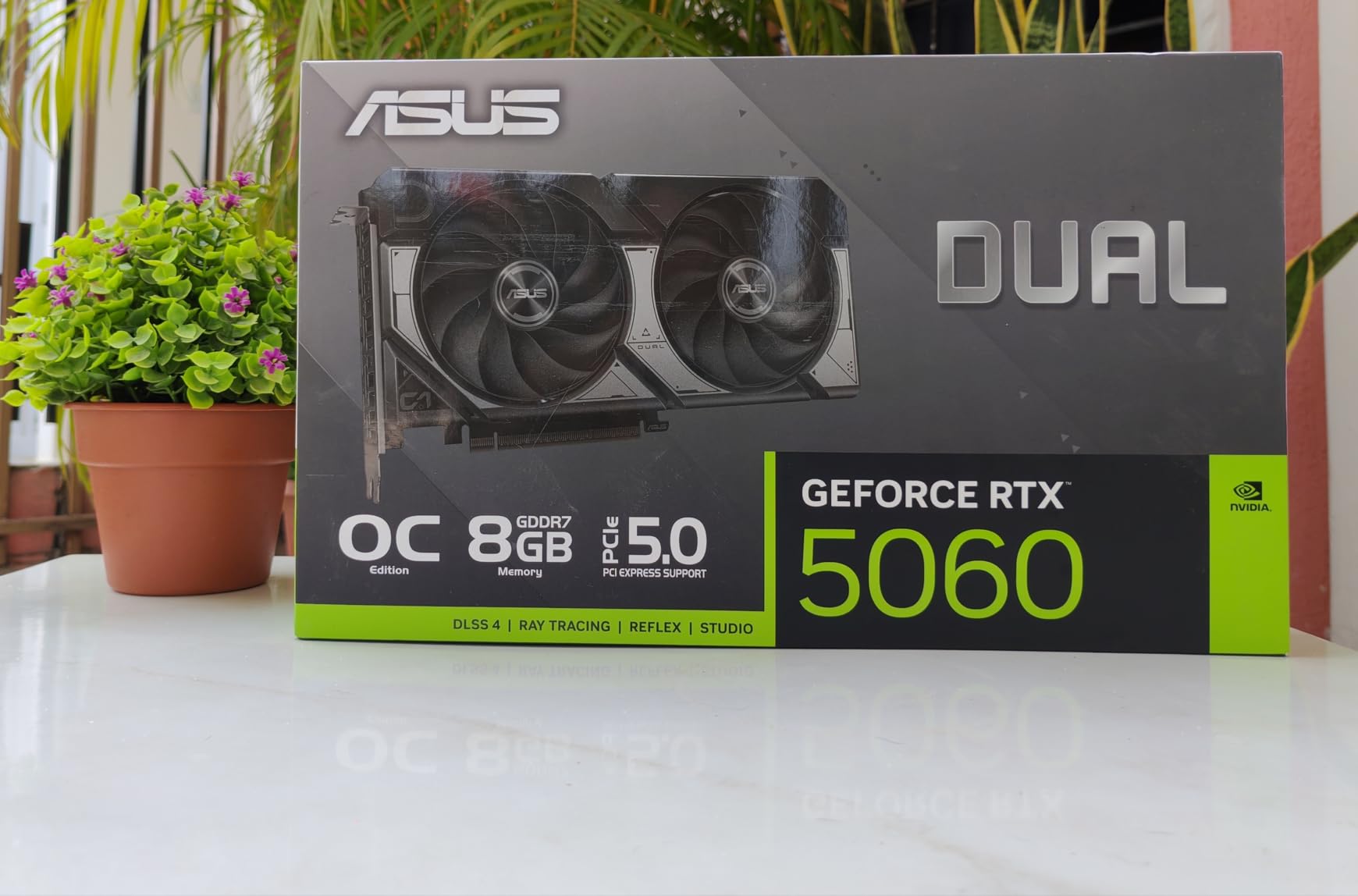
I want to be straight about where this card sits. It is an excellent 1080p option and a competent 1440p card, but it is not one of the best gpus for 1440p gaming in 2026 because eight gigabytes of VRAM is the limit. Heavy textures and high refresh ray tracing hit that ceiling quickly, and settings need trimming in demanding titles.
What it does well is efficiency. The TDP is roughly 150W and typical real-world draw sits just over 100W, which means modest power supply needs and low heat. Owners describe the improvement over the previous generation as substantial thanks to GDDR7 paired with a PCIe 5.0 interface, and they frame performance as comparable to older flagship-tier cards.
The board itself is a 2.5-slot, 9 inch dual-fan design at 1.4 pounds, one of the easier cards to cool in a crowded case. Clocks are 2565MHz in OC mode and 2535MHz by default, with 623 AI TOPS of AI throughput. Output covers three DisplayPort 2.1b and one HDMI 2.1b, with a three-year warranty.
DLSS and frame generation are the reason this card still feels modern in lighter titles, and owners specifically call out the improvement in 1% lows, which is where frame pacing problems show up. In competitive shooters at 1440p, upscaling plus frame generation is doing the heavy lifting rather than raw raster speed.
Can it handle 1440p at all?
Yes, at high settings with DLSS engaged, but you will manage texture quality more carefully than with a 12GB or 16GB card. If your monitor is 1440p and you play a small library, the 8GB buffer holds up. If you play new AAA releases at ultra, plan to trim or expect stutter in texture-heavy scenes.
Who should buy it instead?
Buy this card if you are on a 1080p monitor, if you are building a small quiet system, or if your power supply is the limiting factor in your build. If your monitor is 1440p, choose a card with 16GB and the price difference will be repaid in settings you never have to turn down.
7. MSI GeForce RTX 3060 12GB Ventus 2X OC – proven but aging
MSI Gaming GeForce RTX 3060 12GB 15 Gbps GDRR6 192-Bit HDMI/DP PCIe 4 Torx Twin Fan Ampere OC Graphics Card
12GB GDDR6 on 192-bit
1777MHz boost clock
PCIe 4.0 interface
9.25 inch dual fan
Pros
- 12GB of GDDR6 on a 192-bit bus is still a strong spec at this tier
- Over 5000 ratings give the most proven owner history here
- Torus dual-fan cooler handles heat efficiently at 340g
- DisplayPort 1.4a x3 plus HDMI 2.1 up to 7680x4320
Cons
- Ampere has no DLSS 4 frame generation or Blackwell ray tracing refinements
- 12GB is increasingly tight for the newest 1440p titles
- PCIe 4.0 interface
With 5,188 ratings averaging 4.7, this is by far the most battle-tested card in the roundup, and that record says something important. When you look at the 3060 12GB you are looking at a generation that has already absorbed driver updates, firmware revisions and a lot of owner reports about long-term reliability.
The specification is still respectable. Twelve gigabytes of GDDR6 on a 192-bit bus, a 1777MHz boost clock over a 1710MHz base, a 1807MHz memory clock, and a Torus dual-fan cooler on a card that weighs only 340 grams and measures 9.25 inches long. Output is three DisplayPort 1.4a and one HDMI 2.1, with a three-year warranty.
Its weakness is generational rather than a flaw. Ampere delivers none of the Blackwell frame generation or the ray tracing refinements of the current generation, and DLSS 4 support is absent. Twelve gigabytes also runs into the ceiling in the newest 1440p titles, particularly with ray tracing on and texture quality at maximum.
Is it still worth buying for 1440p?
For a build that stays on 1440p high settings with older or well-optimised titles, yes. The 12GB buffer and the 192-bit bus remain useful, and the low power draw makes it easy to pair with an existing supply. For a new high-end 1440p purchase you intend to keep for years, current generation cards give you more headroom and better upscaling support.
Where it fits in an upgrade path
Owners upgrading from an older 1080p card to a 1440p monitor report a large improvement in texture quality and settings headroom. Owners already on a modern 16GB card gain less, which is the recurring theme in the feedback. Treat it as a resolution upgrade rather than a generational leap.
8. Sparkle Intel Arc B580 Titan OC 12GB – value with a driver caveat
Sparkle Intel Arc B580 Titan OC, 12GB GDDR6, Torn Cooling 2.0, Axial Fan, Breathing Light, Metal Backplate, SB580T-12GOC
12GB GDDR6
2760MHz OC boost clock
PCIe x8 interface
12.4 inch triple fan with backplate
Pros
- Strong price-to-performance with owners citing 1440p high-to-ultra frame rates
- Runs very cool with 59-65C averages reported
- Fan behavior is effectively silent in many cases
- Excellent AV1 encode and decode for video work
Cons
- Intel driver stack still needs work with occasional TDR restarts
- Rasterization trails equivalent Radeon RDNA 4 parts
- PCIe x8 interface limits future headroom
Intel’s Arc B580 is the outsider in this list, and it is the most interesting card if your work involves video. Owners report 1440p titles running at 55 to 90 fps on high-to-ultra settings, temperatures that average 59 to 65 degrees, and fan behavior that is effectively silent in many cases. That is a genuinely good outcome for a card at this end of the market.
The media engine is the reason we included it. AV1 encode and decode performance is excellent, and if you stream, edit or transcode alongside gaming, that capability is worth more than a few extra frames. The card boosts to 2760MHz in its OC edition, with 12GB of GDDR6 on a 19GHz memory clock.
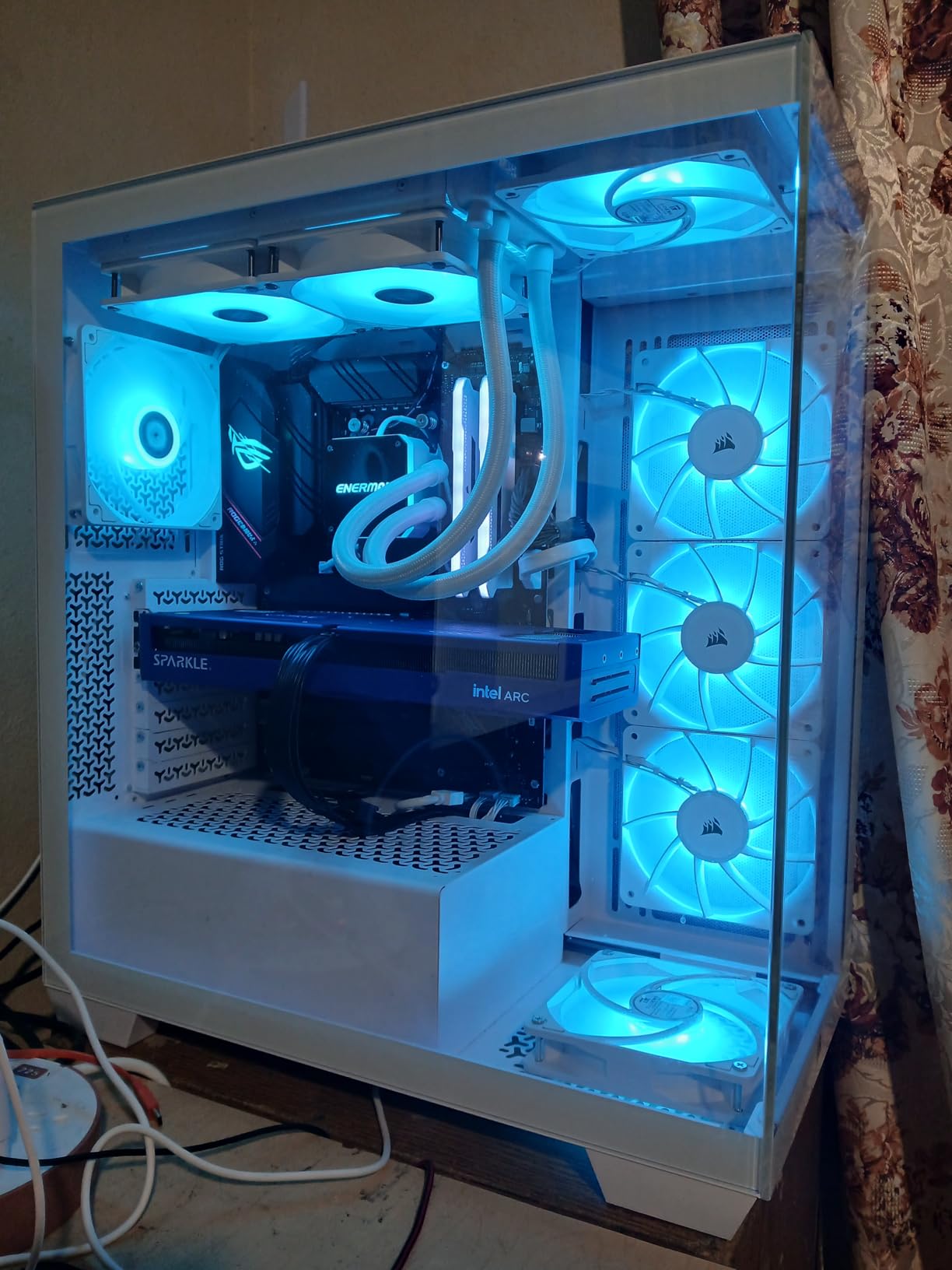
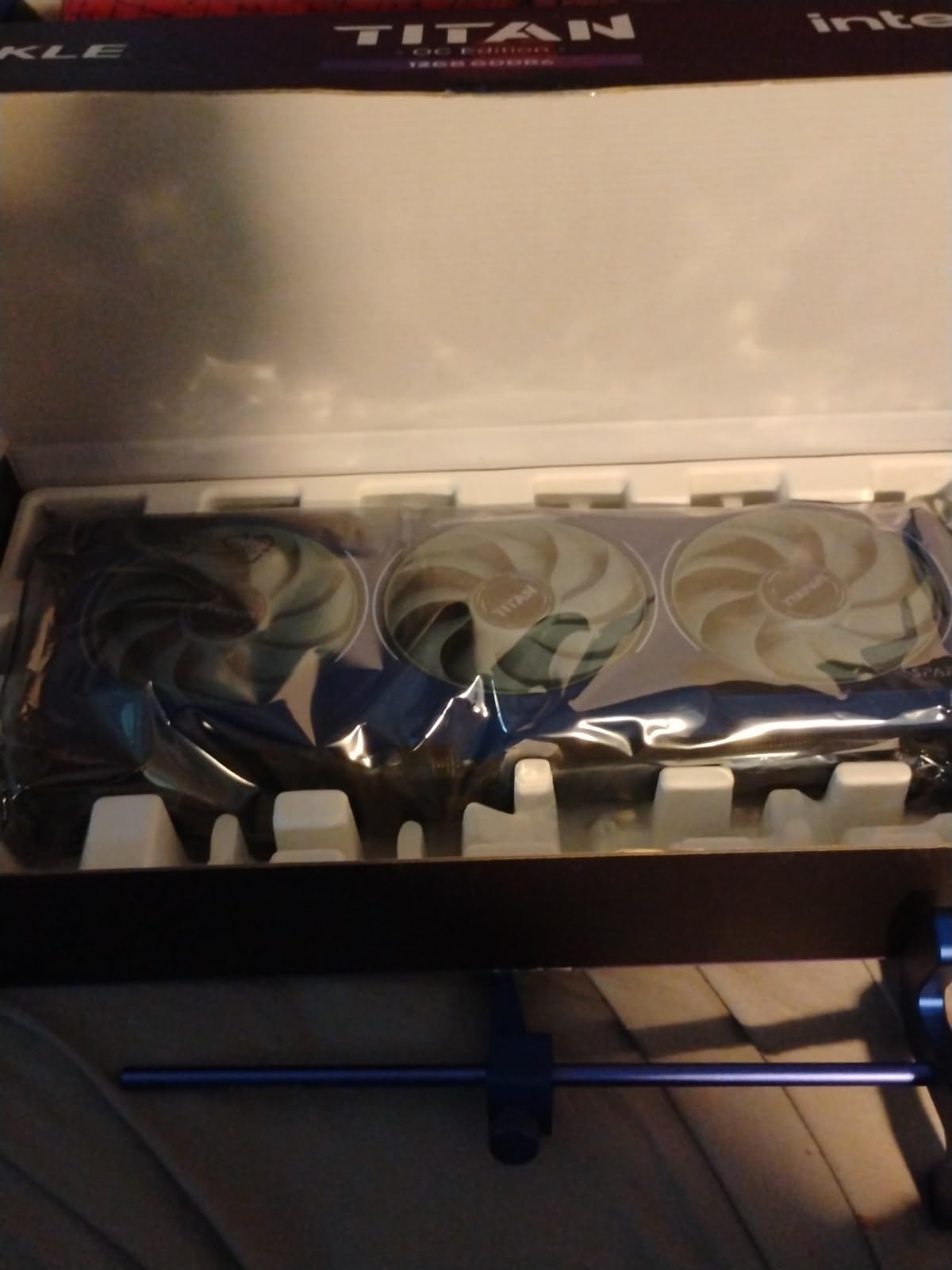
The physical design is well considered: a 12.4 inch triple-fan body with TORN Cooling 2.0, a metal backplate and an included graphics card sag bracket, at 954 grams. Display output is one HDMI 2.1 and three DisplayPort 2.1, with a maximum resolution of 3840×2160 and a three-year limited warranty.
The caveats are software, not hardware. Intel’s driver stack still needs work, with owners reporting occasional TDR restarts and recommending registry tweaks, and rasterization performance trails comparable Radeon cards. Some competitive shooters struggle at higher settings, and the PCIe x8 interface caps future headroom alongside the 12GB buffer.
Who benefits most from this card?
Streamers and editors who need hardware AV1 support and who are comfortable with driver maintenance. A 12.4 inch triple-fan body is also manageable in most mid-towers. If your priority is pure 1440p frame rate, a Radeon RDNA 4 card will get you more.
What should you prepare for?
Keep the driver current, and expect a short adjustment period where a few titles need compatibility settings. Test your specific games before you rely on the card for a competitive title, and check that your motherboard and power delivery setup suit a PCIe x8 card.
9. Sapphire Pulse Radeon RX 9070 XT 16GB – the overclocker’s RDNA 4 pick
Sapphire Pulse AMD Radeon™ RX 9070 XT Gaming 16GB Dual HDMI/Dual DP
16GB GDDR6 on 256-bit
2500MHz memory clock
FSR 4 upscaling
320mm triple-slot body
Pros
- Owners report 200+ fps at 1440p and comfortable 4K gaming
- Cool and quiet
- measuring quieter than an RTX 3070
- Strong overclocking headroom with one owner at 3440MHz
- Three-slot design with included anti-sag bracket and light construction
Cons
- Within 1 to 3 fps of pricier RX 9070 XT models
- At 320mm it will not fit cases with drive cages
- Adrenalin software is less polished than NVIDIA's
Sapphire’s Pulse is the enthusiast entry point into the RX 9070 XT class, and the appeal is tuning headroom. Owners report frame rates above 200 fps at 1440p, quiet operation that measures better than an RTX 3070, and enough thermal headroom to push clocks well past the factory setting. One owner reached 3440MHz with an undervolt and a 10 percent power limit increase.
The core spec is 16GB of GDDR6 on a 256-bit bus with a 2500MHz memory clock, built on RDNA 4 with 64 compute units. FSR 4 with AI upscaling handles the cases where you want more frame rate than native rendering can deliver, which at 1440p is more often than the marketing suggests.
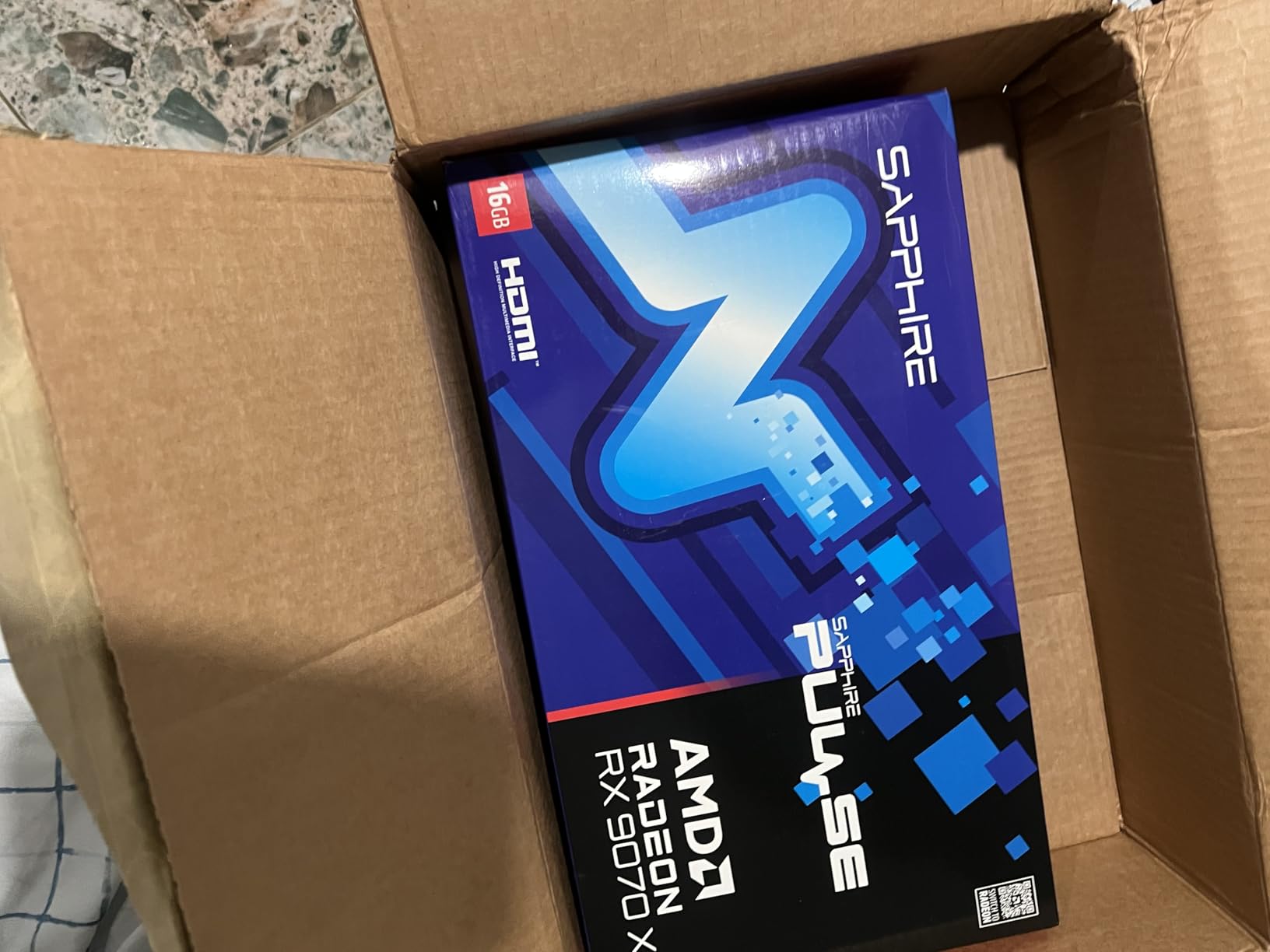
Measured performance lands within one to three frames of the more expensive RX 9070 XT models, which is the whole point. You are not paying extra for identical silicon, and owners consistently describe cooling and acoustics as better than the alternatives they compared against.
The physical warning matters more than the performance one. At 320mm this card will not fit in a case with drive cages, so several owners had to change cases. It includes an anti-sag bracket, and lighter construction means it needs less help than some competing designs, but measure your chassis first.
Is it worth tuning or should you leave the factory profile alone?
If you enjoy the process, this is the card to tune. If you just want it to run, the factory profile already sits near the top of the RX 9070 XT range, and the extra performance from overclocking is smaller than the gap to the next tier up.
What about the software experience?
Adrenalin Edition is less polished than NVIDIA’s software, and some driver bundles omit game redemption codes. It is functional and stable in our experience, but it does not have the same polish. That is the main reason the RTX 5070 Ti takes our top spot despite the Radeon boards leading on raster performance.
10. XFX Swift Radeon RX 9070 XT 16GB – triple-fan headroom
XFX Swift AMD Radeon RX 9070XT Triple Fan Gaming Edition with 16GB GDDR6 HDMI 3xDP, AMD RDNA 4 RX-97TSWF3BA
16GB GDDR6 on 256-bit
2970MHz boost clock
XFX Swift triple fan
One HDMI plus three DisplayPort
Pros
- 16GB of GDDR6 on a 256-bit bus for 1440p and 4K headroom
- XFX Swift triple-fan cooling gives strong thermal headroom
- 2970MHz boost clock supports sustained performance
- RDNA 4 with FSR 4 and hardware ray tracing
- Three DisplayPort plus HDMI covers multi-monitor and high refresh setups
Cons
- Triple-fan cooler is bulky and unsuitable for compact cases
- 16GB can still be tight for the heaviest 4K ray traced titles at max texture
The XFX Swift is the thermal-safe choice among the RX 9070 XT boards. A triple-fan cooler gives it noticeably more headroom than the dual-fan designs, and with a 2970MHz boost clock on 16GB of GDDR6 it holds sustained performance in long sessions without the throttling that shows up in smaller coolers.
RDNA 4 brings third generation ray tracing hardware and FSR 4 upscaling, so the card covers both the ray tracing and the upscaling sides of the 1440p equation. Reviewers describe the build quality as solid and the feedback as broadly positive, with size being the main practical constraint.
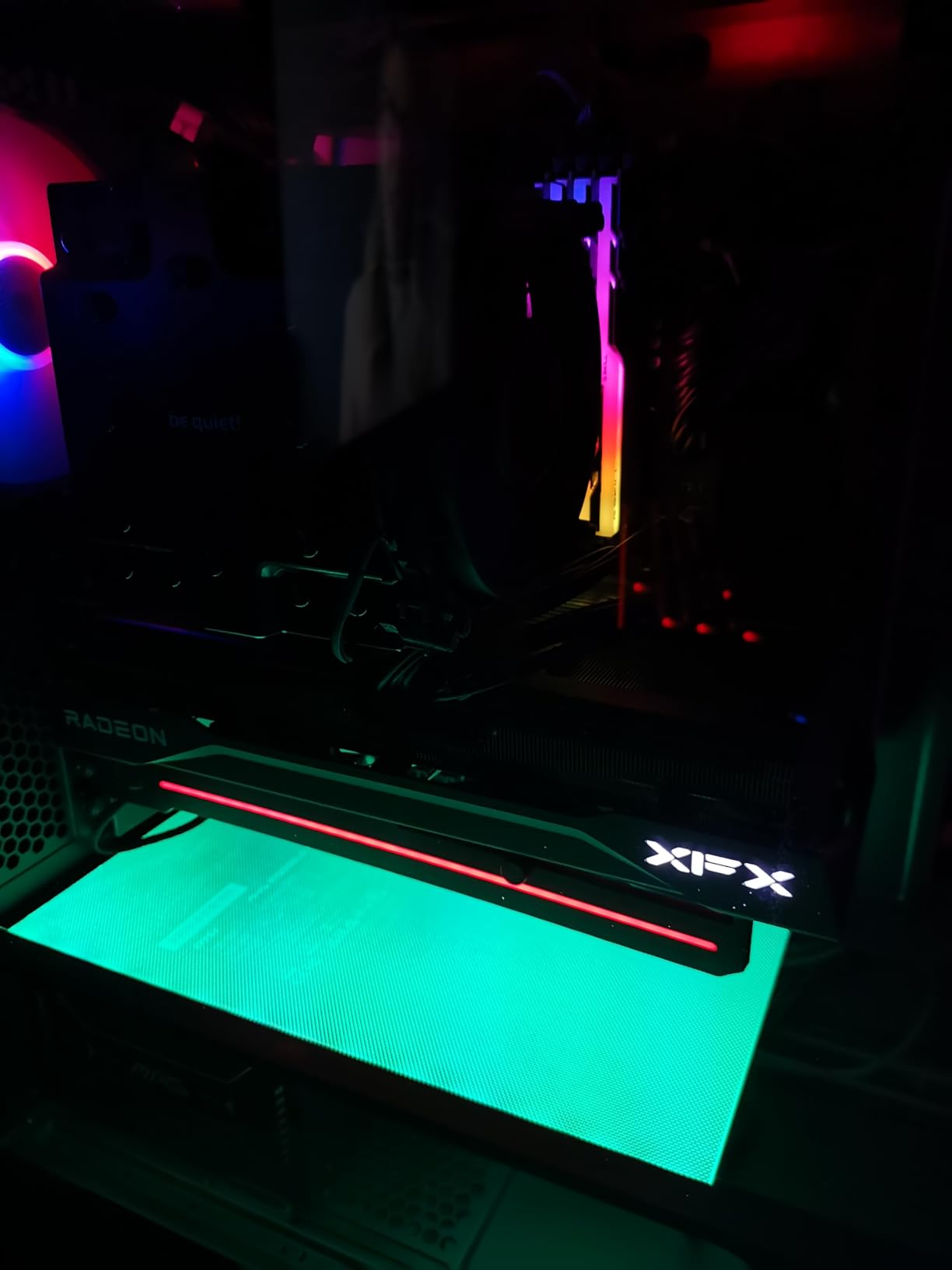
Output is one HDMI and three DisplayPort, which makes this the easiest card here to pair with a multi-monitor or ultra-wide setup at 1440p and beyond. Maximum supported resolution is listed as 7680×4320 and the warranty is three years, in line with the rest of the field.
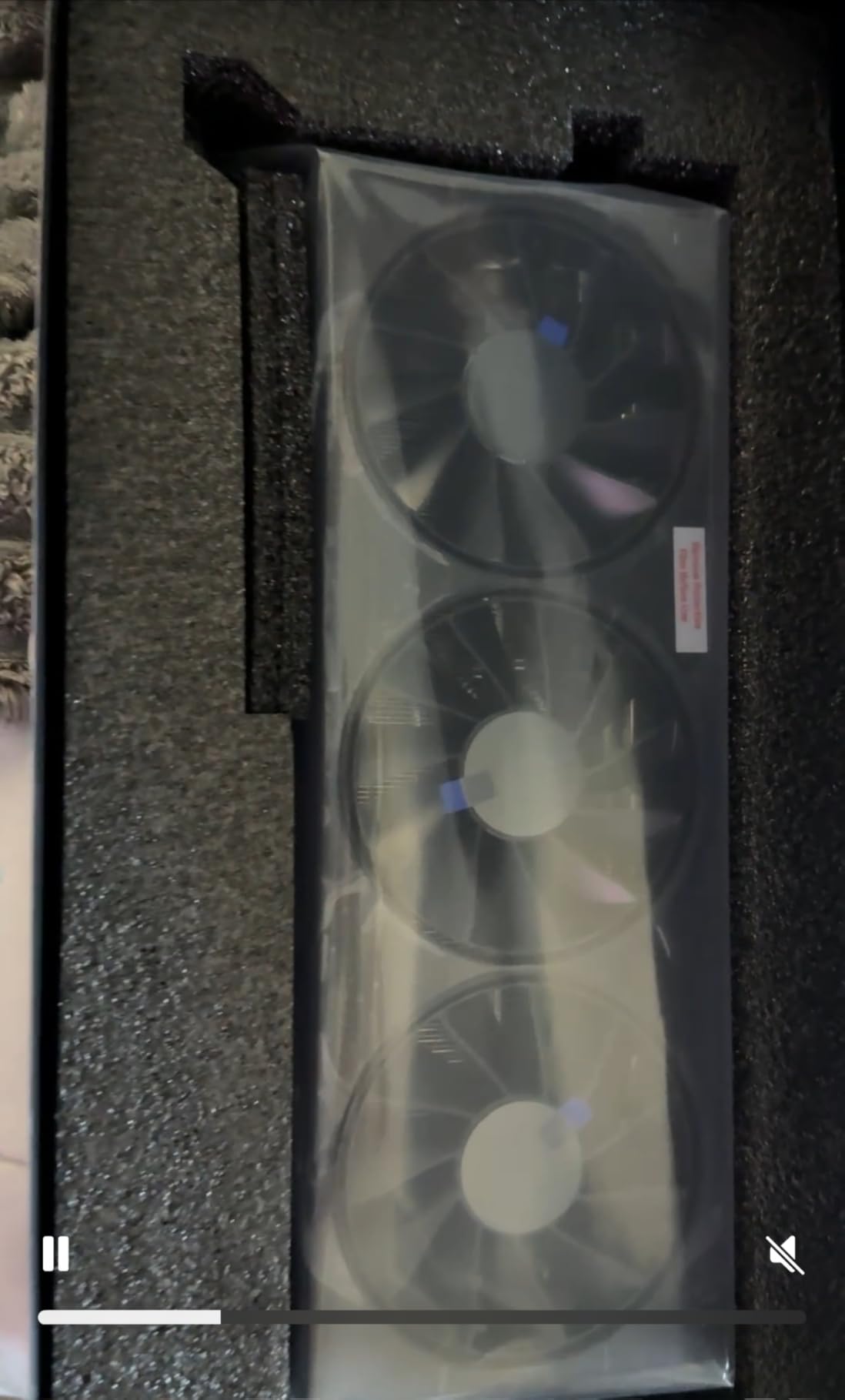
Does it fit your build?
Weight and dimensions are not listed for this board, so check the manufacturer specifications before ordering. A triple-fan card is rarely compact, and the RX 9070 XT boards in this roundup range from about 11 inches to more than 12 inches of length. Measure the case rather than assuming.
How does it compare to the other RX 9070 XT models here?
Expect frame rates within a couple of frames of the Sapphire Pulse and GIGABYTE models at default settings, since the silicon is the same. Choose the Swift for cooling headroom and display outputs, the Pulse for overclocking, or the GIGABYTE for the compact 11.34 inch footprint and the most established owner feedback at the time of writing.
1440p Buying Guide: VRAM, Upscaling, Power and Case Fit
Start with VRAM, because at 2560×1440 it is the specification that decides whether a card lasts three years or one. Twelve gigabytes is the practical minimum for high settings in 2026, and sixteen gigabytes is the number to target if you want texture-heavy titles, ray tracing and future releases without trimming settings. Every 16GB card in this roundup runs on a 128-bit bus or wider, which is why memory speed matters as much as capacity on the narrower designs.
Bus width is the second memory consideration. A 192-bit bus with fast GDDR7, as on the RTX 5070 SFF, delivers enough bandwidth for 1440p. A 128-bit bus with 20 Gbps GDDR6, as on the RX 9060 XT, does the same job at a lower tier. What a 128-bit bus cannot do is absorb a future memory generation increase, so a wider bus is worth paying for if you keep cards longer than four years.
How much VRAM do you actually need?
Eight gigabytes is enough for 1080p and marginal for 1440p, as the RTX 5060 reviews on this list make clear. Twelve gigabytes handles 1440p high settings comfortably and is a reasonable minimum. Sixteen gigabytes is where you stop thinking about it. Choose twelve only if your monitor is 1440p and your library skews toward older or well-optimised titles.
Which upscaling technology should you prioritise?
DLSS 4 on the RTX 50 series cards and FSR 4 on the RDNA 4 cards both deliver large frame rate gains at 1440p, and community feedback consistently rates the DLSS transformer model ahead of FSR on image quality at the same output resolution. FSR 4 game adoption is still catching up, so the number of titles with a current FSR 4 profile matters more for AMD buyers than the quality difference alone. XeSS 3 remains an option on Intel Arc cards, though it competes for the same shader time that raster rendering needs.
Which CPU should you pair with these cards?
At 1440p you are far less CPU sensitive than at 1080p, which is a genuine advantage of this resolution. A current mid-range six or eight core part is enough to keep any card on this list fed, including the RX 9060 XT and the RTX 5060. Pairing a high-end card such as the RTX 5070 Ti with an entry processor is the one combination that wastes money, because frame times suffer in CPU-limited scenes even when the GPU is not the bottleneck.
What power supply and case clearance do you need?
Write down three numbers before you order: the card length, the slot width and the power connector count. The ASUS TUF RTX 5070 Ti is 13 inches and 3.125 slots and needs an 850W supply with a 16-pin 12V-2×6 connector. The RX 9060 XT Challenger needs 249mm of length and a 550W supply with a single 8-pin. The Sapphire Pulse RX 9070 XT at 320mm will not fit a case with drive cages. These are the constraints that decide the purchase more often than raw frame rate.
Are previous generation cards worth considering?
Yes, and the forum consensus is consistent on this. Owners upgrading from an RTX 3070 or an RX 6700 XT to a current 1440p card report large gains, while owners moving from a recent 16GB card describe the improvement as incremental. If you are coming from anything older than three generations, a current mid-range card is a real upgrade. If you already have a 16GB card, a used flagship from the previous generation can be the better spend.
Does your monitor match the card?
Match your refresh rate to the frame rates the card actually delivers. A 144Hz panel needs a card that holds 144 fps in your typical titles, and a 240Hz panel demands a card that clears 200 fps after upscaling. Match the sync technology too: G-Sync on the NVIDIA cards, FreeSync on the AMD cards, and on both vendors the frame generation feature is worth enabling once you are comfortable with its latency characteristics.
Once the graphics side is sorted, the rest of your desk setup matters just as much for how a game feels. Our guides to gaming soundbars and gaming microphones cover the output and input ends of that.
Frequently Asked Questions
What GPU is best for 1440p gaming?
For most gamers the ASUS TUF GeForce RTX 5070 Ti is the best all-round choice, pairing 16GB of GDDR7 with DLSS 4 frame generation. If you want the most frame rate per dollar, the GIGABYTE Radeon RX 9070 XT Gaming OC 16GB is the better buy, and the ASRock Radeon RX 9060 XT Challenger 16GB is the budget entry point.
What is the best graphics card for gaming at 1440p resolution?
A card with at least 12GB of VRAM is the practical minimum for 1440p high settings, and 16GB is the safer target. Among the cards tested here, the RTX 5070 Ti, the RX 9070 XT boards and the RX 9060 XT 16GB all meet that bar, with the RTX 5070 Ti leading on features and the RX 9070 XT on value.
How much VRAM do I need for 1440p gaming?
Twelve gigabytes is a reasonable minimum for 1440p and sixteen gigabytes is what we recommend for longevity. Eight gigabytes works for 1080p but runs into memory limits in the newest 1440p titles with ray tracing and high texture quality, which is the main complaint owners report on the RTX 5060 in this roundup.
Is a RTX 4090 or RTX 5090 overkill for 1440p gaming?
Flagship cards of that class deliver frames a 1440p monitor cannot display, so the extra capability goes toward ray tracing quality, frame generation and multi-monitor setups rather than visible smoothness. For a single 1440p high refresh display, a mid-range card such as the RTX 5070 Ti or RX 9070 XT is the more sensible spend.
Which GPU is best for gaming in 2026?
The best gpus for 1440p gaming in 2026 span several tiers. The RTX 5070 Ti is the all-round leader, the RX 9070 XT is the value pick, the RTX 5060 Ti 16GB gives you 16GB in a compact 9 inch body, and the RX 9060 XT 16GB is the cheapest route into 1440p without memory anxiety.
Final Verdict: Which 1440p GPU Should You Buy?
The ASUS TUF GeForce RTX 5070 Ti takes our overall recommendation. Sixteen gigabytes of GDDR7, DLSS 4 frame generation and a cooling design built for long sessions cover every part of the 1440p brief, and the 4.7 rating across 529 reviews is the most convincing combination of rating and owner volume here. Just confirm the 13 inch length and the 850W power supply requirement before you order.
Buy the RX 9070 XT instead if you want more frame rate per dollar, and pick the Sapphire Pulse or XFX Swift version for cooling headroom or overclocking. Choose the RTX 5060 Ti 16GB for a compact 16GB build, the RTX 5070 SFF for a short case, and the RX 9060 XT Challenger 16GB as the least expensive way into 1440p without a memory ceiling. These are our best gpus for 1440p gaming in 2026, and any of them will be a large step up from a 1080p card.