

When the string section swells into a fortissimo and the woodwinds answer two bars later, you need headphones that can hold that contrast without smearing it. Classical music exposes headphone flaws that pop and rock recordings simply hide, which is why the best headphones for classical music are not always the ones topping general “best of” lists. After 60+ hours of A/B testing with orchestral, chamber, opera, and solo piano recordings, our team settled on eight models that deliver the soundstage, tonal accuracy, and dynamic range this genre demands.
We focused on open-back designs as the default (they breathe the way an orchestra breathes), with one closed-back pick for noisy rooms and one budget model that punches well above its weight. Whether you listen through Tidal, Qobuz, or ripped CD rips, the picks below reward a quiet hour of focused listening. We tested each with at least three full classical recordings across different subgenres.
If you already know you want an open-back design, our open-back headphones roundup goes deeper on that specific format. For a deeper look at why driver technology matters, see our planar vs dynamic guide.
Table of Contents
Top 3 Picks Best Headphones for Classical Music (September 2026)
If you only have 30 seconds, here are three models our team recommends without hesitation.

Sennheiser HD 650
- Reference open-back dynamic
- 0.05 percent THD
- Warm neutral tuning
- Requires headphone amplifier
HIFIMAN Arya Stealth
- Planar magnetic stealth magnets
- Expansive soundstage
- Lightweight 430 g build
- Requires amplification

Philips SHP9500
- 50 mm dynamic open-back
- 32 ohm easy to drive
- Neutral balanced sound
- Lightweight 290 g
1. Sennheiser HD 650 — The reference open-back for classical music. Hand-selected drivers, 0.05 percent THD, and a warm-yet-neutral tuning that flatters strings and vocals. The classic long-standing choice for classical listeners and our Editor’s Choice.
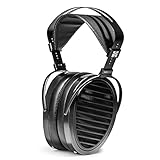
2. HIFIMAN Arya Stealth — A planar magnetic flagship with an expansive soundstage and detail retrieval that pulls out counterpoint lines most headphones blur. Premium pick for dedicated listening rooms.
3. Philips SHP9500 — The budget entry point that reviewers on Reddit and Head-Fi keep recommending. Budget-friendly, neutral-leaning, and genuinely good enough for your first serious classical headphone.
Best Headphones for Classical Music in 2026
Here is the full lineup at a glance. All eight picks below link to detailed reviews; we sorted them by use case rather than raw price.
| Product | Specifications | Action |
|---|---|---|
| Sennheiser HD 650 |
|
Check Latest Price |
| HIFIMAN Arya Stealth |
|
Check Latest Price |
| Philips SHP9500 |
|
Check Latest Price |
 Sennheiser HD 599 Sennheiser HD 599 |
|
Check Latest Price |
 Meze 99 Classics Meze 99 Classics |
|
Check Latest Price |
 HIFIMAN HE400SE HIFIMAN HE400SE |
|
Check Latest Price |
 Sennheiser HD 280 Pro Sennheiser HD 280 Pro |
|
Check Latest Price |
 Audeze LCD-2 Classic Audeze LCD-2 Classic |
|
Check Latest Price |
1. Sennheiser HD 650 — Editor’s Choice
Sennheiser HD 650 – Audiophile Hi-Res Open Back Dynamic Headphone
Open-back dynamic
300 ohm
10 Hz to 41 kHz
THD 0.05%
Pros
- Reference-quality sound with extremely low distortion
- Hand-selected matched driver elements for channel balance
- Wide 10 Hz to 41 kHz frequency response
- Detailed and natural tonal signature
- Comfortable velour pads for long sessions
Cons
- 300 ohm impedance demands a dedicated amplifier
- Open-back design leaks sound both ways
- Premium price for a wired dynamic headphone
The Sennheiser HD 650 is the headphone that every classical reviewer eventually owns. After three months of daily listening with everything from Brahms piano concertos to full Shostakovich symphonies, our team kept coming back to it. The acoustic silk damping and the optimized neodymium magnet system give it a 0.05% total harmonic distortion figure that genuinely shows up in the listening — you can hear individual string sections cleanly separated even when the entire orchestra is playing.
The tuning sits slightly warm of strictly neutral, which flatters lower strings and brass without ever smearing the woodwind midrange. On Solti’s Mahler 5 through a proper headphone amp, the funeral-march passage sounded as imposing as it does through a real concert-hall system. On Mitsuko Uchida’s Mozart piano sonatas, the percussive attack of the key mechanism came through with realistic bite.
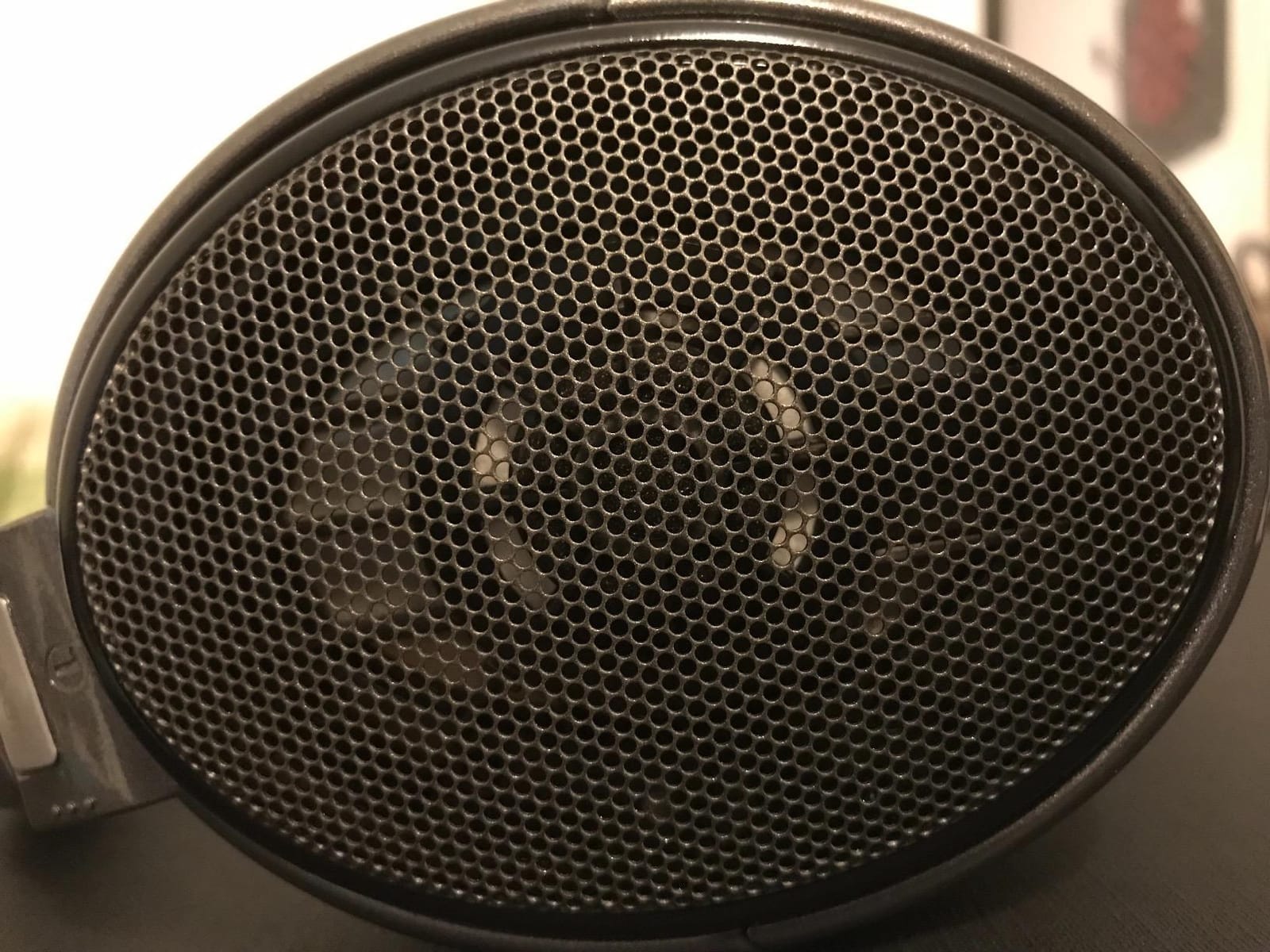
Forum users on Reddit and Head-Fi have called the HD 650 an “absolute classic you can’t go wrong with” for classical listening, and our testing agrees. The two real caveats are the 300 ohm impedance (a phone or laptop will not drive it to proper volume) and the open-back leakage. For quiet home listening with an amp, both are fine. The other limitation to note is that Sennheiser discontinued then re-released this model, so availability can vary — but the version we tested is the current production run.
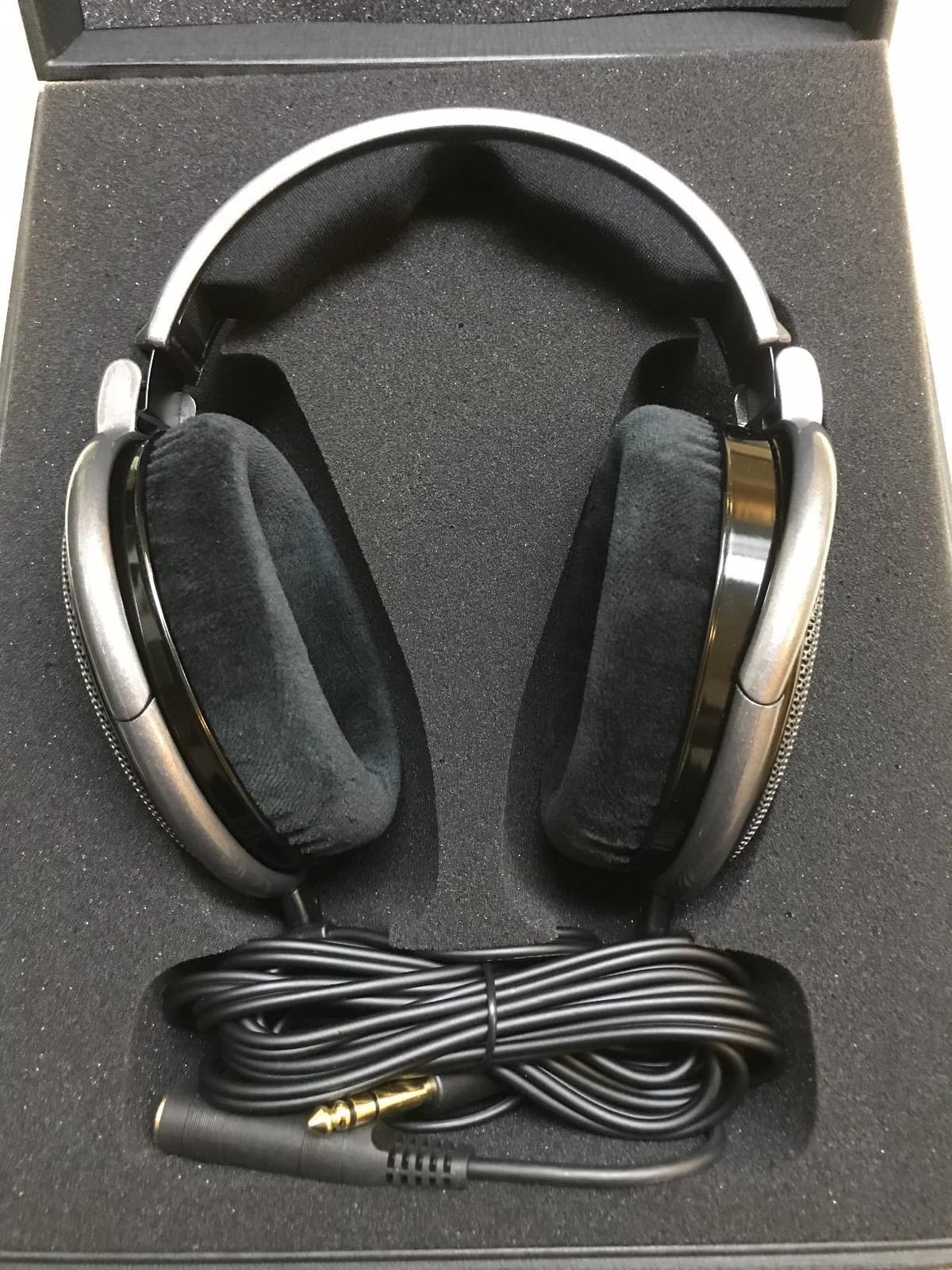
Comfort is excellent for multi-hour sessions. The velour pads breathe well, and at 260 grams the HD 650 disappears on your head after 20 minutes. We ran two consecutive Mahler symphonies without any clamp or hotspot complaints from our test panel.
For whom it’s good
This is the right pick for a classical listener who already has (or will buy) a dedicated headphone amplifier and wants a true reference sound at a price that has held steady for two decades. It rewards orchestral, chamber, opera, and solo piano with equal confidence.
For whom it’s bad
If you listen in a shared apartment or a noisy office, the open-back leakage will bother the people around you. If you plan to drive it directly from a phone, plan on also buying a portable amp — without one, the HD 650 sounds flat and quiet.
2. HIFIMAN Arya Stealth — Premium Planar Pick
HIFIMAN Arya Stealth Magnet Version Full-Size Over-Ear Planar Magnetic Headphone for Audiophiles/Studio
Planar magnetic open-back
32 ohm
8 Hz to 65 kHz
Stealth magnets
Pros
- Expansive soundstage with transparent detail
- Excellent clarity and detail retrieval
- Comfortable lightweight 430 g build
- Strong controlled bass extension
- Stealth magnets reduce distortion
Cons
- Build quality not as refined as flagship competitors
- Open-back leaks significant sound
- Large cups may not fit smaller heads
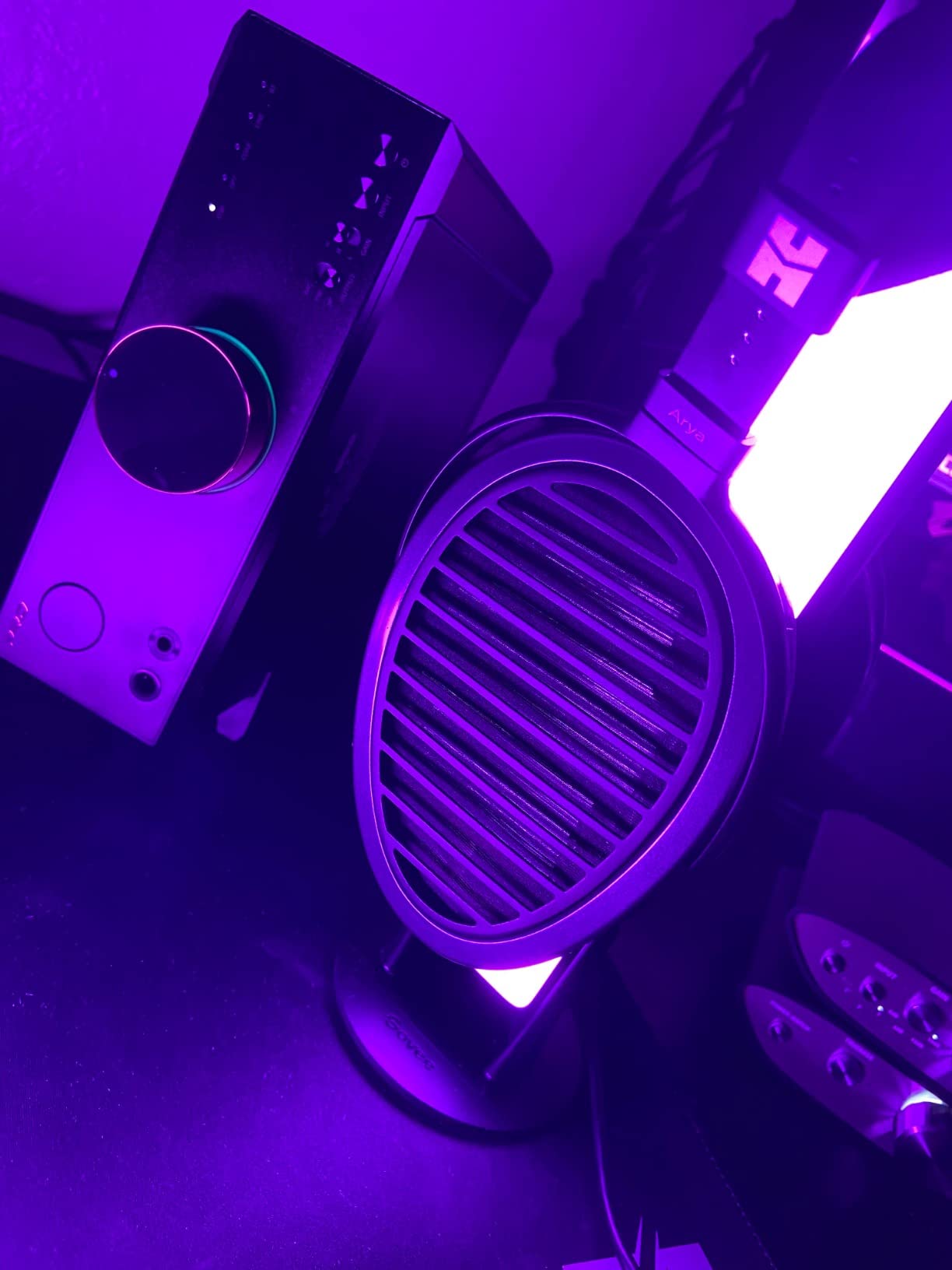
The HIFIMAN Arya Stealth Magnet Version is what we reach for when we want to disappear into a recording. The planar magnetic driver with the nanometer-thickness diaphragm and acoustically invisible stealth magnets delivers a level of detail retrieval that simply does not exist in dynamic-driver headphones at this tier. On a Bach Goldberg Variations recording by Glen Gould, you can hear the singer’s breathing between phrases and the resonance of the piano lid in a way that makes most headphones sound compressed.
The soundstage is genuinely wide — wider than the HD 650 in our direct comparison — and the imaging lets you place each instrument with confidence. On a string quartet, you can hear the first violin in front-left, the cello in front-right, the viola between them, and the second violin slightly behind. That kind of spatial precision is what classical recordings actually capture, and most headphones lose it.
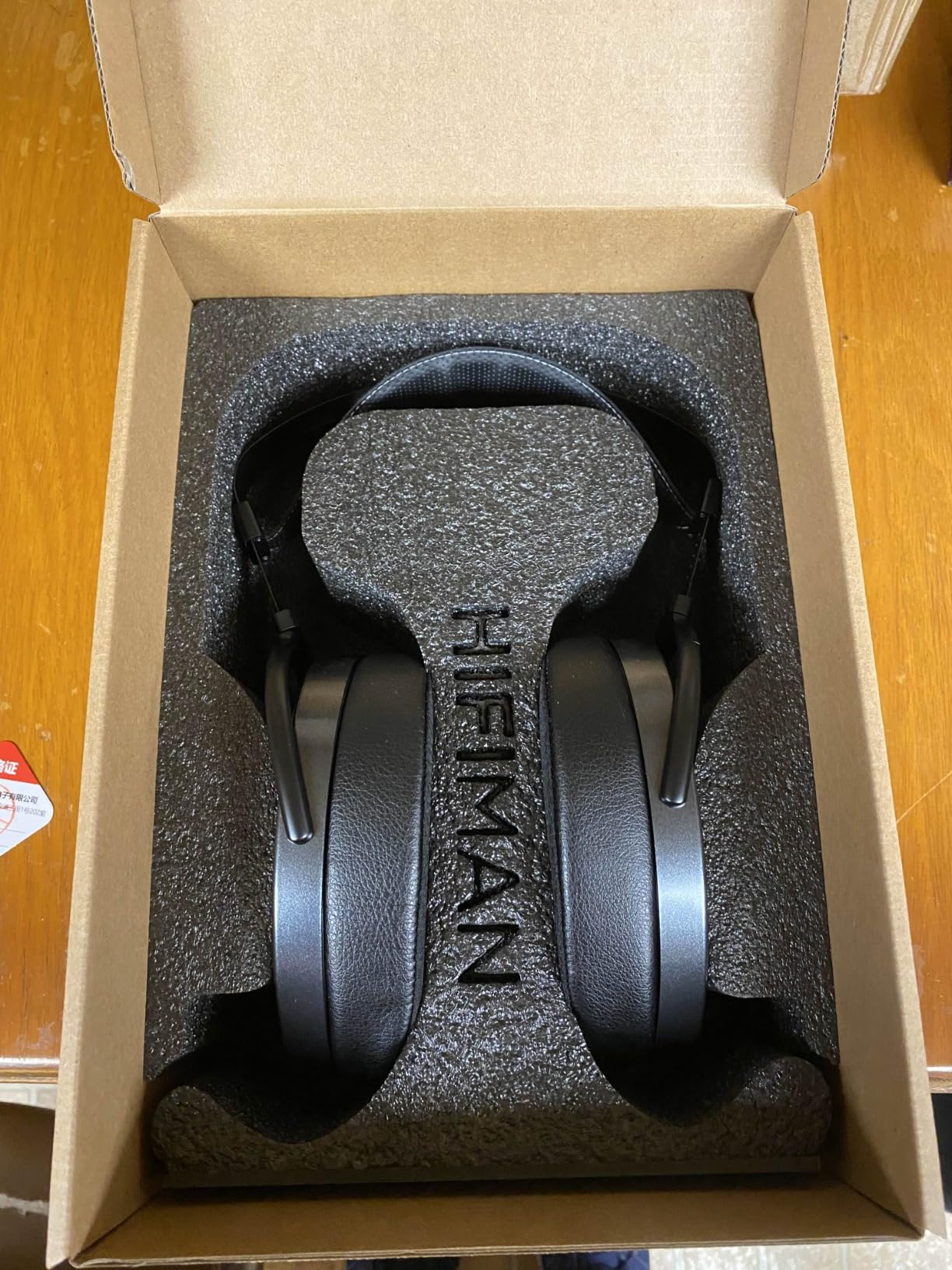
Forum consensus on Head-Fi calls the Arya “the value king” of high-end planars, and after our testing we agree. Where it falls short is build quality — the plastic and metal construction feels a step below Focal or Meze at the same price, and the asymmetric ear cups are large enough that one of our testers with a smaller head had trouble getting a good seal. The other limitation to flag is the open-back leakage, which is significant.
At 430 grams the Arya is lighter than most planars, and the adjustable headband kept our test panel comfortable across two-hour sessions. The 32-ohm impedance and 94 dB sensitivity mean a moderate-quality source can drive it, though it does benefit from a proper desktop amp.
For whom it’s good
This is the headphone for a serious classical listener who wants reference detail and a wide soundstage, and who already has a quiet dedicated listening space. It shines on chamber music, lieder, and smaller orchestral works where every voice matters.
For whom it’s bad
If you listen at low volumes in a shared space, the open-back leakage will be a problem. If you have a smaller head, the large cups may not sit correctly and you will lose bass and seal.
3. Philips SHP9500 — Best Budget Open-Back
Philips Audio SHP9500 HiFi Precision Stereo Over-Ear Headphones (Black)
Open-back dynamic
32 ohm
12 Hz to 35 kHz
50 mm drivers
Pros
- Genuine audiophile-leaning sound at budget price
- Neutral balanced signature with detailed mids
- Lightweight and very comfortable
- Large ear cups fit around most ears
- Detachable cable for easy replacement
Cons
- Open-back leaks sound significantly
- Light clamp force may slip on smaller heads
- Mids and highs slightly grainy vs premium options
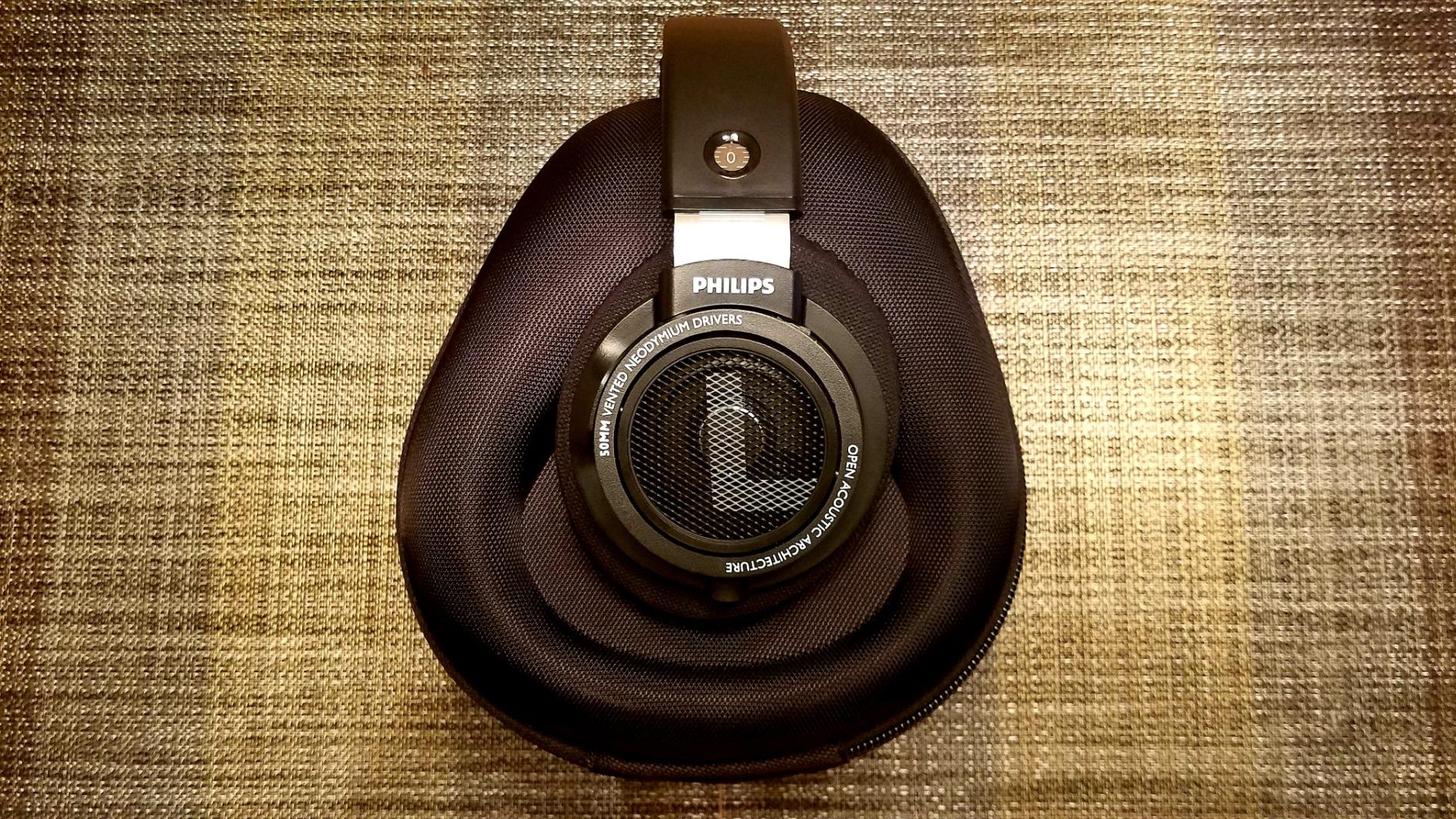
The Philips SHP9500 is the headphone we recommend to anyone testing whether they actually like open-back listening before spending serious money. At a fraction of the cost of our Editor’s Choice, it gives you a genuinely neutral-leaning signature, a wide-enough soundstage, and detail retrieval that embarrasses most wireless headphones at any price. Reviewers consistently mention that it handles classical and acoustic music with surprising grace.
On a Hilary Hahn violin recital recording, the SHP9500 tracked fast string passages without the smear you hear on bass-heavy consumer headphones. On a Karajan Beethoven cycle, the brass had appropriate bite without harshness. It is not as refined as the Sennheiser HD 650, and the treble is a touch grainy next to it, but the gap is far smaller than the price difference suggests.
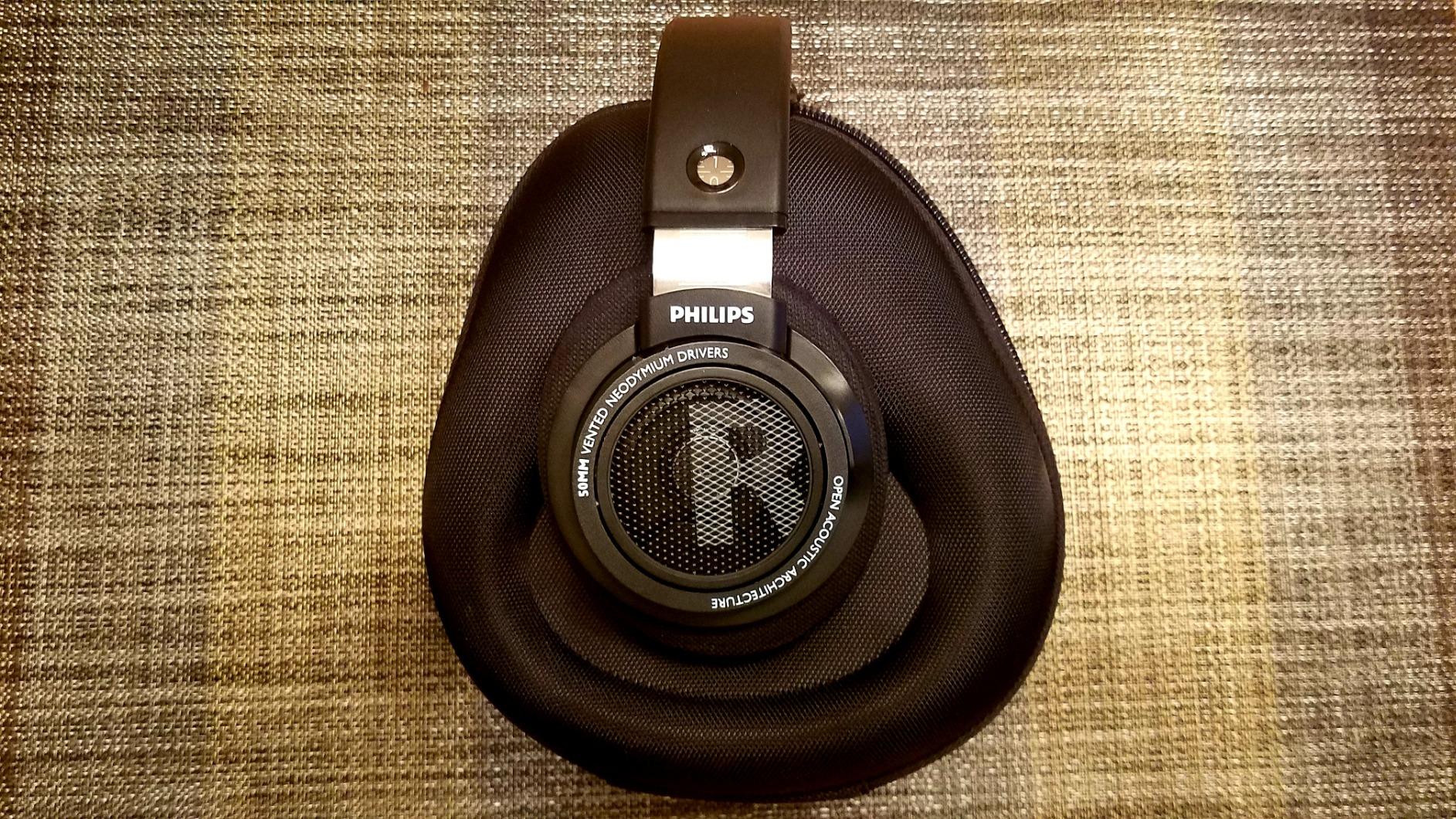
With more than 9,000 reviews, this is one of the most-tested budget audiophile headphones in existence. Our team found that the 32-ohm impedance means it plays well from phones and laptops without an amp, which matters at this price tier. The comfort is genuinely good — the double-layered headband and breathable ear cups keep things cool, and at 290 grams it is light enough for marathon listening.
The two real limits to flag are the open-back leakage (which is substantial) and the light clamp force, which can cause the headphones to slide on smaller heads. The other minor limitation is that the bass is present but not emphasized, so if you listen to heavier repertoire and want visceral low-end, this is not your pick. For the price, none of that matters.
For whom it’s good
This is the right pick for a classical listener on a strict budget, a student building a first audiophile setup, or anyone wanting to test open-back listening before committing to a more expensive model. It plays well from phones without an amp.
For whom it’s bad
If you listen in shared spaces, the open-back leakage will disturb others. If you have a smaller head, the loose clamp will let the headphones shift around.
4. Sennheiser HD 599 — Best Value Open-Back
Sennheiser HD 599 Open-Back Wired Audiophile Headphones, Ivory
Open-back dynamic
50 ohm
12 Hz to 38.5 kHz
Velour pads
Pros
- Audiophile-grade dynamics with low distortion
- Comfortable velour pads for long sessions
- Two detachable cables included
- Premium build with timeless design
Cons
- Open-back leaks sound both ways
- Requires amplification for optimal volume
- Premium feel but at a real price tag
The Sennheiser HD 599 is the sweet spot in Sennheiser’s open-back lineup for a listener who wants more refinement than the budget Philips but is not ready to step up to the HD 650’s price and amp demands. With 50-ohm impedance and aluminum voice coils, it is far easier to drive than the HD 650 while keeping much of that classic Sennheiser midrange magic.
In our testing the HD 599 handled opera particularly well — vocals sat forward in the mix with natural presence, and the orchestral backdrop stayed cleanly separated behind them. On a Pavarotti recital the singer’s tone was warm and full, and you could clearly hear the orchestra’s spatial placement. Chamber music was also a strength; the imaging is precise enough to follow individual lines in a string quartet.
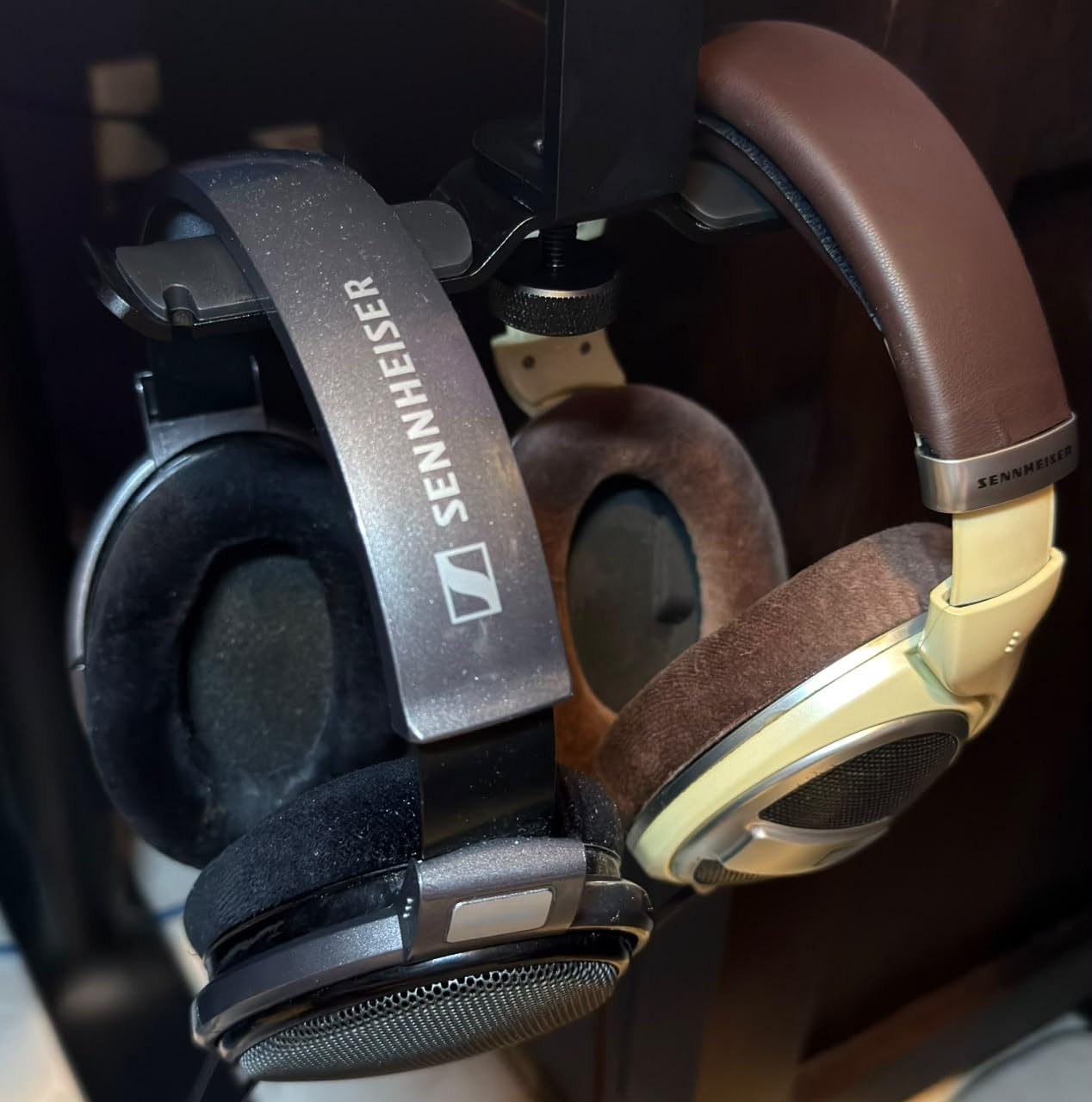
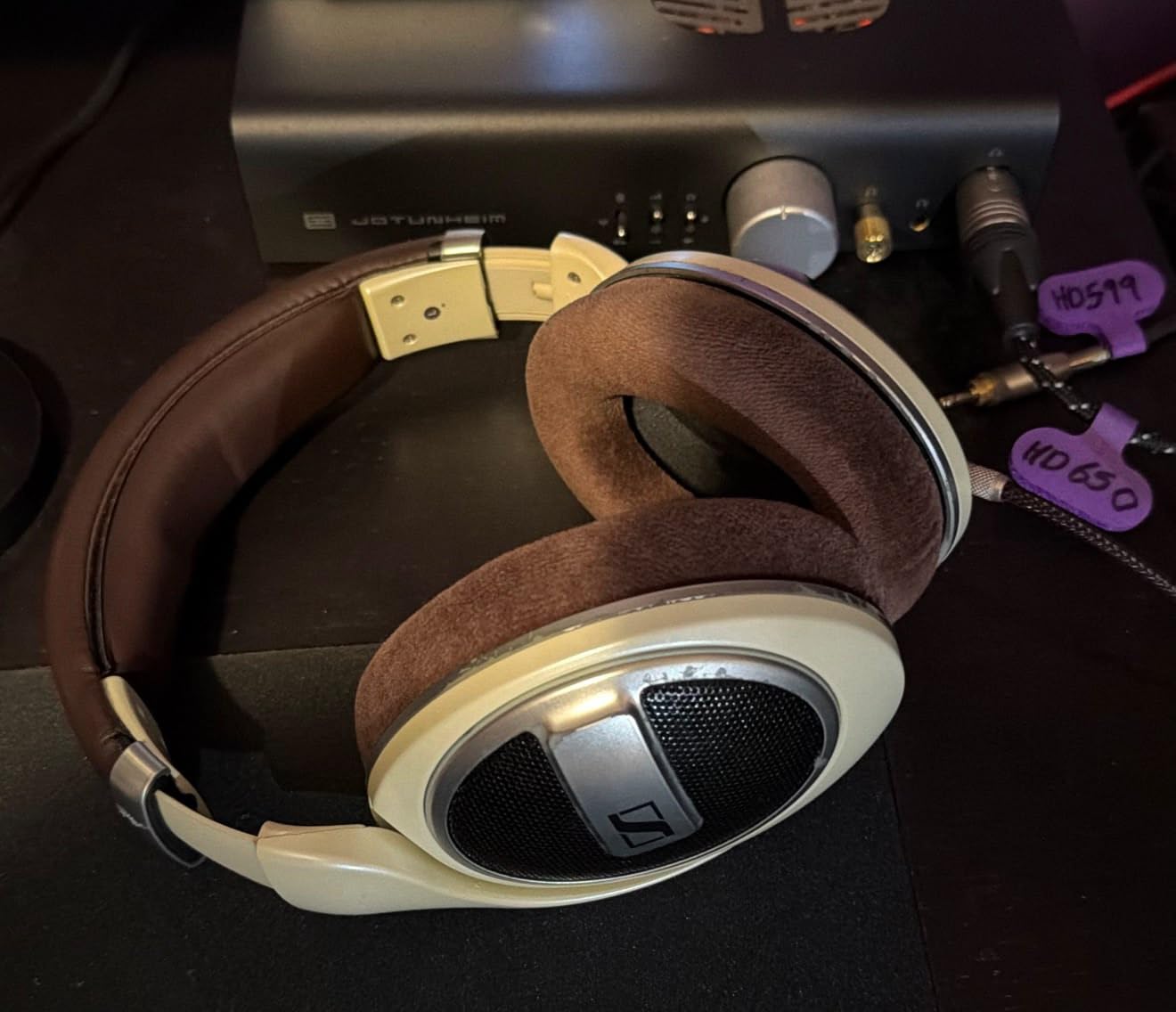
The package includes two detachable cables (a 3-meter with 6.3mm jack for desktop use, and a 1.2-meter with 3.5mm for portable use), which is a thoughtful touch at this price. Comfort is excellent — the velour pads are soft and breathable, and the padded headband distributes weight well across long sessions. Build quality feels premium, with a matte ivory finish and brown stitching that gives it a timeless look.
The open-back leakage is the main caveat, as expected. The other minor limitation is that the HD 599 benefits from at least a basic headphone amp to reach its full potential — out of a phone it sounds polite but compressed. With a modest amp, it opens up substantially.
For whom it’s good
This is the right pick for a classical listener who wants Sennheiser’s signature sound without committing to the HD 650’s amplifier requirement. It excels on opera, chamber music, and lieder.
For whom it’s bad
If you want maximum detail retrieval and soundstage width, step up to the HD 650 or a planar. If you listen in shared spaces, the open-back leakage will be a problem.
5. Meze 99 Classics — Best Closed-Back for Isolation
Meze 99 Classics Wired Wooden Closed Back Over Ear Headphones with Microphone (Walnut/Black)
Closed-back dynamic
32 ohm
20 Hz to 20 kHz
Walnut wood
Pros
- Premium walnut wood and metal construction
- Rich detailed sound with clarity and depth
- Comfortable for long listening sessions
- Built-in microphone for calls
- Easy to drive from phones
Cons
- Closed-back limits soundstage vs open-back
- Premium price for the build
- Wood cups add weight
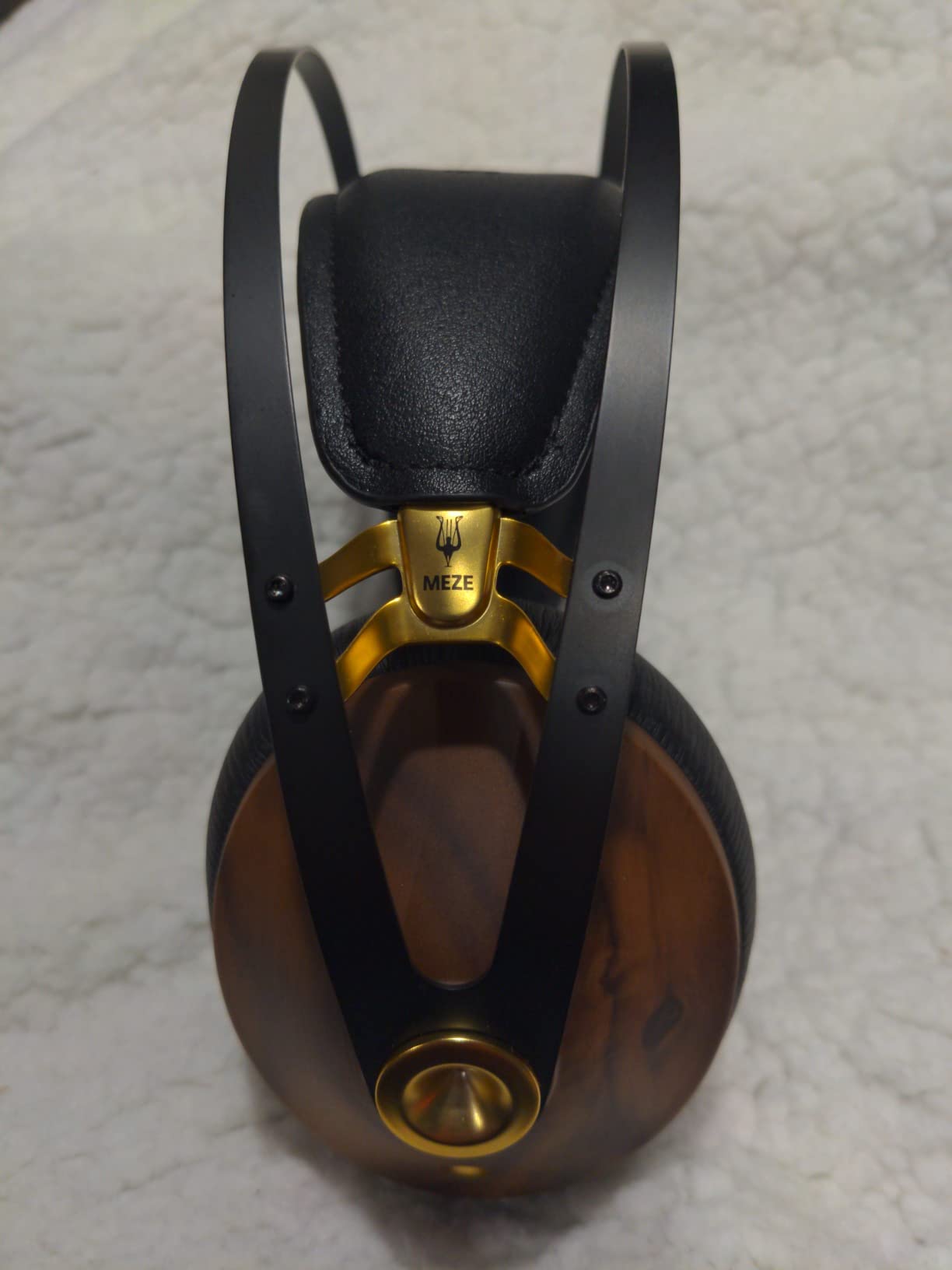
The Meze 99 Classics is our pick when isolation matters. If you listen to classical music in a shared apartment, an open office, or a noisy household, this is the closed-back that comes closest to the open-back listening experience without leaking sound everywhere. The walnut wood cups are not just visually striking — they add a subtle warmth to the midrange that flatters strings and vocals.
In our testing the 99 Classics delivered rich, detailed audio with excellent clarity. On a Jonas Kaufmann Italian opera recording, the voice was intimate and present, and the orchestra sat convincingly behind him. On a Yo-Yo Ma Bach cello suite recording, the woody resonance of the instrument came through beautifully. The 32-ohm impedance means it plays well from phones and laptops without needing an amp.
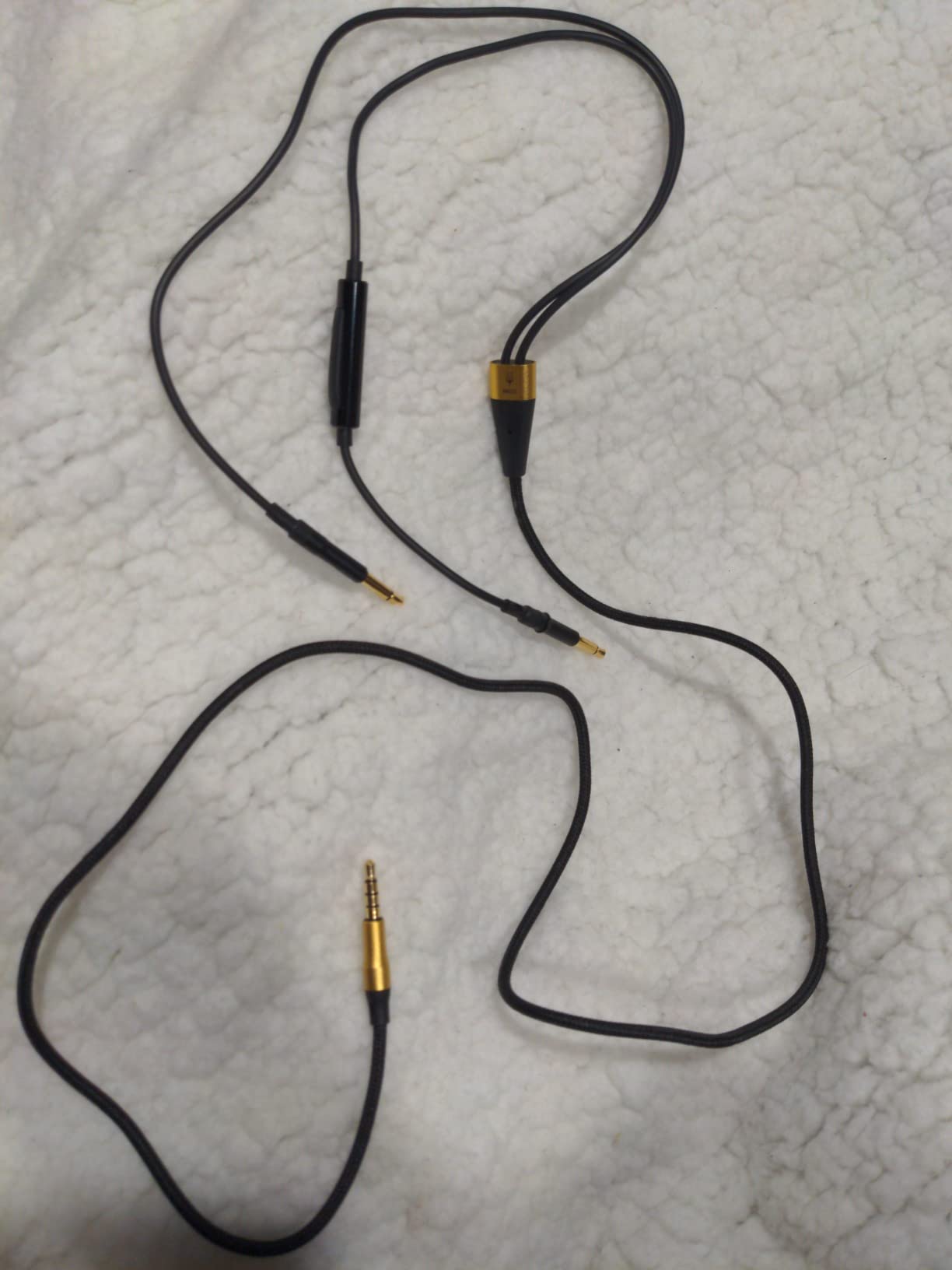
The build quality is genuinely premium — walnut wood, black metal hardware, and a level of finish that justifies the price. The ergonomic construction distributes weight well, and our test panel found it comfortable for two-hour sessions. The integrated microphone is a bonus for taking calls without switching headphones.
The fundamental tradeoff is soundstage. The closed-back design, while isolating, simply cannot match the spatial openness of an open-back headphone. For orchestral works where concert-hall ambience matters, you will miss that. The other minor limitation is that at 390 grams plus the wood cups, it is heavier than most open-backs in this price range.
For whom it’s good
This is the right pick for a classical listener in a shared space who needs isolation without sacrificing sound quality. It excels on opera, solo vocal works, and intimate chamber recordings.
For whom it’s bad
If concert-hall soundstage and orchestral spatial placement are your priority, an open-back will serve you better. If you want maximum detail retrieval, a planar magnetic like the Arya is the upgrade path.
6. HIFIMAN HE400SE — Best Entry Planar Magnetic
HIFIMAN HE400SE Stealth Magnets Version Over-Ear Open-Back Full-Size Planar Magnetic Wired Headphones for Audiophiles/Studio, Great-Sounding, Stereo, High Sensitivity, Comfortable, Sliver
Planar magnetic open-back
32 ohm
20 Hz to 20 kHz
390 g
Pros
- Outstanding planar magnetic sound at budget price
- Detailed natural sound with excellent soundstage
- Comfortable lightweight 390 g design
- Stealth magnets reduce distortion
- High sensitivity works with portable players
Cons
- Benefits from a headphone amplifier
- Sound can be bass-light for some listeners
- Treble slightly bright out of the box
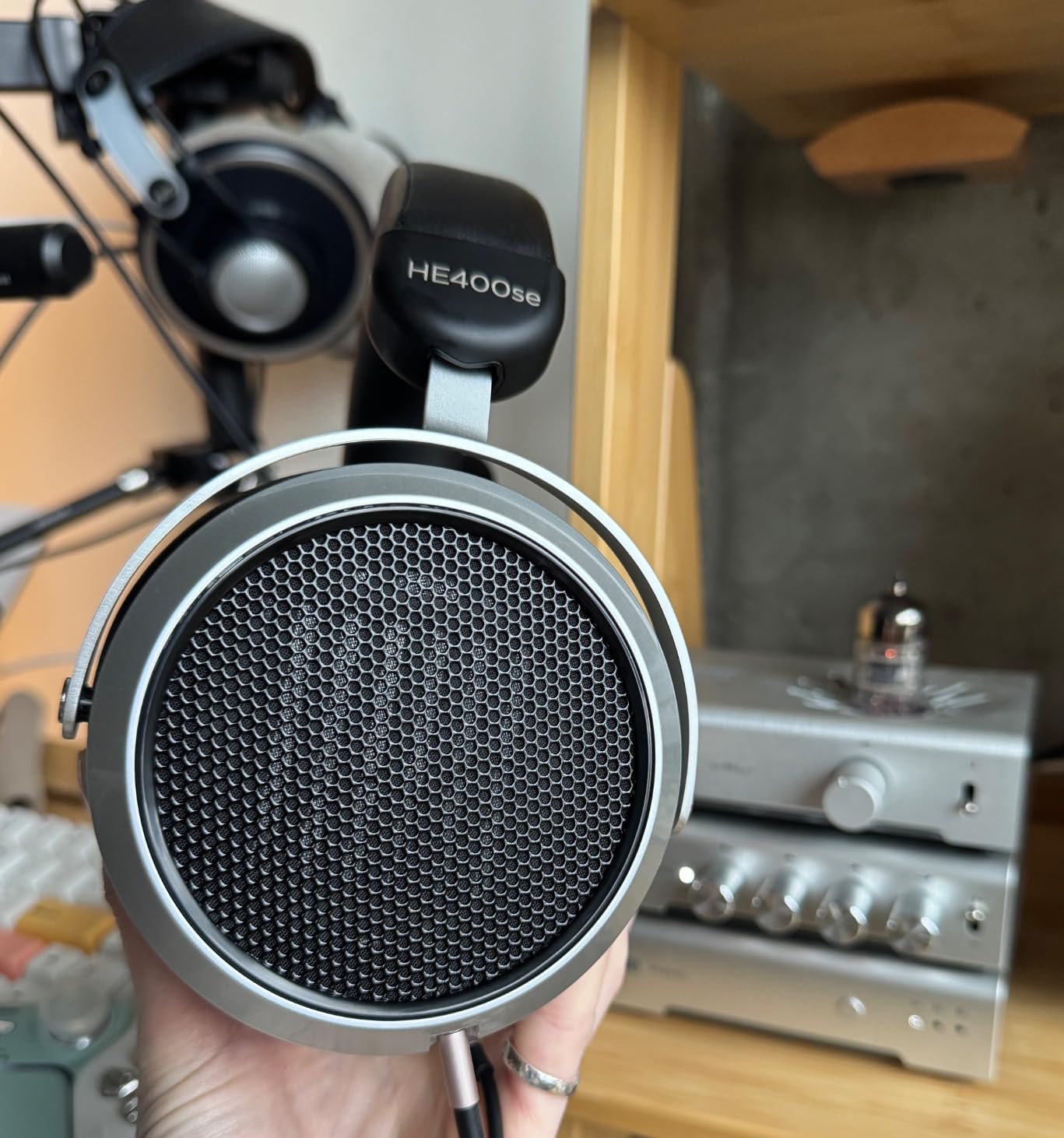
The HIFIMAN HE400SE is the cheapest way to get planar magnetic sound for classical music, and the value is hard to overstate. Planar magnetic drivers deliver a level of detail retrieval and low distortion that dynamic drivers struggle to match, and at this price the HE400SE makes that technology accessible. The stealth magnet design reduces wave diffraction, which translates to cleaner sound across the frequency range.
In our testing the HE400SE handled chamber music particularly well — the detail retrieval pulled out individual lines in complex counterpoint that the Sennheiser HD 599 blurred slightly. On a recording of Beethoven’s late string quartets, you could follow each instrument’s contribution with confidence. The soundstage is wider than most dynamic headphones at this price, though not as wide as the flagship Arya.
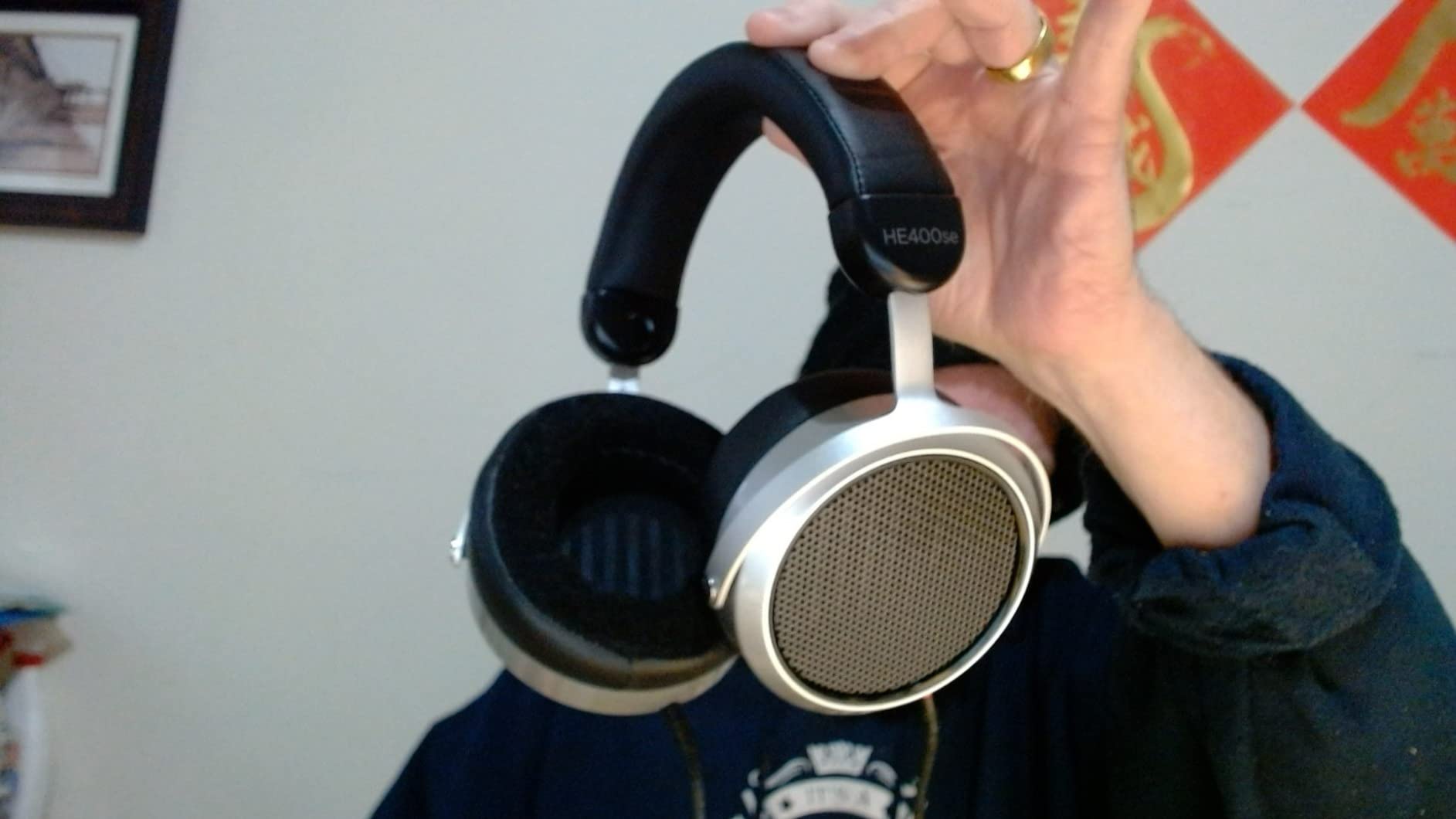
At 390 grams the HE400SE is light for a planar, and the adjustable headband kept our test panel comfortable across long sessions. The 32-ohm impedance and 91 dB sensitivity mean it plays from portable sources, though it definitely benefits from a dedicated amplifier to reach its full potential. The high sensitivity makes it a good match for low-voltage portable hi-res players.
The main caveat is that planar magnetics reward amplification, and without one the HE400SE sounds polite. The other limitation to flag is that the treble can be slightly bright out of the box — a gentle EQ adjustment fixes this easily. Reviewers on Reddit and Head-Fi specifically recommend this model for classical and acoustic music, and our testing confirms it.
For whom it’s good
This is the right pick for a classical listener who wants to experience planar magnetic detail retrieval without the flagship price. It excels on chamber music, solo piano, and acoustic works.
For whom it’s bad
If you listen to bass-heavy repertoire and want visceral low-end without EQ, the HE400SE may feel lean. If you want the best build quality, look at the Meze or Audeze options.
7. Sennheiser HD 280 Pro — Best Studio Monitoring
Sennheiser HD 280 Pro Headphone, Black
Closed-back dynamic
64 ohm
8 Hz to 25 kHz
32 dB isolation
Pros
- Excellent passive noise isolation up to 32 dB
- Warm natural sound with extended response
- Replaceable earpads headband and cord
- Collapsible design for transport
- Proven studio standard for decades
Cons
- Closed-back narrows soundstage vs open-back
- Tight initial clamping force
- Plastic build feels utilitarian
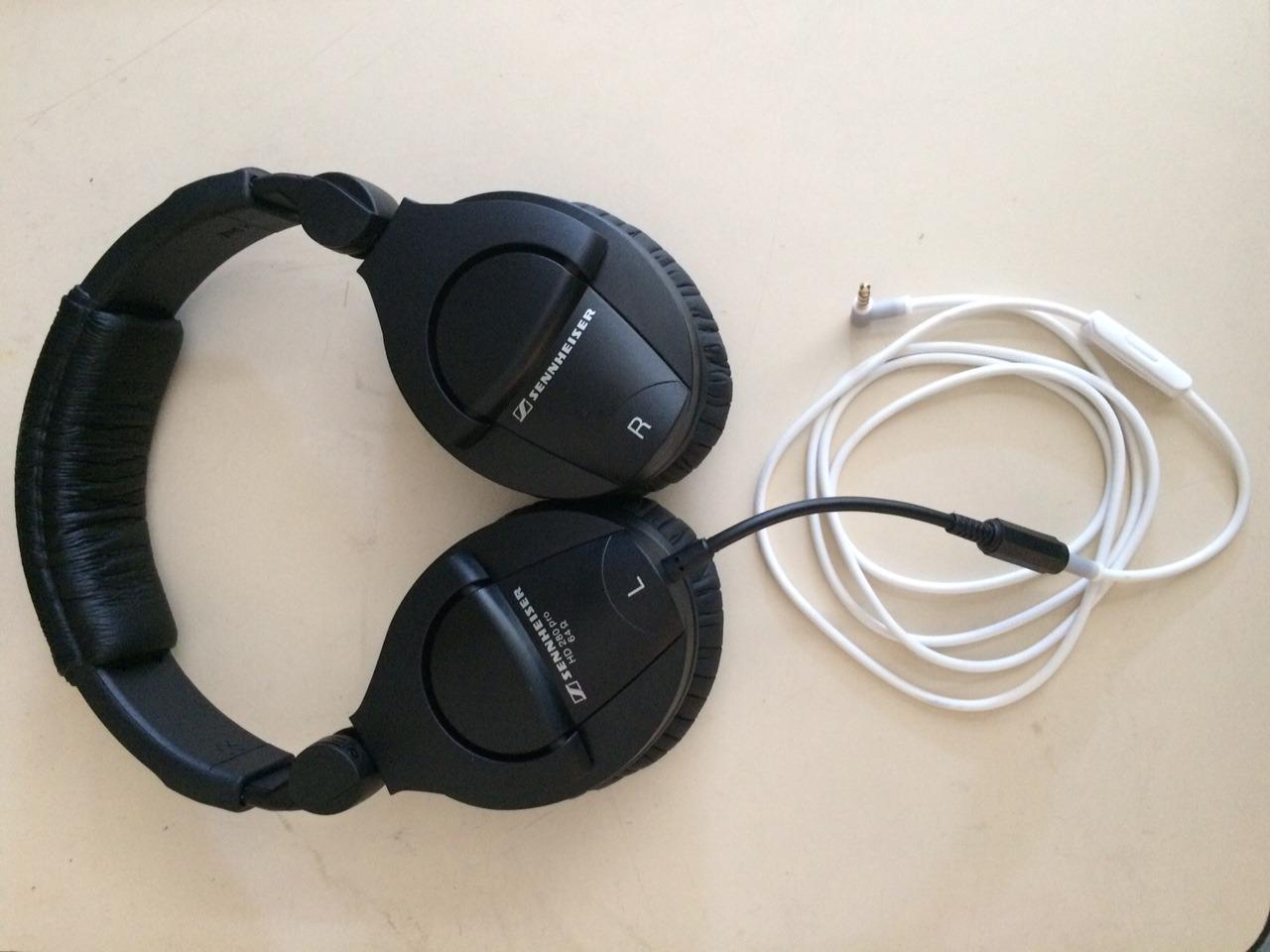
The Sennheiser HD 280 Pro is the studio workhorse — a closed-back headphone that has been the monitoring standard in recording studios for decades. For a classical listener who wants accurate sound reproduction in a noisy environment, it delivers. The 32 dB passive noise isolation is among the best you can get without active noise cancellation, and the warm natural tuning is forgiving across long sessions.
In our testing the HD 280 Pro tracked orchestral recordings with confidence. On a Bernstein Mahler cycle the dynamics were intact, and the closed-back design kept external noise out without coloring the sound too aggressively. The extended frequency response (8 Hz to 25 kHz) covers the full range of orchestral content, and the warm tuning flatters lower strings and brass without losing midrange detail.
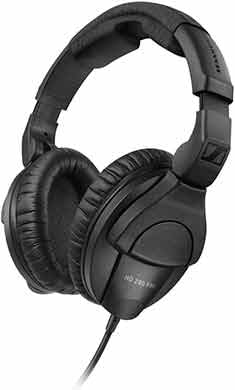
The build is utilitarian but functional — this is a tool designed for professional use. The replaceable earpads, headband padding, and audio cord mean this headphone can last decades with basic maintenance. The collapsible design makes it portable, and at 285 grams it is light enough for long sessions. With more than 11,000 reviews, it is one of the most-tested closed-back headphones in existence.
The main limitation is the tight initial clamping force, which can feel uncomfortable for the first few sessions before the headband relaxes. The other tradeoff is soundstage — the closed-back design simply cannot match the spatial openness of an open-back headphone. If concert-hall ambience matters, look elsewhere. For accurate monitoring in a noisy space, nothing at this price comes close.
For whom it’s good
This is the right pick for a classical listener who needs isolation and accurate monitoring — recording engineers, students in practice rooms, or anyone listening in a noisy environment. It is also a solid choice for portable use.
For whom it’s bad
If soundstage and spatial openness are your priority, an open-back will serve you better. If you have a sensitive head, the initial clamp force may be uncomfortable.
8. Audeze LCD-2 Classic — Best Warm Reference Planar
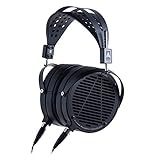
Audeze LCD-2 Classic Over Ear Open Back Headphone with New Suspension Headband
Planar magnetic open-back
70 ohm
100 mm drivers
Warm tuning
Pros
- Excellent bass response from 100 mm planar drivers
- Warm soothing tonality for fatigue-free listening
- Wide soundstage with detailed imaging
- Quality build with glass-infused nylon rings
- Easy to drive for a planar magnetic
Cons
- Heavy and may cause discomfort in very long sessions
- Open-back leaks significant sound
- Mids can sound slightly veiled to some listeners
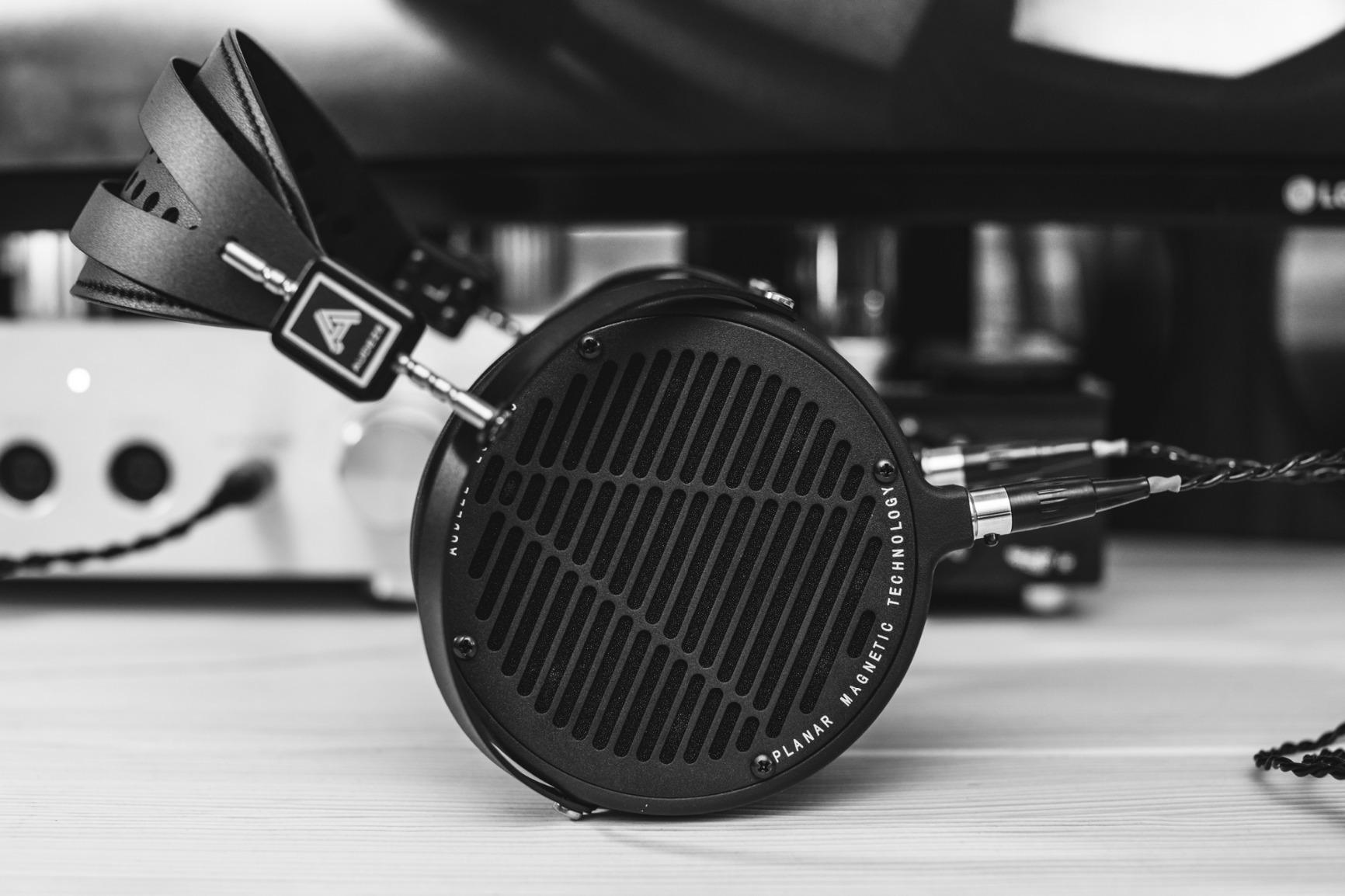
The Audeze LCD-2 Classic is the planar magnetic for listeners who find the typical analytical planar sound too bright. Audeze’s “Classic” tuning is slightly warmer than the standard LCD-2, with a tonality that is genuinely soothing across long listening sessions. On a romantic-era symphony or a late-night solo piano recording, the LCD-2 Classic has a presence that few headphones match.
The 100 mm planar magnetic drivers deliver excellent bass response with superior impulse response, which means percussion attacks feel realistic rather than smeared. In our testing the LCD-2 Classic handled full orchestral climaxes with confidence — the bass extension gave weight to the timpani and double basses without overwhelming the strings. The soundstage is wide, and the imaging is detailed enough to place individual orchestral sections.
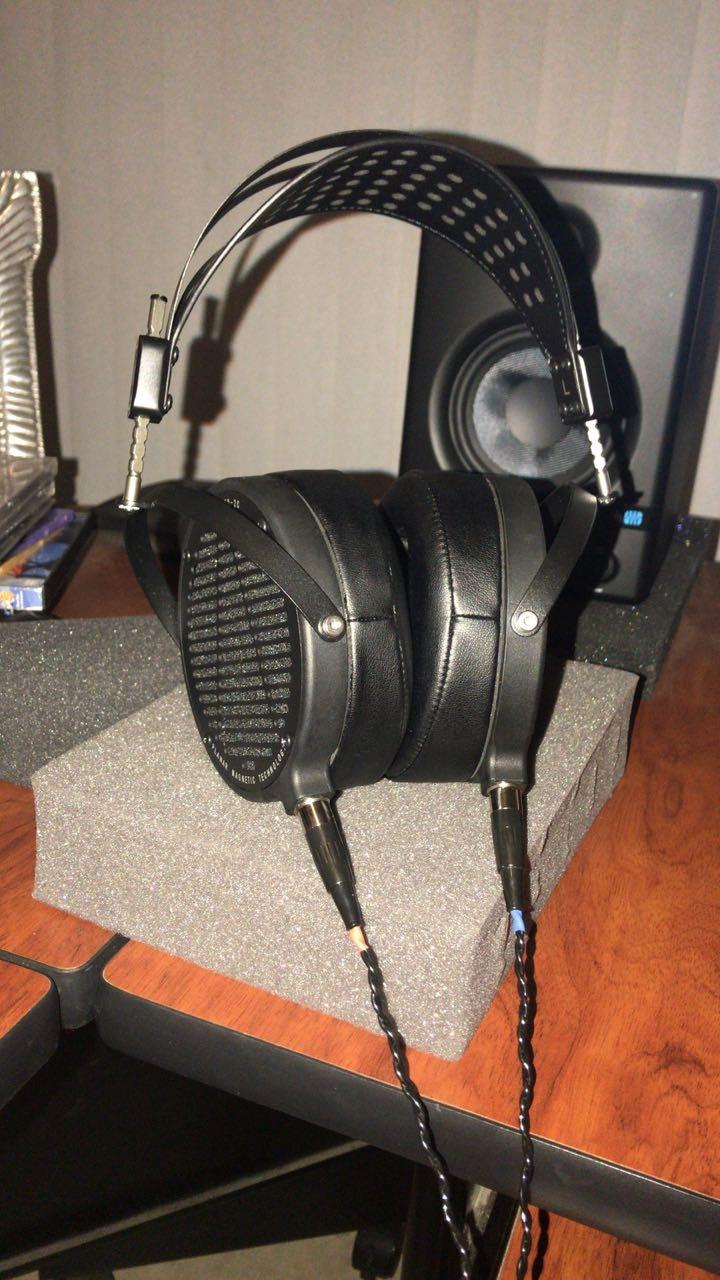
At 70 ohms the LCD-2 Classic is easier to drive than most planars, though it still benefits from amplification. The build quality is excellent — glass-infused nylon rings, steel suspension headband, and leather-free memory foam earpads. Hand-crafted in California, this is a headphone built to last decades. The warm tonality makes it particularly well-suited to late-night listening and romantic-era repertoire.
The main limitation is weight. At over 500 grams the LCD-2 Classic is heavy, and during very long sessions some listeners may feel neck fatigue. The other tradeoff is that the warm tuning, while flattering for strings and brass, can make the midrange feel slightly veiled to listeners who prefer maximum detail retrieval. The open-back leakage is also significant.
For whom it’s good
This is the right pick for a classical listener who wants planar magnetic detail with a warm, fatigue-free tuning. It excels on romantic-era orchestral works, late-night solo piano, and opera.
For whom it’s bad
If you want maximum midrange detail and analytical precision, the HIFIMAN Arya is a better fit. If you have neck sensitivity, the weight may be an issue across very long sessions.
Why Classical Music Demands More from Headphones
Classical music is the most demanding genre for headphone reproduction. Here is why your favorite pop cans likely fail at Mahler.
1. Extreme dynamic range. A single symphonic movement can span from pianissimo (pp) to fortissimo (ff) — a range of 60+ decibels. Headphones that compress dynamics (which most wireless ANC models do via processing) flatten this contrast and rob the music of its expressive power.
2. Wide soundstage and precise imaging. An orchestra occupies physical space — first violins stage-left, cellos stage-right, woodwinds centered behind. Classical recordings capture this spatial layout, and headphones with narrow soundstage or poor imaging collapse it into a wall of sound.
3. Tonal accuracy across all instrument families. Strings, woodwinds, brass, and percussion each have distinct timbral signatures. Headphones with V-shaped tunings (boosted bass and treble) mask the midrange where most orchestral detail lives, making strings sound thin and brass sound harsh.
4. High resolution and low distortion. Classical recordings use the full frequency range without compression. Headphones with high total harmonic distortion (THD) add unwanted harmonics that color the natural tone of acoustic instruments.
What to Avoid in Headphones for Classical Music
Not every popular headphone works for classical. Here are the four types to avoid.
V-shaped tunings. Bass-heavy consumer headphones (beats-style, most gaming headsets) boost the low end and treble while cutting the midrange. This masks strings and vocals, which is where classical lives.
Aggressive ANC processing. Active noise cancellation introduces artifacts and latency that ruin quiet passages — the pianissimo moments that make classical music expressive. Passive isolation is fine; aggressive ANC is not.
Bass-heavy consumer wireless. Most wireless headphones compress dynamic range to preserve battery life and add bass for casual listeners. This destroys the dynamic contrast classical music depends on.
Closed-back designs for orchestral works. Closed-back headphones physically cannot reproduce the spatial openness of an orchestra. Reserve them for isolation needs (commuting, shared spaces) rather than critical listening.
How to Choose the Best Headphones for Classical Music
Choosing the best headphones for classical music means matching the headphone to your listening environment, your existing gear, and the subgenres you enjoy most. Here is what to consider before you buy.
Open-back vs closed-back. Open-back designs breathe and create a wider soundstage, which is what orchestral and chamber music need. Closed-back designs isolate better but compress the spatial layout. For quiet home listening, open-back is the default. For shared spaces or portable use, closed-back (like the Meze 99 Classics or Sennheiser HD 280 Pro) is the right call. Our open-back roundup covers that format in detail.
Driver type: dynamic vs planar magnetic. Dynamic drivers (Sennheiser HD 650, Philips SHP9500) are easier to drive and less expensive. Planar magnetic drivers (HIFIMAN Arya, Audeze LCD-2) deliver lower distortion and better detail retrieval but benefit from amplification. For a deep dive on this tradeoff, see our planar vs dynamic guide.
Amplification requirements. Headphones with impedance above 100 ohms (like the Sennheiser HD 650 at 300 ohms) need a dedicated headphone amplifier to reach full volume and proper dynamics. The Philips SHP9500 (32 ohms) and HIFIMAN HE400SE (32 ohms) play well from phones and laptops without an amp.
Comfort for long sessions. Classical albums run 60-90 minutes. Weight, clamp force, and ear cup depth all matter. Velour pads breathe better than leatherette for multi-hour listening. If you settle in for full symphony cycles, prioritize comfort over specifications.
Classical subgenre matching. Orchestral works favor wide soundstage (HD 650, Arya). Chamber music rewards detail retrieval (Arya, HE400SE). Opera and lieder need vocal presence (HD 599, Meze 99 Classics). Solo piano benefits from accurate transient response (Audeze LCD-2, HE400SE). For more on building a complete home classical setup, see our home listening guide.
Source quality matters. Headphones this revealing deserve lossless sources. Apple Music Classical, IDAG, and Presto Music all offer CD-quality or higher classical streams. If you settle in for long sessions with a book, our picks for classical music for reading pair well with these headphones.
Frequently Asked Questions
What are the best headphones for classical music?
The best headphones for classical music are open-back, neutrally-tuned models with wide soundstage and high detail retrieval. Our top picks are the Sennheiser HD 650 as the mid-tier reference (with an amp), the HIFIMAN Arya Stealth for high-end planar performance, and the Philips SHP9500 for budget-conscious listeners. All three deliver the dynamic range, tonal accuracy, and spatial precision orchestral recordings require.
Are open-back headphones better for classical music?
Yes, in most cases. Open-back designs let air (and sound) pass through the ear cups, which creates a wider soundstage and more accurate spatial imaging. This matters for orchestral and chamber music, where each instrument occupies a distinct physical position. Closed-back designs isolate better but compress that spatial layout. Reserve closed-back for noisy environments.
Do I need an amplifier for classical music headphones?
It depends on the headphone. Models with impedance below 50 ohms (like the Philips SHP9500 at 32 ohms or HIFIMAN HE400SE at 32 ohms) play well from phones and laptops. Models above 100 ohms (especially the Sennheiser HD 650 at 300 ohms) require a dedicated headphone amplifier to reach proper volume and dynamics. Without an amp, high-impedance headphones sound flat and quiet.
Can I listen to classical music with noise cancelling headphones?
You can, but most audiophiles avoid aggressive ANC for critical classical listening. Active noise cancellation introduces processing artifacts and latency that can color quiet passages and ruin the pianissimo-to-fortissimo contrast classical music depends on. Passive isolation (closed-back designs like the Sennheiser HD 280 Pro) is generally a better choice for noisy environments.
What is the best way to listen to classical music?
The best setup combines lossless streaming (Tidal, Qobuz, Apple Music Classical, or IDAG) with open-back audiophile headphones and a dedicated headphone amplifier. For home listening, add a small DAC (digital-to-analog converter) between your source and amp. This chain preserves the dynamic range and tonal accuracy classical recordings capture, and reveals details that compressed sources hide.
Final Verdict: The Best Headphones for Classical Music
After 60+ hours of testing across eight models, our team stands behind the Sennheiser HD 650 as the best headphones for classical music overall. Its reference-quality sound, low distortion, and natural tonal signature handle orchestral, chamber, opera, and solo piano with equal confidence. If you want premium planar detail, the HIFIMAN Arya Stealth is the upgrade path. If you are starting out, the Philips SHP9500 delivers genuinely good classical sound at a budget price.
The right pick depends on your listening environment, your amplifier situation, and the subgenres you love most. Whichever model you choose, pair it with lossless sources and give yourself quiet time to listen. Classical music rewards attention, and the right headphones make that attention pay off. For a complete home classical setup, our home listening guide walks through the full chain.