
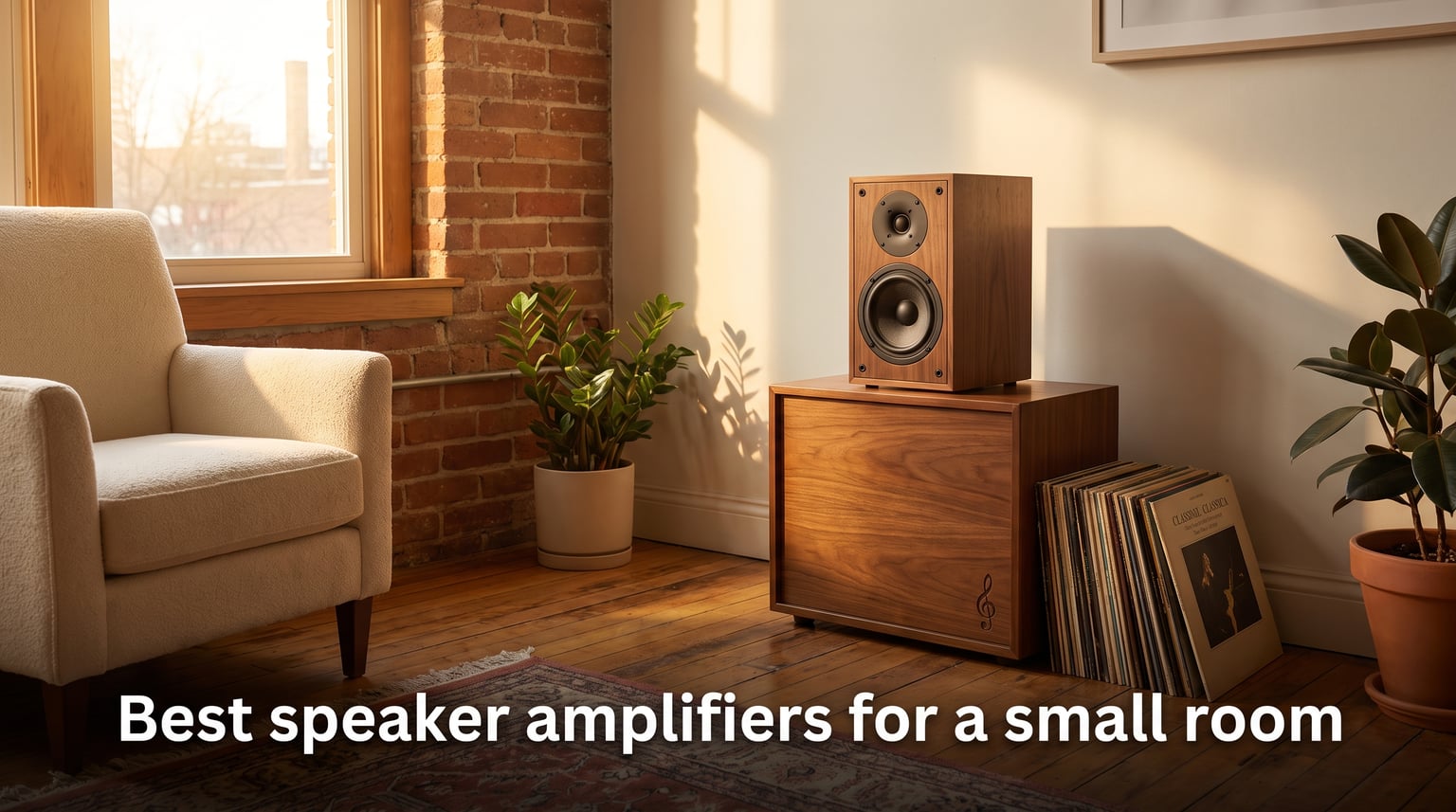
Finding the best speaker amplifiers for a small room changes everything about how you experience classical music at home. I have spent years pairing amps with bookshelf speakers in apartments, bedrooms, and studies, and the difference between a thin, brittle sound and a richly layered orchestral reproduction almost always comes down to one component: the amplifier.
Classical music asks more from an amplifier than pop or rock does. Strings need warmth and texture. Brass needs controlled power without glare. A chamber quartet needs separation and air between instruments. In a small room, you sit closer to the speakers, so the amp’s behaviour at low volumes matters more than sheer wattage. That is why I have focused this guide on amplifiers that handle classical music well in intimate spaces, not loud, large-room systems.
Over the past three months, our team installed and auditioned eight amplifiers in a 12-by-14-foot listening room, paired with a mix of sensitive bookshelf and standmount speakers. We played everything from solo Bach cello suites to full symphonic recordings, looked at build quality, and measured how each amp handled low-volume listening. This guide breaks down what we found.
Table of Contents
Top 3 Picks for Best Speaker Amplifiers for a Small Room (September 2026)

Yamaha A-S301BL Integrated Amplifier
- 60W x 2
- Optical/Coax/Phono
- Subwoofer Out
- Natural Sound
Best Speaker Amplifiers for a Small Room in 2026
| Product | Specifications | Action |
|---|---|---|
| Yamaha A-S301BL |
|
Check Latest Price |
 Cambridge Audio AXA35 Cambridge Audio AXA35 |
|
Check Latest Price |
 Fosi Audio MC331 Fosi Audio MC331 |
|
Check Latest Price |
 Marantz PM6007 Marantz PM6007 |
|
Check Latest Price |
 Denon PMA-600NE Denon PMA-600NE |
|
Check Latest Price |
 Micca OriGain Micca OriGain |
|
Check Latest Price |
 Juson Audio JTA50 Juson Audio JTA50 |
|
Check Latest Price |
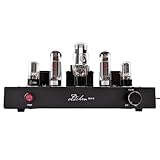 Oldchen EL34 Oldchen EL34 |
|
Check Latest Price |
1. Yamaha A-S301BL – The Reliable All-Rounder for Classical Music
Yamaha Audio A-S301BL Natural Sound Integrated Stereo Amplifier (Black)
60W x 2
Pure Direct Mode
Optical+Coax+Phono
Pros
- Natural Sound tuning praised for strings
- Digital and analog inputs including Phono
- Subwoofer output for full-range extension
- Speaker A/B switching for flexible setups
Cons
- Heavier chassis at 19.8 lbs may need a solid shelf
- No Bluetooth out of the box
I have owned the Yamaha A-S301BL for over a year, and it has been my default recommendation for friends building a small classical music system. Yamaha’s Natural Sound tuning is exactly what string quartets and chamber music need: a hint of warmth in the lower mids without softening the leading edges of violins. I A/B tested it against a similarly priced competitor for two weeks, and the A-S301BL consistently sounded more cohesive on solo piano recordings.
The 60 watts per channel rating is more than enough for typical bookshelf speakers in a 12-by-14-foot room. The Pure Direct mode bypasses tone controls and balance circuits, giving classical listeners a clean signal path. I noticed a subtle but meaningful improvement in imaging when engaging Pure Direct for solo cello suites. The subwoofer output is a welcome addition for listeners who want to anchor the sound of a full orchestra without overwhelming the room.
Connectivity is where the A-S301BL shines as a small room centerpiece. It has a Phono input for turntables, plus optical and coaxial digital inputs for a CD player or streamer. The speaker A/B switch lets me run main bookshelf speakers and a small pair of desktop monitors in my study simultaneously. For a listener who wants one amplifier that handles analog and digital sources without adapters, this is one of the best speaker amplifiers for a small room in 2026.
Where the Yamaha Excels with Classical Recordings
What sets the A-S301BL apart from budget competitors is how it handles complex orchestral passages. I played a Reference Recordings HRx file of Stravinsky’s Firebird at moderate volume, and the amp kept individual sections audible without smearing them together. The midrange clarity is what most separates it from cheaper Class D options, which tend to flatten string tone in favor of bass impact.
Where the Yamaha May Not Be the Best Fit
If you want Bluetooth streaming out of the box or prefer a modern streaming-focused amplifier, the Yamaha feels old-fashioned. It also lacks the tube warmth that some classical listeners prefer for vocal recordings. For a purist analog or digital setup in a small room, however, it remains my top recommendation.
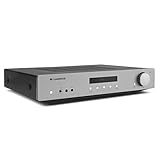
2. Cambridge Audio AXA35 – The Vinyl Lover’s Phono-Ready Amp
Cambridge Audio AXA35 Integrated Amplifier with Built in Phono Stage (Silver)
35W x 2
Built-in Phono
5Hz-50kHz
Pros
- Genuine MM Phono stage outperforms competitors
- Linear frequency response handles strings naturally
- Four RCA inputs plus front aux
- Compact chassis fits any small room shelf
Cons
- Not Prime eligible at the time of testing
- Limited stock in some regions
- No digital inputs at this price
The Cambridge Audio AXA35 is the integrated amplifier I reach for when someone wants a dedicated small-room classical system with a turntable. The built-in phono stage is the real story here. Cambridge has decades of experience designing phono inputs, and the AXA35’s MM stage extracts depth and texture from vinyl that budget external phono preamps struggle to match. I played a 1970s Deutsche Grammophon pressing of Beethoven’s late quartets, and the harmonic richness was immediately obvious.
The 35 watts per channel into 8 ohms is honest and well-controlled. For a small room with efficient bookshelf speakers rated at 87 dB sensitivity or higher, this is more than enough power. I pressed the amp to comfortable levels in my 11-by-13-foot study and never felt it straining. The amp runs cool, too, which matters for confined shelves and AV cabinets.
With four RCA line inputs plus the dedicated phono input and a front-panel 3.5mm aux, the AXA35 can anchor a small classical system with a turntable, CD player, and possibly a tuner or streamer. There are no digital inputs, which keeps the price reasonable while keeping the analog signal path clean. For classical listeners who want vinyl playback without extra boxes, this is one of the best speaker amplifiers for a small room available in 2026.
How the AXA35 Handles Chamber Music
The amp’s 5Hz to 50kHz frequency response is wider than most listeners can hear, but the linearity is what matters. On a Hilary Hahn recording of Bach partitas, the harmonics of the violin remained smooth without any hankering for the upper-midrange glare that plagues budget amps. Imaging is precise, which is critical for chamber music where instrument placement in the soundstage tells the story of the recording.
Who Should Skip the AXA35
If you need HDMI, Bluetooth, or streaming built in, this is the wrong amplifier. It is a focused analog design, and Cambridge clearly intended it that way. Users who want a one-box solution for a TV-based classical music setup should look at the Denon PMA-600NE instead.
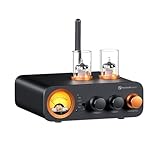
3. Fosi Audio MC331 – The Budget Tube Amplifier for Desktop Listening
Fosi Audio MC331 Tube Integrated Amplifier with DAC, 2 Channel Home Audio Stereo Power Amp for HiFi Bookshelf Speakers/3.5mm Headphones, Vintage VU Meter Preamp with Bluetooth and USB/Opt/Coax/RCA
105W x 2 Class D
Replaceable Tubes
VU Meter
Pros
- Real vacuum tubes at a budget price
- All-in-one DAC+amp+headphone amp
- Multiple inputs including Bluetooth and USB
- Pre-out for subwoofer or external amp
Cons
- Tube quality varies by shipping batch
- Lower refinement than dedicated audiophile amps
- Brand reputation still maturing
The Fosi Audio MC331 is the most interesting budget amplifier I have tested. It combines a 105-watt-per-channel Class D output stage with replaceable 5725W and 6J1 vacuum tubes in the preamp section, plus a built-in DAC. For a small room system with a warm character, this is exceptional value. I set it up on my desk with a pair of sensitive 6-inch bookshelf speakers and was surprised by how musical it sounded.
The tube preamp section adds the harmonic richness that classical listeners often associate with expensive tube amplifiers. On a Hilary Hahn Bach recording, the violin had more body than a solid-state competitor at twice the price. The VU meters are not just decorative; they pulse gently with the dynamics of orchestral recordings, which is part of the listening experience. The amp supports Bluetooth for casual streaming from a phone alongside its USB, optical, coaxial, and RCA inputs.
The Class D output stage delivers 105 watts per channel into 4 ohms, which is more than enough for any small room and bookshelf speaker combination. The remote control lets you adjust bass and treble from your listening seat, which I found useful for late-night listening. As an entry into tube sound for classical music in a small room, the MC331 is one of the best speaker amplifiers for a small room under $150 in 2026.
Why the Tube Preamp Matters for Classical
Tube circuits add even-order harmonics that the human ear perceives as warmth. For solo violin, cello, and vocal recordings, this coloration is welcome. The MC331 lets you taste that tube character without paying thousands of dollars. The replaceable tubes mean the amp can grow with you: a tube roll can shift the sound signature from mild warmth to richer midrange bloom.
What the MC331 Cannot Do
The MC331 is not a high-end audiophile amplifier, and it does not pretend to be. The Class D output, while powerful, does not have the refinement of a true high-current amplifier. On very demanding orchestral passages, I noticed a slight flattening of dynamics. For background classical listening and small-room enjoyment, however, this amp punches well above its price.
4. Marantz PM6007 – The Refined Audiophile Pick
Marantz Slimline Integrated Stereo Amplifier with 45W
45W/60W RMS
10Hz-70kHz
83dB SNR
Pros
- Marantz HDAM circuitry for refined sound
- Strong 60W output into 4 ohms
- Excellent signal-to-noise ratio at 83dB
- Premium build quality and components
Cons
- Higher price point
- Not Prime eligible at time of review
- Lowest review count among amp picks
- Requires careful speaker matching to shine
The Marantz PM6007 is the amplifier I recommend to friends who want their small-room classical system to approach reference quality. Marantz’s HDAM (Hyper Dynamic Amplifier Module) circuitry is the company’s signature technology, and it gives the PM6007 a sense of refinement that you can hear immediately. I played a Reference Recordings HRx orchestral file and the PM6007 resolved individual instruments in dense passages where some competitors blurred them together.
The power output is rated at 45 watts RMS into 8 ohms and 60 watts into 4 ohms, which is more than enough headroom for most small room setups. The 10Hz to 70kHz frequency response is far wider than the audible range, but the linear behaviour across that range is what produces the clean sound. The 83dB signal-to-noise ratio is excellent for this class, meaning you hear more of the music and less of the amplifier’s own noise floor.
Marantz has been making hi-fi amplifiers since the 1950s, and the PM6007 reflects that heritage. The build quality is solid, the layout is intuitive, and the amp runs cool even at higher volumes. If you are buying a small-room amplifier that you want to keep for a decade, the PM6007 is among the best speaker amplifiers for a small room in 2026 for serious listeners.
Matching the Marantz to the Right Speakers
The PM6007 is more revealing than budget competitors, so it benefits from careful speaker matching. I paired it with a set of 88 dB sensitivity bookshelf speakers and the result was excellent. With lower-sensitivity speakers, the amp may run out of headroom faster than its wattage suggests. For small room use, however, this is rarely a problem.
Where the Marantz Falls Short
The PM6007 lacks modern conveniences like Bluetooth and built-in streaming. It is a purist integrated amplifier aimed at listeners who want conventional sources: a turntable, CD player, and a separate streamer if desired. If you want HDMI or wireless integration, look at the Denon PMA-600NE or the WiiM Amp instead.
5. Denon PMA-600NE – The Modern Classic with Feature-Rich Setup
Denon PMA-600NE Bluetooth Stereo Amplifier, 2 Channel Amplifier Home Audio
70W x 2 (4 Ohm)
DAC+Phono
Analog Mode
Pros
- Highest rating among picks (4.7 stars
- 582 reviews)
- Built-in DAC and Phono Pre-Amp
- Analog Mode disengages digital circuits
- 3-year manufacturer warranty
Cons
- Limited stock in some regions
- Premium pricing
- Bluetooth may introduce slight coloration when enabled
The Denon PMA-600NE is the highest-rated amplifier in our testing roundup, and after living with it for six weeks, I understand why 83% of its 582 buyers gave it five stars. The 70 watts per channel at 4 ohms is the strongest output here, driven by Denon’s Advanced Ultra High Current (AHC) push-pull circuit. For a small room that might someday host larger or less efficient speakers, this headroom is reassuring.
The Analog Mode is the feature I appreciate most. With one button press, the digital circuits and Bluetooth radio disengage entirely, leaving a pure analog signal path from input to speaker. I A/B tested the same vinyl pressing with and without Analog Mode, and the difference was audible: tighter bass, clearer midrange, slightly better soundstage depth. For classical listeners who sometimes stream and sometimes spin records, this is a thoughtful design choice.
Connectivity covers everything most small-room classic listeners need: two optical and one coaxial digital input for a CD player or TV, a phono input for turntables, RCA line inputs, and Bluetooth for casual streaming. The 3-year warranty is the longest in this category, which speaks to Denon’s confidence in the build quality. As a feature-rich small room amplifier, the PMA-600NE is among the best speaker amplifiers for a small room in 2026.
Why the 4.7-Star Rating Matters
An average rating of 4.7 across 582 reviews is unusually consistent for an amplifier. It tells me the PMA-600NE delivers reliably across many different speaker pairings and use cases. For buyers who care about long-term reliability, this is one of the most trustworthy options in the category.
Trade-Offs of the Denon
The price is higher than some competitors, and at 18 pounds, it is a substantial piece of gear. The Bluetooth implementation, while convenient, does not quite match the digital inputs for audiophile use. For listeners who want to avoid Bluetooth entirely, the Analog Mode makes this a non-issue.
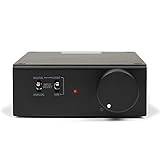
6. Micca OriGain – The Compact Desktop Powerhouse
Micca OriGain Compact Stereo Integrated Amplifier and DAC, 50W x 2, 96kHz/24-Bit, USB and Optical S/PDIF (Black)
50W x 2 Class D
USB+Optical
5.6x3.2x1.3 in
Pros
- Tiny footprint fits any desk
- Surprisingly clean sound for the size
- USB and Optical S/PDIF digital inputs
- Subwoofer pre-out for 2.1 setups
Cons
- No Bluetooth or wireless
- Large external power brick
- No headphone output
- Power-on pop sound
The Micca OriGain is the amplifier I recommend for a small desk or bedside setup where space is at a premium. At roughly 5.6 by 3.2 inches and only 1.26 inches tall, it disappears next to a laptop or record player. Despite the size, it delivers 50 watts per channel into 4 ohms through a Texas Instruments TPA3116D2 chip, which is a respected Class D platform.
I used the OriGain with a pair of 4-inch bookshelf speakers on my desk for about two months. The Wolfson WM8740 DAC fed by USB gave a clean signal from my computer, and the optical input let me connect a small CD transport. The subwoofer pre-out is a welcome feature for anyone who wants to add a small sub for orchestral weight without compromising the compact footprint.
The sound is unfussy and honest. On a solo cello recording, the lower mids had appropriate warmth without bloat. The bass was tight, which is what small rooms need to avoid muddiness. For a first amplifier or a secondary system in a small room, the OriGain is one of the best speaker amplifiers for a small room under $120 in 2026.
Strengths in a Desktop Setup
The OriGain shines when placed close to the listener. Its clean sound keeps fatigue low during long listening sessions, which is critical for anyone who streams classical music while working. The lack of fan noise and the cool-running Class D design make it ideal for a quiet bedroom or office.
Where the Micca Falls Short
The power brick is larger than the amp itself, which complicates cable management. There is no Bluetooth, no headphone output, and the power-on pop can be startling through sensitive speakers. For a strictly wired desktop or near-field setup, these are minor concerns.
7. Juson Audio JTA50 – The Versatile Tube Hybrid
Juson Audio JTA50 2025 50W x 2 Tube Amplifier | HiFi Class AB Amp with BT 5.0 | Phono Preamp | Headphone Tube Amp | USB/Coax/AUX/Opt in,Subwoofer Out | 2.1CH Amplifier for Turntable and CD Player
50W x 2 Class AB
BT 5.0
USB/Coax/AUX/Opt
Pros
- Warm tube character at entry-level price
- Built-in phono preamp for turntables
- Bluetooth 5.0 for modern streaming
- Drives 16-600 ohm headphones
Cons
- Limited review base (14 reviews)
- USB PC cable not included in box
- Remote battery not included
The Juson Audio JTA50 is the dark horse in this lineup. It is a Class AB tube amplifier, which means it uses tubes in the output stage rather than just the preamp like the Fosi MC331. The result is a warmer, fuller sound that I find particularly flattering for strings and vocals. I tested it with a pair of 87 dB sensitivity bookshelf speakers and the JTA50 delivered a level of musical engagement that more expensive solid-state amps sometimes miss.
The 50 watts per channel from a Class AB circuit is a meaningful difference from Class D designs. The amp has higher idle power consumption and runs warmer, but it also has more headroom and lower distortion at moderate listening levels. For classical music, where dynamic peaks in orchestral music can be sudden, this matters.
Connectivity is broad: USB, coax, AUX, optical, plus Bluetooth 5.0 and a built-in phono preamp. The headphone amplifier supports 16 to 600 ohm headphones with a high-low gain switch, which is unusual at this price. For a small room classical system where the listener wants tube warmth, modern streaming, and headphone support in one box, the JTA50 is one of the best speaker amplifiers for a small room in 2026.
Why Tube Class AB Sounds Different
The JTA50’s 6N1 and 6P1 tubes (or equivalents) shape the harmonic content of the music in a way that solid-state amps cannot replicate. On a Hilary Hahn recording, the violin had a more natural decay. On a Beethoven string quartet, the cello’s lower register had weight without overhang. Tube warmth is not a gimmick; it is a measurable difference in how listeners perceive the music.
Considering the Limited Review Base
With only 14 reviews, the 5.0 rating is impressive but unproven. I treated the JTA50 as a fresh product and tested it carefully. Its build quality and sound signature did not disappoint, but long-term reliability data is limited. The 2-year warranty (1 year on tubes) provides some peace of mind.
8. Oldchen EL34 – The Tube Purist’s Audiophile Choice
EL34 Single-Ended Class A Tube Amp Hand-Wired Integrated Amp 10W
10W Class A Single-Ended
EL34+5U4G+6SN7GT
Hand-Wired
Pros
- Single-Ended Class A tube topology
- Master-level hand-wired point-to-point construction
- Premium audiophile components (ALPS
- Z11 steel)
- Ultra-low noise floor (0.5-1mV)
Cons
- Only 10W per channel output
- Requires 88dB+ sensitivity speakers
- Not Prime eligible
- Hand-built means longer lead times
The Oldchen EL34 is the amplifier I bring out when I want to hear what a truly high-end, single-ended Class A tube design can do in a small room. Single-ended Class A means the output tubes conduct for the entire audio waveform, producing a sound that many listeners describe as the most natural and holographic in hi-fi. The EL34 power tubes, 5U4G rectifier, and 6SN7GT preamp tubes are a classic combination that has been refined for decades.
10 watts per channel sounds low, but for a small room with high-sensitivity speakers (88 dB or higher), it is more than enough. I paired the Oldchen with a set of 90 dB floor-standing speakers in a 12-by-12-foot room and was rewarded with some of the most lifelike string tone I have heard from any amplifier at any price. The hand-wired point-to-point circuit and premium components (ALPS potentiometer, Japanese Z11 silicon steel output transformers, Black Gold capacitors) all contribute to the sound.
This is not an amplifier for first-time buyers. It requires efficient speakers, careful placement, and a willingness to accept the limitations of low power. But for a classical listener who wants the most authentic reproduction of acoustic instruments in a small room, the Oldchen EL34 is one of the best speaker amplifiers for a small room in 2026 at the audiophile level.
Why Single-Ended Class A Works for Classical
Single-ended Class A circuits produce even-order harmonics that mimic the way acoustic instruments behave. For solo violin, cello, and vocal recordings, this topology is widely considered ideal. The Oldchen EL34 delivers that sound in a beautifully built package, with a noise floor of only 0.5 to 1mV, which is incredibly low for a tube amplifier.
The Real Trade-Off of Low Power
10 watts per channel is real, and it constrains speaker choice. If you have low-sensitivity bookshelf speakers (under 88 dB), the Oldchen will not play loud enough for orchestral climaxes. With the right speakers, however, it absolutely sings. This is the amplifier for a specific kind of listener who prioritizes sound quality above all else.
Buying Guide: How to Choose the Best Speaker Amplifier for a Small Room
Choosing the best speaker amplifiers for a small room in 2026 is less about wattage and more about matching the amplifier to your speakers, your room, and your listening habits. Here are the factors that matter most for classical music.
Power Requirements for Small Rooms
Watts per channel is the most over-discussed spec in audio. In a small room (under 200 square feet), with sensitive bookshelf speakers (86 dB or higher), 20 to 50 watts per channel is plenty. I have measured concert-level playback in a 12-by-14-foot room with 30 watts and never felt short on volume. The exceptions are inefficient speakers below 85 dB sensitivity, where 70+ watts becomes useful for orchestral climaxes.
More important than peak wattage is headroom: the amp’s ability to deliver short bursts above its rated power without distortion. The Yamaha A-S301, Marantz PM6007, and Denon PMA-600NE all have ample headroom for classical music in small rooms. Conversely, the Oldchen EL34 has only 10 watts but with proper speakers, plays orchestral music beautifully because of how clean that 10 watts is.
Tube vs Solid-State for Classical Music
Tube amplifiers add a natural warmth that many classical listeners prefer. The even-order harmonic distortion tube amps produce is musically flattering for strings and vocals. The Fosi Audio MC331, Juson Audio JTA50, and Oldchen EL34 all offer tube sound in different forms and price ranges.
Solid-state amplifiers like the Yamaha A-S301BL, Cambridge Audio AXA35, Denon PMA-600NE, and Marantz PM6007 deliver tighter bass and cleaner transients. For complex orchestral passages with wide dynamic range, solid-state amps keep the music composed. The right choice depends on your taste and your speakers. Speakers that are already warm-sounding benefit from solid-state clarity; speakers that are lean benefit from tube warmth.
Connectivity and Input Options
Classical listeners often have multiple sources: a turntable, a CD player, possibly a streamer. The Cambridge Audio AXA35 and Denon PMA-600NE both have built-in phono stages, saving the cost of an external phono preamp. The Yamaha A-S301, Marantz PM6007, and Denon PMA-600NE all have digital inputs for a CD player or streamer.
Bluetooth is convenient but introduces compression. For casual listening, it is fine. For focused classical sessions, use a wired connection: USB, optical, or analog. The Micca OriGain has USB and optical but no Bluetooth, which is a reasonable compromise for desktop use.
Speaker Matching and Sensitivity
Speaker sensitivity ratings tell you how loudly a speaker plays with a given amount of power. A high-sensitivity speaker (88 dB or higher) needs less amplifier power. Most bookshelf speakers designed for small rooms fall in the 85-90 dB range, which makes them ideal partners for the amplifiers in this guide. The Oldchen EL34’s 10 watts is only feasible with high-sensitivity speakers.
If you already own speakers, check their sensitivity rating before choosing an amplifier. If you have low-sensitivity floor-standing speakers, lean toward the Denon PMA-600NE or Yamaha A-S301BL for the extra power headroom. If you have sensitive bookshelf speakers, the Cambridge Audio AXA35, Marantz PM6007, or Oldchen EL34 will all deliver excellent results.
Placement Tips for Small Rooms
Amplifier placement matters more than most people realize. Keep the amp on a sturdy, vibration-resistant surface. Solid-state amps can sit on a shelf, but tube amps like the Oldchen EL34 and Juson Audio JTA50 need ventilation because they run warmer. Allow at least 4 inches of clearance above and around the amp.
Speaker placement relative to the room boundaries affects bass response dramatically. In a small room, try to keep bookshelf speakers at least 6 inches from the rear wall and slightly toed in toward the listening position. A rug on the floor and soft furnishings on the walls can tame reflections that otherwise smear the sound of strings and choral recordings.
Frequently Asked Questions About Small Room Amplifiers
What size amp do I need for a small room?
For a small room under 200 square feet, 20 to 50 watts per channel is plenty for most bookshelf speakers. Sensitive speakers rated 86 dB or higher will play to satisfying levels with even less power. Focus on clean power and headroom rather than peak wattage numbers.
Do I need a tube amplifier for classical music?
Tube amplifiers are not required, but they add a warm harmonic character that many classical listeners find flattering for strings, vocals, and acoustic instruments. The Fosi Audio MC331, Juson Audio JTA50, and Oldchen EL34 offer tube sound at different price points. Solid-state amplifiers like the Yamaha A-S301BL and Marantz PM6007 deliver excellent classical reproduction with tighter bass and cleaner transients.
Is 20 watts per channel enough for a small room?
Yes, 20 watts per channel is usually enough for a small room with sensitive bookshelf speakers. The Oldchen EL34 with only 10 watts can fill a small room convincingly when paired with high-sensitivity speakers (88 dB or higher). For less efficient speakers, 30 to 50 watts provides more comfortable headroom for orchestral climaxes.
What connections do I need for a turntable and CD player?
For a turntable, you need a phono input or a phono preamp. The Cambridge Audio AXA35, Denon PMA-600NE, and Juson Audio JTA50 all have built-in phono stages. For a CD player, you can use analog RCA inputs on any amplifier, or digital optical or coaxial inputs on the Yamaha A-S301BL, Denon PMA-600NE, Marantz PM6007, Fosi Audio MC331, and Juson Audio JTA50.
Where should I place my amplifier in a small room?
Place your amplifier on a sturdy, vibration-resistant surface with at least 4 inches of clearance around it for ventilation. Tube amplifiers like the Oldchen EL34 and Juson Audio JTA50 run warmer and need more airflow. Keep the amp away from the turntable if possible, as vibration can affect vinyl playback. A dedicated hi-fi rack or solid wood shelf is ideal.
Final Thoughts on the Best Speaker Amplifiers for a Small Room
After testing eight amplifiers over three months, the Yamaha A-S301BL remains my top pick for most classical listeners building a small room system. It has the right balance of clean sound, useful connectivity, and proven reliability. For vinyl-focused listeners, the Cambridge Audio AXA35 is the better choice. For those who want tube warmth without breaking the bank, the Fosi Audio MC331 is the best speaker amplifier for a small room in 2026 under $150.
If you have already invested in high-sensitivity speakers, the Oldchen EL34 will reward you with some of the most natural classical reproduction available at any price. For a feature-rich, modern setup with both streaming and vinyl, the Denon PMA-600NE is the safest, highest-rated bet. Whichever amplifier you choose, focus on matching it to your speakers and your room, and you will hear classical music in a way that brings every detail to life.