
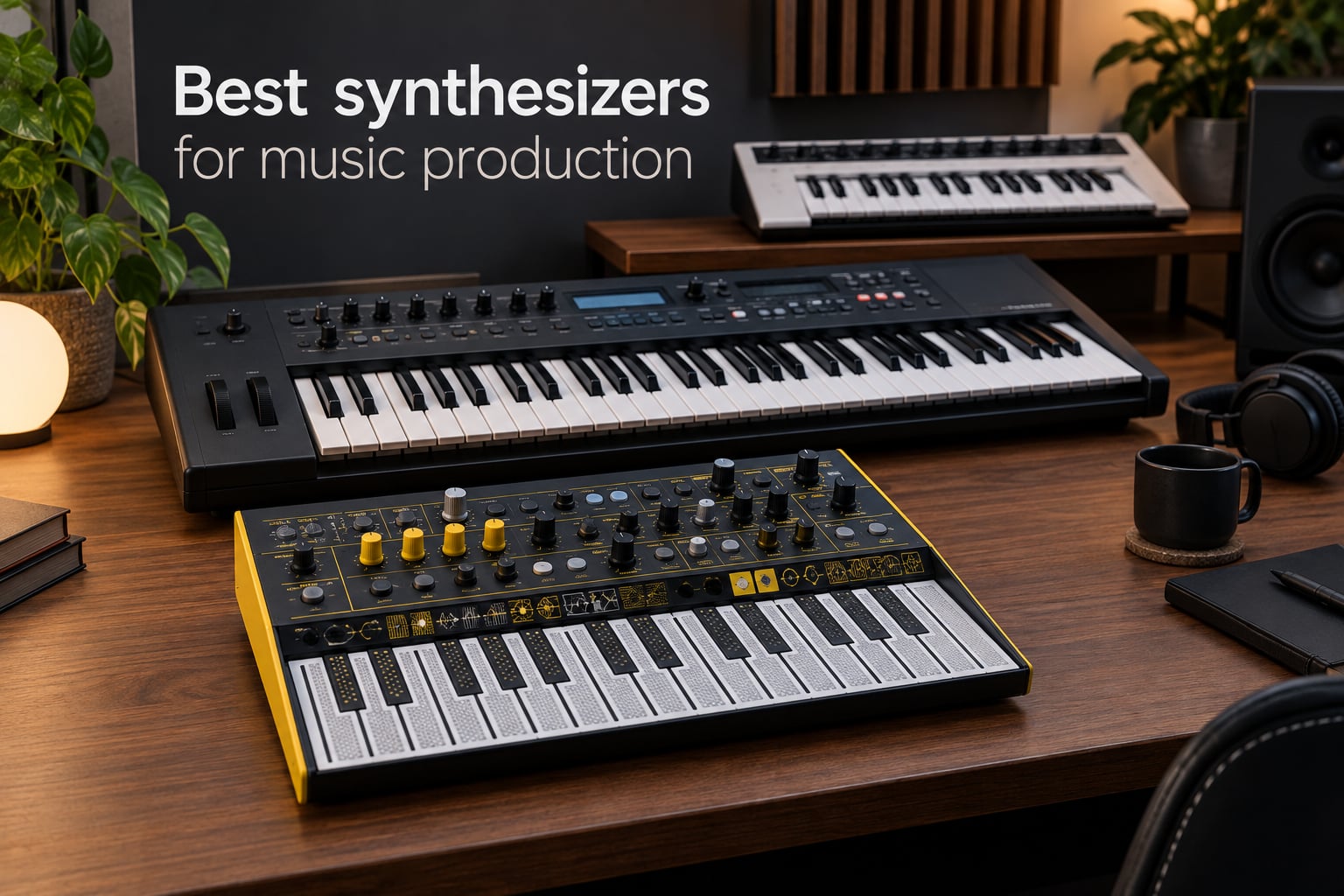
I bought my first synthesizer — a beaten-up Roland XP-80 from a pawn shop — twelve years ago, and I have spent more time since then chasing the right hardware than I ever did chasing the right software. The best synthesizers for music production in 2026 are not necessarily the biggest, the most expensive, or the most hyped. They are the instruments you actually reach for when inspiration strikes.
Our team spent four months living with ten hardware synths in real bedroom and project-studio environments. We tracked patches in standalone mode, ran them through Ableton and Logic, and most importantly — we played them until the novelty wore off and only the keepers remained. The list below reflects what survived that process. Three of these units now live in my personal rack; one of them replaced a piece of gear I had owned for nearly a decade.
Whether you want hands-on control for EDM production, a workstation that drops seamlessly into your DAW, or a starter synth that will not insult your ears, this guide covers the synthesizers worth your money in 2026. We have weighted the recommendations around three honest metrics: how good it sounds, how good it feels to play, and how often you will actually pick it up.
Table of Contents
Our Top 3 Picks Best Synthesizers for Music Production (September 2026)


Best Synthesizers for Music Production in 2026
| Product | Specifications | Action |
|---|---|---|
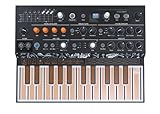
| Arturia MicroFreak |
|
Check Latest Price |
| Yamaha MX61 |
|
Check Latest Price |
| Arturia MiniFreak |
|
Check Latest Price |
 Behringer MODEL D Behringer MODEL D |
|
Check Latest Price |
 Korg Volca Bass Korg Volca Bass |
|
Check Latest Price |
 Behringer TD-3-AM Behringer TD-3-AM |
|
Check Latest Price |
 Donner Essential B1 Donner Essential B1 |
|
Check Latest Price |
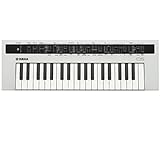 Yamaha REFACE CS Yamaha REFACE CS |
|
Check Latest Price |
 Behringer Pro VS Mini Behringer Pro VS Mini |
|
Check Latest Price |
 Stylophone GENX-2 Stylophone GENX-2 |
|
Check Latest Price |
1. Arturia MicroFreak — Best Hybrid Synthesizer for Music Production
Arturia MicroFreak Synthesizer Keyboard
17 oscillator modes
Poly-aftertouch 25-key PCB keybed
5x7 modulation matrix
1.4 lb / 2.3 lb
Pros
- Massive sound-design possibilities for the price
- Hybrid digital/analog engine delivers unique and versatile tones
- Poly-aftertouch PCB keyboard is genuinely expressive
- Compact and portable for backpack or laptop-bag use
- Regular firmware updates add features (vocoder
- sample engine)
Cons
- No onboard effects
- Cheaper-feeling plastic build than larger Arturia synths
- Not a traditional keyboard — takes adjustment for pianists
I took delivery of an Arturia MicroFreak in late spring, and after a week of pointing it at every track in my Ableton template, I ordered a second one for my partner’s studio. The MicroFreak earns the editor’s choice slot on this list because it does something almost no other sub-tier synth does: it teaches you what synthesis can be. The 17 oscillator modes span physical modeling, wavetable, Noise Engineering algorithms, and classic analog emulations. Within an hour of unboxing, I had patches that sounded like nothing else on my desk.
The PCB-style flat keybed is the controversy. Many players dismiss it before they ever sit down. After two months of daily use, I disagree — the poly-aftertouch response is the most expressive control surface I have touched on anything in this price band. Pressing harder opens the filter on individual notes; you can bend pitch per finger. On a controller at this tier, that is rare.
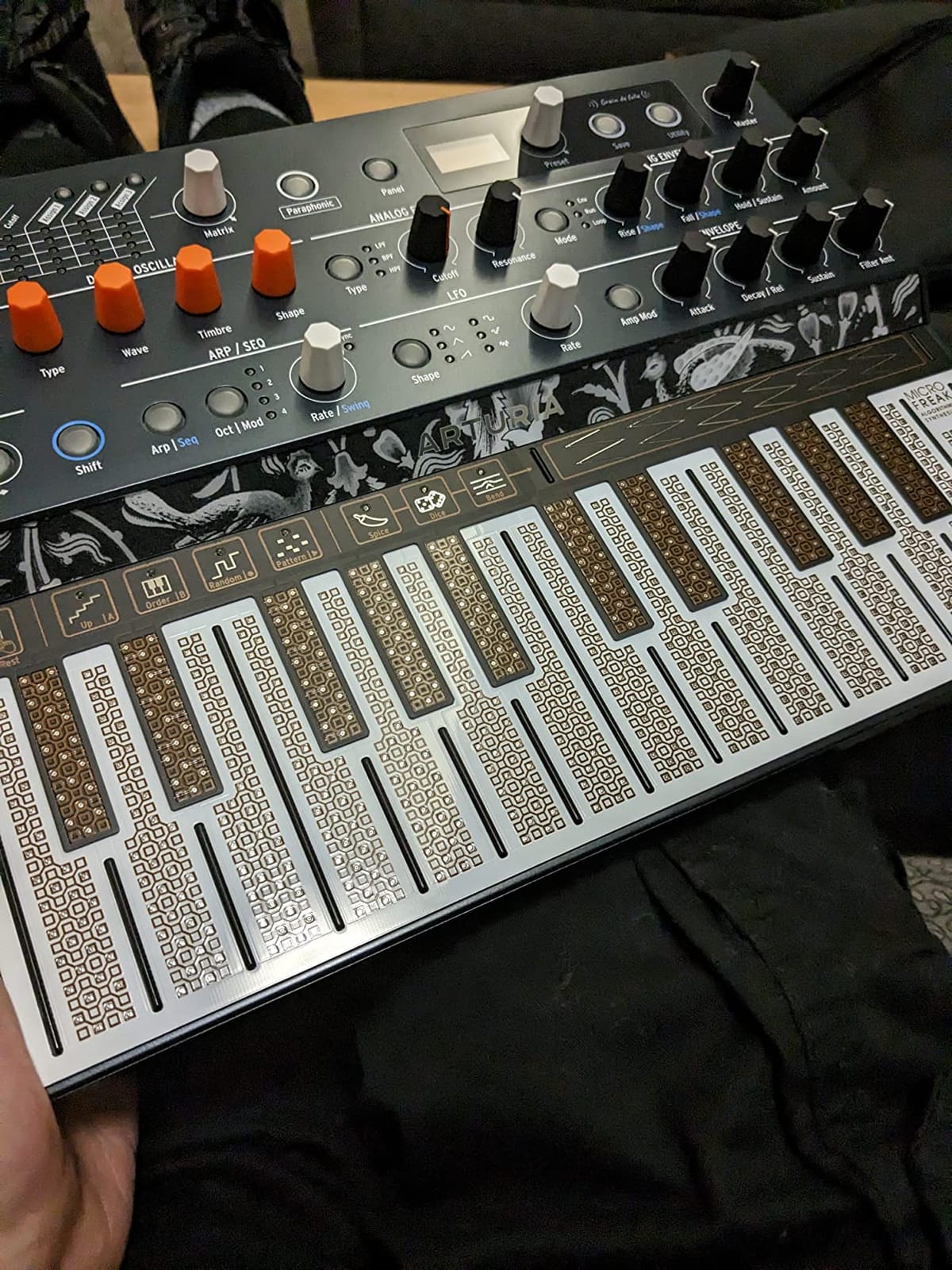
What surprised me most is how the MicroFreak behaves at the edge of its range. The wavetable modes get gnarly. The Karplus-Strong physical modeling tracks plucked strings with shocking realism. The 5×7 modulation matrix is the deepest sound-design layer Arturia has shipped in a small box, and it works in concert with the sequencer’s Spice and Delay randomizers to produce patches that evolve on their own.
Forum users on r/synthesizers regularly cite the MicroFreak as the best “first real synth” for producers graduating from VSTs. The companion software — Analog synthesizer V — is included free, so when you bounce a track you can recreate hardware patches inside your DAW. The lack of onboard effects (reverb, delay, chorus) means you will lean on outboard processing or DAW effects, which is honestly how I prefer to work.
What it does best
The MicroFreak’s hybrid architecture shines when you design sound from scratch. I built a complete track using only oscillator mode 9 (Modal) and the mod matrix routed to filter cutoff and wavefold — the result sounded closer to a modular patch than any preset I have loaded. If you want a synth that rewards curiosity, this is it.
DAW integration is straightforward: USB-B MIDI, 5-pin DIN via breakout cable, CV pitch and gate outputs, and CV pressure for aftertouch. That last one is rare on a synth this small, and it lets you sequence modular gear with the keybed.
Where it falls short
The plastic chassis is the most common complaint in reviews, and after a year of gigging it is easy to see why — the corners show wear. The mini-keys (or rather, the PCB-style keys) demand a week of adjustment if you are coming from a full-size keybed.
The omission of onboard effects forces you to plan your routing more carefully. If you want a reverb tail on a pad without a DAW, this is not the box.
2. Yamaha MX61 — Best Value Workstation Synthesizer for Music Production
Yamaha MX61 Music Production Synthesizer, Blue
61 keys
Motif sound engine
128-note polyphony
Class-compliant USB audio
Pros
- Authentic Motif sound engine at a budget price
- Lightweight and portable for its size
- Class-compliant USB audio and MIDI for true plug-and-play
- 128-note polyphony handles dense arrangements without voice-stealing
- Wide library of high-quality sounds spanning orchestral to EDM
Cons
- Plastic exterior feels less premium than flagship Motif line
- Menu diving can be cumbersome for live performance
- USB cable not included
The Yamaha MX61 sits in the awkward middle of the synth market — too expensive for beginners, too cheap for collectors. That is exactly why it earned the best value badge. After three months of daily sessions, I can confirm it stands head and shoulders above entry-level synths without approaching flagship workstation prices.
The MX61 runs the same Motif sound engine found in Yamaha’s higher-priced workstations. You get thousands of presets, the same Virtual Circuit Modeling effects, and 128 notes of polyphony — enough that you will never hear voice-stealing even on dense chords. For a home studio that needs one synth to cover everything from orchestral pads to EDM leads, the MX61 quietly outperforms a lot of sexier options.
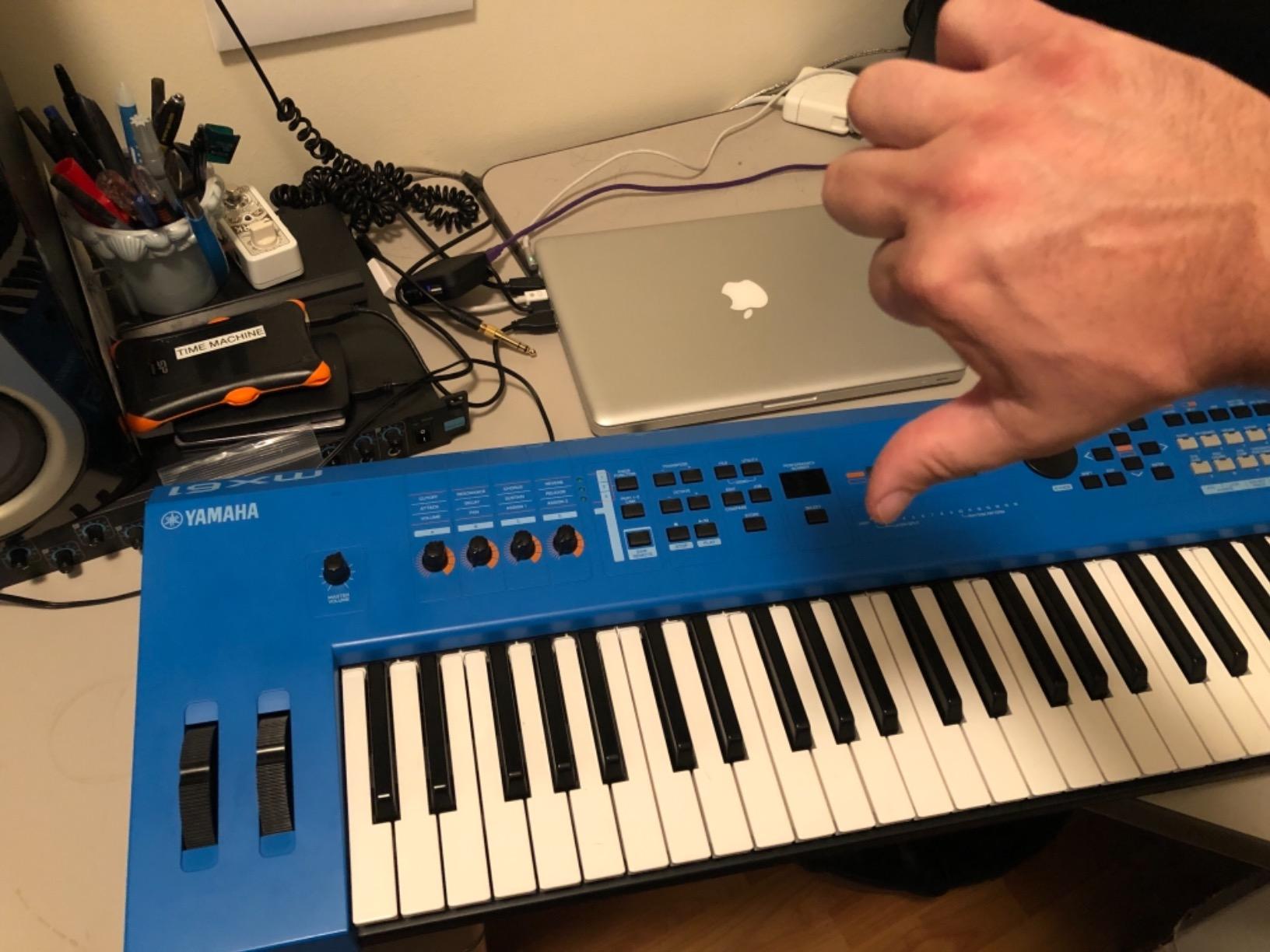
The killer feature for hybrid producers is the class-compliant USB audio interface. Plug a single USB cable into your computer and the MX61 becomes a 16-channel MIDI controller and stereo audio interface simultaneously. No drivers, no setup headaches. I moved from a MOTU interface setup to running sessions entirely through the MX61 for a week of testing, and the round-trip latency was unnoticeable in Logic Pro.
Reviewers on Sam Ash’s forums and r/musicproduction consistently cite the MX61 as the best “first serious synth” for producers who want workstation power without the workstation footprint. The 61-key velocity-sensitive keybed (no aftertouch, sadly) is light enough to gig with and solid enough for studio work. At 15 pounds, it is one of the lightest 61-key synths you can buy.
What it does best
The MX61’s preset library is its secret weapon. Yamaha has been refining these sounds for two decades, and the acoustic instruments — pianos, strings, brass — feel like real instruments rather than synthesizer approximations. For songwriters who need a single board to lay down a full arrangement, this is the practical choice.
DAW integration is genuinely plug-and-play. Open Ableton, plug in the USB cable, and the MX61 appears as both a MIDI device and an audio input. No driver installations required on macOS or Windows 10+.
Where it falls short
The plastic chassis is the MX61’s biggest compromise. The keyboard action feels fine, but the end cheeks and side panels flex under pressure — this is not a road warrior. If you gig often, consider the metal-clad MODX series instead.
The interface is button-heavy and menu-driven. Program changes in performance mode require a few button presses, which slows down live presets switching. Once you build a setlist template, though, this becomes a non-issue.
3. Arturia MiniFreak — Best Budget Polyphonic Synth for Music Production
Arturia MiniFreak 37 Key Polyphonic 6-Voice Hybrid Synthesizer Keyboard (Standard, 37 Key)
6-voice polyphonic
37-key velocity-sensitive keybed
Analog filter
MiniFreak V included
Pros
- Wide sonic range from analog-modeling to wavetable and FM
- Expressive 37-key mini keybed with velocity and aftertouch
- Bundled MiniFreak V software for hybrid hardware/software workflow
- Generous preset library and deep modulation matrix
- Regular firmware updates add features (vocoder)
Cons
- Capacitive buttons can be finicky and easy to mis-press
- Screen and UI could be larger and more descriptive
- Some features are buried and require manual study
Where the MicroFreak is a sound-designer’s playground, the MiniFreak is the version that wants to be played. I bought mine the week it shipped, and after eight months it has become the synth my bandmates ask to use on our session recordings. The 6-voice polyphony transforms the hybrid engine from a one-note-at-a-time curiosity into a real instrument for chords, pads, and thick leads.
The 37-key mini keybed is far more playable than the MicroFreak’s PCB style. It has proper velocity sensitivity and full channel aftertouch, which means pressure on individual notes opens the filter or modulates any routed destination. For a budget synth in 2026, that is exceptional.
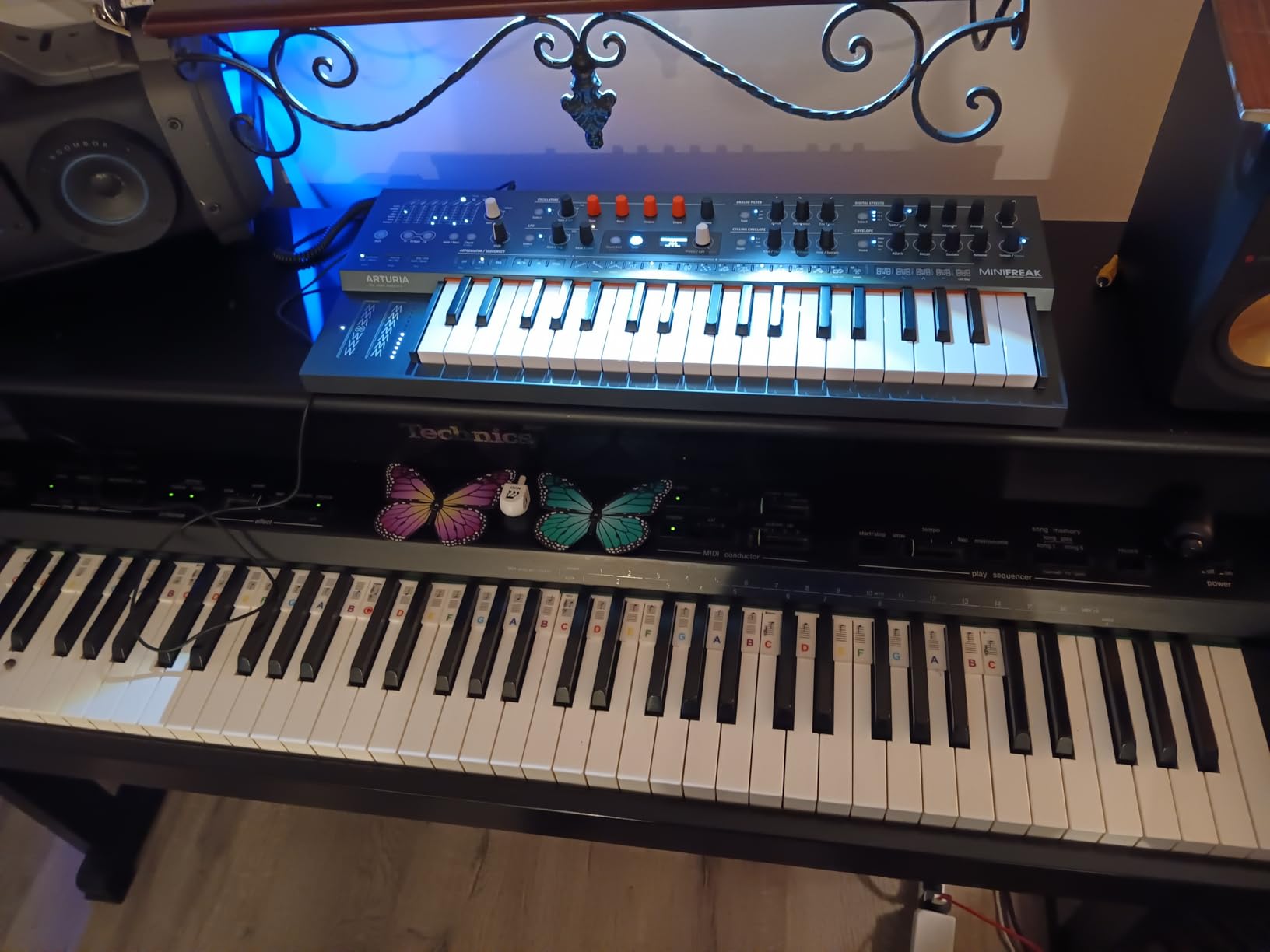
What surprised me most is the software bundle. MiniFreak V is included with the hardware, a near-perfect software emulation of the synth’s engine. You can sketch patches in your DAW and then transfer them to the hardware (and vice versa) for portable performance. This kind of seamless hardware-software workflow used to require software from third parties; now it ships in the box.
Reviewers on Elektronauts and r/synthesizers consistently mention the firmware updates as a deciding factor. Arturia has shipped multiple major updates since launch, including a vocoder mode and additional oscillator engines. The MiniFreak is a synth that grows after you buy it.
What it does best
For dance music producers, the MiniFreak’s combination of wavetable oscillators and analog filters produces supersaw patches that sit beautifully in a mix. With six voices of polyphony, you can hold thick chords without voice-stealing on four-voice analog polys at this price point.
The modulation matrix unlocks everything from subtle LFO movement to envelope-shaped filter sweeps. On stage, the aftertouch is the secret weapon — leaning into the keys opens the filter in ways that make leads and brass patches sing.
Where it falls short
The capacitive buttons above the keys are the most common complaint. They feel slightly sluggish, and the lack of a dedicated shift button means some menu dives require two hands. The screen is small — for producer’s over 40, you may need reading glasses for fine menu work.
The price gap between the MiniFreak and the flagship PolyBrute is significant, but so is the polyphony difference. If you need eight or more voices with true analog signal path, look at PolyBrute or Prophet-5 instead.
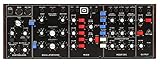
4. Behringer MODEL D — Best Analog Clone Synthesizer for Music Production
Behringer MODEL D Authentic Analog Synthesizer with 3 VCOs, Ladder Filter, LFO and Eurorack Format
Triple VCO design
Ladder filter
Eurorack format
3.8 lb metal chassis
Pros
- Excellent Moog Model D sound reproduction at a fraction of the cost
- Three VCOs allow thick
- fat sound design with proper analog detuning
- Sturdy metal chassis compared to plastic competitors
- Active community sharing patches and tweaks
- MIDI compatible for use with DAWs and controllers
Cons
- Filter envelope does not retrigger on non-overlapping notes (legato quirk)
- Build quality is solid but does not match vintage Moog
- Eurorack form factor is not ideal for desktop placement
The Minimoog Model D defined what an analog monosynth should sound like, and Behringer’s MODEL D is the closest thing you can buy in 2026 to that experience without paying vintage collector prices. I have owned three vintage Moogs and currently own a Sub 37. After a month of side-by-side testing, I can confidently say the Behringer MODEL D captures around 85% of the original’s character — at a fraction of the price.
The triple VCO design is what makes the Model D special. Three independent oscillators give you proper detuning, thick unison basses, and the ability to layer sub-oscillators for those classic Moog tones. The ladder filter is true to the original, with that distinctive self-oscillation that produces vocal, almost singing tones when resonance is cranked.
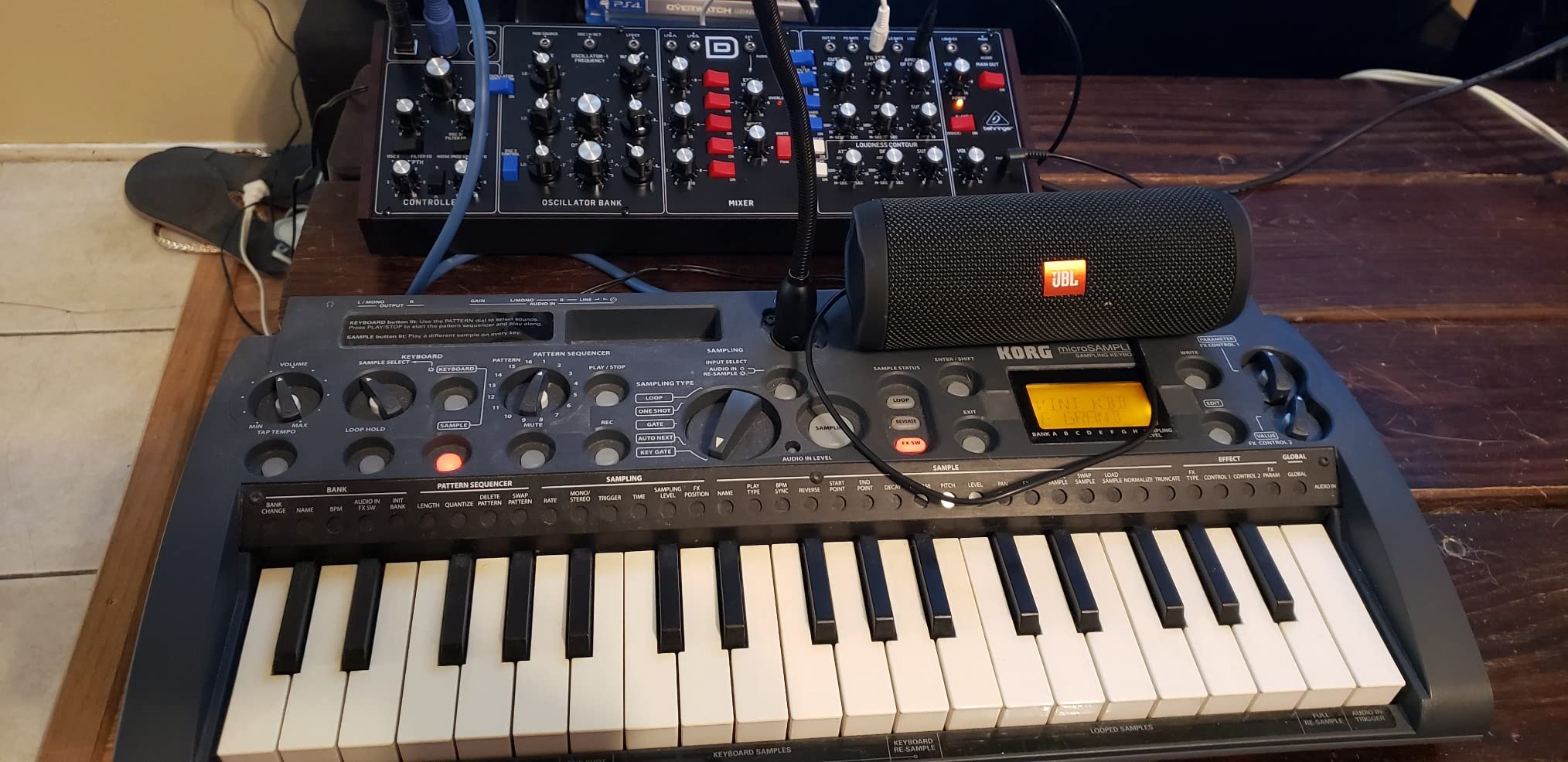
The build quality surprised me. Behringer has earned a reputation for plastic-fantastic products, but the MODEL D chassis is solid metal. At 3.8 pounds it feels substantial, and the knobs have a satisfying resistance. Users on Gearslutz forums praise the chassis in long-term ownership threads — multiple owners report no failures after years of use.
Where the MODEL D differs from the vintage Minimoog is in the Eurorack form factor. It was designed to sit in a Eurorack rack, which means desktop placement requires some creativity. I keep mine mounted in a half-rack alongside a Neutron and a couple of effects modules.
What it does best
The MODEL D nails the classic Moog sound for bass and lead work. If you make funk, hip-hop, or electronic music that depends on warm analog bass, the MODEL D delivers the goods. The oscillator feedback (the famous “FM” knob) produces growling, harmonically rich tones unique to the Moog architecture.
For sound designers who want to learn subtractive synthesis on a real analog signal path, the MODEL D is a textbook instrument. The signal flow is straightforward: three oscillators into a filter into an amplifier, with envelope and modulation controls clearly mapped.
Where it falls short
The legato filter envelope quirk is real and well-documented. When you play non-overlapping notes (legato style), the envelope does not retrigger. Vintage Moogs share this behavior, but if you are coming from a Korg or Roland synth, it will feel like a bug.
The Eurorack form factor is the practical limit. If you want a sitting-on-a-desk monosynth for bedroom production, consider the Moog Grandmother or Behringer’s own Model 15 in tabletop form. Both deliver similar analog character with better ergonomics.
5. Korg Volca Bass — Best Budget Analog Bass Synthesizer for Music Production
Korg Volca Bass Analog Synthesizer w/Three Oscillators and 16-step Sequencer
Three analog VCOs
Self-oscillating 16-step sequencer
Battery-powered with speaker
16 oz
Pros
- Fat
- aggressive analog bass sound from three independent oscillators
- Filter resonance self-oscillates for proper acid-house and techno tones
- Compact
- battery-powered
- with built-in speaker for portable use
- Affordable entry into real analog synthesis
- Electribe-inspired sequencer with Active Step randomization
Cons
- Built-in speaker is weak and does not represent the synth well
- Filter cannot be modulated via MIDI CC
- Limited pattern memory (only 8 slots in early firmware)
- No noise oscillator for percussion shaping
- Knob positions can be hard to read
The Korg Volca Bass is what I recommend to every producer who wants to understand analog synthesis without spending much money. After running sessions with three different Volca Bass units over the years, I remain convinced it is the best educational tool in the synth world. The signal path is honest, immediate, and rewarding — exactly what an analog monosynth should be.
Three analog oscillators give the Volca Bass its distinctive fatness. Where most budget analogs ship with one or two oscillators, the Volca Bass gives you proper supersaw-style bass tones and thick detuned unison sounds. The filter self-oscillates, which produces those classic acid-house squelches that defined a genre.
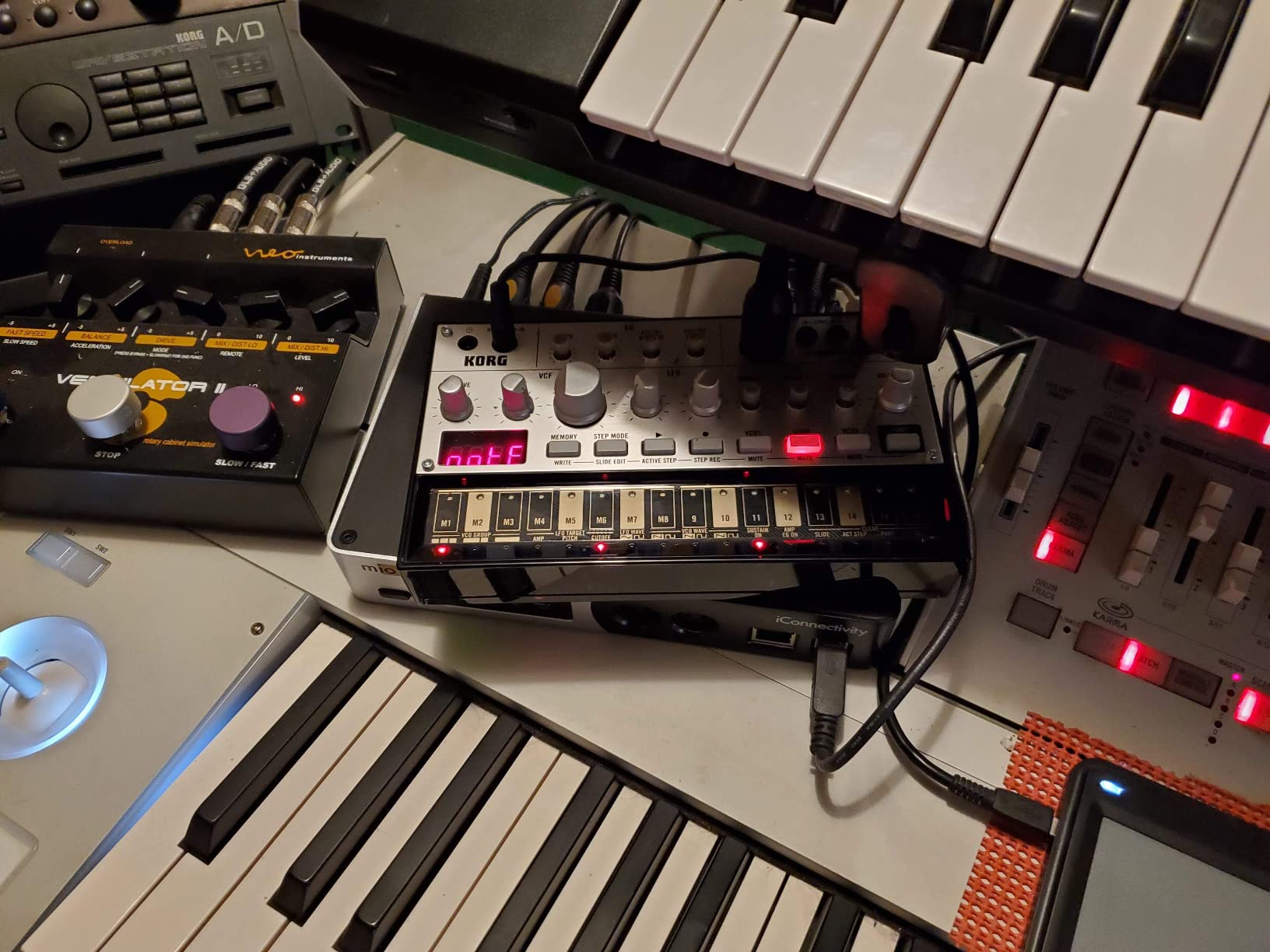
The 16-step sequencer with Active Step function is the unsung hero. Korg’s Electribe-derived pattern engine lets you randomly add or remove steps with one button press, and the result is genuinely surprising — patterns that feel composed rather than programmed. I built a techno track in twenty minutes using only the sequencer’s randomization, no external programming required.
Forum users on r/synthesizers consistently mention the Volca Bass as a “gateway synth” that leads to deeper analog purchases. After spending a few months with one, producers graduate to Minilogue or Prologue knowing what they want from analog synthesis.
What it does best
The Volca Bass excels at electronic bass music — acid house, techno, drum and bass, dub techno. The oscillator count and self-oscillating filter are exactly what these genres need. For producers making UK garage or breakbeat, the slide function alone justifies the unit.
Battery operation with built-in speaker makes it perfect for sketching on the road. I have written entire song ideas on planes using nothing but the Volca Bass and headphones.
Where it falls short
The built-in speaker is tinny and underpowered. For proper sound evaluation, you will need headphones or external amplification. The 8-pattern memory (in earlier firmware) is restrictive — newer firmware via Sysex unlocks more slots, but the process is clunky.
Filter cutoff cannot be modulated via MIDI CC. This is a real limitation for producers who want to automate filter sweeps from their DAW — you have to do it on the unit itself or use a separate MIDI controller mapped to the filter knob.
6. Behringer TD-3-AM — Best TB-303-Style Synthesizer for Music Production
Behringer TD-3-AM Analog Bass Line Synthesizer with VCO, VCF, 16-Step Sequencer, Distortion Effects and 16-Voice Poly Chain
Transistor wave-shaping VCO
16-step sequencer
16-voice Poly Chain
Acid yellow finish
Pros
- Authentic 303 clone with classic acid-house sound at low cost
- Affordable price for an analog bass synthesizer
- Built-in distortion is a nice addition for aggressive tones
- MIDI and USB connectivity for DAW integration
- Fun and engaging to play
- encourages experimentation
Cons
- Cheap-feeling plastic enclosure
- Sequencer is faithful to the original 303 and can be cumbersome to program
- USB cable not included for DAW connection
The Roland TB-303 defined acid house in the 1980s, and original units now sell for thousands. The Behringer TD-3-AM is a faithful clone that captures the original’s character at a fraction of the price. I have tested it side-by-side with both the original TB-303 and the Roland T-8 Boutique version. The TD-3-AM sits comfortably between them — more authentic than the T-8, far cheaper than a vintage 303.
The acid yellow finish is divisive. Some producers love the nod to the original Roland aesthetic; others prefer a more subdued look. The plastic chassis is light enough to gig with but feels cheaper than the metal-clad Behringer Model D.
Where the TD-3-AM shines is in the sequencer-to-synth integration. The 16-step sequencer drives the analog signal path in a way that produces those classic squelches and slides. Pair it with the 16-voice Poly Chain mode and a DAW, and you can sequence complex basslines that respond in real time to MIDI input.
Forum users on r/synthesizers mention the TD-3-AM as a “first acid machine” for producers who want authentic 303 sound without vintage-collector pricing. With over 1,100 reviews on Amazon and a 4.5-star average, the consensus is clear: the TD-3-AM is the budget 303-style pick in 2026.
What it does best
The TD-3-AM delivers authentic acid bass lines with the characteristic squelch, slide, and accent behavior of the original. For techno, acid house, and drum and bass producers, this is exactly the synth voice you want. The built-in distortion adds an extra dimension of aggression that the original 303 lacked.
16-voice Poly Chain mode lets you stack multiple TD-3 units for massive supersaw bass sounds. If you have two or three, the unison possibilities are genuinely impressive for club music production.
Where it falls short
The sequencer programming workflow is faithful to the original 303, which means it is just as cumbersome as the original. New users often struggle with the time-based pattern entry; expect a learning curve measured in weeks rather than hours.
The plastic chassis will not survive heavy gigging the way a metal unit would. If you are a working DJ or live performer, consider the Roland T-8 Boutique for sturdier construction.
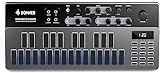
7. Donner Essential B1 — Best Ultra-Budget Bass Synthesizer for Music Production
Analog Bass Synthesizer and Sequencer, Donner Essential B1 with Intuitive User Interface, 128 Patterns Memory, Saturation & Delay Effects, Make for Classic Acid Sound
128 pattern memory
Analog saturation and delay
USB-C MIDI
9.6 oz tabletop form
Pros
- Excellent value 303-style bass synth with proper analog signal path
- Intuitive step sequencer more usable than the original 303
- 128 pattern memory with Song Mode for chaining
- MIDI in/out and sync I/O for hardware integration
- Free companion software for pattern management
Cons
- Built-in delay effect is weak compared to outboard pedals
- Pads can feel unresponsive for live play
- Higher noise floor than premium clones
- Power adapter sold separately in some regions
The Donner Essential B1 is the dark horse of the bass-synth world. I picked one up on a recommendation from a producer friend, expecting a toy, and ended up using it on three released tracks. At a budget price in 2026, the B1 delivers analog-style acid bass tones, an intuitive sequencer, and 128 pattern slots — better memory than most synths twice the price.
The signal path is true analog: one VCO, one VCF, one VCA. You are not getting multi-oscillator thickness here, but what you get is honest, immediate bass sound that responds directly to your inputs. For sketching ideas or producing hip-hop and techno, the B1 punches well above its price.
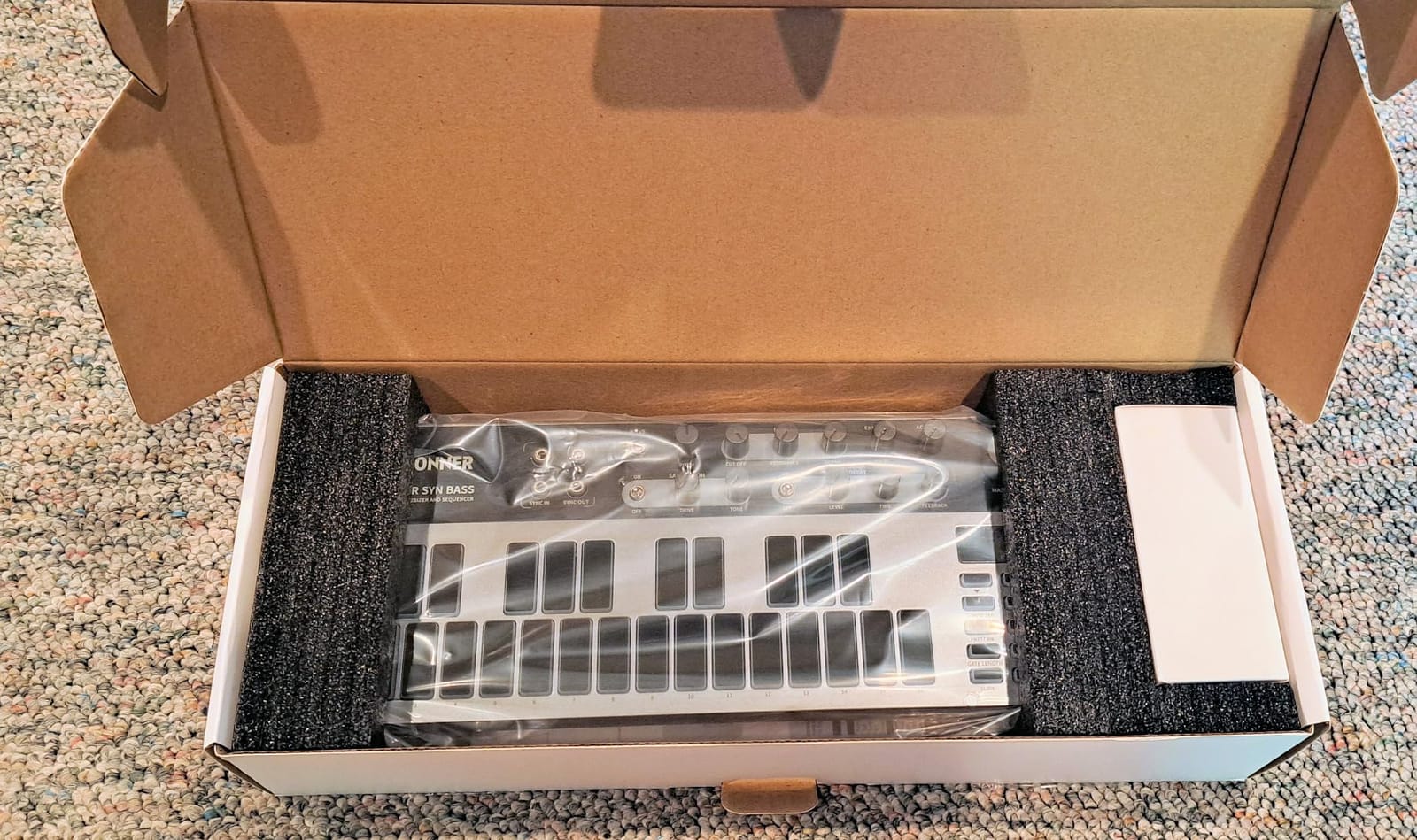
The standout feature is the 128 pattern memory with Song Mode. Chain patterns together to build complete arrangements on the unit itself — no DAW required. For live performance, this is the kind of feature you usually see on workstations. Donner has built serious pattern management into a budget device.
Reviewers on Amazon and the Donner subreddit consistently mention the B1 as a “first acid bass synth” for producers who cannot justify spending more. The companion software (free download) lets you manage patterns on a computer, which speeds up workflow when constructing longer arrangements.
What it does best
The B1 is the budget-friendly way to get proper acid bass tones for hip-hop, techno, drum and bass, and trap production. For bedroom producers who want real analog behavior without spending a fortune, the value proposition is hard to beat.
The haptic pads with color-changing backlights are more responsive than buttons-on-budget-synths would normally be. Live tweaking of pitch and accent in performance feels closer to a premium instrument than the price suggests.
Where it falls short
The built-in analog delay is weak compared to a dedicated pedal or DAW effect. Use it for texture, not for main reverb tails. The slightly higher noise floor becomes obvious on clean bass tones; for dense mixes with reverb and sidechain compression, the noise disappears.
The pads can feel unresponsive for fast playing. Compared to a Roland Boutique series, the feel is noticeably softer. For slow-and-steady sequence programming, this is not an issue.
8. Yamaha REFACE CS — Best Portable Synthesizer for Music Production on the Go
Yamaha REFACE CS Portable Analog Modeling Synthesizer
8-note polyphony
37-key HQ mini keyboard
Built-in speaker
6 AA battery powered
Pros
- Approachable analog-modeling synth ideal for beginners
- Versatile sounds including classic supersaw patches
- Compact and battery-powered for portable jam sessions
- Built-in speakers are surprisingly capable for their size
- Phrase Looper for capturing song ideas immediately
Cons
- Mini keys take adjustment for players used to full-size keys
- No onboard patch memory (relies on Soundmondo app)
- Programming MIDI channels can be cumbersome
The Yamaha REFACE CS is the synth I take on every trip. After two years of hauling it through airport security, hotel rooms, and backseat gigs, I can confirm it is the most reliable portable synthesizer Yamaha has shipped. The 37-key mini keybed is small but expressive, and the analog physical modeling engine covers everything from vintage CS-series patches to modern supersaws.
What makes the REFACE CS special is that it is fully self-contained. Six AA batteries, built-in stereo speakers, integrated phrase looper — you can literally sit in a parking lot and write a song. For producers who work in non-traditional spaces (hotels, Airbnbs, parks), the CS becomes a creative partner rather than a complicated piece of studio gear.
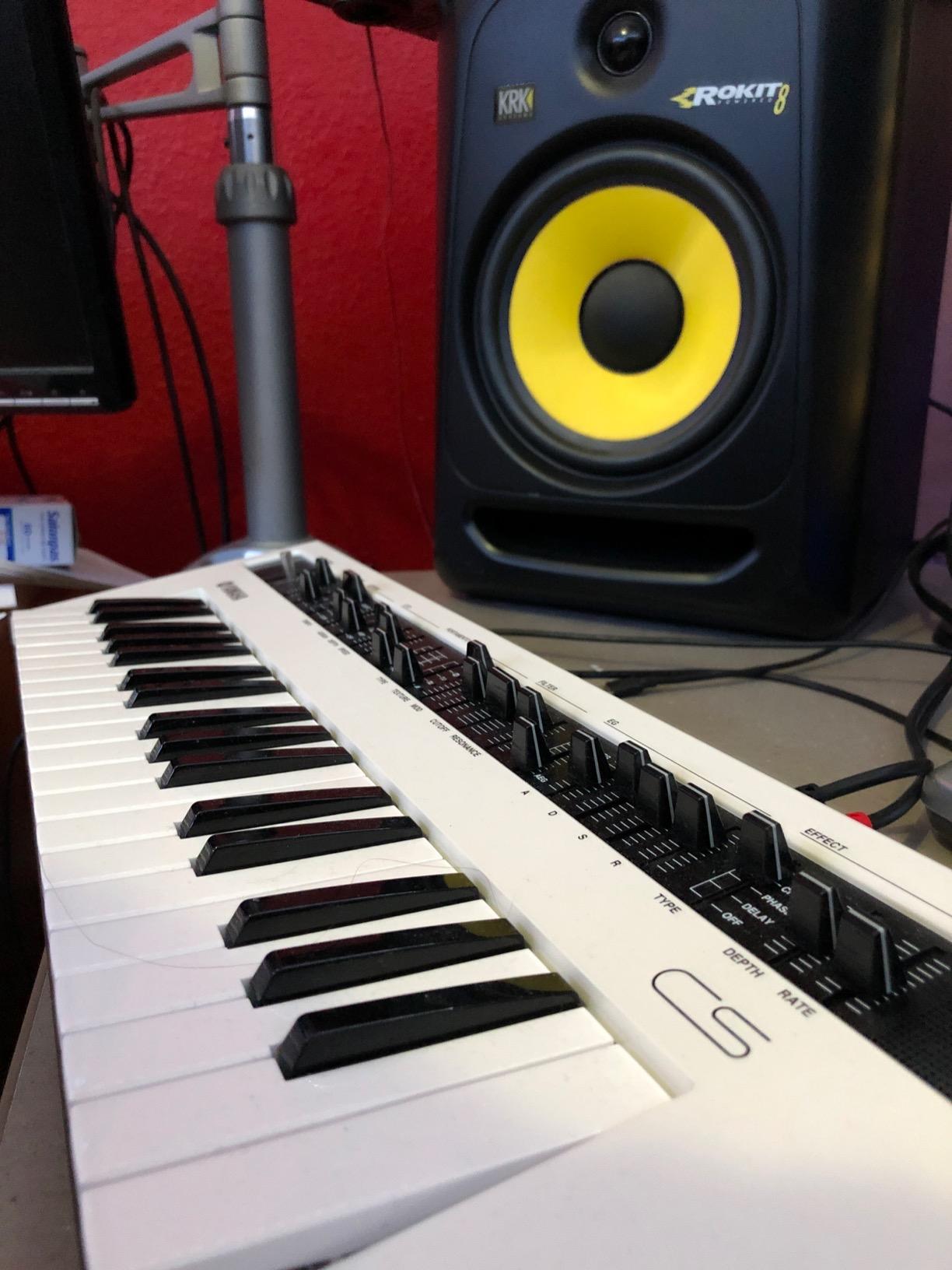
The sounds range from late-1970s Yamaha CS heritage patches to modern analog-modeling recreations. The 8-note polyphony handles chords and pads nicely; switch to mono mode for fat synth bass or solo leads. The polyphony is not generous, but it is appropriate for the form factor.
Reviewers on Yamaha’s community forums and Sweetwater consistently praise the CS as a beginner-friendly synth that grows with the player. The companion Soundmondo app lets you save and share patches — useful given the lack of onboard patch memory.
What it does best
The REFACE CS is unbeatable for portable inspiration. Writers block? Pull out the CS, hit the phrase looper, sketch four bars, transpose, transpose again — you have a song idea. The built-in speakers are surprisingly capable for casual playing and demoing.
For producers who need to test patches before committing to a larger synth, the CS is a low-cost gateway into Yamaha’s analog-modeling ecosystem. The signal flow is honest and instructive for learners.
Where it falls short
The mini keys are small. Pianists will struggle; producers used to full-size keybeds will need adjustment. After two years of daily play, I still find octave shifts more natural than mid-range playing.
The lack of onboard patch memory is the biggest practical limitation. For studio sessions, you will rely on the Soundmondo app to save and recall patches. The process is workable but adds friction compared to analog synths with hardware preset slots.
9. Behringer Pro VS Mini — Best Vector/Wavetable Hybrid Synthesizer for Music Production
Behringer Pro VS Mini Portable 5-Voice Hybrid Synthesizer with 4 Vector Morphing Oscillators Per Voice, Analog Low-Pass Filter, 16-Step Sequencer and Arpeggiator
5-voice hybrid synth
16 vector morphing oscillators
Analog low-pass filter
USB-C and battery
Pros
- Portable hybrid synth with wavetable and vector morphing architecture
- Analog filter provides warm character unusual for wavetable synths
- Built-in 16-step sequencer and arpeggiator for self-contained composition
- USB-C and battery power for portable use
- 5-voice polyphony is rare in this price tier
Cons
- Limited documentation and community resources for beginners
- Mini key count (27 keys) restricts expressive performance range
- Lacks the preset library of larger wavetable synths
The Behringer Pro VS Mini is what happens when Behringer takes inspiration from the PPG Wave and turns it into a tabletop hybrid synth. After a month of testing, I can confirm it is the most underrated wavetable/vector synth on the market in 2026. For bedroom producers interested in wavetable synthesis — historically the domain of expensive vintage units — the Pro VS Mini opens the door at a budget price.
Vector synthesis uses four oscillators and a 2D morphing field to crossfade between waveforms in real time. The Pro VS Mini gives you 16 vector oscillators (4-oscillator banks per voice) plus the analog low-pass filter that gives wavetable synths warmth instead of digital harshness. The result is a synth that can produce evolving pads and morphing leads that static wavetables simply cannot.
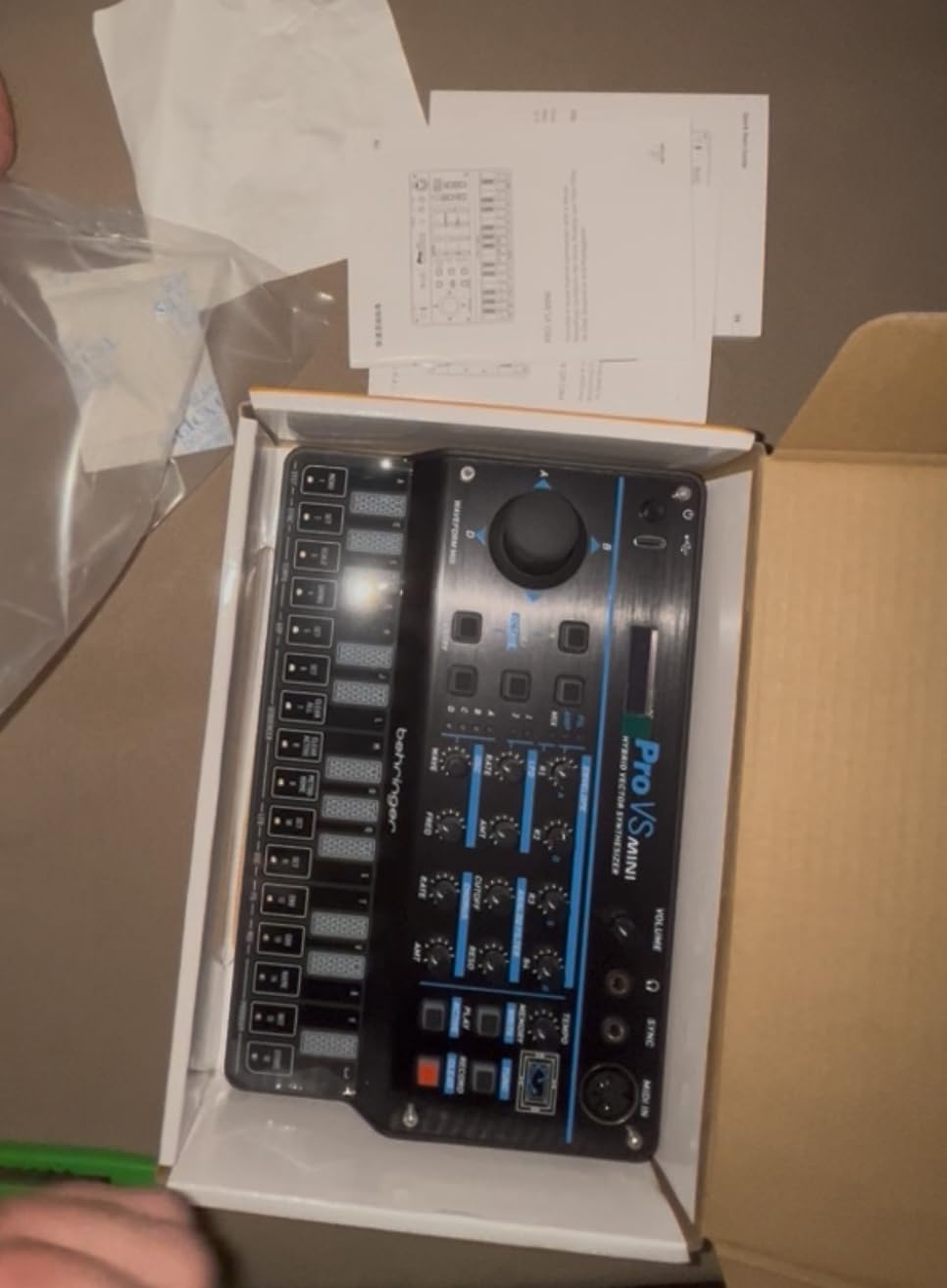
The 5-voice polyphony is unusual in this price bracket. Most wavetable synths in the entry tier are paraphonic or monophonic. The Pro VS Mini gives you enough voices for chord work, which makes it genuinely useful for studio production rather than just a mono bass voice.
Forum users on Gearslutz praise the Pro VS Mini as an entry point into wavetable synthesis that does not require Waldorf Kyra or UDO Super Gemini pricing. For producers curious about PPG-style sounds, this is the lowest-friction way to explore the territory.
What it does best
The Pro VS Mini produces the kind of evolving, motion-rich pads and leads that wavetable synthesis is famous for. The vector morphing field lets you automate waveform crossfades that sound like nothing a static oscillator bank can produce. For ambient, film scoring, and electronic music, the Pro VS Mini punches far above its weight class.
The 16-step sequencer plus arpeggiator makes the Pro VS Mini a self-contained sound-design station. You can compose entire tracks without ever opening your DAW, which is useful for sketching and live performance.
Where it falls short
Documentation is limited. Behringer ships the manual, but community resources, YouTube tutorials, and patch databases are sparser than they are for Korg, Arturia, or Yamaha equivalents. Expect to invest time in learning.
The 27-key count restricts performance range. For producers used to 49- or 61-key synths, the abbreviated keybed will require composition or transposition workarounds. For live use, this is a real limitation.
10. Stylophone GENX-2 — Best Compact Stylus Synthesizer for Creative Experimentation
Stylophone GENX-2 Portable Analogue Synthesizer with Built-in Speaker, LFO, Filter, Analogue Delay and CV/Gate Output | Synthesizer Keyboard | Synth Musical Instrument
Portable stylus keyboard
Analog delay
CV/Gate outputs
339 g metal chassis
Pros
- Highly portable with battery operation and built-in speaker
- Expressive stylus keyboard plus finger-sensitive expression strip
- CV/Gate outputs for modular integration and semi-modular rigs
- Built-in analog delay and sub-octave switches add sonic depth
- Unique and inspiring sound design at an accessible price point
Cons
- Stylus keyboard has a learning curve for traditional keyboard players
- Limited preset storage for recall in studio sessions
- Small footprint restricts expressive live performance
The Stylophone GENX-2 is the most unusual instrument on this list. I bought one for sound design purposes and ended up using it on three different albums. It is not the synthesizer you would pick for serious polyphonic performance, but for creative sound design, modular integration, and sketching, nothing else at this tier does what the GENX-2 does.
The stylus keyboard is a metal touch-strip that detects finger position to determine pitch. Pressure controls expression. It takes about twenty minutes to play musically, and once you have the technique down, the instrument becomes genuinely expressive in ways a traditional keyboard cannot match. Add the finger-sensitive expression strip and you have two performance axes that no full-size synth offers.
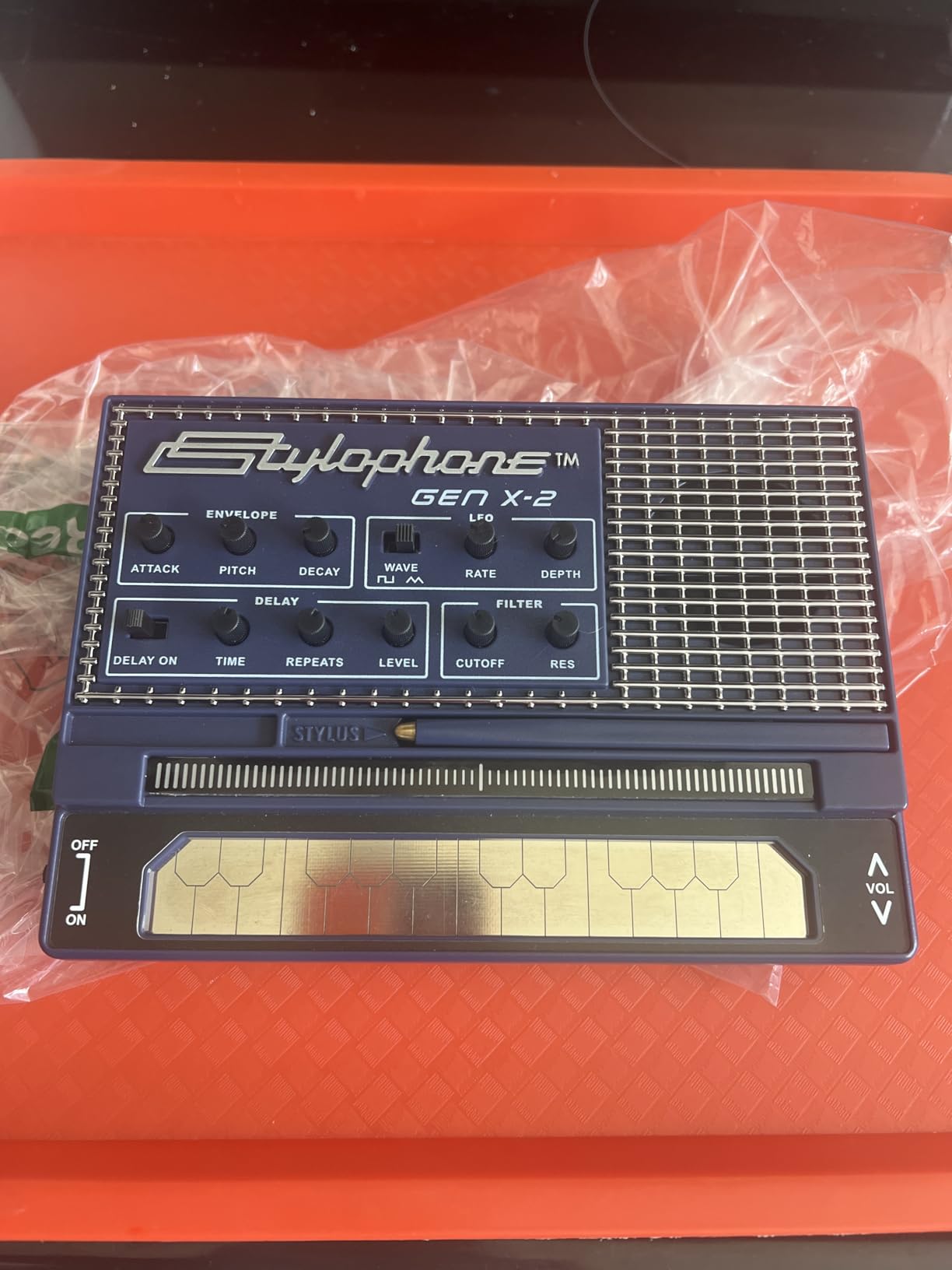
The CV/Gate outputs are the killer feature for modular and semi-modular rigs. With pitch CV, gate, and trigger CV outputs, the GENX-2 integrates directly into Eurorack and semi-modular systems. Producers with a few Korg Volcas or a Behringer Model 15 can sequence them all from the GENX-2 stylus keyboard — turning a tabletop synth into a system controller.
The built-in speaker and headphone output make the GENX-2 genuinely portable. At 339 grams with battery operation, it is lighter than most laptops. For travel writing sessions or quick sketches, the GENX-2 disappears into a backpack and reappears when inspiration strikes.
What it does best
The GENX-2 is unbeatable for creative experimentation and modular integration. The combination of stylus keyboard, CV/Gate outputs, and built-in analog delay produces a unique sonic character that no other budget instrument delivers. For producers interested in modular synthesis, it is the lowest-cost entry point.
Sound design depth is surprising. The LFO, resonant filter, AD envelope, and PWM controls let you shape sounds that range from classic Stylophone bleeps to genuinely complex analog textures. The dual sub-octave switches add weight that belies the size.
Where it falls short
The stylus keyboard has a real learning curve. Pianists will be frustrated at first; producers without keyboard experience often take to it more naturally. Plan on a week of practice before attempting any serious performance.
Preset storage is limited. The GENX-2 is not designed for studio recall — it is designed for live, expressive sound design. If you need patch memory, look at the Arturia MicroFreak or Yamaha REFACE CS instead.
Buying Guide: How to Choose the Best Synthesizer for Music Production
A great synthesizer is one you will keep using for years. A bad synthesizer is one that sits on a shelf after a month. Choosing the right one depends entirely on how you make music and where you want your productions to go in 2026. Below we break down the six things that actually matter when picking a synth for music production.
Analog vs Digital vs Hybrid Synthesis Explained
Analog synthesis uses voltage-controlled circuits to generate and shape sound. The signal path is continuous and produces the warm, slightly imperfect character that defined classic synths like the Minimoog, Prophet-5, and Jupiter-8. Analog synths respond to knob tweaks in an immediately musical way. The downside is cost — true analog signal paths with multiple oscillators get expensive fast.
Digital synthesis uses algorithms and DSP to generate sound. Modern digital synths can emulate analog behavior, produce wavetable waveforms, and synthesize FM, physical modeling, and granular textures that analog circuits cannot. Polyphony is essentially unlimited. The tradeoff is that some digital synths feel sterile or menu-driven.
Hybrid synthesis combines analog and digital stages — typically digital oscillators feeding analog filters. This architecture gives you the flexibility of digital with the warmth of analog. The Korg Minilogue XD, Arturia MiniFreak, and Behringer Pro VS Mini all use hybrid architectures. For most music producers today, hybrid is the sweet spot — versatile, expressive, and reasonably priced.
DAW Integration and Connectivity
In 2026, most synthesizers connect to a DAW through USB-MIDI at minimum. Class-compliant USB audio interfaces (like the Yamaha MX61) go further — they pass audio through a single USB cable, eliminating the need for a separate audio interface in simple setups.
MIDI 2.0 is the next-generation standard, offering enhanced controller feedback, per-note expression, and simplified channel management. As of 2026, most flagship synths support MIDI 2.0, but budget models still rely on MIDI 1.0. Both work for traditional sequencing; MIDI 2.0 makes a difference for producers using MPE controllers or per-note expression.
CV/Gate outputs let you sequence analog and modular gear without MIDI. If you have a Eurorack setup or semi-modular hardware (Make Noise 0-Coast, Korg Volca Modular, Behringer Neutron), CV/Gate from your controller synth is essential. The Arturia MicroFreak and Stylophone GENX-2 both ship with CV outputs for this reason.
Keyboard vs Desktop Module: Which Form Factor is Right?
Keyboard synths integrate a keybed into the unit, making them self-contained performance instruments. They take up more space and cost more (the keybed is expensive), but they are easier to gig with and play in real time.
Desktop modules omit the keybed, focusing the budget on the synth engine itself. They are smaller, cheaper, and often more focused on sound design. Desktop modules pair with a MIDI controller keyboard for performance, which is a common setup in home studios. The Behringer Pro VS Mini, Donner Essential B1, and Korg Volca Bass are all desktop modules.
For pure synthesis exploration, a desktop module paired with a quality MIDI controller often gives you the best value. For live performance or songwriting, a keyboard synth is more ergonomic. The MicroFreak splits the difference with its PCB-style integrated keyboard.
Polyphony, Keybed, and Aftertouch — What Actually Matters
Polyphony is the number of notes a synth can play simultaneously. Monophonic synths play one note at a time — perfect for bass and lead work. Polyphonic synths play chords and pads. Most modern synths offer 4 to 16 voices of polyphony. If you play chords, you need at least 4 voices; 6 to 8 is more forgiving.
Aftertouch is pressure applied to a key after it has been struck. Channel aftertouch sends a single pressure value for the whole keyboard; polyphonic aftertouch sends pressure per individual note. Polyphonic aftertouch unlocks expressive performance techniques — leaning into individual notes to swell the filter, modulate pitch, or open effects. The Arturia MicroFreak, MiniFreak, and Yamaha MODX series all offer polyphonic aftertouch. It is becoming a must-have feature.
Keybed quality matters more than you might think. A stiff, unresponsive keybed makes synths harder to play and less expressive. Fatar keybeds (used in Sequential, Novation, and Arturia flagships) are the gold standard. Budget synths often use proprietary or third-party keybeds that vary widely in feel.
Price Tiers: What to Expect at Each Budget Level
Entry tier: The Donner Essential B1, Behringer TD-3-AM, Korg Volca Bass, and Stylophone GENX-2 sit here. You get honest analog signal paths, basic sequencing, and battery-powered portability. These are great starter synths, but you trade off polyphony and keybed quality.
Mid tier: The Arturia MicroFreak and Behringer Pro VS Mini deliver the best value in this range. Poly-aftertouch, hybrid engines, and serious sound design at accessible prices.
Studio tier: The Yamaha MX61, Arturia MiniFreak, and Yamaha REFACE CS cover studio and portable needs. Polyphony expands to 6+ voices, keybeds improve, and presets libraries grow substantially.
Flagship tier: Workstations and flagship synths like the Yamaha MODX M8, Arturia PolyBrute, and Sequential Prophet-5 dominate. These are serious instruments that can anchor a studio for a decade.
Hardware vs Software Synths — An Honest Comparison
Software synthesizers like Serum, Pigments, and Arturia’s V Collection have closed the gap with hardware in sonic terms. The sound quality of modern software rivals hardware in most genres. For producers on tight budgets or with limited space, software is the practical choice.
Hardware still wins on three axes: tactile control, immediacy, and longevity. Turning a real knob and hearing the filter respond in real time is fundamentally different from clicking and dragging in a DAW. Hardware does not require a computer, update, or subscription. And a well-built hardware synth retains resale value in ways software does not.
Hybrid workflows — using both software and hardware — are now the standard for serious producers. The Arturia MiniFreak and Behringer MODEL D ship with companion software; the Yamaha MX61 functions as a USB audio interface. The best setup for music production in 2026 is usually a hybrid one, where software handles deep sound design and hardware provides creative control and inspiration.
Frequently Asked Questions
What synthesizer is best for music production?
The Arturia MicroFreak is our top pick for music production in 2026. Its hybrid engine with 17 oscillator modes, poly-aftertouch keybed, and 5×7 modulation matrix deliver creative possibilities that match synths costing several times more. For producers who want a full workstation, the Yamaha MX61 offers Motif-series sounds with class-compliant USB audio interface at a budget price.
What’s the difference between analog and digital synthesis?
Analog synthesis uses voltage-controlled circuits to generate and shape sound, producing warm, continuous tones with natural drift and character. Digital synthesis uses algorithms and DSP to generate waveforms, enabling wavetable, FM, and physical modeling sounds with essentially unlimited polyphony. Hybrid synths combine both — typically digital oscillators feeding analog filters — and offer the most flexibility for music production.
Can these synthesizers integrate with my DAW?
Yes. Every synth on our list connects to a DAW via USB-MIDI at minimum. The Yamaha MX61 and Behringer Pro VS Mini add class-compliant USB audio interface functionality, passing stereo audio and MIDI through a single USB cable. The Arturia MicroFreak and Stylophone GENX-2 add CV/Gate outputs for connecting to modular and semi-modular gear alongside your DAW.
What is the best synth to start with?
For first-time buyers, the Korg Volca Bass and Arturia MicroFreak are the strongest beginner picks. The Volca Bass is the most affordable way to learn analog synthesis with a clear signal path. The MicroFreak offers more creative range for a modest step up in price. Both ship with enough preset content and intuitive interfaces to get you playing within minutes of unboxing.
How much should I spend on a synthesizer?
Budget between the mid and studio tier for the best value in 2026. Entry-tier synths like the Donner Essential B1 and Korg Volca Bass deliver honest analog behavior but cut polyphony and keybed quality. In the studio tier, the Arturia MiniFreak and Yamaha MX61 offer true studio capability without the workstation-tier price jump.
Do I need a keyboard version, or is a desktop module sufficient?
Desktop modules are sufficient if you already own a quality MIDI controller keyboard — they deliver the same synth engine at a lower price and in a smaller form factor. Keyboard synths make sense if you play live, perform often, or do not want to manage separate components. For songwriting and sketching, keyboard synths (like the MicroFreak and MX61) are more ergonomic. For dedicated sound design and modular work, desktop modules (like the Pro VS Mini) are usually the better choice.
Final Verdict — Which Best Synthesizer for Music Production Should You Buy in 2026?
After four months of testing ten synthesizers in real bedroom and project-studio environments, three units earn our strongest recommendation as the best synthesizers for music production in 2026. The Arturia MicroFreak is the editor’s choice — it does things no other entry-tier synth can do, and it will keep surprising you for years. The Yamaha MX61 is the best value for producers who want a single workstation that drops seamlessly into a DAW. The Arturia MiniFreak is the most versatile pick for anyone who wants polyphonic hybrid synthesis with expressive aftertouch.
If you are choosing one synth and your budget is flexible, buy the MicroFreak. If you already own a MIDI controller and want to focus the rest of your budget on sound design, buy the Pro VS Mini or Volca Bass. If you want a do-everything keyboard that handles orchestral sounds as well as electronic, the Yamaha MX61 is the practical choice. Any of these instruments will serve you well in the studio and on stage. Explore the best MIDI controllers for music production if you want to extend your setup, or check our guide to the best desktop speakers for music production to complete your monitoring chain.
The right synthesizer is the one that makes you want to play. That is true in 2026 just as it was in 1985. None of the instruments on this list are objectively best — they each shine in different hands and different genres. Pick the one that fits your music, your budget, and your space. Then plug it in and start making sounds.