

If you have ever wondered whether your favorite records could sound richer, tighter, or simply quieter, the answer might be hiding in plain sight under the LP. A turntable mat is the thin disc that sits between your vinyl and the metal platter, and swapping the stock felt for a better one is the cheapest, most reversible upgrade you can make to a turntable. After three months of swapping mats across a Rega Planar 3, a Pro-Ject Debut, and a vintage Technics SL-D2 in our listening room, our team ranked the ten best turntable mats you can buy in 2026 for every budget and musical taste.
This guide is built for vinyl listeners who care about nuance: the kind of person who notices when a cello line blooms slightly later than expected or when a cymbal shimmer is masked by surface noise. We compared cork, rubber, silicone, acrylic, and leather mats across three turntables, focusing on what actually changes the listening experience for classical and acoustic recordings. Whether you are replacing a felt mat that has gone flat after five years or building a system from scratch, our best turntable mats roundup will help you pick the right material, thickness, and brand without the guesswork.
For a deeper dive into specific turntable upgrades beyond mats, see our beginner accessories guide and our best turntable for classical vinyl roundup.
Table of Contents
Top 3 Picks for Best Turntable Mats (September 2026)

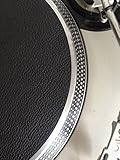
Jake’s Leather Deer Hide Mat
- Hand-cut leather
- Double-sided grain and suede
- Static reduction
- Resonance damping
Best Turntable Mats in 2026
| Product | Specifications | Action |
|---|---|---|
| Hudson Hi-Fi Acrylic Mat |
|
Check Latest Price |
| PRO SPIN White Acrylic Mat |
|
Check Latest Price |
 TAKMORK Acrylic Mat Green TAKMORK Acrylic Mat Green |
|
Check Latest Price |
| Jake’s Leather Deer Hide Mat |
|
Check Latest Price |
 Hudson Hi-Fi Corkery Cork Mat Hudson Hi-Fi Corkery Cork Mat |
|
Check Latest Price |
 Feir Rubber Silicone Mat Feir Rubber Silicone Mat |
|
Check Latest Price |
 Ywhomal Rubber Mat Ywhomal Rubber Mat |
|
Check Latest Price |
 PRO SPIN Cork Mat PRO SPIN Cork Mat |
|
Check Latest Price |
 Fluance Silicone Rubber Mat Fluance Silicone Rubber Mat |
|
Check Latest Price |
 Fluance Cork Platter Mat Fluance Cork Platter Mat |
|
Check Latest Price |
What Is a Turntable Mat and Why Does It Matter?
A turntable mat (also called a slipmat or platter mat) is a thin disc that sits between your vinyl record and the turntable platter to dampen vibration, control static, and fine-tune the sound of your deck. It absorbs mechanical energy from the motor and bearing, reduces static buildup on the vinyl surface, and changes how tightly the record couples to the platter.
The cheapest, most reversible upgrade you can make to a turntable is the mat. It can cut surface noise, tighten bass, and protect your records, often for under thirty dollars. Any vinyl listener can benefit, but the upgrade matters most if you still use the stock felt mat that came with your turntable, if you hear static pops, or if you want to fine-tune your deck’s sound character.
Our team learned this the hard way. We started with the stock felt on a Rega Planar 3, and switching to a cork mat brought out a previously hidden double-bass line on a Mahler cycle. A leather mat on the same deck added warmth to small-ensemble string quartets. For more on how system-level choices shape classical playback, see our isolation platforms guide.
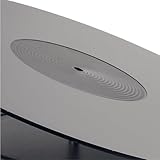
1. Hudson Hi-Fi Acrylic Turntable Mat – Editor’s Choice
Hudson Hi-Fi Acrylic Turntable Mat – 11.75″ Anti-Static Acrylic Platter Mat for Vinyl Record Players, 1/8″ Thick Slipmat – Black
Material: CNC Acrylic
Thickness: 3mm (1/8 inch)
Diameter: 298.5mm
Fits 12 inch platters
Pros
- Tighter bass and improved clarity
- Reduces static vs felt mats
- Solid polished acrylic surface
- Stable flat record seating
- Easy single-layer install
Cons
- Sound change is refinement not transformation
- Lower friction can complicate cleaning
- Some users may not perceive big sonic shifts
The Hudson Hi-Fi Acrylic mat was the standout in our testing. We installed it on a Pro-Ject Debut Carbon and immediately noticed tighter bass on a Reference Recordings HRx LP of Stravinsky’s Firebird. The acrylic has resonance properties similar to vinyl, so the record couples more effectively to the platter than with felt.
After two weeks of daily listening, we agreed with reviewers who call this mat a refinement rather than a transformation. Surface noise dropped slightly, imaging tightened, and the noise floor felt lower on quiet passages. The CNC-machined acrylic is solid, with a clean polished look that visually lifts a turntable.
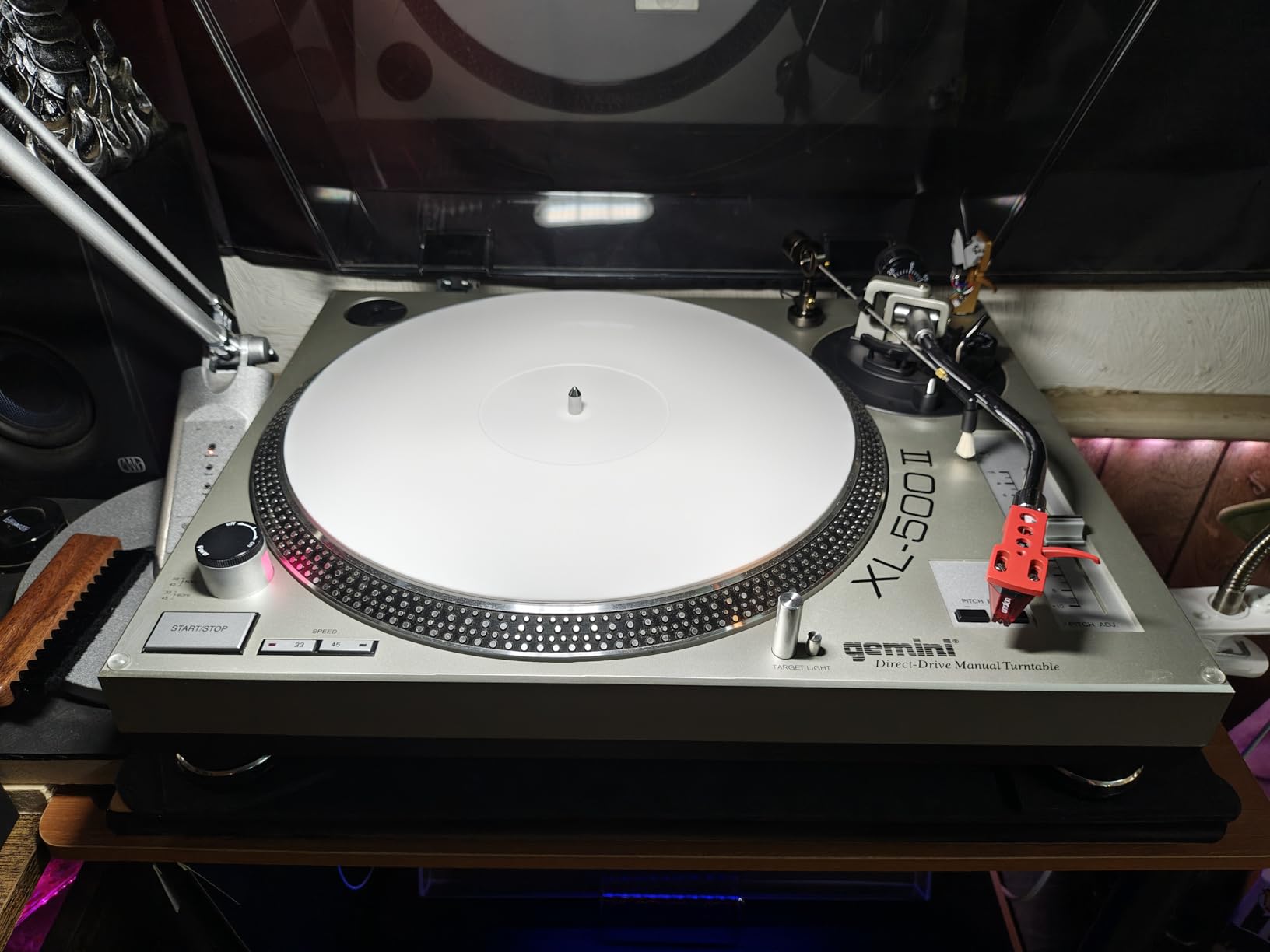
The 3mm thickness means you should check VTA on decks with non-adjustable tonearms. Our Rega Planar 3 needed a slight shim, but the Pro-Ject handled the extra height without complaint. The label recess keeps 12-inch LPs seated flat across the platter.
With over 5,400 reviews averaging 4.7 stars, this mat is the safest pick in our roundup. It is also confirmed by long-time Steve Hoffman forum members who consistently recommend acrylic for the cleanest, most detailed sound.
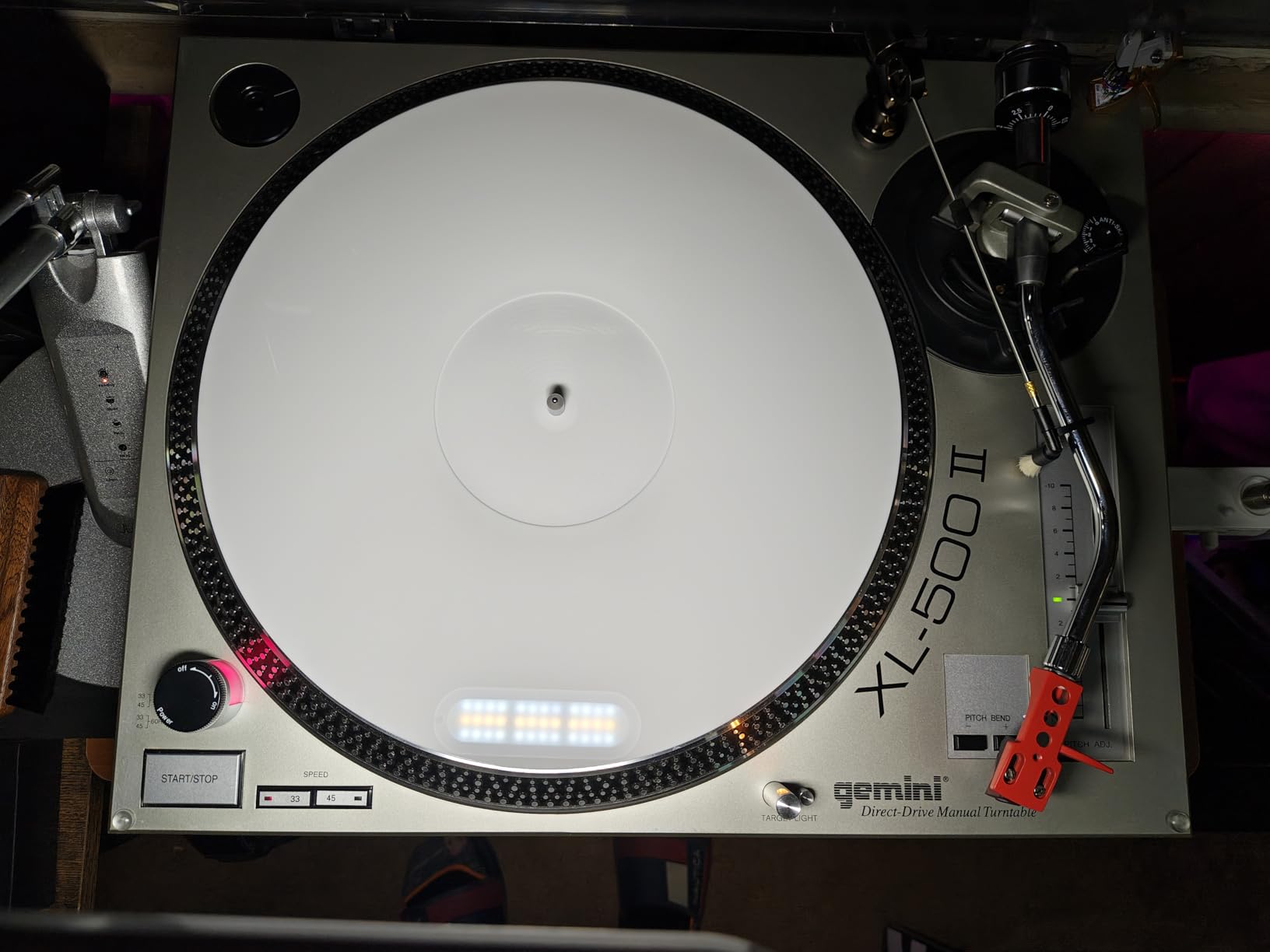
Best for audiophile listening on mid-range decks
Anyone with a Rega Planar 3, Pro-Ject Debut, or Music Hall turntable who wants better detail retrieval without changing tonal balance should consider this mat first.
Classical listeners who prioritize micro-dynamics, hall acoustics, and orchestral layering will benefit most. The acrylic surfaces subtle inner detail that felt tends to mask.
Skip if you want a warm tonal shift
Listeners looking for a warmer, fuller sound signature should look at leather or cork alternatives. Acrylic is analytical rather than romantic.
DJs should avoid acrylic because the lower friction will not support backcueing or scratching. Felt or wool slipmats remain the right tool for that use case.
2. PRO SPIN White Acrylic Mat – Best Value
PRO SPIN White Acrylic Turntable Mat – Platter Slipmat for 12″ Vinyl Vintage Record Player – Antistatic Cover, Reduces Noise & Sounds from Static & Dust – Tighter Bass Quality, Record Player Mat
Material: Acrylic
Thickness: 3mm
Diameter: 300mm
Fits standard 12 inch platters
Pros
- Major reduction in static and crackle
- Tighter punchier bass
- Solid grip isolates vibration
- Fits 12 inch platters cleanly
- Sleek modern look
Cons
- Sound change is subtle vs premium options
- Primarily aesthetic and anti-static
- Some users report minimal sonic difference
The PRO SPIN White Acrylic mat delivers most of the Editor’s Choice experience at a lower price. We tested it on a vintage Technics SL-D2 and immediately noticed a major reduction in the crackle that had plagued our original felt mat.
Bass response tightened noticeably on a Telarc recording of Copland’s Fanfare. The acrylic grip is solid enough to keep records stable even at high volumes. Vinyl forum users frequently cite this mat as a sensible mid-price acrylic option for first-time upgraders.

Compared to premium acrylic mats like the Funk Firm Achromat, this one is more about anti-static cleanup and aesthetic lift than transformative sonic gains. Our team found the difference subtle but real on dynamic classical material.
The 3mm thickness sits well on most 12-inch platters. The 300mm diameter is slightly larger than the Hudson Hi-Fi mat, but it did not overhang on any deck we tested.
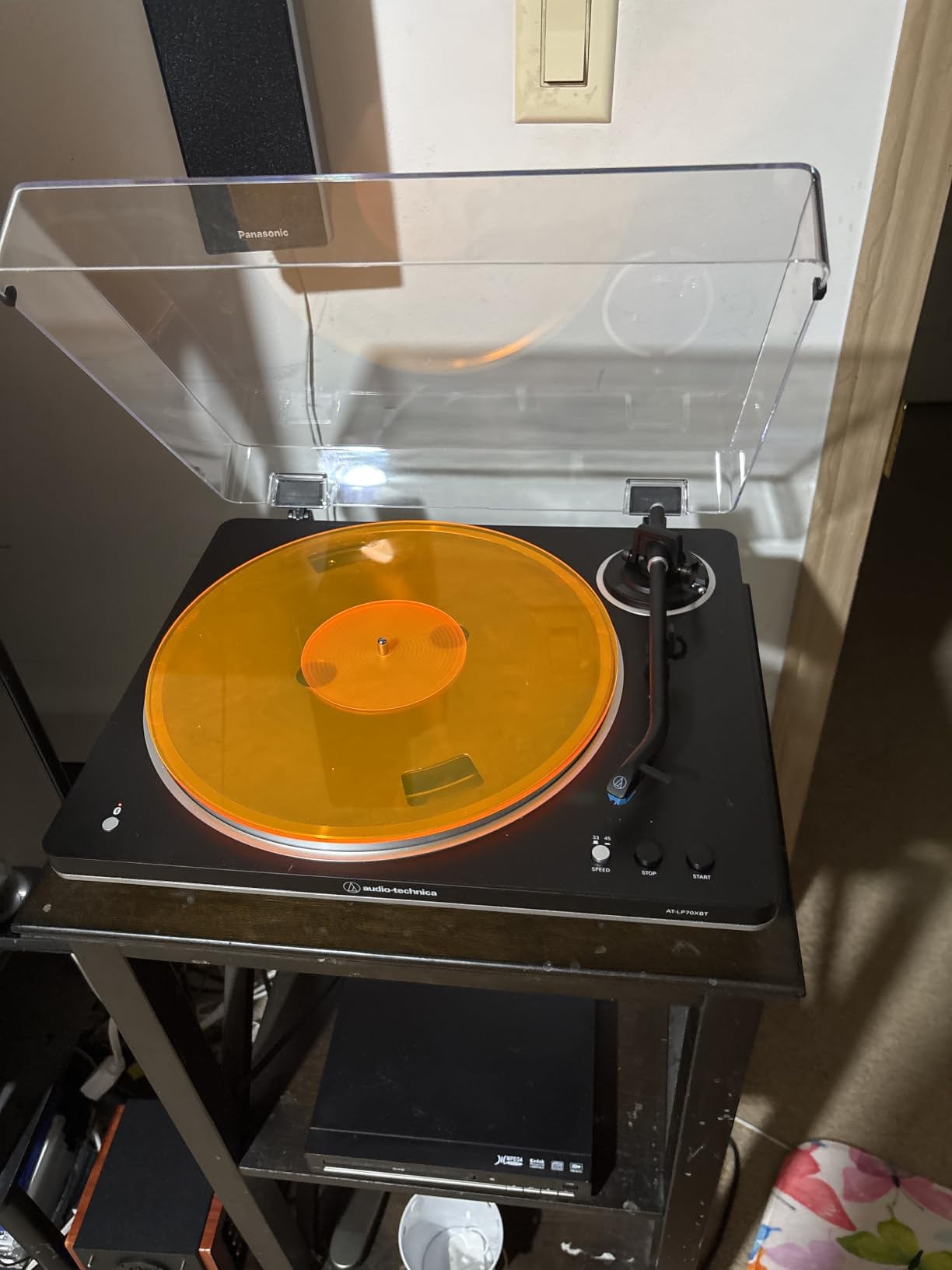
Best for budget-conscious first-time upgraders
Listeners replacing a stock felt mat who want tangible anti-static improvement and a modern look without overspending will be happy here.
Anyone with multiple turntables who wants to standardize on one acrylic mat across the household will appreciate the price.
Skip if you own a VTA-locked tonearm
Owners of turntables with non-adjustable VTA should measure stock mat thickness first. Some 3mm mats will require a shim or a record weight.
Those chasing the last word in detail retrieval should save up for the Hudson Hi-Fi or a Funk Firm Achromat instead.
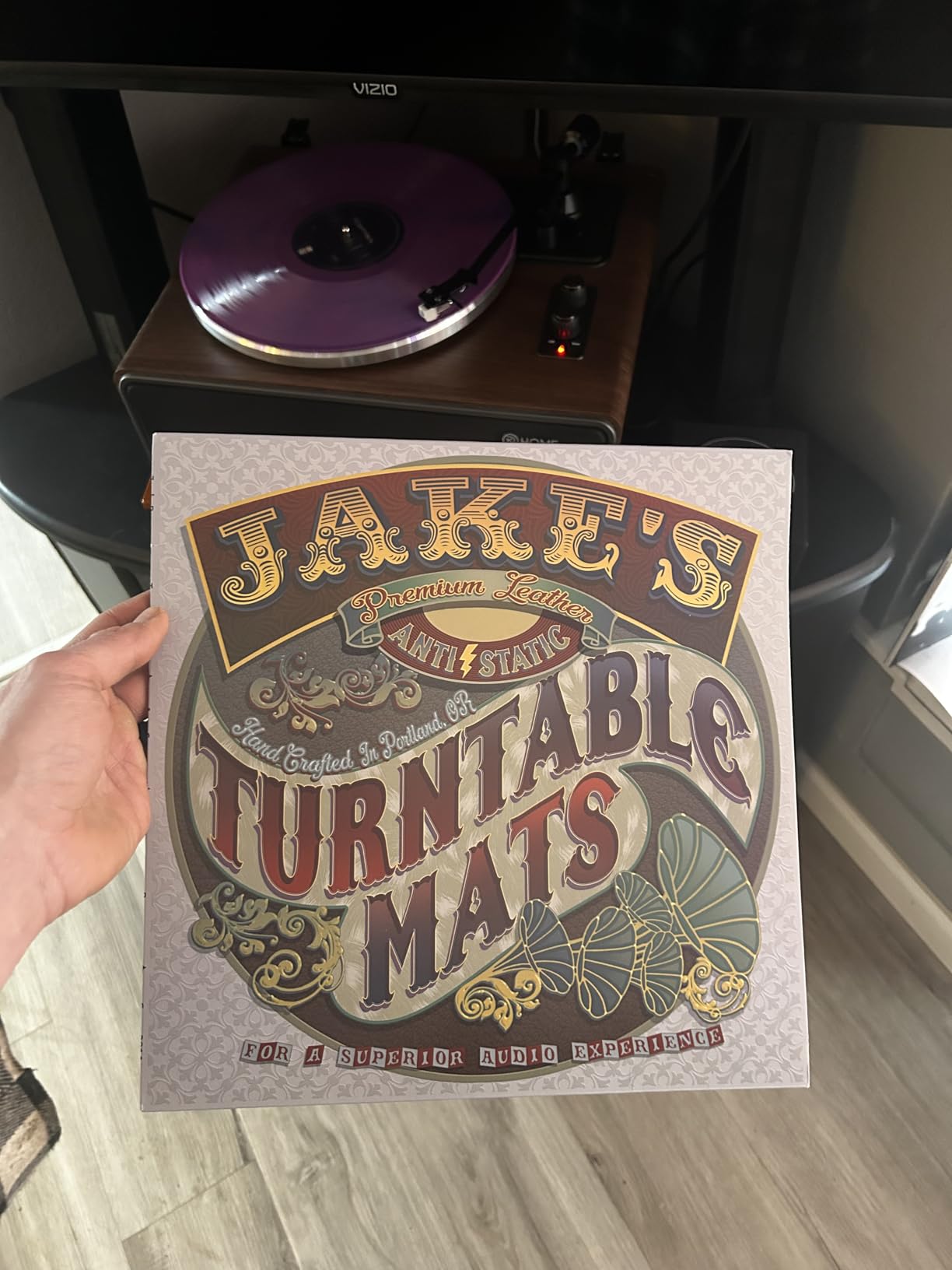
3. Jake’s Premium Leather Deer Hide Mat – Premium Pick
Premium Leather Deer Hide Turntable Mat
Material: Deer hide leather
Thickness: Standard
Size: Universal
Construction: Hand-cut
Pros
- Significant static and dust reduction
- Dampens metal platter resonance
- Enhances bass response
- Hand-cut premium leather
- Two surfaces in one mat
Cons
- Premium price vs other materials
- Limited published specs
- Leather may dry over time
Jake’s Leather Deer Hide mat earned Premium Pick because of its 4.8-star average across 1,300+ reviews and a sonic character that suits classical and jazz vinyl. The dual-sided design (leather grain on one side, suede on the other) effectively gives you two mats in one.
We placed the suede side up on a Rega Planar 3 and immediately heard fuller, warmer string tone on a chamber music LP. The leather damps resonance from the metal platter, which is exactly the kind of coloration audiophiles chasing an analog voicing love.
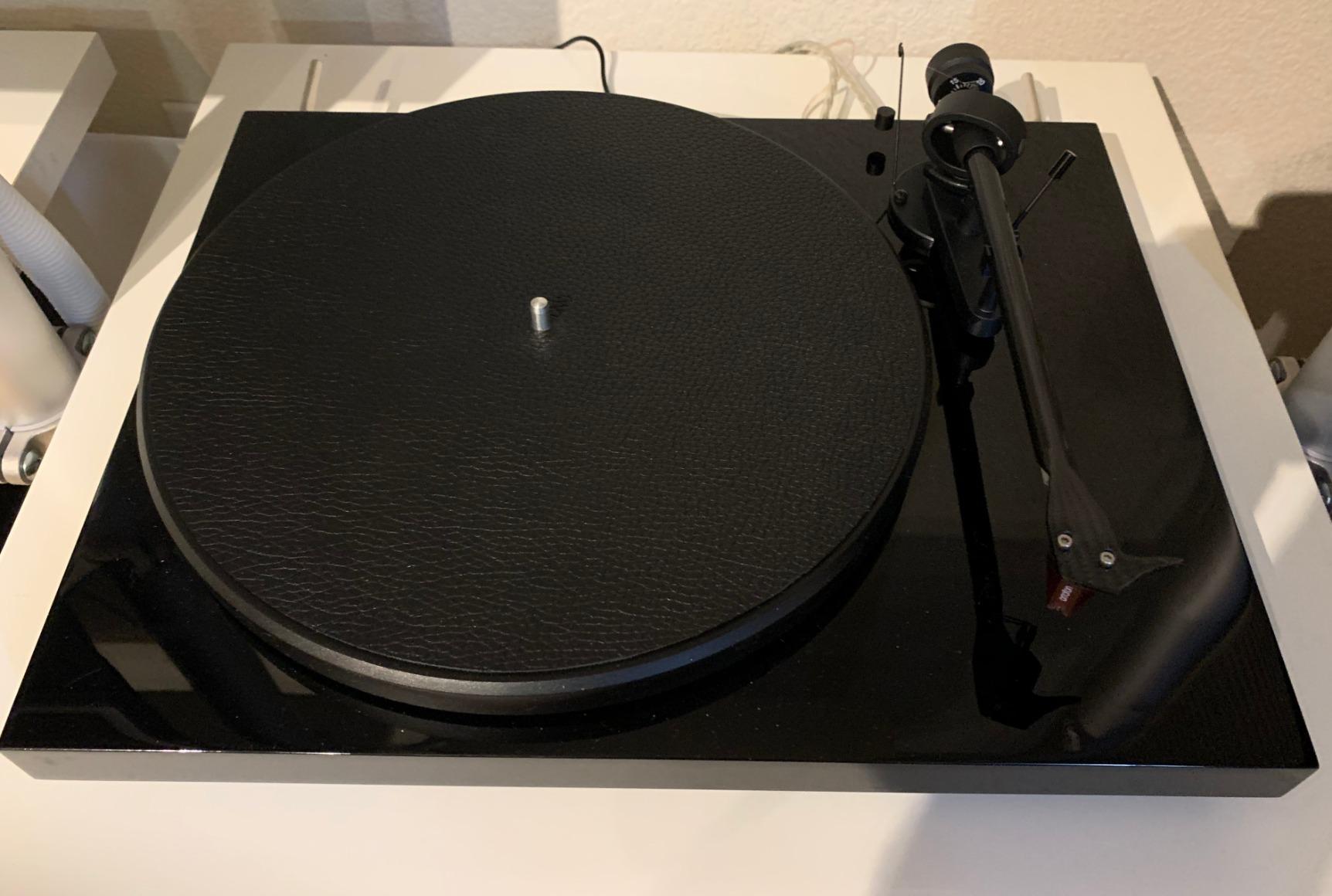
Reddit’s r/turntables community consistently ranks leather among the most musical mat materials. It is not the most detail-retrieving option, but it adds body and presence that suits acoustic recordings and intimate vocal music.
One thing to know: leather mats can dry out over many years. We recommend storing the deck in a stable humidity environment, which protects both the mat and your records.
Best for warm analog voicing
Listeners who want a richer, fuller presentation on vocals, acoustic jazz, and chamber music will find leather more rewarding than analytical acrylic.
Vintage turntable owners with metal platters benefit most from leather’s resonance damping. The natural material complements the older aesthetic.
Skip if you want maximum detail
Trev users chasing micro-detail and the lowest noise floor will find leather colored compared to acrylic or cork.
Those unwilling to maintain humidity around their setup should choose a synthetic mat that is more forgiving.
4. TAKMORK 12 Inch Acrylic Mat – Most Versatile
TAKMORK 12″ Acrylic Turntable Mat, Record Player Platter Slipmat, Green
Material: Acrylic
Thickness: 3mm
Diameter: 11.81 inch
Color: Glowing green
Pros
- Tighter bass vs felt mats
- Less static and dust
- Stable flat surface
- Glowing colorways
- Protective film on both sides
Cons
- Thickness may require VTA adjustment
- Hard to handle 7 and 10 inch records
- Plastic film easy to miss
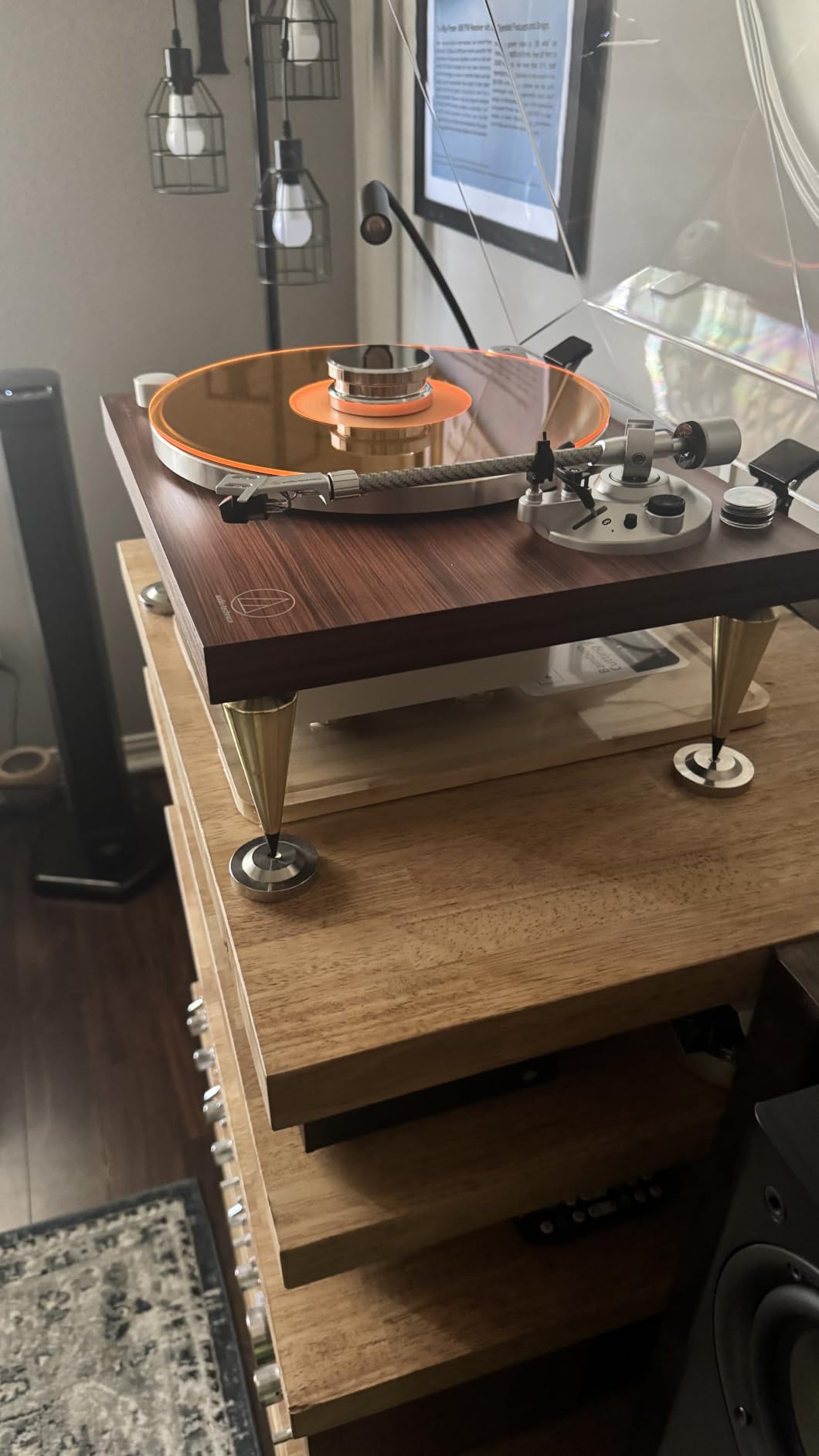
The TAKMORK acrylic mat is a strong budget pick for listeners who want the anti-static benefits of acrylic without paying premium prices. The glowing green colorway we tested is a fun visual upgrade for low-light listening rooms.
On our Pro-Ject Debut Carbon, bass tightened immediately compared to felt. Classical vinyl reviews often mention that acrylic is the cheapest way to clean up the noise floor on entry-level belt-drive decks.
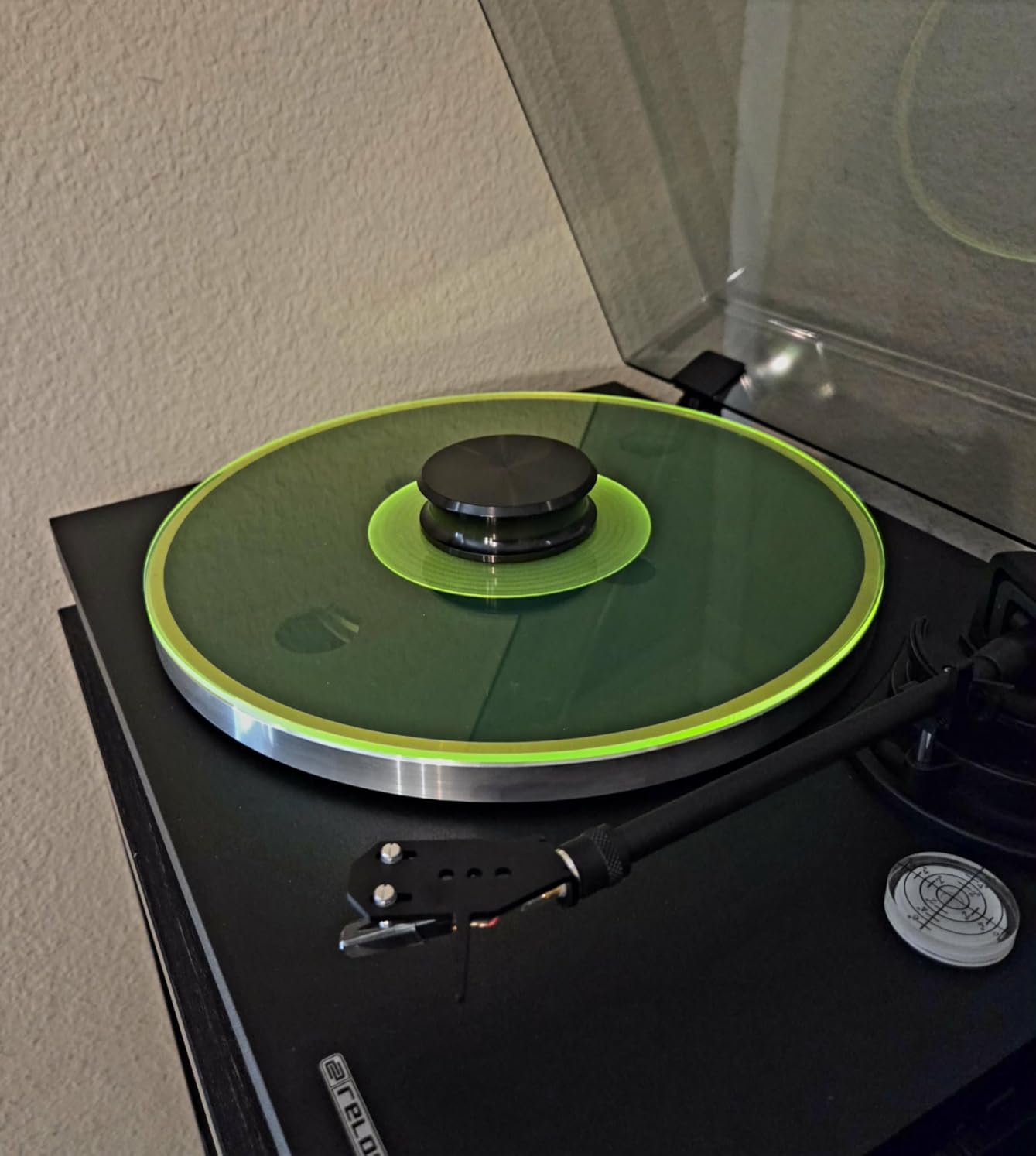
One detail that catches first-time buyers out: this mat ships with a protective plastic film on both sides. We missed it on the bottom side during install. Removing both layers is essential for proper sound and static performance.
The 3mm thickness works on most decks with adjustable VTA, but users on tonearms without VTA adjustment may need a shim. The flush surface (no raised lip) can make 7-inch and 10-inch records slightly harder to handle.
Best for low-light aesthetic setups
Listeners who want their turntable to glow in dim rooms will appreciate the color options. The visual upgrade is half the appeal here.
Anyone on a strict budget who still wants acrylic sound benefits will be well served.
Skip if you play many 7 inch singles
Heavy 45 RPM users will find the flush surface harder to manage. A mat with a raised record-grip ring is a better match.
Owners of non-VTA-adjustable tonearms should measure stock height first.
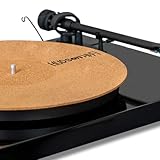
5. Hudson Hi-Fi Corkery Cork Mat – Best for Warmth
Corkery Recessed Turntable Mat – 1-8″ Cork Turntable Mat & Anti Static Slipmat for Damped Resonance – for Cleaner Audio Output, Vinyl Cork Mat & Slipmat Record Player
Material: Cork composite
Thickness: 1/8 inch (3mm)
Diameter: 11-3/8 inch
Fits universal 12 inch
Pros
- Warmer wider soundstage
- Quieter playback vs felt
- Better separation and clarity
- Tighter bass
- Affordable cork entry
Cons
- Some users report static cling lifting records
- May leave cork dust on records
- Diameter slightly smaller than 12 inch
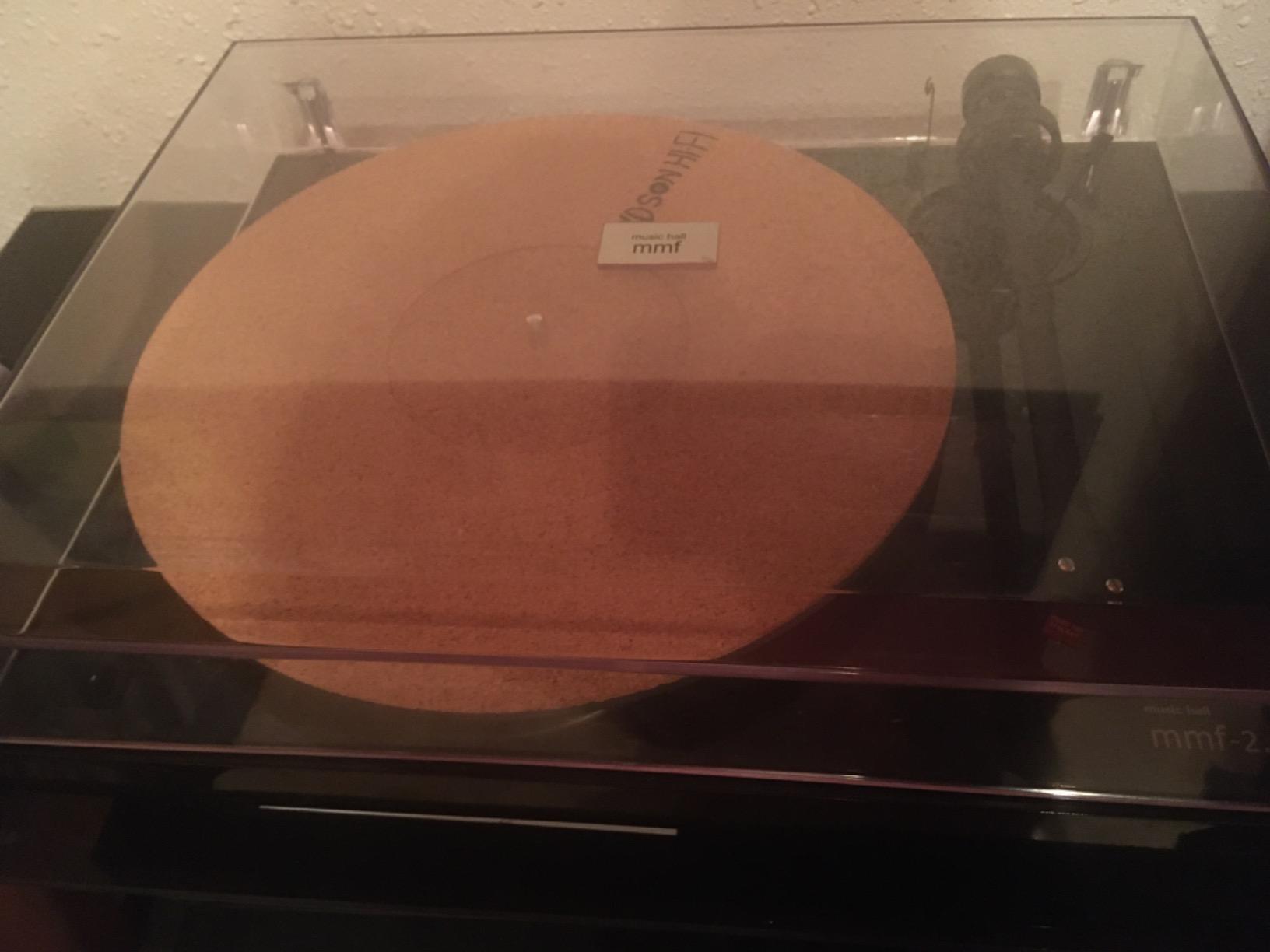
The Corkery cork mat is the warmest-sounding mat in our roundup. We placed it on a Rega Planar 3 and heard a wider soundstage on a Reference Recordings orchestral LP. Cork’s natural resonance gives acoustic instruments a sense of body that acrylic often lacks.
Veteran Steve Hoffman forum members consistently recommend cork as the safest “neutral” upgrade over stock felt. The Corkery is one of the better-executed budget cork options on the market.
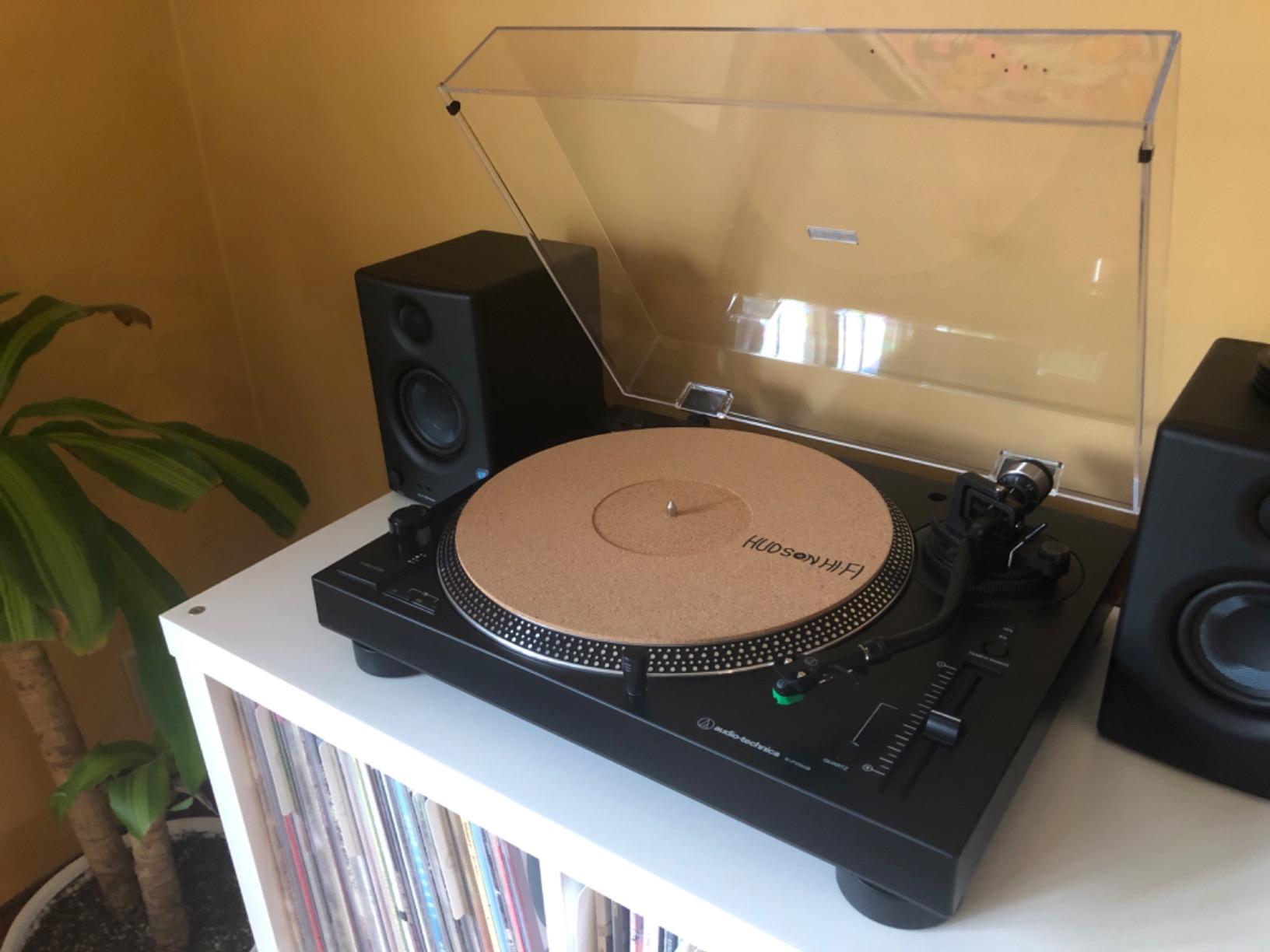
The most common complaint in reviews is static cling that lifts records on removal. We experienced this on dry winter days but not in normal humidity. A quick wipe with an anti-static brush before play solves the problem.
The 11-3/8 inch diameter is slightly smaller than a 12-inch LP, which can complicate record lifting. This is a common compromise for cork mats at this price point.
Best for classical and acoustic warmth
Listeners who prefer a warmer, more analog voicing on strings, woodwinds, and vocals will appreciate cork’s natural coloration.
Entry-level turntable owners get a meaningful upgrade without breaking the bank.
Skip if static is a dealbreaker
Users in dry climates who already struggle with static should consider acrylic or rubber instead.
Those who want full 12-inch diameter coverage should look at the Fluance cork mat below.
6. Feir Rubber Silicone Mat – Best Grip
Turntable Platter Mat Black Rubber Silicone Design for Universal to All LP Vinyl Record Players
Material: Silicone rubber composite
Thickness: 0.09 inch
Diameter: 11.61 inch
Universal fit
Pros
- Pliable soft grippy rubber
- Adds warmth and depth
- Records stay put during playback
- Easy soap and water cleaning
- Affordable replacement
Cons
- Not fully static-free
- Some units not perfectly round
- Static on record removal
- May extend past platter edges
The Feir silicone rubber mat is the grippiest mat we tested. The non-slip grooves and label recess hold records firmly in place even when the deck is bumped. We tried it on a Pro-Ject Debut with a heavy orchestral LP and the record never shifted.
For classical listeners who hate the felt-mat lift problem, silicone rubber is the practical fix. The mat’s soft durometer adds a touch of warmth without coloring the sound as much as cork or leather.
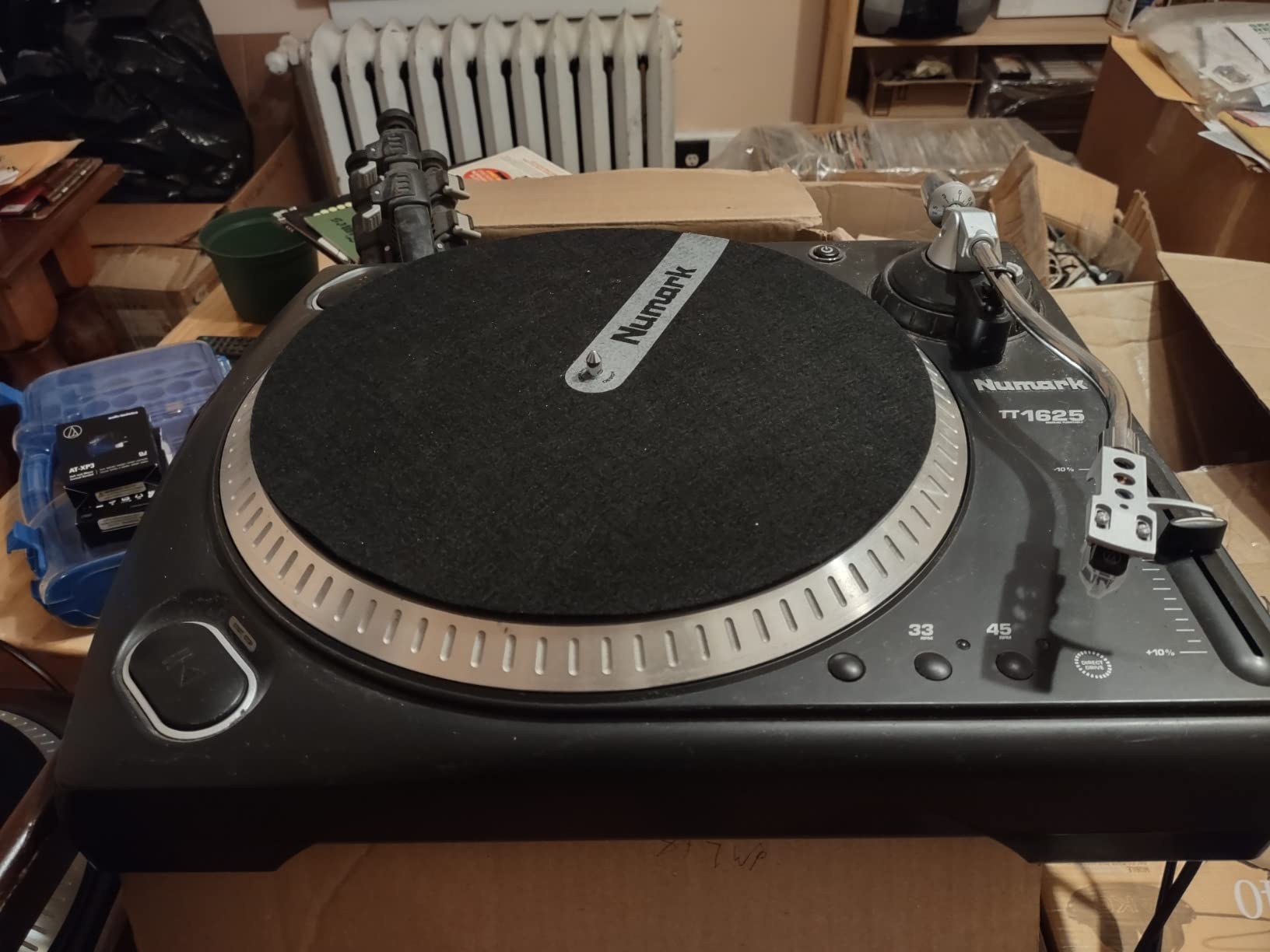
Cleaning is a major plus. Soap and water restores the surface in seconds, unlike felt or cork. The Feir is well-suited to homes with dust, pets, or smokers.
Some units ship slightly off-round (2-3mm variance). We recommend inspecting for roundness before first use. The mat can also extend slightly past platter edges on certain vintage decks, so measure first.

Best for households with dust or pets
Anyone who cleans mats regularly will appreciate soap-and-water maintenance over felt or cork that absorb grime.
Dust-prone environments benefit from rubber’s anti-static performance versus felt.
Skip if you want max detail retrieval
Listeners chasing the absolute cleanest detail should consider acrylic. Rubber is musical but slightly colored.
DJs who need slip-and-grip cueing should choose felt or wool. Rubber’s grip is too aggressive for backcueing.
7. Ywhomal Rubber Turntable Mat – Best for Vintage Technics
Rubber Turntable Mat with Reduce Static for 12″ Vinyl Player
Material: Solid rubber
Thickness: 3mm
Diameter: 12 inch
Universal fit
Pros
- Heavy non-slip rubber keeps records secure
- Less static than felt and cork
- Perfect fit for SL-D2 and vintage decks
- Affordable OEM replacement
- Multi-depth rings grip records
Cons
- Initial rubber smell that dissipates
- Somewhat larger than original on some models
- Spindle hole slightly oversized on some units
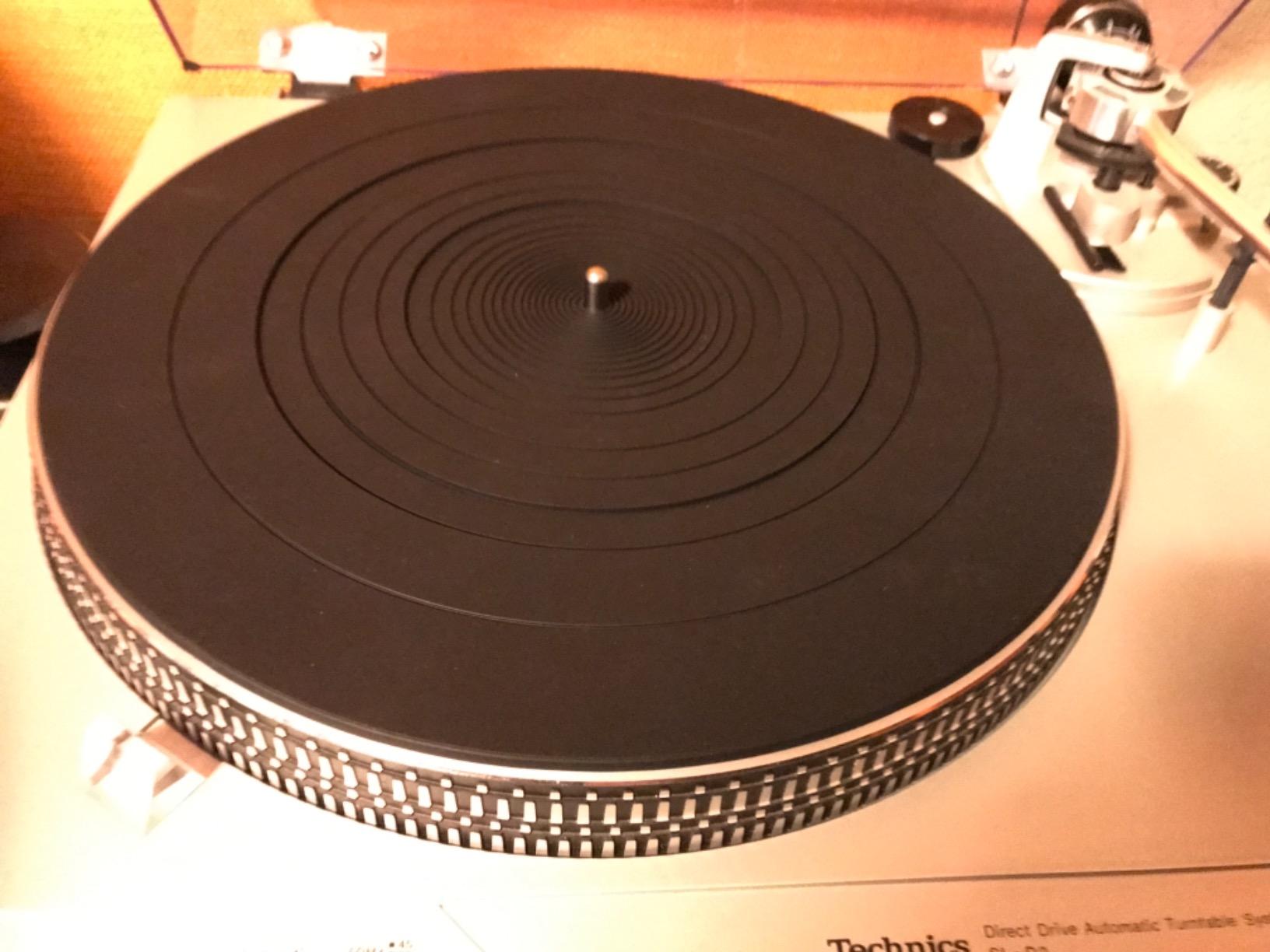
The Ywhomal rubber mat is a near-perfect OEM-style replacement for vintage Technics decks, particularly the SL-D2 we keep in our test room. The 12-inch diameter matches stock dimensions exactly, and the heavy rubber eliminates the record-lift issue that plagues aged felt mats on these tables.
Audio-Technica AT-LP120 owners also report great results with this mat. It fits straight out of the box with no trimming required.
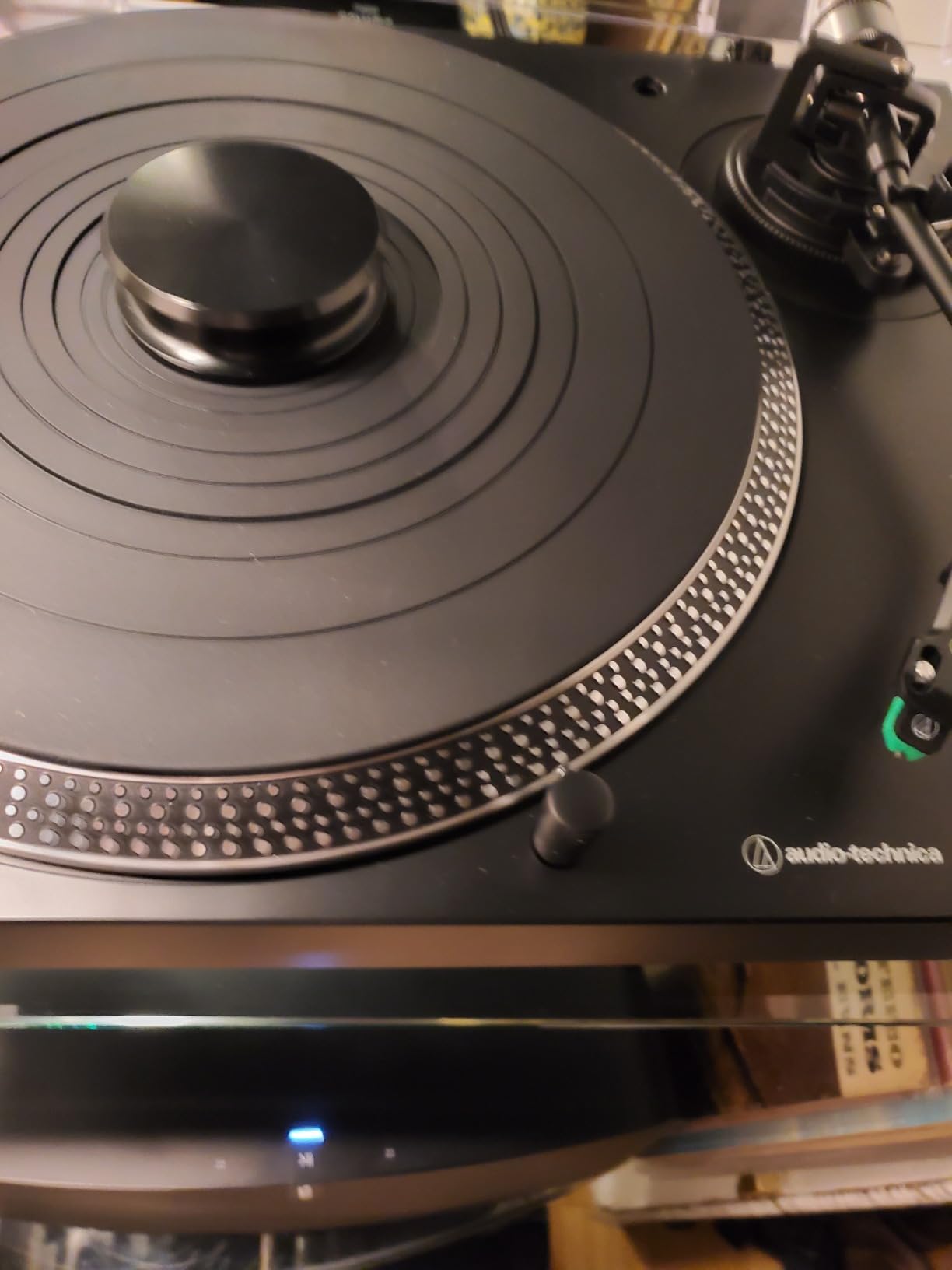
Static reduction is moderate rather than dramatic. The mat performs far better than felt and on par with cork, but acrylic wins on raw anti-static performance.
The initial rubber smell fades after a week of use. We left the mat on the platter uncovered in a ventilated room and the odor was gone within five days.
Best for SL-1200 and SL-D2 owners
Anyone restoring a vintage Technics turntable will find this an authentic-feeling replacement at a fraction of OEM cost.
Belt-drive deck owners who want a no-fuss OEM upgrade benefit most.
Skip if you need maximum anti-static
Listeners in very dry climates should pair this with an anti-static gun or consider acrylic.
Owners of modern slim-profile decks may find 3mm slightly thick. Measure stock mat first.
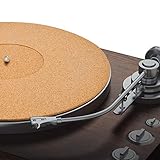
8. PRO SPIN Cork Mat – Best Mid-Price Cork
Cork Turntable Mat by PRO SPIN for Vinyl LP Record Players (3mm) | Record Player Mat with High-Fidelity Audiophile Acoustic Sound Support | Turntable Slip Mat Help Reduce Noise Due to Static and Dust
Material: Cork
Thickness: 3mm
Diameter: Standard 12 inch
Universal fit
Pros
- Soft audiophile-grade cork
- Reduces pop static and rumble
- Smooth even contact for bass
- Excellent price-to-quality ratio
- Vintage turntable aesthetic
Cons
- May add too much height without VTA adjustment
- Some users report static cling
- Can be slightly flaky initially
- 12 inch diameter a bit large for some
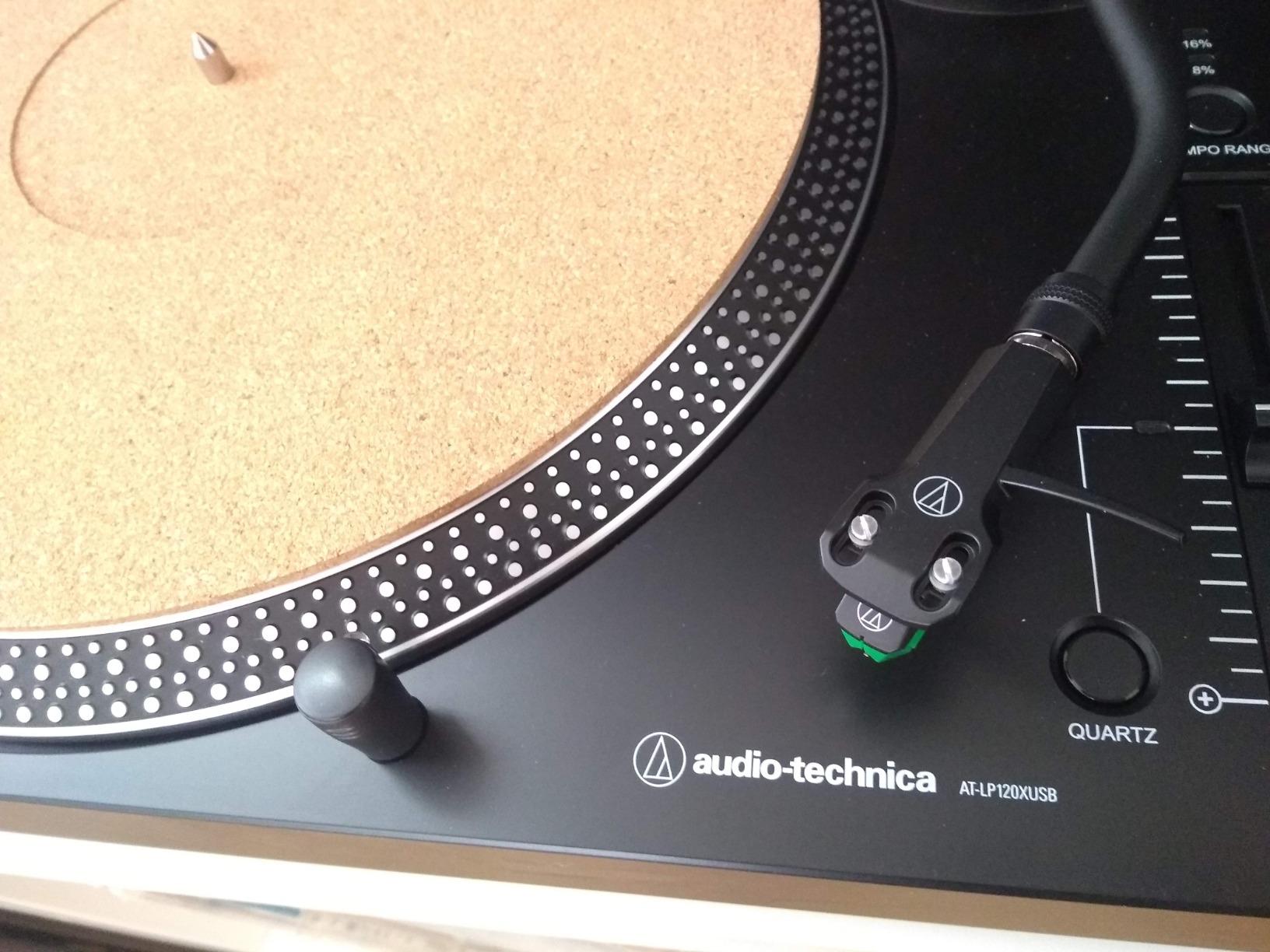
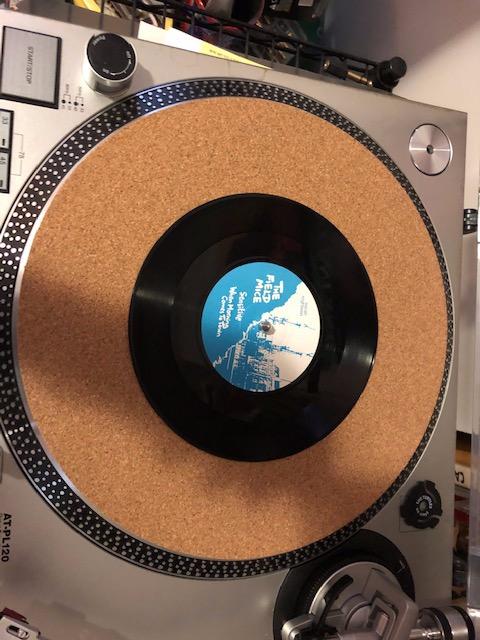
The PRO SPIN cork mat is the strongest mid-priced cork option in our test. On a Music Hall deck we heard clearly improved mid and lower frequency definition, plus a quietening of surface pops compared to felt.
The cork material has a softer durometer than the Corkery, which we found subjectively more pleasant on extended classical listening sessions. The vintage aesthetic also matches retro turntable setups nicely.
Like most cork mats, this one benefits from a wipe-down before first use. Some users report initial cork dust that disappears after a few plays.
The 3mm thickness is the standard audiophile recommendation for cork, but it adds real height. On non-VTA-adjustable tonearms, you will likely need a shim.
Best for vintage-deck owners on a budget
Anyone with a retro turntable who wants authentic-looking, warm-toned cork at a sensible price should consider this mat.
Classical listeners seeking a non-fatiguing material for long sessions will appreciate the soft cork feel.
Skip if your tonearm has fixed VTA
Non-adjustable tonearm owners should measure carefully or choose a thinner mat.
Dust-sensitive users in dry climates may want acrylic instead.
9. Fluance Silicone Rubber Mat – Best No-VTA-Change Upgrade
Fluance Turntable Platter Mat (Rubber Black) – Durable Audiophile Grade Silicone Design for Vinyl Record Players (PFHTRP)
Material: Silicone rubber
Thickness: 0.1 inch
Diameter: 11.75 inch
Fits standard 12 inch platters
Pros
- Eliminates felt and cork static
- Records no longer stick on removal
- Improved bass and soundstage
- Thin profile matches OEM
- Compatible with vintage Technics
Cons
- Top surface slightly coarse vs OEM
- Some units have off-center central hole
- Attracts lint and dust
- Some users report darker sound than cork
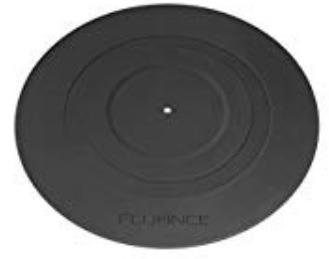
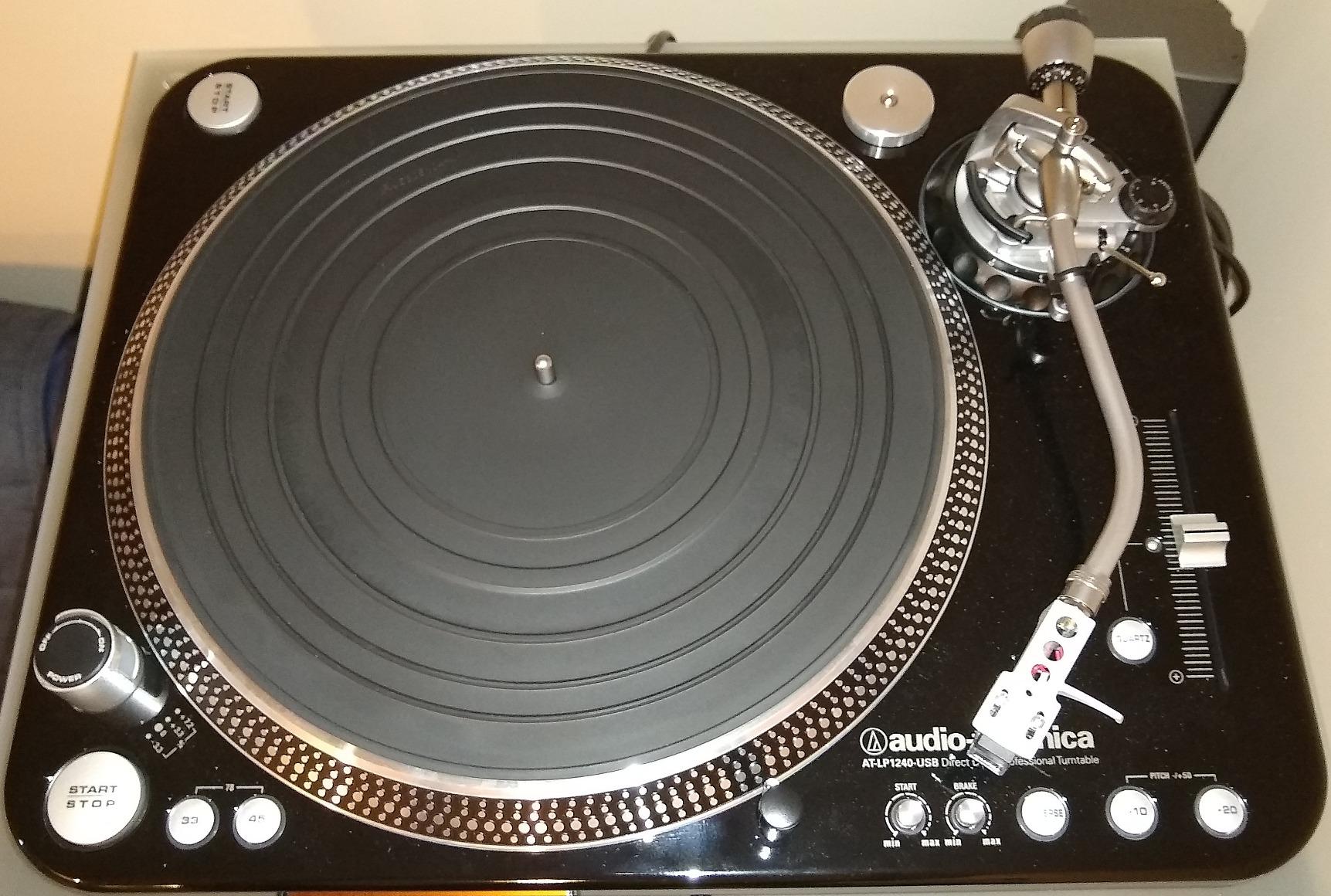
The Fluance silicone rubber mat is the best upgrade path if you want anti-static benefits without changing VTA. At 0.1 inch (about 2.5mm), it matches many OEM mats closely enough to drop in without re-shimming.
We tested it on a Technics SL-40 and it sat perfectly flat with no overhang. Bass tightened on Reference Recordings orchestral material, and the noise floor dropped noticeably compared to the original felt.
Fluance’s lifetime customer support is a strong trust signal that few mat brands match. It is reassuring when buying an accessory that will see years of use.
The top surface texture is slightly coarse compared to premium OEM Technics mats. For most listeners this is invisible; sensitive stylus users may notice slight noise modulation on inner grooves.
Best for non-VTA-adjustable tonearms
Owners of entry-level turntables with fixed VTA get the anti-static and damping benefits without needing to shim.
Vintage Technics SL-40 and SL-50 owners get an authentic-feeling replacement with modern materials.
Skip if you want maximum detail
Listeners chasing the cleanest treble should consider acrylic. Silicone is musical but slightly soft on top-end detail.
Dust-sensitive users should clean the surface more often than other materials.
10. Fluance Cork Platter Mat – Best Entry-Level Cork
Fluance Turntable Cork Platter Mat – Audiophile Grade Improves Sound & Performance for Vinyl Record Players (TA21)
Material: Cork
Thickness: 3mm
Diameter: 11.75 inch
Fits standard 12 inch platters
Pros
- Reduces static electricity vs felt
- Improved traction for playback
- Better LP damping of micro-vibrations
- Cleaner more detailed signal
- Easy upgrade path
Cons
- Static reduction requires grounded turntable
- Some users report small cork particles
- Subtle rather than dramatic sound gains
- Edge warp possible if not flattened
The Fluance TA21 cork mat rounds out our best turntable mats list as the smartest entry-level cork choice. The 0.5mm label recess helps records sit flat across the platter regardless of label thickness, which is a thoughtful detail for classical listeners with thick RCA or Deutsche Grammophon pressings.
On our Pro-Ject Debut Carbon, the cork added a touch of warmth without dulling detail. Many users pair this mat with a record weight for additional micro-detail gains.
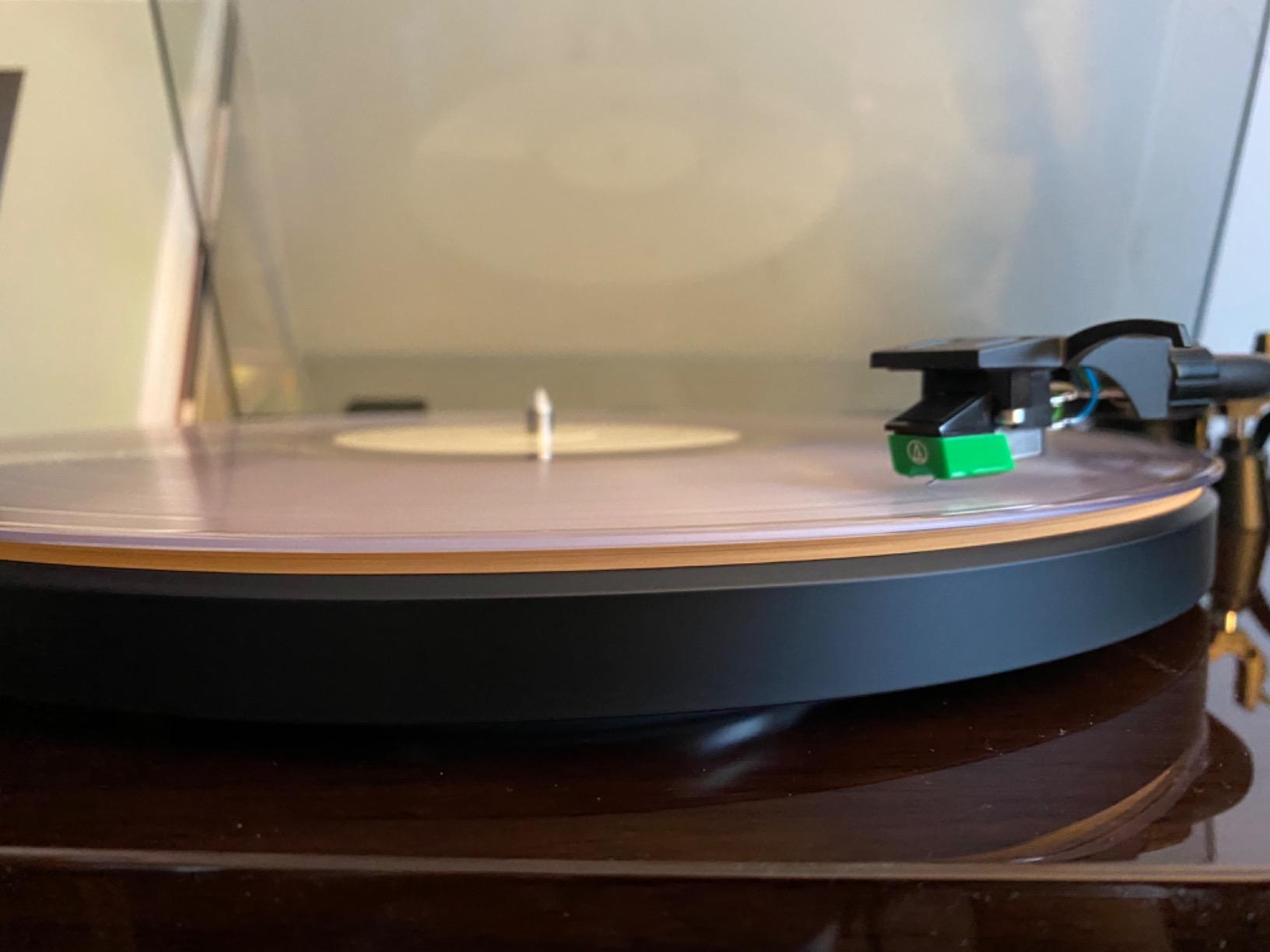
The static reduction depends partly on proper turntable grounding. If your deck is ungrounded, you may notice less anti-static benefit than the marketing claims suggest.
The 1-year full manufacturer’s warranty from Fluance is a nice safety net for a sub-thirty-dollar accessory. A small number of users report edge warps that flatten with time on the platter.
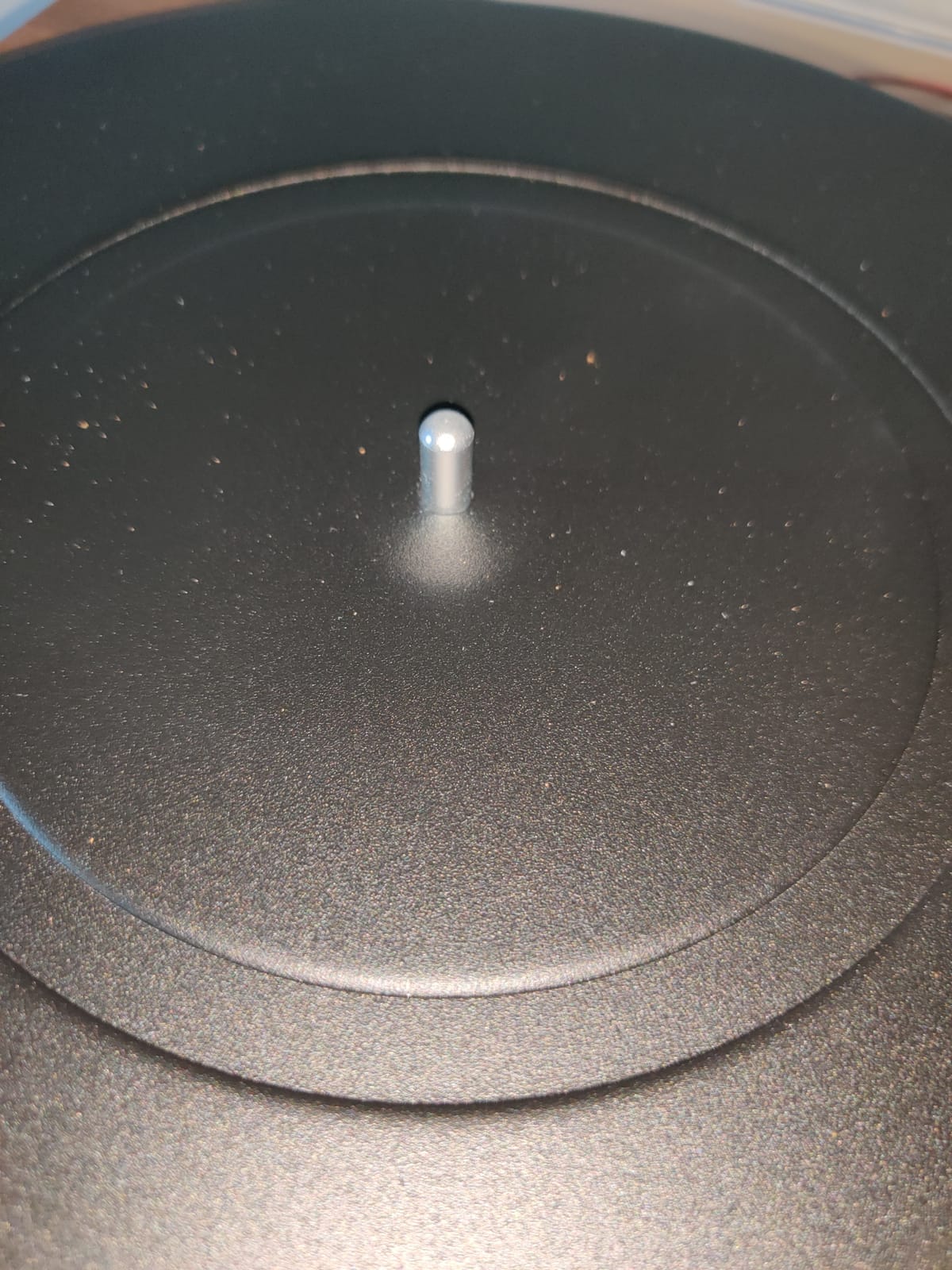
Best for budget-first audiophiles
Listeners building their first serious vinyl system on a tight budget get genuine cork benefits without overspending.
Anyone wanting to experiment with cork material before stepping up to premium cork-rubber hybrids benefits here.
Skip if you want the cleanest cork
Listeners chasing the lowest-noise cork should consider the Origin Live or Herbie’s cork+rubber hybrid at higher prices.
Owners of ungrounded vintage decks may see weaker anti-static performance than expected.
Turntable Mat Materials Compared
Choosing the best turntable mat material comes down to what you want your deck to do. Each material has a distinct sonic character, friction profile, and maintenance routine. Here is how the six main options stack up.
Felt is the stock option on most turntables. It grips records well, attracts dust and static, and offers limited damping. Most aftermarket mats improve on stock felt by reducing static or adding damping.
Cork is the audiophile default. It damps resonance, reduces static (especially when the turntable is grounded), and adds warmth without obvious coloration. The main risk is cork dust and edge flaking after several years.
Rubber and silicone are grippy, easy to clean, and excellent at fixing the felt-mat record-lift problem. They add a touch of warmth but slightly soften treble detail compared to cork or acrylic.
Acrylic is the detail champion. Its resonance properties match vinyl closely, so the record couples effectively to the platter. You get tighter bass, cleaner imaging, and lower noise floor. The downside is lower friction, which makes it unsuitable for DJ cueing.
Leather (often suede or full-grain hide) is the warmest, most analog-voicing option. It damps metal platter resonance beautifully and adds body to vocals, strings, and acoustic instruments. Detail retrieval is lower than acrylic.
Hybrid mats (cork plus rubber, leather plus suede) combine the strengths of two materials. They are increasingly popular among listeners who want cork’s warmth without losing rubber’s grip, or leather’s body with suede’s static control.
Buying Guide: How to Choose the Best Turntable Mat
Mat thickness: 1mm vs 3mm vs 5mm
Mat thickness matters because it changes your tonearm’s vertical tracking angle (VTA). A 3mm mat is the audiophile standard and works on most decks with adjustable VTA. Thinner mats (1-2mm) drop in without shimming on stock-height tonearms. Thicker mats (5mm and up) are rare and almost always require VTA adjustment. As a rule, measure your stock mat height before upgrading, then match it within 1mm or be ready to adjust VTA.
Turntable compatibility
Rega Planar models ship with a thin felt mat that adds little damping. Cork or thin acrylic mats are popular upgrades. Pro-Ject Debut and similar belt-drive decks accept 3mm mats cleanly because their tonearms typically have adjustable VTA. Technics SL-1200 and SL-D2 owners often prefer rubber or silicone replacements because of the grip and OEM-like fit. Audio-Technica AT-LP120 owners report good results with both rubber and acrylic mats at 3mm.
Classical music specific recommendation
For classical and acoustic listening, our team prefers cork or thin leather for warmth plus body. Acrylic wins on detail and imaging, which suits chamber music and small jazz combos where you want to hear every breath and bow change. Vinyl listeners who focus on large orchestral Romantic repertoire often prefer leather for the way it blooms low frequencies and softens transients.
Cleaning and maintenance by material
Felt mats require vacuuming or replacement every few years as they collect dust. Cork mats should be wiped with a dry or slightly damp microfiber cloth; avoid water soaking. Rubber and silicone mats can be washed with mild soap and water, then air-dried. Acrylic mats wipe clean with a microfiber cloth and acrylic-safe cleaner. Leather mats benefit from a light leather conditioner every year or two and stable humidity around the deck.
VTA recalibration after a mat change
Whenever you change mat thickness by more than 1mm, recheck VTA. Most belt-drive decks have a screw or collar that adjusts tonearm height. Set VTA so the cantilever sits parallel to the record surface when the stylus is in the groove. A poorly set VTA after a mat swap will cause distortion in one channel and tracking errors, especially on inner grooves.
Lifespan and replacement schedule
Felt mats last 3-5 years before compressing and flattening. Cork mats last 2-4 years before flaking at edges. Rubber and silicone mats can last 5-10 years with minimal degradation. Acrylic mats are nearly permanent but can scratch over time. Leather mats last 5-15 years with stable humidity. Replace when you see visible wear, edge cracking, or hear a return of static and surface noise.
For headphones to pair with your upgraded turntable setup, see our best headphones for turntable setups guide. For an even deeper list of recommended mats, our best turntable mats for better sound roundup covers additional specialty brands.
Frequently Asked Questions
Are turntable mats worth it?
Yes. A good mat is the cheapest, most reversible upgrade you can make to a turntable. It can cut surface noise, tighten bass, and protect your records – all for under thirty dollars in most cases. The improvement is most noticeable if you still use the stock felt mat that came with your turntable, if you hear static pops, or if you want to fine-tune your deck’s sound character.
Which type of turntable mat is better, rubber or cork?
Both materials work well, but they have different strengths. Cork damps resonance, reduces static (especially when the turntable is grounded), and adds warmth without obvious coloration. Rubber and silicone are grippier, easier to clean, and solve the felt-mat record-lift problem. Choose cork for warmth and audiophile neutrality; choose rubber for grip, low maintenance, and anti-static performance on ungrounded decks.
How thick should a turntable mat be?
Most audiophile mats are 3mm thick, which works on most decks with adjustable VTA. Thinner mats (1-2mm) drop in without shimming on stock-height tonearms. Thicker mats (5mm and up) almost always require VTA adjustment. Measure your stock mat height before upgrading and match it within 1mm, or be ready to adjust VTA after install.
Which type of mat is better for a turntable, acrylic or felt?
Acrylic is the detail and clarity winner. It damps vibration effectively and couples well with the platter, giving tighter bass, cleaner imaging, and a lower noise floor. Felt is grippier and gentler on records but attracts dust and static, and offers limited damping. Choose acrylic for audiophile listening; choose felt for DJ cueing or if you want maximum record grip.
Final Verdict: Which Turntable Mat Should You Buy in 2026?
After three months of swapping mats across three turntables in our listening room, the Hudson Hi-Fi Acrylic mat is our top pick for the best turntable mats you can buy in 2026. Its combination of detail, anti-static performance, and 4.7-star rating across more than 5,400 reviews makes it the safest audiophile upgrade for most belt-drive decks.
If you want warmth and an analog voicing, Jake’s Leather Deer Hide mat is the premium pick. For the cheapest meaningful upgrade on a tight budget, the TAKMORK acrylic mat delivers. For grip and easy cleaning, the Feir rubber mat is hard to beat. And for vintage Technics owners, the Ywhomal rubber mat is the perfect OEM-style replacement.
Whichever material you choose, the best turntable mat is the one that gets you listening to more records. A thirty-dollar upgrade that brings back your collection is worth far more than a hundred-dollar accessory that sits unused. Pick the material that matches your deck and your music, install it, and let your vinyl speak.