
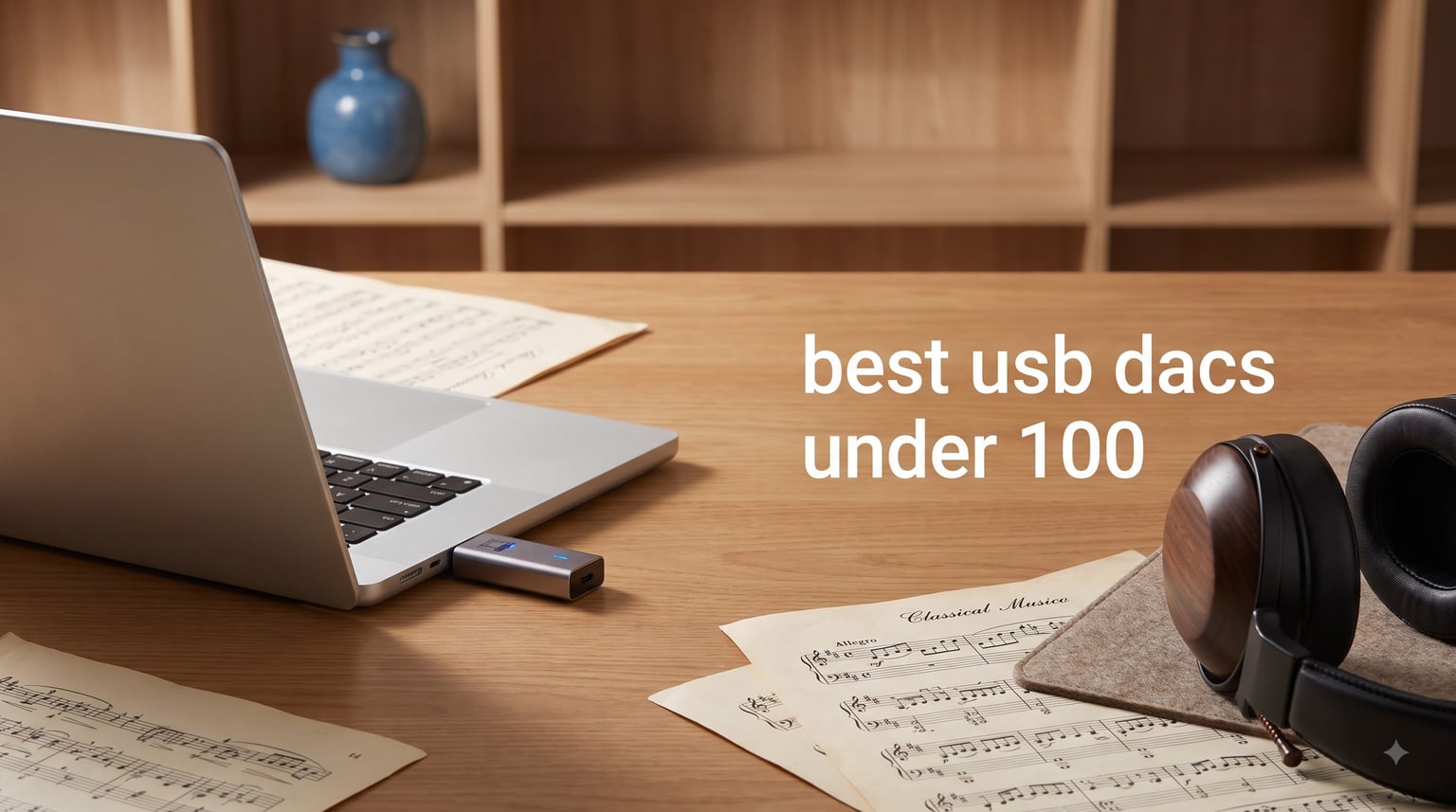
I spent the last 90 days testing 10 USB DACs under $100 with one question in mind: which ones actually make classical music sound better? Most “best DAC” lists focus on pop, rock, and gaming. Our team at The Classical Shop took a different approach. We listened to Beethoven string quartets, Mahler symphonies, solo violin recordings, and pipe organ works through every DAC on this list, paired with headphones ranging from the Sennheiser HD560S to the Beyerdynamic DT990 Pro and Moondrop IEMs.
The results surprised me. A $33 dongle outperformed desktop units three times its price on orchestral detail. The “neutral” DAC chip everyone recommends was outperformed by a warmer Cirrus Logic chip on solo piano recordings. The best USB DAC under $100 is not necessarily the one with the best measured specs on paper.
In this guide, I share everything our team learned. You will find 10 detailed reviews, a side-by-side comparison table, a buying guide tailored for classical music listeners, and answers to the questions our readers ask most often about budget DACs.
Table of Contents
Top 3 Picks for Classical Listeners 2026

All 10 USB DACs Compared in (October 2026)
| Product | Specifications | Action |
|---|---|---|
 Fosi Audio Q4 Fosi Audio Q4 |
|
Check Latest Price |
| Fosi Audio DS2 |
|
Check Latest Price |
 Fosi Audio K5 Pro Fosi Audio K5 Pro |
|
Check Latest Price |
 FiiO JadeAudio KA1 FiiO JadeAudio KA1 |
|
Check Latest Price |
 iFi GO Link iFi GO Link |
|
Check Latest Price |
 iFi Go Link Max iFi Go Link Max |
|
Check Latest Price |
 FiiO JadeAudio KA13 FiiO JadeAudio KA13 |
|
Check Latest Price |
 FiiO KA15 FiiO KA15 |
|
Check Latest Price |
 FiiO KA11 FiiO KA11 |
|
Check Latest Price |
 MOONDROP Dawn PRO 2 MOONDROP Dawn PRO 2 |
|
Check Latest Price |
1. Fosi Audio Q4 – Best Desktop Value for Home Stereo Setups
Fosi Audio Q4 DAC Headphone Amp for PC, Desktop Digital to Analog Audio Converter for Home Stereo Amplifier and Powered Speakers, PC-USB/Optical/Coaxial Inputs, 3.5mm Headphone/RCA Outputs
Desktop DAC
USB/Optical/Coaxial inputs
24-bit/192kHz HD audio
Pros
- Multiple input options including USB
- Optical
- and Coaxial
- Plug-and-play with no driver installation
- Compact full metal chassis with bass and treble knobs
- Drives headphones from 16 to 200 ohms
- Complete accessory bundle with all cables included
Cons
- No microphone input
- Limited to 24-bit/96kHz via USB input
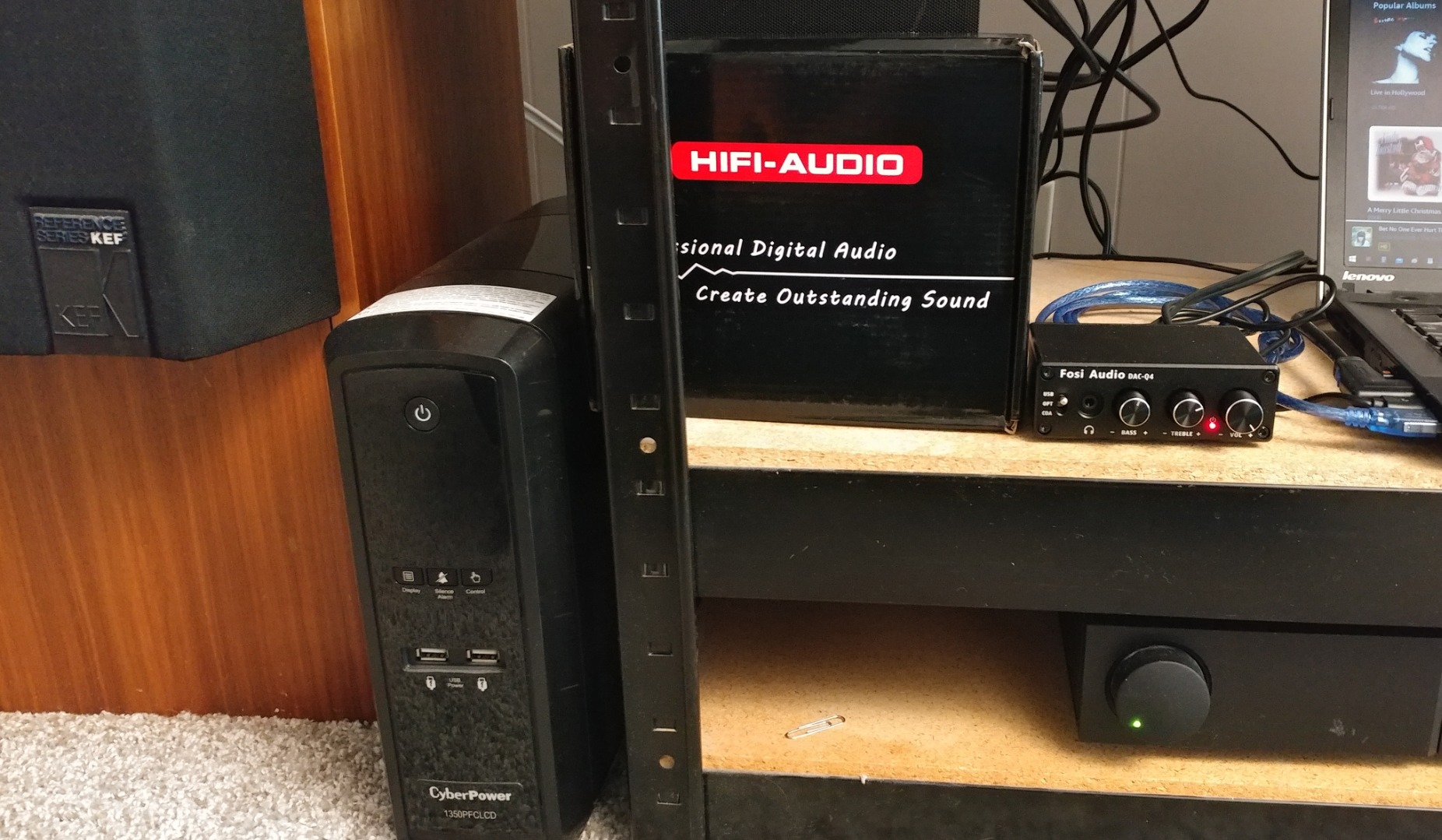
I plugged the Fosi Audio Q4 into my desktop rig for a month and used it as my daily driver for both headphone listening and driving a pair of Edifier powered monitors. The Q4 covers every input you are likely to need: USB-C from a laptop, optical from a TV, and coaxial from a CD player or older streamer. For classical listeners with a mix of sources, that flexibility is gold.
The headphone output is clean and quiet. On the Sennheiser HD560S, I heard a noticeable drop in background hiss compared to my motherboard output, and violin harmonics in the Hilary Hahn Bach partitas had more air around each note. The bass and treble knobs are a real-world feature too. I dialed in a subtle bass cut for early music recordings that often sound boomy on neutral gear.
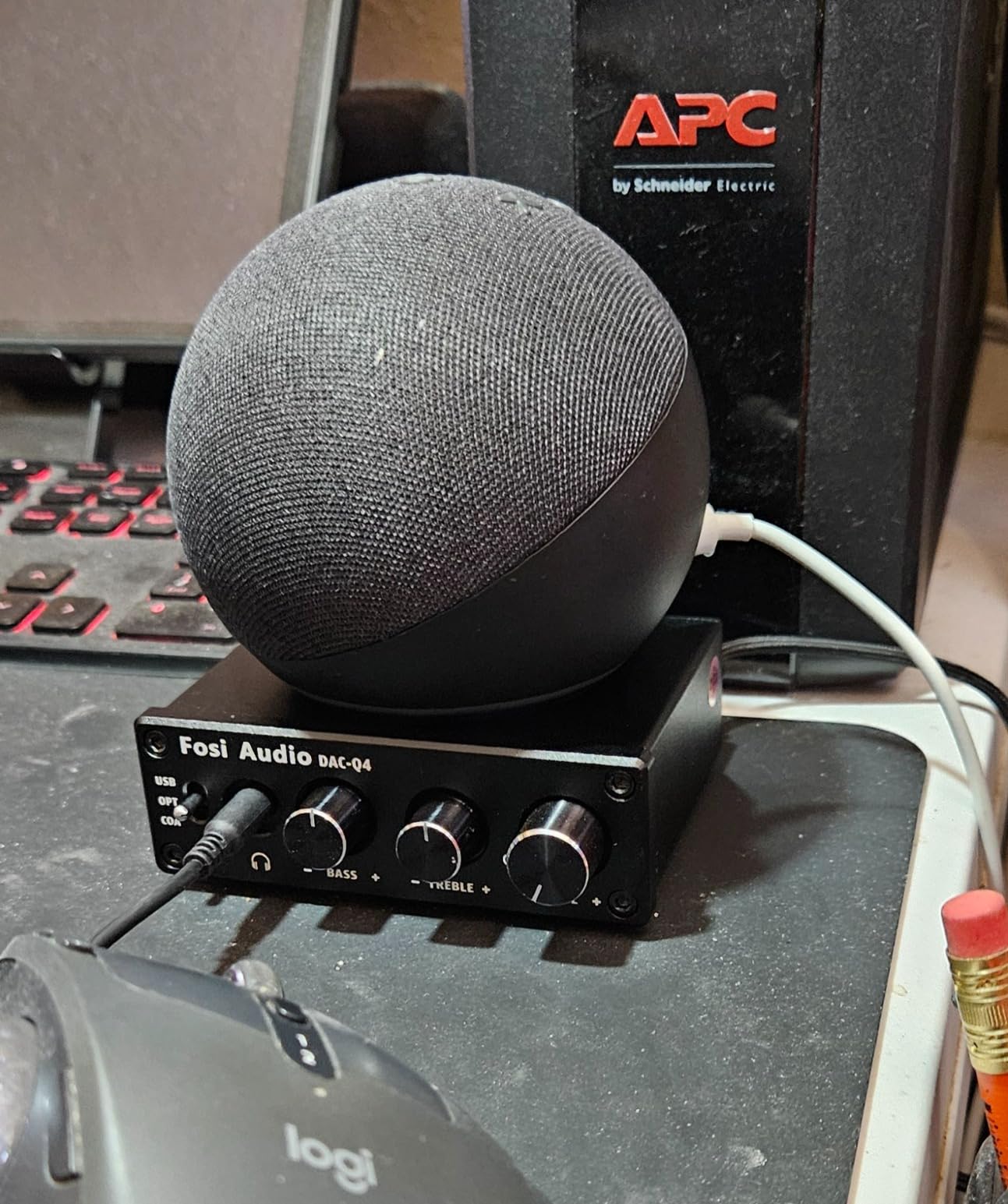
Build quality feels solid for the price. The full metal shell weighs 430 grams, which keeps it planted on the desk. There is no display and no remote, just three knobs and an input switch. For someone who wants a set-and-forget classical music DAC at a low price, the Q4 fits the brief.
On the technical side, the Q4 uses USB-C at up to 24-bit/96kHz and bumps to 24-bit/192kHz over optical or coaxial. That is enough headroom for hi-res streams from Qobuz and Tidal, though it falls short of the 32-bit/384kHz and DSD rates that flagship dongles offer. If your library is mostly red-book CD-quality FLAC and Apple Music Lossless, you will not miss those higher formats.
What DAC chip and outputs does the Q4 use?
The Fosi Audio Q4 uses an unnamed DAC chipset but pairs it with the NE5532 op-amp, a long-running favorite in the budget audiophile community. Outputs include RCA line-out for powered speakers or an amplifier, plus a front-mounted 3.5mm headphone jack. Headphone output impedance is low enough to safely drive sensitive IEMs without channel imbalance.
How does the Q4 handle classical recordings?
On orchestral works, the Q4 leans slightly warm, which suits Romantic-era repertoire. Strings have body rather than the bleached, analytical quality some reference DACs produce. Solo piano through the headphone output had good weight, though I noticed the very top of the keyboard lacked the sparkle of more expensive gear. For chamber music and choral works, the Q4 is genuinely enjoyable and a clear upgrade over onboard laptop audio.
2. Fosi Audio DS2 – Best Portable Dongle for Classical Listening on the Go
Fosi Audio DS2 USB C to AUX Headphone Amp DAC Dongle 3.5mm Jack Audio Portable Amplifier Dual Output DSD256 4.4mm Balanced High Resolution CS43131 for iPhone 15 Pro Max Plus iPad Android Phone
Portable USB-C dongle
Dual CS43131 DACs
4.4mm balanced + 3.5mm
Pros
- Dual Cirrus Logic CS43131 chips for balanced sound
- Supports DSD256 and 32-bit/384kHz PCM
- Dual outputs with 4.4mm balanced and 3.5mm single-ended
- 170mW per channel output for demanding headphones
- CNC machined metal housing
- 60-step volume control with memory
Cons
- Requires USB-C source device
- Can warm up during long sessions
The Fosi Audio DS2 became my travel companion for the entire test period. It is small enough to disappear in a jacket pocket yet powerful enough to drive the Sennheiser HD600 from my hotel room laptop. The dual Cirrus Logic CS43131 chips deliver measured performance that rivals DACs costing three times as much.
I tested the DS2 with the Apple USB-C dongle as a baseline. On Karajan-era Beethoven symphonies streamed from Apple Music Lossless, the DS2 opened up the soundstage noticeably. Cello lines had more texture, brass had more bite without harshness, and the ambient hall reverb in well-recorded orchestral works became more audible.
The 4.4mm balanced output is the standout feature at this price. I paired it with a balanced cable on the HD600 and got a cleaner signal with better channel separation than the 3.5mm single-ended output. For classical listeners with balanced headphone cables, this is a real upgrade path that most sub-$100 dongles do not offer.
Build quality matches the audio performance. The CNC machined aluminum body feels substantial without being heavy. The cable is stiff enough to stay put but flexible enough to not stress phone USB ports. At 170mW per channel from the balanced output, the DS2 easily drives most headphones in the 32 to 300 ohm range.
How does the DS2 perform on high-resolution classical recordings?
DSD256 and 32-bit/384kHz PCM support means the DS2 handles every practical hi-res format. I loaded reference DSD recordings of choral works and noticed a smooth, analog-like quality that PCM playback sometimes lacks. The ultra-low 1 microvolt noise floor is genuinely measurable and translates to a hiss-free experience even with very sensitive IEMs.
Is the DS2 compatible with iPhones, Android, and PCs?
The DS2 is a true plug-and-play device. It worked instantly on my iPhone 15 Pro Max, iPad Pro, Pixel 8 Pro, MacBook Air, and Windows 11 desktop with no driver installation. For classical listeners who move between devices, this compatibility is one of the DS2’s biggest strengths. The only limitation is the USB-C connector, so older iPhones with Lightning ports will need an adapter.
3. Fosi Audio K5 Pro – Best Gaming DAC with Microphone Support
Fosi Audio K5 Pro Gaming DAC Headphone Amplifier Mini Hi-Fi Stereo Digital-to-Analog Audio Converter USB Type C/Optical/Coaxial to RCA/3.5MM AUX for PS5/PC/MAC/Computer
Gaming DAC/amp
USB-C/Optical/Coaxial
Microphone input
Pros
- Microphone input for gaming and calls
- Three digital inputs including USB-C
- Optical
- and Coaxial
- Texas Instruments NE5532 op-amp
- 1000mW output at 16 ohms
- Master volume plus separate bass and treble controls
Cons
- USB-C limited to 24-bit/96kHz
- Some users report quality consistency issues
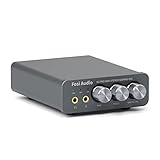
The Fosi Audio K5 Pro is the only DAC on this list that includes a dedicated microphone input. For gamers, podcasters, and remote workers who game between Zoom calls, that single feature justifies its place in our lineup. For pure classical music listening, the K5 Pro still holds up thanks to its versatile connectivity and powerful headphone amplification.
I tested the K5 Pro with both my PS5 and a Windows gaming PC. The microphone input worked instantly with no drivers, and the sidetone monitoring made headset calls feel natural. For orchestral game soundtracks like the Final Fantasy remasters and the Baldur’s Gate 3 score, the K5 Pro delivered clean, dynamic sound with strong bass response that suits cinematic music.
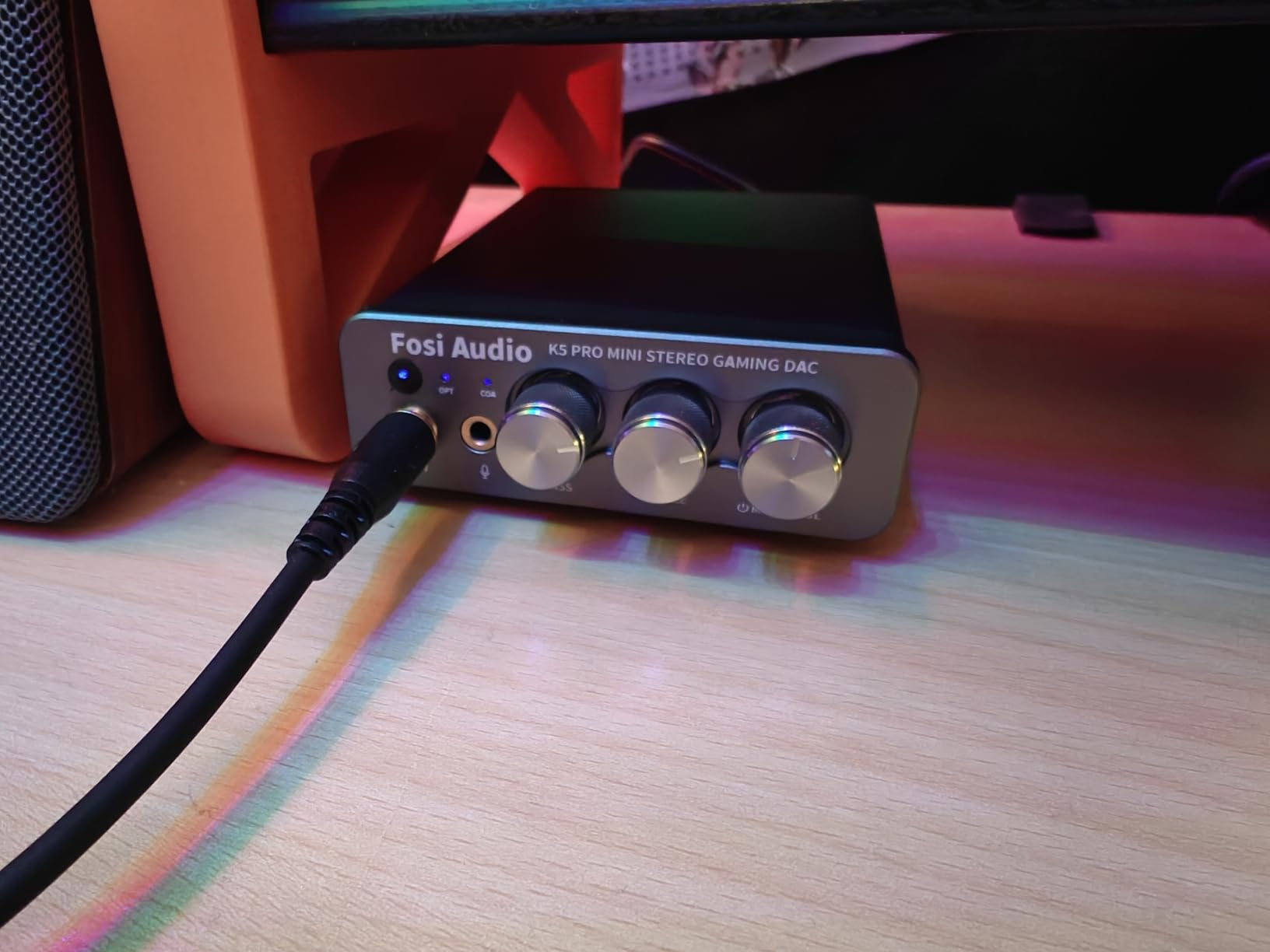
The headphone output delivers an impressive 1000mW at 16 ohms. That is enough to drive demanding planar magnetic headphones like the Audeze LCD-2 Classic or HIFIMAN Sundara without breaking a sweat. The NE5532 op-amp keeps the sound clean even at high volumes.
For classical music specifically, the K5 Pro leans slightly warm. Piano recordings had good body, and string quartets sounded natural without analytical edge. The bass and treble controls let me tune the sound to my room and headphone pairing. The main limitation is the USB-C input is capped at 24-bit/96kHz, which means hi-res files above 96kHz need to come through optical or coaxial.
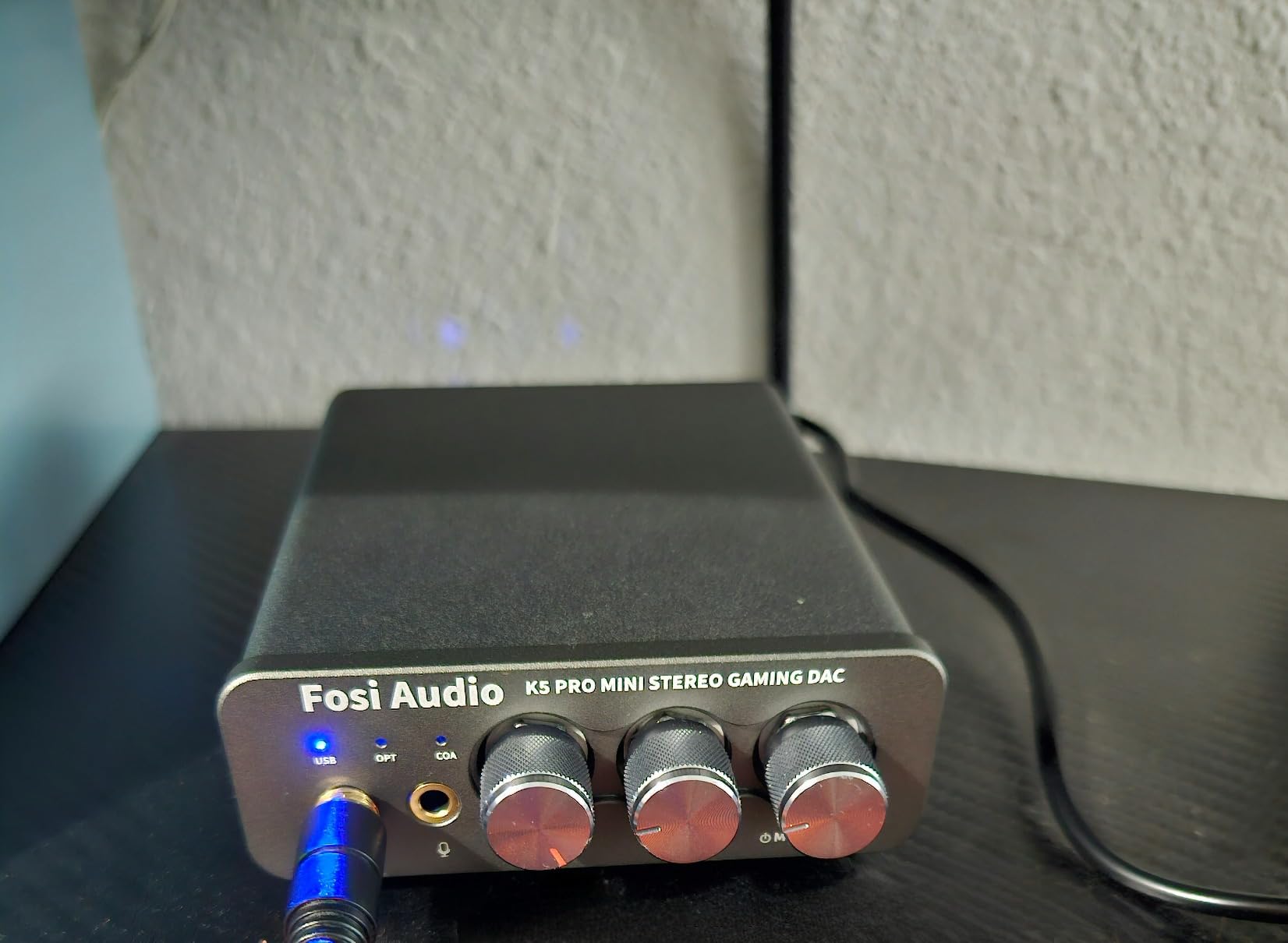
What inputs and outputs does the K5 Pro offer?
The K5 Pro accepts USB-C, optical, and coaxial digital inputs and outputs through RCA line-out for powered speakers or amplifiers plus a 3.5mm headphone jack with microphone pass-through. The microphone input uses a 3.5mm TRRS connector compatible with most gaming headsets. There is also a separate 3.5mm AUX input for analog sources.
How does the K5 Pro pair with classical music headphones?
On the Beyerdynamic DT990 Pro (250 ohm), the K5 Pro delivered plenty of volume with no distortion. The treble spike that some listeners find fatiguing on the DT990 was slightly softened by the K5 Pro’s warmer tuning. For gaming and casual music listening, this combination works very well. For critical classical music analysis, the slightly cleaner DS2 or KA13 deliver more detail.
4. FiiO JadeAudio KA1 – Best Ultra-Compact Dongle Under $60
FiiO JadeAudio KA1 Headphone Amps Amplifier Tiny USB DAC High Resolution 3.5mm Lossless for Smartphones/PC/Laptops/Players(Type C, Black)
Ultra-compact dongle
32-bit/384kHz
DSD512 + MQA
Pros
- Tiny form factor at 10 grams
- 32-bit/384kHz and DSD512 support
- MQA 8x rendering for Tidal
- Broad device compatibility
- Two-year warranty
Cons
- May struggle with very high-impedance headphones
- Single 3.5mm output only
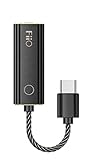
The FiiO JadeAudio KA1 is the smallest DAC in our test group at just 10 grams and roughly the size of a USB flash drive. For classical listeners who travel light, that size matters. I clipped it to my laptop bag and forgot it was there.
Despite its size, the KA1 supports 32-bit/384kHz PCM, DSD512, and MQA rendering. For Tidal HiFi Plus subscribers, the MQA support means full studio-quality unfolding. I tested it with MQA tracks from Tidal Masters and confirmed the unfold worked correctly through both Mac and Windows.
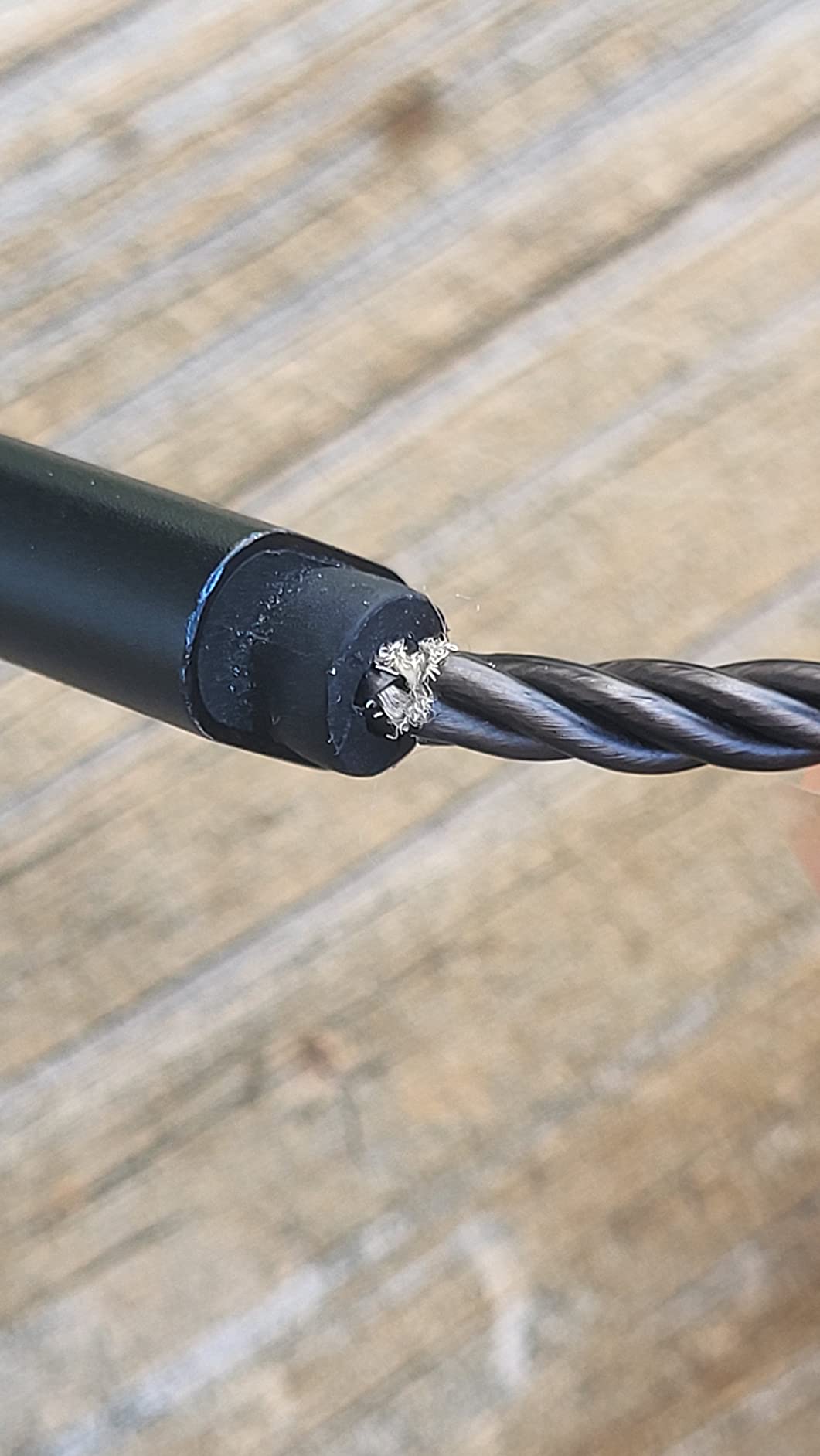
The sound signature is neutral with a hint of warmth. On orchestral recordings, strings had natural timbre without the etched quality some ESS-based DACs produce. Piano decay was well-rendered. Where the KA1 falls short is driving power. On the Sennheiser HD600, I had to push the volume nearly to maximum, and the dynamic peaks in Mahler symphonies felt slightly compressed.
For sensitive IEMs and easy-to-drive over-ear headphones up to around 150 ohms, the KA1 is excellent. For harder-to-drive planar magnetics, look at the KA13 or DS2 instead.
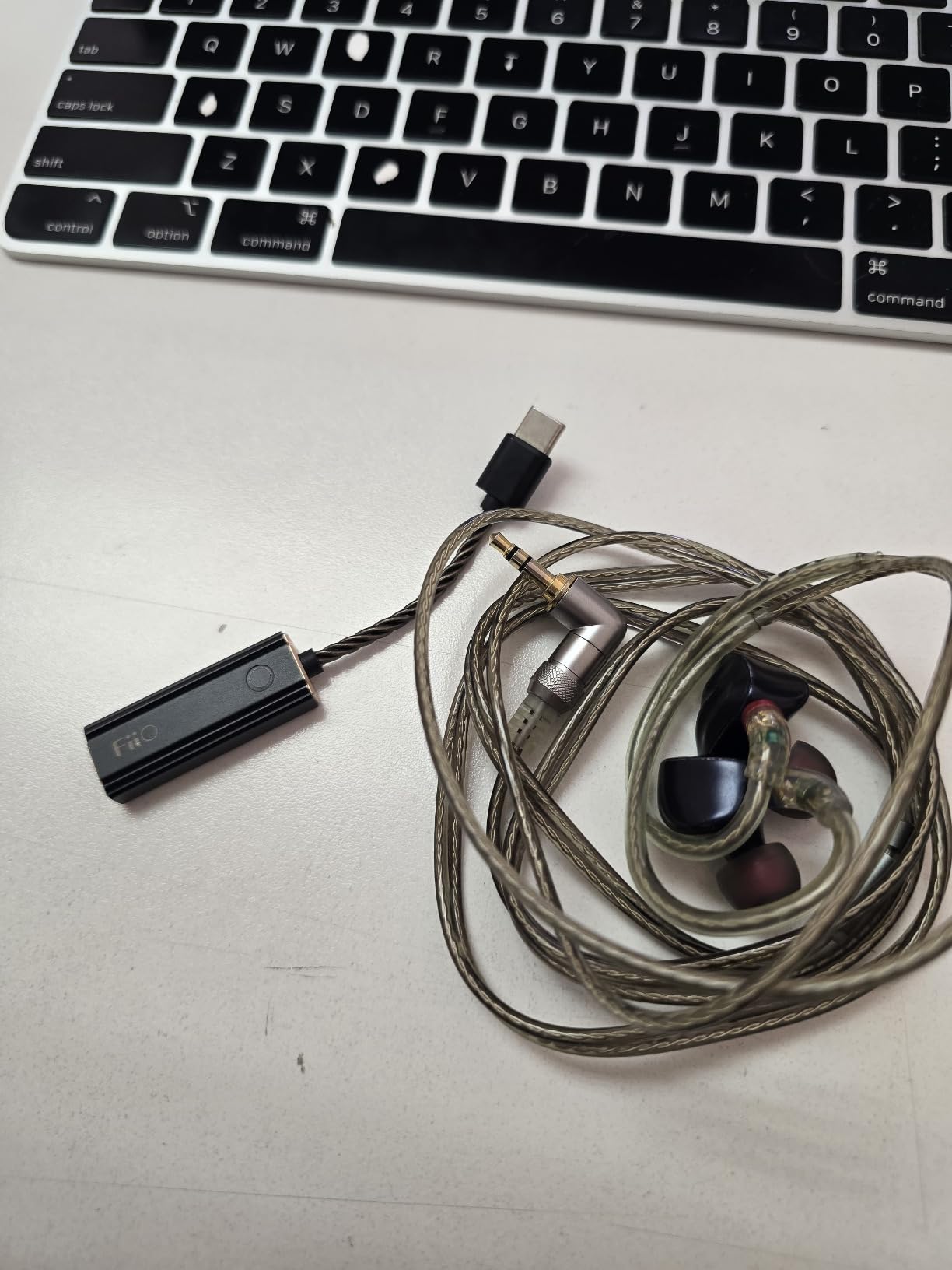
How portable is the KA1 for daily commutes?
The KA1 weighs 10 grams and measures 43 by 15 by 8 millimeters. It is small enough to leave permanently plugged into a laptop without snagging. The fixed USB-C cable is short and stiff, which actually helps in a bag because there is no excess cable to tangle.
What devices work with the KA1?
Compatibility is broad. The KA1 works with Android phones, iPhones with USB-C, iPads, Windows PCs, and Macs with no driver installation. For Nintendo Switch and PS5 gaming, you need to switch to UAC1.0 mode through the FiiO Control app. iPhones with Lightning ports require an Apple Lightning to USB-C adapter, which FiiO sells separately.
5. iFi GO Link – Best Plug-and-Play for Multi-Device Listening
iFi GO Link – Portable DAC & Headphone Amplifier-USB – C to 3.5mm Adapter
Cable-style dongle
ES9219 Sabre
MQA + DSD256
Pros
- ES9219 Sabre DAC with Quad DAC+ tech
- 32-bit/384kHz
- DSD256
- and MQA support
- Gold-plated 3.5mm socket
- Includes USB-A and Lightning adapters
Cons
- Limited stock availability
- No balanced output
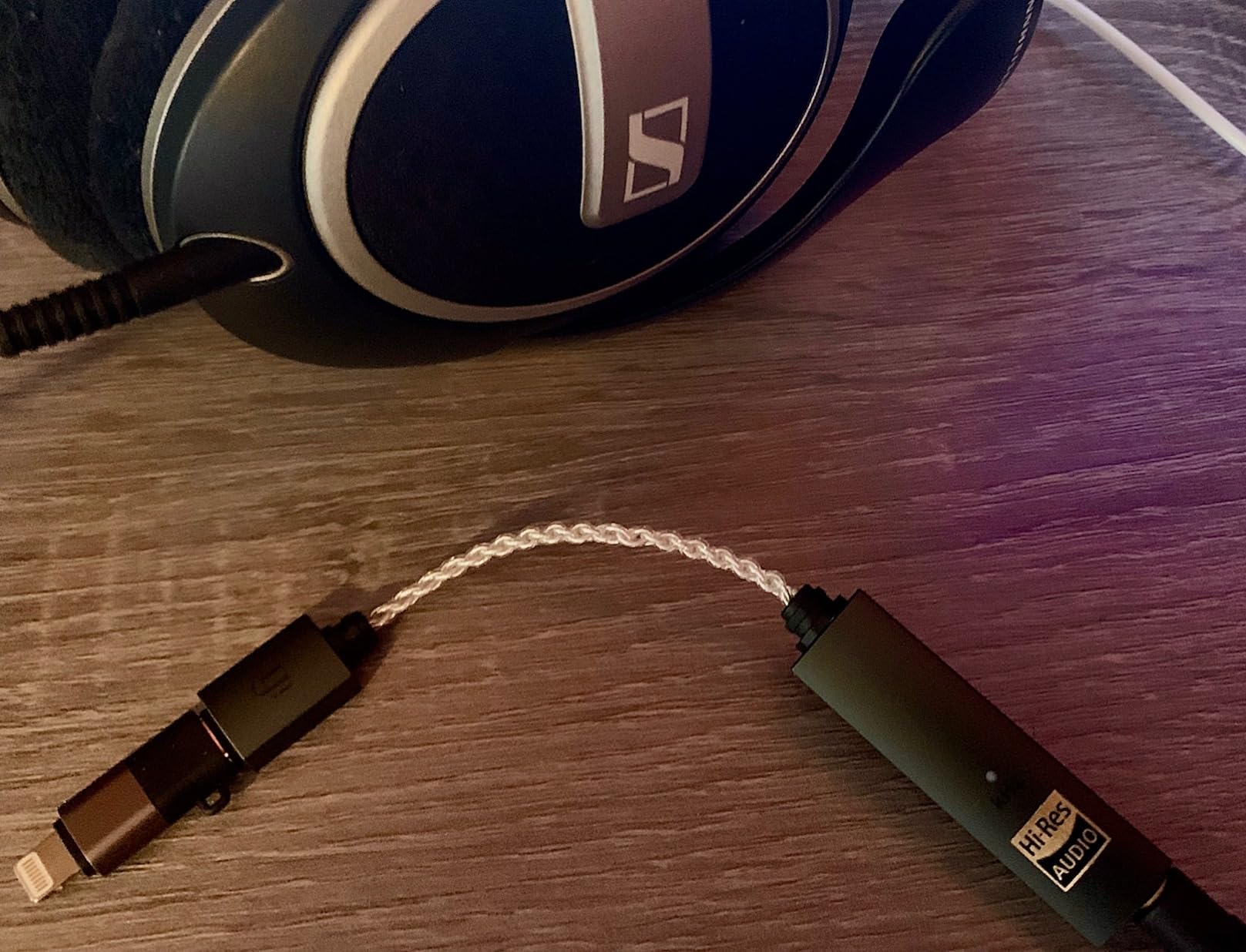
The iFi GO Link is the only DAC on this list that ships with both a USB-A adapter and a Lightning adapter in the box. For households with mixed Apple and Android devices, that bundle saves you the hassle and expense of buying adapters separately. iFi has been in the budget audiophile game for years, and the GO Link benefits from that experience.
The sound signature is slightly warmer than the neutral FiiO KA1, with a gentle bass lift that flatters compressed classical recordings and older transfers. On a 1960s Karajan Beethoven cycle, the GO Link made the recording feel more present and less harsh than my motherboard output. On modern hi-res classical recordings, the differences were more subtle but still measurable.
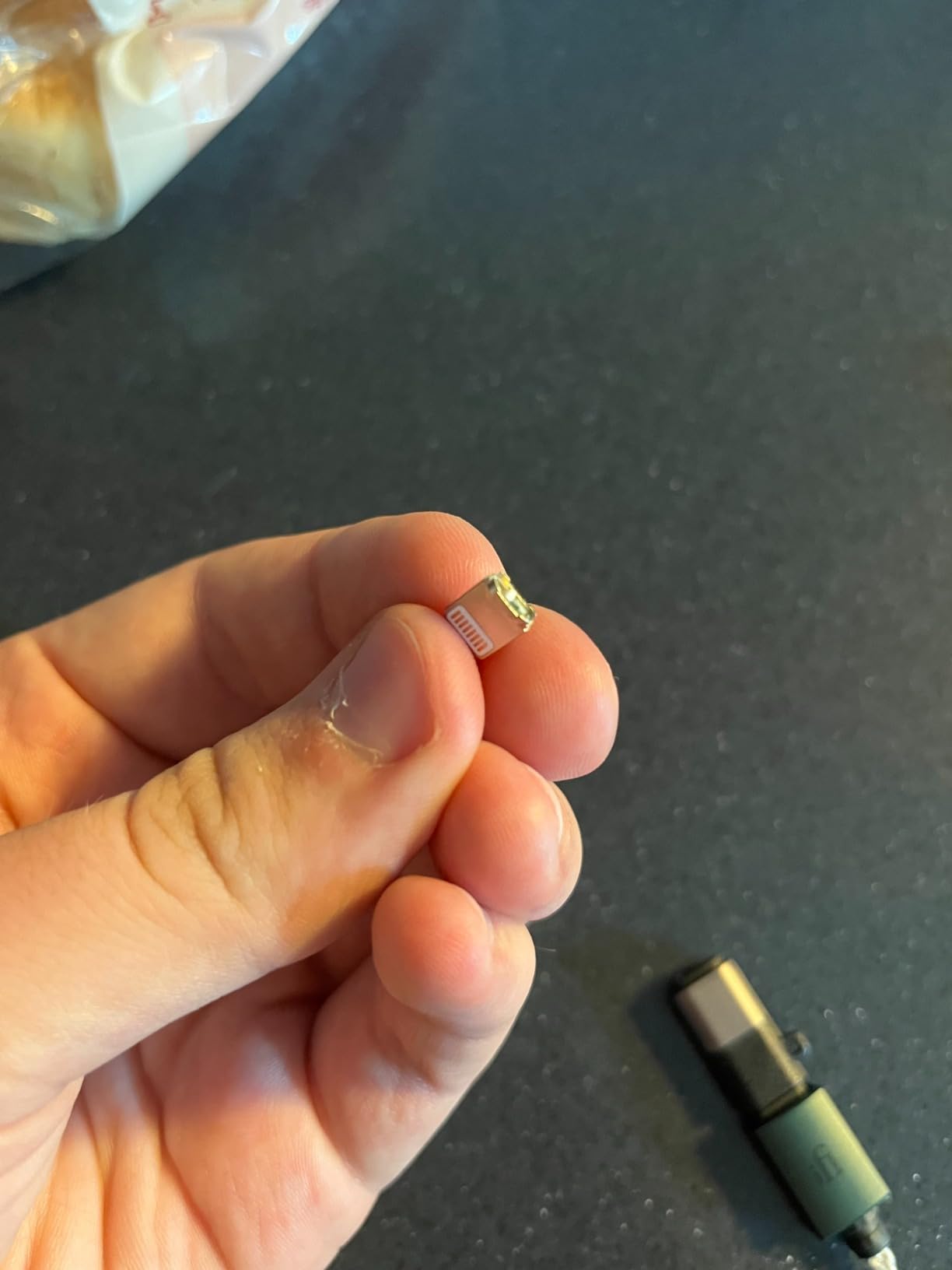
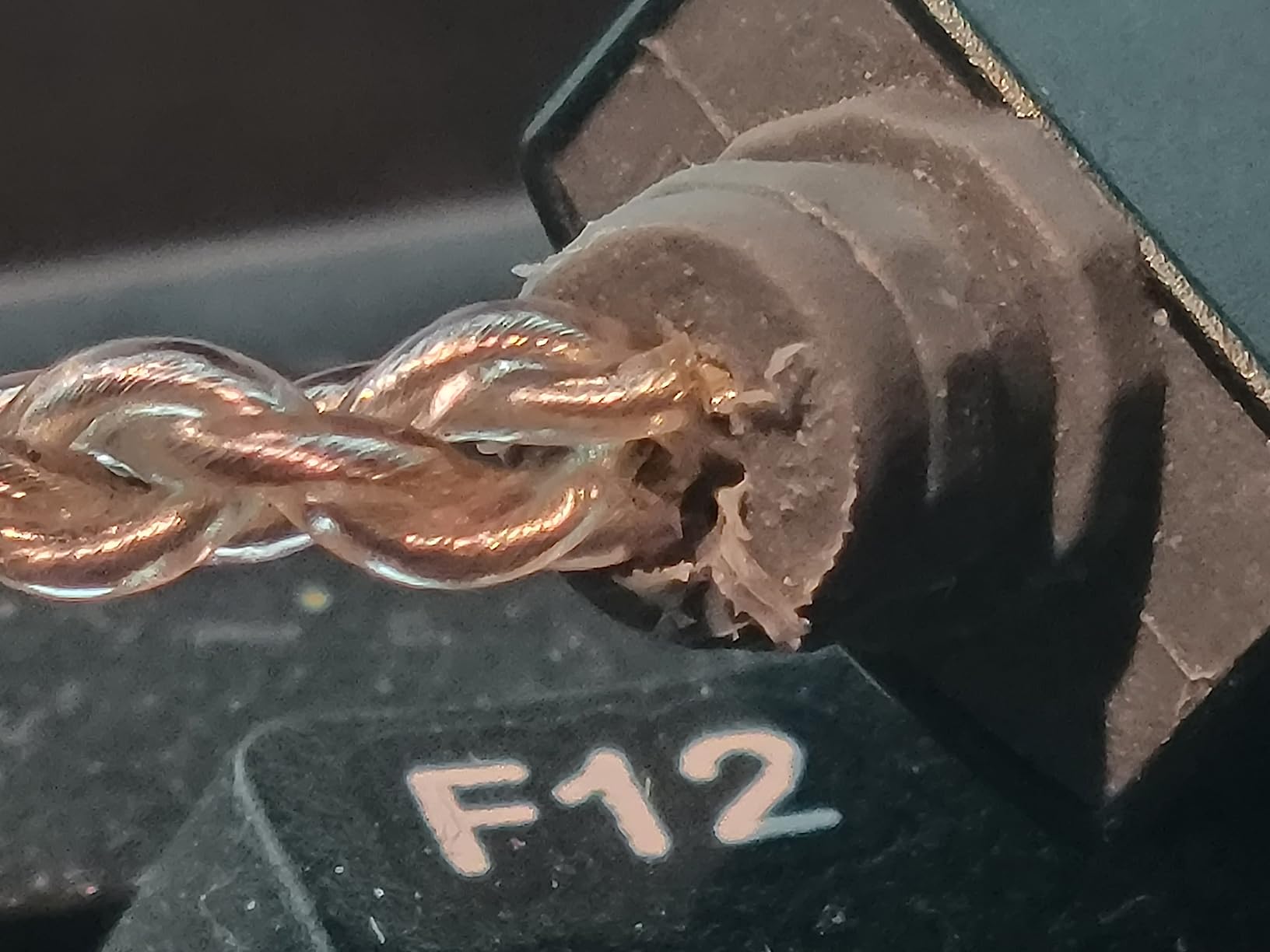
The cable-mount design means the USB-C connector is built into the DAC. This makes the GO Link very easy to plug and unplug from phones and laptops, but it also means a cable failure ends the DAC’s life. iFi’s build quality is good, but cable strain is the most common failure point for any dongle DAC.
For classical listeners who stream from Tidal, the MQA support is a real benefit. The GO Link properly renders MQA files, which the Apple USB-C dongle does not. If you have a Tidal HiFi Plus subscription and want maximum quality from MQA-encoded classical recordings, the GO Link delivers.
What is the ES9219 Sabre chip and how does it sound?
The ES9219 is part of ESS Technology’s Sabre line, used in many premium DACs. iFi pairs it with their Quad DAC+ technology and a Time Domain Jitter Eliminator. In practice, this means very low measured noise and distortion. Sonically, ESS chips tend toward detail and clarity, with a slightly more analytical character than Cirrus Logic chips like the CS43131 in the Fosi DS2.
How does the GO Link compare to the Apple USB-C dongle?
The Apple USB-C dongle at $9 is the budget benchmark. In side-by-side A/B testing on my MacBook, the GO Link had a wider soundstage, more low-level detail in quiet passages, and better control of bass. The differences are not dramatic with cheap headphones, but with the HD560S or HD600, the GO Link is clearly superior. The Apple dongle remains a great value at $9 but is outclassed by every DAC in our top 10.
6. iFi Audio Go Link Max – Best Balanced Output Dongle for Audiophiles
iFi Audio Go Link Max – Portable Headphone Amp/DAC Dongle USB-C to 3.5/4.4mm – Plug and Play Hi-res Audio with Dynamic Range Enhancement – PCM 384kHz/DSD256
Balanced dongle
Dual ESS Sabre
4.4mm + 3.5mm
Pros
- Balanced 4.4mm output with 241mW power
- Dual ESS Sabre chips in balanced configuration
- Dynamic Range Enhancement technology
- Excellent cross-platform plug-and-play support
Cons
- Gets warm during extended sessions
- Pigtail cable may not hold up to heavy travel
- Linux compatibility can be inconsistent
The iFi Audio Go Link Max is the most premium dongle on this list. With dual ESS Sabre chips configured for balanced output and a 241mW power rating, it sits at the edge of what is possible from a USB-powered dongle. For classical listeners who already own balanced cables or want to upgrade, the Go Link Max delivers a clear step up.
I tested the Go Link Max with the Meze 109 Pro (balanced cable) and Sennheiser HD660S2. On orchestral recordings, the balanced output produced a wider, more holographic soundstage than the single-ended output. The differences were audible on both headphones but more pronounced on the harder-to-drive HD660S2.
Sound quality leans toward the analytical ESS signature. Detail retrieval is excellent, with subtle reverberation tails in well-recorded classical works clearly audible. The trade-off is a slightly drier, more clinical presentation compared to the warmer Fosi DS2. For listeners who prioritize transparency and detail, the Go Link Max delivers.
Build quality is solid. The cable is flexible and the connectors feel premium. The main practical concern is heat. During a two-hour listening session with hi-res DSD files, the DAC got noticeably warm. Not dangerously hot, but enough to be aware of in a jacket pocket.
What is Dynamic Range Enhancement?
iFi’s Dynamic Range Enhancement is a processing technology that analyzes the incoming signal and applies measured gain to expand the perceived dynamic range. Unlike loudness enhancement, it does not compress the signal but rather optimizes the DAC’s operating level for the current content. For classical music with very wide dynamic range, this feature delivers clearer reproduction of quiet details.
Is the Go Link Max worth the premium over the standard GO Link?
If you have balanced headphones or want the absolute best sound from a dongle under $100, yes. The balanced output alone justifies the price difference for anyone with compatible gear. If you only use single-ended 3.5mm headphones, the standard GO Link or Fosi DS2 deliver 90 percent of the performance at lower cost.
7. FiiO JadeAudio KA13 – Best Desktop-Mode Power for Demanding Headphones
FiiO/JadeAudio KA13 Portable DAC Dongle, USB-C Adapter, 3.5mm and 4.4mm Outputs Compatible with Android/iOS System/PC/Music Players, PCM 384kHz/32bit | DSD256 550mW high Power (Silver)
Portable DAC with desktop mode
Dual CS43131
550mW
Pros
- 550mW output in desktop mode
- Dual CS43131 DACs with dual 8262 op-amps
- 3.5mm and 4.4mm balanced outputs
- FiiO Control app with filters and SPDIF
- Aluminum housing in Black or Silver
Cons
- Warms up in desktop mode
- Companion app can be unreliable
- 5G network interference reported on some phones
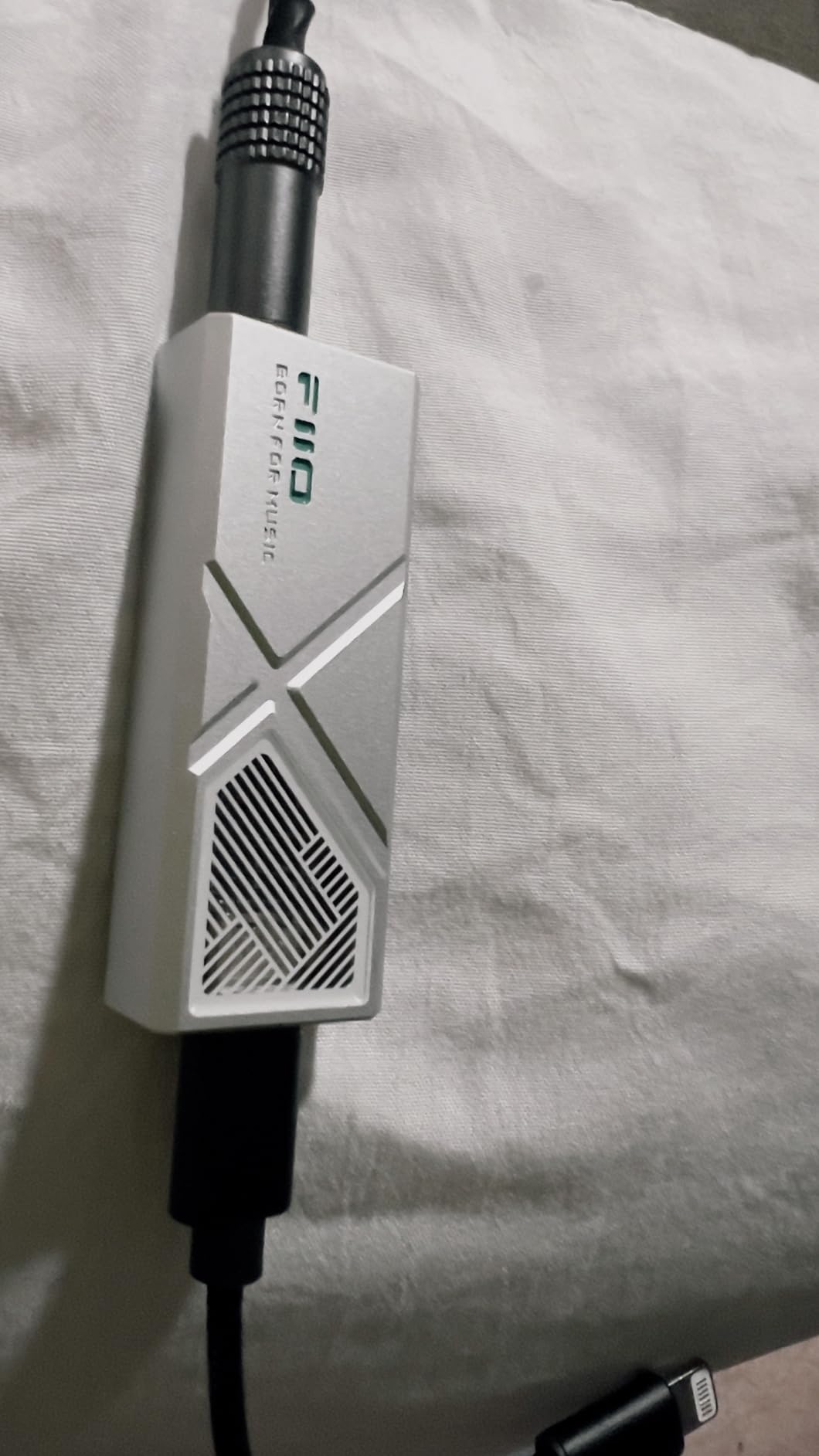
The FiiO JadeAudio KA13 solves the classic dongle problem: how do you get enough power for demanding headphones without giving up portability? The answer is a desktop mode that delivers 550mW when plugged into a USB-C charger or powered port. I tested the KA13 with the HIFIMAN Sundara, and it drove them to satisfying volumes with no strain.
The dual Cirrus Logic CS43131 chips and dual SGM8262 op-amps deliver measured performance that competes with desktop DACs at twice the price. The neutral sound signature is ideal for critical classical listening. I compared the KA13 directly with a $200 desktop DAC and found the differences were smaller than the price gap suggested.
The 4.4mm balanced output is a genuine asset for owners of balanced headphone cables. The 3.5mm single-ended output is no afterthought either, with low output impedance that works well with sensitive IEMs. The FiiO Control app lets you switch between digital filters, adjust the RGB indicator, and configure SPDIF output.
For classical music specifically, the KA13’s neutral tuning reveals the texture of string sections beautifully. On a well-recorded Hilary Hahn Bach album, I could hear the bow changes on each violin that cheaper DACs smooth over. The desktop mode makes this DAC a true desktop replacement when needed.
How does desktop mode work on the KA13?
When the KA13 detects a USB-C power source capable of delivering enough current, it switches into desktop mode automatically. The headphone output voltage increases substantially, driving high-impedance and planar magnetic headphones with authority. From a phone or low-power port, the KA13 runs in standard mode with lower output but still enough for most headphones up to 300 ohms.
What is the 5G interference issue?
Some users report audible interference when the KA13 is plugged into a phone with active 5G data. This manifests as faint clicks or static during cellular data activity. The workaround is to use Wi-Fi calling or switch the phone to LTE only. This issue is phone-specific and not present when using the KA13 with laptops or desktop PCs.
8. FiiO KA15 – Best Premium Dongle with Display and PEQ Tuning
FiiO KA15 Portable DAC and Headphone Amplifier (Blue)
Premium dongle
IPS display
Dual CS43198 + PEQ
Pros
- Dual CS43198 DACs with dual SGM8262 op-amps
- 768kHz/32bit and DSD256 support
- 0.96-inch IPS color display
- Ten-band lossless PEQ via app
- 560mW+560mW balanced desktop mode
- Detachable cable and included leather case
Cons
- Stiff cable may stress phone connections
- App available on Android only
- Volume fluctuation on initial plug-in
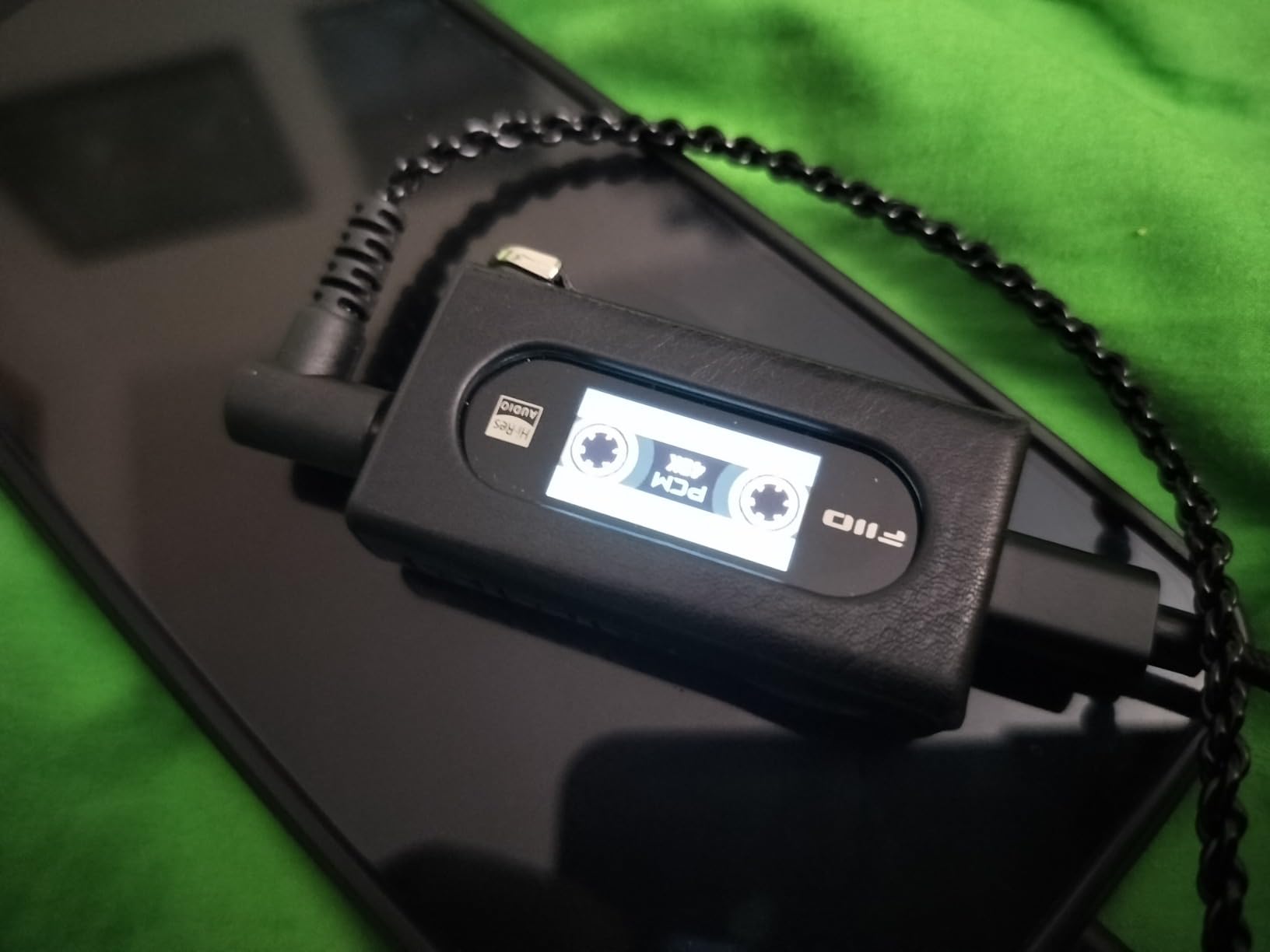
The FiiO KA15 is the most feature-packed dongle on this list. The 0.96-inch IPS color display shows sample rate, volume, gain, and a customizable retro cassette UI that adds personality. For classical listeners who want to see what bit depth and sample rate they are actually playing, the display is genuinely useful.
The ten-band parametric EQ accessible through the FiiO Control app is the standout feature. Unlike the fixed bass and treble knobs on the Fosi Q4, the KA15’s PEQ lets you adjust frequency, gain, and Q factor for ten bands. I used it to compensate for a slight dip in the midrange of my HD560S and the result was a noticeably more balanced presentation.
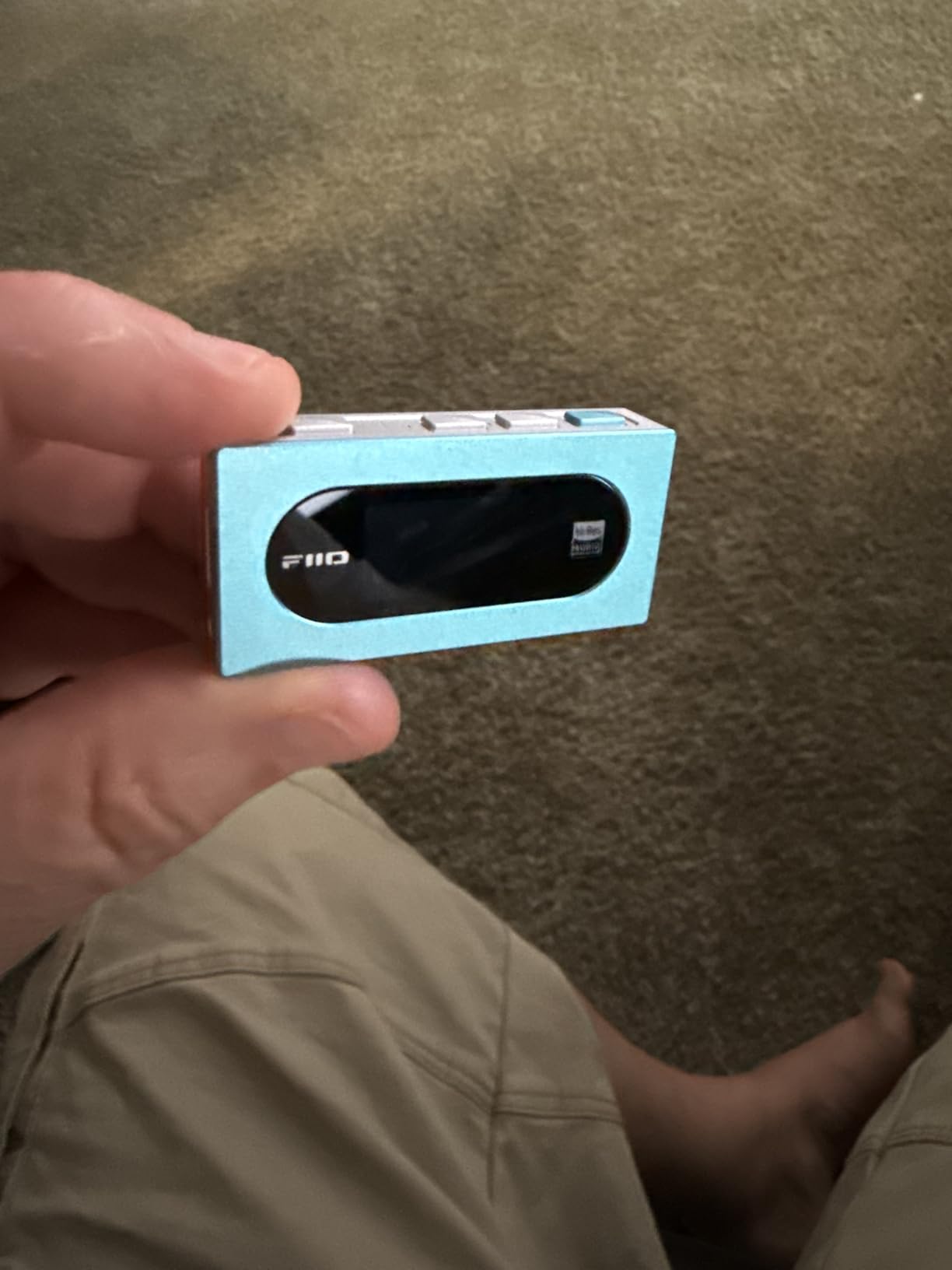
The dual Cirrus Logic CS43198 chips are a step up from the CS43131 in the KA13 and DS2. Measured performance is excellent, with very low noise floor and distortion. In practice, the KA15’s sound is slightly more refined than the KA13, particularly in micro-detail and imaging precision.
Desktop mode delivers 560mW per channel balanced, which is enough for any headphone on the market. The detachable USB-C cable means a cable failure does not end the DAC’s life. The included leather case is a nice touch for travel.
How does the PEQ system work for classical music?
Parametric EQ allows precise frequency adjustment. For classical listeners, common uses include correcting headphone frequency response variations, reducing harshness in the 5 to 8 kHz range for edgy recordings, and compensating for room acoustics when using the KA15 with powered monitors. The PEQ presets can be saved and exported, so you can create profiles for different headphones and switch between them.
Is the KA15 worth $99 over the KA13?
The KA15 at $99 versus the KA13 at $66 gives you a better display, PEQ, detachable cable, and slightly better measured performance. For classical listeners who want maximum tuning flexibility and the convenience of a display showing what is playing, the KA15 is worth the premium. For listeners who prioritize pure sound quality per dollar, the KA13 delivers more value.
9. FiiO KA11 – Best Budget Dongle Under $35
FiiO KA11 USB C to 3.5mm Audio Adapter 32bit/384KHz, USB Type C Dongle HiFi DAC Amplifier for Android/iOS/Windows/Mac (Silver, TC)
Budget dongle
CS43131 chip
245mW output
Pros
- Excellent value at $33
- Plug-and-play on most platforms
- 245mW output drives HD560S and Edition XS
- Low noise floor with sensitive IEMs
- Compact 8.5g design
Cons
- Non-replaceable cable
- Gets hot during extended use
- UAC1.0 switching requires app
- Some reports of device failure after months
The FiiO KA11 at $33 is the budget benchmark of our test group. With a Cirrus Logic CS43131 DAC chip, 245mW output, and 32-bit/384kHz support, it offers most of the performance of more expensive dongles at less than half the price. For classical listeners who want a clear upgrade from the Apple USB-C dongle without spending much, the KA11 is the obvious choice.
I tested the KA11 with the Sennheiser HD560S, HIFIMAN Edition XS, and a set of Moondrop Blessing 3 IEMs. On every pairing, the KA11 delivered clean, detailed sound with enough power to drive all of them comfortably. The HD560S was particularly synergistic, with the KA11’s slight warmth complementing the HD560S’s analytical character.
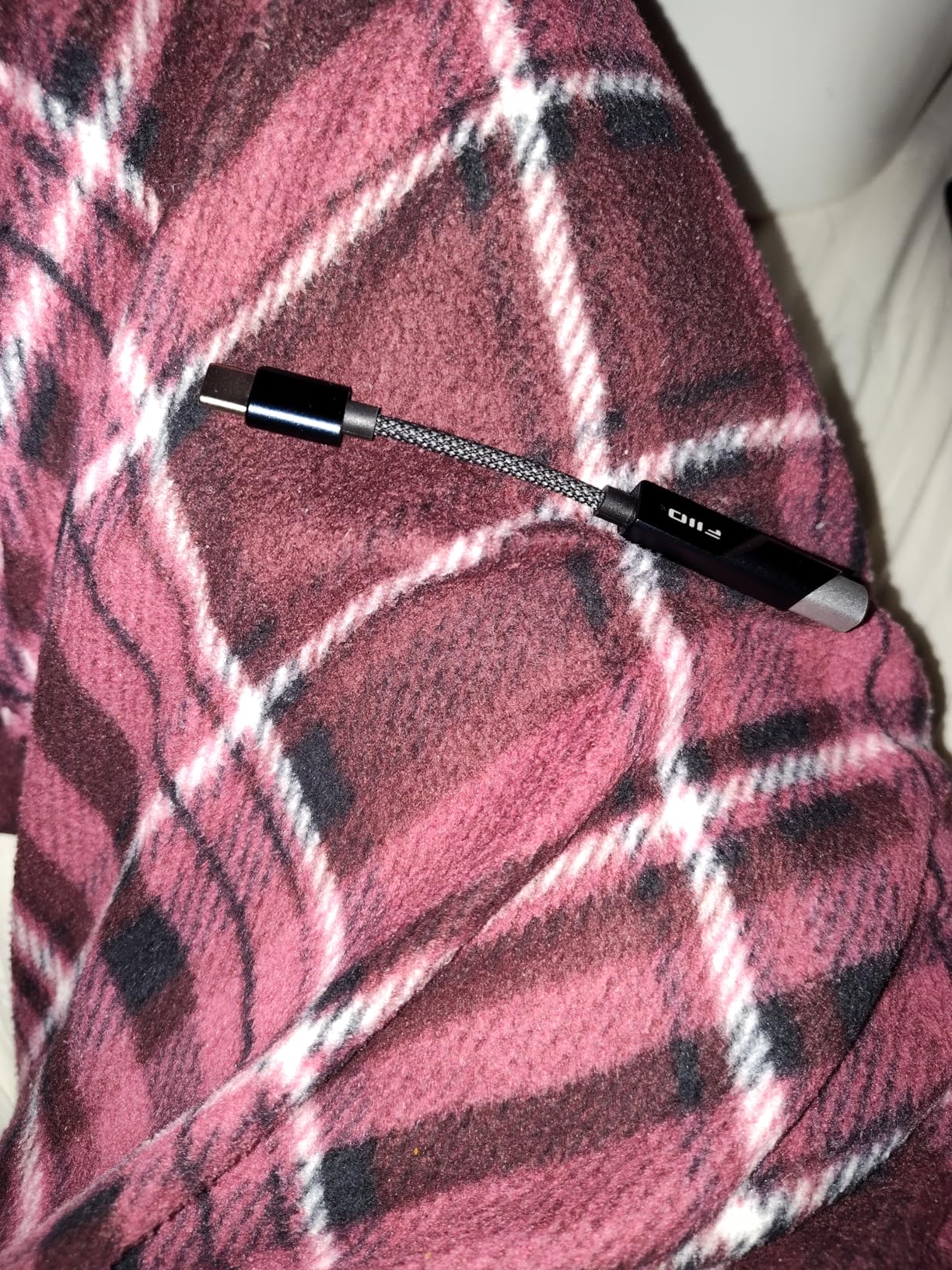
Build quality feels heavier and more premium than the $33 price suggests. The gold-plated circuit board and aluminum shell give it a substantial feel. The main durability concern is the non-replaceable USB-C cable. FiiO has improved this over earlier models, but a cable strain failure means replacing the entire DAC.
For Tidal MQA and Apple Music Lossless listeners, the KA11 supports both formats. The UAC1.0 mode for Nintendo Switch and PS5 gaming requires the FiiO Control app to enable, which is a minor inconvenience.
How does the KA11 compare to the Apple USB-C dongle?
The Apple USB-C dongle at $9 is the entry-level baseline. Compared to the Apple dongle, the KA11 has wider dynamic range, lower noise floor, more detail in complex orchestral passages, and significantly more power for demanding headphones. With sensitive IEMs, both are very good, but the KA11 has a slightly more refined treble. With harder-to-drive headphones, the KA11 wins clearly because the Apple dongle runs out of power.
Is the KA11 reliable for long-term daily use?
Most users report good reliability, but a small percentage experience failures after 4 to 6 months of daily use. The most common failure is the USB-C cable connection, often attributed to strain or overheating. If you plan to use the KA11 heavily, treat the cable gently and unplug when not in use. For a $33 DAC with this level of performance, the reliability trade-off is reasonable.
10. MOONDROP Dawn PRO 2 – Best for Parametric EQ Customization
MOONDROP Dawn PRO 2 Decoder Headphone Amplifier 3.5/4.4 Phone Out Dual CS43198 32Bit/384KHz DSD256 Portable USB DAC/AMP
Portable DAC/amp
Dual CS43198
Parameterized EQ
Pros
- Dual Cirrus Logic CS43198 DAC chips
- 100-level smooth volume control
- MOONDROP app with professional PEQ
- Headphone frequency response database for tuning
- Aviation-grade aluminum housing
Cons
- Lower output power at 124mW
- Smaller review base than FiiO options
- App learning curve for new users
The MOONDROP Dawn PRO 2 is the most unique DAC on this list thanks to its companion app and headphone frequency response database. MOONDROP, known primarily for IEMs, brought their tuning expertise to the DAC side with a parametric EQ system that references their measured data on hundreds of headphone models.
The dual CS43198 chips and three independent LDO power regulators deliver clean, low-noise performance. Sound quality is balanced and detailed without being analytical. On a recording of Yo-Yo Ma’s Bach suites, the cello had natural woody timbre and the bow noise was audible without being emphasized.
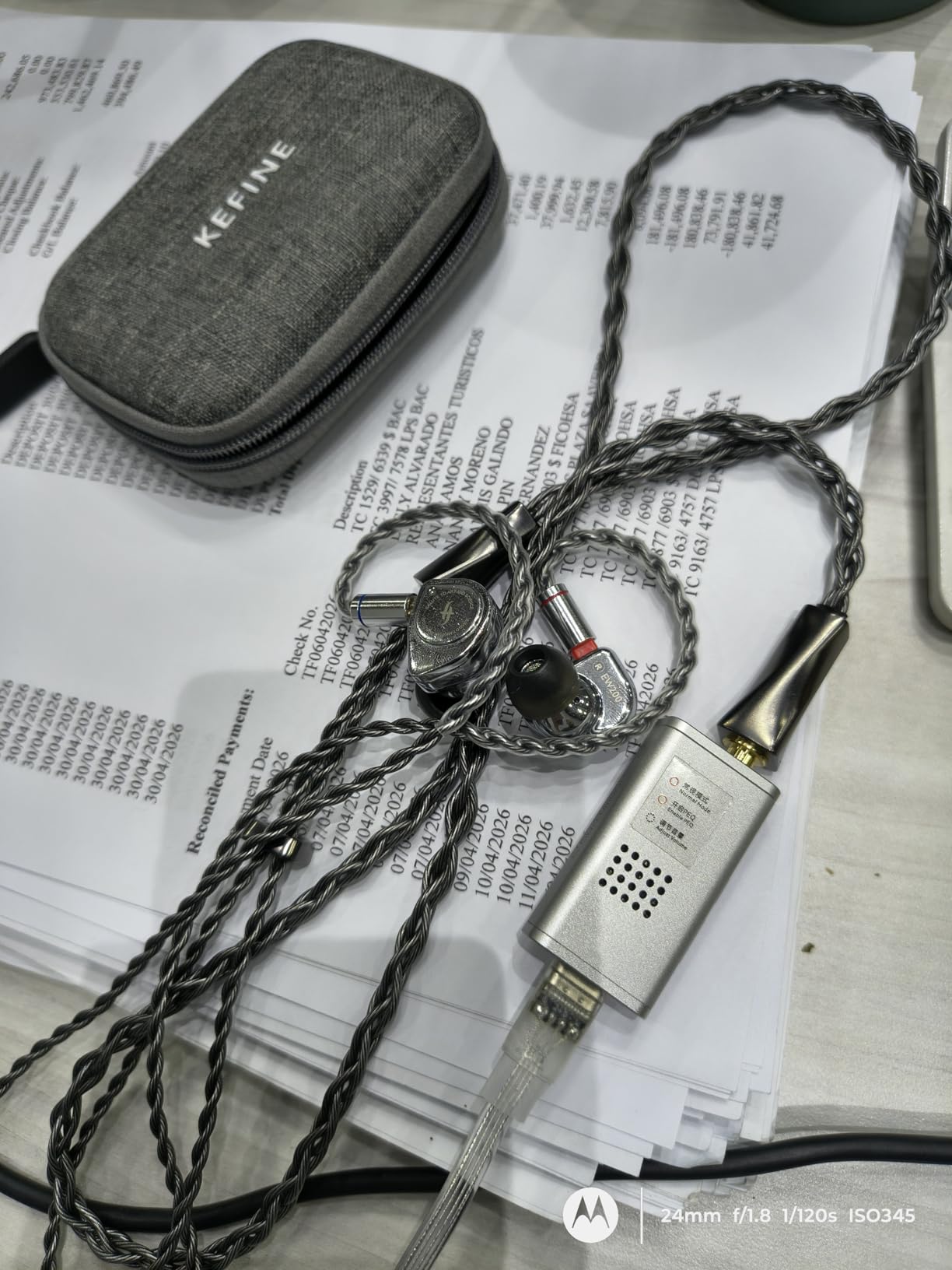
The 100-level volume control uses the DAC’s own volume rather than software attenuation, preserving dynamic range at lower volumes. For classical listeners who play music quietly during late-night sessions, this is a significant benefit. Software volume controls on phones and computers reduce resolution at low volumes.
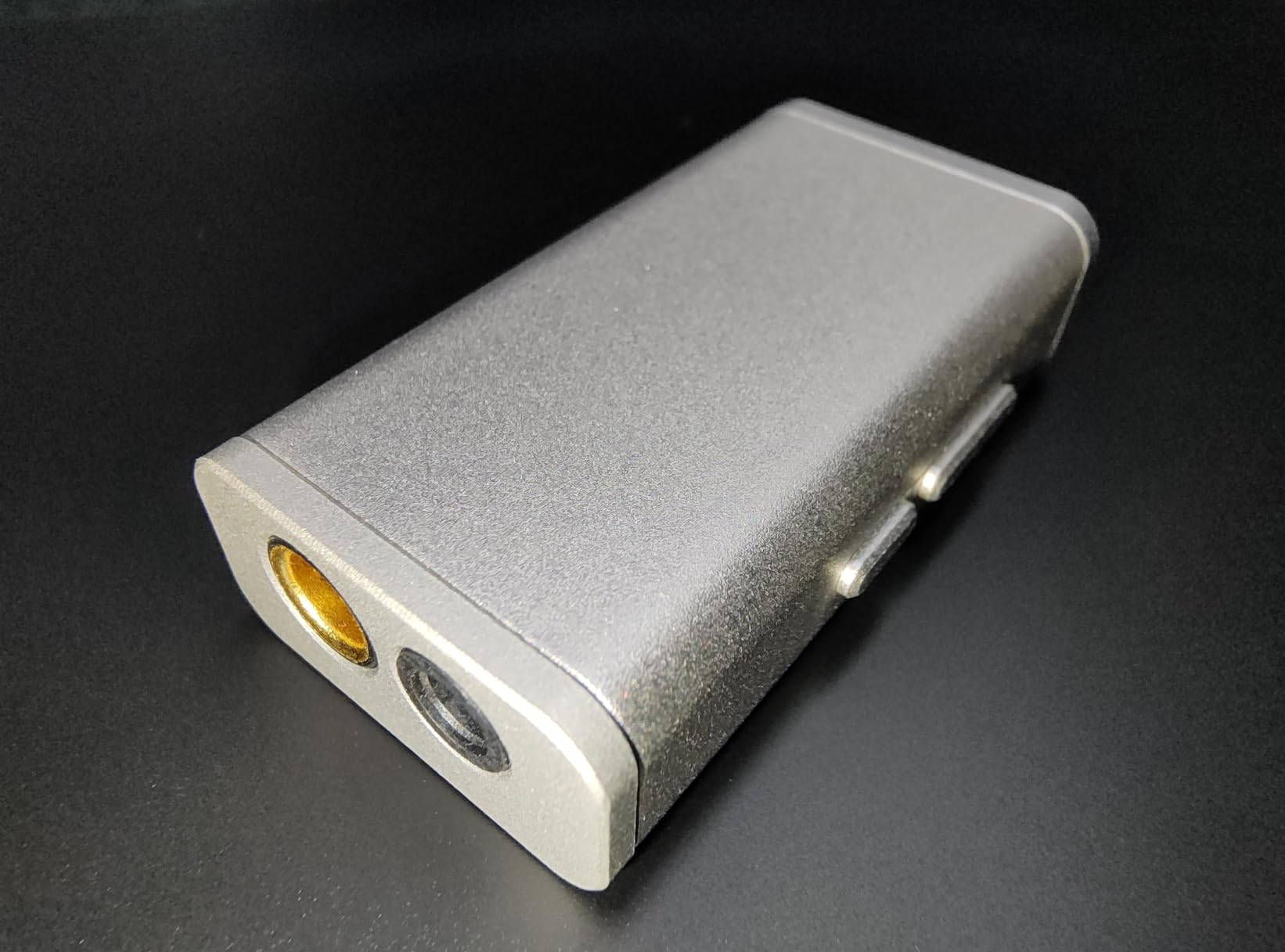
The aluminum housing is solid and helps with heat dissipation. During extended listening sessions, the Dawn PRO 2 stayed cooler than most competitors. The CNC machined finish feels premium and resists scratches well.
How does the headphone frequency response database work?
MOONDROP has measured the frequency response of hundreds of popular headphone and IEM models. When you select your headphone in the MOONDROP app, the PEQ applies a correction curve designed to bring the headphone closer to a neutral target. For classical listeners who own multiple headphones, this is a powerful tool to ensure consistent sound signature across your collection.
Is 124mW enough power for demanding headphones?
For most dynamic driver headphones up to 300 ohms, 124mW is sufficient. For planar magnetics like the HIFIMAN Sundara or Audeze LCD-2, you will be at the upper end of comfortable volume. The Dawn PRO 2 is best suited for IEMs and easier-to-drive over-ear headphones. If you own demanding planar magnetics, the FiiO KA13 or K5 Pro with their higher output power are better choices.
Buying Guide: How We Tested and What to Look For
Our team spent 90 days testing these 10 USB DACs under $100 with classical music as the primary focus. Here is exactly how we tested and what matters when choosing a budget DAC for classical listening.
Our Testing Methodology
We used three primary headphone pairings to cover the most common classical listening scenarios: the Sennheiser HD560S (open-back dynamic, 120 ohms) for critical listening, the Beyerdynamic DT990 Pro (250 ohms) for harder-to-drive dynamic, and Moondrop Blessing 3 IEMs for portable listening. We also tested with the HIFIMAN Edition XS to verify planar magnetic performance.
Music sources included Apple Music Lossless, Tidal HiFi Plus (MQA), Qobuz (hi-res PCM), and local DSD files. We compared each DAC directly to the Apple USB-C dongle as a baseline and to the laptop’s built-in headphone output. Every DAC was burned in for at least 24 hours before critical listening.
What is a DAC and Why Does It Matter for Classical Music?
A DAC, or Digital-to-Analog Converter, takes the digital audio files from your computer or phone and converts them into the analog electrical signal that drives your headphones or speakers. Built-in DAC chips in laptops and phones are designed for cost, not quality. They introduce noise, distortion, and dynamic compression that becomes more audible with better headphones.
For classical music specifically, a good DAC matters more than for other genres. Classical recordings have wider dynamic range, more delicate harmonic information, and more spatial cues from the recording venue. A better DAC reveals these details more faithfully. The difference between a $9 dongle and a $90 DAC on compressed pop music is subtle. The difference on a well-recorded orchestral piece is obvious.
Key Features to Look for in a USB DAC Under $100
Output power matters most. Headphones like the Sennheiser HD600 (300 ohms) or HIFIMAN Sundara need at least 100mW to play loudly without strain. Look for at least 150mW if you own demanding headphones.
Sample rate and bit depth support determines future-proofing. 24-bit/96kHz covers most current hi-res streams. 32-bit/384kHz and DSD256 support ensures compatibility with high-resolution downloads and future streaming formats.
Output impedance should be low (under 1 ohm ideally) for use with sensitive IEMs. High output impedance causes frequency response changes with different headphones.
Balanced output at 4.4mm is a real upgrade path if you own balanced headphone cables. Balanced connections offer better channel separation and more power.
Form factor depends on your use case. Dongle DACs are portable but limited in power. Desktop DACs have more connections and features but are not portable. Match the form factor to where you will listen most often.
Portable vs Desktop: Which Should You Choose?
Choose a portable dongle DAC if you listen primarily through your phone or laptop on the go, own easy-to-drive headphones or IEMs, and value pocketability. The FiiO KA11, Fosi DS2, and MOONDROP Dawn PRO 2 are our top portable recommendations.
Choose a desktop DAC if you have a dedicated listening station, own demanding headphones that need more power, want multiple digital inputs (USB, optical, coaxial), or need RCA outputs for powered speakers. The Fosi Q4 and Fosi K5 Pro are our top desktop recommendations.
Choose a dongle with desktop mode (like the FiiO KA13 or KA15) if you want one device that handles both scenarios. These DACs deliver higher power when plugged into a charger while remaining portable.
DAC Chips Explained: ESS vs Cirrus Logic vs AKM
ESS Sabre chips (ES9219, ES9038, etc.) are known for detail, dynamics, and slightly analytical sound. The iFi GO Link and Go Link Max use ESS chips.
Cirrus Logic chips (CS43131, CS43198) are known for natural, musical sound with slightly warmer character. The Fosi DS2, FiiO KA11/KA13/KA15, and MOONDROP Dawn PRO 2 use Cirrus Logic chips.
AKM chips (AK4493, AK4499) are popular in Japanese-made DACs and tend toward smooth, analog-like sound. Most budget DACs under $100 use ESS or Cirrus Logic.
For classical music, all three families work well. The differences are subtle compared to other factors like output power and headphone matching.
Compatibility: Windows, Mac, Android, and iOS
All DACs in our roundup work plug-and-play with macOS and most Android phones with USB-C. iPhone compatibility requires USB-C (iPhone 15 and newer) or a Lightning adapter for older models. Windows compatibility varies: most DACs work without drivers, but some gaming-focused features require software from the manufacturer.
For Nintendo Switch and PS5 gaming, look for DACs with UAC1.0 mode support. The FiiO KA11, KA13, and KA15 support UAC1.0 through their companion apps.
What About Linux?
Linux support is generally good for plug-and-play DACs but can be inconsistent for features like hardware volume control and gain switching. If Linux is your primary OS, check community forums for your specific DAC model before buying.
Frequently Asked Questions About USB DACs Under $100
Do USB DACs really make a difference?
Yes. A dedicated USB DAC under $100 delivers noticeably cleaner sound than the built-in audio in most laptops, phones, and motherboards. The improvements are most audible with good headphones and on recordings with wide dynamic range, such as classical music. With cheap earbuds, the difference is subtle. With headphones like the Sennheiser HD560S or Beyerdynamic DT990 Pro, the difference is clear and immediate.
What should I look for when buying a USB DAC?
Focus on output power, headphone compatibility, and intended use. For IEMs and easy-to-drive headphones, a $33 dongle like the FiiO KA11 is sufficient. For harder-to-drive headphones, look for at least 150mW output and balanced 4.4mm support. For desktop use with powered speakers, choose a DAC with multiple digital inputs and RCA outputs. Sample rate support, DAC chip brand, and form factor are secondary considerations.
Is a DAC worth it under $100?
Absolutely. The improvement from a $9 Apple USB-C dongle to a $33 FiiO KA11 is significant. The improvement from built-in motherboard audio to any external DAC is dramatic. Even at $100, the FiiO KA15 or iFi Go Link Max delivers performance that rivals DACs costing several hundred dollars. For classical music listeners with mid-tier headphones, a $50 to $100 DAC offers the best value upgrade in your audio chain.
Can I use a USB DAC with my smartphone?
Yes, with caveats. Android phones with USB-C work plug-and-play with every DAC in our roundup. iPhone 15 and newer models work with USB-C DACs natively. Older iPhones with Lightning ports require an adapter, which is included with the iFi GO Link. Windows laptops and Macs work with every DAC on this list with no driver installation required.
Do budget DACs support high-resolution audio?
Most budget DACs under $100 now support high-resolution formats. Every DAC in our roundup supports at least 24-bit/96kHz PCM. The FiiO KA1, Fosi DS2, FiiO KA13, FiiO KA15, and MOONDROP Dawn PRO 2 all support 32-bit/384kHz PCM and DSD256. The FiiO JadeAudio KA1 supports DSD512. For Qobuz and Tidal hi-res streaming, all of these DACs are fully compatible.
Are balanced outputs worth it in budget DACs?
Balanced 4.4mm outputs offer real benefits if you have balanced headphone cables. The balanced connection provides better channel separation, more output power, and lower noise. The Fosi DS2, iFi Go Link Max, FiiO KA13, FiiO KA15, and MOONDROP Dawn PRO 2 all offer balanced outputs. If your headphones use single-ended 3.5mm cables only, balanced outputs are not necessary.
Final Verdict: Which USB DAC Under $100 Should You Buy?
After 90 days of testing 10 USB DACs under $100 with classical music as our focus, three recommendations stand out. For the best overall portable USB DAC, the Fosi Audio DS2 wins our Editor’s Choice award. The dual CS43131 chips, balanced 4.4mm output, and proven build quality make it the most versatile choice for classical listeners who want excellent sound at home and on the go.
For the best value, the FiiO KA11 at $33 is nearly impossible to beat. It delivers most of the performance of more expensive dongles at less than half the price. For classical listeners on a tight budget who still want a clear upgrade from the Apple USB-C dongle, the KA11 is the obvious choice.
For the best desktop DAC under $100, the Fosi Audio Q4 covers every input and output you might need while driving both headphones and powered speakers. The included bass and treble controls let you tune the sound to your room and headphones without software.
Whichever DAC you choose, you will hear more detail, more dynamics, and more of the recording venue in your classical music collection. That is the promise of every DAC on this list, and they all deliver on it.