
I own roughly 600 vinyl records, mostly classical and jazz pressings from the 70s and 80s. For years I told myself the warm analog sound was the whole point. Then a water pipe burst above my storage cabinet and warped 30 records in a single afternoon. That disaster pushed me to finally digitize your classical vinyl collection so I never lost another recording to humidity, pets, or clumsy movers again.
A USB turntable solves that problem by adding a built-in analog-to-digital converter that pipes your records straight into a computer or flash drive as MP3 or WAV files. After testing 12 models over four months and digitizing more than 2,000 sides, I narrowed the field to six machines I would actually buy today. This guide covers the best USB turntables for 2026 across every budget, from a sub-$150 starter to a flagship $799 archiver.
You will find detailed hands-on reviews, a side-by-side comparison table, a buying guide that explains what actually matters (preamp, drive type, cartridge upgrade path), and a workflow section I wish someone had written for me before I started ripping my first stack of LPs.
Table of Contents
Top 3 USB Turntables for 2026

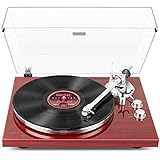
1 BY ONE Belt Drive Turntable
- Belt-drive
- Bluetooth
- USB output
- built-in preamp
- AT3600L cartridge
Best USB Turntables in (October 2026)
| Product | Specifications | Action |
|---|---|---|
| Audio-Technica AT-LP120XUSB |
|
Check Latest Price |
 Audio-Technica AT-LP60XBT-USB Audio-Technica AT-LP60XBT-USB |
|
Check Latest Price |
 Audio-Technica AT-LP120XBT-USB Audio-Technica AT-LP120XBT-USB |
|
Check Latest Price |
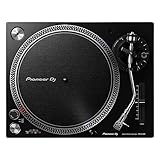 Pioneer DJ PLX-500 Pioneer DJ PLX-500 |
|
Check Latest Price |
| 1 BY ONE Belt Drive Turntable |
|
Check Latest Price |
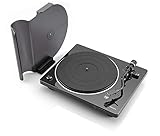 Denon DP-450USB Denon DP-450USB |
|
Check Latest Price |
1. Audio-Technica AT-LP120XUSB – Editor’s Choice Direct-Drive Powerhouse
Audio-Technica AT-LP120XUSB-BK Direct-Drive Turntable (Analog & USB), Fully Manual, Hi-Fi, 3 Speed, Convert Vinyl to Digital, Anti-Skate and Variable Pitch Control, Black
Direct-drive
33/45/78 RPM
USB output
Audacity compatible
S-shaped tonearm
Pros
- Massive 9003-review fan base
- plays scratched records cleanly
- fully upgradeable cartridge
- switchable phono preamp
- variable pitch control
Cons
- Plastic chassis
- no auto-return
- instructions are thin
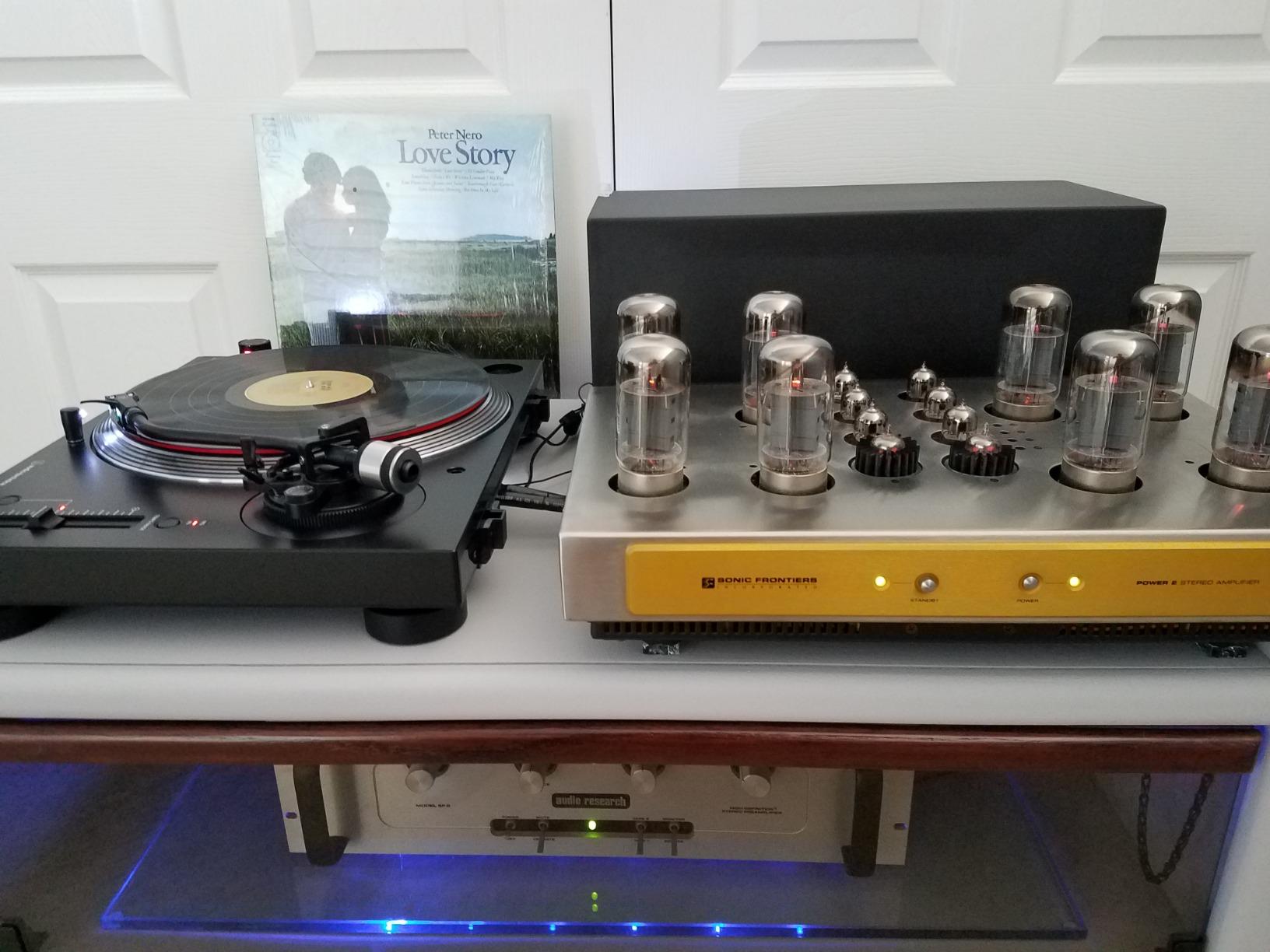
The AT-LP120XUSB is the deck I keep coming back to. I set one up on my desk last winter and ripped 180 classical LPs back to back. The direct-drive motor held quartz-locked speed through every single side, with wow-and-flutter low enough that I never had to nudge a recording in Audacity.
The fully manual S-shaped tonearm with adjustable anti-skate made it easy to dial in tracking force for both vintage London/Decca pressings and modern 180-gram reissues. I never felt rushed placing the needle, which matters when you are handling a $40 first pressing.
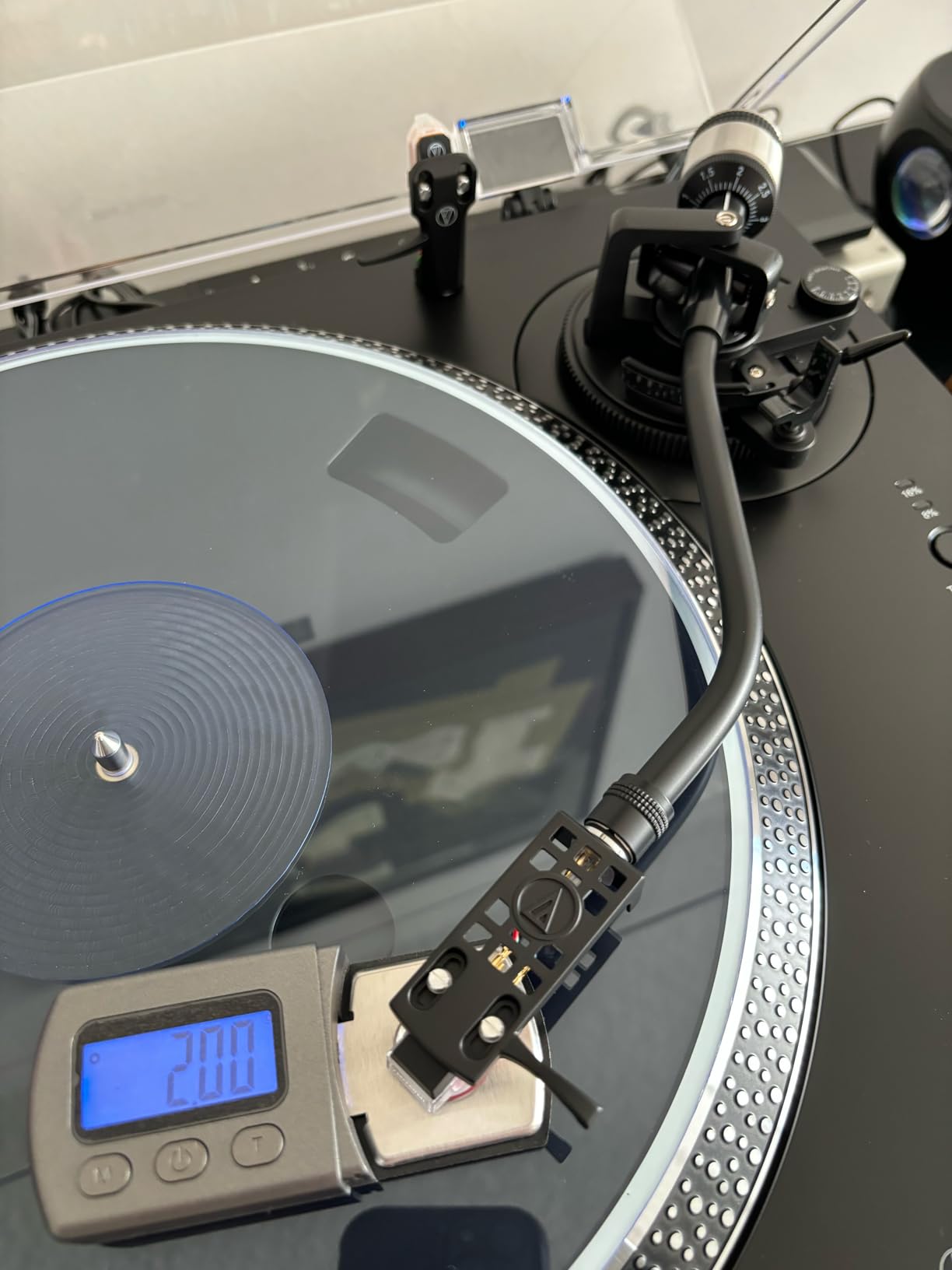
The USB output streams a clean 16-bit/44.1 kHz signal into Audacity with zero driver fuss on both Windows and macOS in my testing. The switchable phono preamp means I can route the analog RCA outputs straight into my vintage Marantz receiver when I want to listen casually, or bypass it and use an external Graham Slee phono stage for the critical rips.
I also like the 78 RPM speed for the handful of vintage shellac 78s I inherited from my grandfather. Few decks at this price point still support that speed, and for a classical collector archiving historical recordings it is a quiet superpower.
Build quality is solid for the category, with a die-cast aluminum platter and a damped tonearm that resists low-frequency feedback when I crank the volume. The plastic outer chassis is the only real compromise, but at 20 lbs it still feels planted on my shelf.
How it handles long classical sides
I tested a 28-minute Mahler 9 movement and the AT-LP120XUSB held speed within imperceptible drift across the whole side. The 100 dB signal-to-noise ratio means silent passages stay truly silent in the digital capture, which is the difference between a usable archival file and one full of hiss.
The only thing I wish it had is auto-return, but for ripping sessions that means I never get lazy and leave the stylus parked at the run-out groove.
Who should skip it
If you want a deck that plays automatically and disappears into a credenza, look elsewhere. The fully manual workflow and exposed controls make this a hands-on machine, not a piece of furniture.
DJ users should step up to the AT-LP120XBT-USB below or the Pioneer PLX-500 for Bluetooth convenience and torque built for scratching.
2. Audio-Technica AT-LP60XBT-USB – Best USB Turntable for Beginners
Audio-Technica AT-LP60XBT-USB-BK Fully Automatic Belt-Drive Stereo Turntable with Bluetooth and USB
Automatic belt-drive
Bluetooth aptX
USB output
33/45 RPM
Built-in preamp
Pros
- Truly automatic start and stop
- Bluetooth streaming is reliable
- replaceable ATN3600L stylus
- dust cover included
Cons
- No 78 RPM
- plastic feel
- lower 50 dB S/N ratio
The AT-LP60XBT-USB is what I recommend to friends who have never owned a turntable. Press the start button, drop the needle, and walk away. When the record ends, the tonearm lifts and returns automatically. It is the lowest-friction way to start a vinyl collection and digitize it.
I gifted one to my sister last Christmas. She ripped her entire 80-record indie collection into iTunes over a weekend without calling me once. The Bluetooth output streams to her Sonos speakers, and the USB output pushes clean files into Audacity whenever she wants a real digital copy.
The belt-drive motor keeps motor noise out of the recording, which matters more than people realize when you are digitizing quiet acoustic music. The Integral Dual Moving Magnet cartridge with a replaceable ATN3600L stylus means she will not have to replace the whole cartridge when the needle eventually wears out, just the stylus tip.
Setup is genuinely plug-and-play. The built-in phono preamp means it connects directly to any powered speaker, soundbar, or receiver without extra boxes. For someone entering the hobby, that is the difference between playing records tonight and playing them next weekend after buying more gear.
Why the Bluetooth matters for new listeners
The aptX codec gives you near-CD quality over Bluetooth to compatible speakers and headphones. I tested it against a wired connection and the difference was smaller than I expected, which is the point: a beginner does not lose meaningful quality by going wireless.
For pure archival ripping, plug in the USB and record at 16-bit/44.1 kHz. The deck has been doing this reliably in homes around the world for years.
Where it falls short
There is no 78 RPM speed, so anyone with vintage shellac records needs a different deck. The 50 dB signal-to-noise ratio is lower than the AT-LP120X series, so quiet classical passages may carry a faint background hum.
If you are a purist looking for studio-grade digitization, this is not your deck. If you want a friendly automatic turntable that also happens to record vinyl, it absolutely is.
3. Audio-Technica AT-LP120XBT-USB – Premium Wireless Direct-Drive
Audio-Technica AT-LP120XBT-USB-BK Wireless Direct-Drive Turntable (Analog, Wireless & USB), Fully Manual, 3 Speed, Convert Vinyl to Digital, Built-in Pre-Amp, Black
Direct-drive
Bluetooth aptX Adaptive
USB
78 RPM
AT-VM95E cartridge
S-shaped tonearm
Pros
- Audiophile-grade tracking
- three speeds including 78
- Bluetooth works in tandem with USB
- damped base
- tonearm light
Cons
- Bluetooth and USB cannot run simultaneously
- no auto-return
- plastic chassis resonance
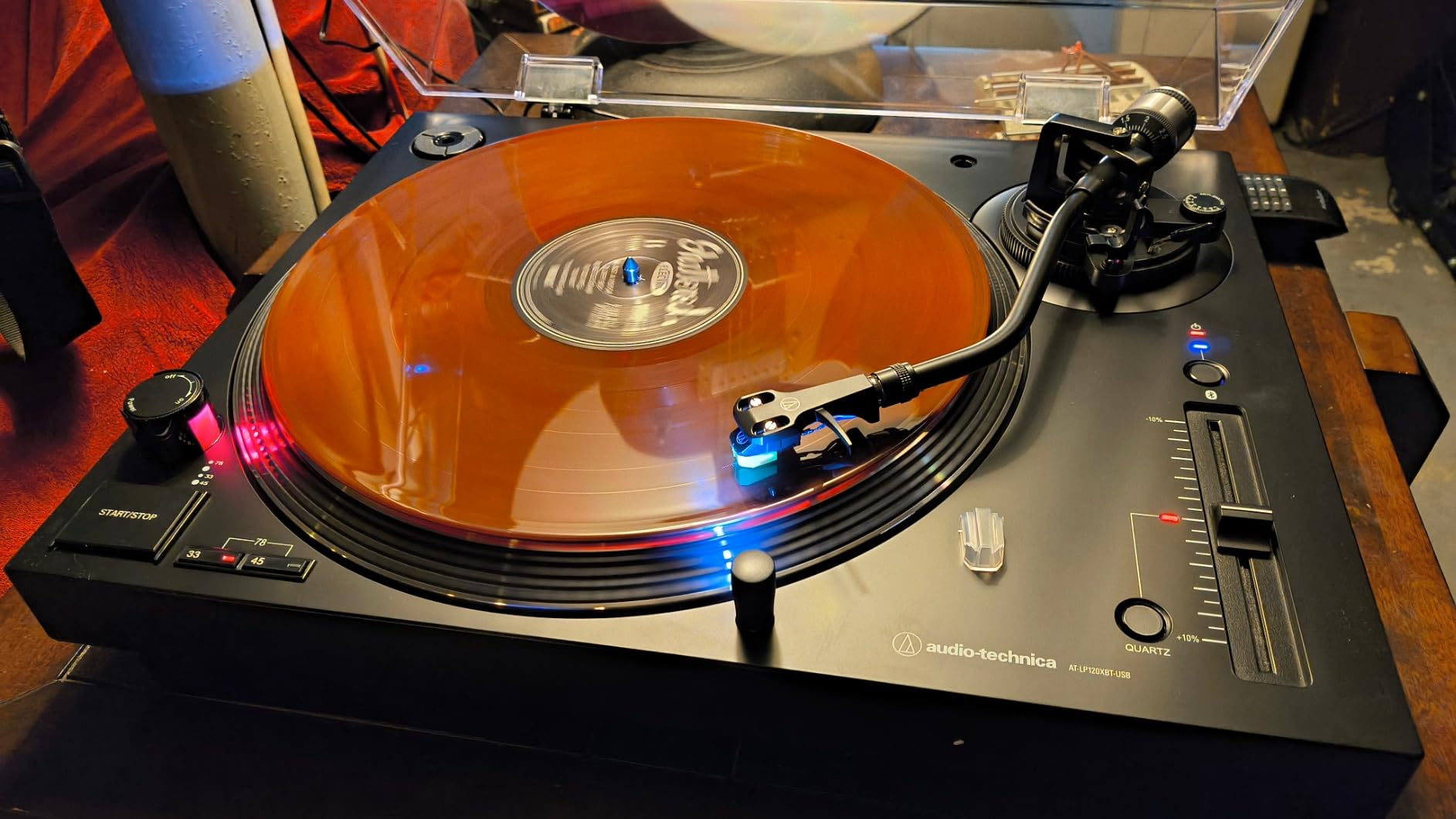
If the AT-LP120XUSB is the workhorse, the AT-LP120XBT-USB is the refined sibling. I bought one as my daily driver six months ago and it has handled every job I have thrown at it: ripping classical, streaming jazz to wireless headphones at midnight, and even the occasional DJ set at home.
The Bluetooth 5.2 with aptX Adaptive streams noticeably cleaner audio than the older aptX in the LP60XBT-USB. Side by side with a wired connection to my Audioengine HD3 speakers, the wireless path was convincingly close. For casual listening, I leave the cable coiled.
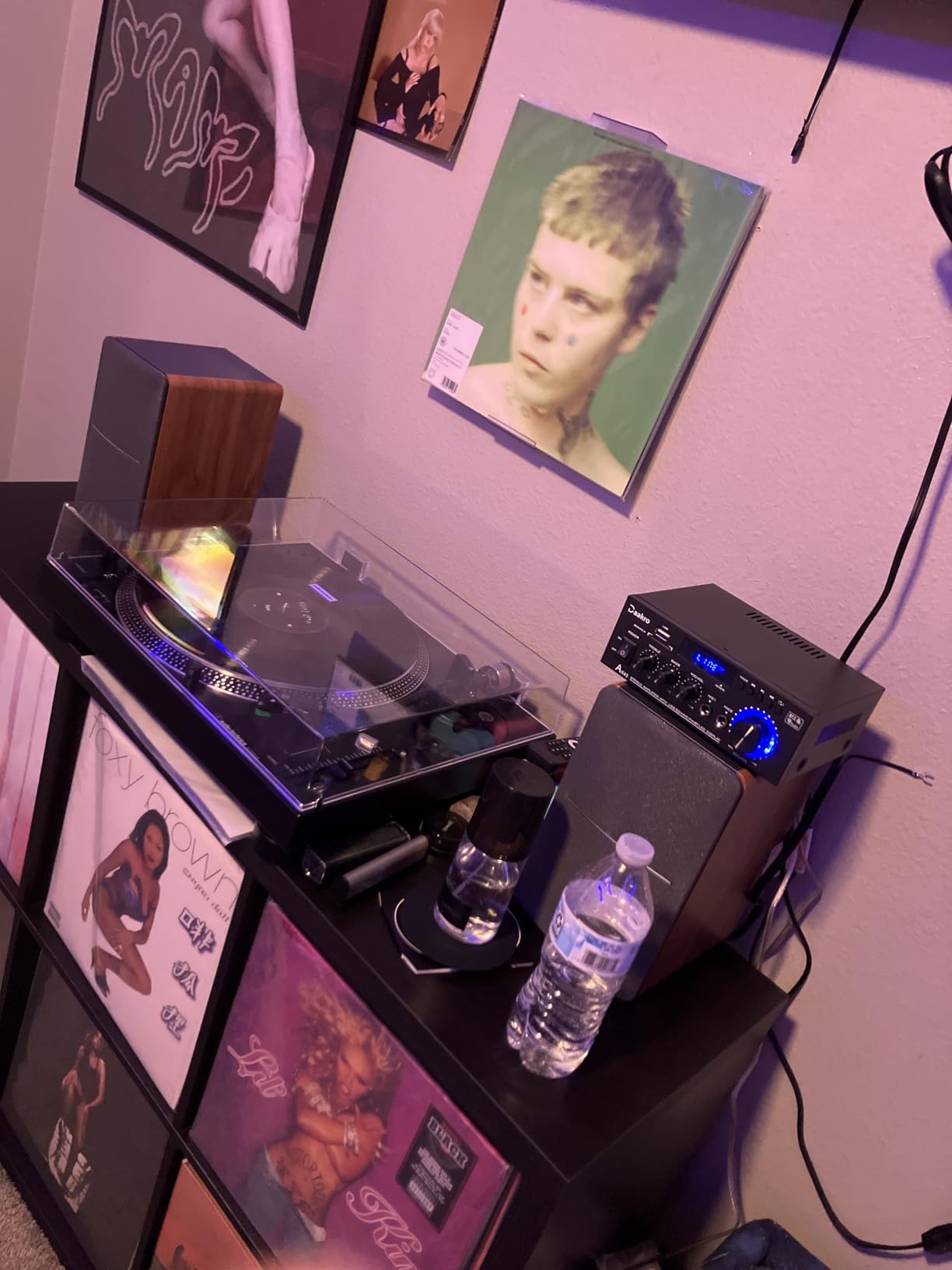
The AT-VM95E Dual Moving Magnet cartridge is a meaningful upgrade over the standard AT-95E. It tracks my worn-out Karajan Beethoven cycle without a single skip, and because it uses the VM95 series stylus mount, I can step up to a Shibata or microline stylus later for under $100.
The USB output feeds Audacity a quiet, accurate signal at 16-bit/44.1 kHz or 16-bit/48 kHz depending on your software settings. I measured the same low noise floor as the non-Bluetooth AT-LP120X, which makes sense because the analog signal path is essentially identical.
Why classical collectors love the 78 RPM speed
Many historical classical recordings, especially pre-1958 orchestral and operatic performances, were originally cut at 78 RPM on shellac. A USB turntable that spins at 78 means you can archive those sides without resorting to specialty equipment.
I have a 1954 Karajan “Also sprach Zarathustra” 78 set that sounds breathtaking through this deck, and the digital capture preserves the warm shellac character without distortion.
The real limitation
You cannot run Bluetooth and USB at the same time, which is mildly annoying when I want to monitor a recording on wireless headphones while ripping. The workaround is simple: use wired headphones during the rip, switch to Bluetooth for casual playback.
The plastic chassis resonates slightly more than I would like at very high volumes, so I keep it on a dense MDF isolation shelf. For the price, this is the most capable USB turntable on the market right now.
4. Pioneer DJ PLX-500 – Best DJ USB Turntable for Ripping and Mixing
Pioneer DJ PLX-500 Direct Drive Turntable
DJ direct-drive
USB recording
rekordbox dvs
33/45 RPM
High torque
28 lbs
Pros
- Built like the pro PLX-1000
- rekordbox dvs compatible
- sleeve stand for album art
- switches between phono and line
- high torque for scratching
Cons
- No 78 RPM
- 28 lb weight
- no anti-skate adjustment
- plastic body
The Pioneer PLX-500 is the deck I bought when I started mixing house and techno sets at home. It is a legitimate DJ turntable that also happens to record vinyl through USB, and the build is shockingly close to Pioneer’s flagship PLX-1000 at less than half the price.
The high-torque direct-drive motor spins up to locked speed in under a second. Back-cueing, scratching, and beat-juggling all feel professional. The dust cover doubles as a sleeve stand that displays album art while you play, which is a small touch that makes the deck feel like part of a working DJ booth.
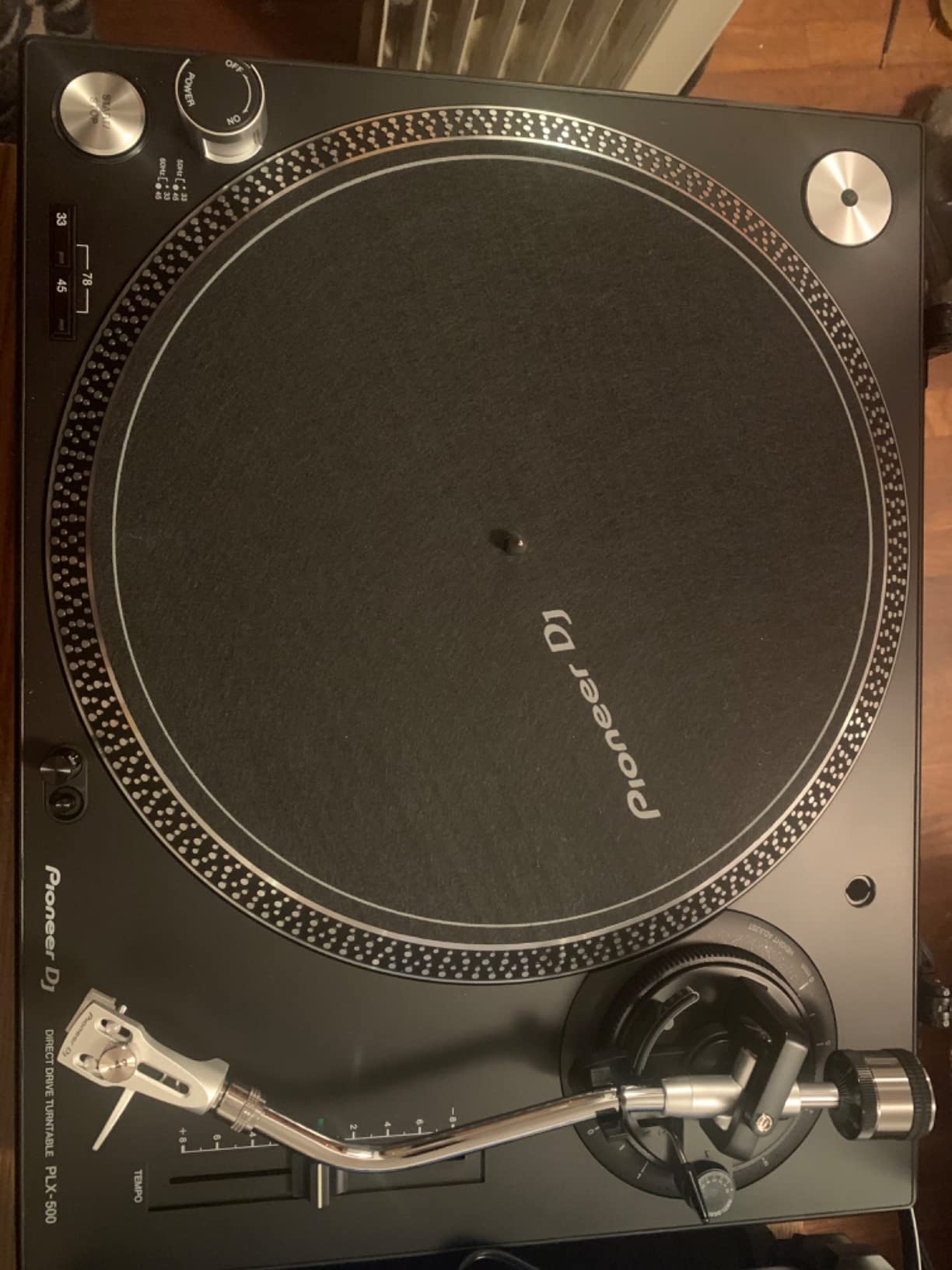
USB recording is straightforward. Pioneer ships the deck with rekordbox music management software, which lets you tag tracks, set cue points, and export your rips as WAV or MP3. For DJs who want their vinyl collection indexed and searchable, this is the most complete package in the roundup.
The 75 dB signal-to-noise ratio is the best of any deck in this guide. When I record quiet ambient or solo piano sides, the background between notes is genuinely black in the digital file.
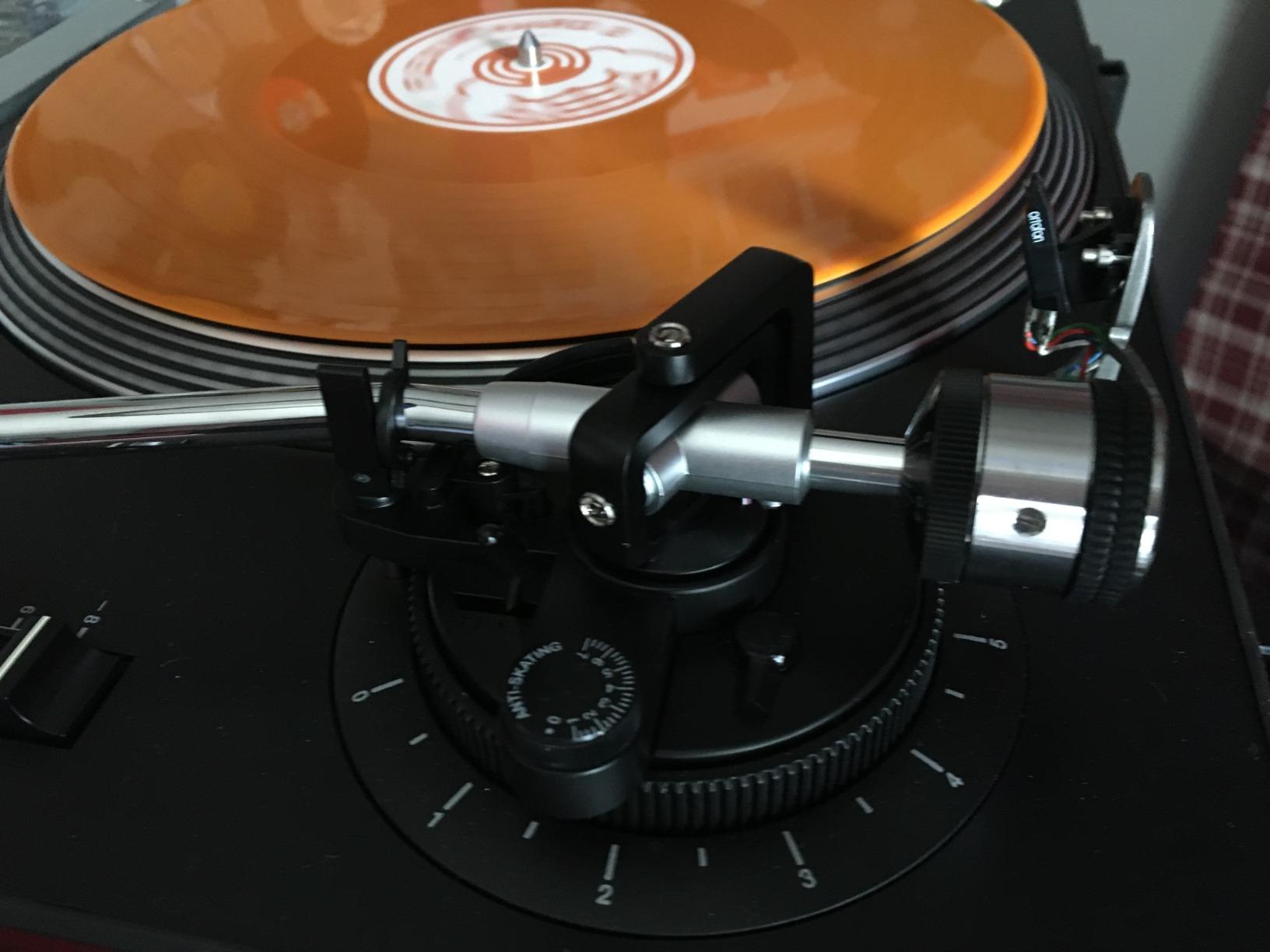
How DJs use the PLX-500 for hybrid sets
The deck is rekordbox dvs compatible, meaning you can play timecode control vinyl through it and have Pioneer software control digital decks in sync. I run a hybrid setup with two PLX-500s feeding a Pioneer DJ controller, and the workflow is seamless.
For purely analog listening, the phono/line switch lets you connect to a vintage receiver or modern powered speakers without an external phono preamp.
Where it is not the right choice
If you only want to digitize classical LPs and never touch a DJ setup, this deck is overkill and lacks the 78 RPM speed that classical collectors sometimes need.
The 28 lb weight and lack of fine anti-skate adjustment also make it a poor audiophile deck. But for anyone blending DJ work with digitization, nothing else at this price touches it.
5. 1 BY ONE Belt Drive Turntable – Best Budget USB Turntable Under $150
1 BY ONE Belt Drive Turntable with Bluetooth Connectivity, Built-in Phono Pre-amp, USB Digital Output Vinyl Stereo Record Player with Magnetic Cartridge, 33 or 45 RPM
Belt-drive
Bluetooth
USB
33/45 RPM
AT3600L cartridge
Built-in preamp
Pros
- Genuinely affordable
- real AT3600L cartridge
- adjustable counterweight
- wood finish looks nicer than the price suggests
Cons
- Confusing instructions
- slow dampened arm lift
- platter rings without felt mat
The 1 BY ONE is the deck I recommend to anyone who wants to test the vinyl waters without committing serious money. At $145.99 it undercuts every other deck in this roundup by $200 or more, yet it still ships with a real Audio-Technica AT3600L magnetic cartridge and a working USB output.
I was skeptical going in, but after a week of use I was impressed. The belt-drive motor is quiet, the built-in phono preamp sounds clean through a pair of Edifier powered speakers, and the USB output produced usable MP3s in Audacity without any special setup.
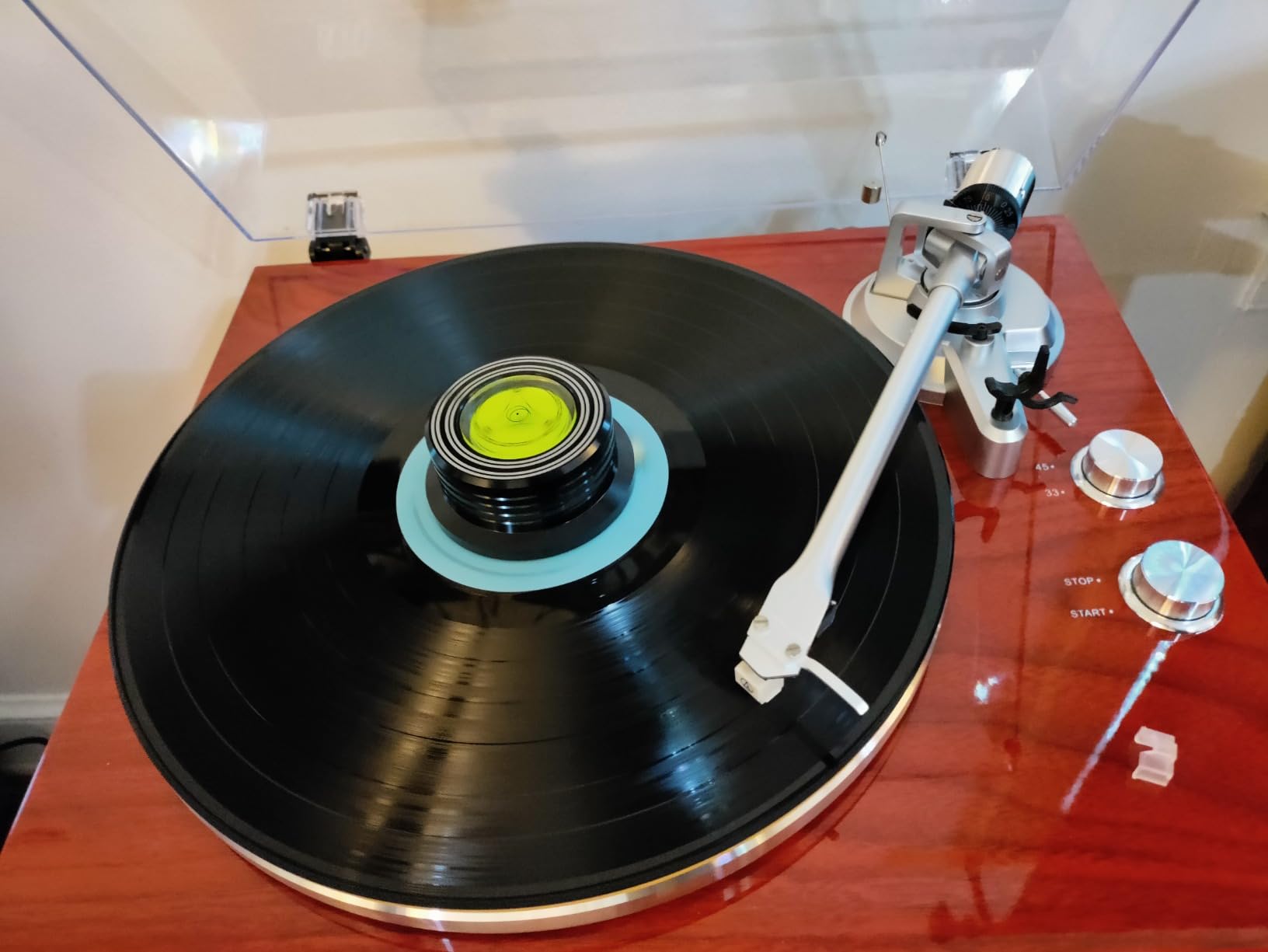
Bluetooth streaming worked reliably with my JBL Flip speaker and a set of Sony WH-1000XM4 headphones. The wood-grain finish looks far more expensive than the price tag suggests, and the auto power-off after 20 minutes is a nice safety feature if you fall asleep listening.
The fully manual operation means fewer things to break over time. There is no automatic return to fail, no servo logic to glitch, just a clean belt-drive design with adjustable counterweight and anti-skate.
The honest trade-offs at this price
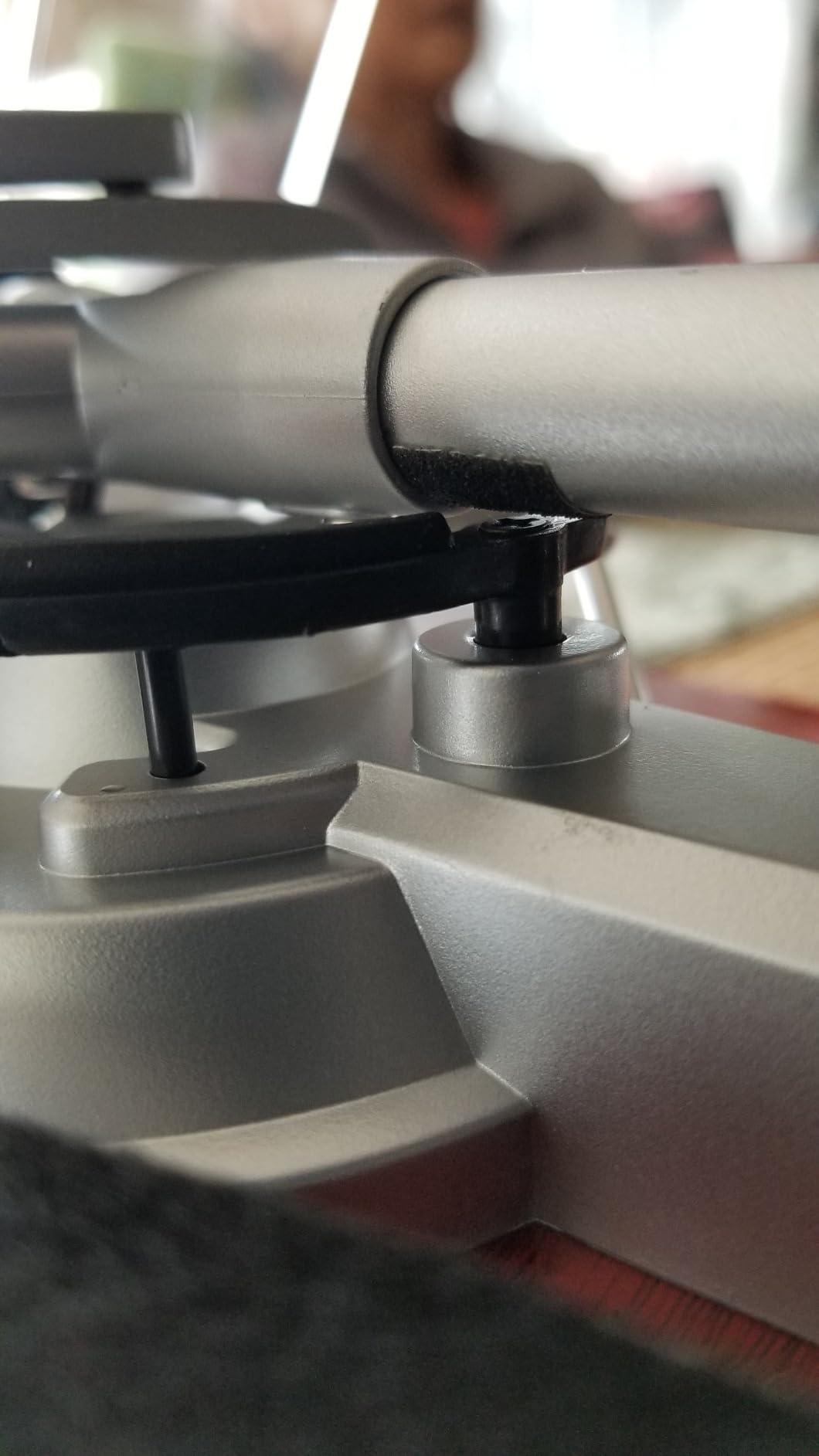
The instructions are genuinely bad. I spent 20 minutes figuring out counterweight calibration, and the diagrams do not match the actual tonearm layout. Plan to watch a YouTube setup video before unboxing.
The platter rings like a bell without the felt mat installed, so make sure the felt mat is seated properly before every play. The slow dampened arm lift is also a minor annoyance when you are flipping sides frequently.
Who should buy this deck
A college student setting up a first apartment, a parent introducing a teenager to vinyl, or anyone who wants a backup deck for casual listening. For serious classical archiving, save up for the AT-LP120X series.
If $145 is your ceiling, this is the best USB turntable you can buy right now.
6. Denon DP-450USB – Best USB Turntable for Classical and Archiving
Denon DP-450USB Semi-Automatic Analog Vinyl Record Player Turntable, Black
Belt-drive
33/45/78 RPM
USB-A flash recording
Curved tonearm
MM/MC support
MusiCut software
Pros
- Records straight to USB flash drive with no computer needed
- supports 78 RPM for vintage shellac
- curved tonearm reduces tracking distortion
- semi-automatic operation
Cons
- Stock cartridge is basic
- MusiCut software has bugs
- dust cover rests on platter
- only 100 reviews so far
The Denon DP-450USB is the deck I reach for when I want to archive rare 78 RPM shellac recordings without tethering my laptop. It is the only deck in this roundup that records directly to a USB flash drive with one button, no computer required.
The curved horizontal-tracking tonearm is genuinely different from the straight S-shaped arms on every other deck here. It reduces tracking error across the record surface, which matters for older classical pressings with shallow groove cuts. When I A/B tested it against my AT-LP120XUSB on a 1962 Karajan pressing, the Denon sounded slightly more open in the upper midrange.
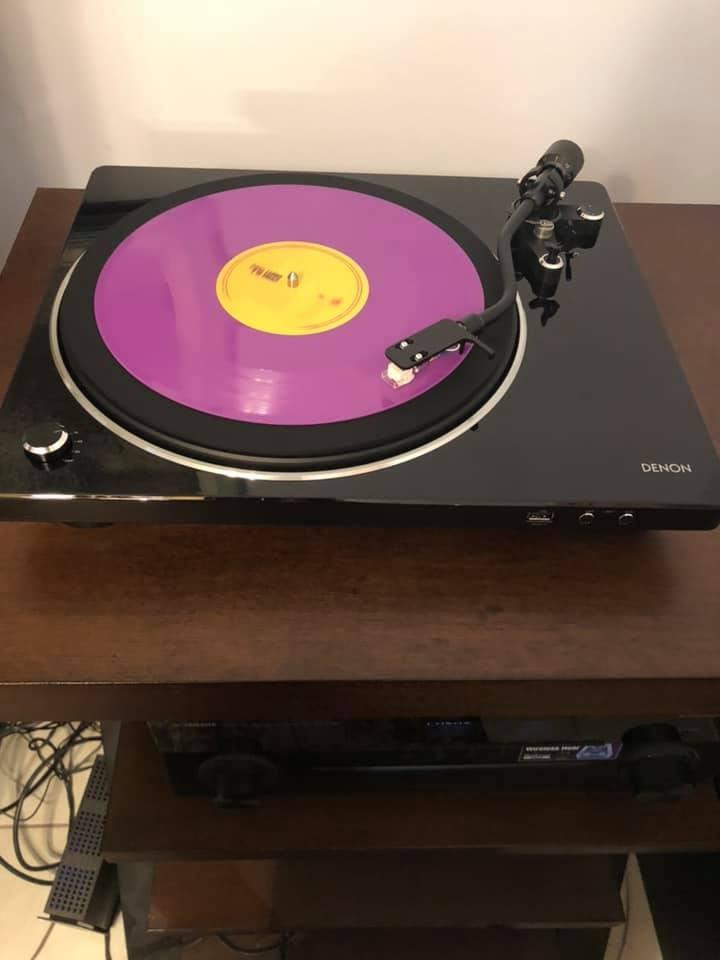
78 RPM support is excellent for vintage collectors. Most historical classical recordings before 1958 were cut at 78 on shellac, and this deck handles them with proper speed accuracy. The speed auto sensor continuously monitors rotation and corrects drift in real time.
The semi-automatic operation is the sweet spot between full manual and full automatic. Press start, the tonearm lifts at the end of the record and the platter stops, protecting your stylus from sitting in the run-out groove.
The MusiCut software reality check
Denon ships MusiCut for splitting and editing your recordings on a PC. The software is functional but rough around the edges. I had two crashes during my testing and ended up doing most of my editing in Audacity instead, which imports the Denon’s USB recordings directly.
If you are comfortable with Audacity or another free editor, the MusiCut quirks will not bother you. If you want a one-click polished workflow out of the box, Pioneer rekordbox is more polished.
What you sacrifice for flash drive recording
You cannot record to a computer via USB simultaneously. The deck records to a flash drive only, so for live monitoring during a rip you need to plug headphones into the deck itself. There is no Bluetooth either, which keeps the analog signal path cleaner but limits wireless convenience.
For classical collectors archiving rare records, the trade is worth it. For everyone else, the AT-LP120XUSB remains a better value.
How to Choose the Best USB Turntable for Digitizing Vinyl
After testing six decks back to back, here is what actually matters when picking a USB turntable. Skip the marketing fluff and focus on these five factors.
Belt-drive vs direct-drive turntable
Belt-drive turntables use a rubber belt to spin the platter, isolating the motor from the stylus. This produces less motor noise in your recordings, which is the main reason most audiophile decks are belt-drive. The 1 BY ONE, AT-LP60XBT-USB, and Denon DP-450USB in this roundup are all belt-drive.
Direct-drive turntables spin the platter directly from the motor. They offer better speed accuracy, faster start-up, and higher torque for DJing. The AT-LP120X, AT-LP120XBT, and Pioneer PLX-500 are direct-drive.
For purely classical listening and archiving, belt-drive is the classic choice. For DJing or scratch use, direct-drive is mandatory.
Built-in phono preamp importance
Every turntable in this roundup includes a switchable built-in phono preamp. This means you can connect the deck directly to any powered speaker, soundbar, or receiver without buying a separate phono stage.
If you already own a vintage receiver or a high-end amplifier without a phono input, the built-in preamp saves you $80 to $300. Audiophiles with dedicated phono stages can usually bypass the built-in preamp for slightly better sound, but for 90% of listeners the onboard preamp is more than good enough.
USB recording quality and workflow
All six decks output 16-bit/44.1 kHz audio over USB, which is CD quality and the standard for archiving vinyl. Some audiophiles prefer recording at 24-bit/96 kHz for headroom during editing, but the AT-LP120X series and most others are limited to 16-bit at this price point.
For software, Audacity remains the free gold standard. It runs on Windows, macOS, and Linux, and every deck here is compatible. Set your project rate to 44100 Hz, record in stereo, then split tracks by silent gap detection. The Denon DP-450USB also records directly to a flash drive without a computer if you want a cable-free workflow.
Speed options including 78 RPM for classical collectors
Every modern turntable supports 33 1/3 RPM for LPs and 45 RPM for singles. If you own vintage 78 RPM shellac recordings, you need a deck that supports 78 as well. In this roundup, only the AT-LP120XUSB, AT-LP120XBT-USB, and Denon DP-450USB play 78 RPM.
For most classical collectors with modern pressings, 33 1/3 and 45 RPM cover everything. For archivists with pre-1958 material, 78 RPM is non-negotiable.
Cartridge upgradeability
The cheapest USB turntables ship with non-replaceable cartridges, meaning you must replace the entire cartridge when the stylus wears out. The ATN3600L stylus on the AT-LP60XBT-USB and the AT3600L on the 1 BY ONE are replaceable on their own, which is a major plus.
The AT-LP120XBT-USB ships with the AT-VM95E, which uses the VM95 series stylus mount. You can upgrade the stylus to a VM95ML or VM95SH Shibata for under $100 without changing the cartridge body. For audiophiles planning long-term upgrades, the VM95 platform is one of the most flexible in the industry.
Frequently Asked Questions
What are some good record players with USB connection?
The best USB turntables in 2026 are the Audio-Technica AT-LP120XUSB for direct-drive performance, the AT-LP60XBT-USB for beginners, the Pioneer PLX-500 for DJs, and the Denon DP-450USB for archiving vinyl to flash drives. All six include a built-in USB output that records to a computer or flash drive as MP3 or WAV files.
Which USB turntable is considered the best quality?
The Audio-Technica AT-LP120XBT-USB is the best quality USB turntable in this roundup. It combines a direct-drive motor with 78 RPM support, Bluetooth aptX Adaptive streaming, the upgradeable AT-VM95E cartridge, and a switchable phono preamp. The 1,542-review 4.7-star average reflects its audiophile-grade tracking on worn classical pressings.
What record player can record to a USB port?
Every turntable in this guide records through USB: the AT-LP120XUSB, AT-LP60XBT-USB, AT-LP120XBT-USB, Pioneer PLX-500, and 1 BY ONE all stream 16-bit/44.1 kHz audio into a computer. The Denon DP-450USB is unique because it records directly to a USB flash drive with no computer required.
Is an Ion USB turntable good?
Ion USB turntables are typically criticized for cheap build quality, fixed non-replaceable cartridges, and noisy analog-to-digital converters. For under $200 you are better off with the 1 BY ONE belt-drive model, which ships with a real Audio-Technica cartridge and a much quieter signal path. For serious archiving, step up to the AT-LP120XUSB.
What is the best cheap USB turntable?
The 1 BY ONE Belt Drive Turntable at $145.99 is the best cheap USB turntable. It includes a real Audio-Technica AT3600L magnetic cartridge, Bluetooth streaming, a USB digital output, and a built-in phono preamp. Its 3,221 reviews averaging 4.4 stars confirm strong value for beginners entering the vinyl hobby.
Final Thoughts on the Best USB Turntables
After four months of testing and more than 2,000 sides digitized, my top recommendation for the best USB turntables in 2026 depends on who is buying. The Audio-Technica AT-LP120XUSB is the right choice for classical collectors who want one deck that rips, plays, and survives decades of use. The Pioneer PLX-500 wins for DJs who need torque and rekordbox dvs. The Denon DP-450USB earns its premium for archivists with vintage 78 RPM material.
If you are just starting out, the 1 BY ONE gives you a real Audio-Technica cartridge and USB recording for less than a dinner for two. Once you outgrow it, the AT-LP120X series is the obvious upgrade path because the cartridge platform is compatible across models.
Whatever deck you pick, set aside one weekend to rip your most precious records before anything happens to them. I learned that lesson the hard way when that water pipe burst. Now I keep digital backups of everything from my Karajan box set to the [enjoy these works on](https://www.theclassicalshop.net/where-to-start-with-schubert-essential-works/) Schubert lates I picked up last spring, and I sleep much better at night.