
Well water is not municipal water. The moment it leaves your well casing, nobody is testing it, and whatever the aquifer hands up gets delivered straight to your drinking glass, your shower and your water heater. If you are searching for the best whole house water filters for well water, you are really looking for one system that fixes several problems at once, because a private well rarely has just one problem.
That is the trap most buyers fall into. They buy a carbon filter for the rotten egg smell in the hot water, and six months later discover the water heater is full of rust. Or they install a softener first, and the resin fouls within a year because the well runs 4 ppm iron. The order of stages matters more than the brand names on the tanks.
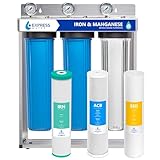
Before writing this guide we read the forums where well owners post real lab numbers after real failures, then compared twelve point-of-entry systems on published contaminant limits, service flow, cartridge life and the plumbing each one demands. Every system below is plumbed into the main line ahead of the pressure tank so the whole house is treated at once.
Test your water before you buy anything. A certified lab panel covering iron, manganese, hydrogen sulfide, hardness, pH, alkalinity and total coliform costs far less than a filtration system chosen by guesswork. The number that comes back decides the technology: iron and sulfur need oxidation, hardness needs ion exchange, bacteria need UV. Nothing on this list substitutes for a test result.
Table of Contents
Top 3 Picks for Well Water Filtration (September 2026)


All 12 Whole House Well Water Filters Compared in 2026
Every filter below treats the whole house at the point of entry. The differences that actually matter on a well are the contaminant ceiling each one is rated for, the service flow it can hold, and whether it needs a drain line, an outlet and regular human hands.
| Product | Specifications | Action |
|---|---|---|
| iSpring WGB21BM 2-Stage |
|
Check Latest Price |
| Express Water 3-Stage Iron and Manganese |
|
Check Latest Price |
| iSpring WGB32BM 3-Stage |
|
Check Latest Price |
 iFilters MWH-D-WELL 3-Stage iFilters MWH-D-WELL 3-Stage |
|
Check Latest Price |
 HQUA WF3-01 3-Stage HQUA WF3-01 3-Stage |
|
Check Latest Price |
 Home Master HMF3SdgFeC 3-Stage Home Master HMF3SdgFeC 3-Stage |
|
Check Latest Price |
 Waterdrop WHF3T-FG 3-Stage Waterdrop WHF3T-FG 3-Stage |
|
Check Latest Price |
 PUREPLUS 1-Stage Iron and Manganese PUREPLUS 1-Stage Iron and Manganese |
|
Check Latest Price |
 Waterdrop WHF3E-SKH 3-Stage Waterdrop WHF3E-SKH 3-Stage |
|
Check Latest Price |
 Aquasana Well Water Filter with UV Aquasana Well Water Filter with UV |
|
Check Latest Price |
 iSpring WCFM550K Whole House Iron Filter iSpring WCFM550K Whole House Iron Filter |
|
Check Latest Price |
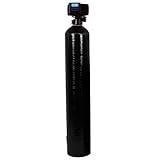 Fleck 5600 SXT Air Injection 1.5 cu ft Fleck 5600 SXT Air Injection 1.5 cu ft |
|
Check Latest Price |
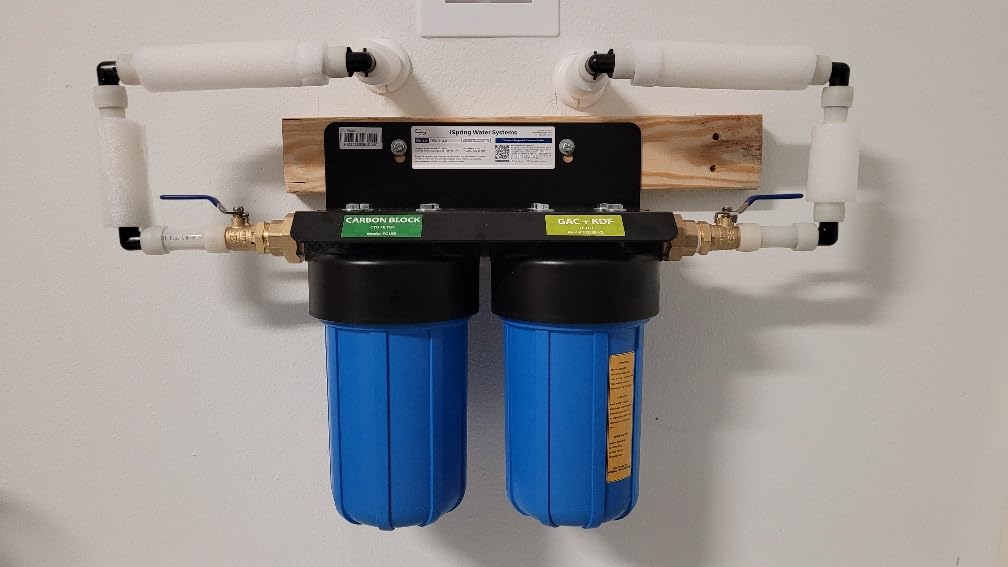
1. iSpring WGB21BM 2-Stage Whole House Filter – Best Overall for Typical Well Water
iSpring WGB21BM 2-Stage Whole House Water Filtration System, 10” x 4.5” Carbon Block and Iron & Manganese Reducing Filters, 1″ Ports
Iron to 3.0 ppm
Manganese to 1.0 ppm
Over 90% chlorine
15 GPM
50,000 gallons
Pros
- Handles iron and manganese below 3 ppm
- Removes over 90% of chlorine plus VOCs
- 15 GPM flow on 1-inch ports
- Pre-assembled bracket simplifies DIY install
- Filter wrench included
Cons
- NPT fittings can weep if overtightened
- Cartridges do not fully thread into housing
- Not built for very high iron or manganese
- Does not reduce TDS
The WGB21BM is the system I keep coming back to for a well that behaves. A CTO carbon block sits in front and an iron and manganese reducing cartridge sits behind it, which is the correct sequence for most household wells. Reviewers consistently report the orange staining in the toilet bowl disappearing within weeks rather than months.
Its 15 GPM ceiling matters more than most spec sheets admit. A family running two showers and a washer at once will exceed 8 GPM, and a filter rated close to your peak demand is the reason people report a pressure drop in year two. At 15 GPM this one has headroom most cartridge housings lack.
The iron stage is rated to 3.0 ppm and manganese to 1.0 ppm. That ceiling is the honest limit of cartridge media, and it is also the number well owners on the r/WaterTreatment forums argue about constantly: past roughly 3 ppm, a cartridge fouls, the pressure drops and you start swapping filters on a schedule instead of a condition.
It arrives as a metal assembly with the housings pre-bracketed, and the included wrench means you are not hunting for tools at midnight when a gasket fails. Operating pressure sits in a wide 25 to 80 psi band, which covers most well pump setups without a regulator.
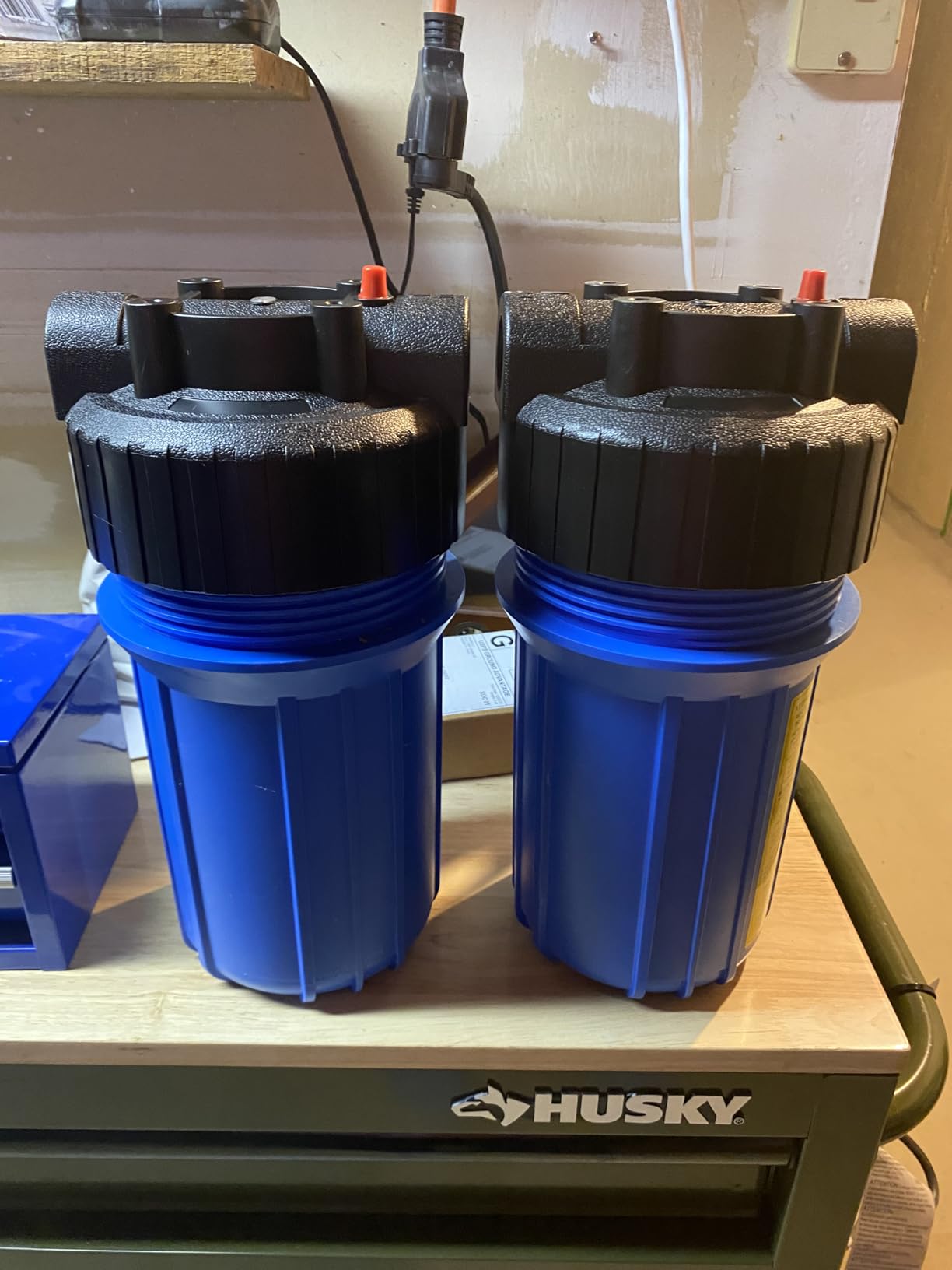
Will it handle your test results
If your lab panel comes back with iron under 3 ppm and manganese under 1 ppm, this system is a direct fit. It is also the sensible pick when you want chlorine, taste and odor handled in the same bracket as the iron media rather than in a separate unit.
Pair it with a spin-down or pleated sediment pre-filter upstream if your well runs sand after heavy rain, and place it ahead of any softener in the line.
Where owners run into trouble
The most common complaint is thread sealing. Buyers overtighten the NPT ports, distort the gaskets and end up with a slow drip that reads as a failing system. Follow the torque guidance rather than muscle memory.
Second, it will not save you from a high-iron well. Reviewers who moved up to 4 ppm and beyond came back disappointed, and no amount of cartridge swapping fixes it. It also does not reduce total dissolved solids, so it is the wrong tool if your problem is hardness rather than staining.
2. Express Water 3-Stage Iron and Manganese System – Best Value Tank-Style Pick
Express Water Whole House Water Filter System, Iron & Manganese, 3-Stage
Iron and manganese reduction
17 GPM
Stainless steel frame
Pressure gauges
100,000 gallons
Pros
- Three stages aimed squarely at iron and manganese
- 17 GPM flow rating on 1 inch connections
- Stainless steel frame and free-standing layout
- Pressure release buttons ease cartridge swaps
- NSF certified replacement cartridges
Cons
- Cartridges need replacing every 6 to 12 months
- Does not reduce TDS
This is the option I recommend when iron is the dominant complaint and the home runs more than two bathrooms. At 17 GPM it carries the highest flow figure in our roundup, and the three housings are dedicated to iron and manganese rather than splitting effort across sediment and carbon.
Owners on well water talk about glassware and laundry first, which is the honest test of an iron system. When white shirts stop coming out rust colored and drinking glasses stop showing orange rings, the media is still working. That is the number to watch, not taste.
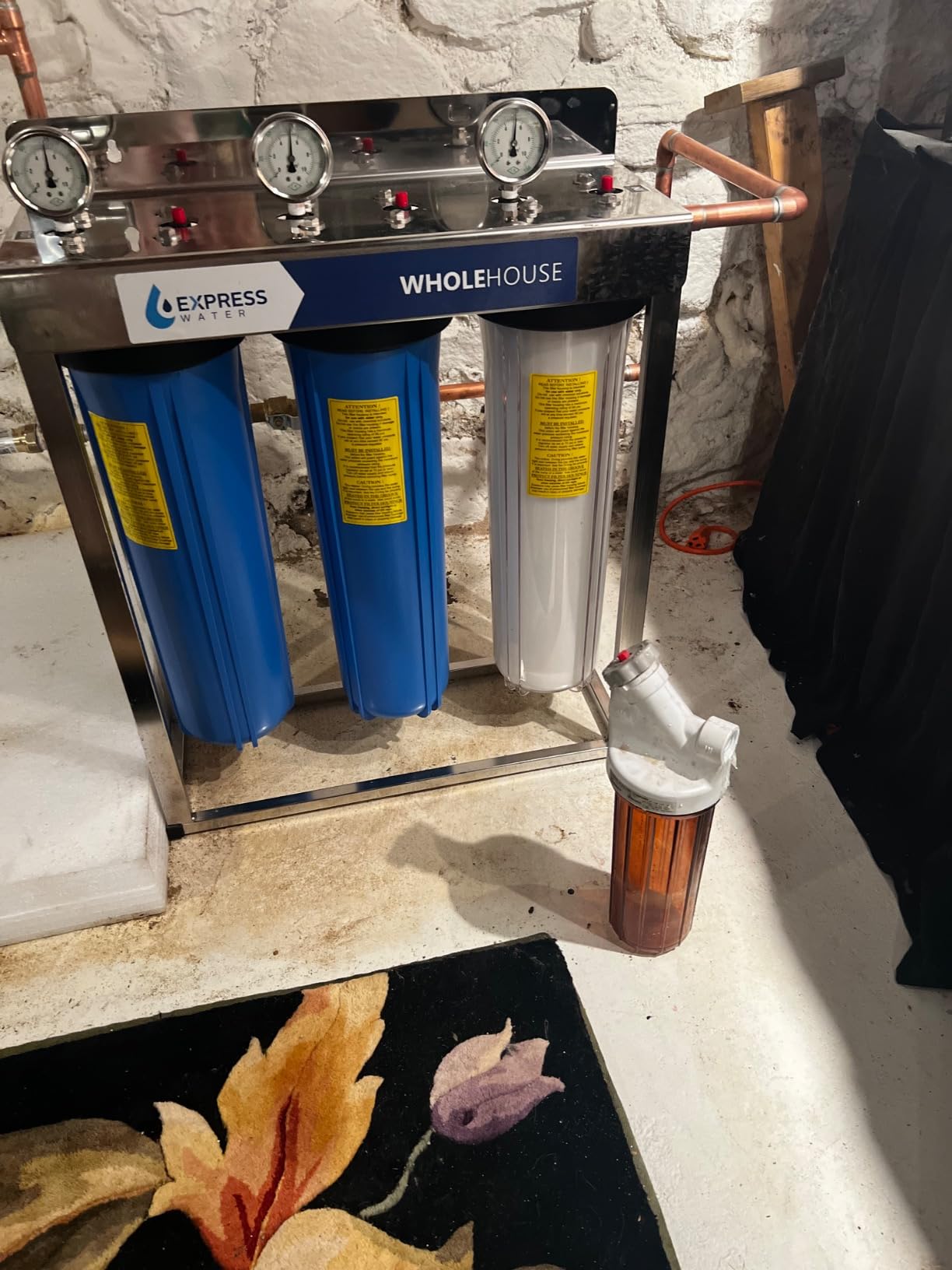
The stainless steel frame is a genuine upgrade over the plastic brackets used on cheaper brackets, and the pressure release button on each housing bleeds the line before you crack it open. That single feature removes most of the wet-floor stories we found in the reviews.
Replacement cartridges are widely available and NSF certified, and the operating band of 20 to 80 psi suits a wide range of well pressure switches. The manufacturer also specifies installing it at the water inlet, ahead of any softener, which is the order that keeps softener resin alive.
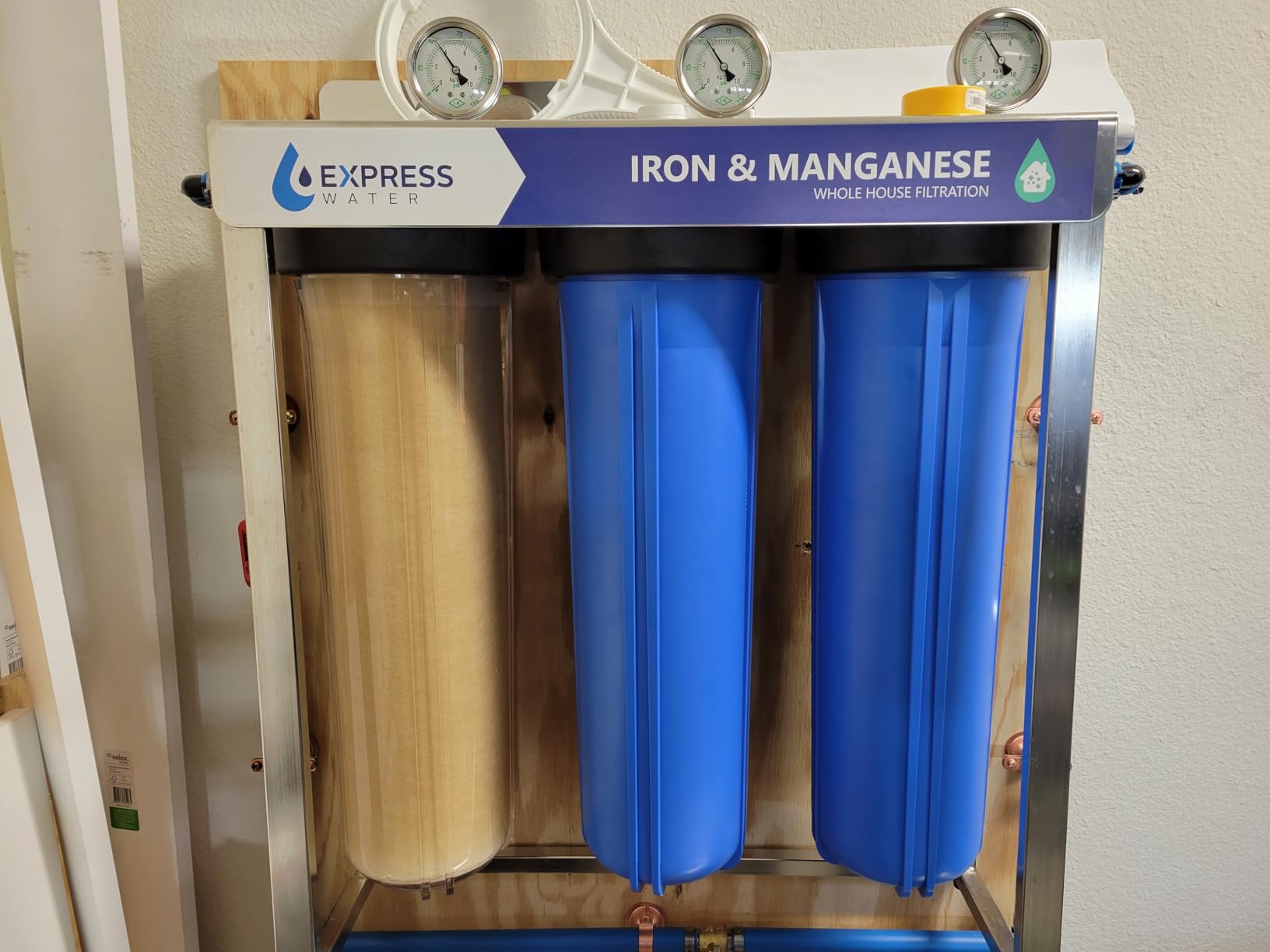
Why it earns the value slot
You get dedicated iron capacity, the best flow rating here and a frame that will not crack in a mechanical room. For a household that showers and launders simultaneously, flow headroom is the feature you will notice every single day.
Budget for two filter changes a year on a typical two-bath home, and more if your well runs heavy sediment after rain.
What it will not do
It is not a softener and it does not reduce total dissolved solids. If your hardness reading is 18 grains per gallon, add an ion exchange softener downstream rather than expecting this to soften anything.
Six-month replacement intervals are the second most common complaint after TDS expectations. Treat the cartridges as a scheduled maintenance item, not a set-and-forget purchase.
3. iSpring WGB32BM 3-Stage System – Best Multi-Stage Sediment, Carbon and Iron Setup
iSpring WGB32BM Iron, Manganese Whole House Water Filter System
5 micron sediment
Coconut carbon block
FM25B iron media
15 GPM
100,000 gallons
Pros
- Covers sediment
- carbon and iron in one bracket
- 20 inch housings hold large media volumes
- Cartridge life indicators on the cores
- Reversible bracket matches either plumbing direction
Cons
- Heavy and wet to change since cartridges cannot fully drain
- Tightening instructions cause small leaks
- Occasional thread leaks on the 1 inch NPT
- No drain fittings to simplify changes
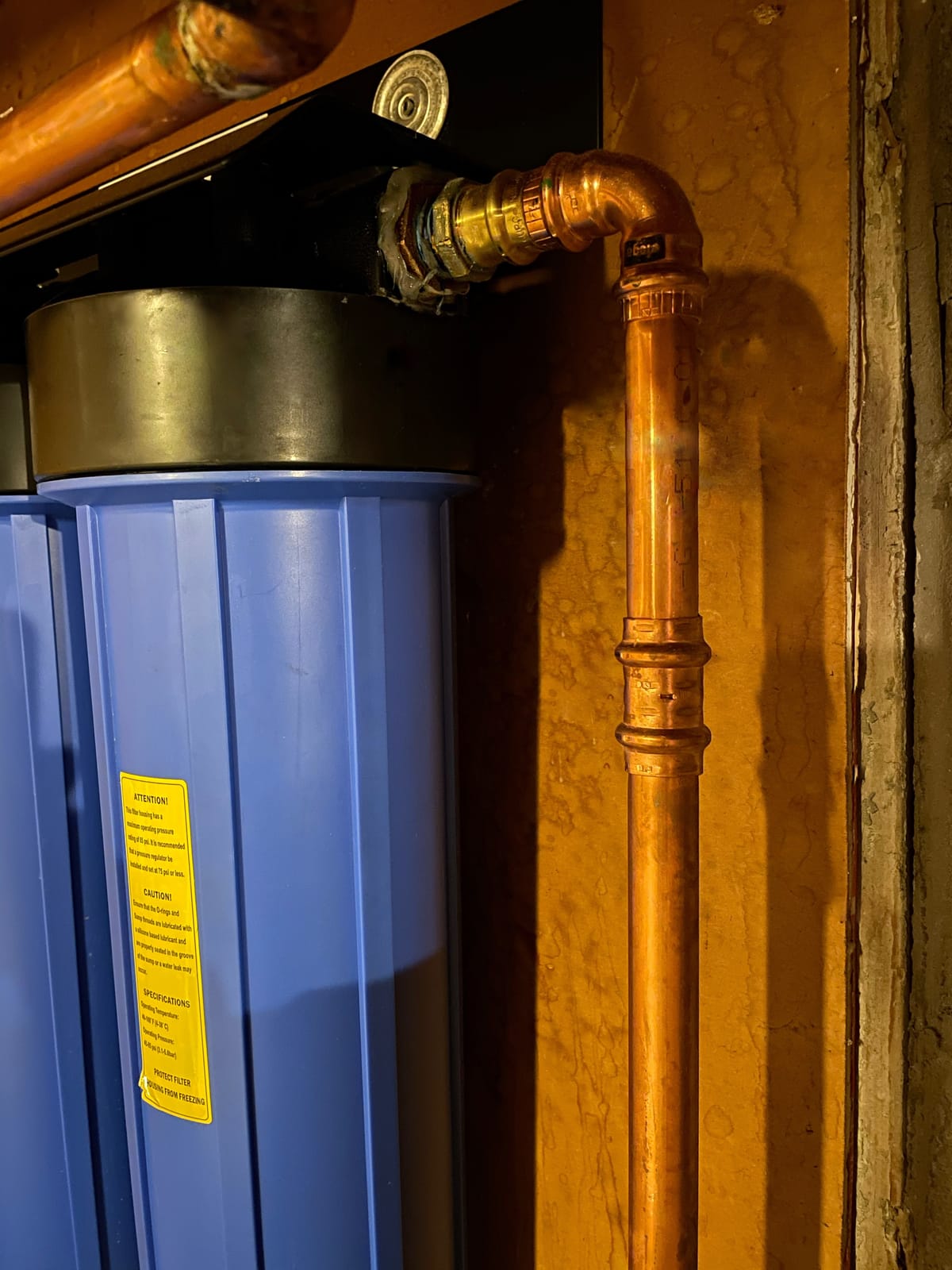
Most whole house cartridge systems force a choice: protect the carbon from sediment, or protect the iron media from plugging. The WGB32BM takes three stages, a 5 micron polypropylene sediment filter, a coconut shell carbon block and an FM25B iron and manganese cartridge, so each medium gets the protection it needs.
The FM25B catalytic media is rated to last up to three times longer than greensand, which matters on wells where iron sits between 1 and 3 ppm and greensand would be exhausted in a year. The 100,000 gallon capacity rating and one-year cartridge life are the honest figures for a two-bath home.
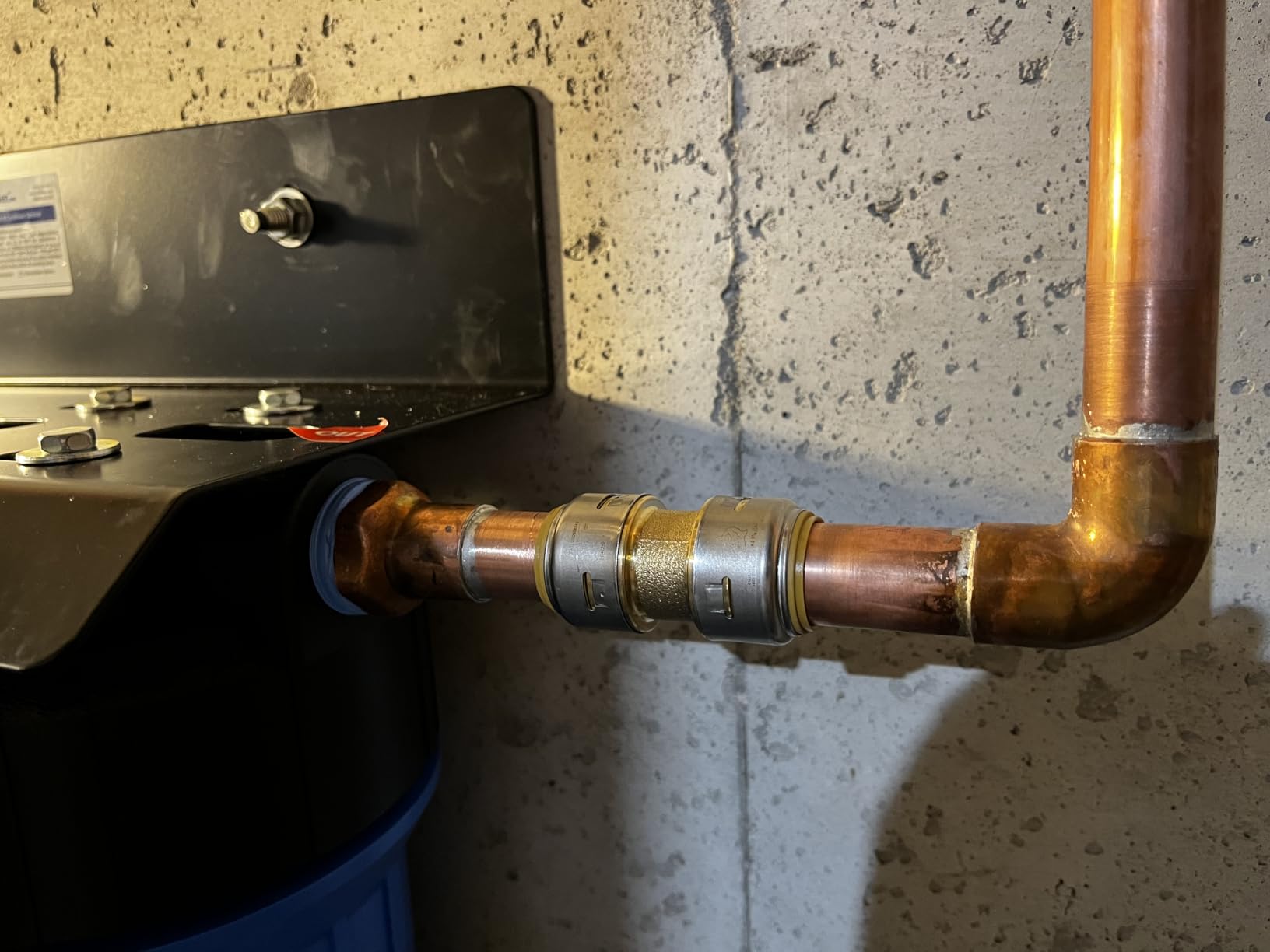
Well owners report crystal clear water and a real drop in staining and scale within the first few weeks. The catalogued life indicators printed on the cartridge cores are a small touch that tells you when to act instead of guessing from taste.
Two details reduce installation guesswork. The mounting bracket reverses 180 degrees so the system can face whichever direction your plumbing runs, and the operating range of 25 to 80 psi covers most wells. Manufacturer support provides replacement O-rings and media directly, which matters when a housing starts weeping.
Best fit for a sediment-heavy well
Choose this when your water runs visibly sandy after rain and you also want taste, odor and iron handled in a single footprint. The 20 inch housings hold far more media than 10 inch units, so fewer changeouts per year.
It still sits downstream of a dedicated sediment pre-filter if your well produces grit regularly, because a spin-down ahead of three loaded housings extends the life of all three.
What owners complain about
These cartridges are heavy and cannot be fully drained, so a change is wet work. Put a bucket under the housing and expect to need a floor that tolerates water.
The clearest documented issue is housing seals. Instructions do not spell out how tightly to tighten the blue caps, and overtightening warps the O-ring. Reviews also mention 1 inch NPT plastic threads as occasionally leak-prone, so brace the ports properly.
4. iFilters MWH-D-WELL 3-Stage Compact System – Best for Cabins and Small Homes
iFilters 4.5 x 10 Sediment CTO Heavy Metals Well Water Filtration System
Washable pleated pre-filter
GAC and KDF cartridge
50000 gallons
2.83 GPM
1 inch ports
Pros
- Washable pleated pre-filter cuts ongoing cartridge cost
- Anti-bacterial pleats suit well water
- Single GAC and KDF housing covers taste plus iron
- 6 to 12 month service life
- USA-based lifetime technical support
Cons
- 2.83 GPM flow suits smaller households only
- No drain taps so cartridges spill on change
- Does not fully clear sulfur odor on every well
- Larger than expected for two housings
The MWH-D-WELL is the pick when a second full bathroom would take your household past what 2.83 GPM can serve. A cabin, a small cottage or a two-bedroom home runs comfortably inside that ceiling, and at this size it is hard to beat the cost per protected gallon.
The first housing is a washable anti-bacterial pleated pre-filter, which is the detail that makes it economical. Rinse it under a hose instead of buying a replacement, and the pleated geometry holds far more dirt than a spun polypropylene cartridge of the same size.
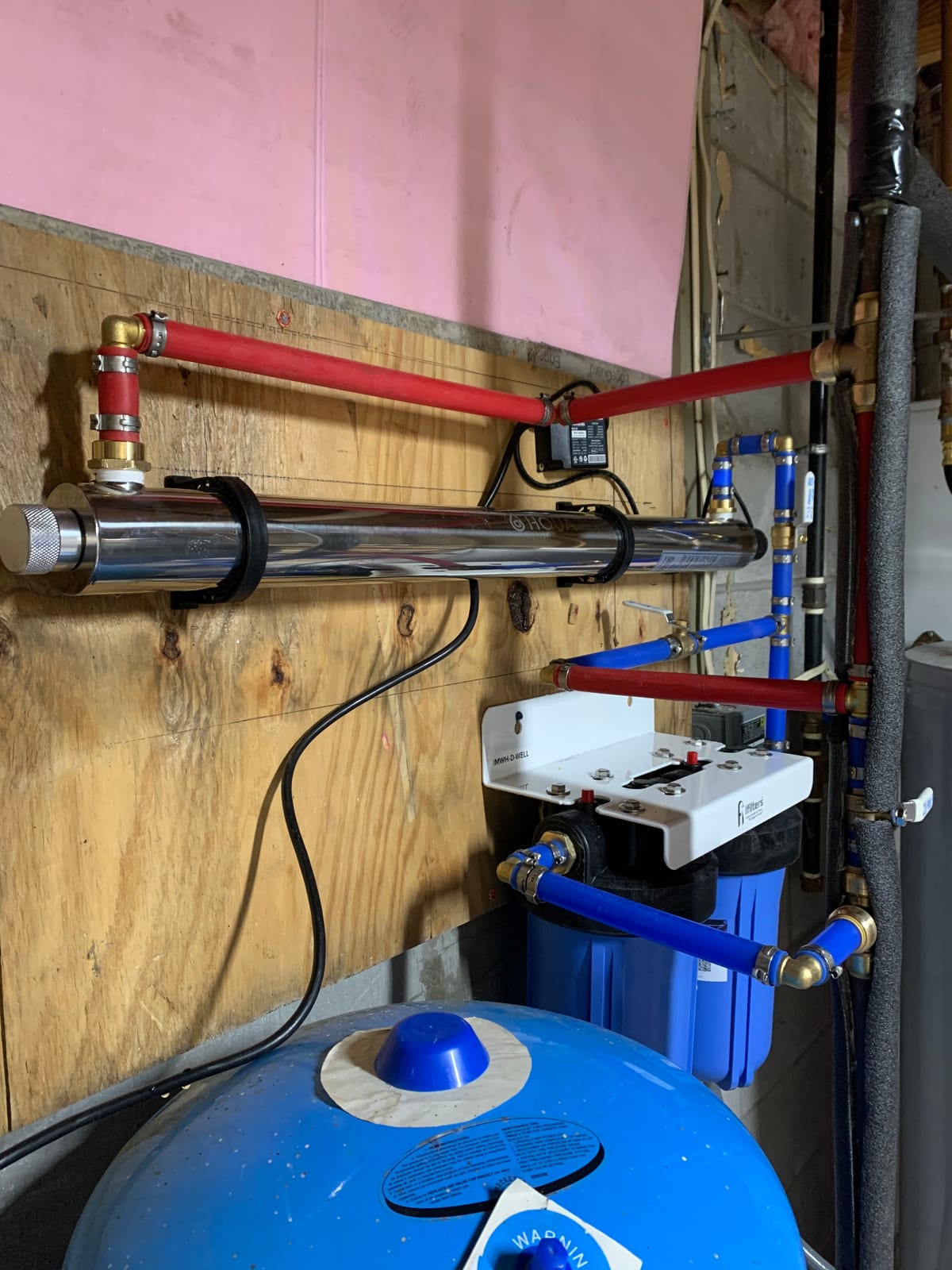
The second stage combines granular activated carbon with KDF media, so one housing handles chlorine taste and odor plus a redox reaction on dissolved iron and sulfur compounds. Owners on wells with sand, rust and chlorine report clear gains in taste and a visible drop in fixture residue.
Service life is quoted at up to 50,000 gallons or 6 to 12 months, whichever comes first, and the housing wrench plus pressure relief valves are included for changes. A 1,000 ppm maximum supported TDS reading gives you a sense of the water chemistry envelope it was built for.
Where it makes sense
It suits a well with moderate iron, some sediment and a household that has never needed more than one shower running. The washable pre-filter is the running-cost advantage that larger systems cannot match.
If your home has three or four bathrooms, skip this and go up in flow, because pressure drop under simultaneous demand is the complaint that would follow.
Honest limitations
The 2.83 GPM ceiling is real and it is the reason this is not a top pick. One reviewer reports a sulfur odor that never fully cleared, which matches what the KDF and carbon combination can do on moderate loads but not on severe hydrogen sulfide.
There are no drain taps on the housings, so every cartridge change ends with water on the floor. The two-housing footprint also runs larger than the dimensions suggest, so measure the wall before ordering.
5. HQUA WF3-01 3-Stage System – Best for Heavy Metals and Sulfur Odor
HQUA WF3-01 3-Stage Whole House Water Filtration System, Reduces Heavy Metals (Lead, Mercury, Arsenic, Cadmium, Chromium), Chlorine, Sediment, Odor, and VOC’s
GAC and KDF compound media
15 GPM
Brass threaded ports
Drain valves and gauges
100000 gallons
Pros
- Brass ports resist the cracking common in plastic systems
- Drain valves and gauges on every housing make service simple
- Reversible flow direction simplifies retrofits
- Includes extra gaskets and both fitting sizes
- 15 GPM holds pressure steady
Cons
- Instructions omit the second O-ring per housing
- Cartridge labels are fixed and hard to orient
- Some reports of thread drips on high pressure lines
- 44 pound unit needs solid mounting
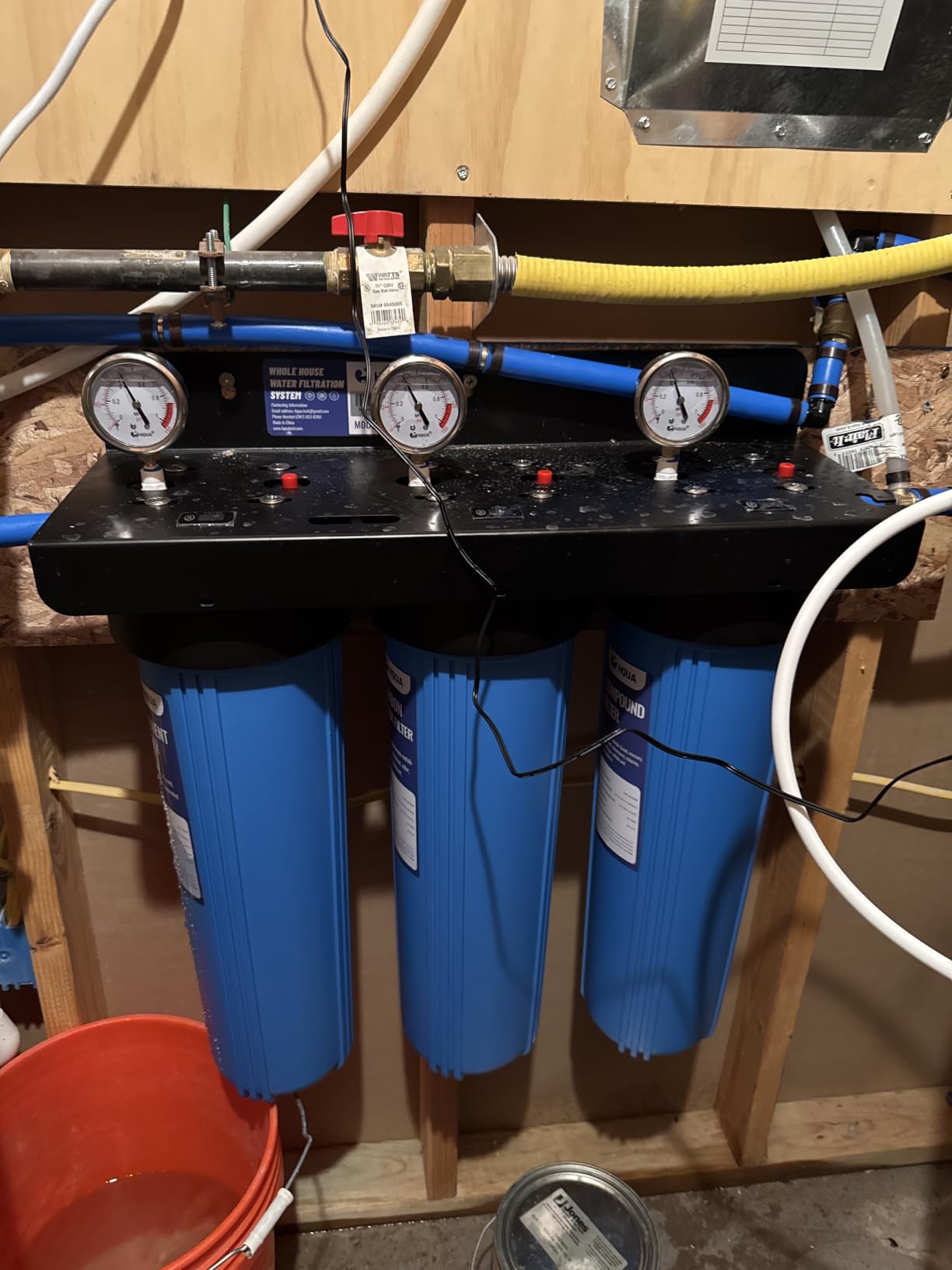
The WF3-01 is the one in this lineup with brass threaded ports rather than plastic, and owners on well water say the difference shows up immediately in leak reports. It uses a compound GAC and KDF media targeting lead, mercury, arsenic, cadmium, chromium and chlorine across three 20 inch housings.
Well owners buying this report the sulfur odor clearing and, just as usefully, faucets no longer clogging with dirt. The 15 GPM rating holds pressure steady over time, and the operating band of 25 to 116 psi is the widest listed here, which matters on a pump that spikes.
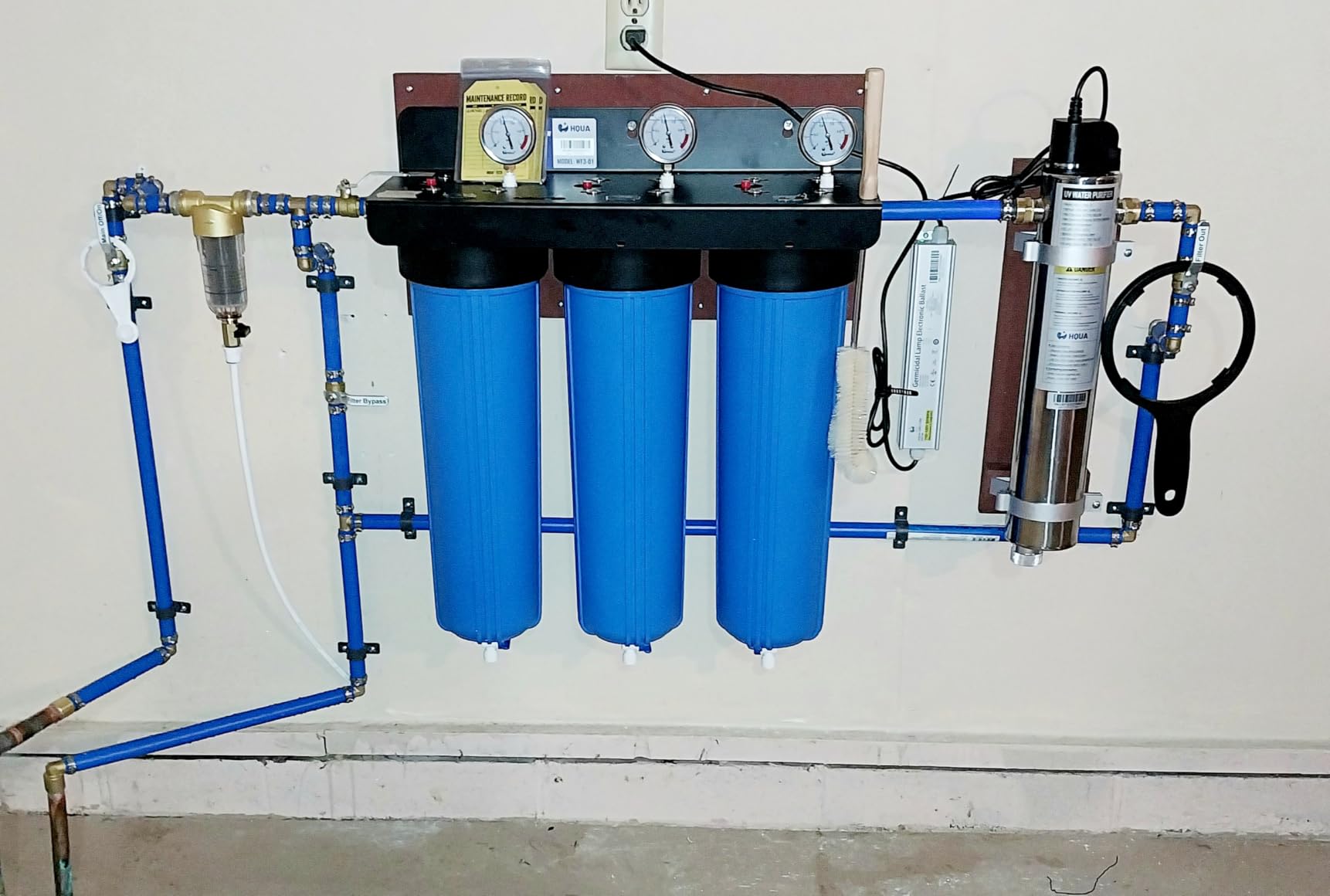
Serviceability is the standout. Every housing carries a pre-installed drain valve and a pressure relief valve, and you get oil filled pressure gauges for clog detection plus 180 day countdown timers for replacement timing. Reversible inlet and outlet flow and included 3/4 and 1 inch adapters simplify a retrofit into an awkward mechanical room.
Filter media is specified for up to 100,000 gallons and a maximum supported TDS of 500 ppm. The box also includes a housing cleaning brush, extra gaskets, silicone lubricant and a maintenance record card, which is unusually complete.
Best fit when metals are the concern
This is the system for a well with a metallic taste, staining that looks grey rather than orange, or a lab panel showing lead or arsenic above the guideline figure. The compound media is aimed squarely at those species.
It also suits anyone tired of replacing whole housings after a thread strip, since brass ports survive rough plumbing work better than plastic.
What to watch before you buy
The documentation is the weak point. Instructions do not mention that each housing needs two O-rings, and installers in the reviews lost hours to leak troubleshooting because of it. Check the seal kit before you close the caps.
A few owners on higher pressure lines still report stubborn thread drips, and the fixed cartridge labels are hard to orient for reading once the bracket is reversed. At 44 pounds, mount it on solid framing or a floor stand.
6. Home Master HMF3SdgFeC 3-Stage System – Best for Fine Sediment Filtration
Home Master Whole House Three Stage Water Filtration System with Fine Sediment, Iron and Carbon, Blue
25-10-5-1 micron sediment stage
15 GPM
Radial flow housings
3 ppm combined load
100000 gallons
Pros
- Four-layer 25-10-5-1 micron sediment filtration
- Radial flow housings sustain 15 GPM
- Long-term owners report multi-year reliability
- Cuts iron staining on grout and laundry quickly
- Manufacturer follows up annually
Cons
- O-rings can pop out of the housing groove
- Copper fittings with plastic sleeves can melt when soldered
- Warranty claims may require a certified plumber
- Filter order matters
- Loses a little pressure across the system
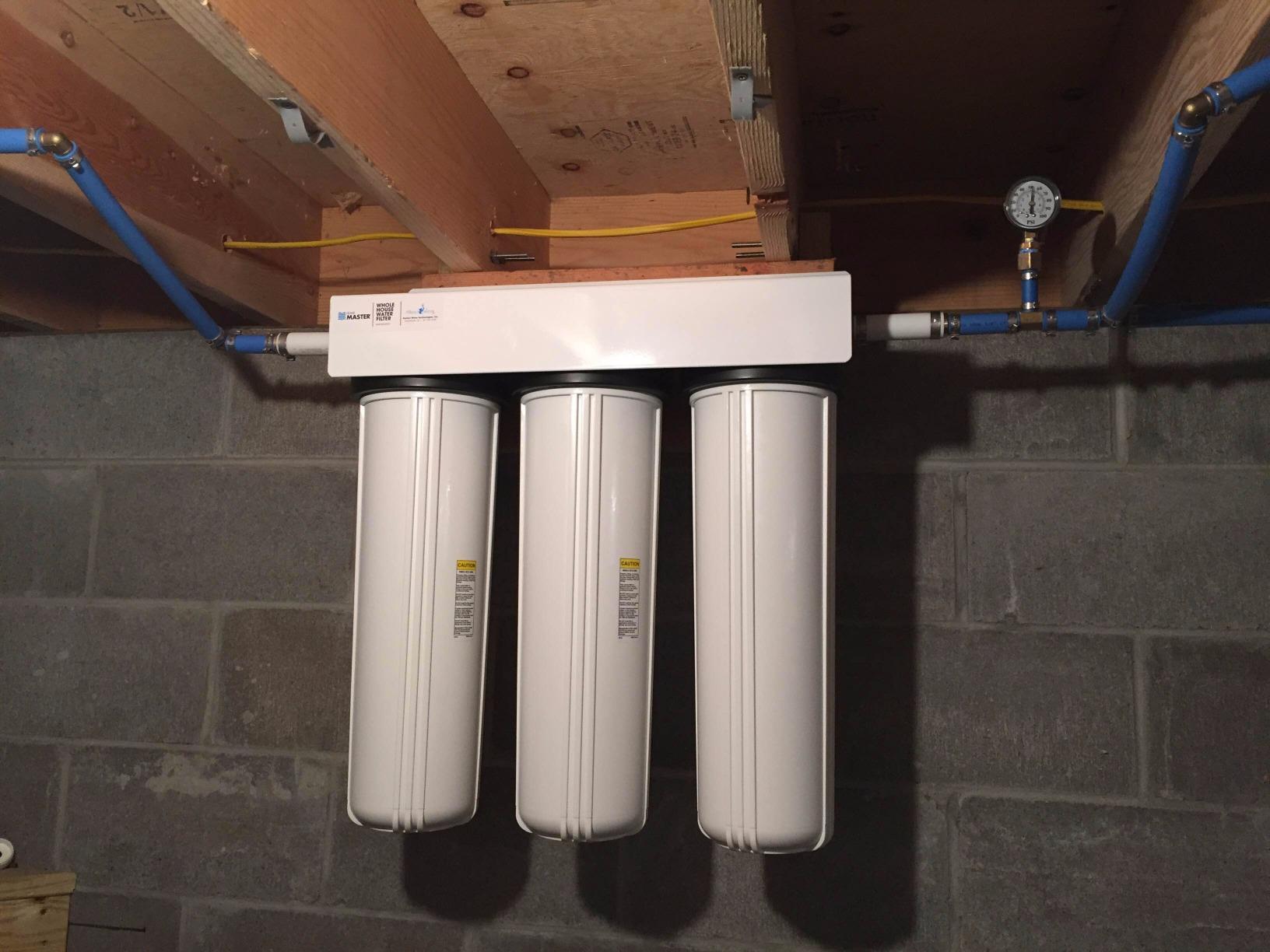
The distinguishing feature here is the first stage. A four-layer 25-10-5-1 micron replaceable sediment filter is the finest rating we found in this roundup, and on a well that produces fine grit after a storm it holds noticeably more dirt before the pressure moves.
Long-term owners on high-iron well water report the same thing over and over: odor, taste and staining improve and then stay improved. The system is rated for up to 95% removal of iron, manganese and sediment, with a 3 ppm combined load for taste and odor causing chemicals.
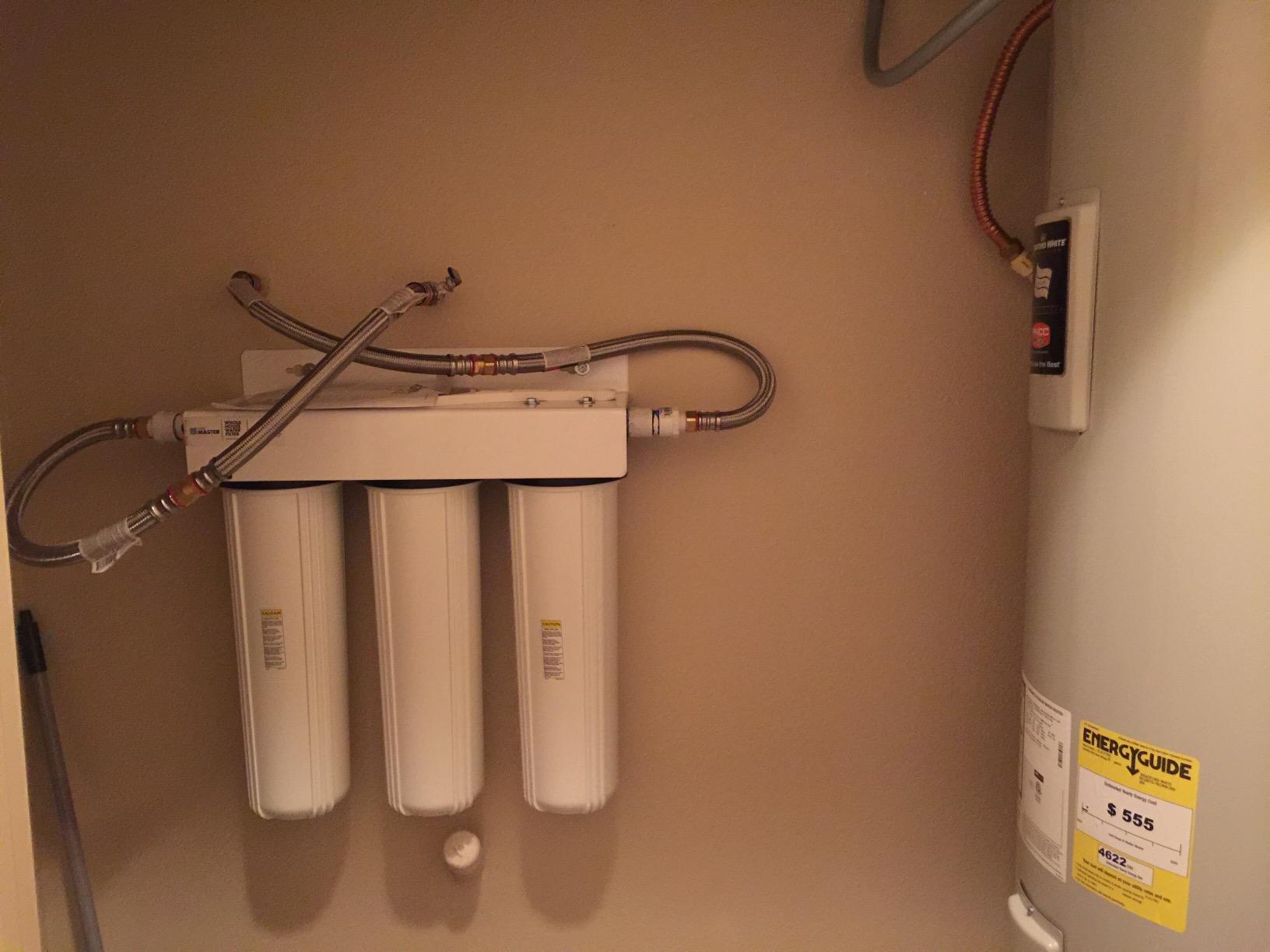
Radial flow filters sit inside the housings rather than as inline cartridges, and with 1 inch ports the system holds 15 GPM. The operating range of 20 to 95 psi is broad, which suits wells with a wide pressure swing, and the maximum supported TDS of 2,000 ppm is the highest figure listed in this group.
It is built for whole house installation on a heavy steel bracket with a filter wrench in the box. The manufacturer sells a different model for city water, which tells you how seriously the well version is specced.
When this is the right pick
Choose it when sediment, not iron, is your dominant problem and you want the finest filtration rating available in a cartridge system. It is also a strong second stage behind a dedicated sediment pre-filter, because its fine layers catch what a spin-down lets through.
If your primary complaint is orange staining, it will help, but it is not an oxidation system and it will not clear a sulfur odor.
Where owners run into friction
O-rings losing diameter and popping out of the housing groove is the most repeated complaint in the reviews. Have replacement seals on hand before you start, and check the groove seating each time you open a housing.
Two install traps are worth knowing. The plastic sleeves around the copper fittings can melt if a plumber solders nearby, and the warranty process has been reported as requiring a Home Master certified plumber to inspect the claim. Position the unit so it is easy to service.
7. Waterdrop WHF3T-FG 3-Stage Well Water System – Best for Verified Iron and Manganese Results
Waterdrop WHF3T-FG 3-Stage Whole House Water Filter System for Well Water
95.9% iron and 99.7% manganese per SGS
NSF/ANSI 372 lead free
15 GPM
100000 gallons
Pros
- Published third-party iron and manganese test results
- Dual iron and manganese cartridges lengthen the filtration path
- 100000 plus water hammer cycle testing
- 15 GPM holds pressure under simultaneous use
- Clear DIY instructions
Cons
- Iron and manganese cartridges can need changing every 6 months
- Fixed flow direction with no reversal
- 88 reviews is the smallest base in this roundup
Most well filter listings publish no independent numbers at all. This one does, and that is why it earns a slot on a list otherwise full of marketing claims: SGS testing for 95.9% iron reduction and 99.7% manganese reduction, plus NSF/ANSI 372 certification for lead-free materials.
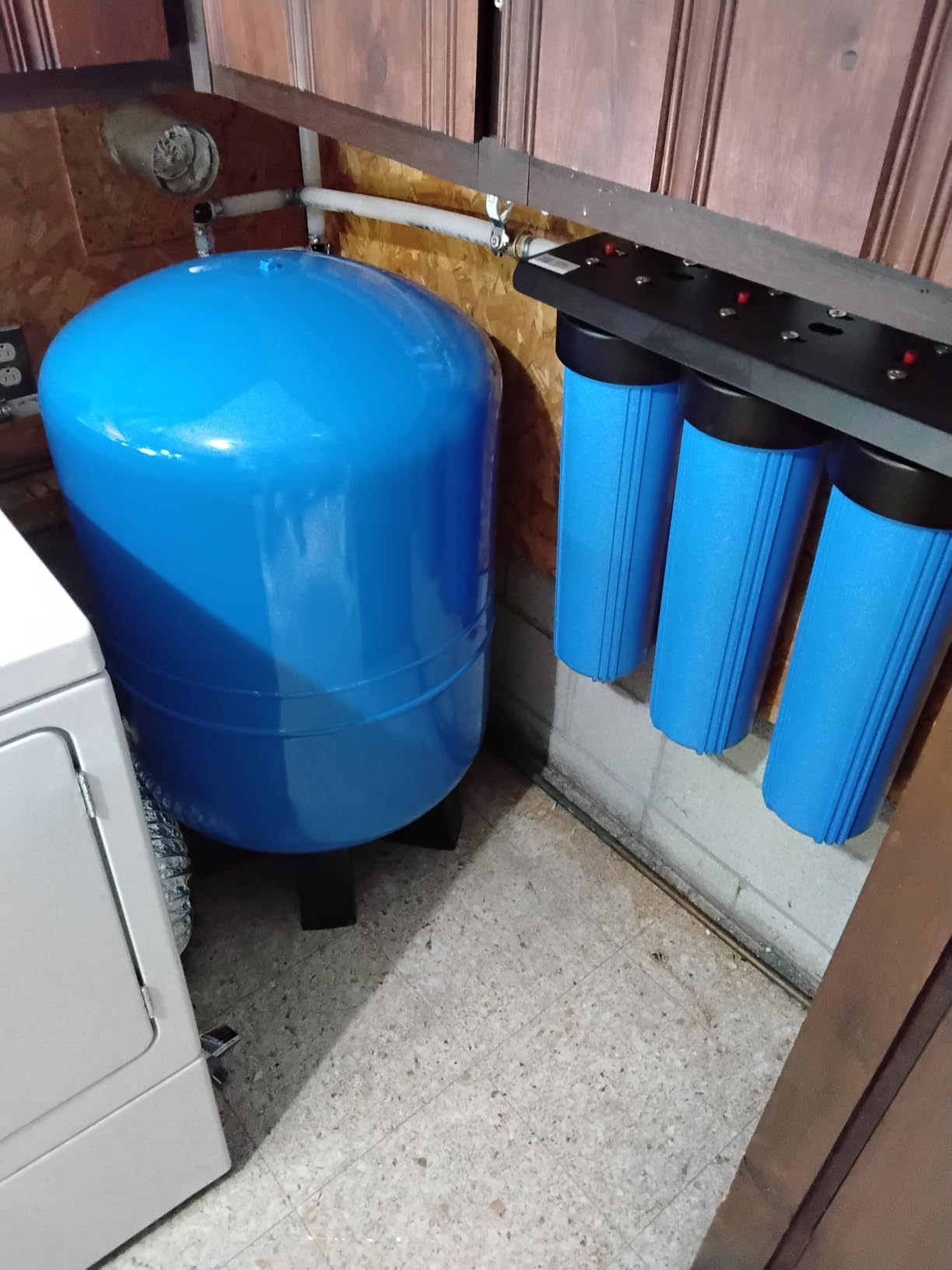
The layout is seven layers of media across three stages, with double iron and manganese removal cartridges wrapped in carbon fiber filter material. Running two iron cartridges in series stretches the path through the iron media, which is why the capacity claim holds up better than single-media systems.

Well owners report clean, clear water with no rust staining and no chlorine odor after installation. The 15 GPM flow and 1 inch inlet and outlet are standard, and the 100,000 gallon capacity rating is comfortably above what a two-bath home consumes in a year.
It is also one of the few systems here with a documented durability test behind it, having passed more than 100,000 water hammer cycles. That matters in a mechanical room where pipes hammer when the pump kicks in.
Best fit for a moderate iron well
If your lab panel shows iron in the 1 to 3 ppm range and you want documented performance rather than a marketing claim, this is the system to put on your shortlist. The dual-cartridge design gives it more iron loading capacity than most competitors at the same flow.
Check your plumbing layout carefully before ordering, because the flow direction is fixed and there is no reversing option on this bracket.
What to plan for
The iron and manganese cartridges are the shortest-lived part of the system, quoted at 6 to 12 months and often the former. Calendar the change rather than waiting for staining to return.
The supported TDS ceiling is 300 ppm, the lowest in this roundup, so very mineral-heavy wells are outside its envelope. And with 88 reviews behind it, there is less long-term owner history here than the higher-volume systems carry.
8. PUREPLUS 1-Stage Iron and Manganese System – Best Budget Single Housing
PUREPLUS 1-Stage Whole House Water Filter System, Iron & Manganese Reduce
Single stage sediment and iron
10 inch universal housing
99% sand, silt and rust
1 inch NPT
Pressure gauge
Pros
- Brass female NPT threads seal reliably
- Universal 10 inch housing accepts standard cartridges
- Clear housing shows sediment build up
- Double O-rings help prevent leaks
- Steel bracket and wrench included
Cons
- Non-standard O-ring size with no support for replacements
- Some housings cracked at the bottom after installation at 60 psi
- Supplied screws are hard to drive
- Angled gauge is difficult to read
One housing, one bracket, one purpose. The PUREPLUS system puts a sand, silt, rust and scale cartridge in a universal 10 inch by 4.5 inch housing that accepts the standard cartridge sizes, so you are never locked into one brand for replacements.
Several owners report the housing holding up for years, and one mentions nearly two decades of service. On a well with light sediment and low iron it does its job quietly, and the transparent body lets you see the dirt column forming without opening anything.
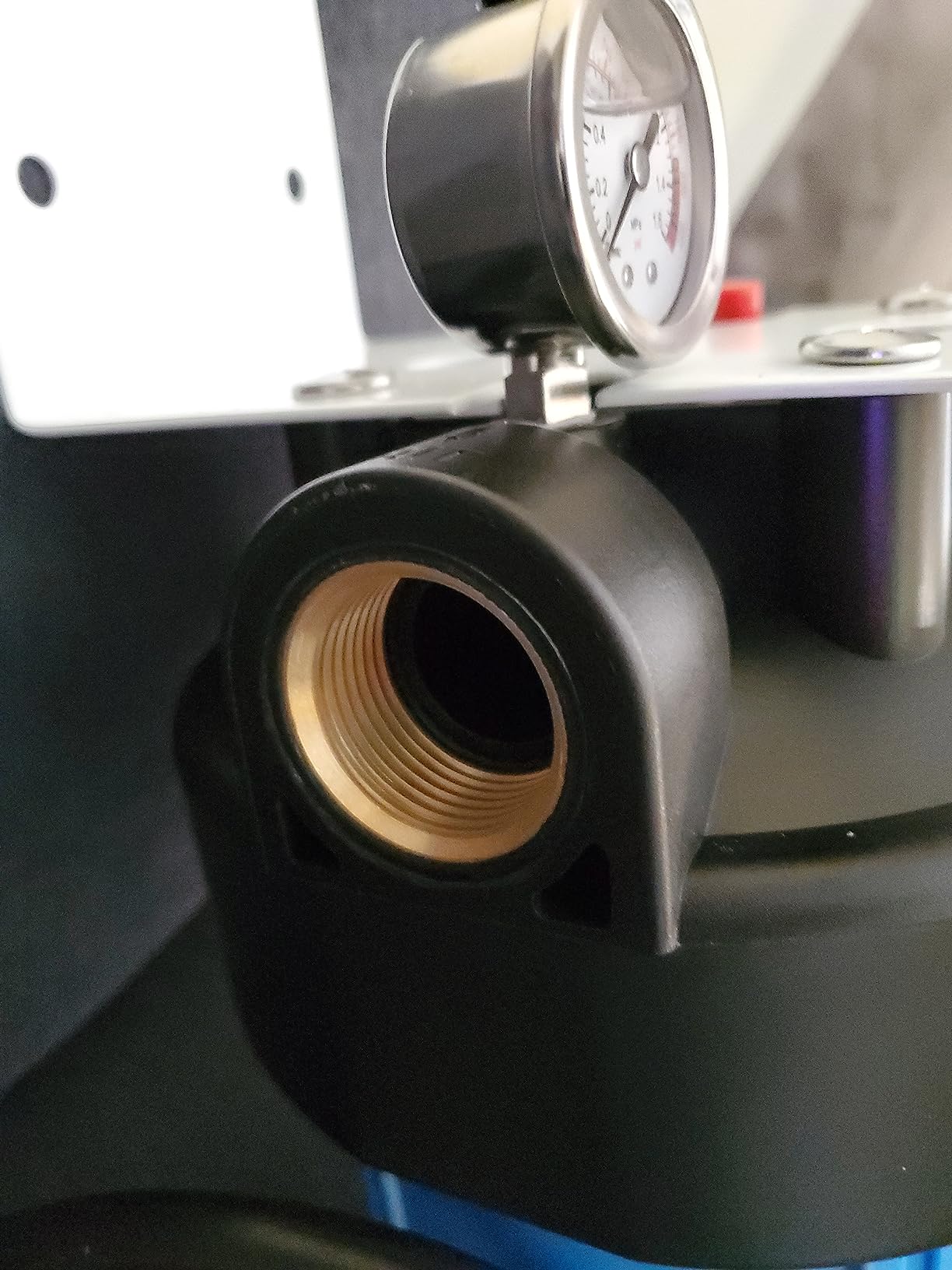
The cartridge is rated for up to 99% removal of sand, silt, rust, dirt and scale, and the housing includes a brass thread junction rather than all-plastic threading. That single design choice accounts for most of the positive long-term reports.
A pressure gauge and a red pressure release button are included, plus a steel bracket, wrench, screws and an O-ring. The release button is what makes cartridge changes in a tight mechanical room survivable.
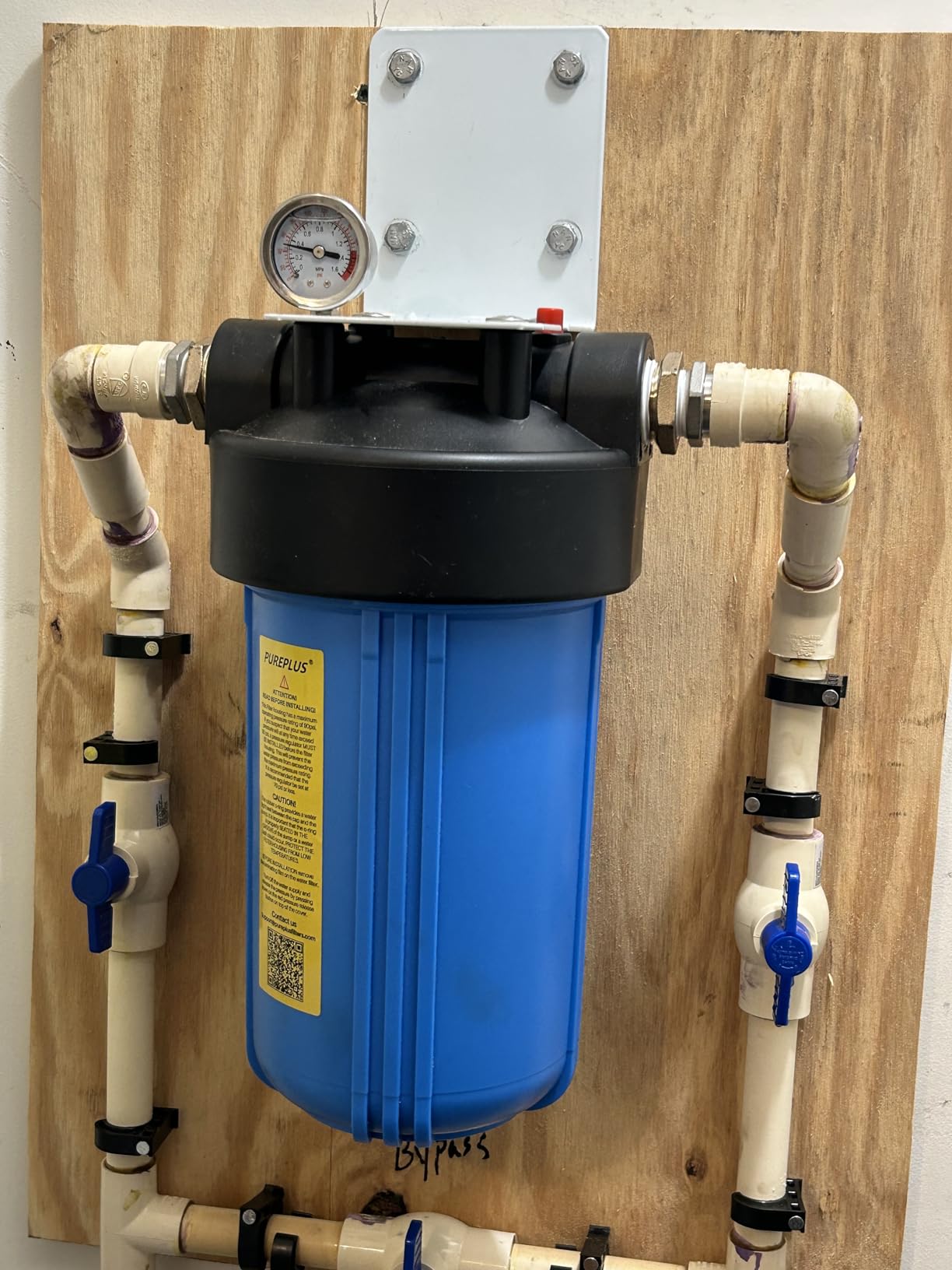
Where a single housing makes sense
This is a pre-filter, a light iron stage or a rental or cabin solution, not a complete treatment train. If your well runs clean water with a low iron reading, it is genuinely enough and nothing more is required.
Most sensible buyers pair it downstream of a dedicated sediment stage, or use it as the sediment stage ahead of a larger system.
Honest limitations
This is the lowest-rated product in the roundup at 4.2 across 411 reviews, with 13% one-star, and the complaints are specific rather than vague: a non-standard O-ring size that customer service will not replace, housing cracks reported shortly after installation at 60 psi, and screws that resist a Phillips driver.
Several reviews also mention arriving without the advertised cartridge, so check the box contents before you plan the install. If you want a well system you will not think about, choose a two- or three-stage bracket instead.
9. Waterdrop WHF3E-SKH 3-Stage System – Best Capacity and for Scale and Lead
Waterdrop WHF3E-SKH 3-Stage Whole House Water Filter System for Well Water
250000 gallon capacity
93.63% scale reduction
NSF/ANSI 42 and 53
15 GPM
One year filter life
Pros
- 250000 gallon capacity with one year filter life
- 93.63% scale plus 98% chlorine and 99.9% lead reduction
- Certified to NSF/ANSI 372 and tested to 42 and 53
- External lifespan trackers on the housings
- Dual reinforced threads and dual O-ring sealing
Cons
- Some packages arrive without the filter wrench
- Iron is not the primary media so mild iron passes through
- 56 reviews is a small owner base
The number that sets this system apart is capacity: 250,000 gallons with filters rated up to one year, roughly double what a typical 3-stage bracket claims. For a family of five or a home with a rental cottage on the same well, that can mean one annual change instead of two.
Nine layers of filtration target 93.63% scale reduction, 98% chlorine and 99.9% lead, and the system is NSF/ANSI 372 certified and tested to NSF/ANSI 42 for chlorine and scale and NSF/ANSI 53 for lead. Carrying both of those certifications at this tier is unusual.
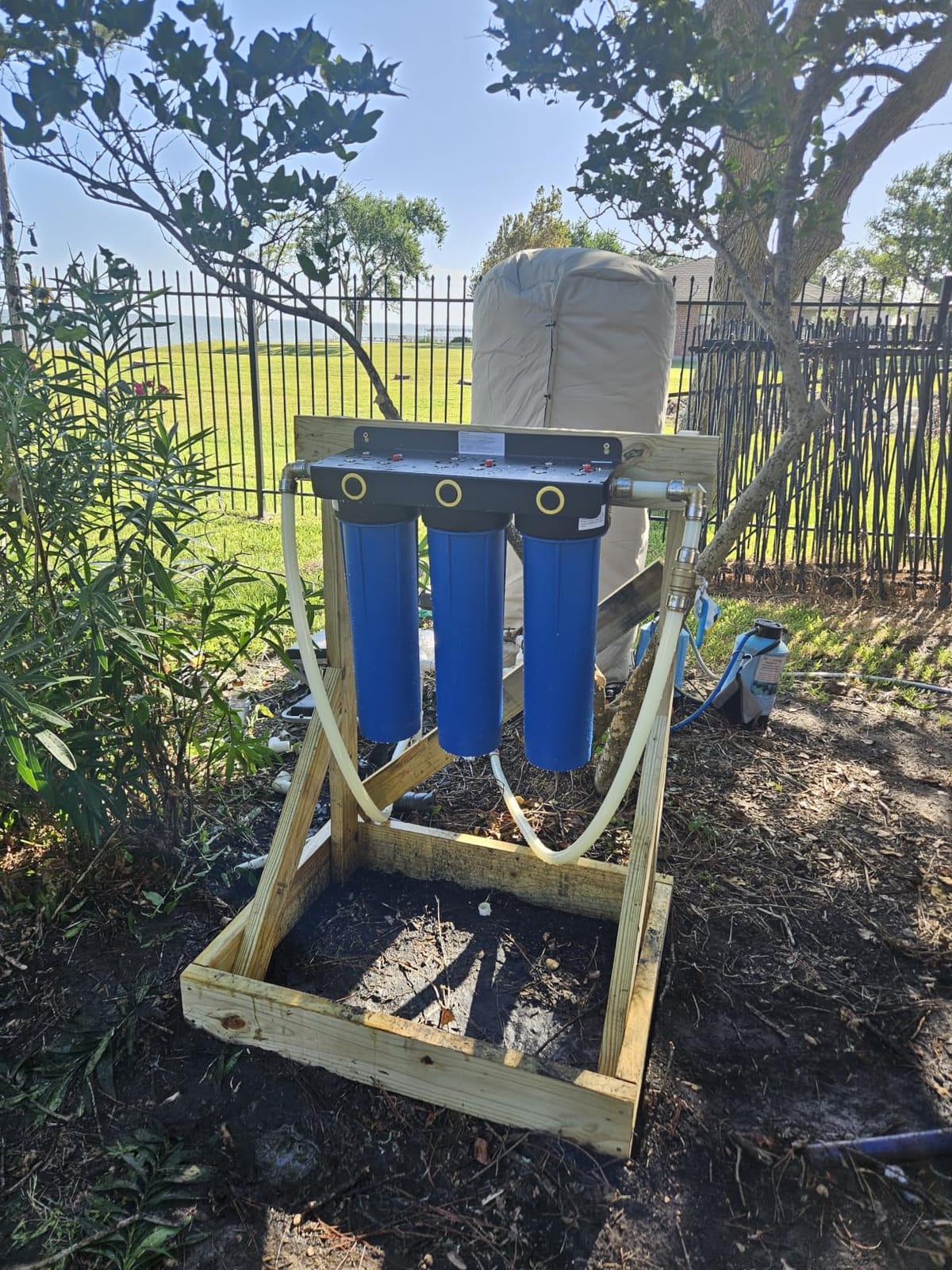
Reviewers confirm it does what a pre-filter should: stops well water debris reaching the washer hoses and the bathtub, and several note it works well positioned ahead of another treatment stage. The 15 GPM flow supports simultaneous household use, and the 20 to 90 psi operating range is generous.
Mechanical details are well thought through, with dual-sided reinforced threads, dual sealing O-rings, top-sealed push-in filters and external lifespan trackers so you are not guessing when a cartridge is spent. The bracket and housings feel substantially heavier than single-stage units.
Best fit for hard water and scale
If your complaint is limescale on faucets, glassware and inside the water heater rather than staining, this is the system aimed at you. Lead and heavy metal reduction makes it worth a look for households with older plumbing.
The 250,000 gallon figure means you can size it for a busy home without doubling your annual cartridge cost.
What it will not solve
Iron is not the primary media here, and owners report mild iron still passing through. If your test shows iron above 0.3 ppm, put a dedicated iron stage ahead of this rather than behind it.
The most common complaint is a missing filter wrench in the box, and the review base is the thinnest in this roundup at 56 ratings, which means less long-term history than the higher-volume systems carry.
10. Aquasana Whole House Well Water Filter with UV – Best With UV Disinfection
Aquasana Whole House Well Water Filter | 500K Gal | UV | EQ-Well-UV-PRO-AST
NSF/ANSI 55 Class B UV
14.7 GPM
500000 gallons
Salt-free scale control
5 year filter life
Pros
- UV stage certified to NSF/ANSI 55 Class B for bacteria and viruses
- 500000 gallon capacity and five year service intervals
- Salt-free scale control with no backwashing
- Preserves healthy minerals
- 5 year warranty with 5 year spare part availability
Cons
- Needs a corded electrical outlet for the UV stage
- 116 pounds and 57 inches tall so placement needs planning
- Iron capability limited to under 0.3 ppm
- Not designed above 15 gpg hardness or pH 8.3
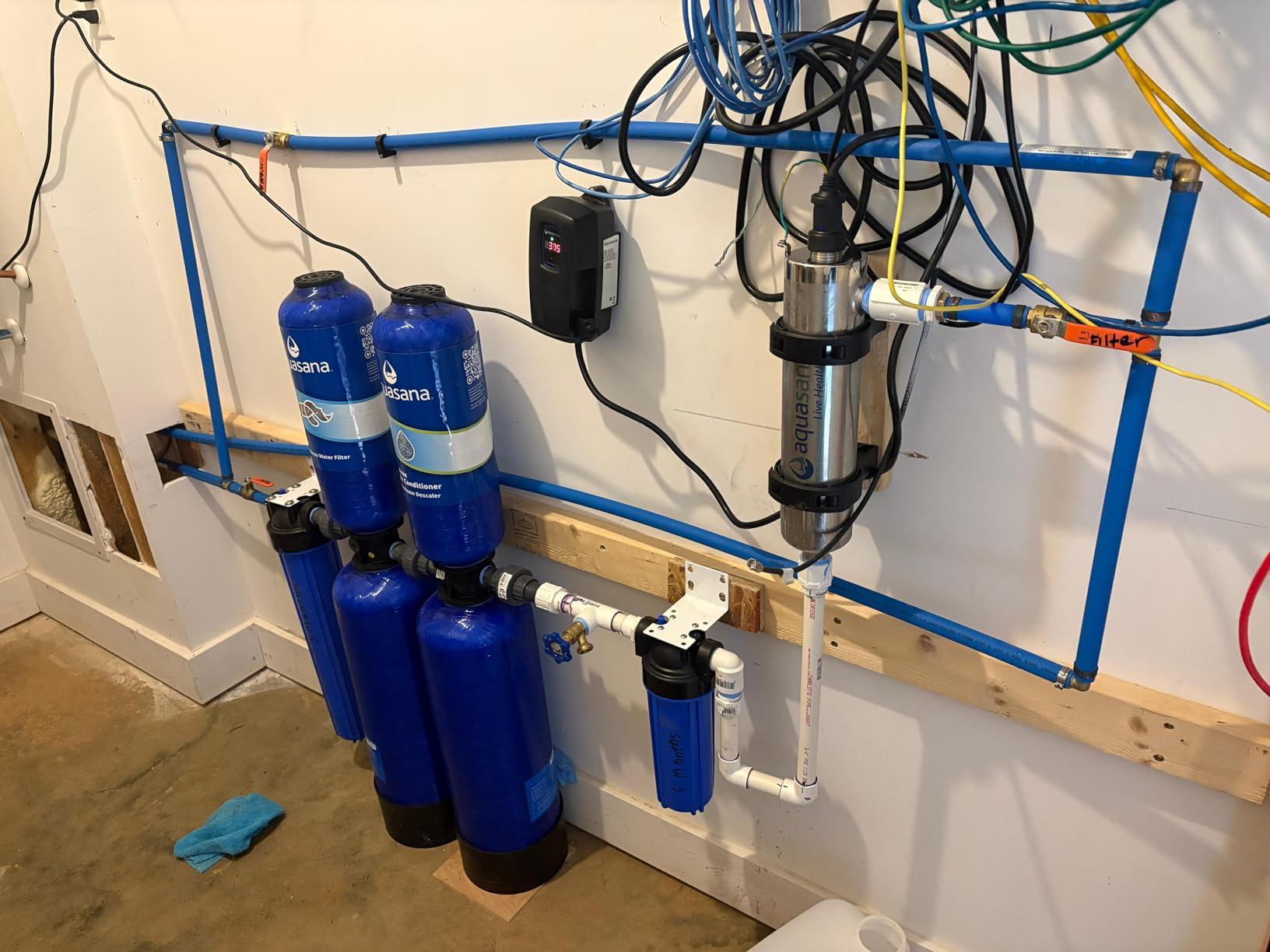
This is the only system in the roundup built to disinfect, and on a private well that gap matters. Coliform bacteria and viruses are unregulated once water leaves your well casing, and no filter cartridge kills them. A UV stage certified to NSF/ANSI Standard 55 Class B does.
The rest of the train combines pre- and post-filters with carbon and KDF media, delivering 97% chlorine reduction, plus salt-free scale control media that needs no salt bags, no backwashing and no cleaning cycles. The capacity figure of 500,000 gallons and a five year filter life give it the lowest per-gallon running cost in this group.
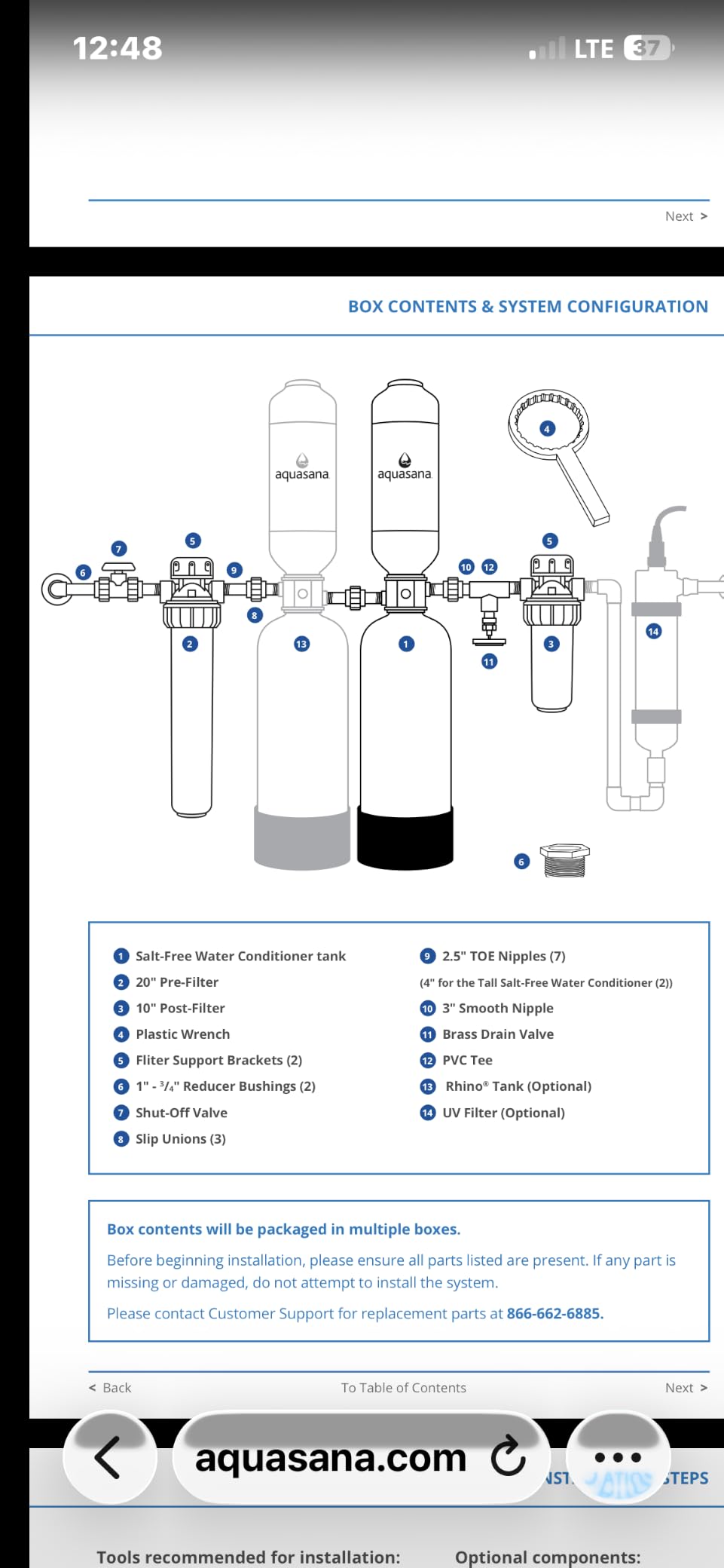
At 14.7 GPM it handles a large household, and unlike reverse osmosis it leaves dissolved minerals in the water. That is a deliberate trade: no demineralized water, no stripped taste, and a much higher flow rate than a membrane system could offer at point of entry.
The warranty is five years with five years of spare part availability, which matters for a system expected to last a decade or more. Owners value the long service intervals most of all, since replacing a UV bulb and checking the system once a year is a fraction of the work a multi-tank setup demands.
Best fit for a bacteria concern
Choose it if your lab panel returned coliform or you have any reason to doubt the well casing, septic proximity or surface water contribution. It is also the right answer for a home with a newborn or an immunocompromised resident, where disinfection is not optional.
It suits wells under 15 grains per gallon hardness, under 250 mg/L alkalinity, pH below 8.3 and iron under 0.3 ppm.
Where it falls short
The iron limit is the one to read twice: under 0.3 ppm. If your staining is visible, this is not your system, and adding an iron stage upstream is mandatory rather than optional. It also will not touch water above 15 gpg hardness or above pH 8.3.
It needs a corded electrical outlet, weighs 116 pounds and stands 57 inches tall, so plan the floor space before you commit. At 4.2 across 686 reviews it carries the broadest owner base here and also the highest share of one-star ratings, most often about fit and finish.
11. iSpring WCFM550K Whole House Iron Filter – Best for Severe Iron and Sulfur
iSpring WCFM550K Whole House Iron Filter, Iron & Sulfur Water Filter
12 ppm iron
20 ppm manganese
20 ppm hydrogen sulfide
12 GPM service flow
Automatic backwash
Pros
- Highest published iron and hydrogen sulfide limits in this roundup
- Automatic backwash and air draw remove the manual work
- Regeneration tunable by time or volume
- 12 GPM service with 26 GPM backwash flow
- 7 to 10 year effective media life
Cons
- 143 pounds and 62 inches tall so floor space and plumbing layout matter
- Needs regeneration water and drain capacity
- Loses effectiveness if phosphate is added upstream
- Organic contaminants can degrade the media surface
This is the system for a well that has already broken a cheaper filter. It is rated to remove up to 12 ppm iron, 20 ppm manganese and 20 ppm hydrogen sulfide, several times the ceiling of the cartridge systems on this list, and the mechanism is oxidation rather than media absorption.
Fully automatic control means it runs service, backwash and air-draw stages on a schedule you choose. Regeneration can be tuned by elapsed time or by treated water volume, with a settable start time, and a smart cleaning mode triggers a backwash and rinse when no flow has been detected after a set number of days.
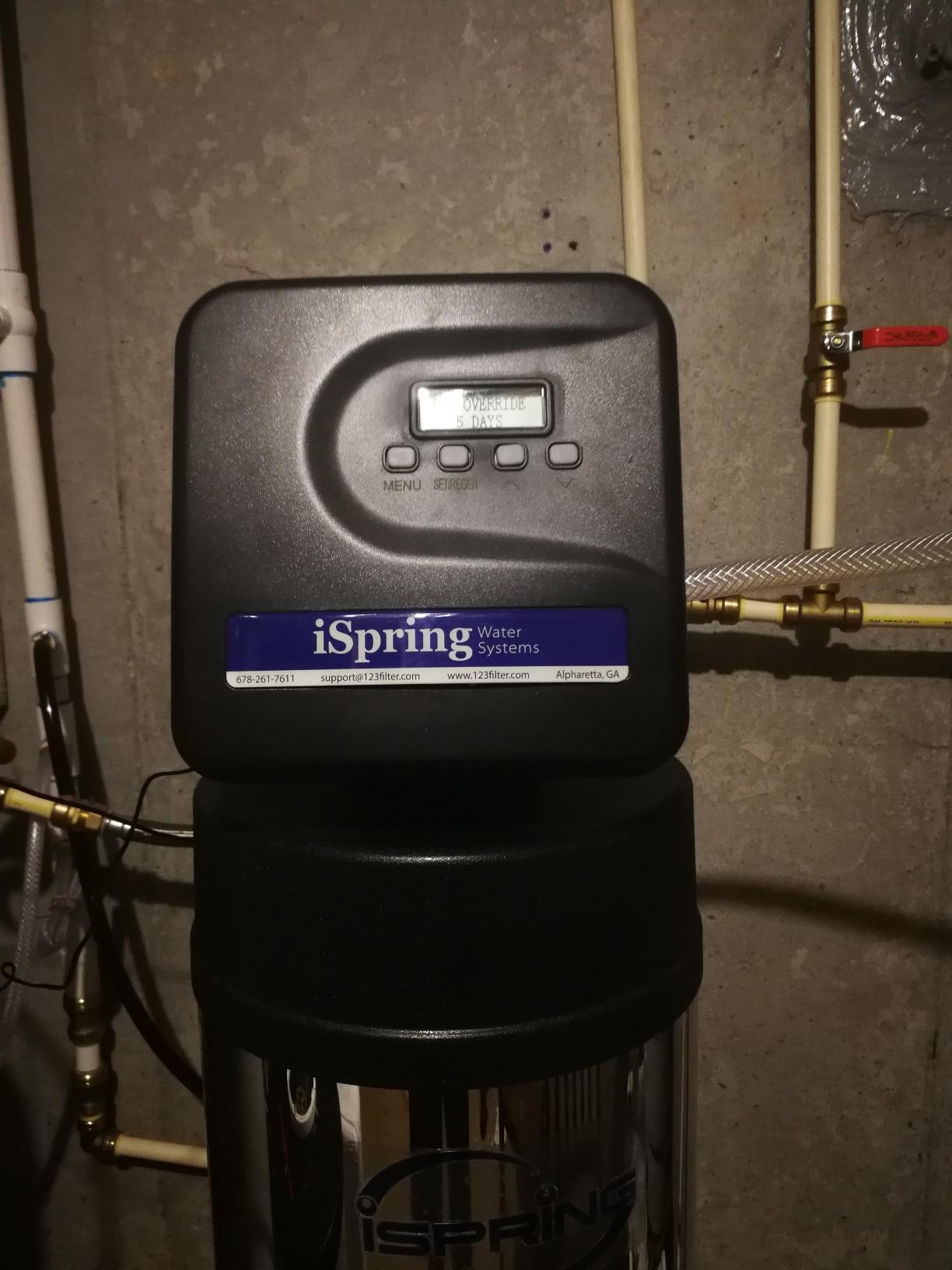
That last feature is the one owners on seasonal or vacation homes care about most. A system that sits idle for three weeks does not come back from a cold start with fouled media, and delayed regeneration plus vacation mode cover the same problem from the control side.
Service flow is 12 GPM with a backwash flow of 26 GPM, connector options for 1 inch or 3/4 inch NPT, and effective media life of 7 to 10 years. Spare parts are listed as available for 10 years, which is unusually long and reflects how rarely you should be opening this tank.

When this is the only sensible choice
If your lab panel shows iron above 3 ppm or a hydrogen sulfide reading bad enough that hot water smells, cartridge systems are the wrong technology and this is the right one. It also stops the failure cycle where a cartridge fouls, pressure drops and you replace it every eight weeks.
Place it ahead of any softener, always, so the resin sees clean water.
What you are committing to
It weighs 143 pounds and stands 62 inches tall, so the floor space and the drain capacity are a real planning item. Regeneration water use is a genuine consideration on a septic system, where a daily backwash cycle adds load to the drain field.
Two water chemistry conditions will undermine it. Phosphate added upstream interferes with oxidation-based iron removal, so remove any phosphate treatment before this unit. And organic contaminants can deteriorate the media surface over time, which is a problem on shallow wells near agricultural ground.
12. Fleck 5600 SXT Air Injection 1.5 cu ft Tank – Best Air Injection System
DuraWater Fleck 5600 SXT Air Injection Iron Eater Filter 1.5 cu ft, Black
Fleck 5600 SXT digital valve
1.5 cubic foot catalytic carbon
Air injection oxidation
10x54 tank
Daily backwash
Pros
- Stops iron staining on sinks
- tubs and toilets quickly
- Eliminates sulfur and rotten egg odor
- Owners on a 14 ppm iron well report 0 ppm readings
- Catalytic carbon lasts about five years
- Owner-installable with basic plumbing skills
Cons
- Daily backwash by default can strain a septic drain field
- Default 15 minute daily cycle uses 75 to 120 gallons
- Air injection cone can weep slightly during the draw cycle
- Needs a 24 hour soak and heater flush after initial fill
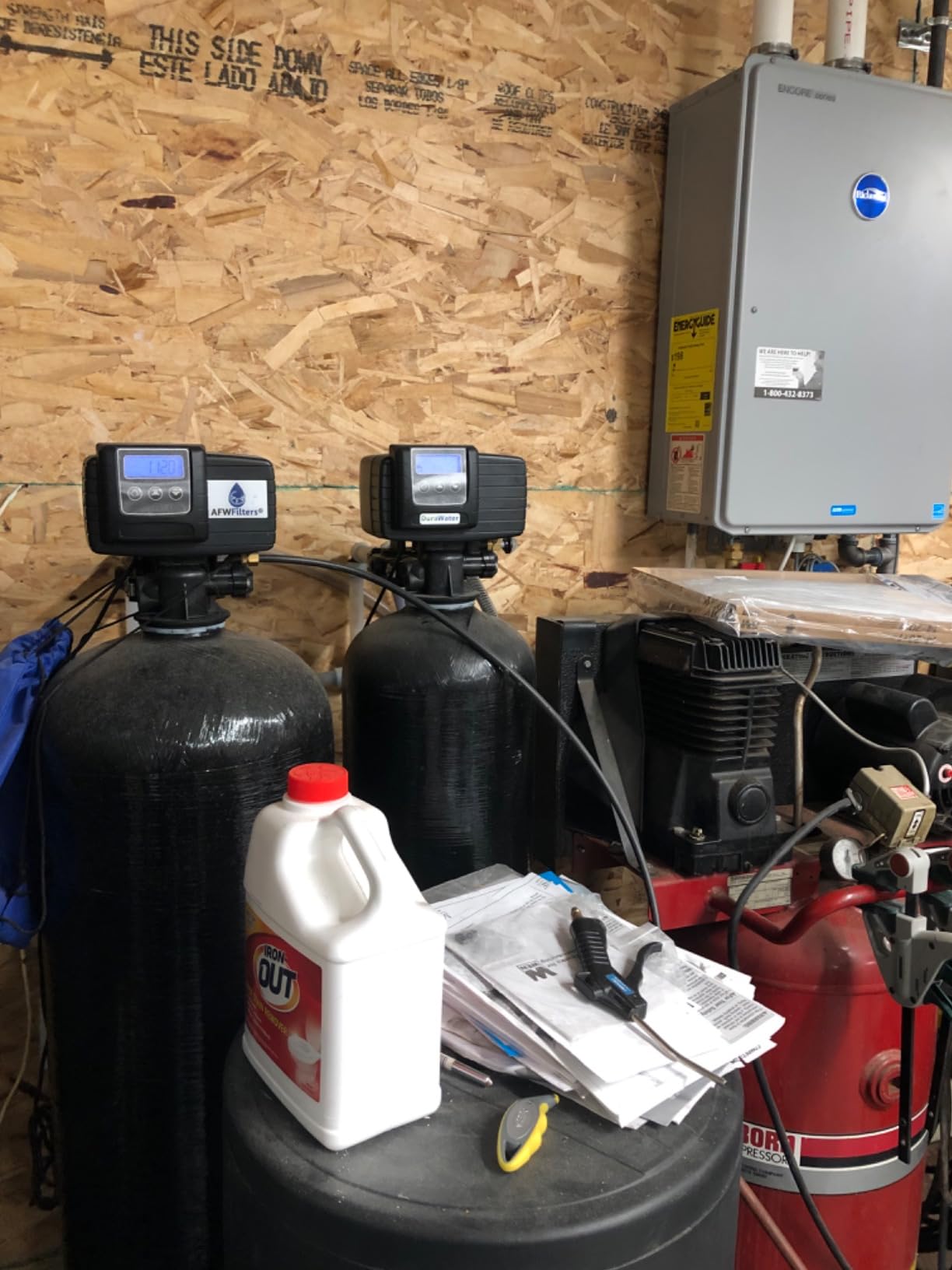
The Fleck 5600 SXT is a 1.5 cubic foot catalytic carbon media tank driven by a Fleck digital control valve, a control head widely used in residential filtration. Air injection creates a pocket of oxygen in the top of the tank, which is what oxidizes dissolved iron and hydrogen sulfide before the water reaches the media.
The reported results on hard wells are among the strongest in this roundup. Owners testing wells with 14 ppm iron report readings dropping to 0 ppm, and reviews describe long stretches with no rust staining at all on sinks, tubs and toilets, plus the rotten egg odor simply disappearing.
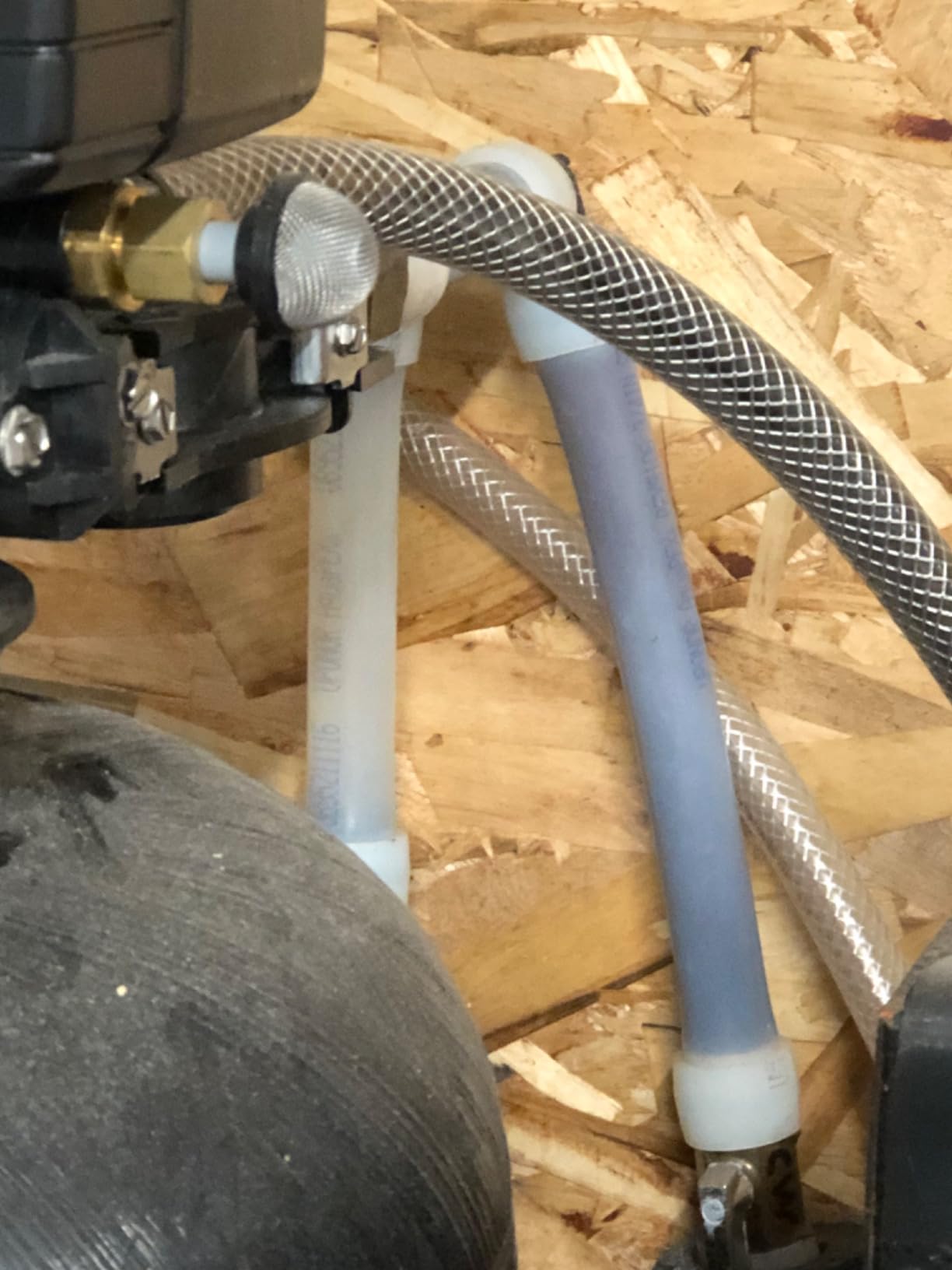
The catalytic carbon is quoted at roughly five years before a recharge, which removes the recurring cartridge expense entirely. The 10×54 mineral tank comes with a 1 inch plastic bypass valve so you can isolate the unit for service, and the system is owner-installable with basic plumbing skills.
One operating note that appears repeatedly: the default regeneration setting backwashes daily for 15 minutes, which is 75 to 120 gallons a day. Owners are instructed to retune that on the Fleck control head, and the difference in water waste between a default setting and a tuned one is substantial over a year.
Best fit for a serious iron problem
Choose this when staining is the daily annoyance, when the sulfur smell is unmistakable in the hot lines, and when you would rather set the system once than replace cartridges twice a year. A catalytic carbon tank and a Fleck valve is the combination a lot of installers end up recommending for exactly this well profile.
Retune the regeneration schedule before the first week ends, especially on a septic system.
What to plan around
Every regeneration cycle needs a drain with capacity to take it, and on a septic system a daily backwash is a meaningful added load. The air injection cone can also weep a small amount of water during the draw cycle, so leave clearance under the tank.
Initial fill takes time. The system needs a 24 hour soak and a water heater flush before you judge results, and the manufacturer does not clearly document draining the tank or loading the media, so ask the seller for those instructions. Expect a hot water smell to persist for a while even after treatment, because biofilm inside the hot lines takes time to clear.
How to Choose a Whole House Water Filter for Well Water
Three questions decide the purchase: what did the lab report, how many people use the water at once, and what can your plumbing and budget absorb. Everything else is detail. Work through them in that order and the technology choice makes itself.
What did the test say? Iron and manganese above 3 ppm mean you need oxidation, not a cartridge. Hydrogen sulfide above roughly 0.5 ppm means sulfur treatment specifically, and a carbon filter alone will not do it. Hardness above about 10 grains per gallon needs ion exchange or a softener downstream, because no filter in this roundup softens. Coliform on the panel means UV, and only UV.
How much flow do you need? Add up the fixtures that could run at once. Two showers plus a washer is roughly 8 to 10 GPM, and a family of five or a guest house can hit 15. Then add about 20% headroom, because a filter sized exactly at peak demand is the reason your pressure sags when everything runs at once. Anything below 3 GPM, like the iFilters unit, belongs in a small home.
What can your space handle? A 62 inch tank weighing 143 pounds needs a floor plan, and any backwashing system needs a drain with capacity to take the waste water. On a septic system that is a conversation with your installer before you buy, not after. A UV stage needs a grounded outlet. Cartridge systems need a floor and a willingness to do wet work twice a year.
Put the stages in the right order
Order matters more than any individual purchase. A sediment pre-filter goes first, always, because grit plugged into an iron tank or a carbon block shortens the life of both. The iron and oxidation stage goes next, ahead of everything, because iron and chlorine destroy softener resin and coat carbon media. Then carbon or UV, then the softener last, and a reverse osmosis or point-of-use filter only if you want drinking water treated to a higher standard than the rest of the house needs.
On the r/WaterTreatment forums the consensus is consistent: the iron filter goes ahead of the softener, never behind. One Tennessee owner with 4.2 ppm iron and 18 GPG hardness reported a softener resin fouled in eight months, then moved to a two-tank air injection oxidation setup ahead of a salt softener and finished 18 months later with iron below 0.3 ppm, hardness at 0 to 1 GPG and steady pressure. The same buyer had run a cartridge KDF and carbon tank that needed servicing every three weeks, dropped from 55 to 38 psi and hit iron breakthrough in month ten.
Understand what a filter cannot do
Two limits catch new well owners out. No whole house filter makes water microbiologically safe, so coliform needs UV or disinfection. And no salt-free conditioner removes hardness, a point that shows up repeatedly in owner reports where staining and sulfur smell did not change after installing one. If you will not use salt, a whole house filtration system is a reasonable answer; a salt-free conditioner is not a softener substitute.
Budget for the running cost, not the purchase
Cartridge systems cost less up front and more per year, because the media is consumed. Backwashing oxidation systems cost more to install and then hold media for 7 to 10 years. The Aquasana UV configuration stretches a single service interval to five years and 500,000 gallons, which is the lowest per-gallon cost in this group. Set a five-year number before you buy and compare the whole figure, not the tank.
Frequently Asked Questions
What is the best well water filter system for home use?
It depends entirely on your lab results. For iron up to 3 ppm with chlorine, the iSpring WGB21BM is a strong all-round choice. Above 3 ppm iron or 8 ppm hydrogen sulfide, you need an oxidation system such as the iSpring WCFM550K or the Fleck 5600 SXT air injection tank. If your panel shows coliform bacteria, only a UV stage such as the Aquasana configuration addresses it.
What is the highest rated whole house water filter?
There is no single consensus winner, because rating a well filter without a water test is meaningless. Judge on published contaminant limits, NSF or ANSI certification, service flow against your peak demand, warranty length and the availability of spare parts. Those five figures tell you more than any star rating.
What is the best whole house sediment filter for well water?
For fine grit, the Home Master HMF3SdgFeC has the strongest sediment stage here with a four-layer 25-10-5-1 micron replaceable filter. For a washable pre-filter you can rinse rather than replace, the iFilters MWH-D-WELL uses anti-bacterial pleated media. A spin-down screen ahead of either one extends the life of everything downstream.
Do I need to test my well water before buying a filter?
Yes, and it is the cheapest step in the whole project. A certified panel covering iron, manganese, hydrogen sulfide, hardness, pH, alkalinity and total coliform determines which technology you need. Wells change with the water table, so retest every two to three years and after any flood or major land change.
Should a whole house filter go before or after the water softener?
Before, always. Iron and chlorine coat softener resin and foul it permanently, which is why owners on wells above 3 ppm iron see their resin fail in under a year. The correct order is sediment pre-filter, then iron or oxidation stage, then carbon or UV, then the softener.
How often do you replace whole house well water filters?
It depends on the technology. Cartridge systems run 6 to 12 months, with iron and manganese cartridges often at the short end. Backwashing oxidation media lasts 7 to 10 years, catalytic carbon about five years, and the Aquasana UV configuration is rated at five years and 500,000 gallons. Service life is a function of load, not calendar time.
Final Verdict: Which Well Water Filter Fits Your Test Results
Match the pick to the number on the lab report, not to the symptom. Iron and manganese under 3 ppm with ordinary chlorine means the iSpring WGB21BM, our pick for the best whole house water filters for well water in 2026. Visible staining, sand and taste together means the iSpring WGB32BM three-stage bracket.
Hard water, scale and lead point to the Waterdrop WHF3E-SKH with its 250,000 gallon capacity. Coliform bacteria on the panel means the Aquasana UV configuration and nothing else will do. Iron above 3 ppm or a serious hydrogen sulfide reading means an oxidation system, and between the iSpring WCFM550K and the Fleck 5600 SXT you have two solid routes depending on whether you want automated volume-based regeneration or a hand-tuned Fleck control head.
Get the panel first. Every other decision follows from it.