
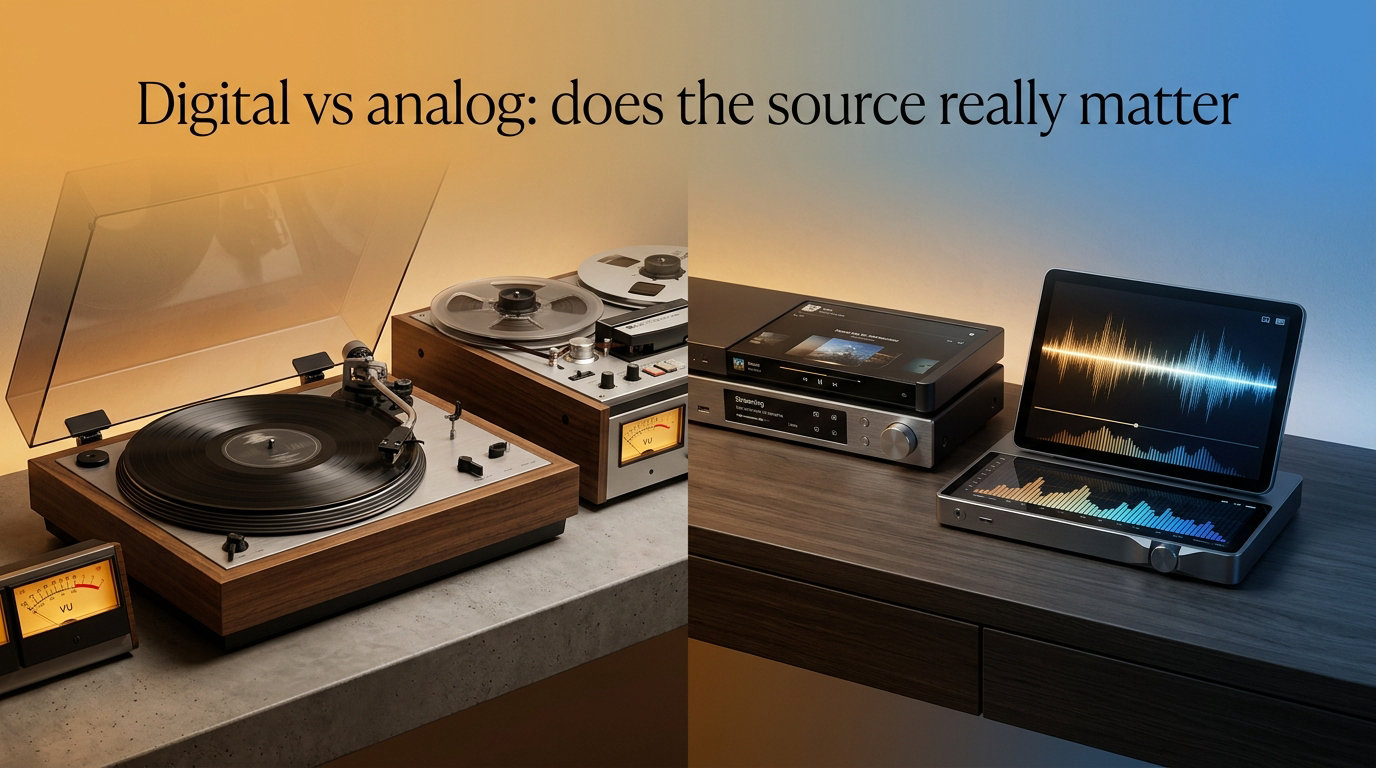
Yes, the source does matter, but probably not in the way most people think. The format of your audio, whether analog or digital, shapes how a recording sounds, but the differences are smaller than the audiophile debate suggests and depend heavily on mastering quality, equipment, and your listening environment.
If you have ever wondered whether your vinyl copy of a Beethoven symphony genuinely sounds better than the streaming version, you are asking the right question. The digital vs analog audio source really matter debate has divided music lovers for decades, and it gets especially heated among classical music fans. Some swear by the warmth of a vintage pressing. Others insist high-resolution digital captures every nuance more accurately.
Our team has spent years listening to the same classical recordings across vinyl, CD, and high-resolution streaming setups. I have compared everything from Furtwangler analog masterpieces to modern digital orchestral recordings. The truth lands somewhere between the two extremes, and understanding why will change how you listen.
Here is what we found: the source format creates measurable and perceivable differences, but those differences are often overwhelmed by other factors like mastering, room acoustics, and playback equipment. For classical music specifically, the stakes feel higher because the genre demands dynamic range and tonal accuracy more than almost any other.
This guide breaks down exactly how analog and digital audio work, compares their sound characteristics head to head, explains the technology behind the differences, and gives you practical guidance for choosing the right source for your classical music collection in 2026.
Table of Contents
What Is Analog Audio?
Analog audio is sound stored as a continuous physical signal that mirrors the original sound wave. When an orchestra plays, sound waves move through the air and a microphone converts those movements into electrical voltage that rises and falls in exactly the same pattern as the music.
That electrical signal gets carved into the grooves of a vinyl record or magnetized onto magnetic tape. Nothing gets chopped up or converted to numbers. The waveform stays intact as one unbroken curve from start to finish. This is why analog enthusiasts describe the format as natural and lifelike.
Think of it like a painting. The original performance is the landscape. Analog recording is an oil painting of that landscape, with continuous brushstrokes capturing every shade and texture. The medium has texture and character of its own, which becomes part of the experience.
For classical music, analog formats dominated recording from the earliest electrical recordings of the 1920s through the late 1970s. Legendary recordings by Toscanini, Karajan, and Bernstein were all captured on analog tape. Many of these remain reference standards today, and listeners continue to debate whether their magic comes from the format or from the performances themselves.
What Is Digital Audio?
Digital audio is sound stored as a series of numerical samples that represent the original sound wave at specific moments in time. Instead of a continuous curve, digital audio takes rapid snapshots of the waveform and assigns each one a numerical value based on its height.
Two numbers define digital audio quality. Sampling rate is how many snapshots are taken per second, measured in kilohertz. A CD-quality recording samples at 44.1 kHz, meaning 44,100 snapshots every second. Bit depth determines how precisely each snapshot is measured, which controls the dynamic range. CD audio uses 16-bit depth.
Returning to the painting analogy, digital audio is like a pointillist painting made of tiny dots. Stand too close and you see the individual points. Step back and the image looks complete and sharp. The key insight is that if the dots are small enough and close enough together, the human ear cannot distinguish the reconstructed wave from the original.
Digital audio became the standard for classical recording in the 1980s with the introduction of the CD. By the 1990s, nearly all major orchestral recordings were captured digitally. Today, high-resolution digital formats sample at 96 kHz or even 192 kHz with 24-bit depth, capturing far more detail than CD quality.
How Analog Recording Works
Analog recording begins with a microphone that converts sound waves into electrical signals. These signals travel through cables to a recording device, which preserves them in a physical medium. The two dominant analog formats are magnetic tape and vinyl records.
For tape recording, the electrical signal passes through an electromagnet called the record head. This magnetizes tiny particles on the tape in patterns that match the sound wave. On playback, the tape passes over another head that reads the magnetic pattern and converts it back to electricity, which flows to your speakers or headphones.
Vinyl works differently. A cutting lathe uses the electrical signal to drive a needle that carves grooves into a master disc. The needle moves side to side and up and down in response to the waveform. On playback, a turntable needle tracks those grooves, and the mechanical movement generates an electrical signal that reproduces the sound.
Both processes are inherently physical, which means they introduce artifacts. Tape adds a gentle compression and a type of harmonic distortion that many listeners describe as warmth. Vinyl adds surface noise, wow and flutter from speed variations, and a slight rounding of transient peaks. These imperfections are not flaws to many listeners. They are part of the analog sound character.
For classical music, the analog limitation that matters most is dynamic range. Analog tape typically handles about 60 to 70 decibels of dynamic range before noise becomes intrusive. Classical music demands huge swings between the quietest pianissimo and the loudest fortissimo, sometimes exceeding 70 decibels in a live orchestral performance. This means analog recordings of symphonic works sometimes need compression to fit within the format.
How Digital Recording Works
Digital recording starts the same way as analog, with a microphone converting sound to electricity. The difference happens at the converter. An analog to digital converter, or ADC, samples the electrical signal thousands of times per second and assigns each sample a binary number.
The sampling rate determines the highest frequency the system can capture. According to the Nyquist theorem, the highest frequency you can record is exactly half the sampling rate. CD quality at 44.1 kHz can capture frequencies up to 22.05 kHz, which covers the entire range of human hearing. Higher sampling rates like 96 kHz and 192 kHz can capture ultrasonic frequencies that some argue affect the audible range through intermodulation.
Bit depth controls how many possible volume levels each sample can represent. A 16-bit system offers about 65,000 levels, giving roughly 96 decibels of dynamic range. A 24-bit system offers over 16 million levels and a theoretical dynamic range exceeding 144 decibels. This is why high-resolution digital is especially appealing for classical music, where dynamic range is everything.
Quantization is the process of rounding each sample to the nearest available value. This introduces a tiny error called quantization noise. Modern dithering techniques spread this noise in a way that is far less noticeable than the inherent noise floor of analog tape. In practice, well-recorded 24-bit digital audio has a lower noise floor than any analog format ever produced.
Error correction is another advantage. Digital systems can detect and fix errors caused by scratches, dust, or signal degradation. CDs use cross-interleaved Reed-Solomon coding to reconstruct missing data. Streaming services use buffering to prevent dropouts. Analog formats have no such safety net, which is why a scratched vinyl record or degraded tape produces audible clicks and distortion.
Digital vs Analog Audio: Does the Source Really Matter for Sound Quality?
Yes, the source creates measurable differences in sound quality, but the perceived gap depends heavily on your equipment and expectations. Let us break down the specific characteristics that listeners consistently report.
Warmth is the most common word associated with analog sound. This warmth comes from analog formats adding low-order harmonic distortion and gentle compression. Tape saturation rounds off sharp transients and adds harmonically related overtones that make instruments sound fuller. Many classical listeners find this especially pleasing for strings and woodwinds, where it adds body and richness.
Clarity is the signature trait of digital audio. Because digital adds virtually no distortion or coloration of its own, recordings sound cleaner and more transparent. You hear deeper into the mix, picking out individual instruments in a complex orchestral texture. For chamber music and solo piano, this clarity can feel revelatory.
Dynamic range is where the debate gets interesting for classical music. Digital formats, especially high-resolution digital, offer significantly more dynamic range than analog. A well-mastered 24-bit recording can reproduce the full impact of an orchestral fortissimo without noise intruding during quiet passages. Analog tape compresses the loudest peaks gently, which some find musically pleasing because it tames harshness.
One forum member on r/audiophile summarized the divide well: analog sounds more alive and dynamic, while digital has tighter bass and more detailed high frequencies. This matches our experience. The best digital recordings sound uncannily accurate, while the best analog recordings sound emotionally involving in a way that is hard to quantify.
The subjective factor cannot be ignored. Listeners on talkclassical.com have noted that vinyl sounds better for large-scale orchestral works, where the format adds a sense of scale and weight. Others on audiokarma.org argue that digital is better for classical because the genre is less forgiving of surface noise and speed inconsistencies. Both observations have merit depending on the specific recording and playback setup.
Here is a quick comparison of the key characteristics:
Analog warmth: Harmonic distortion and compression add pleasing fullness, especially to strings and brass
Digital clarity: Lower noise floor and zero added coloration reveal more detail and inner voices
Dynamic range: Digital wins on paper with up to 144 dB, but analog compression can sound musical
Consistency: Digital sounds identical every time. Analog varies with each play and pressing
Portability: Digital wins easily with streaming and file storage. Analog requires physical media and equipment
The Role of the DAC (Digital to Analog Converter)
A DAC, or digital to analog converter, is the device that translates the binary numbers of a digital recording back into a continuous electrical signal your speakers can play. Every digital playback chain includes a DAC, whether it is a cheap chip inside your phone or a dedicated audiophile component.
The DAC matters enormously because poor conversion can make even the best digital recording sound harsh, flat, or fatiguing. This is where much of the digital fatigue that listeners report actually originates. A low-quality DAC can introduce jitter, which is timing inconsistency between samples. Jitter creates a subtle harshness in the high frequencies that many describe as digital glare.
Quality DACs use precision clocking circuits and advanced filtering to minimize jitter and reconstruction errors. They also use better analog output stages, which is the circuitry that amplifies the converted signal. The difference between a $20 DAC chip and a well-engineered standalone DAC can be striking, especially with classical music where tonal purity matters.
Forum members on r/audioengineering consistently note that DAC quality is considered critical for digital sound quality, sometimes more important than the recording format itself. If you are listening to streaming classical music through your laptop headphone jack, upgrading to a dedicated DAC may transform your experience more than switching to vinyl.
The takeaway is simple. Digital audio can sound every bit as good as analog when played through a quality DAC. Blaming digital as a format for poor sound often means blaming the wrong thing. The conversion stage deserves just as much attention as the source format.
Analog vs Digital Amplifiers
Amplifier design adds another layer to the analog versus digital conversation. Traditional analog amplifiers, including Class A and Class AB designs, amplify the continuous signal directly. They are praised for natural sound but generate significant heat and are less efficient.
Digital amplifiers, often called Class D, use pulse-width modulation to switch the output transistors on and off rapidly. The signal gets reconstructed through a filter. These amplifiers are far more efficient and compact, and modern designs have largely closed the sound quality gap with analog designs.
For classical music, amplifier choice matters because the genre demands effortless handling of dynamic peaks and delicate resolution of quiet passages. A well-designed amplifier of either type can deliver excellent results. The key is matching the amplifier to your speakers and listening room rather than worrying about the class designation.
The amplifier does not change whether your source is analog or digital in any fundamental way. What it does is shape the final sound you hear. Pairing a great DAC with a quality amplifier and speakers will reveal the best of any source format.
Why Mastering Matters More Than the Source Format
Mastering is the final step in producing a recording, where an engineer adjusts the overall tonal balance, dynamics, and loudness before the music gets pressed, burned, or uploaded. Mastering decisions shape the final sound far more than whether the recording is analog or digital.
A well-mastered digital recording will always beat a poorly mastered analog pressing. The reverse is equally true. When listeners complain that a digital release sounds inferior to an older vinyl version, the culprit is often a different mastering job, not the format itself. Record labels frequently remaster recordings for different releases, and these decisions have massive impact.
The loudness wars provide a perfect example. Starting in the 1990s, mastering engineers began compressing and limiting recordings to make them sound louder on radio and streaming platforms. This squashed the dynamic range that classical music depends on. Many CD releases from this era sound flat and lifeless compared to earlier pressings, not because digital is inferior but because the mastering sacrificed dynamics for loudness.
If you want to compare analog and digital fairly, you need recordings mastered identically for both formats. When you do this comparison, the differences between formats shrink dramatically. What remains is the subtle character of each medium, not a night and day transformation.
For classical collectors, this means chasing specific pressings and mastering engineers is often more rewarding than chasing formats. A great mastering on any format will sound better than a mediocre one on the supposedly superior format.
Classical Music and the Source Question
Classical music occupies a unique position in the analog versus digital debate. The genre demands more from any recording format than nearly any other type of music. Huge orchestral forces, extreme dynamic range, complex textures, and tonal purity all push recording technology to its limits.
This is why classical listeners care so deeply about source format. A symphony recording needs to reproduce everything from the whisper of a single violin to the thunder of a full brass and percussion section. Any format limitation becomes immediately apparent with this kind of material.
Historical context adds another dimension. Many legendary classical recordings were captured on analog tape, and listeners have decades of emotional connection to these performances. Forum discussions on r/classicalmusic frequently reference older recordings by Furtwangler, Toscanini, and Karajan as sounding better than modern digital efforts. The question is whether this preference reflects the format or the quality of the performances and recording techniques of that era.
The answer is both. Those golden age recordings benefited from exceptional microphone placement, world-class concert hall acoustics, and engineers who understood how to capture orchestral sound. The analog format added its characteristic warmth. But modern digital recordings from top labels like Deutsche Grammophon, Harmonia Mundi, and Chandos capture orchestral detail that earlier recordings could never achieve.
Classical music is also less forgiving of analog artifacts. Surface noise on vinyl is more intrusive during quiet string passages than during a loud rock chorus. Tape hiss competes with the silence between movements. For some listeners, these analog imperfections enhance the experience. For others, especially those who value hearing every detail of a performance, they are distractions.
The debate within the classical community remains genuinely split. What is clear is that the best listening approach for classical music takes advantage of both formats depending on the repertoire, the era of recording, and personal preference.
Practical Guidance: Which Source Sounds Best for Classical Music?
Choosing the right source format for classical music depends on your priorities, budget, and what kind of listening experience you want. Here is a practical framework to help you decide.
When Vinyl Is the Right Choice
Vinyl shines for listeners who want an immersive, ritualistic listening experience. The act of selecting a record, cleaning it, and lowering the needle creates a focused attention that streaming cannot match. For classical music, this intentional listening often leads to deeper engagement with the performance.
Vinyl also excels for recordings originally mastered for the format. Many classical recordings from the 1950s through the 1980s were optimized for vinyl, and original pressings capture the sound as the engineers intended. If you collect vintage recordings, a good turntable setup will deliver the authentic sound of those releases.
The warmth of vinyl particularly suits Romantic-era orchestral music. Mahler symphonies, Wagner operas, and Brahms concertos often benefit from the added body and smoothness that analog provides. Strings acquire a lush quality that many listeners find deeply satisfying.
When Digital Is the Right Choice
Digital wins for convenience, consistency, and access to the broadest catalog. Streaming services like Apple Music Classical, Idagio, and Qobuz offer high-resolution and lossless classical recordings that would cost thousands of dollars to assemble on physical media. For exploration and discovery, nothing compares.
For modern recordings, digital is usually the original format. Contemporary classical releases are recorded, mixed, and mastered digitally. Listening to them on vinyl often means the digital recording was converted to analog for the pressing, adding an extra conversion step that can only approximate the original.
High-resolution digital is especially valuable for classical music. The extended dynamic range of 24-bit recording preserves the full impact of orchestral climaxes without noise during quiet passages. Solo piano, chamber music, and choral recordings benefit enormously from the clarity and silence that quality digital provides.
Building a Classical Music Collection
For most classical music listeners, a hybrid approach works best. Use high-resolution streaming for exploration, discovery, and daily listening. Invest in vinyl or CD for recordings you love deeply and want to experience in a focused, dedicated way.
If budget is a concern, start with digital. A subscription to a quality streaming service plus a decent DAC will deliver exceptional sound for a fraction of what a turntable, phono stage, and record collection would cost. You can always add analog later for specific recordings that matter most to you.
For listeners with a larger budget, consider the source chain carefully. A quality turntable with a good cartridge and phono stage can extract remarkable sound from vinyl. A dedicated DAC and well-matched amplifier will make digital recordings sound their best. Spending on room acoustics, speaker placement, and quality headphones often delivers more improvement than switching between formats.
Equipment Matters More Than Format
This is perhaps the most important practical insight. The quality of your playback equipment and listening environment matters more than whether your source is analog or digital. A great digital setup will outperform a mediocre analog setup, and vice versa.
Room acoustics deserve special attention for classical music. Hard surfaces create reflections that smear detail and reduce clarity. Soft furnishings, rugs, and acoustic treatment can transform how your recordings sound. Even free improvements like speaker positioning and listening position can make a dramatic difference.
Community wisdom from audiophile forums reinforces this point consistently. Listeners report that well-matched equipment and room treatment matter more than source format alone. The format debate becomes almost irrelevant once you have a properly matched system in a good listening space.
Finally, trust your own ears. Borrow equipment, compare formats with identical masterings, and let your own preferences guide your decisions. The analog versus digital debate has no universal right answer, only the answer that is right for you and your listening habits.
FAQs
Why is analog audio better than digital audio?
Analog audio is not universally better than digital, but many listeners prefer it because analog formats add harmonic distortion and gentle compression that create a warm, full-bodied sound. Tape saturation rounds off sharp transients and adds pleasing overtones, especially flattering for strings and vocals. This character feels more natural and emotionally engaging to some ears compared to the clinical clarity of digital.
Is analog more accurate than digital?
No, digital audio is measurably more accurate than analog. Digital formats capture a wider frequency range, lower noise floor, and greater dynamic range with minimal distortion. Analog introduces harmonic distortion, wow, flutter, and surface noise. However, accuracy and musical enjoyment are different things, and many listeners find analog imperfections pleasing rather than detrimental.
Why do we need ADC or DAC?
We need ADCs (analog to digital converters) to record analog sound waves into digital format for storage, editing, and distribution. We need DACs (digital to analog converters) to convert digital files back into continuous electrical signals that speakers and headphones can play. Every digital playback chain includes a DAC, and its quality significantly affects the final sound.
What are the disadvantages of digital audio?
The main disadvantages of digital audio include potential harshness from low-quality DACs, jitter from timing inconsistencies, quantization noise at low bit depths, and the lossy compression used by some streaming services that discards audio data. Poorly mastered digital recordings can also suffer from excessive loudness compression that reduces dynamic range, which is particularly damaging for classical music.
Conclusion
So does the digital vs analog audio source really matter? It does, but the differences are more nuanced than the heated debate suggests. Analog adds warmth and character that many find musically satisfying. Digital offers clarity, accuracy, and dynamic range that reveal recordings with stunning precision. Neither is inherently superior.
What matters more than format is mastering quality, equipment matching, and your listening environment. A well-mastered recording on any format will outperform a mediocre one on the supposedly better format. A quality DAC, well-matched amplifier, and treated room will transform your experience regardless of source.
For classical music specifically, take advantage of both worlds. Stream high-resolution recordings for discovery and daily listening. Invest in vinyl or CD for recordings you love and want to experience with full ritual and focus. Let your ears and your preferences guide your choices rather than format dogma.
The source matters, but it is one piece of a larger puzzle. Build the system and collection that brings you closest to the music, and you will have answered the question for yourself.