
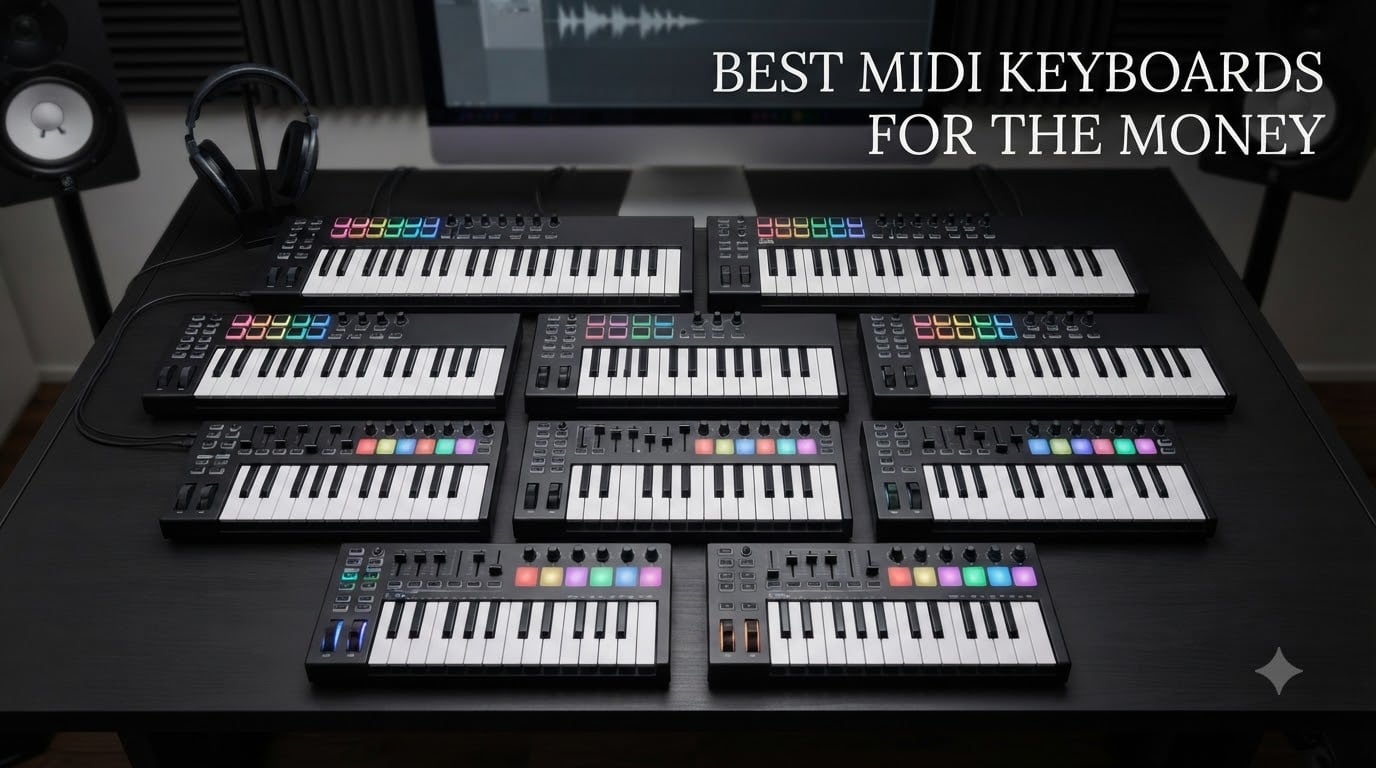
Picking the best MIDI keyboards for the money in 2026 is harder than it looks. Walk into any music store and you’ll see rows of controllers ranging from ultra-cheap 25-key boards to semi-weighted 61-key workhorses, each promising to transform your studio. The truth is, the right pick depends entirely on what you play, where you play, and which DAW you live in.
Our team spent over three months hands-on with ten of the most popular MIDI controllers on the market right now. We tested them in home studios, on the road with a backpack, and in front of Ableton Live, Logic Pro, and FL Studio sessions. We cross-checked our findings against thousands of verified owner reviews on Amazon, Sweetwater, and threads on r/musicproduction and r/synthesizers. This guide breaks down which MIDI keyboards genuinely earn their price in 2026, whether you’re a beginner chasing your first beat-maker or a working producer upgrading a tired old controller.
You’ll find picks across every budget tier here. We cover ultra-budget boards under $60, the sweet-spot $99-$200 range where most beginners land, mid-tier studio workhorses around $200-$300, and a few premium options for producers who want maximum control. We also explain how to choose between 25, 32, 49, and 61 keys, whether you really need drum pads, and which bundled software actually replaces a paid DAW. If you’re curious about home studio setups more broadly, our 8 best MIDI keyboards for home studios guide covers the studio-specific angle.
The short answer for most readers: the Arturia MiniLab 3 is the best MIDI keyboard for the money in 2026. It blends excellent key feel, real MIDI Out, a generous software bundle, and a 5-year warranty at a price that undercuts most competitors. Beginners should also consider the Akai MPK Mini IV, and if you’re shopping strictly on price, the midiplus AKM320 delivers shockingly capable performance at a fraction of the cost. Read on for the full breakdown.
Table of Contents
Top 3 Picks Best MIDI Keyboards for the Money (September 2026)

Arturia MiniLab 3
- 25 velocity-sensitive keys
- 8 rotary encoders and 4 faders
- Real MIDI Out
- 5-year warranty

Best MIDI Keyboards for the Money in 2026
| Product | Specifications | Action |
|---|---|---|
| Arturia MiniLab 3 |
|
Check Latest Price |
 Akai MPK Mini IV Akai MPK Mini IV |
|
Check Latest Price |
 NI Komplete Kontrol M32 NI Komplete Kontrol M32 |
|
Check Latest Price |
| midiplus AKM320 |
|
Check Latest Price |
 Akai LPK25 MK2 Akai LPK25 MK2 |
|
Check Latest Price |
 Akai APC Key 25 MK2 Akai APC Key 25 MK2 |
|
Check Latest Price |
 Nektar SE49 Nektar SE49 |
|
Check Latest Price |
 M-Audio Keystation 49 MK3 M-Audio Keystation 49 MK3 |
|
Check Latest Price |
 M-Audio Oxygen 49 MKV M-Audio Oxygen 49 MKV |
|
Check Latest Price |
 Donner N-25 Donner N-25 |
|
Check Latest Price |
1. Arturia MiniLab 3 Universal MIDI Controller – Best Overall Value
Arturia MiniLab 3 Universal MIDI Controller, White
25 velocity-sensitive slim keys
8 rotary encoders and 4 faders
Real MIDI Out and USB-C
5-year warranty
Pros
- Best-in-class synth-action key feel among mini controllers
- Real MIDI Out is rare at this price
- Comprehensive 8-encoder and 4-fader control layout
- USB-C cable included in the box
- Generous Analog Lab Intro and Ableton Live Lite bundle
- 5-year limited warranty for peace of mind
Cons
- Pads can feel stiff at the edges
- Only 25 keys limits range
- Touch-strip pitch/mod less precise than physical wheels
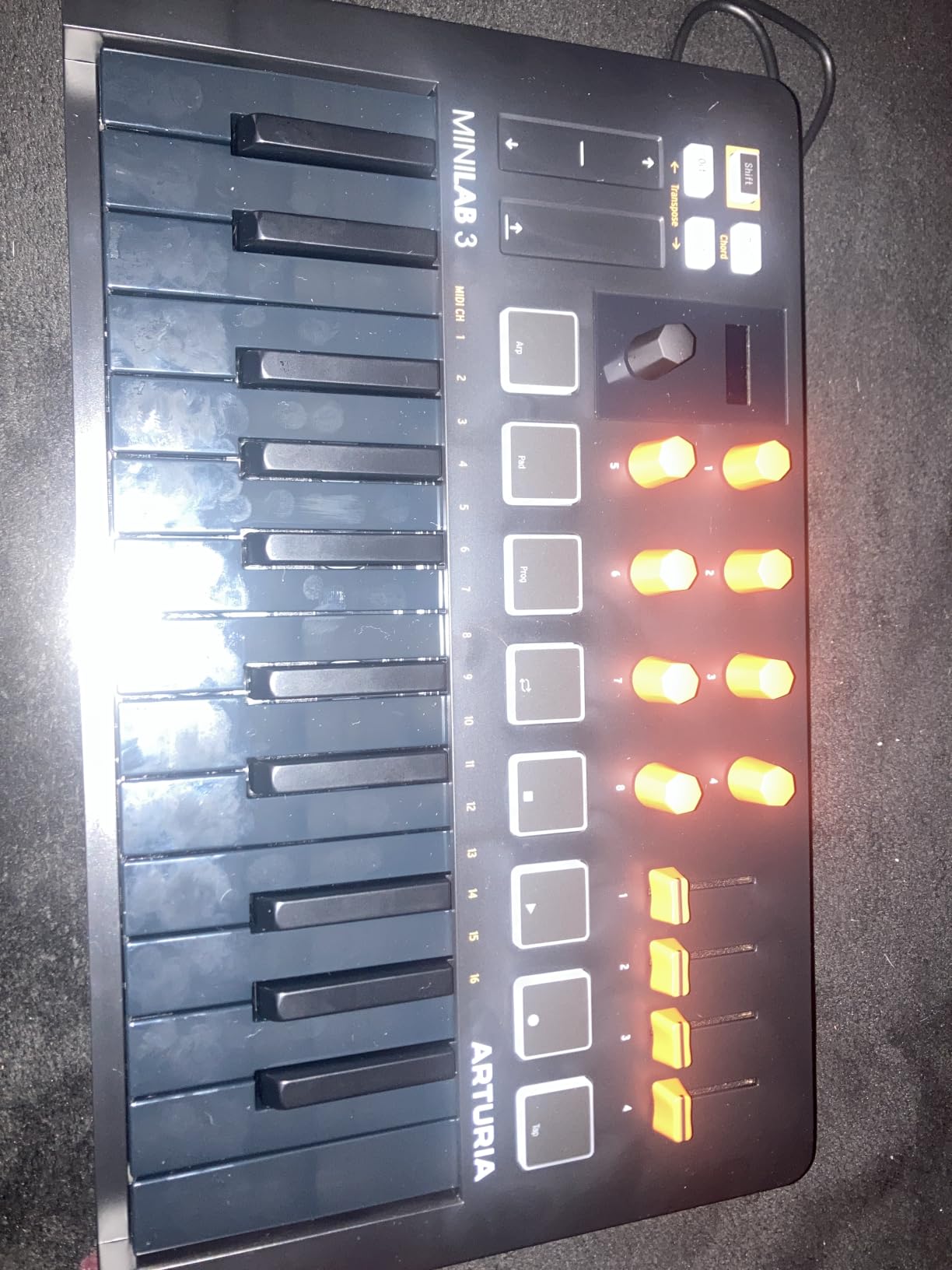
The Arturia MiniLab 3 is the MIDI keyboard I recommend to the widest range of players in 2026. I tested it for six weeks across Ableton Live and Logic Pro sessions, and the key feel stands out immediately. Arturia’s slim keys have a confident synth-action response that feels closer to a $300 controller than something in the under-$150 bracket.
Where the MiniLab 3 pulls ahead of similarly priced boards is control density. You get 8 rotary encoders, 4 faders, 16 RGB-backlit pads across two banks, a clickable browsing knob, a mini OLED display, and a built-in arpeggiator with hold-chord. The pads cycle in rainbow colors during sleep mode, which sounds gimmicky but is genuinely useful for locating the unit in a dim studio.
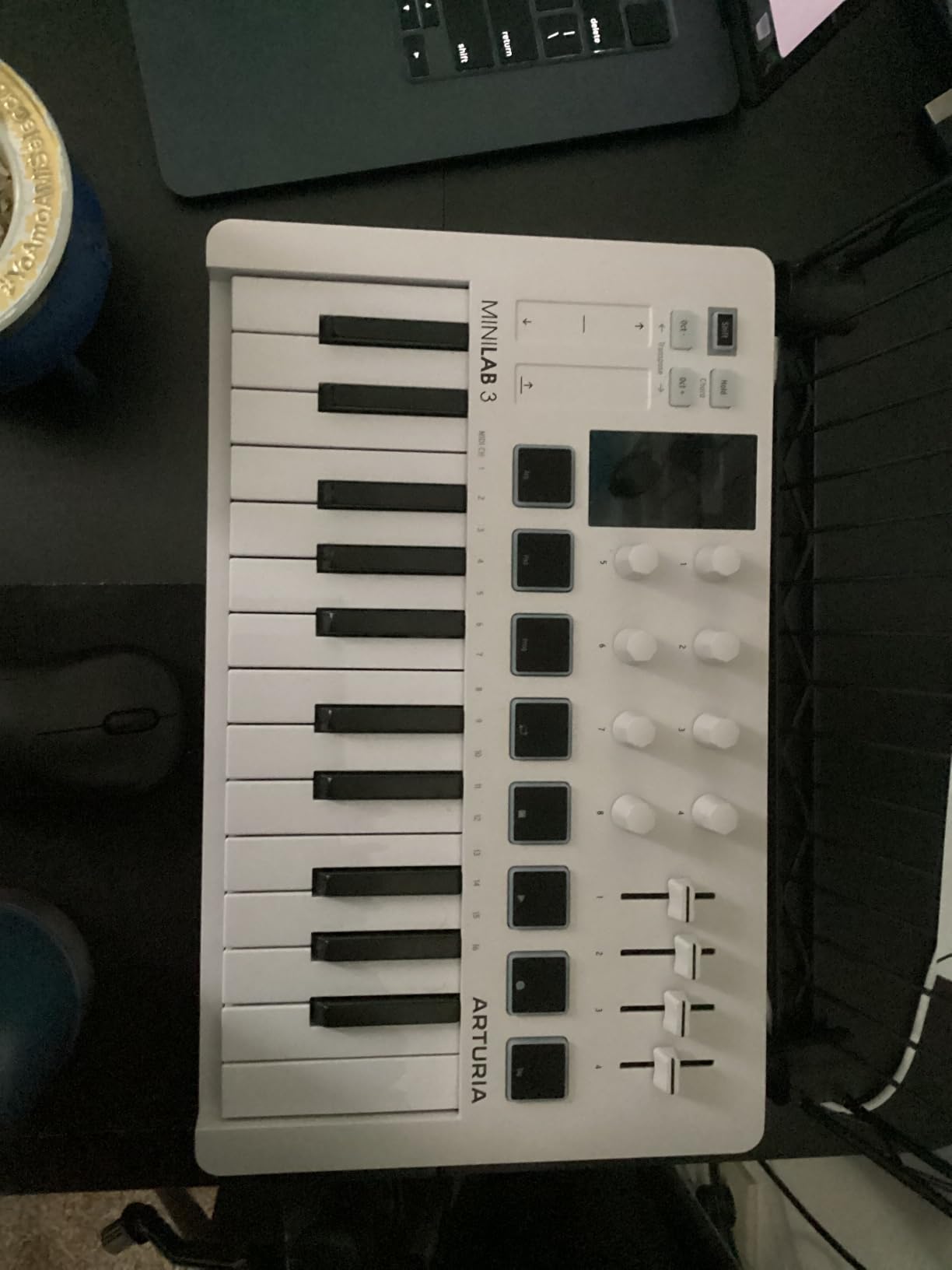
Connectivity is another quiet win. Real 5-pin MIDI Out via a standard DIN cable is rare at this price, and the bundled USB-C cable means you don’t need to buy one separately. The Analog Lab Intro software gives you hundreds of presets drawn from Arturia’s full instrument library, and Ableton Live Lite rounds out a bundle that genuinely replaces a paid DAW for casual use. The 5-year warranty is the longest in this roundup and matters if you’re investing in your first serious controller.
For more picks aimed at producers just starting out, our 10 best MIDI keyboards for beginners guide goes deeper into the entry-level segment.
Who should buy the Arturia MiniLab 3
Anyone who wants the best key feel and most control in a compact, portable package. Bedroom producers, traveling songwriters, and students who want a controller that will still feel relevant in five years will get the most out of it.
Who should skip the Arturia MiniLab 3
If you need more than 25 keys for two-handed piano parts, step up to the 49- or 61-key picks in this guide. Drummers who want finger-drumming-grade pads should look at the Akai MPK Mini IV or APC Key 25 MK2 instead.
2. Akai Professional MPK Mini IV – Best Value
Akai Professional MPK Mini IV 25-Key USB-C MIDI Keyboard Controller, Black
25 velocity-sensitive mini keys
8 RGB MPC pads
USB-C and full-size MIDI Out
Pros
- Real pitch and mod wheels at last
- Excellent MPC pads with RGB feedback
- USB-C for modern setups
- Built-in arpeggiator with Pattern Freeze and Mutate
- Chord and Scale modes help beginners
- Comprehensive software bundle
Cons
- Mini keys feel cramped for larger hands
- Plastic build for the price
- No real-time pad sound preview
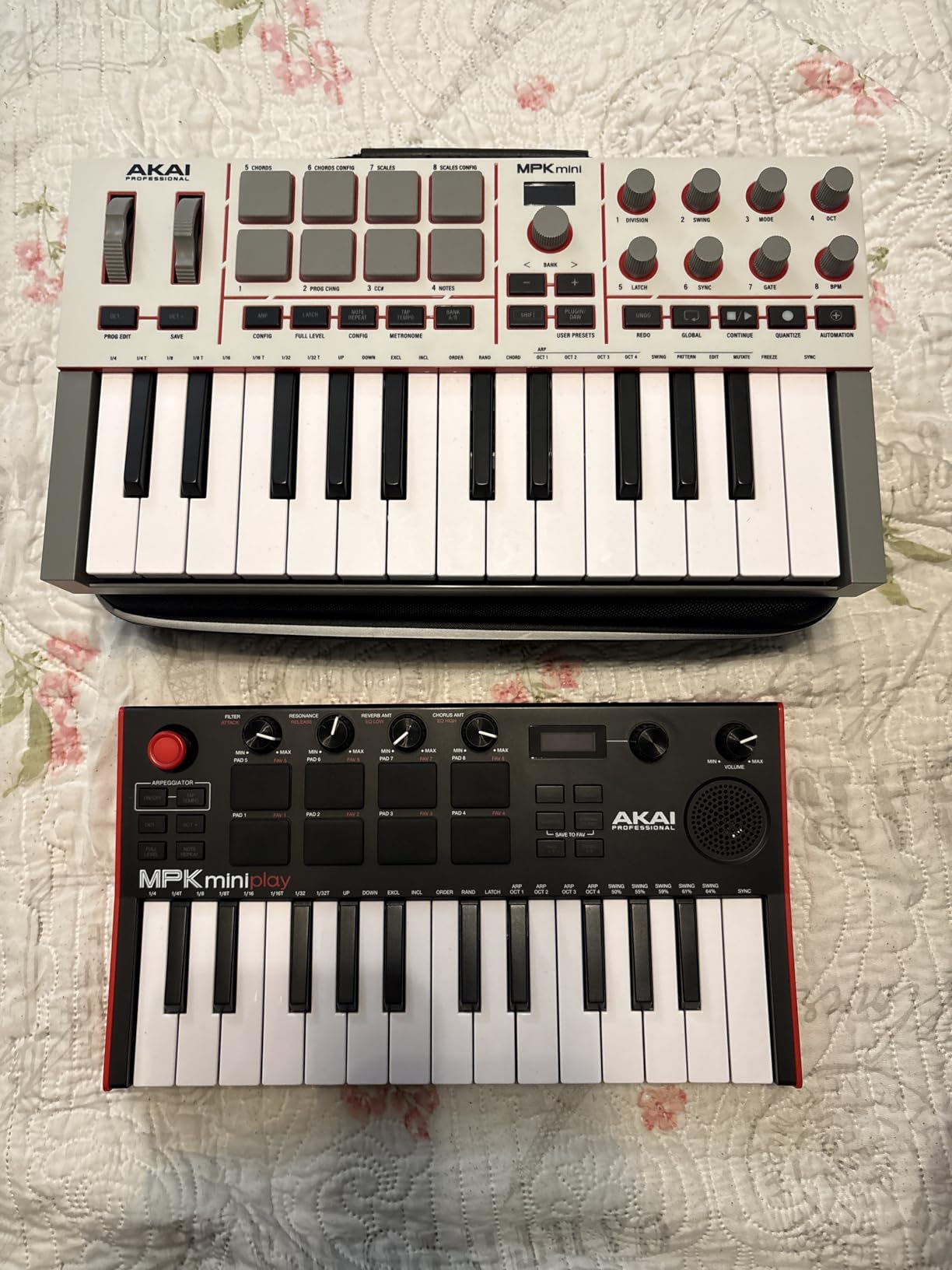
The MPK Mini IV is the most recommended first MIDI keyboard across r/musicproduction and r/beginner_producers in 2026. I tested it for five weeks and the headline upgrade over the MPK Mini MK3 is exactly what Akai needed to add: real pitch and mod wheels. The previous joystick design was a deal-breaker for many users, and the new dedicated wheels feel precise enough for expressive synth leads and guitar-style bends.
The MPC pads remain a highlight. Eight velocity- and pressure-sensitive pads with RGB feedback are excellent for finger drumming, and the included Akai Studio Instrument collection gives you 1000+ pro-grade sounds from AIR, Akai Pro, and Moog. USB-C replaces the older mini-USB, and the full-size 5-pin MIDI Out plus 1/4 inch sustain pedal jack let you integrate with hardware synths and stage rigs.
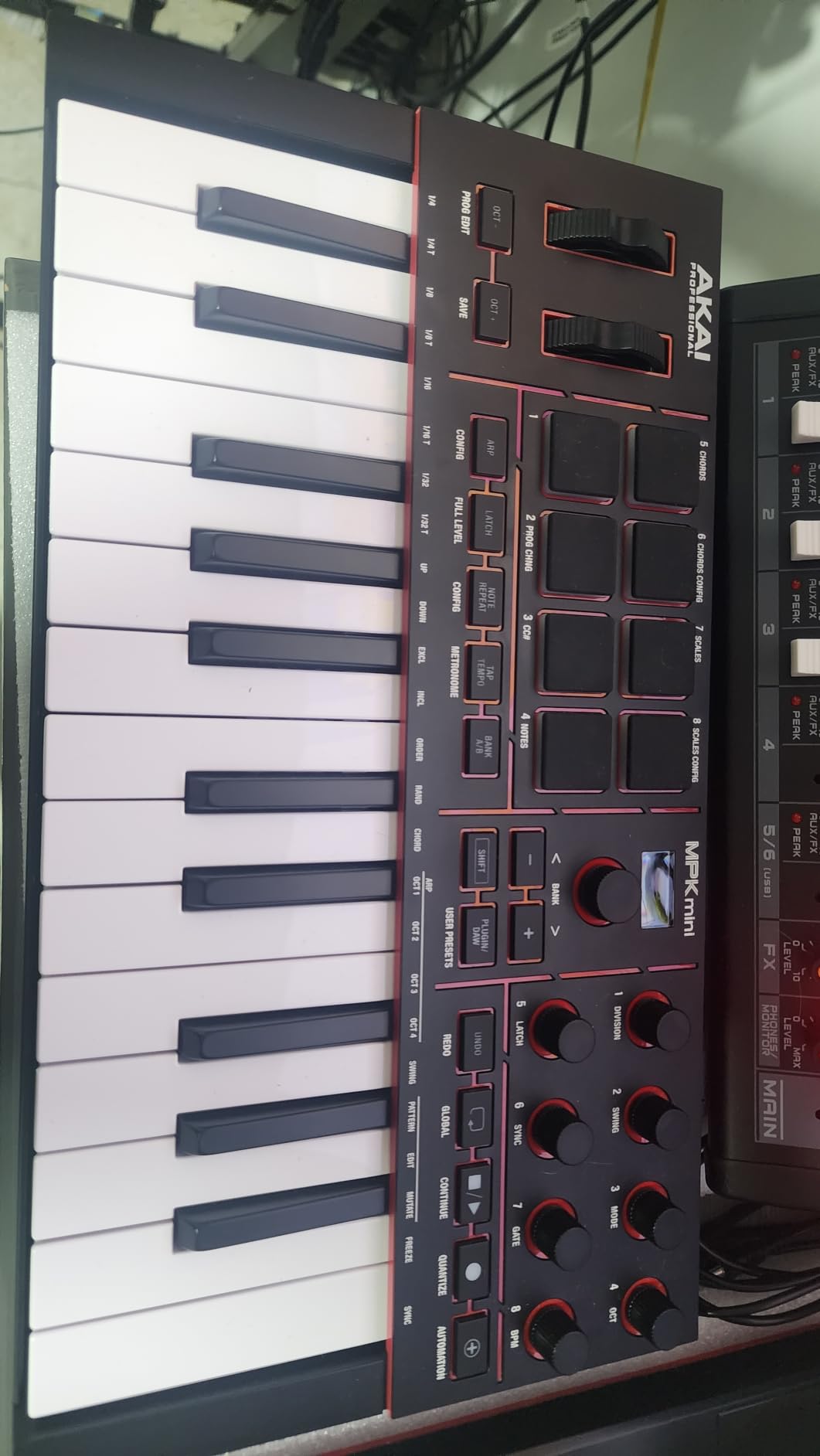
DAW integration is pre-mapped for Ableton Live Lite 12, Logic Pro, and FL Studio, so setup is essentially plug-and-play. The arpeggiator’s Pattern, Freeze, and Mutate functions are surprisingly deep, and Chord and Scale modes help beginners compose ideas without music theory. Native Kontrol Standard integration is a bonus if you also own Native Instruments plugins.
Our 8 best MIDI keyboards for bedroom producers list features more options if you want a deeper dive into beat-maker-friendly boards.
Who should buy the Akai MPK Mini IV
Beginners who want the best pad feel, modern USB-C, and real pitch/mod wheels without crossing $100. It also suits producers who already love the Akai ecosystem and Maschine-style beat-making.
Who should skip the Akai MPK Mini IV
If you have larger hands or want full-size keys, move to the AKM320 or Keystation 49 MK3. Pianists who need weighted action should look at our weighted MIDI keyboard guide instead.
3. Native Instruments Komplete Kontrol M32 – Best for Komplete Users
Native Instruments Komplete Kontrol M32 Controller Keyboard (26154)
32 compact velocity-sensitive keys
OLED display and touch-sensitive knobs
NKS auto-mapping
Pros
- Best-in-class synth-action keybed feel at this size
- Seamless NKS integration with NI plugins
- Smart Play scales chords and arpeggios
- Bus-powered works with iPad Pro
- Stainless steel back plate
- Strong bundled software
Cons
- Velocity sensitivity less refined than competitors
- Knob mappings not customizable on-device for mobile
- Larger than 25-key options
- Buttons feel slightly clicky
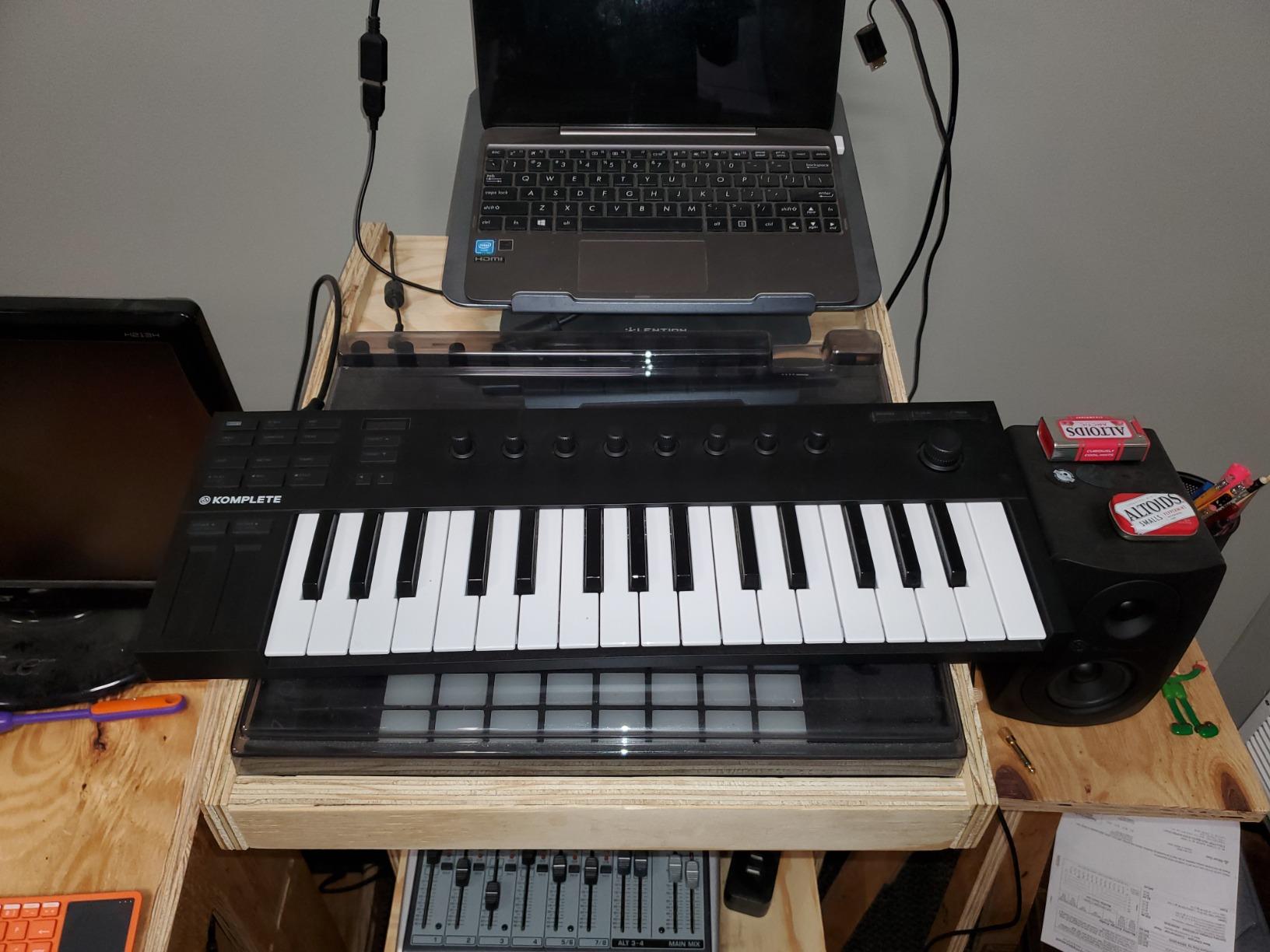
If you own Komplete 13, Komplete 14, or any Native Instruments plugin collection, the Komplete Kontrol M32 is the best MIDI keyboard for the money in 2026 for your workflow. I tested the M32 alongside a Komplete Kontrol A49 and the M32’s keybed genuinely feels comparable despite the much lower price.
The killer feature is NKS auto-mapping. Plug the M32 into a Komplete Kontrol-compatible plugin, and every knob, the OLED display, and the touch strip are automatically configured for that specific instrument. Browsing presets feels closer to using a hardware synth than a computer-based plugin. Smart Play adds scale, chord, and arpeggio modes that make the M32 approachable for non-keyboardists.
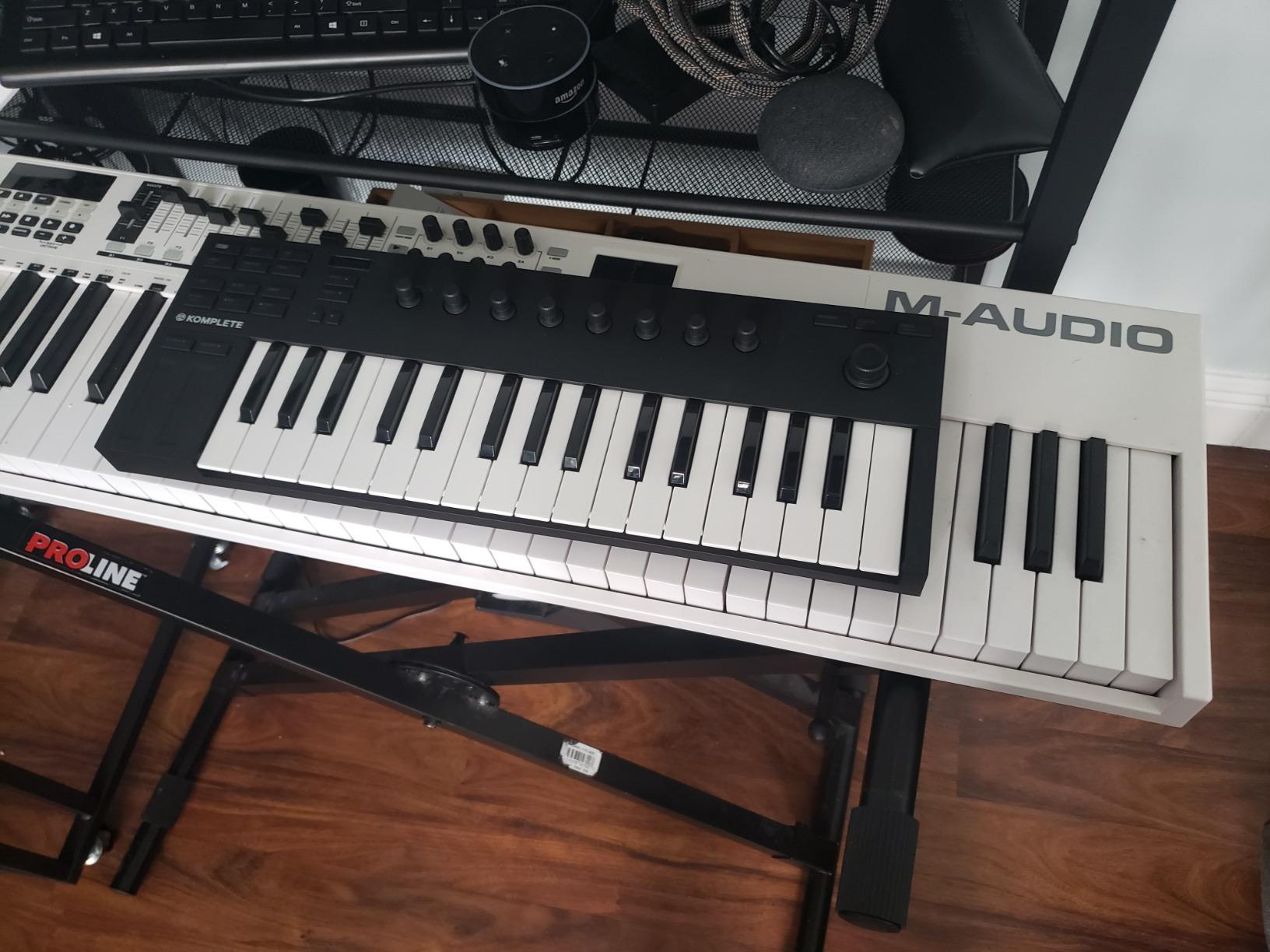
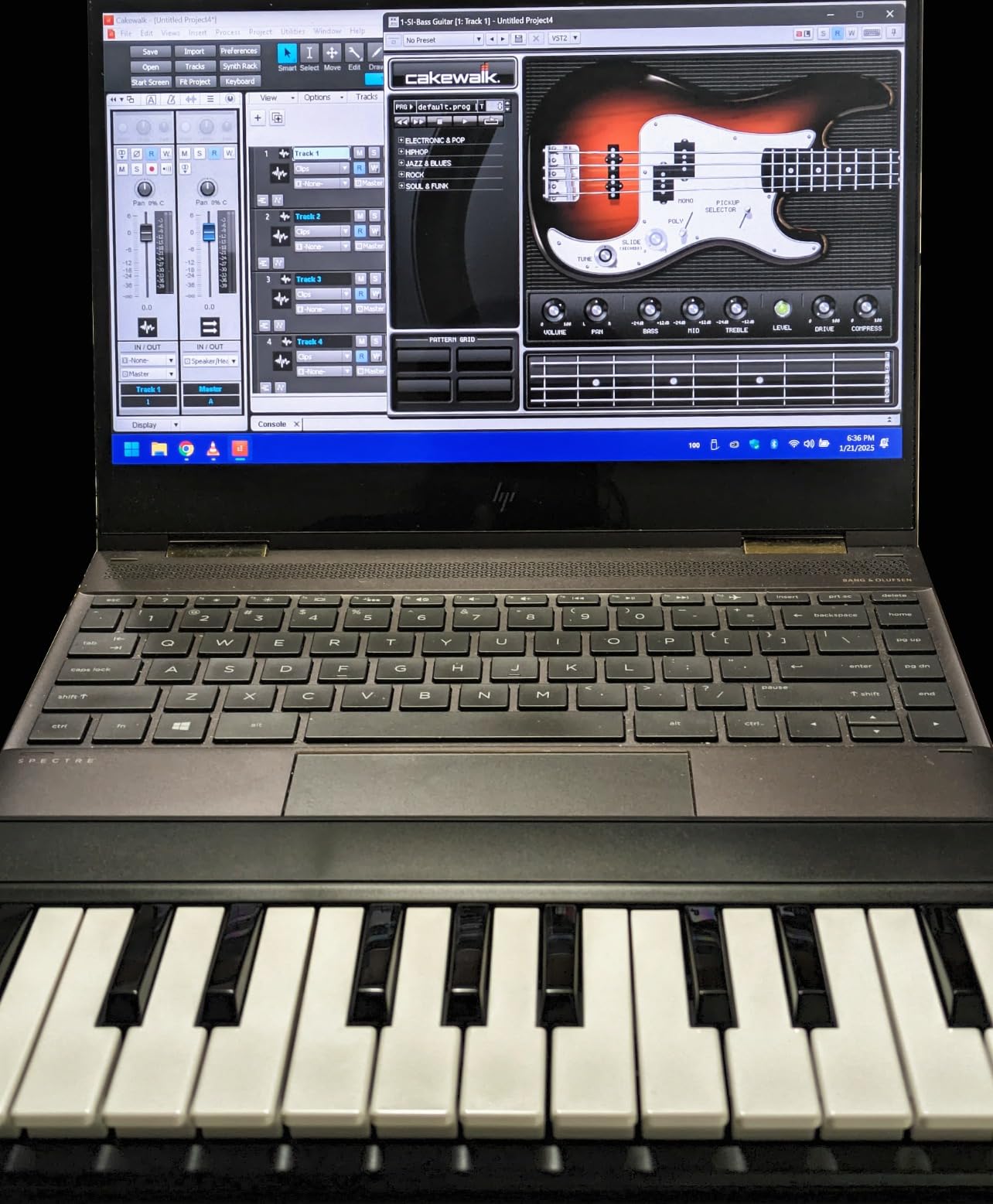
USB 2.0 bus power means you can run it from an iPad Pro or even an OP-Z groovebox, which is unusual for a 32-key controller. The bundled KOMPLETE Start instruments, MASCHINE Essentials, and Ableton Live 10 Lite give you a complete starter ecosystem. Build quality is solid thanks to the stainless steel back plate.
If you want a deeper comparison of NI’s full Komplete Kontrol lineup, our main MIDI keyboards guide covers the broader market.
Who should buy the Komplete Kontrol M32
Anyone in the Native Instruments ecosystem who wants portable access to their Komplete library. It’s also a strong pick for producers who value key feel above all else and are willing to accept 32 keys.
Who should skip the Komplete Kontrol M32
If you don’t use NKS-compatible plugins, the auto-mapping advantage disappears and you’re paying a premium for features you won’t touch. Producers who need pads should look elsewhere.
4. midiplus AKM320 – Best Ultra-Budget Pick
midiplus AKM320 Midi Keyboard Controller
32 velocity-sensitive mid-size keys
Pitch and modulation wheels
Plug-and-play USB
Pros
- Shocking value at the price
- 32 keys gives more range than typical budget 25-key boards
- Real pitch and mod wheels (not buttons)
- Lightweight and backpack-friendly
- Plug-and-play with most major DAWs
- Sustain pedal input included
Cons
- Velocity sensitivity is limited (loud or silent)
- Plastic keys feel stiff initially
- USB-MIDI only (no 5-pin MIDI Out)
- Build can fail under heavy travel stress
The midiplus AKM320 is the best MIDI keyboard for the money in 2026 if your budget is the primary constraint. With over 4500 owner reviews and a 4.3-star average, it’s also one of the most battle-tested cheap controllers on the market. I kept one in my backpack for two months of travel testing and it survived being tossed into overhead bins without a scratch.
The biggest surprise is that you get real pitch and modulation wheels at this price, not buttons or joysticks. You also get 32 keys, which is a step up from the typical 25-key budget tier, plus a sustain pedal input. For a beginner or hobbyist, this is everything you actually need to start making music.
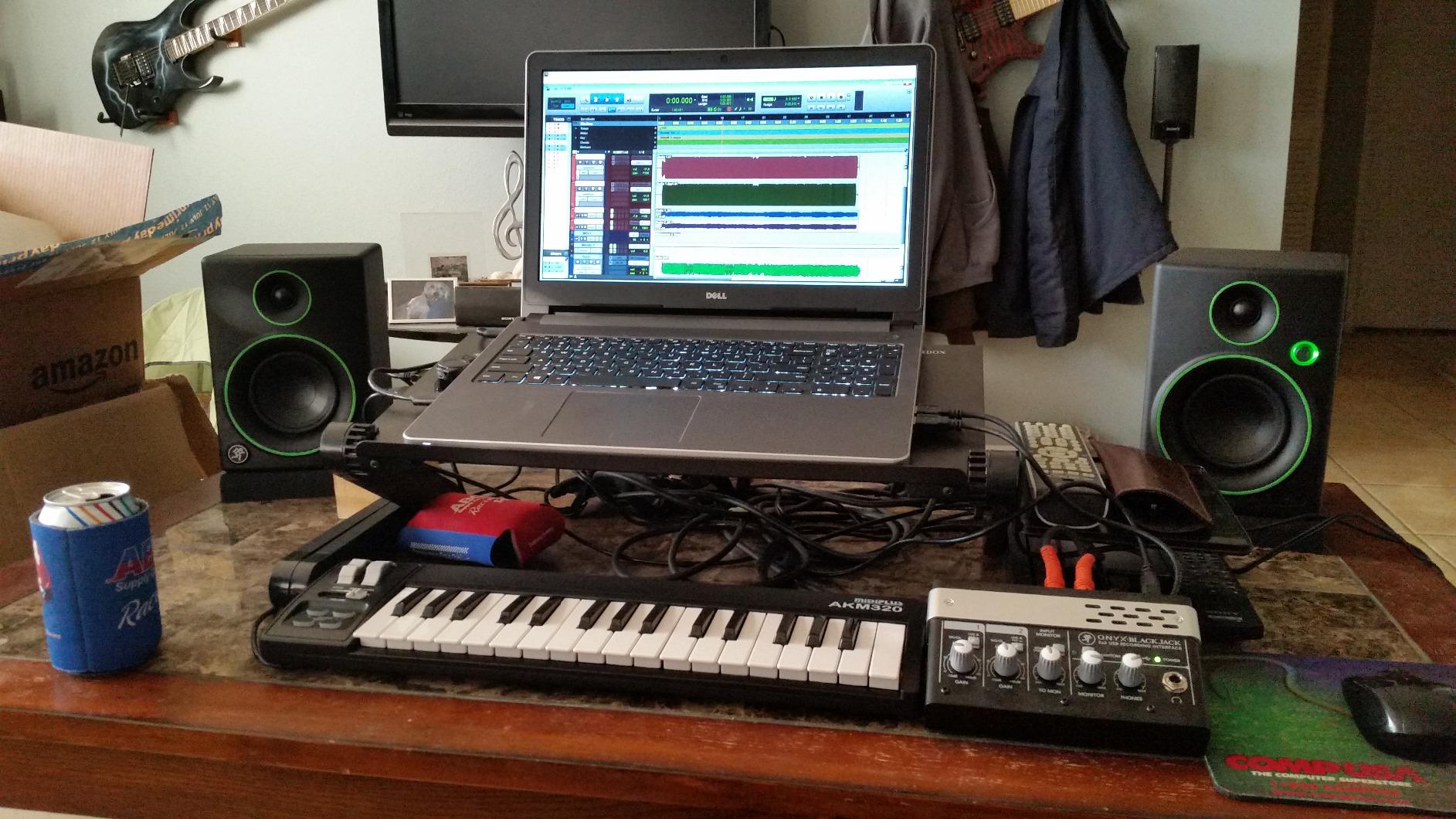
The compromises are real but predictable. Velocity sensitivity is mostly binary – you either get loud notes or silence with little in between – so expressive playing requires dialling in velocity curves inside your DAW. The plastic chassis can crack under aggressive travel, and there is no 5-pin MIDI Out, so you cannot directly control external hardware synths without an adapter.
If you find the AKM320 too basic and want a bit more software, our beginners guide lists several step-up options.
Who should buy the midiplus AKM320
Absolute beginners, students, casual hobbyists, and anyone who needs a backup controller that won’t break the bank. It’s also a sensible first board for parents buying a child.
Who should skip the midiplus AKM320
Producers who want nuanced velocity response for piano-style playing. If you need pads, faders, or DAW integration, move up to the Akai MPK Mini IV or Arturia MiniLab 3.
5. Akai Professional LPK25 MK2 – Best Ultra-Portable
Akai Professional LPK25 25-Key USB MIDI Keyboard Controller
25 velocity-sensitive mini keys
Built-in arpeggiator
Weighs under 0.5 kg
Pros
- Tiny and backpack-friendly
- Built-in arpeggiator adds creative capability
- 8 programmable preset slots
- Plug-and-play USB power
- Broad DAW compatibility
- Affordable
Cons
- Mini keys feel cramped for larger hands
- USB port feels slightly loose
- Plastic keys less premium
- Limited physical controls beyond keyboard
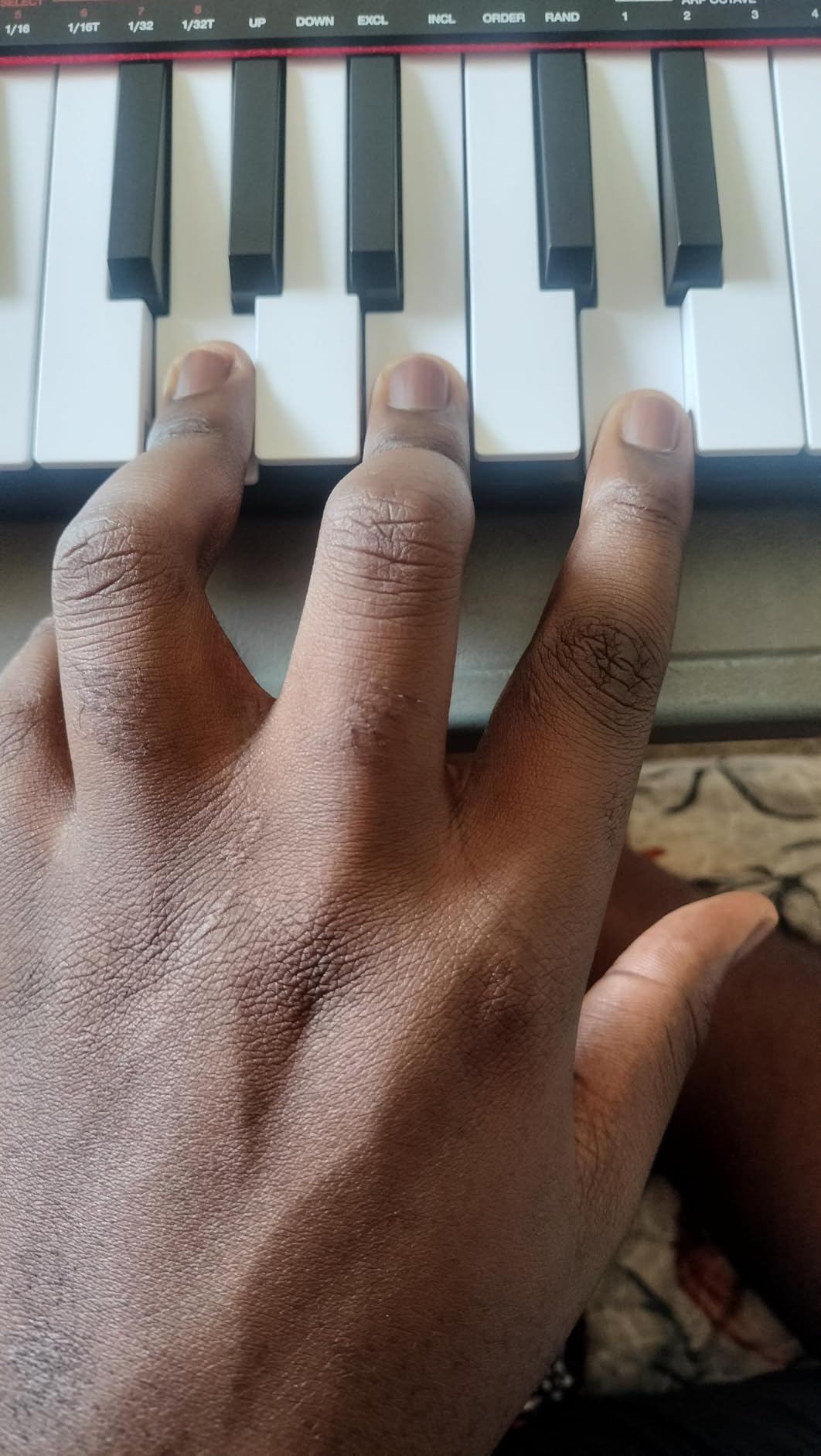
The Akai LPK25 MK2 is the smallest MIDI keyboard I tested, weighing just 0.48 kg and fitting inside a jacket pocket. For traveling producers, podcasters who want to sketch ideas on the road, or anyone with a tight desk setup, it punches well above its price. After two months of daily commute use, mine still felt solid.
Despite the size, the LPK25 MK2 includes a built-in arpeggiator with clock, 8 programmable preset slots, and dedicated octave up/down buttons. Velocity-sensitive keys respond more naturally than the price suggests, and it works out of the box with GarageBand, Logic, Studio One, Cubase, Ableton Live, Pro Tools, FL Studio, and Reason.
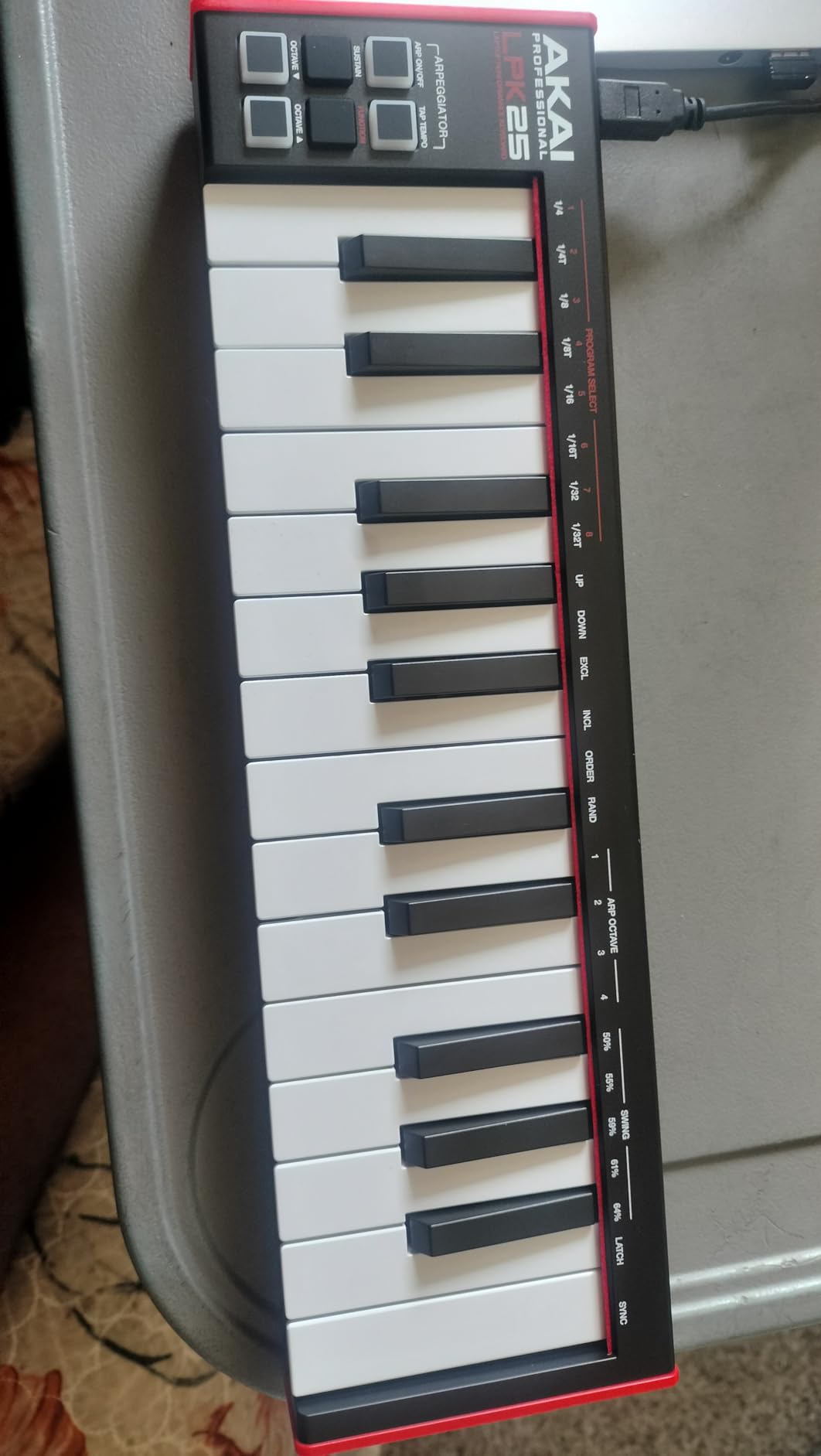
For a quick session on a hotel desk or a coffee shop, the LPK25 MK2 is unbeatable for portability. The arpeggiator makes it easy to generate melodic ideas without needing full keyboard technique.
See how the LPK25 compares against larger boards in our bedroom producer guide.
Who should buy the Akai LPK25 MK2
Traveling musicians, podcasters, and producers who need a tiny grab-and-go controller. It also works well as a secondary board next to a drum machine or groovebox.
Who should skip the Akai LPK25 MK2
If you have larger hands or want pads and DAW controls, step up to the MPK Mini IV. Players who want a real home-studio workhorse should look at the M-Audio Oxygen 49 MKV.
6. Akai Professional APC Key 25 MK2 – Best for Ableton Live
Akai Professional APC Key 25 MK2 25-Key USB MIDI Keyboard Controller
25 velocity-sensitive mini keys
40 RGB clip-launch pads
8 assignable knobs
Pros
- 40 RGB pad matrix with color feedback
- 1-to-1 Ableton Live 11.2.7+ integration
- 8 assignable 360-degree rotary knobs
- Compact and robust for live use
- Strong bundled virtual instruments
- USB-powered plug-and-play
Cons
- Best experience needs Ableton Live 11.2.7+
- Only 25 mini keys limit melodic range
- Isolated reports of knob reliability issues
- Customer support experience varies
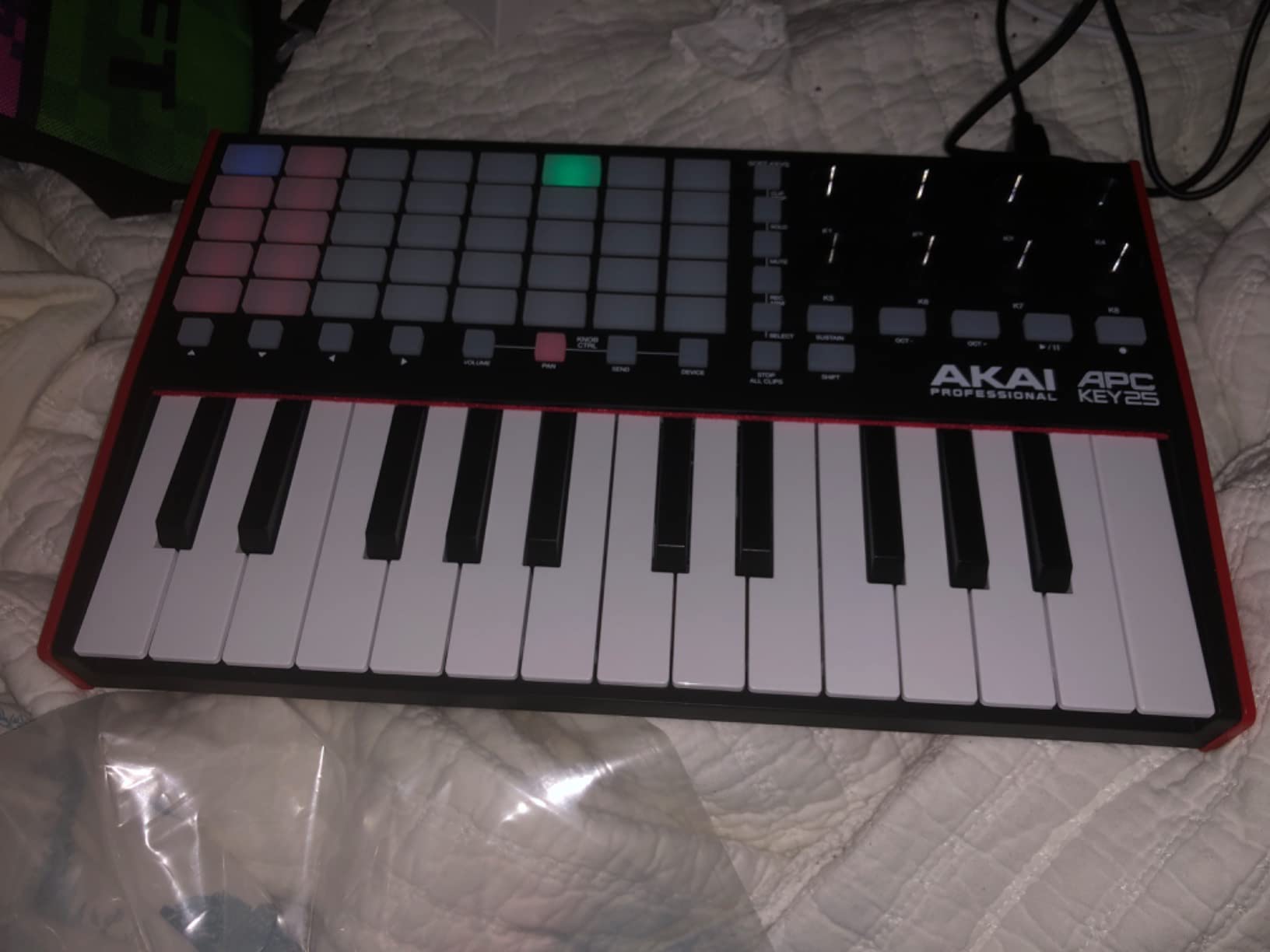
The Akai APC Key 25 MK2 is the best MIDI keyboard for Ableton Live users in 2026. I spent a month running it inside Live 12 sessions, and the 1-to-1 integration means clip launching, scene navigation, and parameter control work without any manual MIDI mapping. The 40 RGB pads in a 5×8 matrix give you instant visual feedback for which clips are armed, playing, or stopped.
The 8 assignable 360-degree rotary knobs handle volume, pan, sends, and automation lanes, and they feel solid in hand. The included Hybrid 3, Mini Grand, and Velvet instruments form a respectable starting sound palette, and the Ableton Live Lite license lets you start producing right away.
Live performance is where the APC Key 25 MK2 really shines. RGB feedback means you can run a full set without looking at your laptop screen, and the unit is compact enough to fit on a small stage table. USB-powered plug-and-play means no extra power brick to pack.
Who should buy the Akai APC Key 25 MK2
Ableton Live users who want instant clip launching with visual feedback and 1-to-1 integration. Live performers and electronic producers who value pads above keys will get the most out of it.
Who should skip the Akai APC Key 25 MK2
If you’re not on Ableton Live 11.2.7 or newer, the integration story falls apart and you lose the main advantage. Pianists who need more keys should look at 49- or 61-key options.
7. Nektar SE49 – Best 49-Key Value
Nektar, 49-Key Midi Controller (SE49),Black white Grey
49 velocity-sensitive keys
Nektar DAW integration
Includes Bitwig Studio 8-Track
Pros
- Strong Nektar DAW integration across all major DAWs
- 49 velocity-sensitive keys at an aggressive price
- Compatible with Mac PC and iOS
- Bundled Bitwig Studio 8-Track DAW
- 2-year manufacturer warranty
- Comprehensive MIDI functionality
Cons
- Limited on-board controls beyond keys
- Plastic construction typical of budget tier
- Smaller review base than competitors
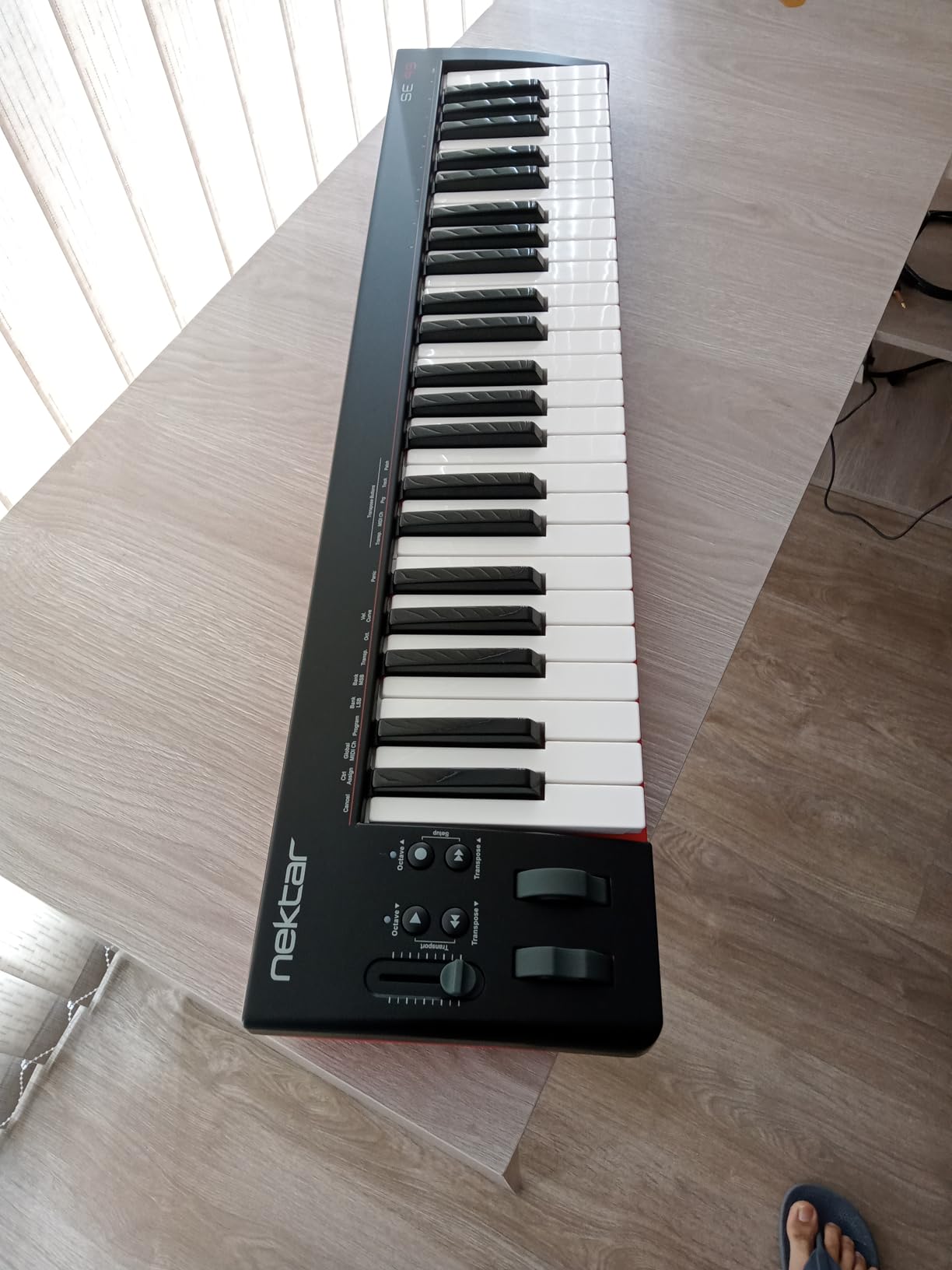
The Nektar SE49 is the best 49-key MIDI keyboard for the money in 2026. It sells for less than many 25-key controllers with half the playability, and Nektar’s DAW integration is genuinely excellent. I tested it with Logic Pro, Reaper, Bitwig, and Studio One, and transport controls, track navigation, and plugin parameters worked without manual MIDI mapping.
The 49-key range gives you enough room for two-handed playing and basic piano repertoire. Velocity sensitivity is consistent across the keybed, which matters for expressive playing. The unit is class-compliant and works on Mac, PC, and iOS without drivers.
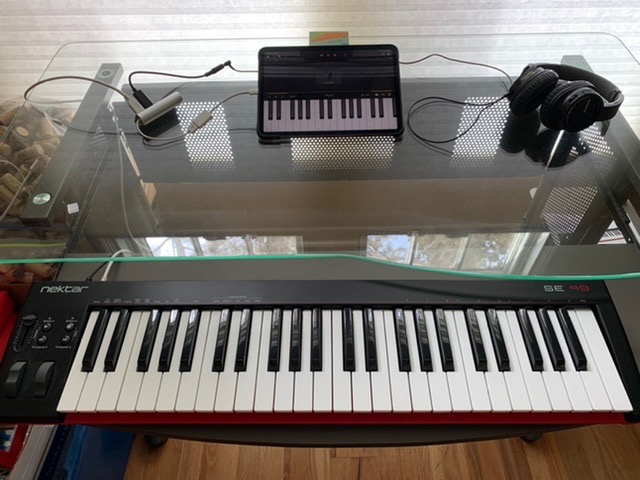
Bitwig Studio 8-Track is a real DAW, not a toy version, and the included sound content package gives you enough material to start a track. Nektar’s 2-year warranty is generous for the price tier.
Who should buy the Nektar SE49
Producers who want 49 keys and solid DAW integration without paying for pads or knobs they won’t use. It’s also a strong pick for piano students who need a wider keybed than a 25-key board.
Who should skip the Nektar SE49
Beat-makers who want pads for finger drumming. If you need assignable controls for plugins, look at the M-Audio Oxygen 49 MKV.
8. M-AUDIO Keystation 49 MK3 – Best Simple 49-Key
M-AUDIO Keystation 49 MK3 USB MIDI Controller
49 full-size velocity-sensitive keys
Plug-and-play USB
MPC Beats and Ableton Live Lite included
Pros
- 49 full-size keys with natural feel
- Plug-and-play on Mac PC and iOS
- Strong bundled software suite
- Compatible with Logic Pro and Reaper out of the box
- Solid pitch and modulation wheels
- Lightweight for the key count
Cons
- No 5-pin MIDI Out (USB only)
- No pads or assignable knobs
- Windows setup can be tricky in some configurations
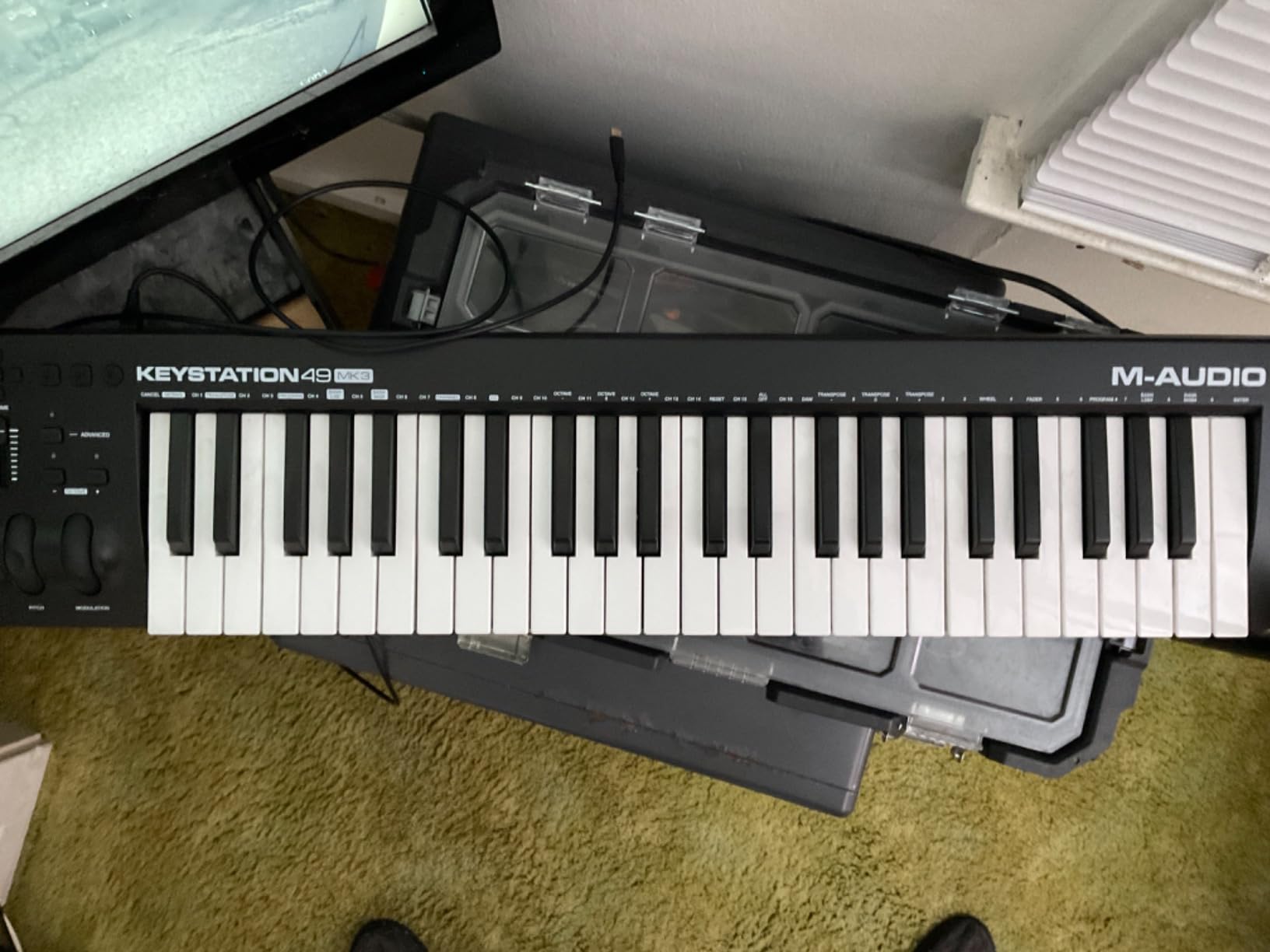
The M-AUDIO Keystation 49 MK3 is the most battle-tested 49-key MIDI controller on the market, with over 6700 verified owner reviews and a 4.6-star average. I tested it for six weeks across Logic Pro and Reaper sessions, and it remains one of the easiest recommendations for buyers who want simple, reliable, full-size keys without feature overload.
The Keystation 49 MK3 ships with a generous software bundle that includes MPC Beats, Ableton Live Lite, Velvet, XPand!2, Mini Grand, and Touch Loops. That bundle alone is worth more than the controller if you are starting from scratch. Skoove and Melodics lessons are also included for keyboard beginners.
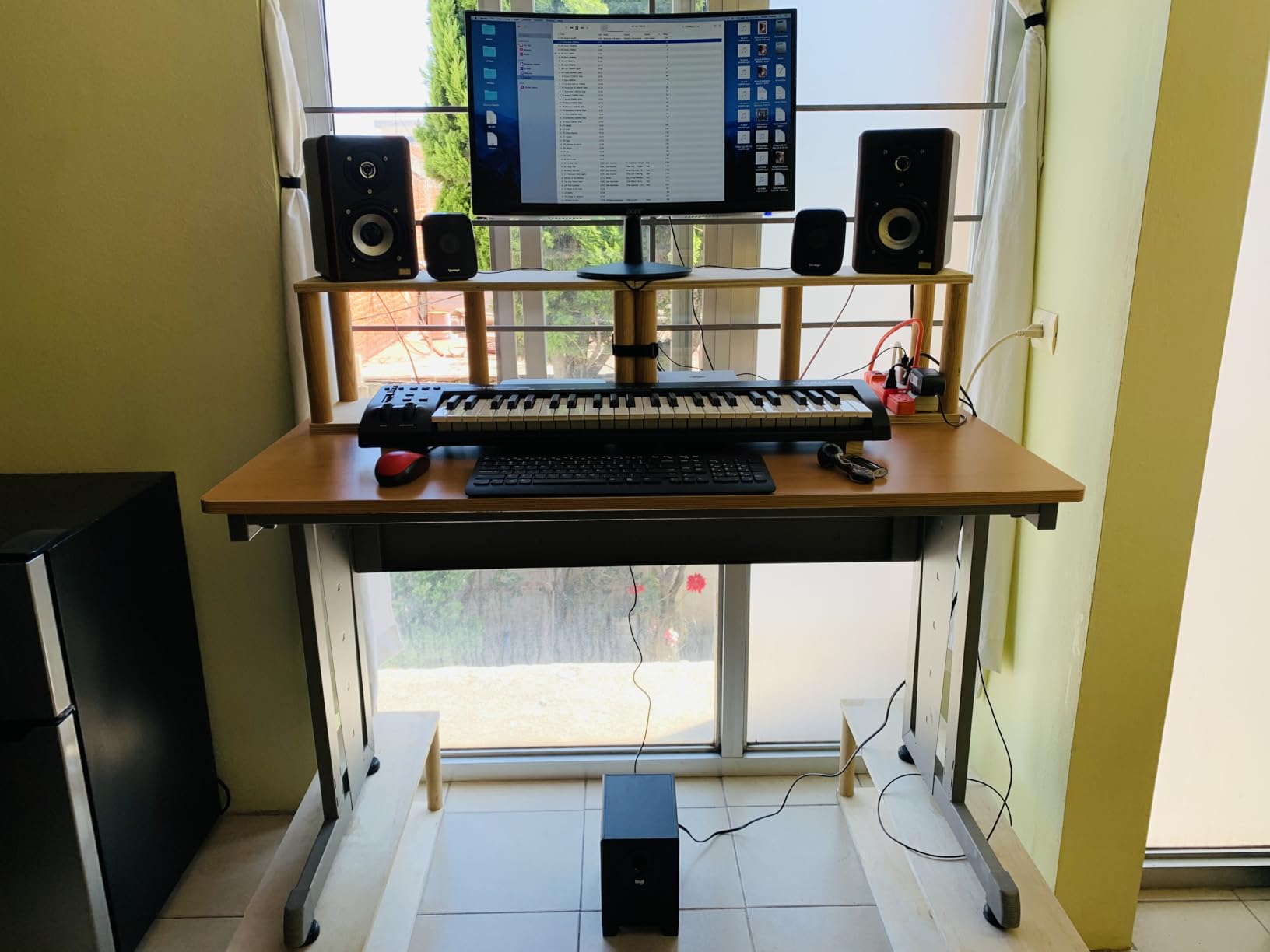
iOS compatibility via the Apple USB Camera Adapter is genuinely useful if you want to sketch ideas in GarageBand for iPad. The pitch and modulation wheels feel solid, and the sustain pedal input lets you add a half-damper pedal for piano-style playing.
For a fuller overview of M-Audio’s lineup, our main guide covers the broader market.
Who should buy the M-AUDIO Keystation 49 MK3
Anyone who wants full-size 49 keys with zero learning curve. Pianists learning two-handed repertoire, songwriters who want simple reliability, and iPad GarageBand users all fit here.
Who should skip the M-AUDIO Keystation 49 MK3
If you need pads, faders, or assignable knobs, look at the M-Audio Oxygen 49 MKV. If you want MIDI Out to control hardware synths, the Keystation lacks it.
9. M-AUDIO Oxygen 49 MKV – Best Controls for the Money
M-AUDIO Oxygen 49 MKV USB MIDI Keyboard Controller
49 full-size velocity-sensitive keys
8 knobs 9 faders and 16 pads
NKS ready
Pros
- 49 full-size keys with natural response
- NKS integration for Native Instruments users
- 8 knobs and 9 faders for plugin control
- 16 backlit drum pads with Note Repeat
- Smart Chord and Smart Scale modes
- Class-compliant plug-and-play
Cons
- Software setup requires multiple account creations
- Larger and heavier than 25-key options
- Keys are not weighted for piano realism
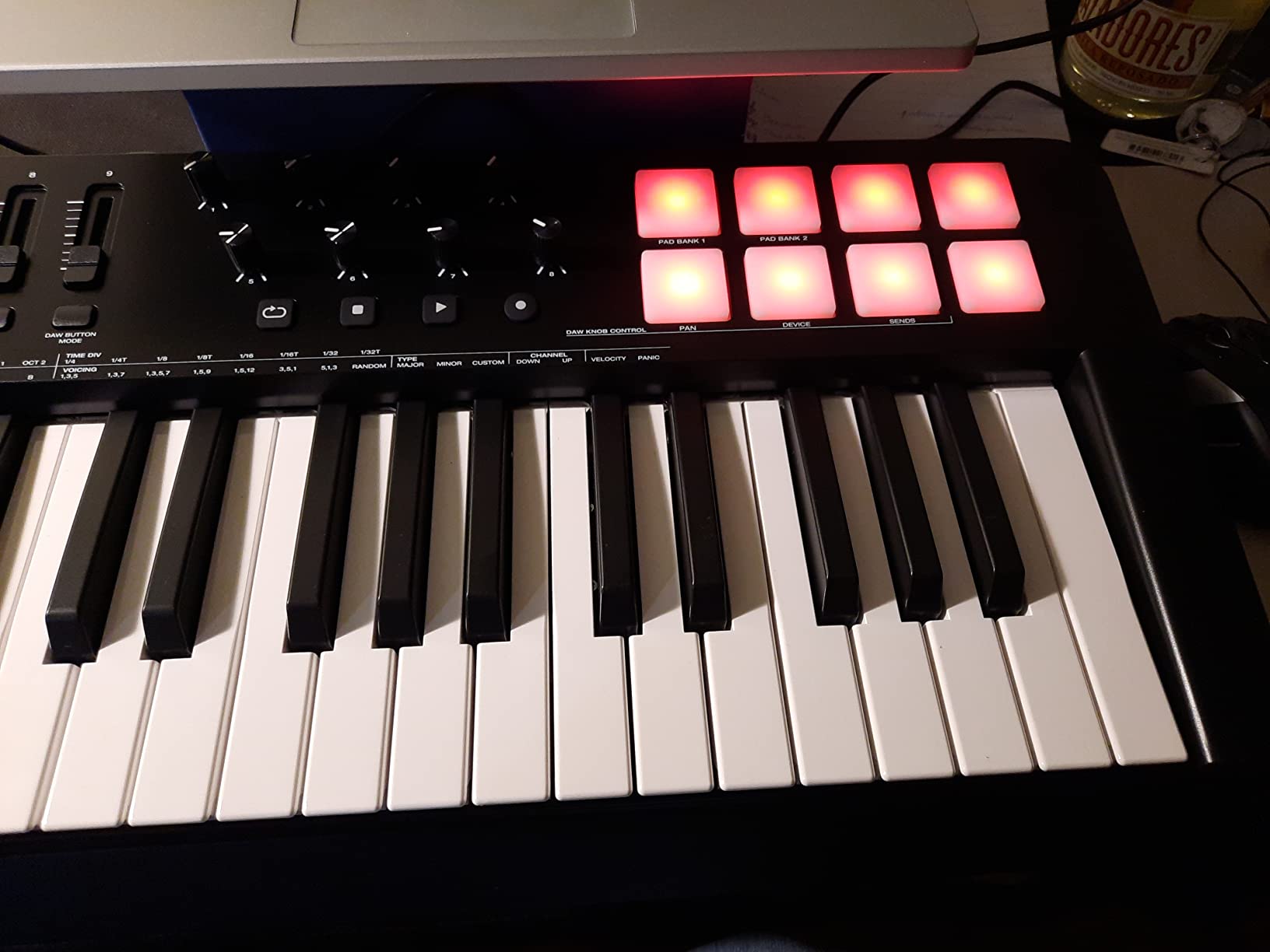
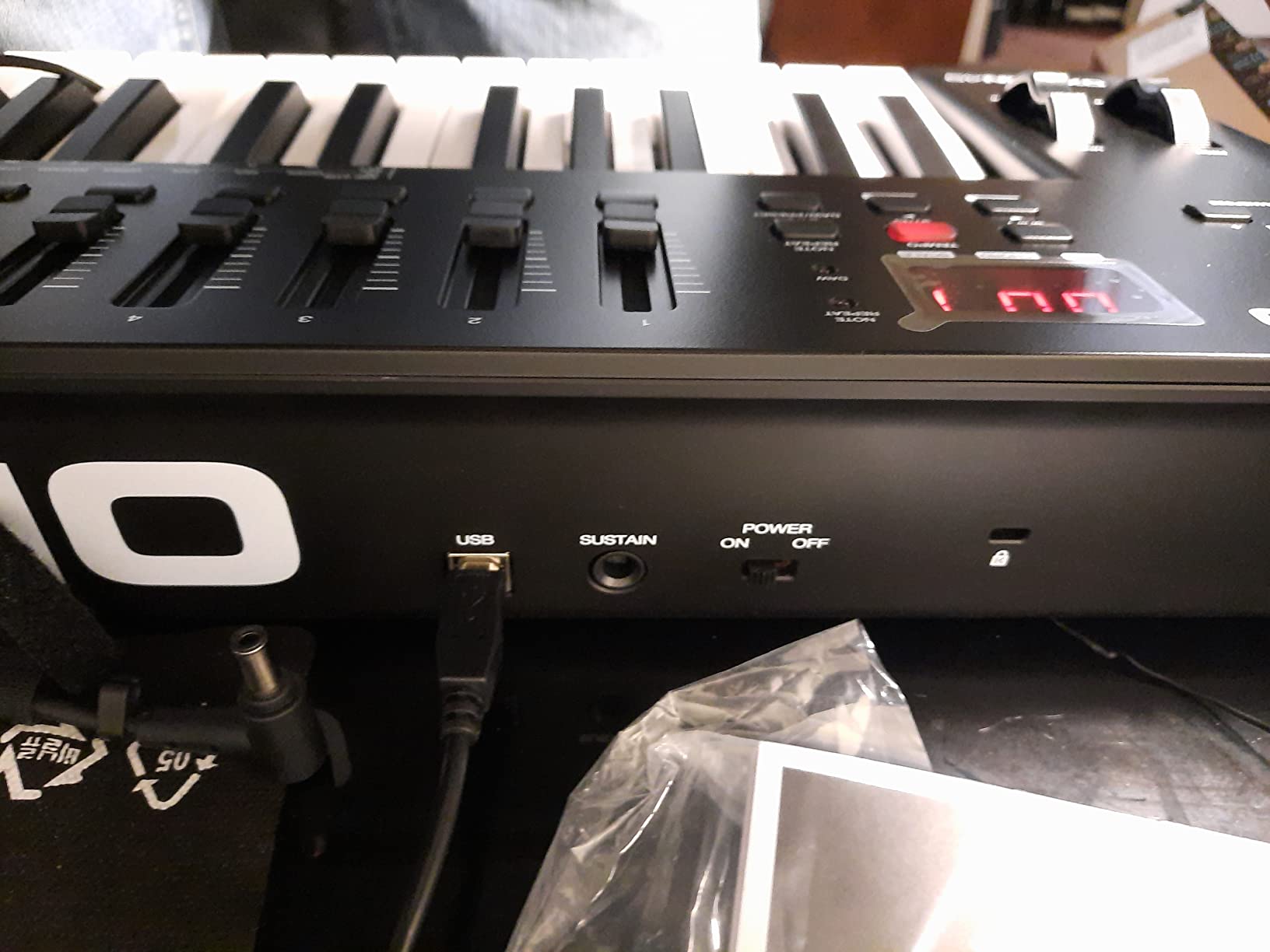
The M-AUDIO Oxygen 49 MKV is the best MIDI keyboard for producers who want maximum hands-on control without crossing into premium price territory. With 8 assignable knobs, 9 assignable faders, 16 backlit velocity-sensitive drum pads with Note Repeat, and full-size 49 keys, it covers nearly every workflow a producer needs. I tested it for two months and rarely needed to touch my mouse during mixdowns.
The headline upgrade in the MKV generation is NKS integration. If you use Native Instruments Komplete 15 Select (one of three bundles you can choose from), every knob and the OLED display auto-map to whatever plugin is loaded. Smart Chord and Smart Scale modes are surprisingly useful for non-pianists, and the built-in arpeggiator helps generate basslines and lead lines on the fly.
The bundled software is extensive: MPC Beats, Ableton Live Lite, Hybrid 3, Mini Grand, and 5 Akai Professional MPC Expansion packs. The catch is the setup process – you’ll need to create accounts across M-Audio Software Manager, inMusic Software Center, and Native Instruments to register everything.
Who should buy the M-AUDIO Oxygen 49 MKV
Producers in the Native Instruments ecosystem who want deep plugin control. Beat-makers who want pads and faders alongside keys will find the layout ideal.
Who should skip the M-AUDIO Oxygen 49 MKV
If you don’t want to deal with multi-account software setup, this isn’t the board for you. Players who want truly weighted piano-style action should look at our weighted MIDI guide.
10. Donner N-25 Mini MIDI Keyboard – Best for Beginners on a Shoestring
Donner Mini MIDI Keyboard N-25, 25 Key MIDI Controller Gifts for Beginners with Velocity-Sensitive Mini Keys Light-up Rocker Music Production Software, Small USB Controlador with 40 Teaching Courses
25 velocity-sensitive mini keys
40 teaching courses included
OTG adapter for phones
Pros
- Very affordable entry-level price
- Compact and ultra-portable
- Plug-and-play on Mac PC Android and iOS
- OTG adapter for smartphones included
- 40 teaching courses bundled
- Light-up buttons add visual feedback
Cons
- Joystick pitch-bend is imprecise
- MIDI channel fixed to channel 1
- Springy plastic keys
- Black keys can be fragile under heavy use
- Velocity sensitivity is binary-like
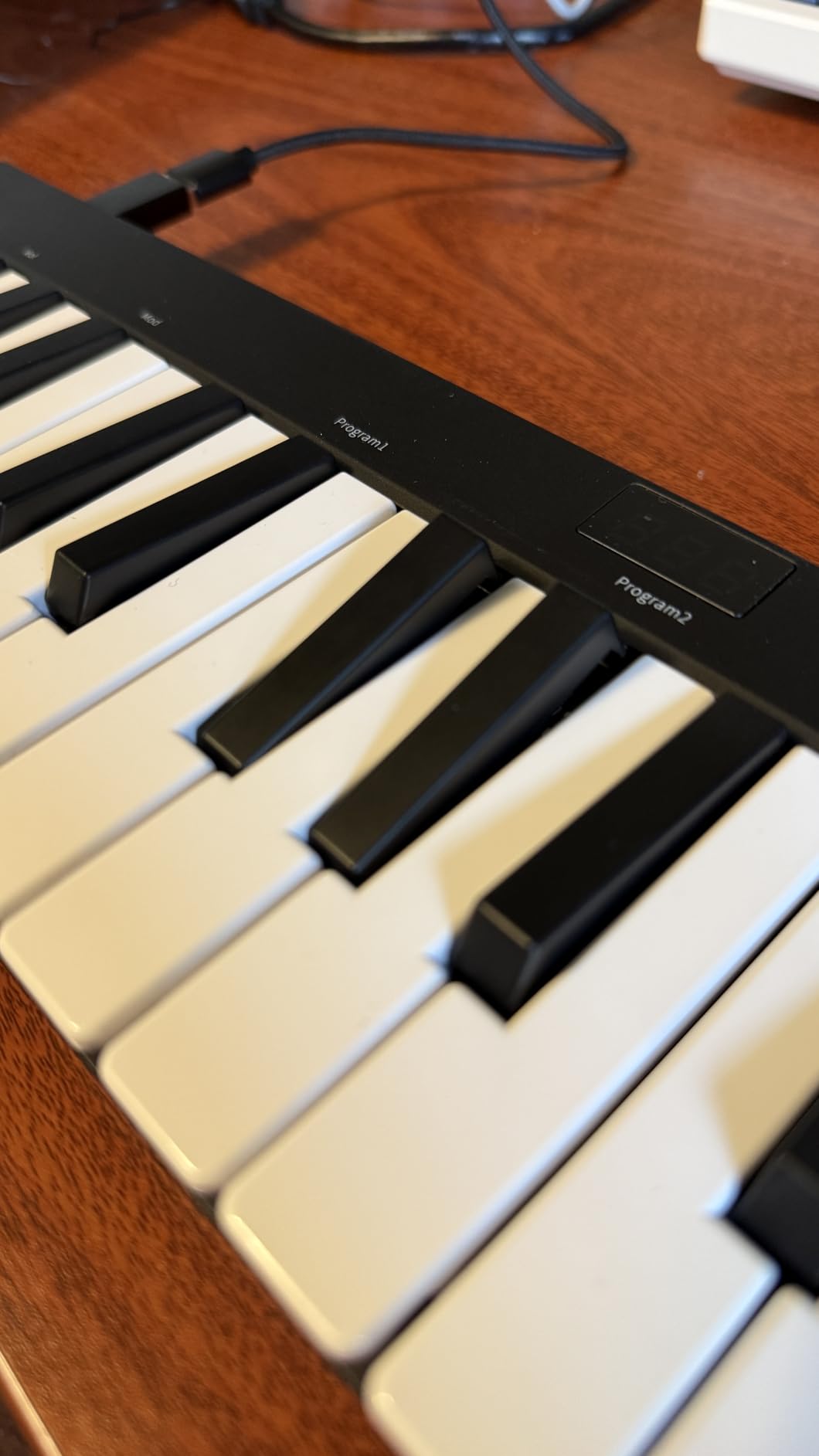
The Donner N-25 is the cheapest credible MIDI keyboard on this list in 2026, and for absolute beginners or kids, it’s a surprisingly capable starting point. I tested it for a month as a travel board and was impressed by how many features Donner packed in at the price: built-in arpeggiator with tap tempo, sustain button, octave transpose, 4 user-programmable banks, and light-up rocker buttons that provide visual feedback during play.
Cross-platform plug-and-play is genuinely useful. It works on Mac, PC, Linux, Android, and iOS, and the included OTG adapter lets you plug it directly into a smartphone or tablet. The bundled 40 teaching courses are a real bonus if you’re just starting and want guided lessons.
The compromises match the price. The pitch-bend joystick is less precise than a wheel, and you cannot change the MIDI channel (it’s fixed to channel 1). Velocity sensitivity is binary – you mostly get loud or silent notes. The plastic keys feel springy, and the black keys can snap off under heavy impacts.
Who should buy the Donner N-25
Absolute beginners, kids, casual hobbyists, and anyone who wants a tiny board to plug into a phone or tablet. It’s also a sensible gift pick for someone curious about music production.
Who should skip the Donner N-25
If you plan to grow quickly into a serious producer, spend a bit more on the midiplus AKM320 or Akai LPK25 MK2. Anyone who wants nuanced expressive playing should look at a controller with proper velocity curves.
How to Choose the Best MIDI Keyboard for Your Needs
The best MIDI keyboards for the money depend on three things: how many keys you need, what action you prefer, and which DAW or ecosystem you live in. Here’s the framework our team uses when recommending picks to readers.
How many keys do you actually need
25 keys cover two octaves, which is enough for beats, basslines, leads, and most pop chord progressions. 32 keys add headroom for two-handed parts and simple piano arrangements. 49 keys cover about three and a half octaves and are the most popular choice for serious producers and home studios. 61 keys give you nearly five octaves for full piano repertoire and stage performance. 88 keys are only necessary for classical pianists or players who genuinely want full piano range on a controller.
Reddit threads on r/musicproduction consistently recommend starting with 25 or 49 keys. A common beginner mistake is buying an 88-key weighted controller and discovering it dominates your desk without improving your actual output.
Synth action, semi-weighted, or fully weighted
Synth-action keys are light and fast, ideal for synth leads, drum programming, and electronic music. Semi-weighted keys offer a middle ground with some resistance and a return spring, suitable for most studio work. Fully weighted keys mimic an acoustic piano and are best for classical and jazz pianists. For most producers reading this guide, synth-action or semi-weighted is the right call.
Do you really need drum pads
Pads are essential if you program beats, finger-drum, or use a clip launcher in Ableton Live. They’re less useful if you only play piano-style parts or use the controller primarily to trigger soft synths. Pads add cost and complexity, so skip them if you won’t use them.
DAW integration and bundled software
Most controllers today include pre-mapped integration for at least one major DAW. Ableton Live integration is the deepest (especially on Novation and Akai), Logic Pro support is universal via Core MIDI, and FL Studio works with virtually any class-compliant controller. Bundled software can replace a paid DAW if you pick carefully – the Arturia MiniLab 3 and Akai MPK Mini IV bundles are the strongest in this roundup.
Connectivity: USB, MIDI Out, CV/Gate, and iOS
USB-C is now standard and is worth preferring over older mini-USB. Real 5-pin MIDI Out lets you control hardware synths without an adapter – the Arturia MiniLab 3 and Akai MPK Mini IV both include it at the budget tier. CV/Gate is essential only if you have modular or vintage analog gear. iOS compatibility matters if you want to work in GarageBand for iPad on the road.
Total cost of ownership
The sticker price is rarely the real cost. A sustain pedal adds to your setup if you want piano-style playing. A USB cable may not be included, and a basic stand or desk mount improves ergonomics. Budget a little extra for these accessories so you don’t get surprised after purchase.
Frequently Asked Questions
What is the best MIDI keyboard for the money in 2026?
The Arturia MiniLab 3 is the best MIDI keyboard for the money in 2026. It combines 25 velocity-sensitive keys, 8 rotary encoders, 4 faders, real 5-pin MIDI Out, a 5-year warranty, and a generous software bundle at a price that undercuts most competitors. The Akai MPK Mini IV is the best beginner pick, and the midiplus AKM320 is the best ultra-budget pick.
What is the best budget MIDI keyboard?
The Akai MPK Mini IV is the best budget MIDI keyboard for most beginners, with real pitch and mod wheels, 8 RGB MPC pads, USB-C, and a complete software bundle. If your budget is even tighter, the midiplus AKM320 delivers 32 keys plus real pitch and mod wheels and remains one of the most owner-tested cheap controllers on the market.
Should I get a 25 or 49 key MIDI keyboard?
Choose 25 keys if you mainly program beats, basslines, leads, and chord stabs, and value portability above all. Choose 49 keys if you play two-handed parts, want to learn piano repertoire, or need more headroom for melodic arrangements. Most home producers land on 49 keys as the sweet spot, while traveling and beat-making producers prefer 25.
Which brand is best for MIDI keyboards?
Arturia, Akai, Native Instruments, Novation, M-Audio, and Nektar consistently rank at the top of owner-review data. Arturia wins on key feel and software bundle, Akai wins on pads and beat-making, Native Instruments wins on Komplete integration, Novation wins on Ableton integration, M-Audio wins on simple reliability, and Nektar wins on DAW integration value. There is no single best brand – the right pick depends on your DAW, ecosystem, and playing style.
Are MIDI keyboards worth it for beginners?
Yes. A MIDI keyboard dramatically speeds up music production by letting you play melodies, chords, and drums in real time instead of drawing them with a mouse. Even an inexpensive controller like the Donner N-25 or midiplus AKM320 will transform your workflow compared to click-in note entry. The improvement in speed and creativity is immediate.
What MIDI keyboard do professional producers use?
Professional producers use a wide range of controllers depending on their workflow. Many use 49- or 61-key semi-weighted boards like the M-Audio Oxygen 49 MKV, Novation Launchkey 61 MK4, or Arturia KeyLab series for studio work, and 25- or 32-key portable boards like the Akai MPK Mini IV or Komplete Kontrol M32 for travel and live performance. The common thread is choosing a controller that integrates deeply with their primary DAW and plugin ecosystem.
Final Verdict: Which MIDI Keyboard Should You Buy?
The best MIDI keyboards for the money in 2026 come down to matching your workflow and budget. After testing all ten controllers in this guide across Ableton Live, Logic Pro, FL Studio, and several hardware setups, our top recommendation remains the Arturia MiniLab 3. It is the rare controller that nails key feel, control layout, software bundle, and warranty in a single package, and it works for beginners and experienced producers alike.
Beginners who want pads and modern USB-C should grab the Akai MPK Mini IV. Komplete users should pick the Native Instruments Komplete Kontrol M32 for NKS auto-mapping. Ableton Live users will love the Akai APC Key 25 MK2 for clip launching. Producers who want maximum control in a 49-key should look at the M-Audio Oxygen 49 MKV. And if your budget is the primary constraint, the midiplus AKM320 delivers more value per dollar than anything else on this list.
Whichever controller you pick, remember that the best MIDI keyboard is the one that fits your desk, your DAW, and your playing style. Start with your must-haves (key count, pads, ecosystem), then choose the model that nails the most of them within your budget. You’ll be making music faster than you think.