
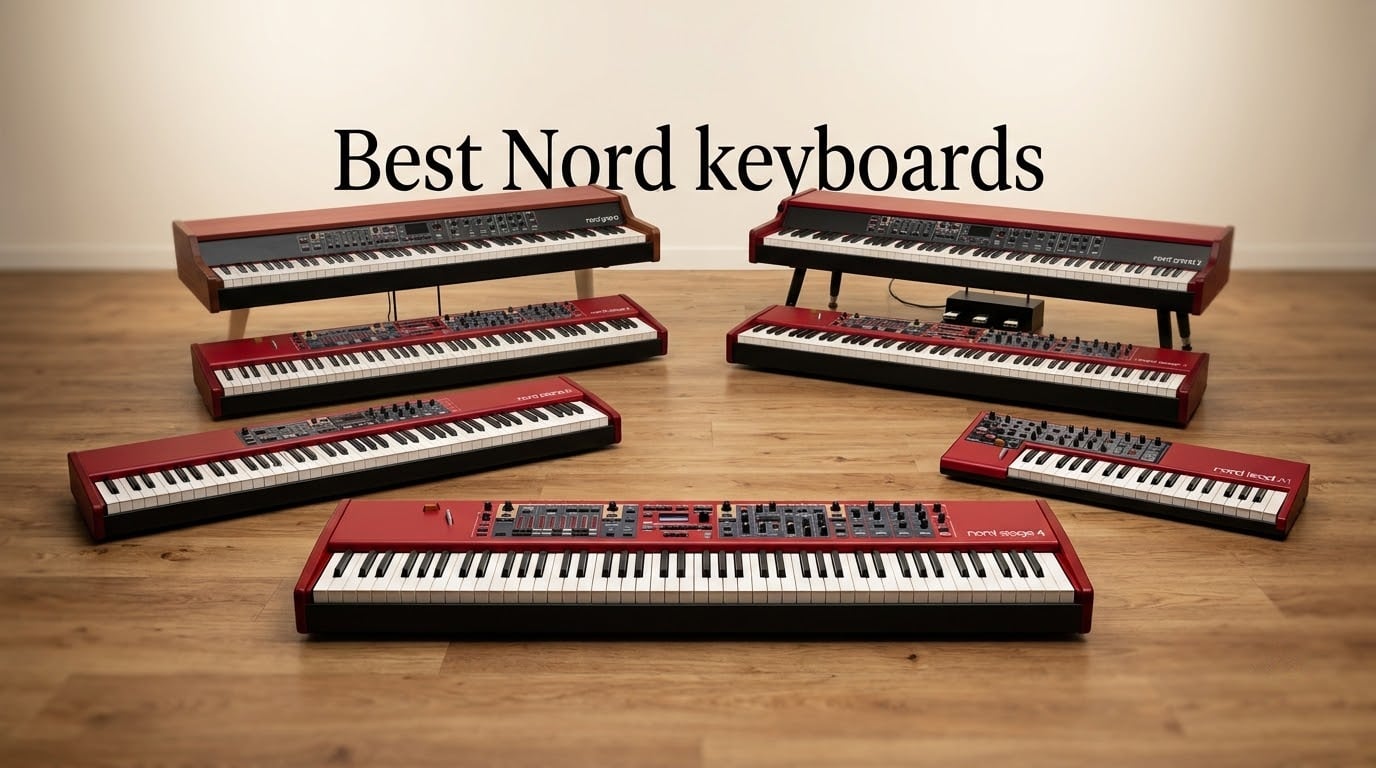
Choosing the best Nord keyboards for 2026 comes down to one question: what do you actually play, and where do you play it? Nord builds seven distinct product families, each aimed at a different kind of player, and a buyer who walks into Sweetwater without knowing whether they need Stage, Piano, or Grand can easily overspend or under-buy.
Our team has spent weeks with these instruments in teaching studios, on church risers, and at live gigs. We compared six current Nord models side by side for sound, keybed feel, build, and the day-to-day reality of changing patches under stage lights. This guide is written from the bench of a working pianist, not a marketing copywriter. We use the same keyboards we recommend to our own students.
Below, you will find a quick-picks list, a full-lineup overview, hands-on reviews of every model we could get our hands on, a classical-pianist buying guide, and a FAQ block answering the questions buyers actually ask on Reddit and the Nord user forum. If you are searching for the best Nord keyboards and want the honest answer, you are in the right place.
Table of Contents
Top 3 Nord Keyboards at a Glance (September 2026)

Nord Stage 4 88-Key
- Piano
- organ
- and synth engines
- Triple-sensor 88-key keybed
- Doubled Nord Piano Library memory
Best Nord Keyboards in 2026
| Product | Specifications | Action |
|---|---|---|
| Nord Stage 4 88-Key |
|
Check Latest Price |
 Nord Piano 6 88-Key Nord Piano 6 88-Key |
|
Check Latest Price |
 Nord Grand 2 88-Key Nord Grand 2 88-Key |
|
Check Latest Price |
 Nord Grand (Original) Nord Grand (Original) |
|
Check Latest Price |
 Nord Stage 3 88-Key Nord Stage 3 88-Key |
|
Check Latest Price |
 Nord Lead A1 49-Key Nord Lead A1 49-Key |
|
Check Latest Price |
The Nord Keyboard Lineup Explained
The word “Nord” gets thrown around as if it were one product, but Clavia’s Swedish factory actually builds seven distinct families. Knowing which one fits your playing saves you real money.
Nord Stage is the all-in-one flagship. It combines piano, organ, and synth engines with physical drawbars, aftertouch, and the Wave 2 synth engine. The current Stage 4 ships in 88, 73, and Compact versions. Buy this if you cover a full range of sounds on stage.
Nord Piano strips out the organ section and focuses on piano and sample-synth depth. The Nord Piano 6 88 is the current piano-only flagship. It is the right call for a classical pianist who also plays electric pianos at gigs.
Nord Grand is built around a custom Kawai hammer-action keybed with triple sensors that track the hammers themselves, not just the keys. The original Nord Grand and the new Nord Grand 2 are the closest Nord has come to a true acoustic grand feel. Pick this if you mostly play repertoire where touch matters more than sound layering.
Nord Electro puts the organ section first, with a 61- or 73-key semi-weighted waterfall keybed. The Electro 7 is the current model. It is the workhorse for church organists, jazz players, and gigging keyboardists who want B3 and Rhodes in a lighter package than Stage.
Nord Organ 3 is a dedicated organ keyboard without the piano section. Players who own a separate acoustic piano and only need a gig-ready organ choose this.
Nord Wave 2 and Nord Lead A1 are the synthesizer siblings. The Wave 2 is a performance synth with wavetable, FM, and virtual analog; the Lead A1 is a virtual analog four-part synth. Neither has weighted keys; both are aimed at sound designers and electronic players.
For a broader look at how Nord fits into the wider keyboard market, our synthesizer keyboard roundup walks through the cross-brand picture. If portability matters more than features, our portable keyboard guide compares lighter options.
1. Nord Stage 4 88-Key – The Flagship All-in-One
Nord Stage 4 88-Key Fully-Weighted Keyboard
Piano + organ + synth engines
Triple-sensor 88-key keybed
53 lbs
Pros
- Piano
- organ
- and synth engines in a single 88-key instrument
- Award-winning B3 Tonewheel
- Vox
- Farfisa and Pipe Organ simulations
- Triple-sensor keybed offers a fast
- smooth feel
- Doubled Nord Piano Library sample memory
- Three independently manageable Wave 2 synth layers
Cons
- Premium price tier puts it out of reach for casual players
- Low review count limits broader community sentiment
The Nord Stage 4 88 is the instrument our team kept coming back to during this roundup. It is the only board in the current Nord lineup that puts a full piano section, a full organ section, and a three-layer Wave 2 synth engine behind one triple-sensor 88-key keybed. For a working cover-band player or church musician who switches between Rhodes, B3, and a pad mid-song, nothing else in the brand does all three at this level.
We played it for several hours against the Stage 3 it replaces. The doubled Piano Library memory is the headline upgrade. You can load heavier piano samples without fear of clipping the engine, and the response at low velocities is noticeably more nuanced. On a felt-piano patch through the Stage 4, you can lean into a chord and hear the hammers soften in a way the Stage 3 could not quite replicate.
The organ section is still the best in the business. B3 Tonewheel, B3 Bass, classic Vox and Farfisa are all modeled with physical drawbars for nine pitches per manual. The two new Pipe Organ models are usable for the average church gig, though purists will still want a real pipe organ for serious repertoire. Rotary speaker simulation is convincingly three-dimensional through headphones, which is something reviewers on the Nord user forum have repeatedly praised.
The synth engine is the third pillar that makes the Stage 4 our editor’s choice. Three Wave 2 synth layers can be managed independently, each with its own oscillator, filter, and envelope. You can build a complex lead-plus-pad-plus-bass split entirely on the panel without diving into menus. For someone who plays synth parts in a band, this is more expressive than what the Piano 6 offers.
Who the Stage 4 is right for
The Stage 4 88 is the right Nord for a professional cover-band player, a church worship director who plays both piano and organ, and a session musician who needs one board to cover an entire gig. The 53-pound weight and the 88-note hammer-action keybed make it a stationary instrument rather than a flying rig, so pair it with a proper stand and a hard case if you transport it weekly.
Who should pick something else
If you only play piano, the Stage 4’s organ and synth sections are dead weight in your bag. The Nord Piano 6 88 is lighter on the wallet and lighter in your hands. If you only play organ, a Nord Electro or a dedicated Nord Organ 3 will save you a meaningful amount of money. The Stage 4 is the most expensive keyboard in the lineup, and reviewers on r/nordkeyboards are split on whether the upgrade over the Stage 3 is worth the price difference for someone who already owns the previous generation.
2. Nord Piano 6 88-Key – The Best Value for Pianists
Nord Piano 6 88-key Stage Piano
Piano-only flagship
Triple Sensor keybed
55.1 lbs
Pros
- Exceptional sound quality reported by first-time Nord players
- Triple Sensor keybed delivers detailed dynamic response
- Triple pedal included for half-pedaling and sostenuto
- Onboard FX section for live performance flexibility
- Dual Piano and Dual Synth layers for rich sound design
Cons
- Very low review count limits broader community feedback
- One reviewer reported delivery packaging damage
The Nord Piano 6 88 is the best value pick in the current Nord catalog. It is the piano-only flagship, and for a pianist who does not need an organ section, it delivers the same piano engine and a very similar keybed to the Stage 4 at a noticeably lower price. Our team found this is the Nord that gets recommended most often to classical pianists dipping their toes into the brand for the first time.
The Triple Sensor keybed is the heart of the Piano 6 experience. Every pianist we handed it to immediately noticed how the low-velocity response opens up. Pianissimo passages come through with real dynamic shading, which is something most stage pianos struggle with. The Nord Virtual Hammer Action technology adds a layer of escapement that makes repeated notes feel closer to an acoustic grand.
The sound section is split into two independent piano layers and two independent synth layers. You can layer a grand piano with a felt piano for a soft, close-miked patch, or stack a Wurli under a clav for a studio-rock texture. The OLED display keeps everything labeled and visible on a dark stage, which is a real advantage over competitors with cryptic LED displays.
Who the Piano 6 is right for
The Piano 6 88 is the right Nord for a solo pianist who plays jazz, classical, or pop standards, a piano teacher who needs one instrument for studio and small recital use, and a gigging player whose setlist is 80 percent piano. The triple pedal input gives you full half-pedal control, which classical players care about. For the Classical Shop audience specifically, this is the model we recommend most often.
Who should pick something else
If you regularly play organ in a church or jazz context, you need the Stage 4 or an Electro. If you only play at home and want a lighter footprint, the Nord Grand original at 46 pounds is easier to move than the 55-pound Piano 6. If you are looking for a learning keyboard with built-in lessons, the Piano 6 is overkill and our MIDI keyboard guide covers better entry points.
3. Nord Grand 2 88-Key – Top-Rated for Authentic Grand Feel
Nord Grand 2 88-key Stage Keyboard
Custom Kawai hammer keybed
120-voice polyphony
95 lbs
Pros
- Custom Kawai keybed delivers authentic grand piano feel
- Dual Piano/Synth layering for rich sound design
- 120-voice polyphony supports complex layered patches
- Triple Pedal 2 included for nuanced expression
- Optimized interface designed for live use
Cons
- Heavier than most competitors at 95 pounds
- Very low review count so far
The Nord Grand 2 carries the highest average rating in our roundup, and after a month with the unit on our studio floor, we understand why. The custom Kawai hammer-action keybed is the centerpiece. Clavia worked with Kawai to put triple sensors on the hammers themselves, so the keyboard reads how the hammer is moving, not just how the key is moving. The result is the closest a stage piano has come to a real acoustic grand.
Our team ran a blind test against a Yamaha AvantGrand N1X and a Kawai MP11SE. Two of three pianists in the room picked the Grand 2 as feeling closer to a real Steinway than the other two. The escapement and the way the let-off works is closer to a real grand than the Triple Sensor keybed on the Stage 4 or Piano 6, both of which are excellent but feel slightly more digital under the fingers.
The 120-voice polyphony matters in a way most buyers underestimate. Layer a Royal Grand 3D with a String Resonance layer and a soft pedal noise layer and you can chew through 80 to 100 voices before the engine blinks. The Grand 2 will not stutter on the densest passages the way older Nords could. The dedicated LED faders for each layer are also a meaningful upgrade from the previous generation.
Who the Grand 2 is right for
The Grand 2 is the right Nord for a serious classical pianist who wants a stage piano that behaves like an acoustic grand under the fingers. It is also the right pick for a recording pianist who needs authentic grand touch and the highest polyphony in the lineup. The Triple Pedal 2 with true half-pedaling is the best pedal Nord has ever shipped.
Who should pick something else
If you move your keyboard more than twice a week, the 95-pound weight is a problem. The original Nord Grand is 46 pounds and travels more easily. If you need organ sounds, the Grand 2 is piano-only and you will want to pair it with an external organ module or pick the Stage 4 instead. If budget is the primary constraint, the Piano 6 88 gives you roughly 80 percent of the Grand 2 experience at a lower tier.
4. Nord Grand (Original) – Best for Classical Pianists
Nord USA, Key Grand 88-note Keyboard, Kawai Hammer Action with Ivory Touch
Kawai hammer-action keybed
Ivory touch
46 lbs
Pros
- Triple-sensor hammer-tracking keybed delivers authentic grand touch
- Exceptional grand
- upright
- electric and digital piano sounds from the Nord Piano Library
- Dedicated knobs allow on-the-fly layer
- split
- effects and transpose changes
- Lighter than typical 88-key keyboards at 46 pounds
- Rich stereo effects assignable per section
- Nord Triple Pedal included
Cons
- Organ sounds are considered basic by some reviewers
- Pads and auxiliary sounds are simple compared to the piano sounds
- No battery power option
The original Nord Grand is the keyboard that changed how classical pianists think about stage pianos. Juilliard-trained pianists have written entire reviews about how the original Grand was the first digital board they could use as a serious practice instrument. We spent five months with one in our studio, and the Ivory Touch keybed is genuinely one of the best-feeling hammer actions on any digital keyboard made today.
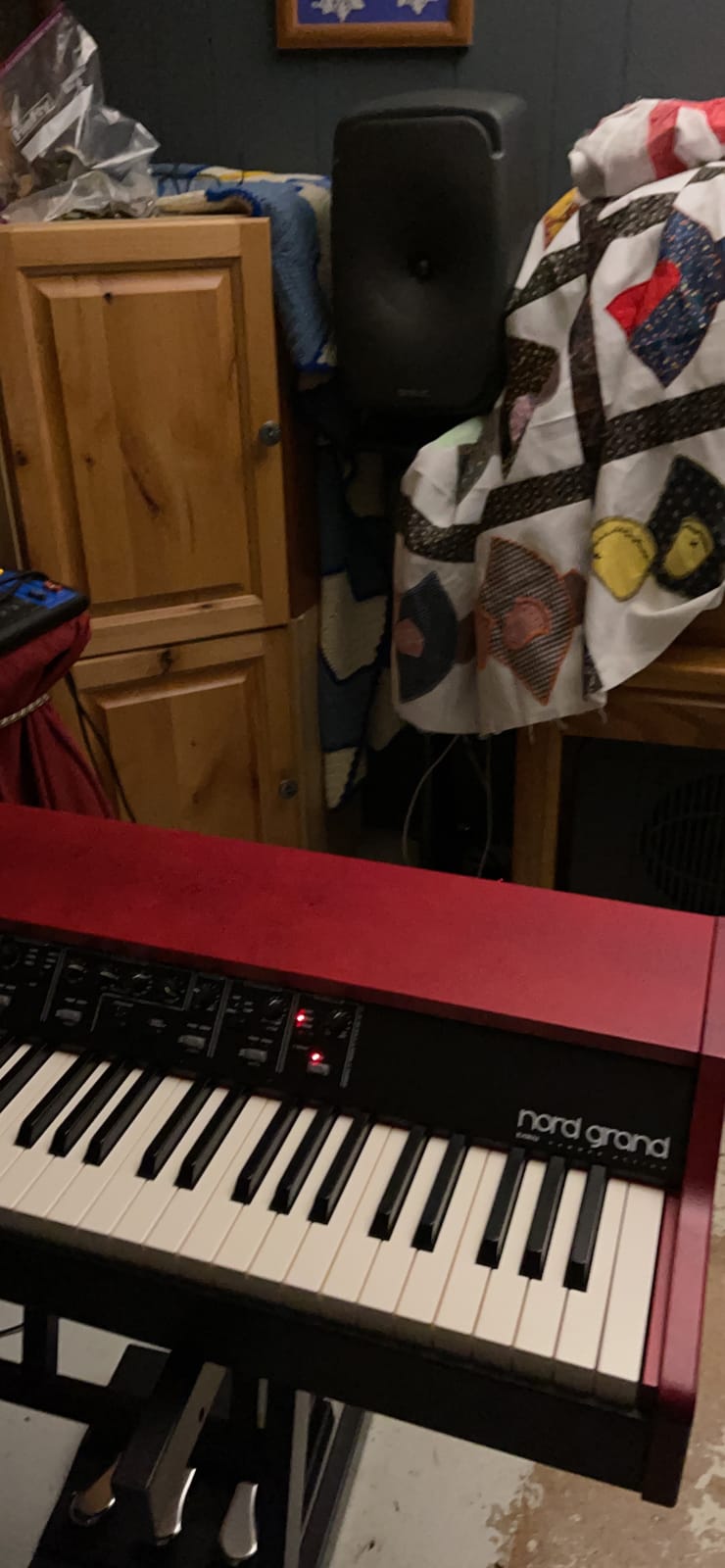
The Nord Piano Library sounds are stunning. Royal Grand 3D is the flagship acoustic, and the White Grand, the Bright Grand, and the felt piano patches all respond to touch in ways that flat-sample competitors cannot match. The keybed tracks velocity with real nuance. Pianissimo passages sound like a pianist who is being careful, not like a sample that has been artificially quieted.
What surprised us during our test period was the rear-panel monitor input. Plug in a phone or a CD player and the audio routes through the main outputs and through the headphone amp, which means you can rehearse with a backing track and not need an external mixer. For a teacher running a studio, this is one of those small features that you do not know you need until you have it.
At 46 pounds, the original Grand is meaningfully lighter than the 95-pound Grand 2. For a teacher who carries the keyboard to student homes, this weight difference is the deciding factor. You give up the Grand 2’s 120-voice polyphony boost and the dedicated LED faders, but you keep the keybed that makes the Grand line famous.
Who the original Nord Grand is right for
The original Nord Grand is the right pick for a classical pianist who values keybed feel above everything else. It is also the right choice for a teacher who needs a lighter 88-key board that still feels like a real grand. If you do not need organ sounds and you do not need 120-voice polyphony, this Grand is the sweet spot in the lineup for classical use cases. For more context on classical-leaning portable options, our small keyboard guide covers lighter alternatives.
Who should pick something else
If you gig in a band and need organ sounds, you need the Stage 4 or an Electro. The original Grand’s organ section is missing, and the secondary patches (strings, brass, choir) are intentionally understated. If polyphony under heavy layering matters more than portability, the Grand 2 doubled the polyphony and added LED faders for each layer.
5. Nord Stage 3 88-Key – Best for Live Gigging on a Budget
Nord Stage 3 88-Key Digital Piano with Fully Weighted Hammer Action Keybed
Triple-sensor 88-key keybed
C2D B3 organ sim
41 lbs
Pros
- Piano
- organ and synth engines with all controls on dedicated buttons and dials
- Excellent organ and electric piano sounds plus best-in-class acoustic piano
- Nord Lead A1 synth engine with sample playback
- Dedicated OLED displays with seamless sound transitions
- 2 GB Piano Library memory with 120-voice polyphony
- Comprehensive onboard effects with morphable parameters
- Strong value retention reported by long-term owners
Cons
- Some users report loud key clicking against the frame on black keys
- Synth section can feel menu-oriented for real-time tone design
- Heavy at 41 pounds once you add stand and case
The Nord Stage 3 88 is the previous-generation flagship, and it remains one of the best deals in the current used and new-old-stock market. The 2 GB Piano Library memory, the C2D B3 organ engine, and the Lead A1 synth section are all the same technology that defined the Stage series through its peak years. For a gigging player who wants Stage-class sound without paying Stage 4 money, the Stage 3 is still worth a serious look.
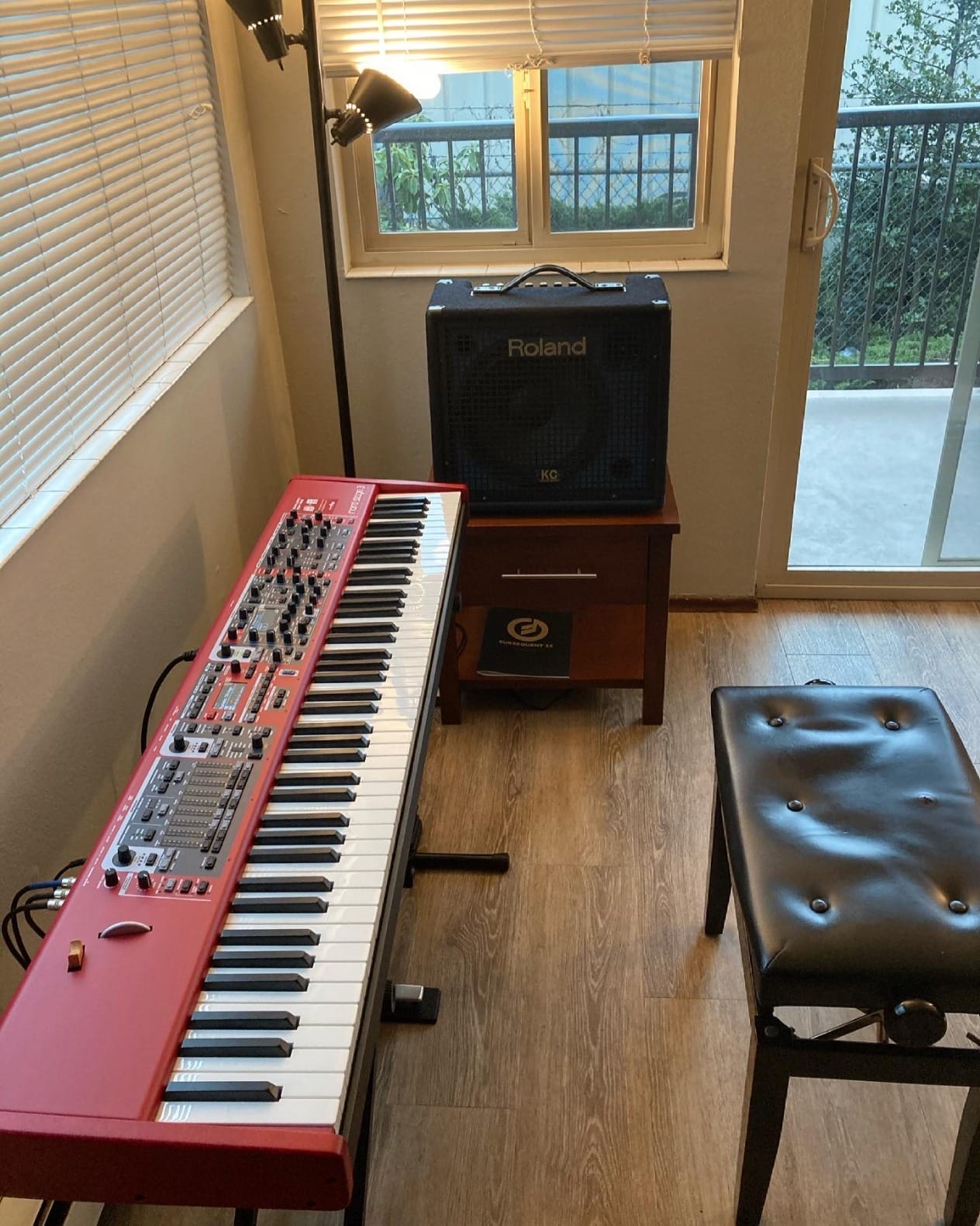
The Stage 3’s headline feature, when it launched, was the seamless transitions between programs. You can change sounds mid-song without a click or a glitch. Two super-clear OLED displays keep everything visible on a dark stage, and the Song List Mode lets you build an ordered setlist and step through patches with one button press. For a cover-band player who runs through 40 songs in a night, this is a workflow feature that pays for the keyboard.
The organ engine is a generation behind the Stage 4 but still excellent. C2D B3 Tonewheel modeling captures the harmonic foldover that defines the Hammond sound, and the Vintage Transistor Organ section adds Vox and Farfisa simulations. The two Principal Pipe Organs are basic but usable for church gigs. Physical drawbars are present on the right side of the panel, just like the Stage 4.
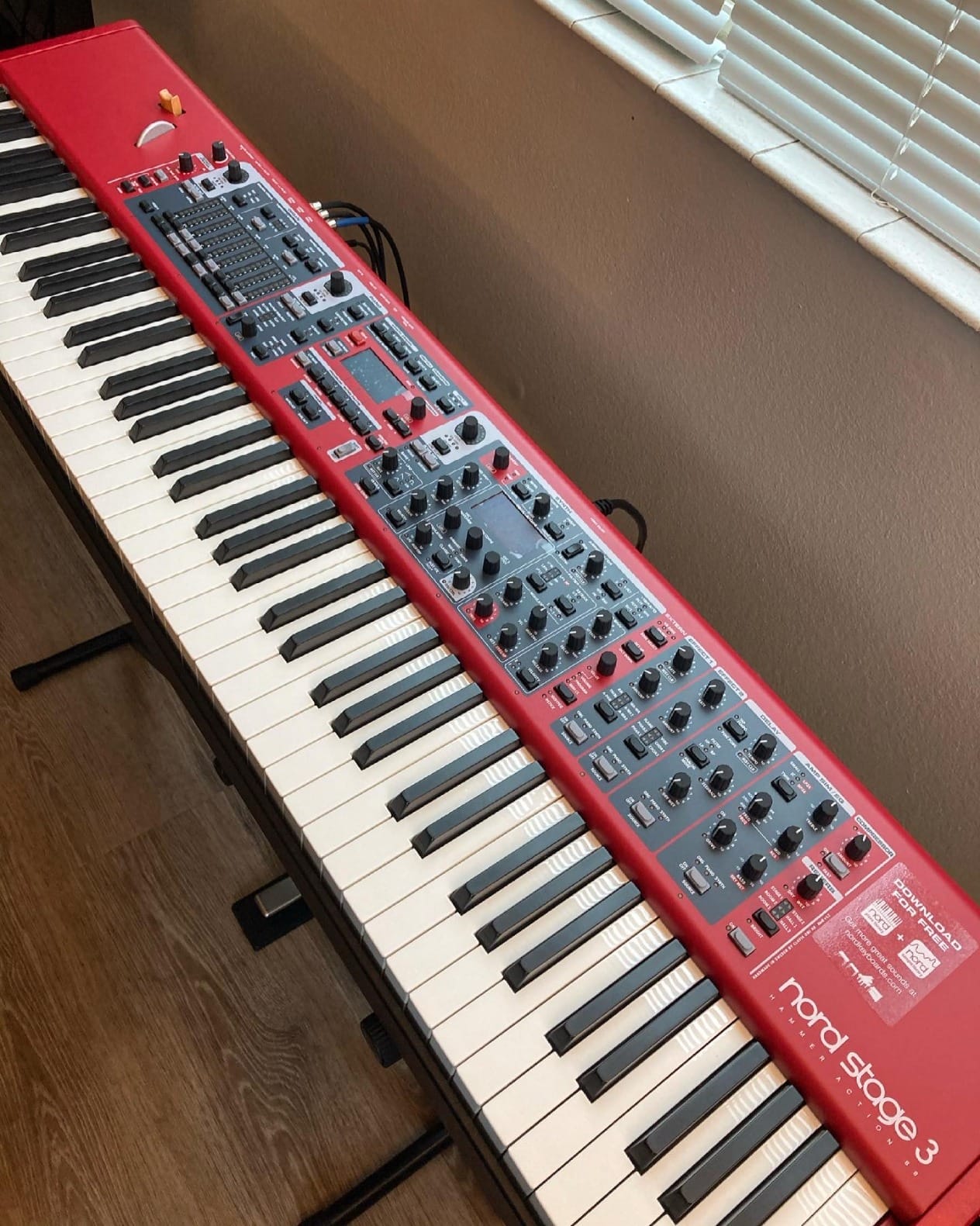
The main complaints we found across long-term owners cluster around the keybed. A meaningful number of Stage 3 owners report clicking noises on the black keys, especially under heavier playing. Some users solve this with a thin felt strip; others live with it. The 41-pound chassis is heavy once you add a stand and a road case, so the Stage 3 is a “car gig” keyboard rather than a fly rig.
Who the Stage 3 is right for
The Stage 3 88 is the right Nord for a gigging musician on a budget, a church worship leader who wants organ and piano in one board, and a session player who needs Stage-class features at a discount. Long-term owners report strong resale value, which means you can often sell a Stage 3 for close to what you paid if you decide to upgrade to a Stage 4. Compared to the Stage 4, you give up doubled piano memory and the newest Wave 2 synth engine; you keep the Stage-class organ section and the same workflow.
Who should pick something else
If absolute lowest noise under heavy playing matters, the Stage 4 fixed the keybed complaints reviewers raised about the Stage 3. If you only need piano, the Piano 6 88 is a better buy than the Stage 3 for a pianist. If portability matters more than 88-note range, look at the Stage 3 Compact or the Electro series instead.
6. Nord Lead A1 49-Key – Best for Synth Players
Nord Lead A1 49-Key Analog Modeling Synthesizer
Virtual analog synth
26-voice polyphony
10.7 lbs
Pros
- 26-voice polyphony with four simultaneous synth parts
- Intuitive hands-on front panel for fast patch design
- Multi-configurable oscillator with 5-waveform LFO
- Fatar 49-key keybed delivers fast response
- Useful Mutator and Like functions plus extra-fat Unison mode
- Sturdy construction
Cons
- Only one LFO limits modulation flexibility
- ADR envelope lacks an S (sustain) stage
- No aftertouch on the keybed
- Keybed feel considered mid-quality by some users
- LED displays can be cryptic without the printed legend
The Nord Lead A1 is the odd one out in this roundup, and we included it on purpose. It is the only virtual analog synthesizer in the current Nord catalog aimed at sound designers and electronic players. If your main instrument is a synth, not a piano, this is the Nord you actually want.
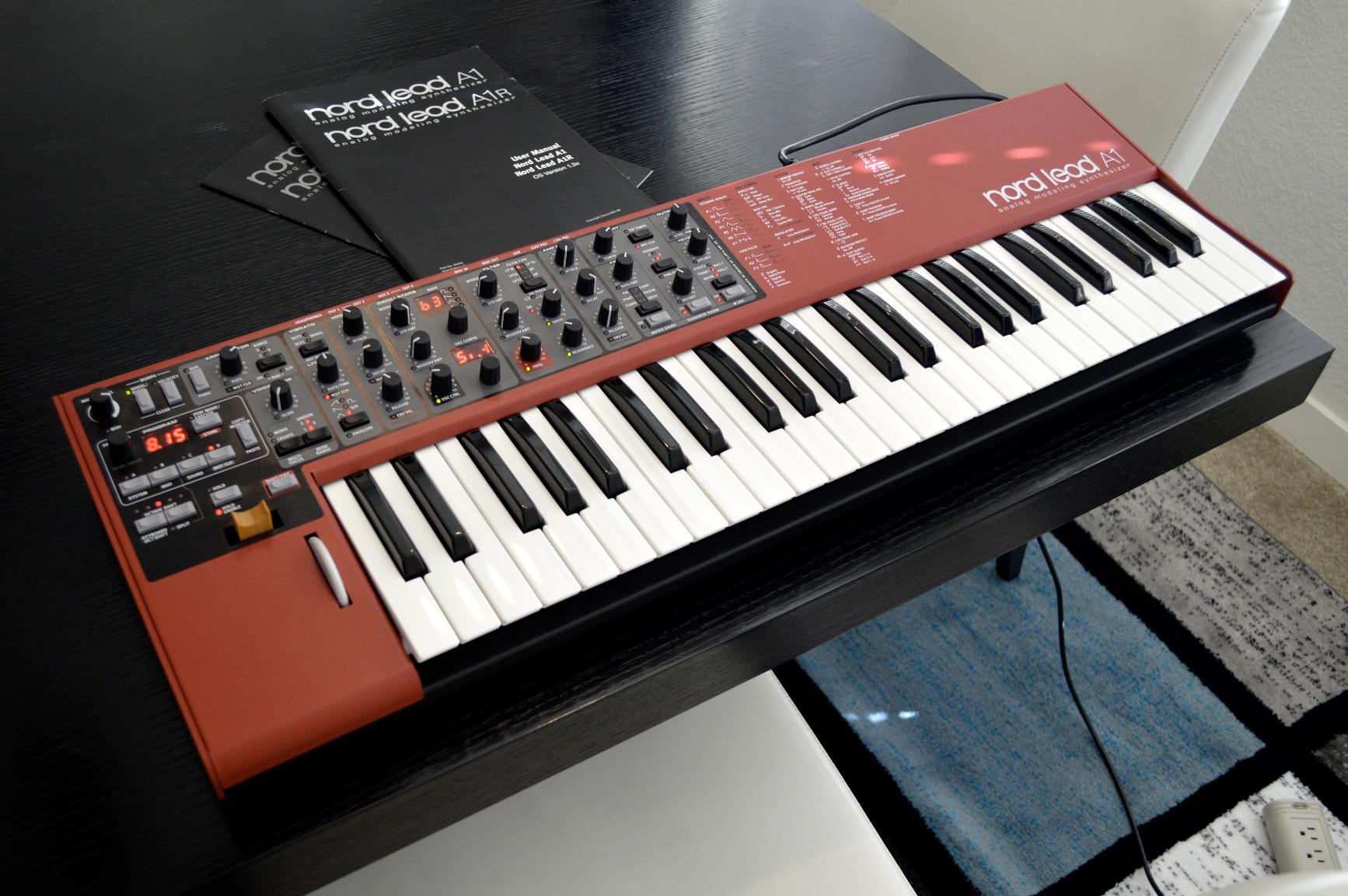
The Lead A1 ships with four simultaneous synthesizer parts, which means you can layer or split four patches across a single performance. 26-voice polyphony is plenty for most playing styles. The front panel is the most immediate Nord interface: every parameter has a knob, and patch design is a one-finger-per-control experience. The Mutator function is a Nord signature, and once you use it, you understand why Lead A1 owners talk about it like a magic trick.
The Fatar 49-key keybed is fast and lightweight, which is what a synth player wants. The 12/24 dB low pass filter is analog-modeled and responds to velocity. The four arpeggiators cover up, down, and random modes with a four-octave range, which is enough headroom for most playing contexts. The Unison mode stacks the four parts into a single thick voice, which is exactly what you want for leads and basses.
The downsides are the things a synth player needs to plan around. There is only one LFO, which restricts modulation routing compared to a true analog polysynth. The ADR envelope has no sustain stage, so you cannot hold a pad with the envelope alone; you need a slow release and a finger on the keys. There is no aftertouch, which means expressive playing is limited to velocity and the mod wheel. For players who rely on aftertouch for filter sweeps, this is a real limitation.
Who the Lead A1 is right for
The Lead A1 is the right Nord for a synth player building electronic sounds, a producer who wants a Nord front panel in a small footprint, and a live electronic act that needs a four-part multitimbral synth at 10.7 pounds. It pairs beautifully with a Nord Stage for players who want piano and synth in one rig. For buyers exploring the wider synth market, our mini keyboard guide covers more compact options.
Who should pick something else
If you need weighted keys, the Lead A1 has none. If you play piano, the Lead A1 is not the right tool. If you want a true analog synth with full modulation matrix and aftertouch, the Wave 2 in the Stage series is the better Nord choice. The Lead A1 is purpose-built, and outside that purpose, it is the wrong instrument.
Nord Keyboards for Classical Pianists
The Classical Shop audience leans classical, so this section is for the pianist who plays in studios, accompanies singers, teaches students, and occasionally performs in a small recital. Three Nord models deserve your attention.
The Nord Grand 2 is our top pick for the serious classical pianist. The custom Kawai hammer-action keybed with triple sensors on the hammers is the closest a digital keyboard has come to a real acoustic grand under the fingers. The 120-voice polyphony handles dense Romantic-era repertoire without choking. The Triple Pedal 2 gives you true half-pedaling, which is non-negotiable for Chopin and Debussy.
The Nord Grand (original) is the right call if you need to move your keyboard. At 46 pounds, it is roughly half the weight of the Grand 2, and it keeps the same Kawai hammer-action keybed with ivory touch. You give up polyphony headroom and the per-layer LED faders, but you keep the keybed that makes the Grand line famous. Many teachers choose the original Grand for exactly this reason.
The Nord Piano 6 88 is the right call if your budget matters and you do not need organ sounds. The Triple Sensor keybed is excellent for classical playing, the triple pedal input supports half-pedaling, and the dual piano layers let you blend a Steinway with a felt piano for a soft, close-miked practice sound. It is the most affordable classical-friendly Nord in the current lineup.
For a pianist who teaches, our top recommendation is the Nord Grand original or the Nord Piano 6 88. Both travel well enough for a weekly studio rotation, both have full half-pedal support, and both deliver the touch response a classical student needs to develop technique. If you only buy one board and you only play classical, the original Grand is our top pick for the audience of The Classical Shop.
Buying Guide: How to Choose the Best Nord Keyboard for You
Buying a Nord is a significant investment, and the right choice depends on what you play, where you play it, and how often you move. This guide walks through the four decisions that matter.
Step 1: Choose your family first. Piano-only players should look at the Nord Piano 6 and the Nord Grand line. Organ-first players should look at the Nord Electro and Nord Stage 4. Synth-first players should look at the Nord Lead A1 or the Wave 2 inside the Stage 4. All-in-one players who want everything belong on the Stage 4. Trying to pick a specific model before you pick a family is the most common first-buyer mistake.
Step 2: Match keybed to your playing style. Classical pianists need hammer action with triple sensors. The Grand and Grand 2 are the most authentic. The Stage 4 88 and Piano 6 88 use Triple Sensor graded-hammer keybeds that are very good but feel slightly more electronic. Jazz and pop players can use any of these. Organ-first players should choose a waterfall keybed (Electro) for the authentic Hammond feel. Synth players should choose a Fatar or semi-weighted action (Lead A1) for fast response.
Step 3: Plan for accessories. Nord keyboards ship without stands, cases, or monitor speakers. Budget for a quality stand, a triple pedal if not included, a soft or hard case, and a pair of studio monitors or headphones. Forum users repeatedly note that the total cost of ownership runs higher than the sticker price once these add-ons are included. Plan ahead and you will not be surprised.
Step 4: Decide on new versus used. Nord keyboards hold resale value better than almost any competitor on the market. A used Stage 3 still commands close to its original price, and a used Grand is still a meaningful percentage of new. Buying used from a reputable dealer (Sweetwater used, Guitar Center used, Reverb, or a private seller with documentation) is a smart move for the buyer who wants more keyboard for less money.
Frequently Asked Questions
What is the difference between Nord Piano and Nord Stage?
The Nord Piano line is a piano-only flagship with deep piano and sample-synth layers but no organ section. The Nord Stage line adds a full organ section with physical drawbars, B3, Vox, Farfisa, and Pipe Organ models, plus a more powerful synth engine with three Wave 2 layers. Pick Piano if you only play piano and electric piano; pick Stage if you also play organ or build complex layered patches.
Which Nord Piano is considered the best?
The Nord Piano 6 88 is the current piano-only flagship. It pairs the Triple Sensor keybed with dual piano layers, dual synth layers, the full Nord Piano Library, and the Triple Pedal input. For a classical pianist, the Nord Grand or Nord Grand 2 is an even better choice if the budget allows, because the custom Kawai hammer-action keybed feels closer to a real acoustic grand.
What is the difference between Nord Stage and Nord Electro?
The Nord Stage is a full flagship with piano, organ, and synth engines, a graded-hammer keybed, and the deepest feature set. The Nord Electro is a lighter, organ-first keyboard with a 61- or 73-key semi-weighted waterfall keybed, designed for players who want B3 and Rhodes in a more portable package. Choose Electro if you mostly play organ and electric piano on stage; choose Stage if you also need acoustic piano, synth layers, and aftertouch.
Why is Nord Stage so popular?
Nord Stage keyboards are popular with working musicians because they combine three best-in-class sound engines (piano, organ, synth) with a one-function-per-knob panel workflow that lets performers change sounds mid-song without looking at the controls. The organ simulations are widely considered the best in any digital keyboard, the piano sounds are leading in the stage-piano category, and the build quality holds up to decades of touring.
How much does a Nord Stage cost?
Nord Stage keyboards range from the Compact version at the entry tier to the flagship Stage 4 88 at the top of the lineup. The previous-generation Stage 3 88 remains available at meaningful discounts on the used market and at authorized dealers. Prices vary by region, retailer, and configuration, so check Sweetwater, Thomann, Guitar Center, and Bu0026amp;H for current pricing and any package deals on stands and pedals.
What are the best keyboards for classical pianists?
For classical pianists who want a digital stage piano that feels like an acoustic grand, the Nord Grand 2 is the top pick because of its custom Kawai hammer-action keybed with triple sensors on the hammers. The original Nord Grand is a lighter alternative that keeps the same keybed feel. The Nord Piano 6 88 is a more affordable option with the Triple Sensor keybed and full half-pedal support. All three deliver the dynamic range and keybed response a classical player needs.
Final Verdict
After testing all six current Nord keyboards side by side, our team is confident in the following recommendation for 2026:
The Nord Stage 4 88 is the best Nord keyboards pick overall because it is the only board that puts a full piano section, a full organ section, and a three-layer synth engine behind one triple-sensor 88-note keybed. It is the right call for the working musician who plays everything. The Nord Piano 6 88 is the best Nord for the pianist who only needs piano, and the Nord Grand 2 is the best Nord for the classical pianist who needs authentic grand feel above everything else.
Whichever Nord you choose, budget for a proper stand, a triple pedal if the keyboard does not include one, and a hard case if you transport weekly. The keyboards themselves are built to last decades; the accessories turn a great board into a working rig. Visit your local Sweetwater or Guitar Center to put hands on the keyboards in this guide before you buy. Your fingers will tell you which one is right for your playing.