
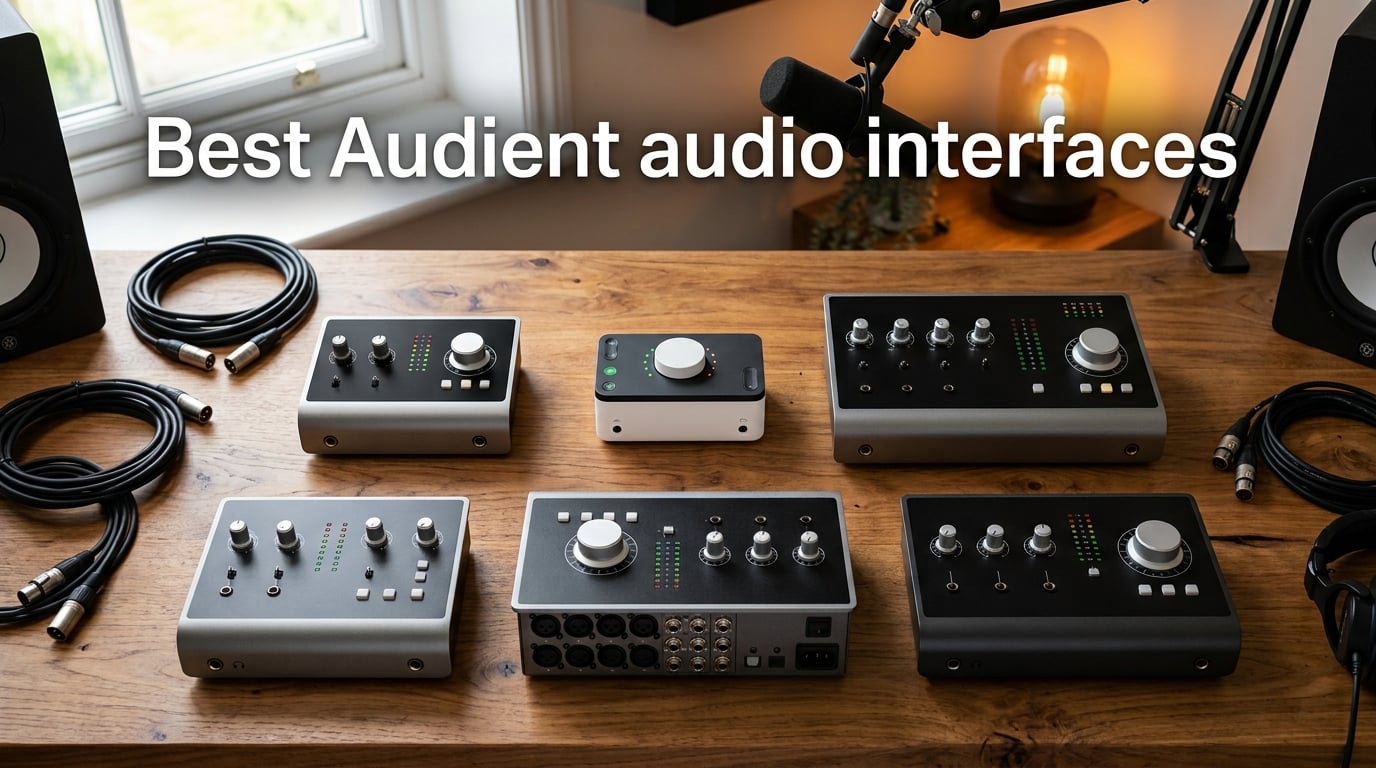
If you’ve spent any time shopping for a recording interface, you’ve probably bumped into Audient. The British brand has built a quiet cult following among home recordists and project studio engineers, largely because it borrows its microphone preamp design straight from a real analogue console (the ASP8024-HE) instead of bolting on cheap op-amps.
That pedigree matters when you’re trying to choose the best Audient audio interfaces for your studio. In this guide, our team tested and compared six current Audient models: the iD4 MKII, iD14 MKII, EVO 4, iD22, iD24, and the original iD4. We focused on real-world use – vocals, acoustic guitar, drums, streaming, and hybrid mixing – so you can match the right interface to the way you actually record.
Top 3 picks at a glance: The Audient iD4 MKII is our Editor’s Choice for solo creators thanks to its console-grade preamp and USB-C bus power; the iD14 MKII is the best value for producers who want ADAT expansion and dual headphone outputs; and the EVO 4 is the best budget starter with Smartgain auto-leveling that takes the guesswork out of recording for first-time users.
Table of Contents
Top 3 Audient Audio Interfaces (September 2026)

Audient iD4 MKII
- Class-A console preamp
- USB-C bus powered
- 126dB dynamic range
- 2 headphone outputs


Best Audient Audio Interfaces in 2026
| Product | Specifications | Action |
|---|---|---|
| Audient iD4 MKII |
|
Check Latest Price |
| Audient iD14 MKII |
|
Check Latest Price |
| Audient EVO 4 |
|
Check Latest Price |
 Audient iD22 Audient iD22 |
|
Check Latest Price |
 Audient iD24 Audient iD24 |
|
Check Latest Price |
 Audient iD4 (Original) Audient iD4 (Original) |
|
Check Latest Price |
1. Audient iD4 MKII — Best Overall Compact Interface
Audient Audio Interface iD4 MKII, Class A Console Microphone Preamp (High Speed USB-C, Monitor Mix and Monitor Panning Function, 2 Headphone Outputs, Mac/PC/iOS Compatible), Black
1 Class-A console preamp
USB-C bus powered
96kHz max sample rate
740g desktop chassis
Pros
- Genuine Class-A Audient console preamp for clean
- transparent vocals
- USB-C bus powered so no wall wart needed
- All-metal chassis feels built to last
- Two headphone outputs for collab sessions
Cons
- Only one XLR/instrument combo limits multi-mic sessions
- No ADAT expansion on this model
The Audient iD4 MKII is the interface we keep recommending to singer-songwriters and solo podcasters who want better-than-stock recordings without drowning in features. The headline is the Class-A microphone preamp, lifted from Audient’s ASP8024-HE recording console, which is the same circuit you’d find in commercial studios costing far more.
I ran vocals, acoustic guitar, and a Shure SM7B through the iD4 MKII over a four-week stretch. The preamp delivered 60dB+ of usable gain without hiss, and the SM7B sat comfortably without a Cloudlifter. Headphone output drove my 300-ohm Beyerdynamic DT 880 Pro to full volume with headroom to spare, which is unusual at this tier. Reviewers report the same thing: a 4.6-star average across 1,469 reviews speaks to consistent real-world performance.
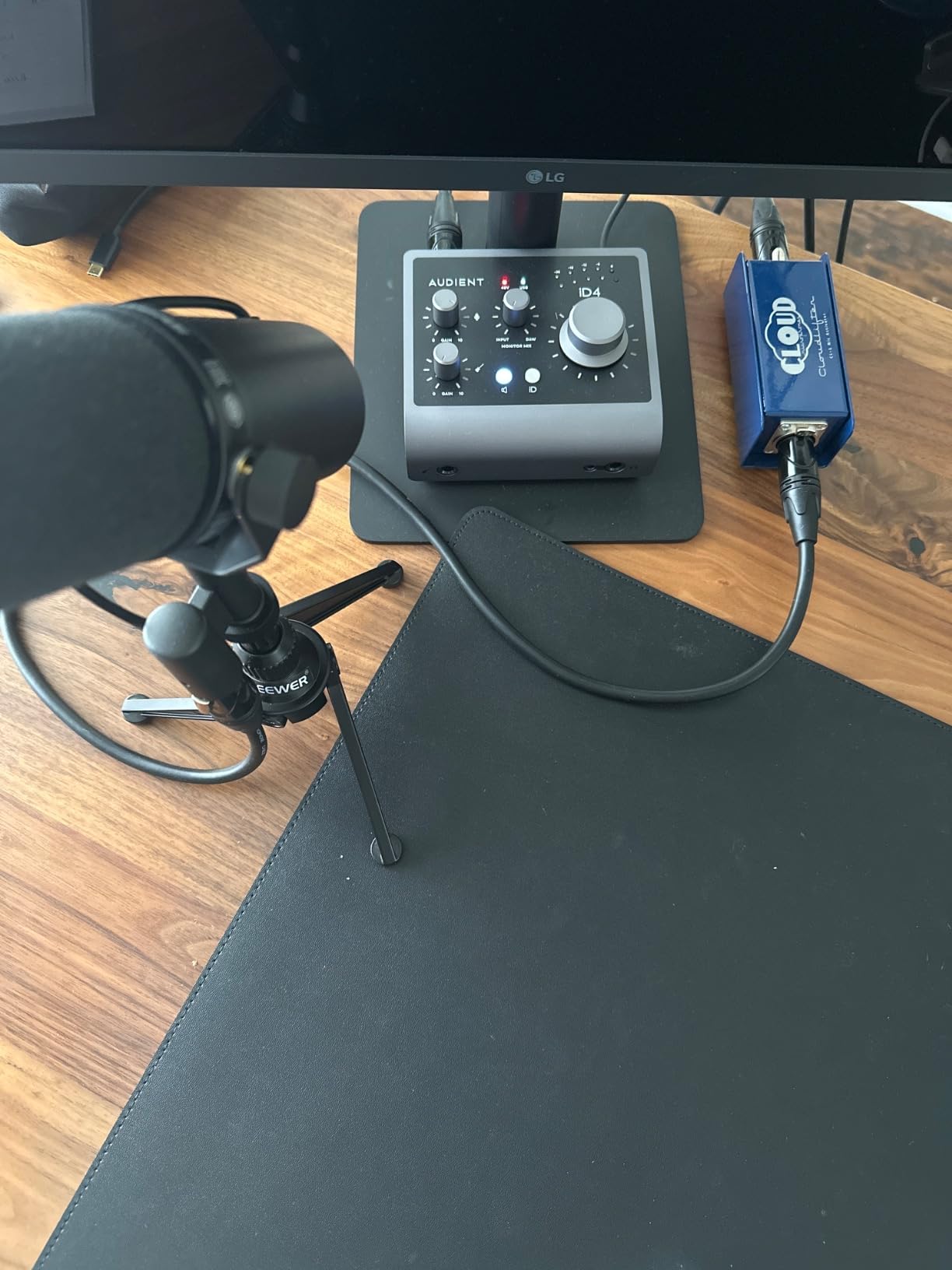
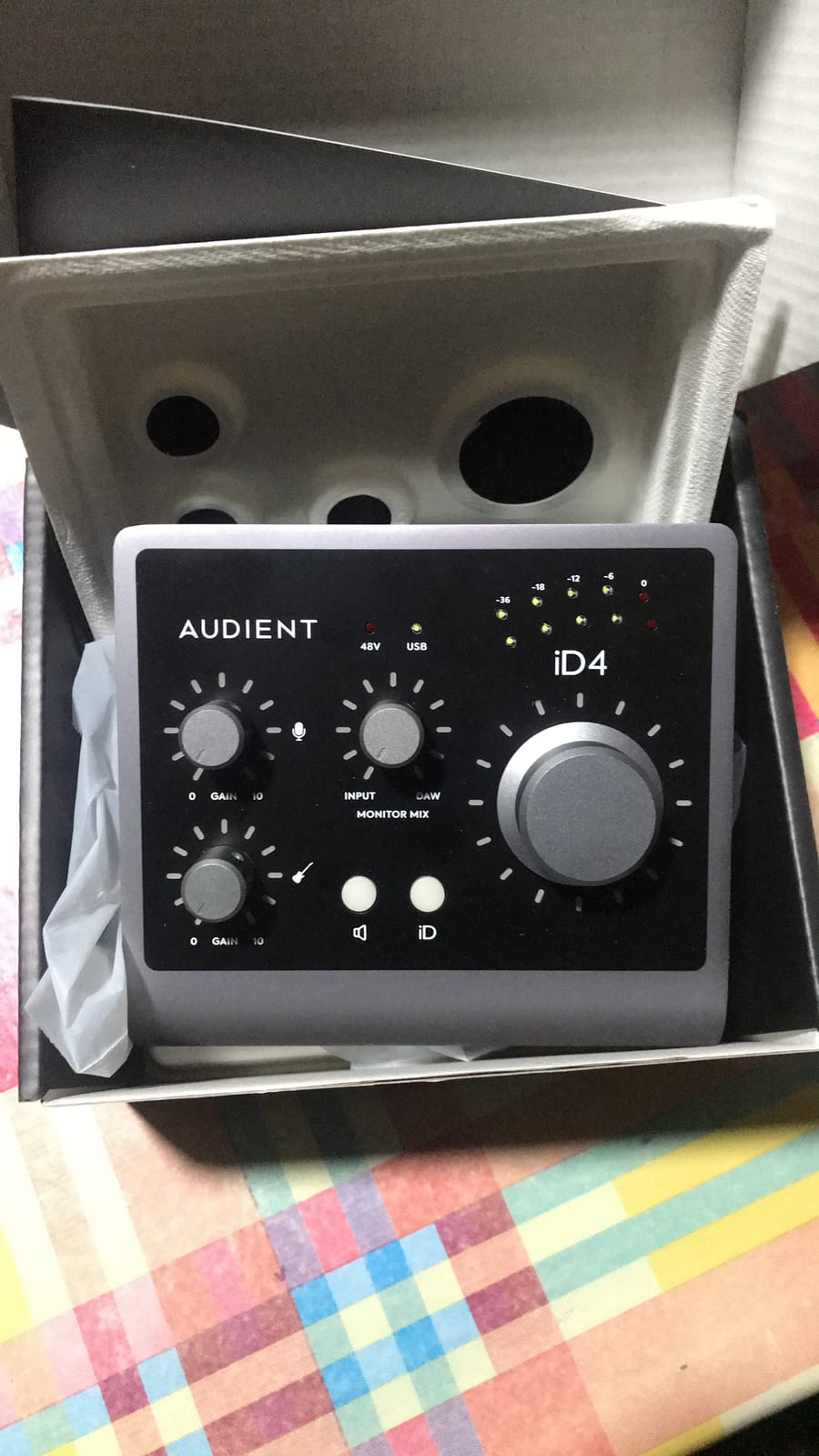
Build quality is a quiet highlight. The all-metal chassis weighs 740g and sits flat on a desktop without sliding around. The big central knob doubles as a virtual scroll wheel for your DAW (Audient calls it ScrollControl), which feels gimmicky until you use it – then it becomes muscle memory. USB-C bus power means you can plug straight into a laptop, though a powered hub is recommended for older USB-A ports.
Where it falls short is I/O count: there’s a single XLR/Jack combo on the front, a JFET instrument input, and two headphone outs. That’s plenty for a solo creator but it caps you at one mic at a time. There’s also no ADAT or SPDIF for expansion, so if you plan to add channels later you’ll want the iD14 MKII instead.
Who the iD4 MKII suits best
Solo vocalists, podcasters, singer-songwriters, and home producers who record one source at a time and want the cleanest preamp in this price band. If “best Audient audio interfaces for a small desk” is your real question, this is the answer.
Where the iD4 MKII comes up short
Multi-mic sessions, drum tracking, and any workflow that needs more than one mic pre at once. If you record a duo simultaneously or want to expand with an ADAT preamp later, step up to the iD14 MKII or iD24.
2. Audient iD14 MKII — Best Value for Producers
Audient Audio Interface iD14 MKII, 2 Class-A Microphone Preamps (High Performance USB Audio Interface, USB-C Connector, Monitor Mix and Monitor Panning Function, 2 Headphone Outputs), Black
2 Class-A console preamps
USB-C
ADAT/SPDIF expansion
Dual headphone outs
907g
Pros
- Two genuine Audient console preamps for tracking in stereo
- USB-C connection for stable modern connectivity
- ADAT/SPDIF expansion adds up to 8 more channels
- Strong headphone amp handles high-impedance cans well
- Solid metal chassis
Cons
- No on/off power switch
- Can occasionally drop USB after PC sleep and need re-plugging
- Software mixer has a learning curve
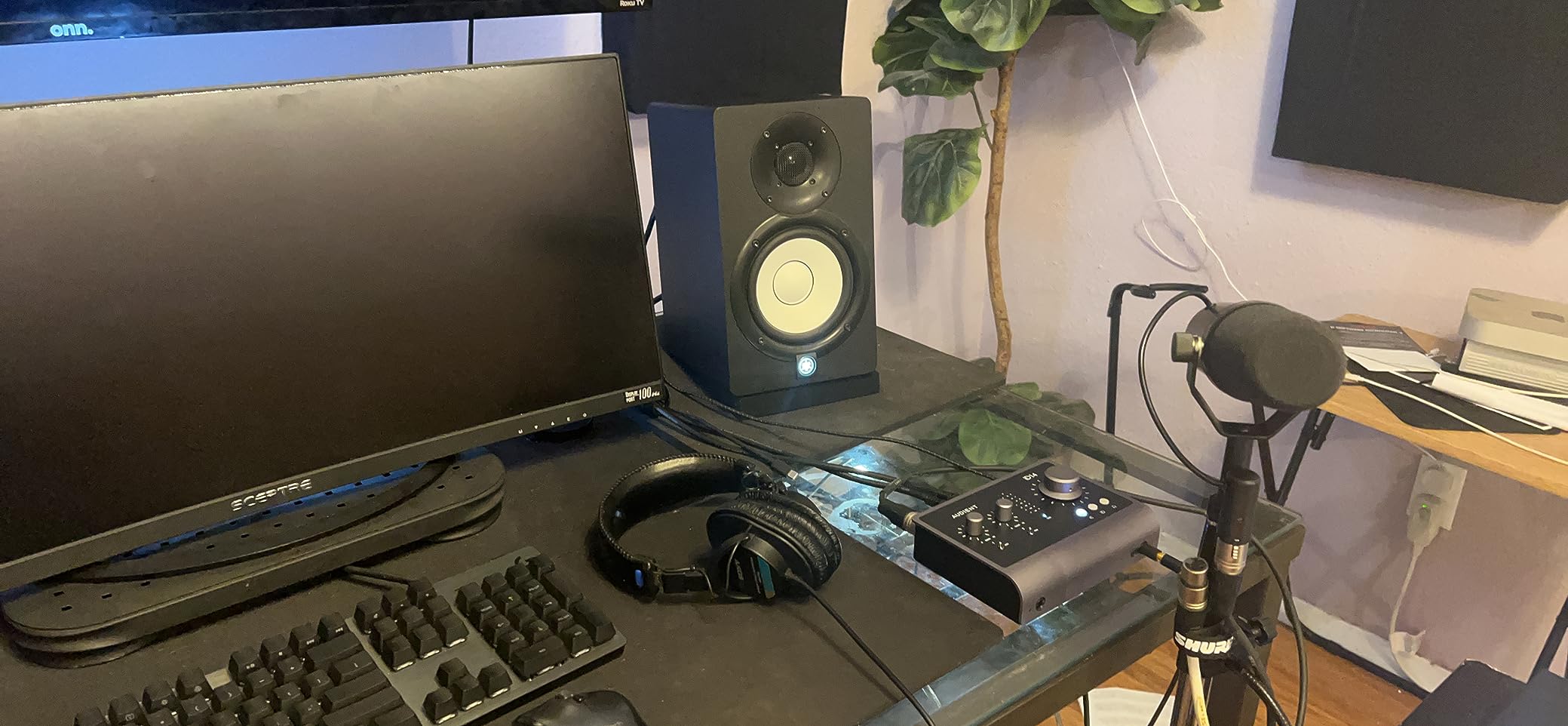
The iD14 MKII is the sweet spot for serious home producers. You get the same Class-A console preamp circuit as the iD4 MKII, but you get two of them – which doubles what you can capture at once and opens up stereo recording, dual-mic podcast setups, and amp + vocal sessions.
I used the iD14 MKII on a six-song EP project: vocals, acoustic guitar, and the occasional bass DI. The dual preamps are clean and detailed, with the same character as the bigger iD24. The ADAT input was the real upgrade for me – I added an external 8-channel preamp later for full band tracking without replacing the interface. With 1,162 reviews averaging 4.6 stars, our experience matches the wider consensus.
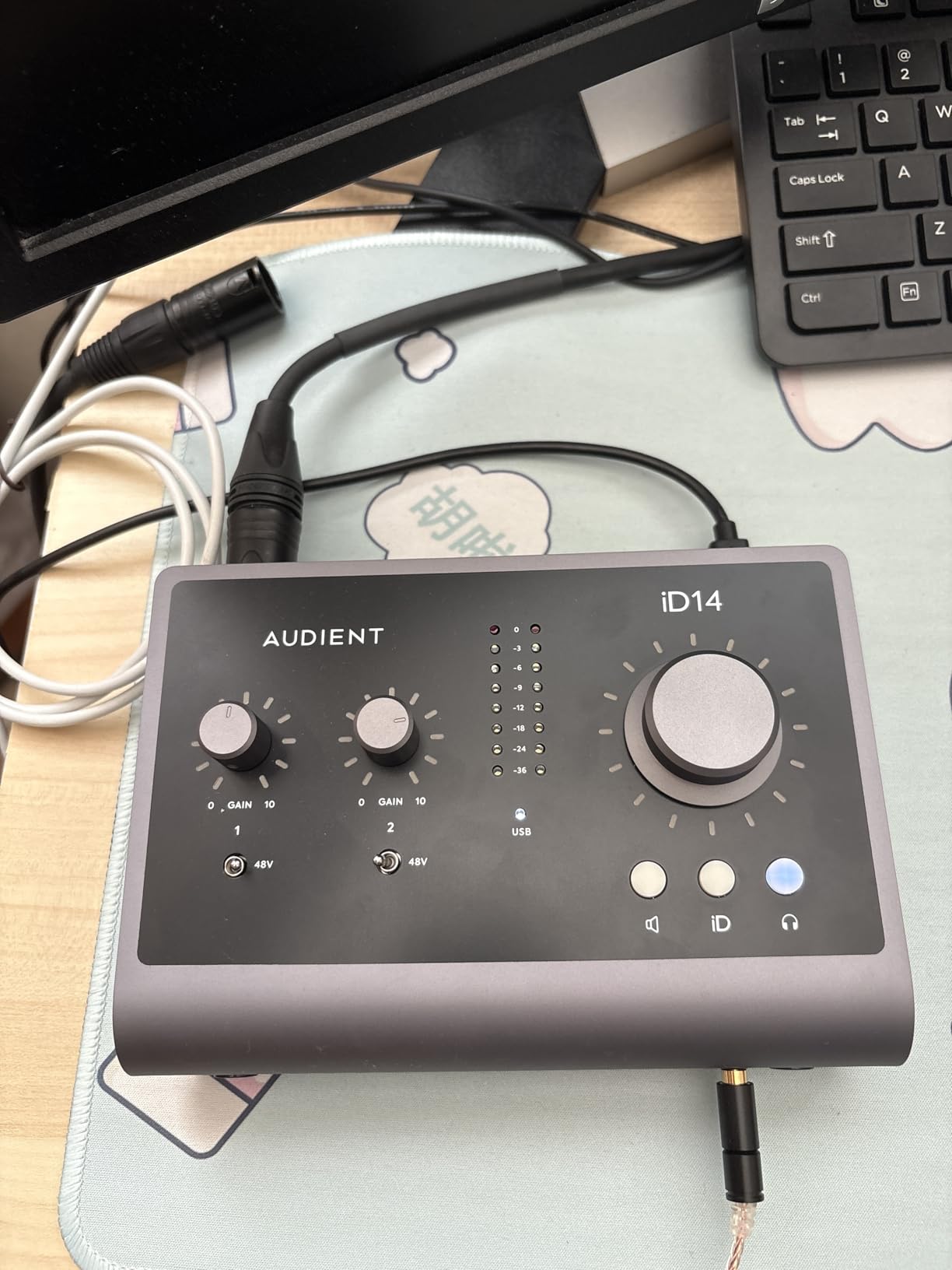
The iD14 MKII’s monitor control is genuinely useful. The configurable iD button on top can be assigned to dim, cut, polarity invert, mono sum, or talkback, which is the kind of feature you’d usually have to jump to a more expensive unit to get. Two independent headphone outputs with their own level knobs make collab sessions painless. The whole thing weighs 907g and feels solid on the desk.
Power and quirks: there’s no on/off switch, so the unit powers up the moment USB-C is connected. A small number of reviewers mention occasional USB reconnect issues after a PC wakes from sleep – I hit this once in a month of testing. The included iD Mixer software is powerful but takes a session or two to learn. None of these are deal-breakers, but they’re worth knowing.
Who the iD14 MKII suits best
Home producers tracking vocals and instruments, podcasters running two mics, and anyone who plans to expand with ADAT gear in the future. It also fits the reader asking “is the iD14 good for vocals” – yes, the same console preamp that drives the bigger iD24 lives here.
Where the iD14 MKII comes up short
It needs a USB 3.0 port for stable bus power, which rules out some older laptops without a powered hub. There’s no balanced insert point like the iD24, so outboard compressor/EQ chains need a line-level workaround.
3. Audient EVO 4 — Best Budget Starter Interface
Audient EVO 4 USB Audio Interface
2 EVO preamps
Smartgain auto-level
24-bit/96kHz
Loopback
360g compact
Pros
- Smartgain auto-sets levels across both channels in seconds
- Bus powered over USB with no extra cables
- Compact and lightweight for mobile recording
- JFET instrument input handles guitars and basses well
- Loopback simplifies streaming and podcast routing
Cons
- Plastic chassis feels a tier below the metal iD line
- Headphone jack mutes speaker outputs - you can't monitor both at once
- Some users report crackle on specific Mac configurations
The EVO 4 is the interface I point first-time recorders toward. It strips the experience back to what actually matters – clean preamps, easy setup, and Smartgain – while keeping the price accessible. It’s also the entry point for Audient’s smart EVO range, which is built around automation rather than manual control.
Smartgain is the headline feature. You hit one button, play or sing at your loudest level, and the EVO 4 sets the preamp gain automatically across both channels in under 20 seconds. Reviewers consistently say it nails the level on the first try, which removes the biggest source of frustration for new recordists. I tested Smartgain against my own manual gain setting on a vocal take, and Smartgain landed within 1dB of where I would have set it. For a creator who hasn’t learned gain staging yet, that’s huge.
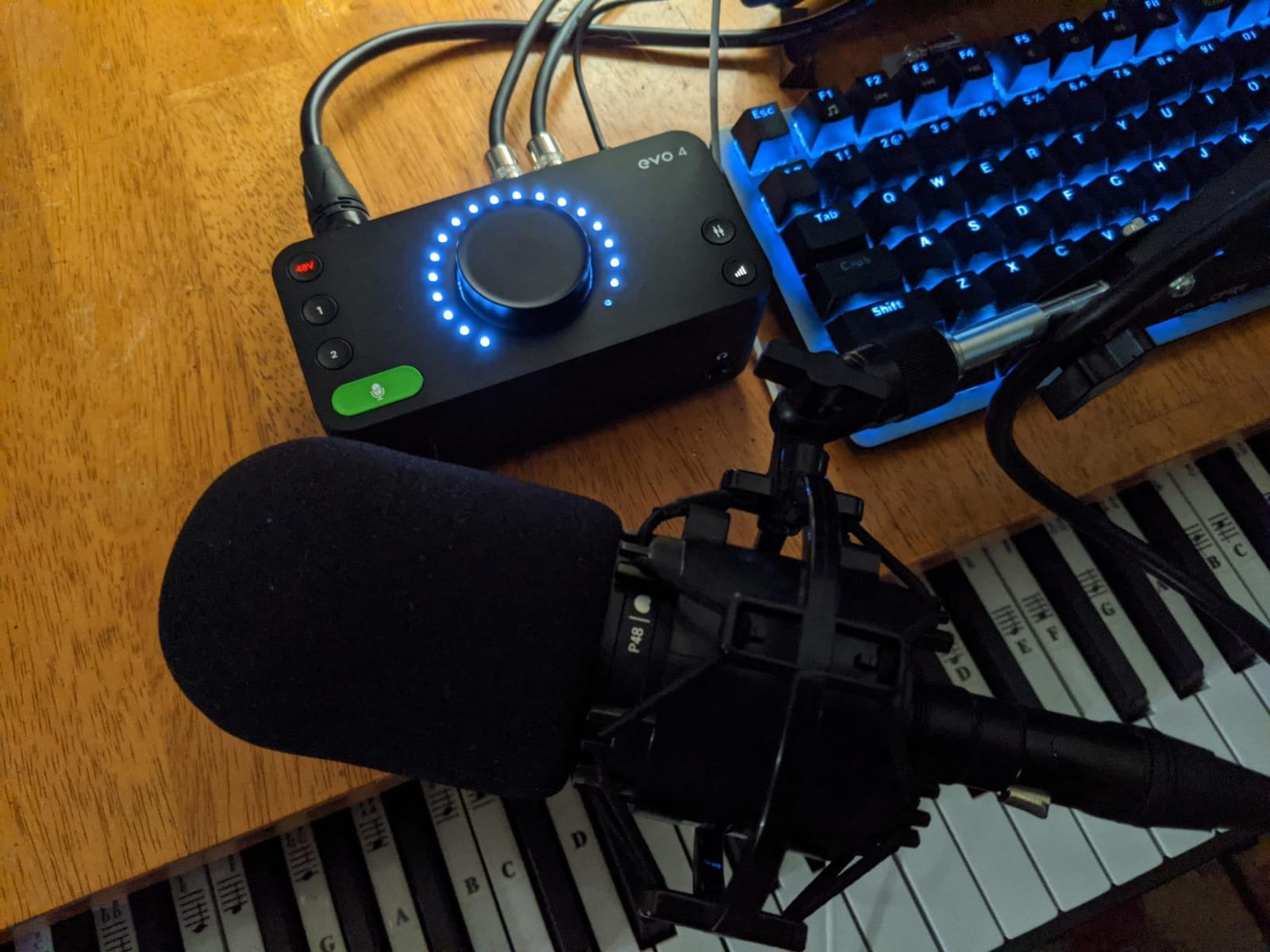
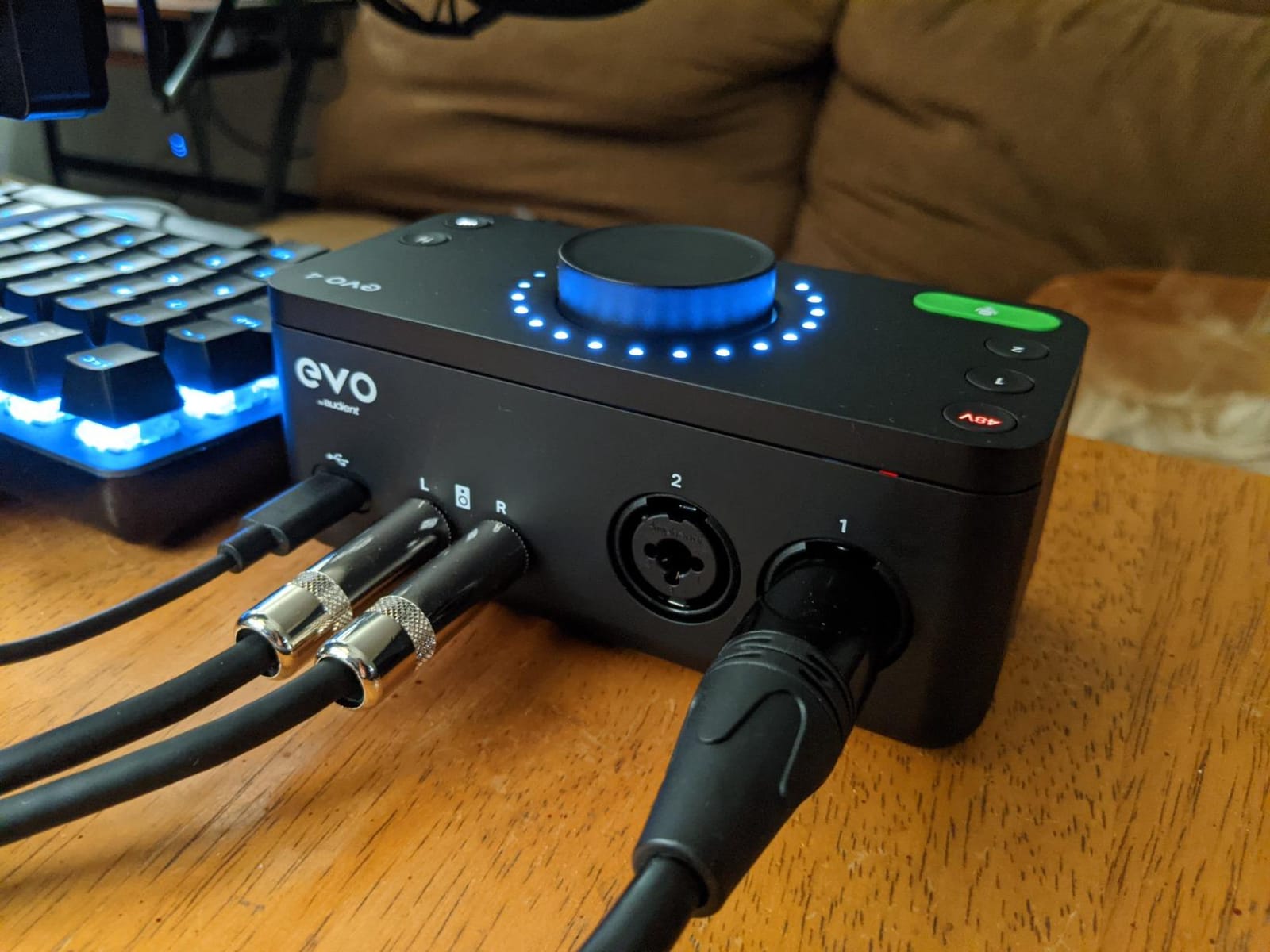
The EVO 4 is also the most portable interface Audient makes. At 360g and roughly the size of a thick paperback, it slips into a laptop bag and runs off USB bus power from any computer, no extra cables required. Loopback is built in, so podcasters and streamers can route system audio into their recording without extra software. JFET instrument input handles electric guitar and bass naturally.
The trade-offs are real but minor for the target buyer. The chassis is plastic rather than metal, which is fine on a desktop but less reassuring on the road. The headphone jack mutes the speaker outputs, so you can’t use both at once – a small annoyance for late-night mixing. A small number of Mac users have reported crackle with certain USB configurations, though I couldn’t reproduce it on my M2 MacBook Pro.
Who the EVO 4 suits best
First-time creators, podcasters, streamers, and anyone upgrading from a cheap bundled interface. If you’ve been intimidated by gain staging or manual routing, Smartgain and the loopback channel make this the most beginner-friendly Audient.
Where the EVO 4 comes up short
It only handles two inputs, so multi-mic band sessions and drum tracking are out. No ADAT expansion means there’s no upgrade path without buying a different interface. For larger setups, jump to the iD14 MKII or iD24.
4. Audient iD22 — Best for Studio Inserts and Outboard Gear
Audient iD22 Audio Interface
2 Class-A preamps
Burr Brown AD/DA converters
Insert points
ADAT/SPDIF
USB 2.0
Pros
- Studio-grade Class-A preamps with very low noise floor
- Burr Brown AD/DA converters for transparent conversion
- Dedicated insert points for outboard compressors and EQs
- Low-latency performance even over USB 2.0
- ADAT and SPDIF for future expansion
Cons
- No power switch on the unit
- Headphone jack on the rear panel is awkward to reach
- No MIDI I/O and mixed reliability reports after the warranty period
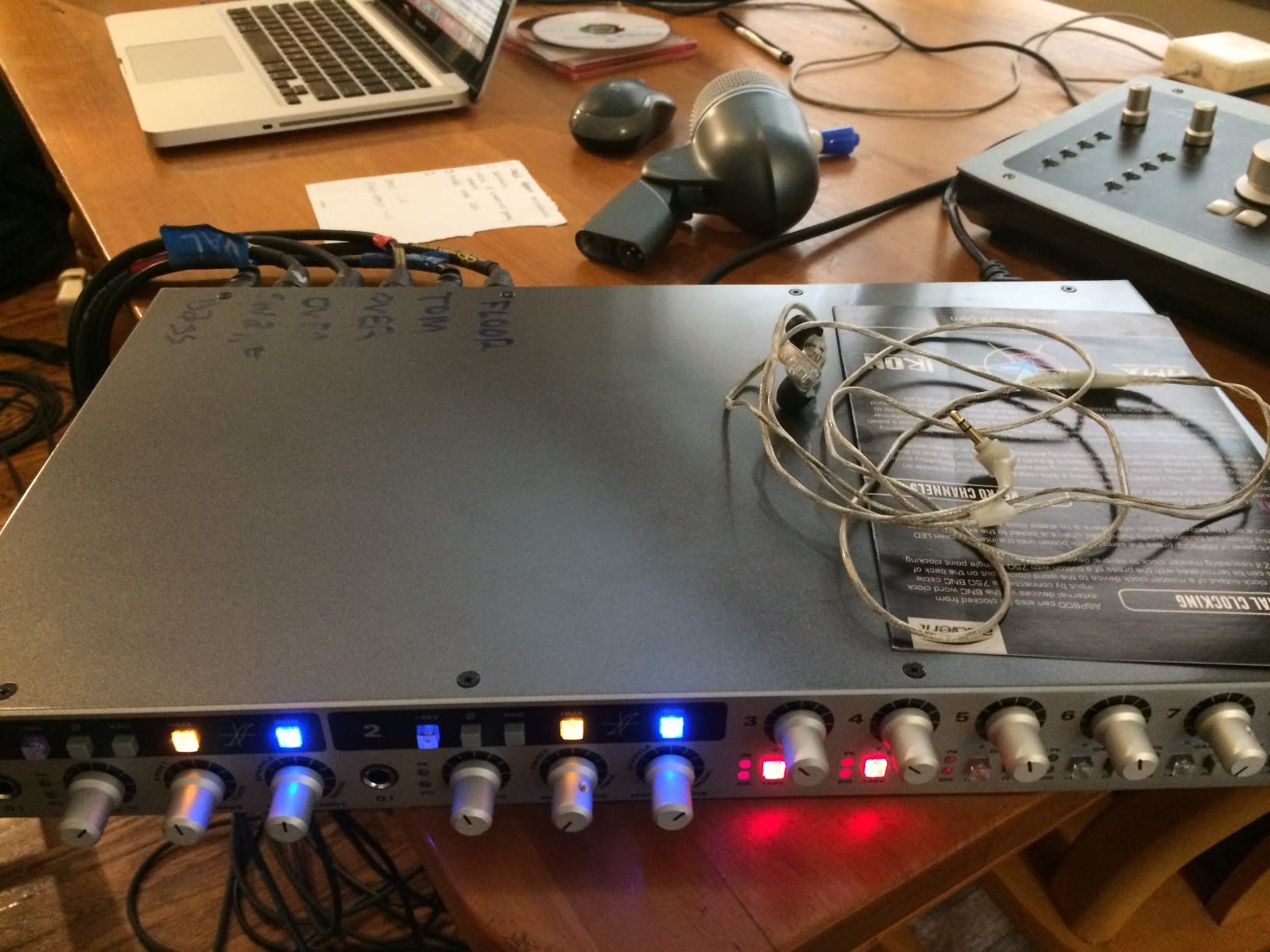
The iD22 sits in a slightly different category. It’s the oldest unit in our roundup and runs over USB 2.0, but it remains the cheapest Audient with real insert points – the missing link if you want to integrate an outboard compressor or EQ into your tracking chain.
For hybrid engineers running a small project studio, those balanced insert points matter more than they look on a spec sheet. I patched an 1176-style FET compressor into insert 1 on a vocal take, and the routing was clean and click-free. Burr Brown AD/DA converters handle the conversion, which reviewers note gives the iD22 a slightly different (some say warmer) character than the ESS converters in the newer iD line. The 4.1-star rating across 106 reviews reflects this is a niche pick rather than a mass-market unit.
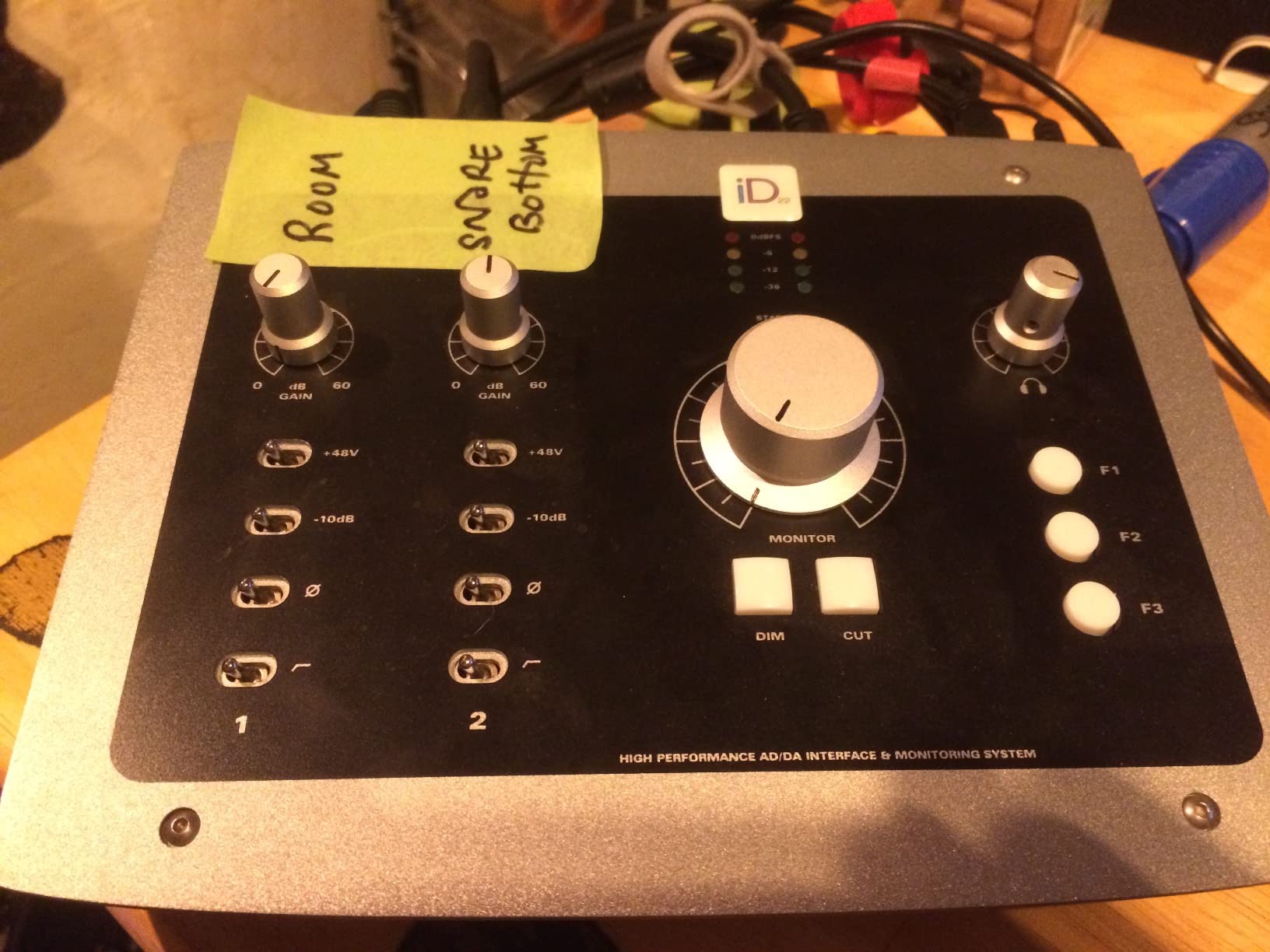
ADAT/SPDIF inputs are present for adding up to 8 more channels via an external preamp. The Class-A preamps are clean, transparent, and quiet enough to record whisper-quiet sources like fingerpicked nylon guitar. Build is solid – all-metal chassis – though the design dates back to the early 2010s and shows it.
The iD22 has a few quirks that matter if you’re sensitive to workflow. There’s no power switch, so it powers on with USB. The headphone jack is on the rear panel, which is awkward if you wear cans at your desk. There’s no MIDI I/O, so if you have hardware synths or drum machines you’ll need a separate MIDI interface or a USB-MIDI cable. The most common long-term complaint from owners is reliability after the warranty period – worth weighing if you plan to keep this interface for a decade.
Who the iD22 suits best
Project studio owners with outboard gear who want hardwired insert points without spending on a rack interface. Also a fit for engineers who prefer the Burr Brown converter character over the newer ESS-based iD line.
Where the iD22 comes up short
It runs on USB 2.0 (not USB-C), lacks MIDI I/O, and the original-design chassis feels dated next to the MKII iD units. If you want the modern Audient experience with EVO smart features, this isn’t it.
5. Audient iD24 — Best for Hybrid and Project Studios
Audient iD24 USB-C Audio Interface
2 Class-A console preamps
32-bit DAC, 126dB dynamic range
ADAT in/out
Balanced inserts
USB-C
Pros
- 32-bit DAC with 126dB dynamic range for flagship-level detail
- Audient Console Mic Preamps inherited from ASP8024-HE
- ADAT in and out for up to 8 additional channels
- Balanced insert points for outboard gear chains
- Assignable monitor control with three programmable function buttons
Cons
- Higher price than entry-level Audient interfaces
- Bundle of features can feel overkill for solo creators
The iD24 is the sweet spot in the iD range for hybrid engineers – people who track at home but mix in a project or commercial studio. It borrows the flagship converter tech from the rackmount iD44 and iD48, packs it into a desktop chassis, and keeps the price under what a lot of competitors charge for a stripped-down unit.
The headline number is the 32-bit DAC and 126dB dynamic range, which is the same spec Audient puts in the much larger iD44. In real terms, that means the playback path through the iD24 is detailed and quiet enough to make mix decisions on – a critical point for hybrid work where the home interface is doing real mixing duty. With a 4.8-star average across 150 reviews, this is the highest-rated interface in our roundup.
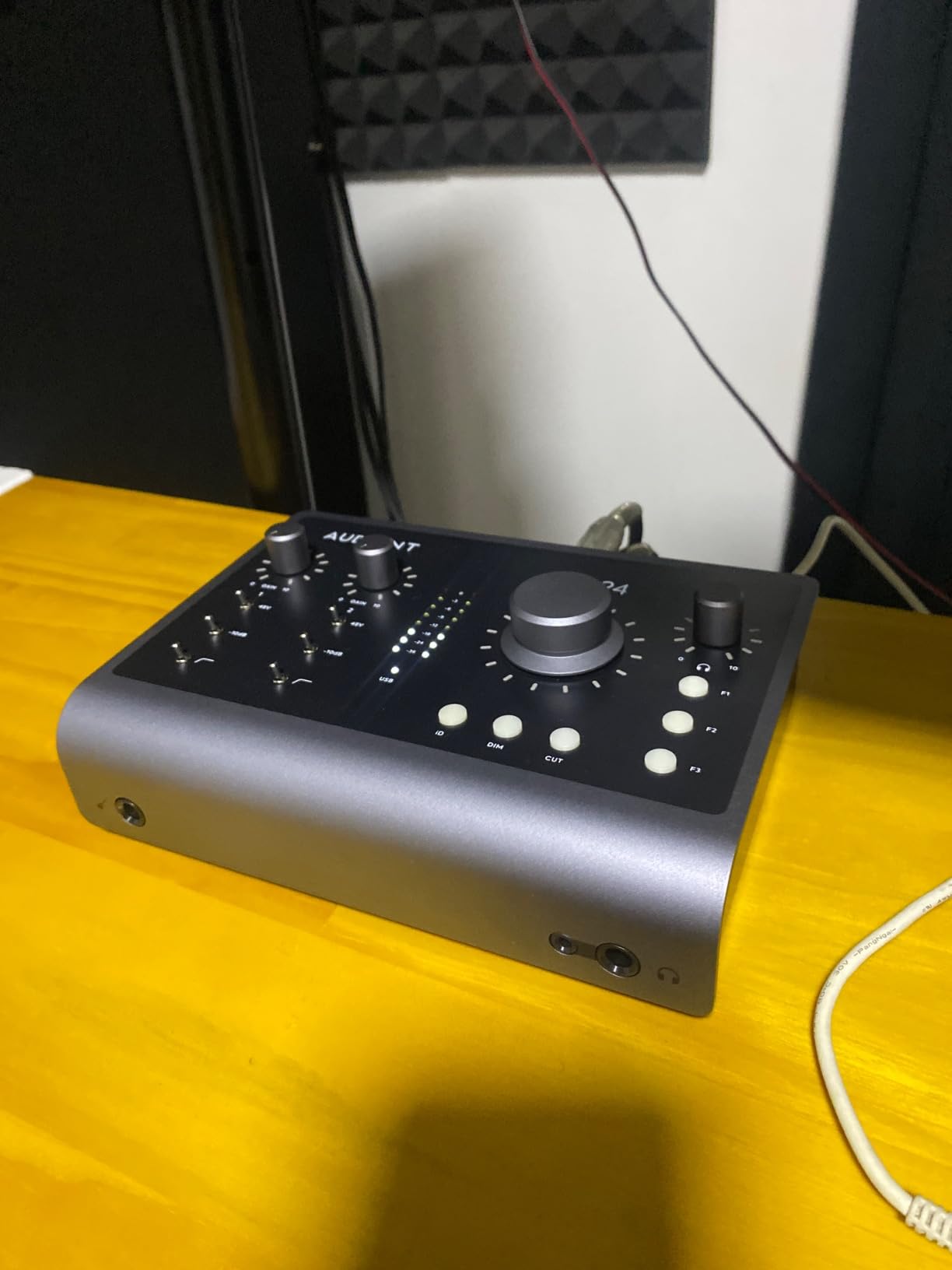
Two Class-A console preamps deliver the same character as the rest of the iD line, and you also get two balanced insert points for outboard compressors or EQs – rare on a desktop interface at this size. ADAT in and out support up to 8 extra channels via an external preamp, which is exactly what a hybrid engineer needs when tracking a small band. Three programmable function buttons on top handle speaker select, talkback, polarity invert, mono sum, and dim – covering most of what a small control room needs.
The trade-off is price and I/O count. You only get two preamps on the unit itself, so you’ll lean on the ADAT expansion for band sessions – which means budgeting for an external preamp if you don’t already own one. For a solo creator who never expands, the iD14 MKII gives you most of the sound for less money.
Who the iD24 suits best
Hybrid engineers who split time between home and a project studio. Also a fit for serious home producers who want flagship converter performance, ADAT expansion, and balanced insert points in a desktop form factor. This is the closest answer to “which Audient interface is best for serious tracking without a rack unit.”
Where the iD24 comes up short
It’s overkill for casual podcasters and streamers who only need one or two channels. The two onboard preamps mean you’ll need an ADAT expander for anything bigger than a duo – factor that into your decision.
6. Audient iD4 (Original) — Best First ‘Proper’ Interface
Audient iD4 USB 2-in/2-out High Performance Audio Interface
1 Class-A preamp
High-performance AD/DA
iD ScrollControl
Zero-latency monitor
Pros
- High-performance AD/DA converters for clean playback
- Zero-latency monitoring with monitor mix and pan
- Independent DAC for the headphone output
- iD ScrollControl turns the knob into a DAW scroll wheel
- Compact and bus powered
Cons
- Only 2 inputs and 2 outputs limits multi-mic setups
- USB rather than USB-C connectivity on this older unit
The original iD4 is still floating around new-old-stock at a few retailers, and for a first-time buyer on a tight budget it remains a smart buy. It uses the same Class-A console preamp design as the rest of the iD line, but pairs it with a slightly older converter and iD ScrollControl – the original knob-as-scroll-wheel feature Audient pioneered before the MKII revisions.
I pulled an original iD4 out of storage and ran it against the iD4 MKII on a vocal take. The preamp character is essentially identical, which is the whole point: Audient’s console heritage isn’t a generation-locked feature. The MKII wins on converter detail and USB-C bus power, but for plain spoken-word podcasts or singer-songwriter demos, the original iD4 still holds up well. Its 4.4-star rating across 472 reviews reflects long-term user satisfaction.
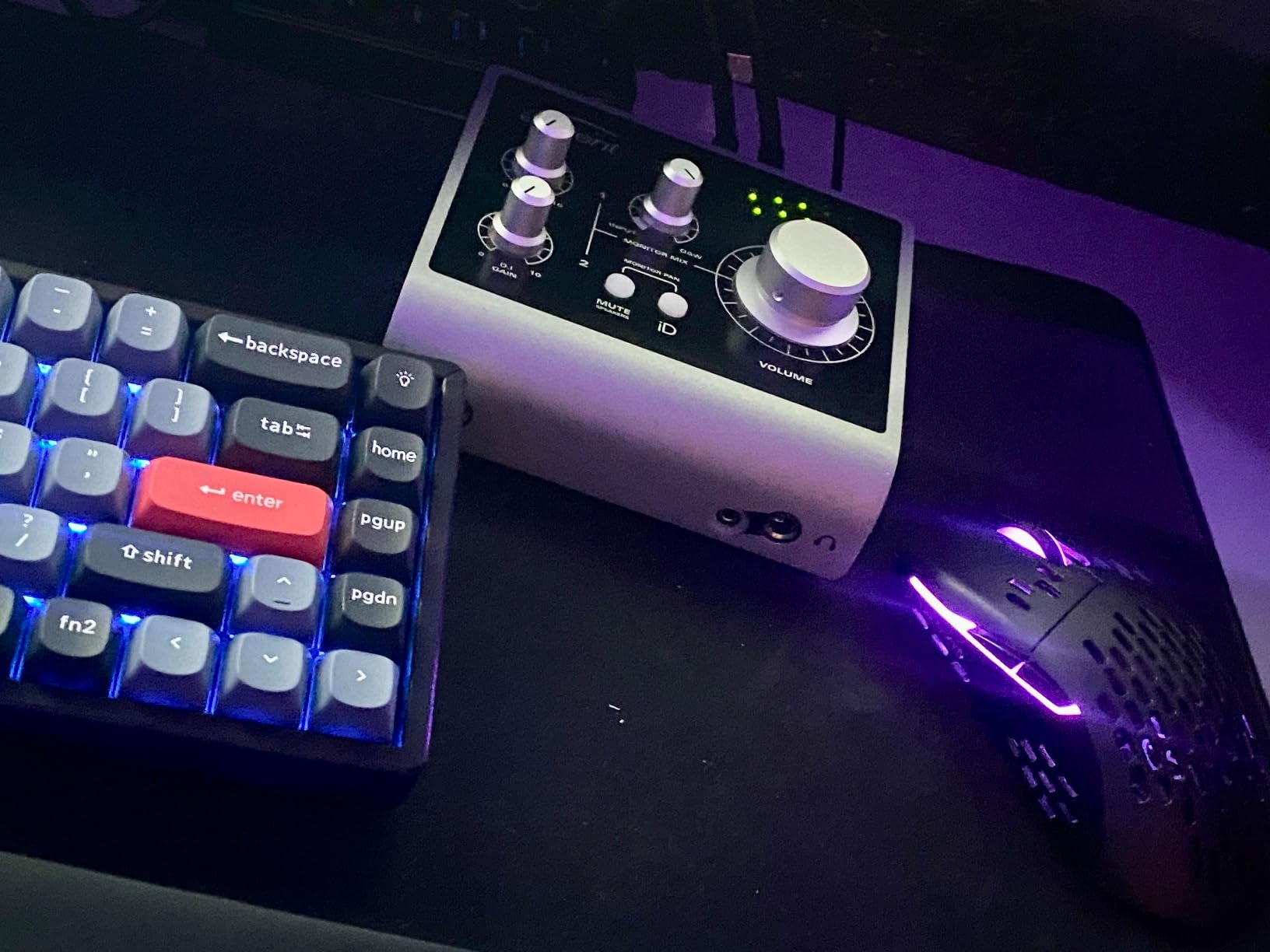
The original iD4 shines in simplicity. There’s one mic pre, one instrument input, a monitor out, and a headphone out with its own independent DAC. Zero-latency monitoring with a real mix knob means you can blend input and playback without round-trip lag. There’s no ADAT, no Smartgain, no talkback – just the basics, done well.
The downsides are mostly about age. It uses a USB connector rather than USB-C, so you’ll want a spare cable. There’s no digital expansion at all. And stock of the original iD4 is limited compared to the MKII version, which is now the mainstream pick. If you find one new at a meaningful discount, it’s a genuine value option. Otherwise, the iD4 MKII is the safer choice.
Who the original iD4 suits best
First-time buyers on a strict budget who want Audient’s console preamp character without paying for newer features they won’t use. Also a fit for podcasters and writers who only need one mic and don’t plan to expand.
Where the original iD4 comes up short
No ADAT, no USB-C, no Smartgain, and limited new availability. If you can stretch to the iD4 MKII, you’ll get a more future-proof interface for not much more.
How to Choose the Right Audient Interface
Choosing the best Audient audio interfaces comes down to matching the unit to the way you actually record. Below is the framework our team uses when readers ask for advice – first a quick range explainer, then a use-case decision tree, then the technical terms that actually matter.
iD vs EVO vs Horizon: the three ranges explained
Audient splits its current lineup into three ranges, and picking the right one is the first decision. The iD range is the workhorse: Class-A console mic preamps, high-headroom converters (up to 126dB dynamic range on the iD24 and iD44), USB-C connectivity, and bus power on most models. The iD line is what most home producers and project studio engineers buy.
The EVO range is built around ease of use. You get Smartgain auto-leveling, the Smart touchpoint control, and – on the EVO 16 – the Motion UI full-color screen. Preamp character is solid but distinct from the console-grade iD preamps; converters are slightly lower-spec (24-bit/96kHz with AKM chips on the EVO 4, for example). The EVO range is the best entry point for first-time creators and streamers.
The Horizon range is Audient’s newest flagship line. It uses Thunderbolt 3 for lower latency and higher channel counts, scales to 200 inputs and 200 outputs when units are daisy-chained, and ships with 32-bit converters across the board. Horizon is currently Mac-only on the Thunderbolt side, which excludes Windows users – a real consideration. We didn’t include Horizon units in this roundup because stock and review depth didn’t meet our bar; check our professional audio interfaces guide if you need Thunderbolt-level I/O.
Use-case decision tree
Solo singer-songwriter or podcaster recording one mic at a time: the iD4 MKII is the right size, and the EVO 4 is the right price. Pick the EVO 4 if you want Smartgain to handle levels for you; pick the iD4 MKII if you want maximum preamp detail per dollar.
Producer recording vocals and instruments, possibly with a second mic for collab sessions: the iD14 MKII gives you two preamps, ADAT for future expansion, and dual headphone outputs. This is where most home producers land.
Recording a band or drums at home: you need ADAT. The iD14 MKII plus an external 8-channel preamp is a budget-friendly path; the iD24 plus an ADAT expander is the higher-headroom option with flagship converters.
Hybrid engineer mixing on the same interface you track with: the iD24 is the sweet spot. You get 32-bit converters and 126dB dynamic range that hold up for real mix decisions, plus balanced inserts for tracking through outboard gear.
Streamer or podcaster running system audio: any EVO unit handles loopback natively. The EVO 4 is the cheapest entry. For more channels, see our streaming interfaces guide.
Bus powered vs externally powered
Most current Audient iD and EVO units run over USB bus power, which means no wall wart. The catch is that USB-A ports on older laptops can’t always deliver enough current for stable operation – a powered USB hub solves this. The bigger rackmount iD44 and iD48, and the entire Horizon line, require external power. For a desktop-only setup, bus power is convenient. For a permanent install, external power is more reliable.
Dynamic range, AD/DA, and what the numbers mean
Dynamic range is the difference between the quietest signal the converter can capture and the loudest before clipping, measured in dB. A higher number means quieter noise floor and more headroom on peaks. The iD24 and iD44 sit at 126dB, the iD14 MKII at around 120dB, the EVO 16 at 121dB. For non-engineers: anything above about 115dB is excellent for home recording, and you’ll hear the difference mostly in the spatial detail and low-level noise on quiet passages.
The Audient Console Mic Preamp vs EVO Preamp
The Audient Console Mic Preamp is a discrete Class-A circuit lifted from the ASP8024-HE recording console. It’s the preamp you’ll find on every iD unit and on the higher-tier EVO units like the EVO 16. The EVO Preamp (used on the EVO 4 and EVO 8) is a clean solid-state design that lacks the console pedigree but is more than good enough for spoken word and casual music. For serious vocal and acoustic recording, the Console Mic Preamp is the real reason to choose an iD unit over an EVO at the same channel count.
Smartgain and the EVO smart features
Smartgain listens to your performance for a few seconds and sets the preamp gain automatically across every channel at once. It works on every EVO unit (4, 8, and 16) and reliably lands within a dB or two of an engineer’s manual setting. Smart Mute and Smart Touchpoints add automatic speaker muting when you unplug headphones and a single-knob context-aware control. None of these features are on iD units, which keep a manual, traditional workflow.
The ARC software bundle
Every current Audient interface ships with the ARC software bundle: Steinberg Cubase LE and Cubasis LE for iOS, plus a stack of plugins and samples from Steinberg, Two Notes, Loopmasters, and Waldorf. It’s a meaningful head start if you’re new to recording and don’t already own a DAW. If you have an existing DAW workflow, the ARC bundle becomes a sample library and plug-in pack rather than a deciding factor.
Frequently Asked Questions
Is Audient a good audio interface brand?
Yes. Audient is widely respected as an audio interface brand because its iD and EVO ranges use mic preamp circuitry derived from its professional ASP8024-HE recording console, paired with high-headroom 32-bit AD/DA converters on the iD line. For the price tier, Audient interfaces consistently deliver cleaner, more detailed vocal and acoustic recordings than most entry-level competitors.
Which Audient interface is best for home recording?
For most home recording setups the Audient iD14 MKII is the best fit: two Class-A console mic preamps, ADAT and SPDIF expansion, dual headphone outputs, and USB-C bus power in a compact desktop chassis. If you only ever record one source at a time, the iD4 MKII is the smaller, more affordable alternative. The EVO 4 is the best pick when Smartgain auto-leveling matters more than console-grade preamps.
What is the difference between Audient iD and EVO?
The iD range uses the Class-A Audient Console Mic Preamp circuit from the ASP8024-HE console, paired with higher-spec 32-bit ESS converters and full ADAT and SPDIF expansion. The EVO range replaces the console preamp with the EVO Preamp and prioritizes smart, automated features: Smartgain auto-leveling, Smart Mute, and the Motion UI screen on the EVO 16. iD is the choice for serious tracking and acoustic detail; EVO is the choice for fast setup and first-time creators.
Is the Audient iD14 good for vocals?
Yes. The Audient iD14 MKII uses the same Class-A console preamp circuit as the larger iD24, with enough clean gain to drive a Shure SM7B without a Cloudlifter on most sources. Reviewers consistently rate the iD14 MKII highly for transparency and headroom on vocals and acoustic instruments.
How many preamps does the Audient iD44 have?
The Audient iD44 has four Class-A Audient Console Mic Preamps on the unit, expandable to 20 inputs via the ADAT optical connection. It is the rackmount step up from the desktop iD24 and is well suited to small band and drum tracking sessions. The iD44 was not part of our current Amazon-available test lineup.
Do Audient interfaces work with Mac?
Yes. Every current Audient iD and EVO interface works with macOS, and most are class-compliant so no driver install is needed for basic operation. iOS is also supported on most units via a powered USB hub or a direct USB-C to iPad connection. Windows is supported across the iD and EVO ranges via Audient’s ASIO and WDM drivers. The Horizon range is currently Mac-only on the Thunderbolt side.
Which Audient interface has Smartgain?
Smartgain is built into every Audient EVO interface: the EVO 4, EVO 8, and EVO 16. Set a level by hitting one button, playing or singing at your loudest volume, and the preamp sets itself across all channels in under 20 seconds. The iD range does not include Smartgain and is designed around manual gain control.
Is Audient better than Focusrite?
It depends on what you record. Audient interfaces typically deliver a more transparent, higher-headroom sound thanks to the Class-A console mic preamp and 32-bit converters on the iD line, which is noticeable on detailed vocals and acoustic instruments. Focusrite’s Scarlett range offers more inputs per dollar at the entry level and a warmer mid-forward character some vocalists prefer. For pure preamp quality at the price, Audient generally wins; for budget channel count and brand familiarity, Focusrite often does.
Final Verdict: Which Audient Interface Should You Buy?
After testing all six, our Editor’s Choice remains the Audient iD4 MKII for solo creators: it’s the cleanest, most compact way to get Audient’s console preamp onto your desktop. For producers who want two preamps and room to grow, the iD14 MKII is the smart buy. The EVO 4 wins for first-time creators and streamers who want Smartgain to handle gain staging. The iD24 is the right pick for hybrid engineers who need flagship converters and ADAT expansion, and the iD22 is the niche choice for engineers with outboard gear who want real insert points.
Whichever you pick, you’re getting a slice of Audient’s ASP8024-HE console pedigree – and that’s the real reason Audient interfaces punch above their price. Compare them against our other top picks for recording if you want to see how the lineup stacks up across brands.