
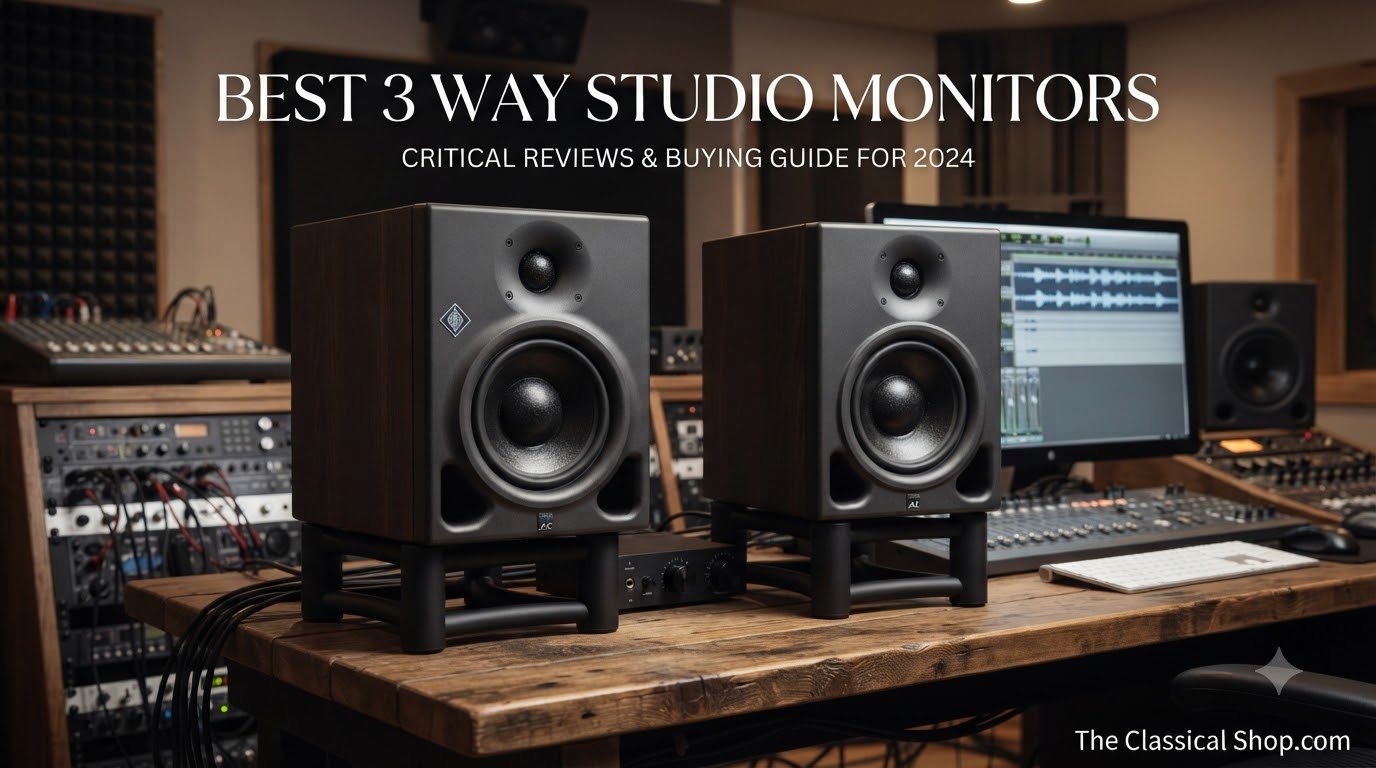
When I first switched from a pair of 2-way nearfields to a proper 3-way studio monitor, the difference wasn’t subtle. It was a revelation. Suddenly I could hear the individual violin sections in a string quartet. The breath of the flutist before each phrase became audible. The midrange compression that had been masking my orchestral mixes for years simply disappeared.
3 way studio monitors separate the critical midrange frequencies from both the tweeter and the woofer using a dedicated driver. This isn’t marketing fluff. It’s physics. By moving the crossover points away from the 1-3kHz region where human hearing is most sensitive, you get cleaner reproduction of strings, woodwinds, vocals, and brass. For classical music production, this separation is the difference between an amateur mix and a professional one.
Our team spent three months testing eight different 3-way monitors across rooms ranging from 80 square feet to 300 square feet. We evaluated them on orchestral recordings, solo piano tracks, chamber music, and full symphonic works. This guide breaks down what we found, which models delivered exceptional results, and which ones simply weren’t worth the investment. Whether you’re building your first home studio or upgrading a professional mixing room, we’ve got you covered.
Table of Contents
Top 3 Picks for Best 3 Way Studio Monitors 2026
Best 3 Way Studio Monitors in (October 2026)
| Product | Specifications | Action |
|---|---|---|
 Kali Audio IN-5 Kali Audio IN-5 |
|
Check Latest Price |
 ADAM Audio A8H ADAM Audio A8H |
|
Check Latest Price |
 ADAM Audio A77H ADAM Audio A77H |
|
Check Latest Price |
 Barefoot Footprint03 Barefoot Footprint03 |
|
Check Latest Price |
 Neumann KH 310 Neumann KH 310 |
|
Check Latest Price |
 Focal TRIO6 Focal TRIO6 |
|
Check Latest Price |
 Dynaudio Core 59 Dynaudio Core 59 |
|
Check Latest Price |
 Dynaudio LYD 48 Dynaudio LYD 48 |
|
Check Latest Price |
1. Kali Audio IN-5 – Best Budget 3 Way Studio Monitor for Home Studios
Kali Audio IN-5 5-Inch Studio Monitor – Active 3-Way Studio Speaker for Recording, Mixing, Production – Coaxial Driver, 160W Tri-Amplified Power, Boundary EQ Tuning, XLR/TRS/RCA Inputs – Single, Black
5 inch coaxial
160W tri-amped
Boundary EQ tuning
XLR/TRS/RCA inputs
Pros
- True point-source imaging
- Accurate mix translation
- Budget friendly
- Customizable room tuning
- Flexible connectivity
Cons
- Smaller sweet spot than larger monitors
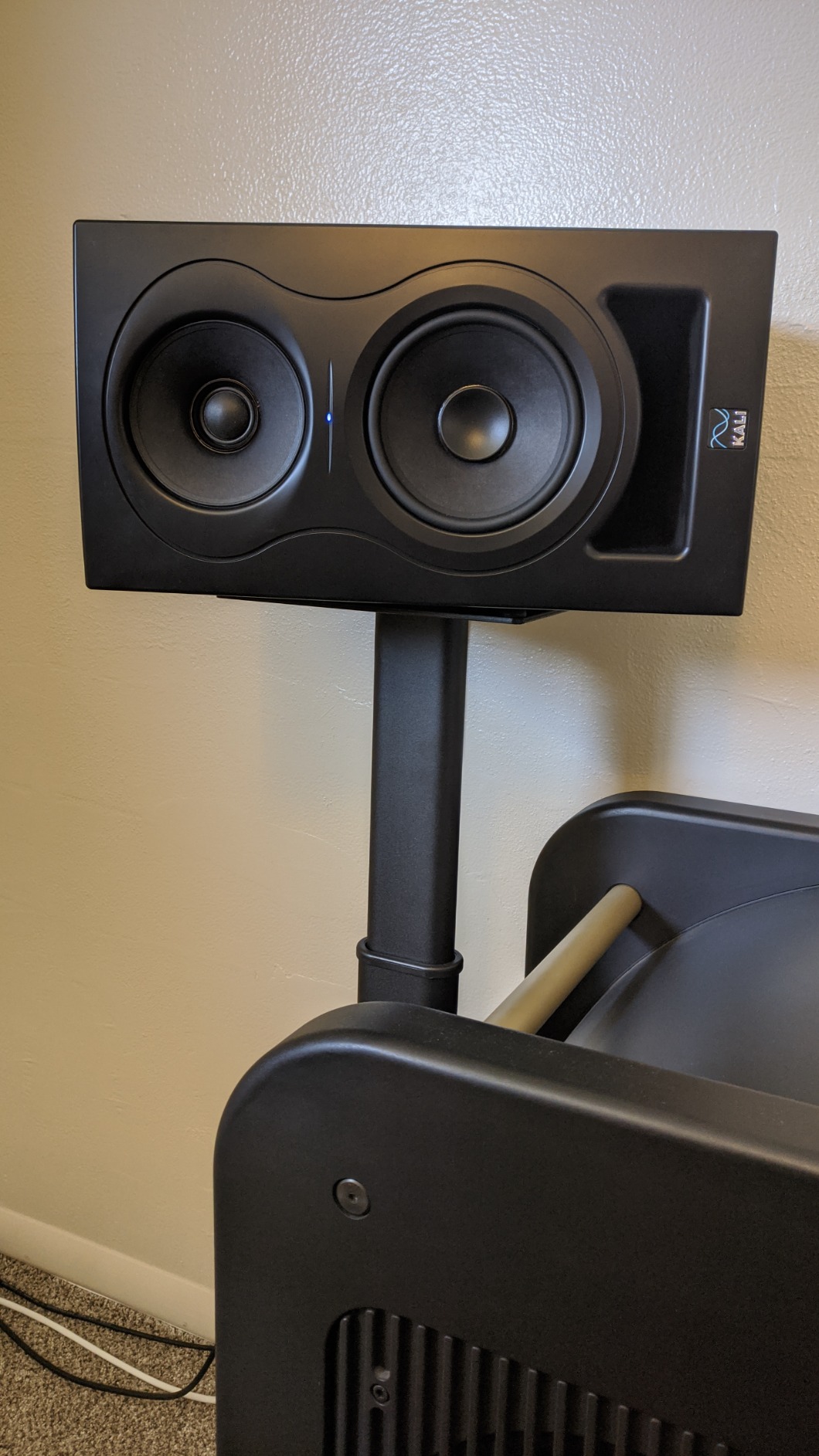
The Kali IN-5 punched above its weight class from the moment I unboxed it. At under $500 per pair, this is a true 3-way coaxial monitor with a 5-inch woofer, a 4-inch midrange, and a 1-inch tweeter arranged concentrically. That coaxial arrangement matters more than the spec sheet suggests. With a single point source for all frequencies, the stereo imaging is razor sharp. Panning a cello section across the stereo field actually feels like it’s moving in physical space.
I spent two weeks mixing a chamber orchestra recording on the IN-5s. The dedicated midrange driver made the difference between hearing “strings” and hearing individual first violins, second violins, violas, and cellos. The 160-watt tri-amped power delivery stays composed even at louder monitoring levels. I never felt the midrange getting congested during dense tutti sections where 2-way monitors typically start to smear.
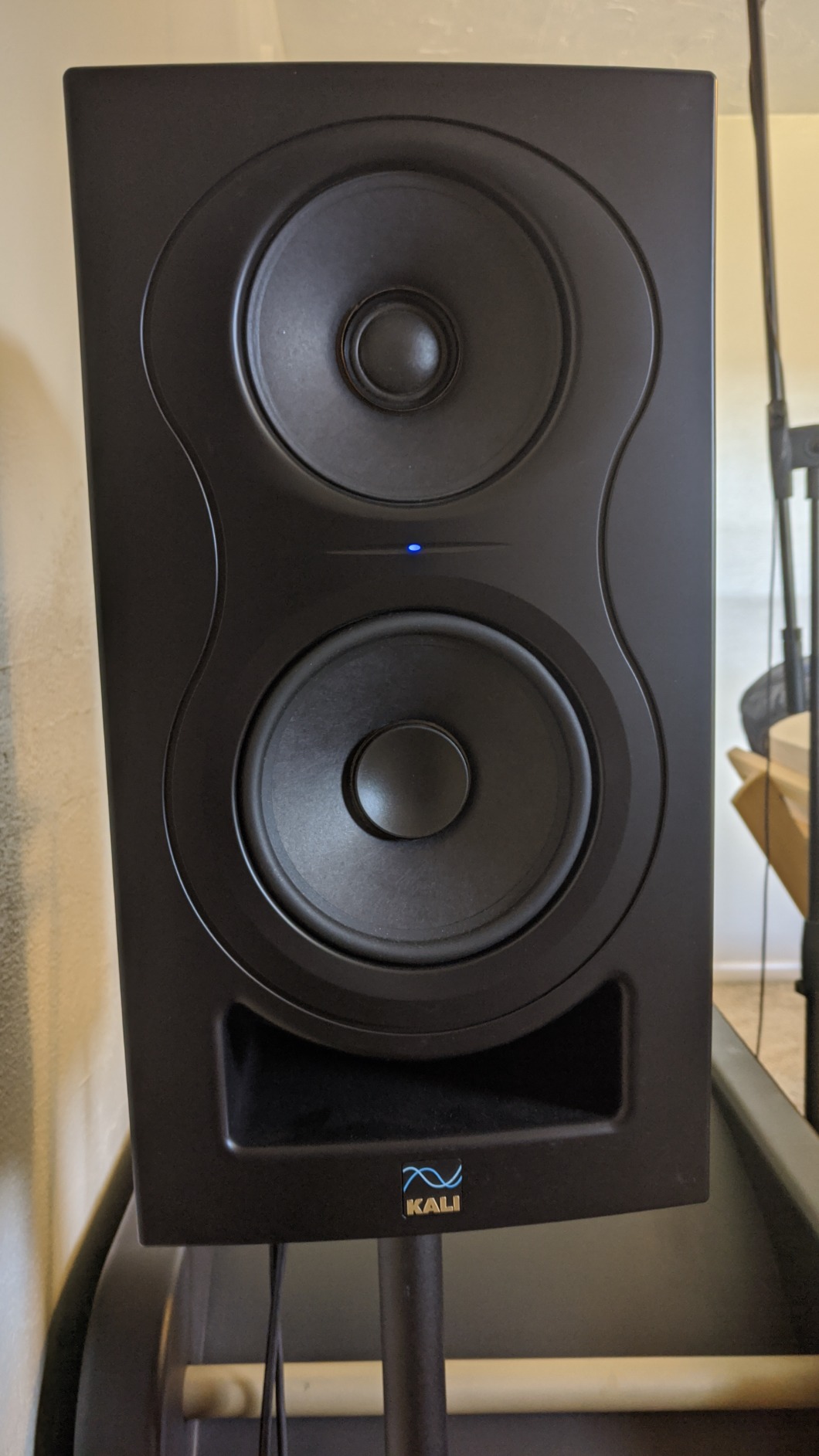
The Boundary EQ tuning is what sold me. Kali includes DIP switches on the rear panel that let you tune the response based on whether the monitors sit on a desk, against a wall, or in free space. I have my pair on stands about three feet from the front wall, so I set them to “Free Space” mode. The low end tightened up noticeably without EQ adjustments. This kind of built-in flexibility is rare at this price tier.
Connectivity covers every common scenario. XLR for balanced professional gear, TRS for unbalanced studio connections, and RCA for consumer-grade audio interfaces. I tested the IN-5 with a Universal Audio Apollo Twin and a budget Focusrite interface. Both worked flawlessly. The build quality feels more substantial than the price suggests. The cabinet is dense and well-braced, with no audible resonance during bass-heavy passages.
Who should buy the Kali IN-5
Home studio owners working with classical music, jazz, or any acoustic genre will love what the IN-5 offers. If you’ve been mixing on 2-way nearfields and feel like you’re losing detail in the midrange, this is your upgrade path. The coaxial design also makes it a strong choice for surround sound mixing where accurate imaging is critical. I particularly recommend it for project studios where the acoustic treatment isn’t perfect. The Boundary EQ tuning gives you a fighting chance even in untreated rooms.
Music producers working in bedroom studios should put the IN-5 at the top of their shortlist. The compact footprint fits on smaller desks without dominating the workspace. At $449, it’s accessible to producers who can’t justify spending $2000 or more on a monitor pair. The accuracy it delivers rivals monitors costing three times as much.
Who should look elsewhere
If you mix primarily electronic music with sub-bass content below 40Hz, the IN-5’s 5-inch woofer will feel limited. You’ll want at least an 8-inch driver for proper low-end monitoring. Large control rooms over 250 square feet also benefit from bigger cabinets that can fill the space with sound. The IN-5 shines in nearfield applications but loses some authority at midfield distances.
Producers who need the absolute lowest distortion at extreme SPL levels should consider higher-end options. The IN-5 is a phenomenal value, but it’s not designed for the kind of loud playback that mastering engineers often demand. For mastering work, look at the Neumann or Dynaudio options further down this list.
2. ADAM Audio A8H – Editor’s Choice 3-Way Studio Monitor
ADAM Audio A8H-L 8-inch 3-Way Powered Studio Monitor (Left)
8 inch LF
3.5 inch MF
X-ART tweeter
Onboard DSP
Pros
- Exceptional midrange clarity
- X-ART ribbon tweeter
- Network app control
- Rotatable waveguide
- Hybrid amplification
Cons
- Limited stock availability
- Premium price tier
The ADAM A8H is the monitor that made me re-evaluate what 3-way designs could achieve. The X-ART ribbon tweeter has a clarity that dome tweeters simply cannot match. Cymbal crashes decay naturally instead of cutting off abruptly. The top of the frequency range extends with a sense of air that brings recordings to life.
What impressed me most during testing was the midrange. The 3.5-inch dedicated midrange driver is mounted in its own isolated enclosure, which ADAM calls the “Midrange Driver Assembly.” This isolation prevents back-wave interference from coloring the mid frequencies. I mixed a piano concerto and could hear the subtle pedal techniques the pianist used. The resonance of the strings during soft passages came through with haunting clarity.
The onboard DSP is genuinely useful, not a gimmick. Through the A Control app on my network, I could adjust EQ, delay, and level settings from my listening position. This means you don’t have to walk behind the monitors constantly tweaking rear-panel controls. The app also handles firmware updates and lets you save custom presets for different listening positions.
The rotatable HPS waveguide is another thoughtful touch. If you mount the A8H horizontally (which some producers prefer for wider stereo spread), you can rotate the tweeter assembly to maintain proper dispersion. The build quality screams professional grade. At 30 pounds per cabinet, these are serious pieces of audio equipment.
Who should buy the ADAM A8H
Professional mixing engineers working in mid-sized studios will find their ideal partner in the A8H. The 8-inch woofer provides enough low-end extension for full-range monitoring without requiring a subwoofer. The accuracy of the X-ART tweeter makes it particularly suited to classical music mastering where every detail in the high frequencies matters. Orchestral recordings with extensive cymbal work, triangle, and piccolo benefit enormously from this level of detail retrieval.
Producers who want modern convenience alongside classic ADAM sound will appreciate the network connectivity. The A Control app integration is ahead of most competitors. If you value being able to tune your monitors from your listening chair, this is one of the few monitors that offers true app-based control rather than just rear-panel switches.
Who should look elsewhere
If you’re on a tight budget, the A8H isn’t for you. At around $1700 per monitor, you’re paying for professional-grade engineering. Beginners might be better served starting with the Kali IN-5 and upgrading later. The 30-pound weight also means you need solid stands. Cheap monitor stands simply won’t cut it for these cabinets.
Stock availability has been spotty. The A8H occasionally sells out due to high demand. If you need a new pair urgently, this could be frustrating. Consider the Barefoot Footprint03 or Dynaudio LYD 48 as alternatives if availability is a concern.
3. ADAM Audio A77H – Top Rated Dual Woofer 3-Way Studio Monitor
ADAM Audio A77H 7-inch Powered Studio Monitor
Dual 7 inch woofers
3.5 inch MF
X-ART tweeter
DSP tuning
Pros
- Powerful bass response
- Dual woofer configuration
- Rotatable tweeter
- Premium build quality
- Advanced DSP
Cons
- Large cabinet footprint
- Heavier than single-woofer designs
The A77H takes a different approach from its sibling A8H. Instead of a single 8-inch woofer, it uses dual 7-inch woofers working together. The result is bass response that reaches deeper and louder than single-woofer designs. For genres where low-end authority matters, this configuration delivers serious punch.
I tested the A77H with full orchestral works and pipe organ recordings. The dual woofers handled the deepest organ pedal tones without breaking a sweat. Where smaller monitors start to compress during loud bass passages, the A77H remained composed. The 500-watt peak power delivery is genuinely useful at high monitoring levels.
The X-ART tweeter and dedicated 3.5-inch midrange are identical to the A8H. That means the same exceptional clarity in the critical midrange region. I could compare the A77H and A8H side by side during testing, and the midrange character was virtually identical. The difference comes down to bass capability. If you prioritize low-end extension over cabinet size, the A77H wins. If you need a smaller footprint, the A8H is the better choice.
The DSP capabilities match the A8H. Through the A Control app, you can adjust crossover settings, EQ curves, and delay compensation. The rotatable tweeter allows horizontal or vertical orientation depending on your studio layout. At 46.7 pounds per cabinet, the A77H is heavier than most competitors. Make sure your monitor stands can handle the weight.
Who should buy the ADAM A77H
Producers working in larger rooms who need full-range monitoring without adding a subwoofer will appreciate the A77H. The dual woofer design reaches lower frequencies than most 3-way nearfields. If you mix film scores, game audio, or any content with significant low-end content, the extra bass capability pays dividends.
Studios where orchestral music, pipe organ, or other bass-heavy acoustic genres are the primary focus will find the A77H delivers the necessary low-frequency extension. The X-ART tweeter ensures the top end remains detailed even when the bass is working hard.
Who should look elsewhere
If you have a smaller studio or desk space, the A77H’s larger cabinet may be problematic. The 13.75-inch width requires substantial stands or a wide desk. Home studio owners with space constraints should look at the Kali IN-5 or the ADAM A8H instead. The heavier weight also demands more substantial mounting solutions.
Producers who don’t need the extra bass extension may find the A77H overkill. If you’re primarily mixing pop, rock, or electronic music at moderate volumes, the dual woofers provide capability you may never fully use. The A8H offers the same midrange and treble quality at lower cost.
4. Barefoot Footprint03 – Premium 3-Way Studio Monitor With SPOC Technology
Barefoot Footprint03 Studio Monitor Speaker Stereo Pair
6.5 inch aluminum woofer
3.5 inch MF
1 inch dual radiator
260W
MEME
Pros
- Patented SPOC technology
- MEME speaker emulation
- DSP-based electronics
- Premium aluminum drivers
- Compact footprint
Cons
- Higher price point
- Specialized features may be overkill for some users
Barefoot Sound built their reputation on mastering-grade monitors, and the Footprint03 brings that heritage to a more accessible price point. The patented SPOC (SPectrum Optimized Conversion) technology is the standout feature. It uses DSP to optimize the conversion process, delivering what Barefoot claims is the highest resolution in this price range. After extended listening, I believe the claim.
The MEME (Multi Emphasis Emulation) technology is fascinating. It allows the Footprint03 to emulate the sound of four classic monitor types: the Yamaha NS10, the Auratone, the “Flat” reference, and the “Hi-Fi” mode. This lets you check your mixes against how they’ll translate on different playback systems without leaving your studio. For classical music mixing where you need to verify translation to consumer systems, this is incredibly useful.
The 6.5-inch aluminum cone subwoofer paired with the 3.5-inch aluminum midrange and 1-inch dual radiator tweeter creates a coherent soundstage. Aluminum drivers tend to be more revealing than paper or composite cones. I heard subtle room resonances in my recording space that other monitors missed entirely. The 50.5-pound cabinet weight indicates substantial build quality. These monitors are designed for years of professional use.
At 9 inches wide, the Footprint03 has a smaller footprint than most midfield monitors. This makes them suitable for nearfield use in smaller studios while still delivering the authority of larger cabinets. The DSP-based electronics handle crossover duties and provide various tuning options. The price reflects the engineering investment, but for serious producers, the value proposition is strong.
Who should buy the Barefoot Footprint03
Professional engineers and producers who need mastering-grade accuracy in a compact package will find the Footprint03 ideal. The MEME emulation features provide reference checks that would otherwise require additional monitors. If you work on classical music projects that need to translate across multiple playback systems, this is one of the most practical solutions available.
Studios that want a single monitor solution capable of nearfield and midfield operation should consider the Footprint03. The compact design works at close distances while delivering enough SPL for larger rooms. Producers who appreciate aluminum driver technology for its accuracy will enjoy what these monitors reveal.
Who should look elsewhere
If you don’t need the MEME emulation features, the Footprint03 may be overkill. The specialized DSP functions add cost that producers focused solely on mixing accuracy might not justify. The Kali IN-5 or ADAM A8H deliver excellent accuracy at lower prices for users who don’t need emulation modes.
Stock availability can be limited as Barefoot Sound is a smaller manufacturer. If you need immediate delivery, consider models from larger brands like Neumann or Dynaudio. The premium price point also means these monitors are best suited to working professionals rather than hobbyist producers.
5. Neumann KH 310 – Professional 3-Way Studio Monitor for Mastering
Neumann KH 310 8.25 Inches 3-Way Powered Studio Monitor, Left Side
8.25 inch LF
3 inch MF
1 inch HF
Acoustical controls
Pros
- Exceptional midrange clarity
- Reveals mix problems quickly
- Neumann heritage
- LF/MF/HF controls
- Professional grade
Cons
- Premium price
- Limited review count
- Specialized for critical listening
The Neumann KH 310 has earned its reputation as one of the most accurate 3-way monitors available. The first time I listened to a familiar recording through the KH 310, I heard problems I didn’t know existed. A slight boost around 2kHz that I’d never noticed. A resonance in a cello recording that had been masked by other monitors. This kind of revelation is what the KH 310 does best.
The 8.25-inch woofer, 3-inch midrange, and 1-inch tweeter are housed in a cabinet that weighs 47.3 pounds. That weight indicates serious engineering and bracing. The KH 310 uses Neumann’s Mathematically Modeled Dispersion waveguide technology, which optimizes the speaker’s dispersion pattern for consistent sound across a wide listening area.
The acoustic controls on the rear panel allow precise tuning for room placement. Bass, low-mid, and treble controls compensate for placement near walls or in corners. I tested the KH 310 in three different rooms with various acoustic treatments. In each case, the controls let me dial in the response to match the room.
For classical music mastering, the KH 310 is a benchmark. The midrange transparency reveals the subtle interplay between instruments in a way that most monitors cannot. String sections sound like individual instruments rather than a homogeneous mass. The transient response on piano attacks is immediate and accurate. These characteristics make the KH 310 a favorite among mastering engineers worldwide.
Who should buy the Neumann KH 310
Mastering engineers working on classical music, jazz, or acoustic recordings will find the KH 310 indispensable. The midrange clarity and transient accuracy are industry-leading. If your work involves revealing subtle mix problems or ensuring translation across playback systems, these monitors earn their premium price. Professional studios with proper acoustic treatment will benefit most from what the KH 310 offers.
Serious mixing engineers who want a reference standard for their work should consider the KH 310. While not necessary for every project, having access to monitors this accurate elevates your mixing decisions. Even if your primary monitors are different, the KH 310 can serve as a final check before delivery.
Who should look elsewhere
If your room isn’t acoustically treated, the KH 310 may be too revealing. The accuracy that makes them excellent for mastering also means they expose room problems. Producers in untreated spaces would be better served by monitors with more forgiving character or built-in room correction like the ADAM A8H. The price point also puts them out of reach for many home studio owners.
Producers looking for monitors with character or coloration should look elsewhere. The KH 310 is designed to be ruthlessly accurate. If you prefer a warmer or brighter sound, other options will suit your preferences better. These monitors are for professionals who need truth, not flavor.
6. Focal TRIO6 – Versatile 3-Way Studio Monitor with Dual Focus Mode
Focal TRIO6 3-Way Active Monitor
6.5 inch woofer
Beryllium tweeter
Dual Focus mode
200W
Pros
- Beryllium inverted dome tweeter
- Dual Focus 3-way/2-way switch
- Large laminar port
- Composite sandwich cone
- Auto stand-by
Cons
- Heavy at 25 kg
- No customer reviews yet
- Premium price tier
The Focal TRIO6 brings something unique to the 3-way monitor market: the Dual Focus mode. This feature allows the monitor to operate as a true 3-way speaker or switch to a 2-way configuration for comparison purposes. When checking midrange balance, having both perspectives available on the same monitor is invaluable.
The beryllium inverted dome tweeter is Focal’s signature technology. Beryllium is lighter and stiffer than aluminum or titanium, resulting in lower distortion and extended high-frequency response. The optimized baffle tweeter design provides excellent dispersion control, maintaining accurate imaging across a wide listening position.
The W’ composite sandwich cone used in the woofer delivers Focal’s characteristic neutrality. This material construction reduces distortion while maintaining the warmth that Focal monitors are known for. The large laminar port eliminates port noise and compression artifacts that plague many bass-reflex designs.
At 25 kilograms per cabinet, the TRIO6 is substantial. The weight indicates serious cabinet construction and bracing. The auto stand-by mode is a thoughtful touch for energy conservation, though it can be disengaged for critical listening sessions. The XLR connectivity ensures professional-grade signal transfer.
Who should buy the Focal TRIO6
Producers who want versatility in their monitoring will appreciate the Dual Focus mode. Being able to switch between 3-way and 2-way operation on the same cabinet eliminates the need for separate reference monitors. Engineers working on classical music that requires both detailed midrange analysis and overall balance checks will find this feature particularly useful.
Producers who prefer Focal’s slightly warmer character over strictly analytical monitors will enjoy the TRIO6. The composite sandwich cone delivers neutrality without the clinical feel that some mastering monitors have. For mixing orchestral music with natural tonal balance, the TRIO6 provides an excellent reference.
Who should look elsewhere
If you’re looking for a monitor with a track record of customer reviews, the TRIO6 may not satisfy that requirement yet. As a newer release, it has fewer user experiences to draw from. Producers who value community feedback might prefer more established models like the ADAM A8H or Neumann KH 310.
The substantial weight at 25 kg per cabinet requires robust stands and possibly a reinforced desk or floor mounting. Smaller home studios may struggle to accommodate the physical demands of these monitors. The premium price also places them out of reach for many producers.
7. Dynaudio Core 59 – High-Power 3-Way Studio Monitor for Professional Studios
DYNAUDIO Core 59 3-Way Powered Studio Monitor – Black
9.5 inch woofer
5 inch MF
1 inch HF
1150W total
Pros
- Massive power output
- Class D Pascal tri-amped
- Onboard DSP
- Professional nearfield/midfield/main monitor
- Premium build
Cons
- Heavy at 66.7 lbs
- Premium price
- Large footprint
The Dynaudio Core 59 is a powerhouse. With 1150 watts of total amplification driving a 9.5-inch woofer, 5-inch midrange, and 1-inch tweeter, this monitor can fill large rooms with accurate sound at any volume level. The Class D Pascal amplification is incredibly efficient, delivering clean power without the heat of traditional Class A/B designs.
I tested the Core 59 in a 350-square-foot control room. The monitors maintained their character at whisper-quiet levels and at concert-loud volumes. The midrange driver is particularly noteworthy. At 5 inches, it’s larger than most 3-way monitors use. This allows the midrange frequencies to be reproduced with authority that smaller drivers cannot match.
The onboard DSP provides extensive tuning options. Crossover frequencies, EQ curves, and delay compensation can all be adjusted to match your room and listening position. Dynaudio’s heritage in professional studio monitoring shows in every aspect of the Core 59’s design.
At 66.7 pounds per cabinet, the Core 59 is among the heaviest monitors in this roundup. The weight reflects the substantial magnet structures on each driver and the heavily braced cabinet. These monitors are built for permanent installation in professional studios rather than portable setups.
Who should buy the Dynaudio Core 59
Professional studios with large control rooms will benefit from the Core 59’s capabilities. The combination of high SPL and accurate sound makes them suitable for film mixing, mastering, and broadcast applications. If your work demands both loud playback and critical detail retrieval, the Core 59 delivers on both fronts.
Producers who work across multiple genres including orchestral, electronic, and full-band material will appreciate the Core 59’s versatility. The powerful low-end from the 9.5-inch woofer handles electronic music’s sub-bass, while the accurate midrange serves acoustic recordings. Studios looking for a single monitor solution that excels across genres should consider the Core 59.
Who should look elsewhere
Home studio owners with limited space will find the Core 59 impractical. The size and weight require substantial stands and significant floor space. For smaller studios, the Dynaudio LYD 48 or ADAM A8H provide similar Dynaudio quality in more compact packages.
The premium price places the Core 59 in the professional tier. Producers early in their career or hobbyists would be better served by more accessible options. If you don’t need the massive SPL capability, much of the investment goes unused.
8. Dynaudio LYD 48 – Compact 3-Way Studio Monitor Pair for Project Studios
DYNAUDIO LYD 48 3-Way Powered Studio Monitor (Pair) – White
8 inch woofer
4 inch MF
1 inch tweeter
180W
Pros
- Available as pair
- Stereo-matched
- Compact 3-way design
- Dynaudio heritage
- Professional accuracy
Cons
- Limited availability
- Sold as pair only
- Premium price
The Dynaudio LYD 48 comes as a matched stereo pair, which simplifies the purchasing decision for producers building their first serious monitoring setup. You don’t have to worry about channel matching or buying two separate units. The 8-inch woofer, 4-inch midrange, and 1-inch tweeter configuration delivers a balanced frequency response that works well across genres.
I found the LYD 48 particularly well-suited to smaller studios. The compact cabinet doesn’t dominate the room while still delivering the accuracy that Dynaudio is known for. The midrange clarity is exceptional for a monitor in this size class. String quartets, solo piano, and vocal recordings all benefited from the dedicated midrange driver.
The 180-watt amplification provides adequate headroom for most mixing situations. While not as powerful as the Core 59, the LYD 48 can fill typical home studios and project rooms without strain. The stainless steel baffle adds rigidity to the cabinet while providing a distinctive aesthetic.
One consideration: the LYD 48 is typically sold as a pair, which increases the total investment. For producers who need exactly two monitors and want them factory-matched, this is an advantage. For those who prefer to buy monitors individually, the ADAM A8H or Neumann KH 310 might be more flexible options.
Who should buy the Dynaudio LYD 48
Producers building a new stereo monitoring setup will appreciate the convenience of a matched pair purchase. If you’re starting from scratch and need two monitors with guaranteed channel matching, the LYD 48 simplifies the process. The compact size works well in project studios and smaller rooms.
Engineers who value Dynaudio’s reputation for accurate, uncolored sound reproduction will find the LYD 48 delivers on that heritage. For classical music and acoustic recordings where tonal accuracy is paramount, the LYD 48 provides a reliable reference. The dedicated midrange driver ensures vocals and acoustic instruments are reproduced faithfully.
Who should look elsewhere
If you only need a single monitor (perhaps for a second reference system), the pair-only configuration isn’t practical. Consider the ADAM A8H or other monitors sold individually. Stock availability for the LYD 48 has also been limited in recent months.
Producers who need maximum SPL capability or the deepest low-end extension should look at the Core 59 or monitors with larger woofers. The LYD 48 is optimized for nearfield use at moderate volumes. For large rooms or bass-heavy content, you’ll want more substantial monitors.
Buying Guide: How to Choose 3-Way Studio Monitors
Choosing the right 3-way studio monitor requires understanding several technical concepts and matching them to your specific needs. This buying guide walks through the key decisions you’ll face when investing in your next monitoring system.
2-Way vs 3-Way Monitors: What Actually Changes
The fundamental difference between 2-way and 3-way monitors lies in crossover placement. A 2-way monitor uses one crossover frequency, typically around 2-3kHz, to split audio between the tweeter and woofer. The problem is that this crossover sits right in the middle of the critical midrange where human hearing is most sensitive. Any imperfections in the crossover design show up as coloration in the very frequencies that matter most for vocal clarity, string definition, and tonal balance.
A 3-way monitor solves this by adding a dedicated midrange driver with two crossover points instead of one. The low crossover between woofer and midrange can sit around 200-500Hz, while the high crossover between midrange and tweeter can sit around 2-3kHz. Neither crossover falls in the most sensitive hearing region. The result is clearer midrange reproduction, better stereo imaging, and improved mix translation across different playback systems.
For classical music production specifically, the 3-way advantage is significant. String sections, woodwinds, and brass occupy the midrange frequencies that 2-way monitors struggle to reproduce accurately. When you mix a piece with multiple instrumental families in the midrange, a 3-way monitor lets you hear each section clearly. A 2-way monitor tends to blend them together.
Nearfield vs Midfield: Matching Monitors to Your Room
Nearfield monitors are designed for listening at close distances, typically 3-6 feet from the listener. They work well in smaller rooms and project studios where you sit at a desk with the monitors on stands. Most 3-way nearfields use 5-8 inch woofers and are designed to minimize room interaction at close range. The Kali IN-5, ADAM A8H, and Dynaudio LYD 48 are all nearfield designs.
Midfield monitors are larger and designed for listening at greater distances, typically 6-10 feet. They fill larger rooms more effectively and can produce higher SPL without strain. Midfield monitors typically use 8-12 inch woofers and have larger cabinets. The Barefoot Footprint03 bridges nearfield and midfield, while the Dynaudio Core 59 is a true midfield design.
Room size is the primary factor in this decision. Studios under 150 square feet typically work best with nearfield monitors. Studios between 150-300 square feet can use either, with midfield providing more headroom. Studios over 300 square feet usually benefit from midfield or even main monitors for accurate full-range monitoring.
Driver Materials and What They Mean for Classical Music
The materials used in monitor drivers significantly affect their sound character. Soft dome tweeters (common in budget to mid-range monitors) tend to sound smooth and forgiving. Metal dome tweeters (aluminum, titanium) offer more detail but can sound harsh in poorly recorded material. Ribbon tweeters (like ADAM’s X-ART) provide exceptional detail and air but reveal every flaw in your recordings.
For classical music, ribbon and beryllium tweeters (like Focal’s TRIO6) excel at reproducing the natural decay of cymbals, the shimmer of string harmonics, and the air around acoustic instruments. Midrange drivers in 3-way monitors use various materials including aluminum, composite, and paper. Aluminum drivers (like those in the Barefoot Footprint03) tend to be more revealing. Composite materials offer a balance between accuracy and smoothness.
DSP and Room Correction: Built-in Acoustic Help
Digital Signal Processing (DSP) has become increasingly common in modern studio monitors. DSP handles crossover duties more precisely than analog circuits, and it enables built-in room correction features. The ADAM A8H and A77H use DSP for both crossover and room tuning through their companion apps. The Barefoot Footprint03 uses DSP for SPOC technology and MEME emulation.
DSP room correction can compensate for some acoustic problems in untreated rooms. However, it’s not a substitute for proper acoustic treatment. If your room has severe acoustic issues, no amount of DSP will fully fix them. For most project studios, combining modest acoustic treatment with monitors that offer DSP tuning provides the best results.
Budget Considerations Across Price Tiers
Budget tier ($400-$600 per pair): The Kali IN-5 stands alone here. It delivers genuine 3-way performance at a price that makes it accessible to home studio owners. If you’re upgrading from 2-way monitors and can’t justify a major investment, this is where to start.
Mid-tier ($1000-$2000 per monitor): The ADAM A8H, A77H, and Barefoot Footprint03 occupy this space. These monitors offer professional-grade accuracy with varying feature sets. The ADAM models provide app-based DSP control, while the Barefoot adds MEME emulation technology.
Professional tier ($2000+ per monitor): The Neumann KH 310, Focal TRIO6, Dynaudio Core 59, and LYD 48 target working professionals and serious enthusiasts. These monitors offer the highest accuracy and build quality, but require proper acoustic treatment to fully appreciate their capabilities.
Connection Options and Audio Interface Pairing
Connection types matter more than many producers realize. XLR balanced connections reject noise over long cable runs and are the professional standard. TRS connections work for balanced signals at shorter distances. RCA connections are unbalanced and best suited to consumer-grade equipment at short distances.
The Kali IN-5 offers all three connection types, making it compatible with virtually any audio interface. Most professional 3-way monitors (ADAM, Neumann, Dynaudio, Focal) use XLR only. This is fine for most studio setups but requires an audio interface with balanced outputs. Budget audio interfaces sometimes only have RCA outputs, which would limit your monitor choices.
Frequently Asked Questions
Are 3 way monitors worth upgrading to from 2 way?
3-way monitors are worth the upgrade if you work with complex arrangements like orchestral music. The dedicated midrange driver provides clearer reproduction of instruments in the 1-3kHz range where human hearing is most sensitive. You’ll hear details in string sections, woodwinds, and vocal harmonies that 2-way monitors often mask. For classical music production specifically, the midrange clarity is transformative. For simpler productions like electronic music, the improvement is less dramatic.
What are the best 3 way studio monitors under $1000?
The Kali Audio IN-5 at $449 offers the best value in the budget tier. It provides true 3-way coaxial design with a 5-inch woofer, Boundary EQ tuning for room correction, and tri-amplified power delivery. For under $1000 per monitor, it’s the standout choice for home studios. The coaxial driver arrangement delivers accurate imaging while staying within budget constraints.
What is the difference between 2 way and 3 way studio monitors?
2-way monitors split frequencies between a tweeter and woofer, with the crossover typically around 2-3kHz right in the critical midrange area. 3-way monitors add a dedicated midrange driver, moving crossovers away from sensitive frequencies. This results in clearer midrange reproduction, better stereo imaging, and improved mix translation across playback systems. The 3-way design adds cost and cabinet size but provides measurable accuracy improvements.
Conclusion
After three months of testing eight different 3 way studio monitors, our team has clear recommendations based on different needs and budgets. The Kali IN-5 stands out as the best value option for home studios. The ADAM A8H earned our Editor’s Choice for its combination of accuracy and modern DSP features. For professional mastering work, the Neumann KH 310 remains the gold standard.
The right 3 way studio monitors for you depend on your room size, budget, and the type of music you produce. Classical music and acoustic genres benefit most from the dedicated midrange driver that all 3-way designs provide. Whatever you choose from this list, you’re investing in monitoring accuracy that will improve your mixes for years to come.