
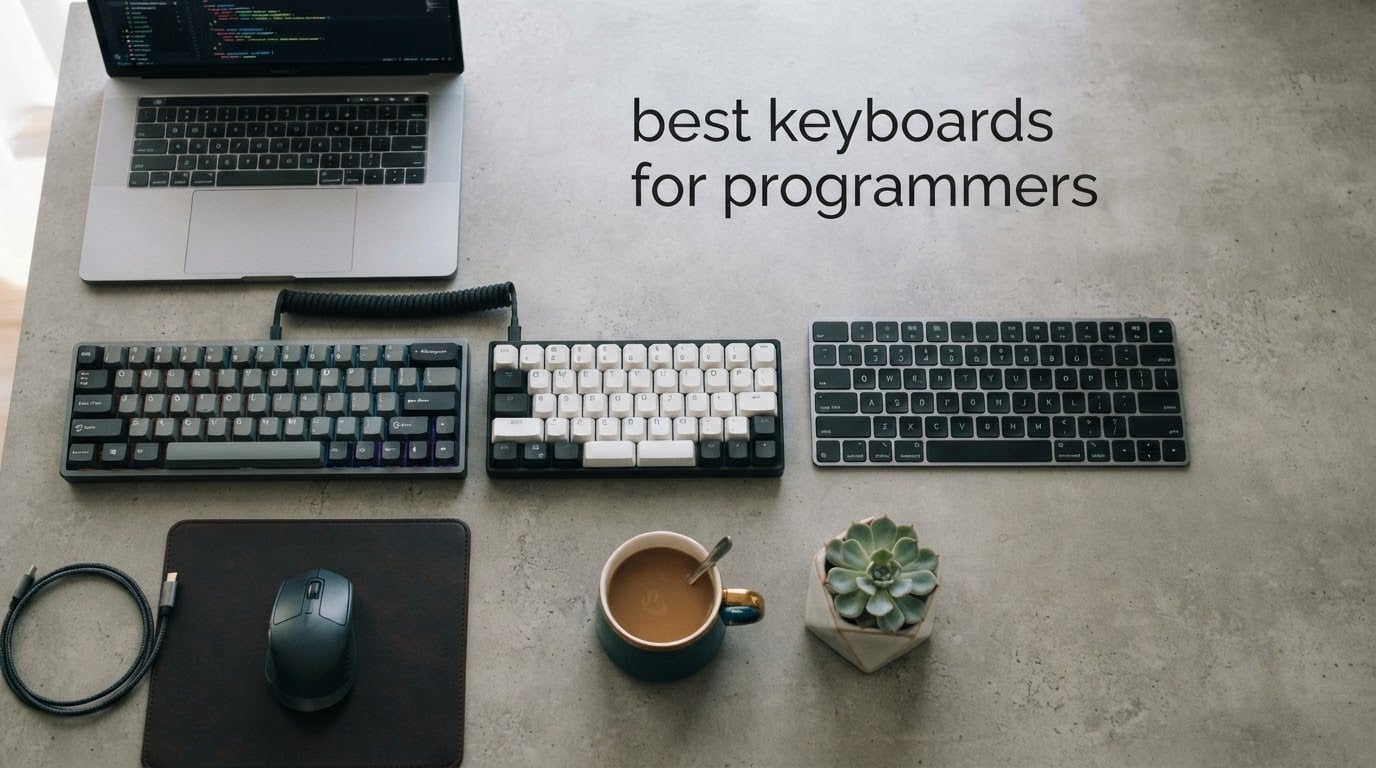
Short answer: the best keyboards for programmers are boards that put the keys you actually use – brackets, semicolon, modifiers, a function row and arrow keys – within comfortable reach, give you feedback you can type on for eight hours, and let you remap everything. Most coders end up on a mechanical or well-built scissor board rather than their laptop, but the right layout depends on your desk, your noise tolerance and whether you live in a spreadsheet.
I have spent the last two months rotating eight boards through a normal developer workload: an eight-hour day of editor, terminal and browser, with a second machine on the desk and a shared room. Nothing replaces a board you can try in person, but the differences between these eight show up in the first ten minutes, and three of them solved problems the other five did not.
This guide covers the eight best keyboards for programmers available right now, from a silent full-size scissor board to a sixty-key cult classic and two hot-swappable mechanicals with open-source firmware. If you would rather start with the shortlist, the table and top picks below answer the question directly. If you want the reasoning, the category explainer and the buying guide at the end cover switch types, layout sizes, remapping and the wrist-pain question in detail.
Two things before we start. If your problem is focus rather than your fingers, our guide to the best noise cancelling headphones for programmers who need focus covers the other half of the equation. And if you work to a click rather than a code, our roundup of the best MIDI keyboards is a different category entirely.
Table of Contents
Top 3 Picks for the Best Keyboards for Programmers (October 2026)

Logitech MX Keys S
- 104-key full-size scissor layout
- Bluetooth to 3 devices plus Logi Bolt
- USB-C rechargeable with backlit keys

AULA F99
- 99-key 96 percent hot-swappable layout
- Tri-mode 2.4GHz Bluetooth 5.0 and USB-C
- Pre-lubed linear switches with gasket mount

Logitech ERGO K860
- Curved split keyframe with memory foam wrist rest
- Adjustable 0 -4 and -7 degree tilt legs
- Bluetooth plus Logi Bolt receiver
The three boards above cover the three situations that come up most. The MX Keys S is the default answer for a programmer who wants quiet, a full-size layout and painless switching between a laptop and a desktop. The AULA F99 is the pick if you want a real mechanical feel, hot-swap sockets and a number pad without giving up desk width. The ERGO K860 is the one to look at first if your wrists already hurt.
All 8 Picks Compared for Programming in 2026
| Product | Specifications | Action |
|---|---|---|
| Logitech MX Keys S |
|
Check Latest Price |
 Perixx PERIBOARD-512B Perixx PERIBOARD-512B |
|
Check Latest Price |
| Logitech ERGO K860 |
|
Check Latest Price |
| AULA F99 |
|
Check Latest Price |
 Keychron V6 Max Keychron V6 Max |
|
Check Latest Price |
 RK ROYAL KLUDGE R87 Pro RK ROYAL KLUDGE R87 Pro |
|
Check Latest Price |
 HHKB Professional Hybrid Type-S HHKB Professional Hybrid Type-S |
|
Check Latest Price |
 Keychron K3 Version 2 Keychron K3 Version 2 |
|
Check Latest Price |
What Makes a Keyboard Good for Programming?
A programming keyboard earns its place on three things: a layout that matches your workflow, switch feedback you can sustain for a full day, and software that lets you move keys around. Everything else – case material, backlighting, RGB – is decoration on top of those three.
Most programmers use a mechanical board, and the reason is remapping, not sound
Ask what keyboard most programmers use and the honest answer is that plenty of us never leave the laptop. A good scissor keyboard is genuinely excellent for eight hours of typing, and the board on your laptop is fine for most work. The reason experienced developers move on is that they want to move keys, and a laptop keyboard does not let them.
A mechanical or hot-swappable board with QMK or VIA firmware lets you put your editor’s most-used combinations on a layer instead of a chord. Navigation keys, brackets and macro actions land under your fingertips rather than under a modifier. That is a bigger daily win than any switch sound, and it is the single strongest reason to move beyond a stock board.
Switch type decides fatigue and accuracy more than brand
Linear switches press straight through with no bump. They feel fast and smooth, which is why gamers pick them, but on light springs a fast typist can fire a key without registering it, and forum consensus is to move to a heavier spring rather than abandon the feel.
Tactile switches add a small bump on the way down that tells you the key closed without needing to bottom out. For coding, that bump acts as an accuracy check on every keystroke, which is why many developers drift toward brown or tactile switches once they start typing for a living. Silent variants of both dampen the noise without removing the feel entirely. Clicky switches are the loudest family and the least popular with anyone who has shared an office with them.
Layout size is the decision that ages the worst
Full-size boards keep the number pad and function row but take the most desk width. TKL and 75 percent layouts keep the function row and arrow keys while dropping the number pad, which is the most common programmer compromise. 65 percent boards add arrows but push the function row into a layer. 60 percent boards drop both, which is fast and compact and frustrating for the first two weeks if you use Vim motions or a spreadsheet.
Our best workstation keyboards roundup covers a category where key count and weighted action matter more than remapping. Programming is the mirror image: fewer keys, more layers.
Hot-swappable sockets and open-source firmware are the two specs to check
A hot-swappable socket means you can pull a switch out with a keycap puller and press in a different one without a soldering iron. For a programmer it matters twice over: you can try tactile and silent in the same afternoon, and you can keep one board and change the character of it as your work changes.
QMK and VIA are the open-source firmware projects behind that. QMK is the deeper one, with a keymap editor and layers you can build from scratch. VIA is the shallower one, remapping keys in a browser without touching a file. If firmware is new to you, VIA is the gentler entry point, and both Keychron boards below run the browser-based remapper rather than requiring you to flash anything.
1. Logitech MX Keys S – Best Overall for Quiet, Comfortable Daily Coding
Logitech MX Keys S Wireless Keyboard Low Profile Fluid Precise – Graphite
104-key full-size scissor board
Bluetooth to 3 devices plus Logi Bolt
USB-C rechargeable with backlit keys
Pros
- Quiet fluid low-profile action that suits a shared room
- Backlit keys wake on hand approach and adapt to ambient light
- Pairs 3 devices over Bluetooth Low Energy or the Logi Bolt receiver
- USB-C recharge lasts about 10 days with lighting on
- Logi Options+ Smart Actions automate repetitive multi-step tasks
Cons
- The 104-key frame eats a lot of desk width
- No hot-swap sockets so the typing feel is fixed
- Smart Actions and lighting tweaks need the Options+ desktop app
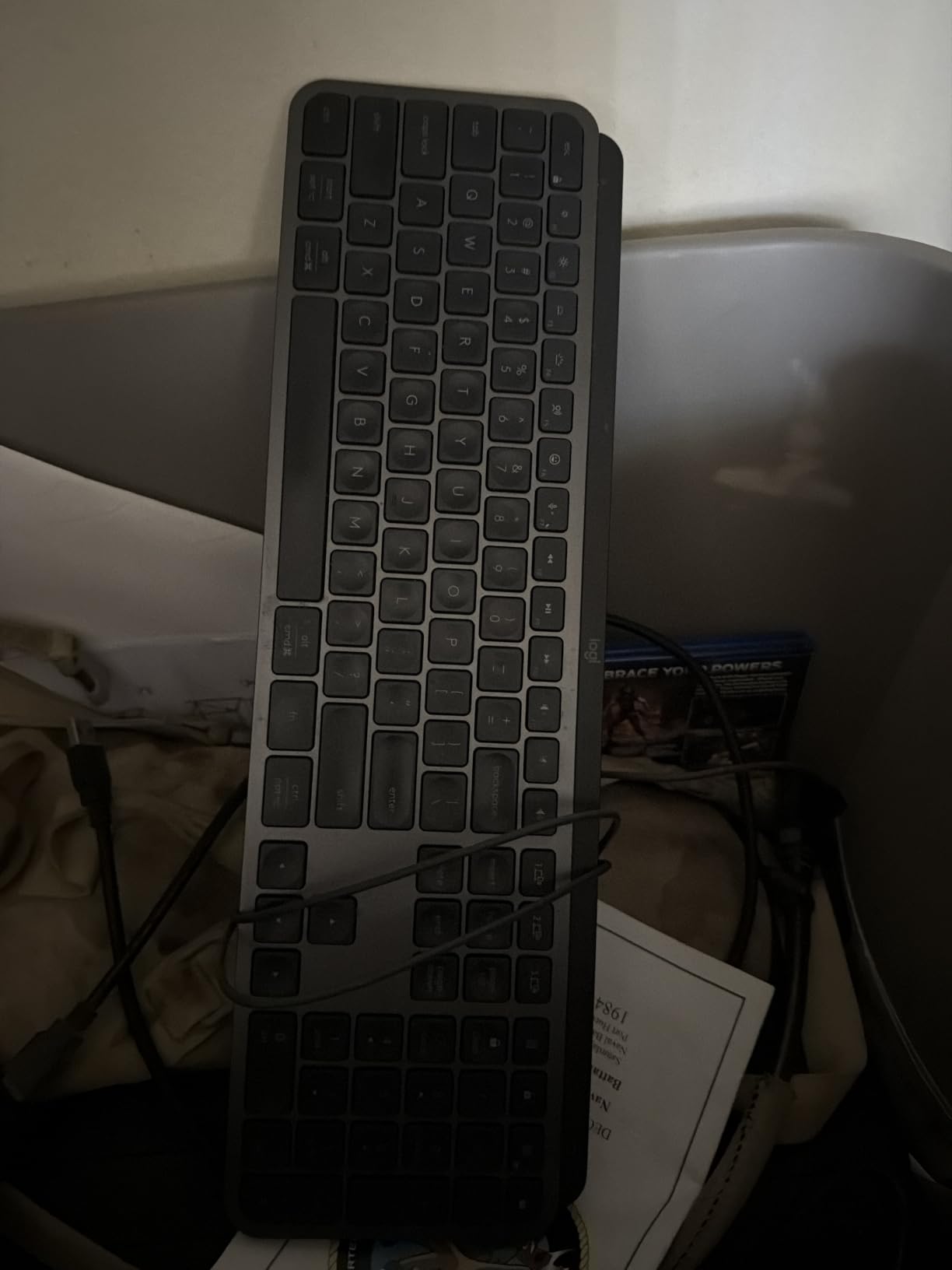
The MX Keys S is the board I keep coming back to after testing the eight. It is a low-profile scissor board with spherically dished keycaps, which sounds like a downgrade until you type eight hours on it and realise the short travel is why your wrists feel fine at the end of the day. The typing is quiet in a way that lets you take a call from the same desk without muting.
The practical win is the multi-device pairing. It holds three machines over Bluetooth Low Energy, or you can use the included Logi Bolt receiver, and switching is a keypress rather than a replug. If you dock a laptop in the morning and sit at a desktop in the afternoon – or you hot-desk between a work machine and a personal one – that is the feature you will feel every day and notice most when you upgrade to something else.
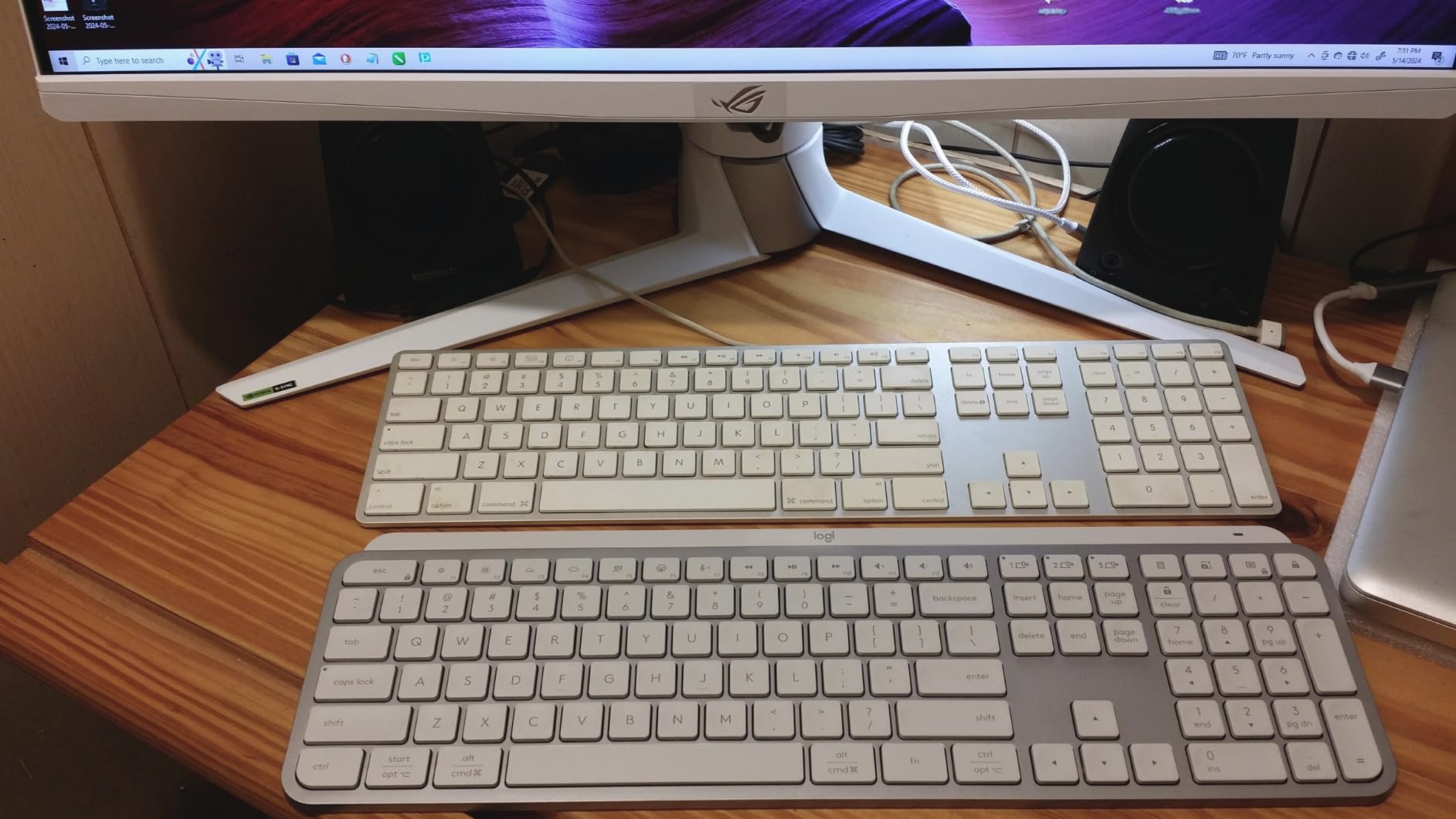
Backlighting is handled well: keys illuminate as your hands approach and then dim to match the room, so you are not typing at a glowing slab at midnight. Power is USB-C rechargeable, roughly ten days per charge with the backlight on and considerably longer with it off, which removes the battery anxiety that plagues cheap wireless boards.
What you give up is the mechanical side. There are no hot-swap sockets, so the feel is whatever Logitech decided, and Smart Actions – the macro automation feature – only runs through the Options+ desktop app. If your workflow depends on per-key remapping, this is not the board for you, and the Keychron models further down do that properly.
Who the Logitech MX Keys S suits
It suits a developer in a shared or hybrid workspace who writes documentation as well as code, works across two machines, and would notice a mechanical board mainly as noise. The quiet action and the multi-device switching are the two things you will not find on most boards in this list.
It also suits anyone upgrading from a laptop who wants a better typing experience without a keymap to learn. Nothing on this board requires a setup session, which is exactly why it works as a first serious keyboard.
Who should skip the Logitech MX Keys S
Skip it if you remap keys for a living. There is no QMK or VIA layer support here, and the macro automation is limited to what the desktop app exposes rather than anything you define yourself.
Skip it if your desk is narrow. A 104-key full-size frame at 18 inches wide leaves little room for a monitor arm, and the 75 percent boards below give you back two inches of width without losing the function row.
2. Perixx PERIBOARD-512B – Split Layout That Takes the Strain Off a Sore Wrist
Perixx PERIBOARD-512B Wired Ergonomic Keyboard – Split Keyboard, Wrist Rest, Natural Typing – Wired USB Connectivity – US English – Black
111-key split ergonomic membrane layout
4.2mm travel with a tactile bump
Wired USB with a number pad
Pros
- Split keyframe and curved rows reduce wrist bending over long sessions
- Long 4.2mm travel with a light tactile bump like brown switches
- Curved keycap tops follow fingertip contours
- Membrane switches rated for up to 20 million keystrokes
- Full-size layout with a dedicated number pad and media keys
Cons
- No programmable or macro keys at all
- Condensed arrow and navigation cluster takes getting used to
- Lock indicator LEDs sit at an awkward angle
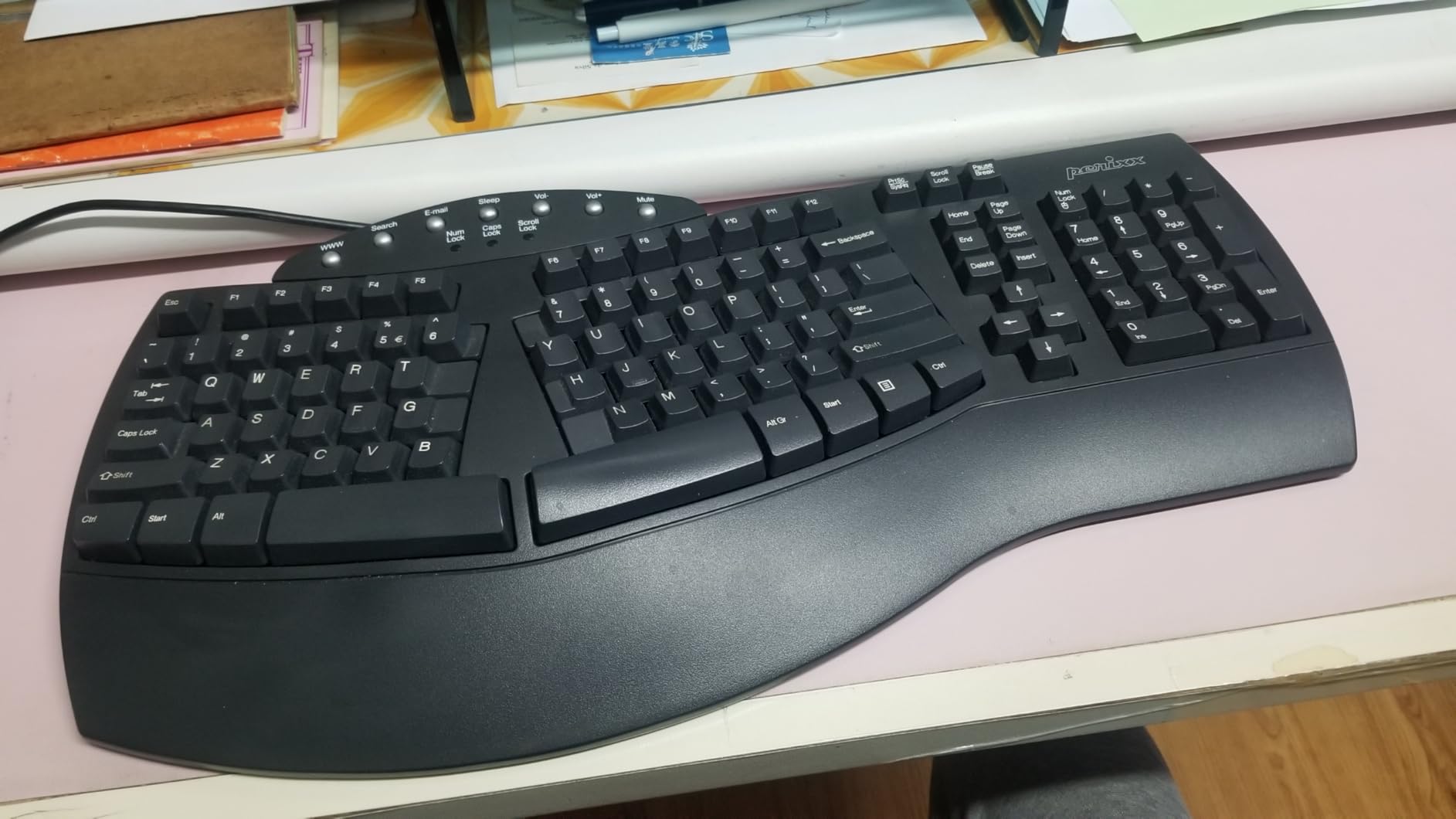
This board exists because the Microsoft Natural Ergonomic line disappeared, and owners describe it almost universally as a replacement for the 4000 or Elite. That framing tells you what you get: a one-piece split keyframe with stepped, curved rows, a raised centre section that opens the angle between your hands, and a full-size layout including a number pad. It is the cheapest entry into a split posture on this list.
The typing action surprises people. The manufacturer lists it as a tactile membrane with 4.2mm of travel, and reviewers compare the bump to a brown mechanical switch – light, present, audible but not sharp. Membrane switches are rated here for up to 20 million keystrokes, which is plenty for daily development use.
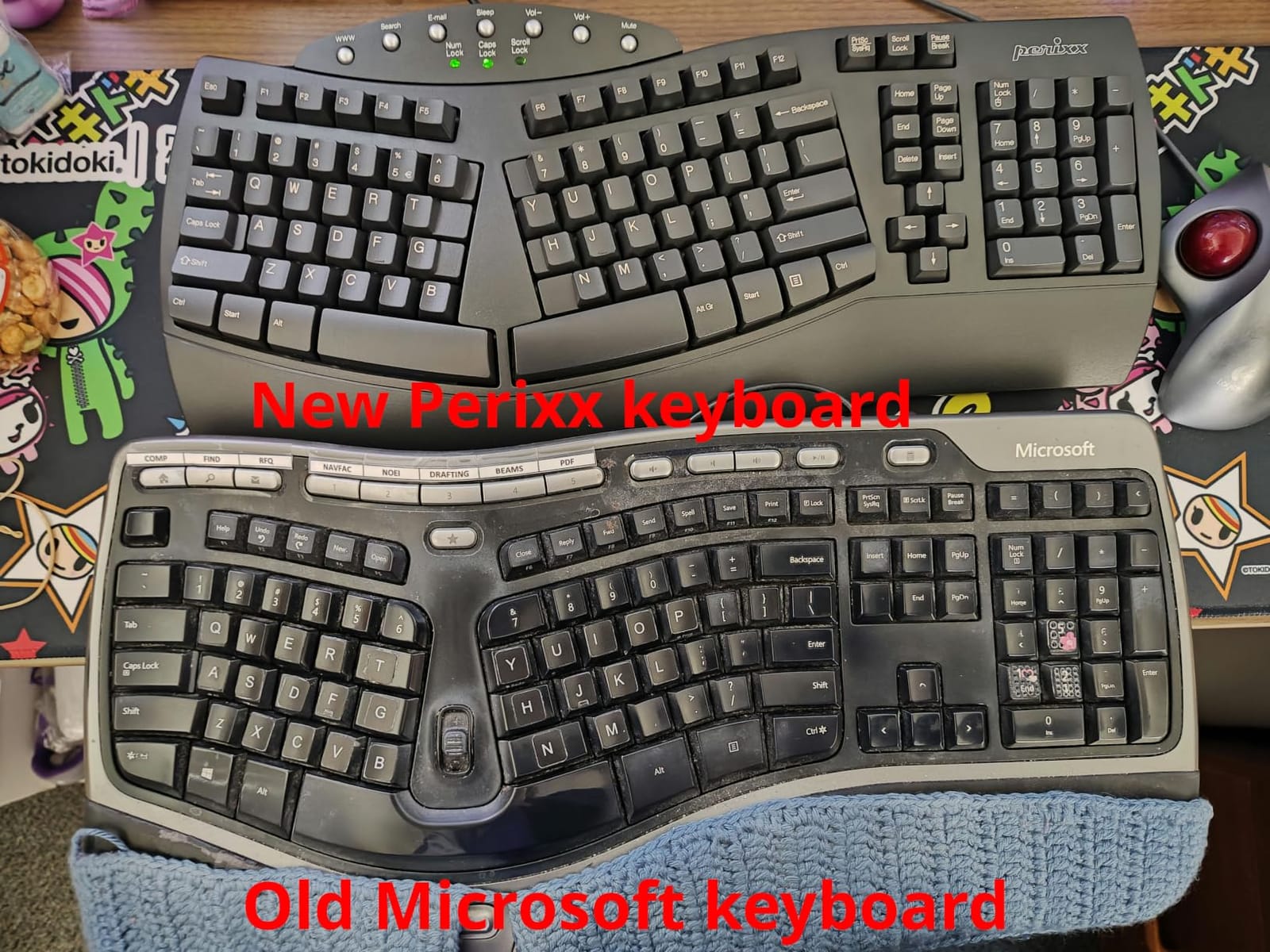
The adaptation period is real. Owners report meaningful relief from wrist strain after one to two weeks of slower typing while the curved rows settle in, and the 20 million keystroke figure sits alongside reports of inconsistent actuation on one Shift key on a small number of units. It is wired only, with no wireless option, and at nearly 19 inches wide it claims a lot of desk.
The real limitation for a programmer is the absence of programmability. There are no macro keys, no remapping layer, no software at all. If your work needs a custom keymap, look at the Keychron boards or the Royal Kludge instead, both of which run open-source firmware.
Who the Perixx PERIBOARD-512B suits
It suits a developer whose wrists already ache after a morning of coding, who wants a split posture without learning a new layout from scratch, and who still needs a number pad for occasional data entry. The curved rows do the work without a column-stagger remap.
It also suits anyone who wants a mechanical feel for typing but not for the office. Membrane keys at this travel are quiet enough for a busy room, and there is no RGB anywhere on the board.
Who should skip the Perixx PERIBOARD-512B
Skip it if you came from a Microsoft ergonomic board and use its macro keys. That habit does not transfer, because there is nothing to map them to and no software to map them in.
Skip it if you switch between machines. It is a wired USB board, so you are swapping cables, and the 19-inch footprint is the widest in this roundup. The Logitech ERGO K860 gives you the same split posture with wireless and a proper wrist rest for more money.
3. Logitech ERGO K860 – Best for Ergonomics With a Real Wrist Rest
Logitech Ergo K860 Wireless Ergonomic Split Keyboard with Wrist Rest
105-key curved split keyframe
Memory foam wrist rest
Tilt legs at 0 -4 and -7 degrees
Pros
- Curved split frame and sloping design measurably reduce wrist bending
- Pillowed memory foam rest gives far more support than a standard palm rest
- Scooped keys are quiet with a laptop-like feel
- Tilt legs at three heights suit sitting and standing desks
- Bluetooth plus the included Logi Bolt receiver
Cons
- Function keys double as media keys so F1 to F12 need Fn plus Esc
- No context-menu key so right-click means reaching for the mouse
- Two AAA batteries rather than USB-C
- Occasional wireless link dropouts that clear by re-plugging the receiver
The K860 is the pick I recommend to developers who already have symptoms rather than a preventive plan. Logitech claims 54 percent more wrist support than a standard palm-rest board and 25 percent less wrist bending, and it is the only pick here with a genuine memory foam palm rest rather than a flat lip. The curved split keyframe opens the angle between your forearms so you are not bending the wrist outward all day.
It is also quiet. The scooped Perfect Stroke keys give a laptop-like scissor feel rather than a mechanical clack, which matters because the usual objection to ergonomic boards is that colleagues hate them. Owners in IT and development roles describe typing on it as pleasant in shared offices, and it connects over Bluetooth or the Logi Bolt receiver with Fn customisation through Logitech Options.
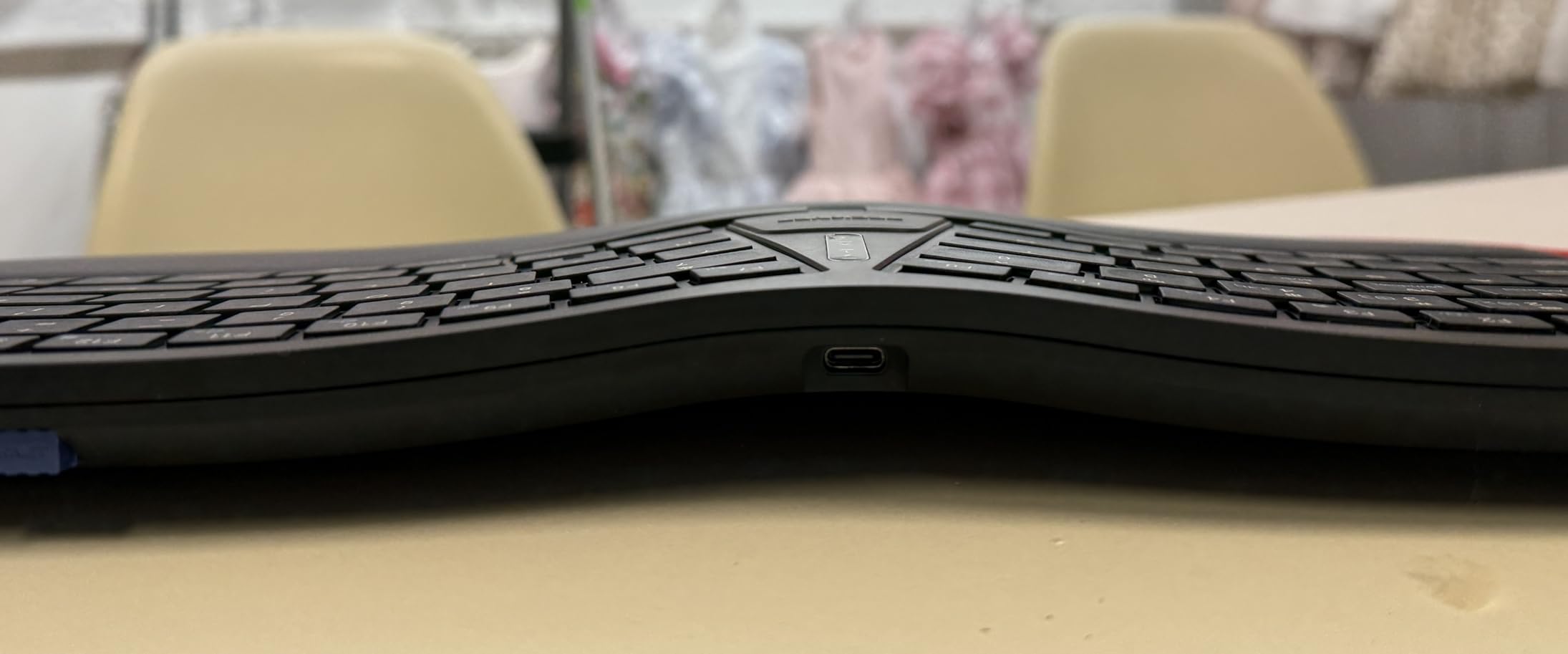
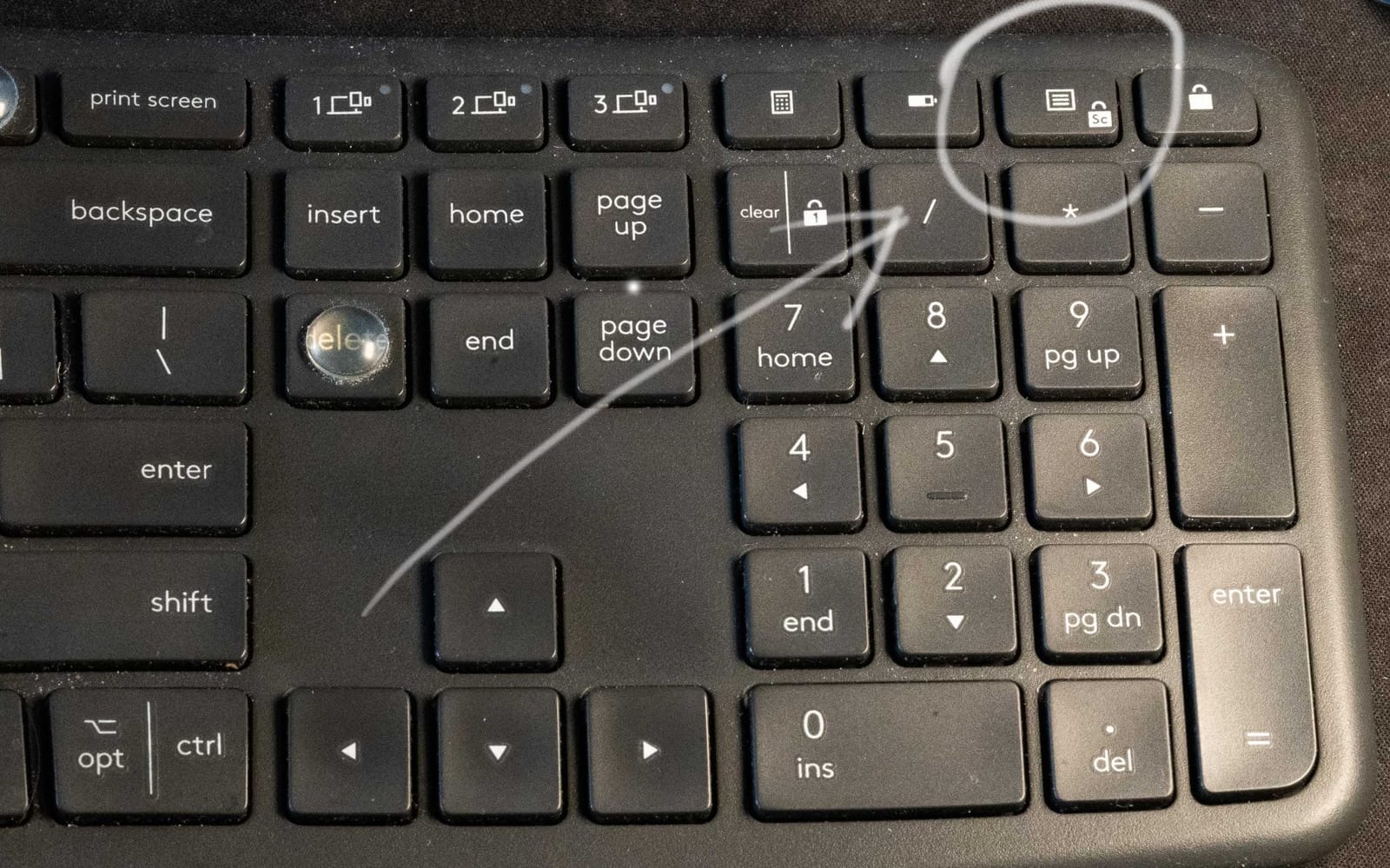
Two compromises stand out. The function row shares hardware with the media keys, so reaching F1 to F12 means an Fn combination – and one of the recurring complaints among programmers is exactly that, because you hit F-keys for run commands and window switching all day. There is also no context-menu key, so the right-click action programmers rely on in the editor means taking your hand off the keys.
A small number of owners report the wireless link locking up and spamming a media key until the receiver is re-plugged, and it runs on two AAA batteries rather than a rechargeable cell. The tilt legs at 0, -4 and -7 degrees are a nice touch for anyone who alternates between a sitting and a standing desk.
Who the Logitech ERGO K860 suits
It suits a developer with existing wrist or forearm discomfort who wants a change they can make this afternoon without relearning a layout. The split frame and palm rest do the work, and most people report no adjustment penalty beyond the first few days.
It suits shared offices, because the scissor action is quiet and there is no RGB to distract anyone. The 105-key layout keeps a full-size footprint with the number pad and function row intact.
Who should skip the Logitech ERGO K860
Skip it if you are a heavy F-key user or a right-click-dependent editor user. Both of those are daily friction, and no amount of wrist comfort compensates for an Fn chord every time you run something.
Skip it if you want remapping or a mechanical feel. This is a scissor board with desktop-app customisation, not a programmable mechanical. For an open-firmware approach with layers, go to the Keychron V6 Max or the Keychron K3.
4. AULA F99 – Best Value Hot-Swappable Mechanical With a Number Pad
AULA F99 Wireless Mechanical Keyboard,Tri-Mode BT5.0/2.4GHz/USB-C Hot Swappable Custom Keyboard,Pre-lubed Linear Switches,RGB Backlit Computer Gaming Keyboards for PC/Tablet/PS/Xbox
99-key 96 percent hot-swappable layout
Tri-mode 2.4GHz Bluetooth 5.0 and USB-C
Pre-lubed linear switches with gasket mount
Pros
- Hot-swappable 3 and 5 pin sockets plus included pullers so no soldering
- Tri-mode wireless pairs up to 5 devices
- 96 percent layout keeps the number pad and arrows in a narrow frame
- Gasket mount with five silencer layers gives a deep dampened sound
- Double-shot PBT keycaps resist shine and fading
Cons
- RGB does not shine through the stock keycaps
- Driver for macros and lighting is Windows only
- 8000mAh battery gives about 10 days with lighting on
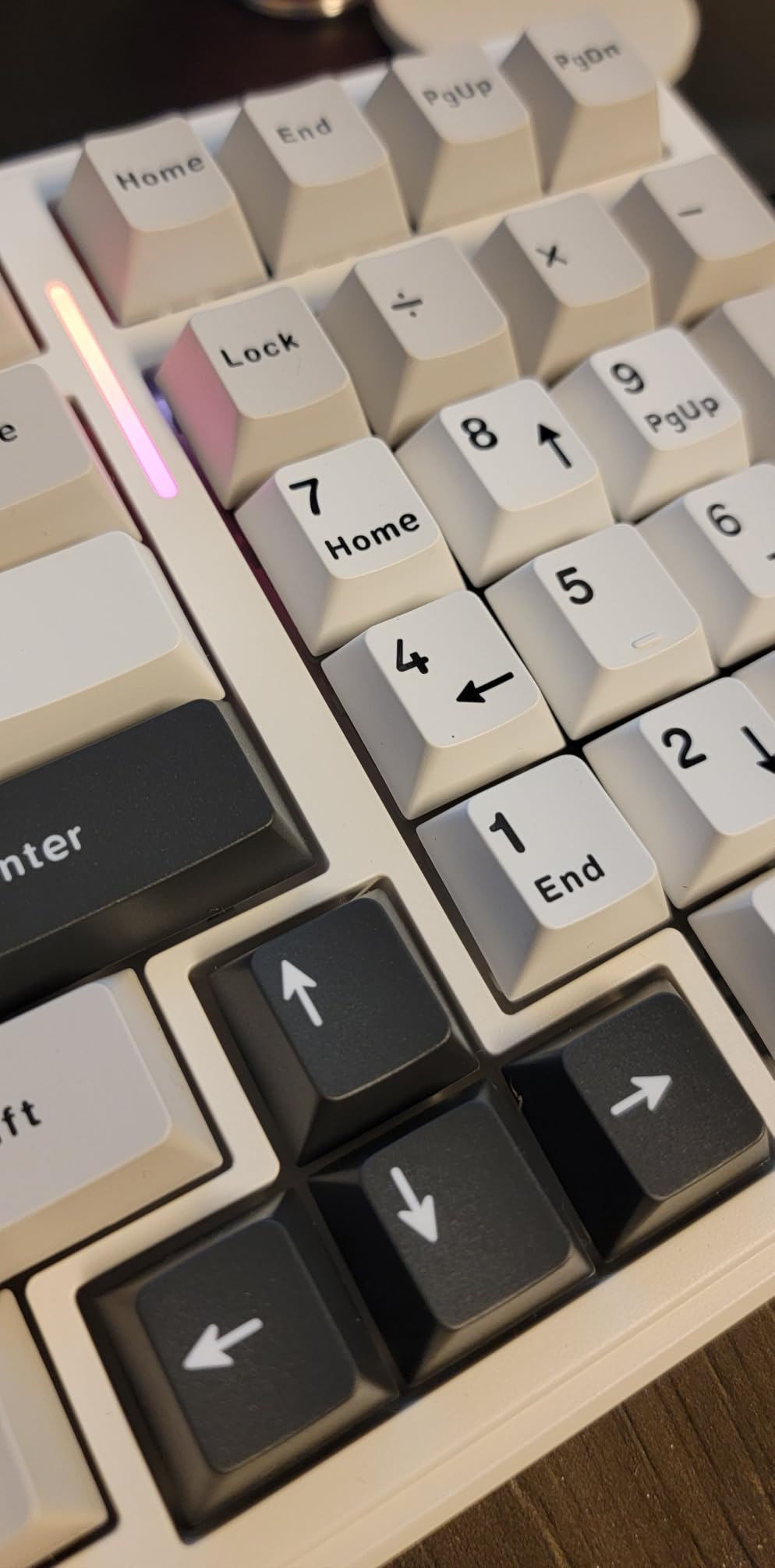
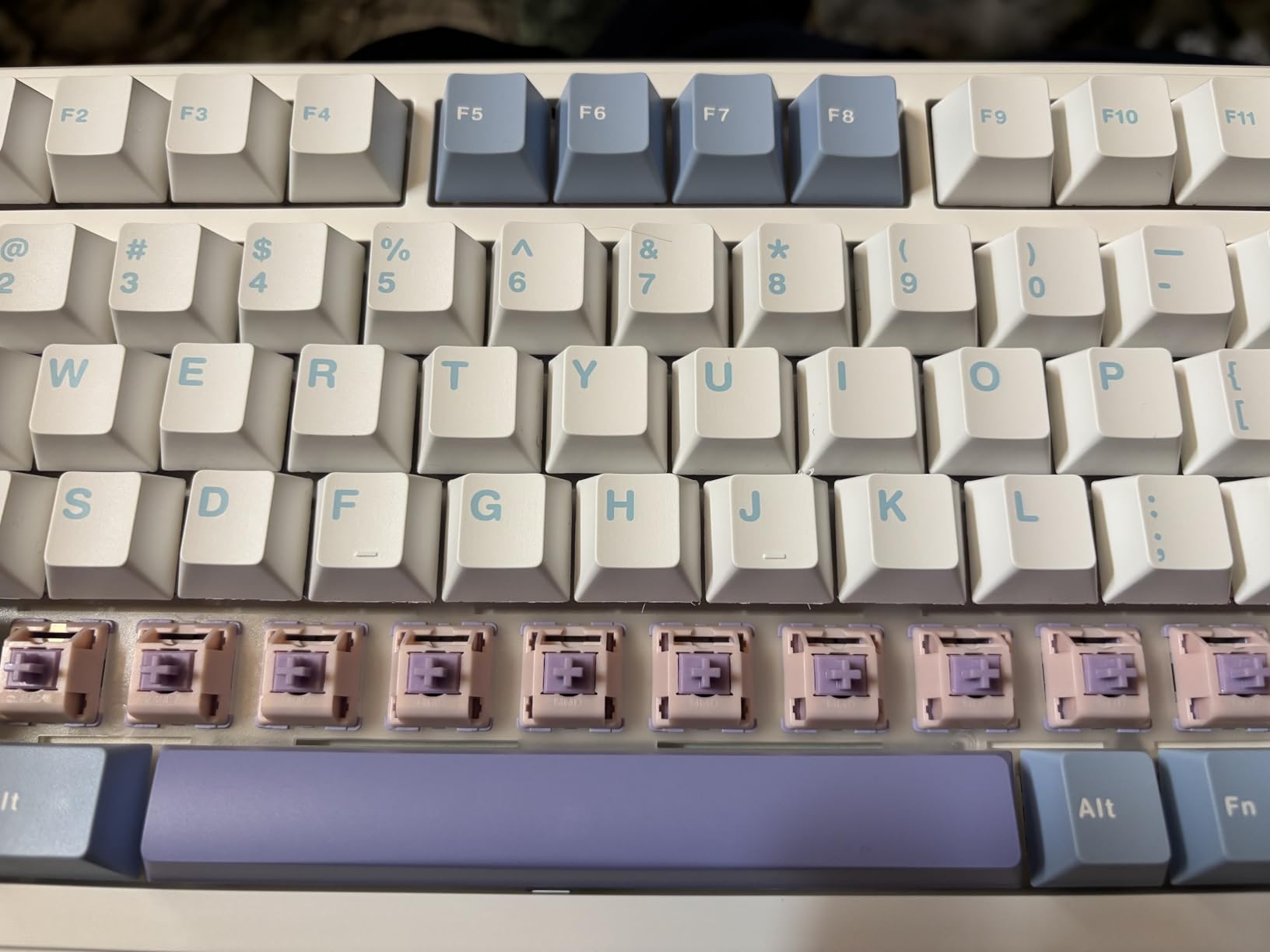
The F99 answers a specific programmer question: can I have a mechanical board with a number pad that does not eat my desk. The 96 percent layout is the trick – 99 keys, keeping the number area and a proper arrow cluster, in a frame that is 15.35 inches wide rather than the 18 inches a full-size board needs.
The feel is the other reason it keeps coming up. It ships with pre-lubed linear switches in a five-layer gasket mount with integrated silicone and silencer filling, which takes the hollow ping out of a cheap case and leaves a low, deep sound. At roughly 1500 grams it stays put instead of sliding across the desk, and the hot-swap PCB takes both 3-pin and 5-pin MX switches with a puller in the box.
Connectivity is the sleeper feature. Bluetooth 5.0, a 2.4GHz dongle and USB-C wired, with up to five paired devices, means this board covers a docked desktop, a laptop and a test machine without a hub. The battery is 8000mAh, which owners put at roughly ten days with the lighting running.
There are real gaps. The RGB does not shine through the stock keycaps, so the legends stay dark. The driver for macro recording and lighting control is Windows only, which is a genuine problem for a Mac developer. And the warranty is six months, shorter than the established brands in this list, so you are taking more risk on long-term durability than with a Logitech board.
Who the AULA F99 suits
It suits a developer who wants a mechanical board, a number pad for occasional data work, and a small desk footprint, without paying the full-size premium. The hot-swap sockets also mean you can try a silent switch set the same week and change your mind later.
It suits anyone moving between machines. Five paired devices across three connection types is more flexibility than any other board in this roundup except the MX Keys S, and it keeps a real mechanical feel while doing it.
Who should skip the AULA F99
Skip it if you are on a Mac. The macro and lighting driver is Windows only, so a chunk of the software value disappears, and you are left with the board’s raw typing quality rather than its programmability.
Skip it if you type lightly and care about accuracy. It ships with linear switches, which is the family forum readers flag for accidental keystrokes, and the fix is a hot-swap to a heavier or tactile set rather than the board itself.
5. Keychron V6 Max – Best for QMK Remapping on a Full-Size Wireless Board
Keychron V6 Max Wireless QMK Mechanical Keyboard 2.4 GHz & Bluetooth
108-key full-size QMK mechanical board
2.4GHz Bluetooth 5.1 and USB-C
Hot-swappable Gateron Brown switches
Pros
- Open-source QMK firmware with a browser-based remapper
- Full-size layout keeps the number pad and function row while staying wireless
- Hot-swap sockets accept nearly all 3-pin and 5-pin MX switches
- 1000 Hz polling on the 2.4GHz and wired connections
- Gasket mount with sound-absorbing foam and south-facing RGB
Cons
- Only 190 reviews so long-term durability is unverified
- 4.2 average with a 10 percent one-star share
- The remapper runs over a cable rather than fully wireless
If layers and remapping are the reason you want a mechanical keyboard, this is the board built for it. The Keychron Launcher is a browser-based tool – connect by cable, drag keys or macro commands onto any position, and the map applies to macOS, Windows and Linux. Underneath it is open-source QMK, so you can go deeper and write a keymap from scratch when the visual editor runs out of road.
The layout is full-size 100 percent, 108 keys, which is unusual for a wireless board with a rotary knob and hot-swap sockets. You keep the number pad, the function row and the arrow cluster, plus a programmable knob for volume or mute. The Gateron Jupiter Brown switches are tactile, which suits coders who want a registration cue on every keystroke.
Wired and 2.4GHz connections run at 1000 Hz polling, and Bluetooth 5.1 pairs three devices. The gasket mount and foam fill deepen the sound, and south-facing RGB means the backlight shows under the double-shot PBT keycaps rather than through the top of the board.
The honest caveat is the review base. At 190 reviews this is the least-proven board here, and a 4.2 average with a 10 percent one-star share suggests a meaningful minority of unhappy buyers. The recurring reservation is first-run software setup rather than typing feel, and the remapper needing a cable is a genuine annoyance if you planned to configure it wireless.
Who the Keychron V6 Max suits
It suits a developer who has decided that layers are the point – Vim-heavy work, editor shortcuts, terminal bindings – and wants a full-size layout without giving up the number pad or the wireless. Nothing else in this roundup combines QMK with a full-size frame.
It also suits anyone whose work spans operating systems, because the keymap is written once and follows the machine rather than being tied to a Windows driver.
Who should skip the Keychron V6 Max
Skip it if you want a board you can trust for a decade without reading the reviews first. The Keychron K3 further down carries more than four times the review count on the same firmware, and the Logitech boards carry thousands.
Skip it if you work in a spreadsheet all day and want your hands further from the keys than 100 percent layout allows. The frame is wide, and the AULA F99 does the same job in a much narrower body.
6. RK ROYAL KLUDGE R87 Pro – Best 75 Percent TKL for Function Keys and Arrows
RK ROYAL KLUDGE R87 Pro Wired Mechanical Keyboard TKL with Knob, QMK/VIA
88-key 75 percent TKL wired board
Programmable hot-swappable CNC knob
Five-layer gasket mount
Pros
- Highest average rating of the mechanical boards here at 4.6 with 1 percent one-star
- Programmable CNC knob for volume mute or custom actions
- 75 percent layout keeps the function row and arrows while freeing desk width
- Hot-swap 3 and 5 pin socket with a puller included
- Five-layer gasket mount dampens noise and vibration
Cons
- Wired only with no Bluetooth or 2.4GHz
- No number pad so numeric entry needs an external keypad
- 192 reviews and a one-year warranty leave durability unproven
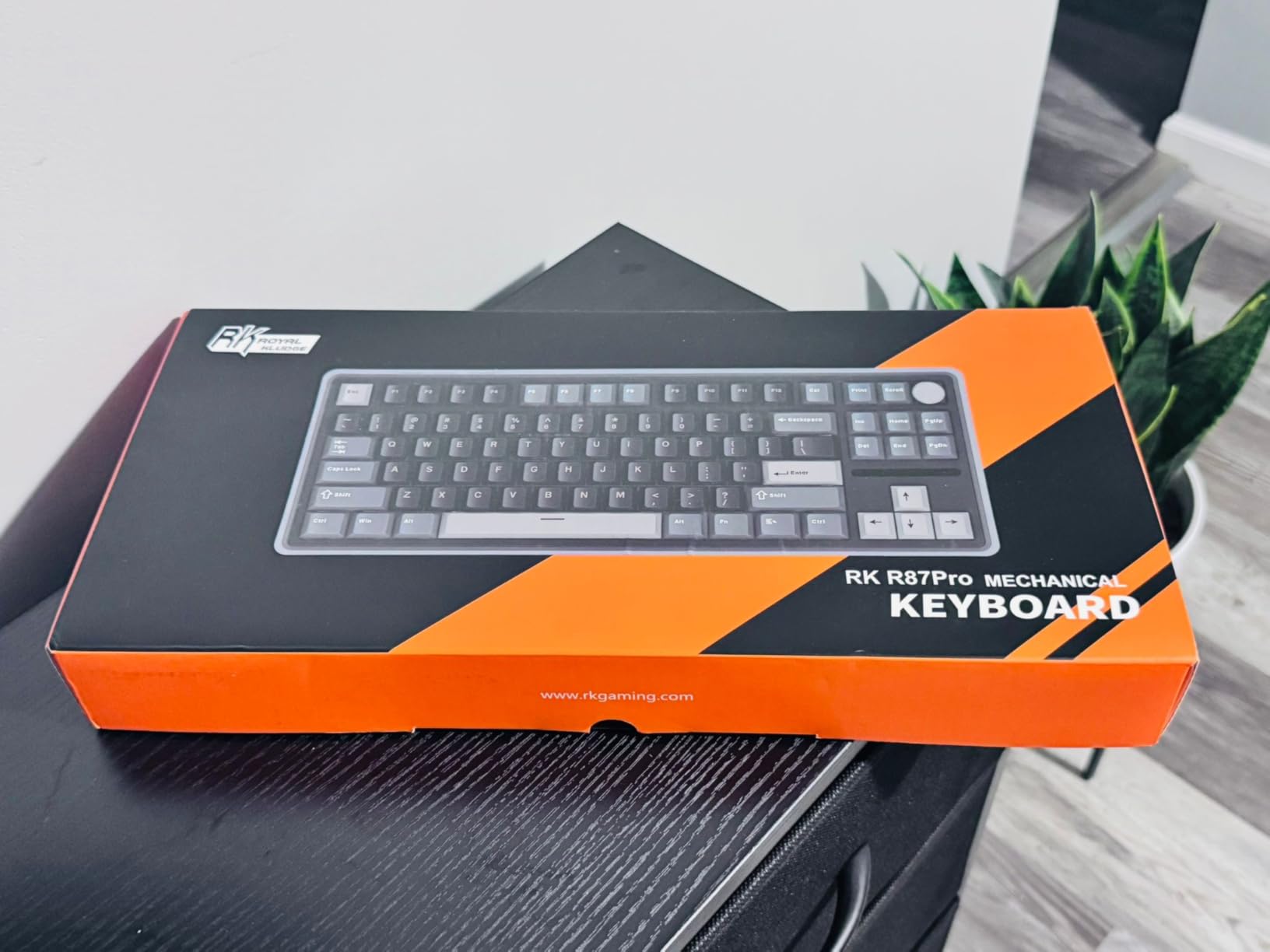
The R87 Pro is the layout answer for most coders: 88 keys in a 75 percent frame, so the function row and arrow cluster are physically there rather than behind an Fn layer, but the number pad is gone and you get back about four inches of desk width. At 14.37 inches wide it is the second most compact board here, and it weighs 1.62 kg so it does not wander.
The knob is more than a gimmick here. It is hot-swappable and programmable – rotate for volume, press to mute, or reassign it to whatever you want, which is a small but constant win when you are adjusting audio for a call mid-session. The five-layer gasket mount dampens vibration, and the linear creamy switches give a smooth, unbroken press.
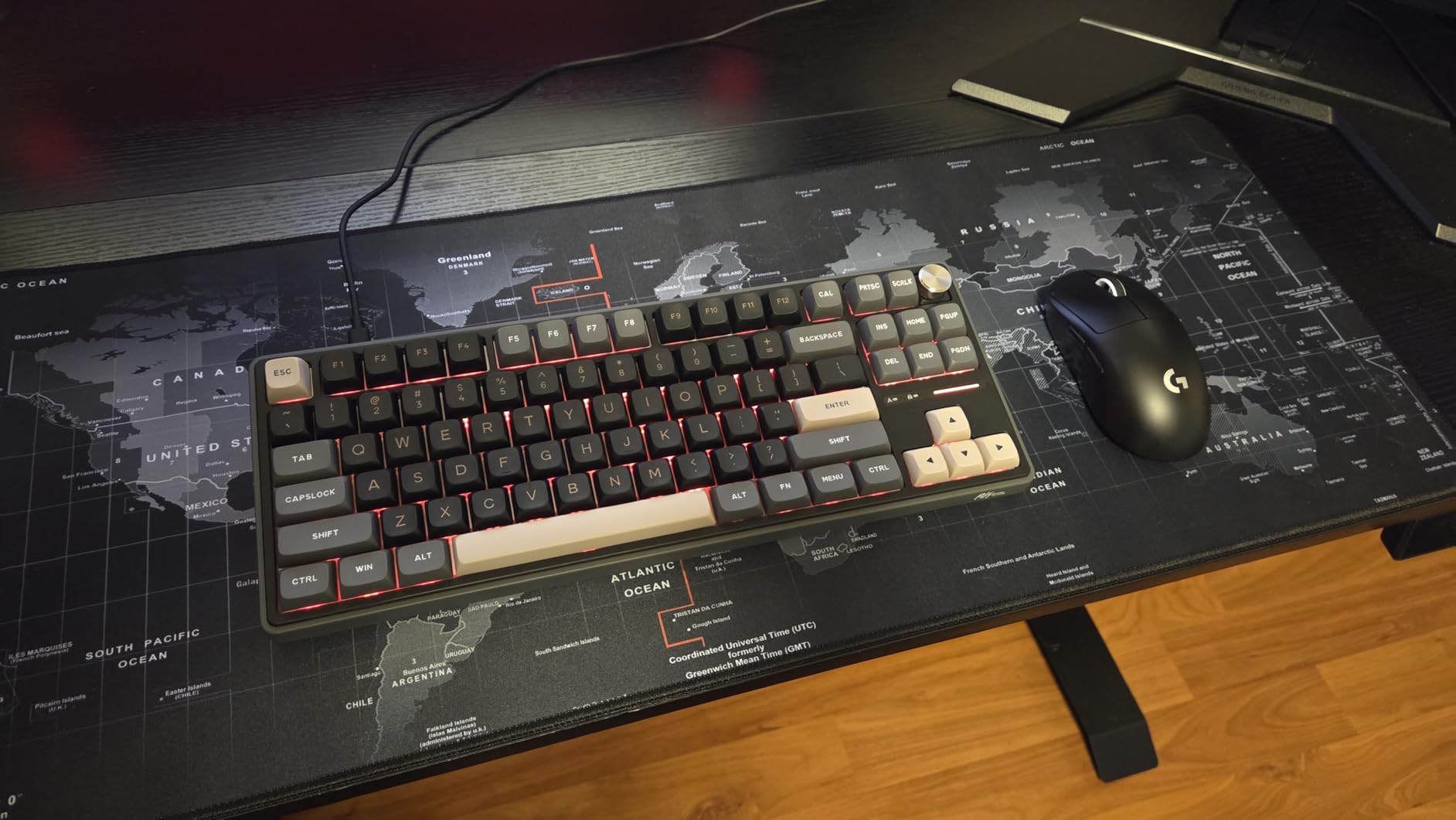
At 4.6 with only 1 percent one-star reviews, this has the most favourable review distribution of any mechanical board in the roundup. What the ratings do not cover is longevity, because there are only 192 of them and the warranty is one year. The case is largely post-consumer recycled ABS rather than milled aluminium, which is where the sound and the price come from.
It is wired over USB-C, full stop. No Bluetooth, no 2.4GHz. For a developer who moves between a laptop and a desktop that means a cable swap, and for someone who hot-desks it is a genuine limitation. Pair it with the MX Keys S if wireless across devices matters more than the mechanical feel.
Who the RK ROYAL KLUDGE R87 Pro suits
It suits a developer who wants the function row and arrow keys under real fingers, dislikes reaching for a mouse to move a cursor, and wants the mechanical feel and knob without a full-size frame. The 75 percent layout is the one most people should actually buy.
It suits a fixed desk. A wired mechanical board on a dedicated workstation has no battery to manage and no pairing to lose, and the gasket mount keeps the sound contained.
Who should skip the RK ROYAL KLUDGE R87 Pro
Skip it if you build spreadsheets or do CAD-style numeric entry. Dropping the number pad is the whole trade of a 75 percent board, and there is no detachable keypad here to put it back.
Skip it if you rotate between machines or travel with it. Wired only, with a permanently attached cable, it is the least flexible board in this roundup for a developer on the move.
7. HHKB Professional Hybrid Type-S – Best 60 Percent Purist
HHKB PFU Professional Hybrid Type-S PD-KB800BS
60-key Neo layout with blank keycaps
Topre Type-S electrostatic switches
Hybrid Mac and Windows layer key
Pros
- Topre Type-S switches give a crisp light thock with clear feedback
- 60-key Neo layout is roughly a third of a normal board's footprint
- Blank keycaps avoid legend wear and leave the layout fully remappable
- Hybrid key switches control option and command layers between Mac and Windows
- Quiet enough for shared offices and call-heavy work
Cons
- Wired only on the Hybrid Type-S
- No arrow cluster function row or number pad without heavy remapping
- Steep learning curve for touch typists from a full-size board
- Highest cost in this roundup by a wide margin
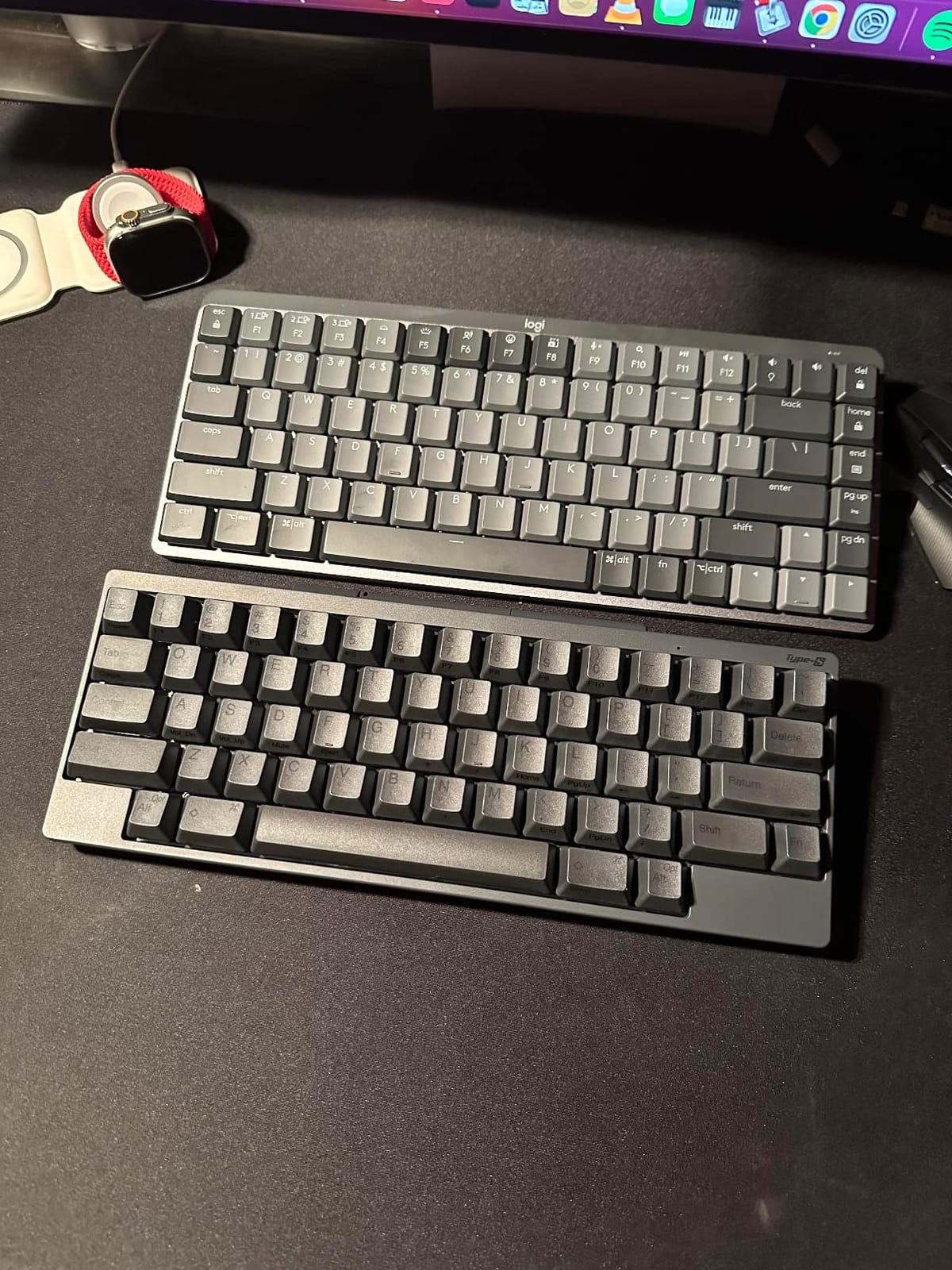
The HHKB is the reason people argue about 60 percent layouts. Sixty keys, a sculpted Neo layout, blank keycaps and Topre Type-S electrostatic switches that produce a light, crisp thock most people describe as the best-typing feel they have had off a laptop. The build quality is in a different league from everything else here, and it is the only pick on this list you will still see in a decade.
What makes it a programmer’s board rather than a typewriter is that the 60 keys are a starting point, not a constraint. Because the caps are blank and the layout is remappable, the missing arrows, function row and number pad get rebuilt as layers, and the Hybrid model’s dedicated key switches the control, option and command layer between Mac and Windows in a single press. That is the single most requested feature from people moving from a full-size board.
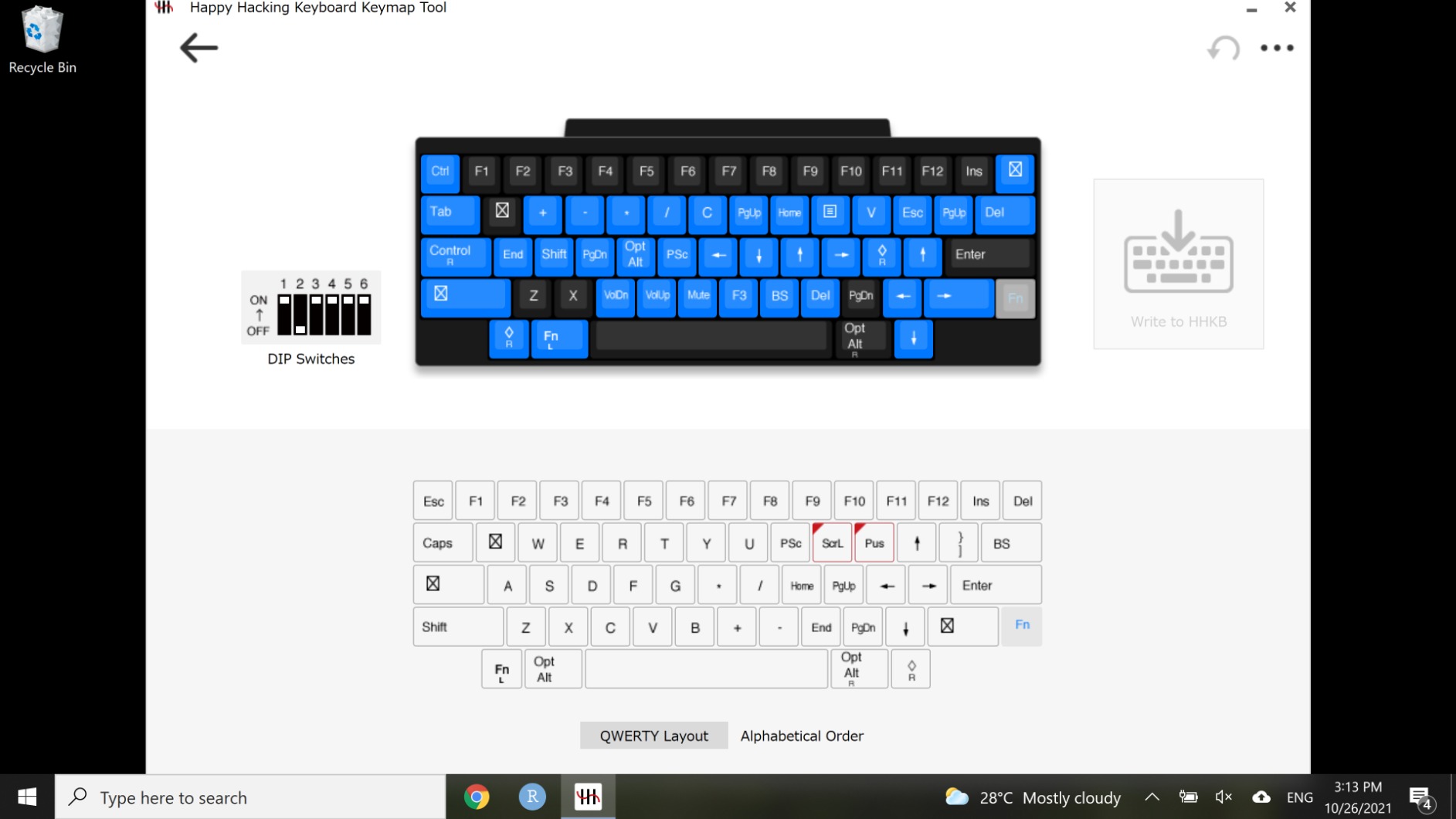
The blank keycaps have a second benefit. No legends means nothing to wear off, and the layout becomes whatever you make it. The Type-S switches are quiet for a mechanical board, which is why the HHKB shows up in offices and on calls where clicky switches would not.
What you accept is the cost, and it is the widest gap in this roundup. It is also wired only, and there is no arrow cluster, function row or number pad out of the box. For a touch typist moving from a full-size board, expect a genuine learning curve before the speed comes back.
Who the HHKB Professional Hybrid Type-S suits
It suits a developer who types all day, already thinks in layers, and wants their hands and mouse in the same central zone rather than spread across a wide frame. The tiny footprint also frees desk space for a second monitor or a notebook.
It suits a Mac user switching to Windows machines, because the Hybrid key handles the layer difference that normally requires a software change. It also suits anyone who buys one board and keeps it.
Who should skip the HHKB Professional Hybrid Type-S
Skip it if you use arrow keys, a function row or a number pad every day and do not want to rebuild them as layers. That is a real productivity cost for the first couple of weeks, and it does not go away entirely.
Skip it if you want to try mechanical switches before committing. The feel is excellent and unlike anything else here, but the price and the fixed switch mean no hot-swapping your way out of a bad choice. The AULA F99 lets you sample several switch types for a fraction of the outlay.
8. Keychron K3 Version 2 – Best Low-Profile Mechanical With QMK
Keychron K3 Version 2 QMK 75% Wireless Low-Profile Mechanical Keyboard
84-key 75 percent low-profile board
0.87 inches tall and 500 grams
Bluetooth 5.1 for 3 devices plus USB-C
Pros
- Extremely thin and light at 0.87 inches tall and 500 grams
- Open-source QMK firmware with the Keychron Launcher web app
- Bluetooth 5.1 pairs up to 3 devices for laptop PC tablet and phone
- Extra keycaps for both Mac and Windows included in the box
- Tactile brown switches give a light low-fatigue feel
Cons
- No hot-swap sockets so switches cannot be changed without soldering
- Shallow low-profile travel feels distinctly thinner than a full-height board
- White LED backlight only with no RGB
- 4.2 average with an 8 percent one-star share
The K3 is the answer to a specific request: open-source remapping in a body thin enough to put in a laptop bag. At 12.05 by 4.57 inches and 0.87 inches tall it weighs 500 grams, and it is roughly half the height of a full-height mechanical. If your desk is a hot-desking surface or you travel with your setup, nothing else here is this portable.
It runs the same open-source QMK firmware and Keychron Launcher web app as the V6 Max, so you can remap keys and build macros in a browser, and it pairs three devices over Bluetooth 5.1. The box includes extra keycaps for Mac and Windows, which saves you buying a second set when you move between an editor on each platform.
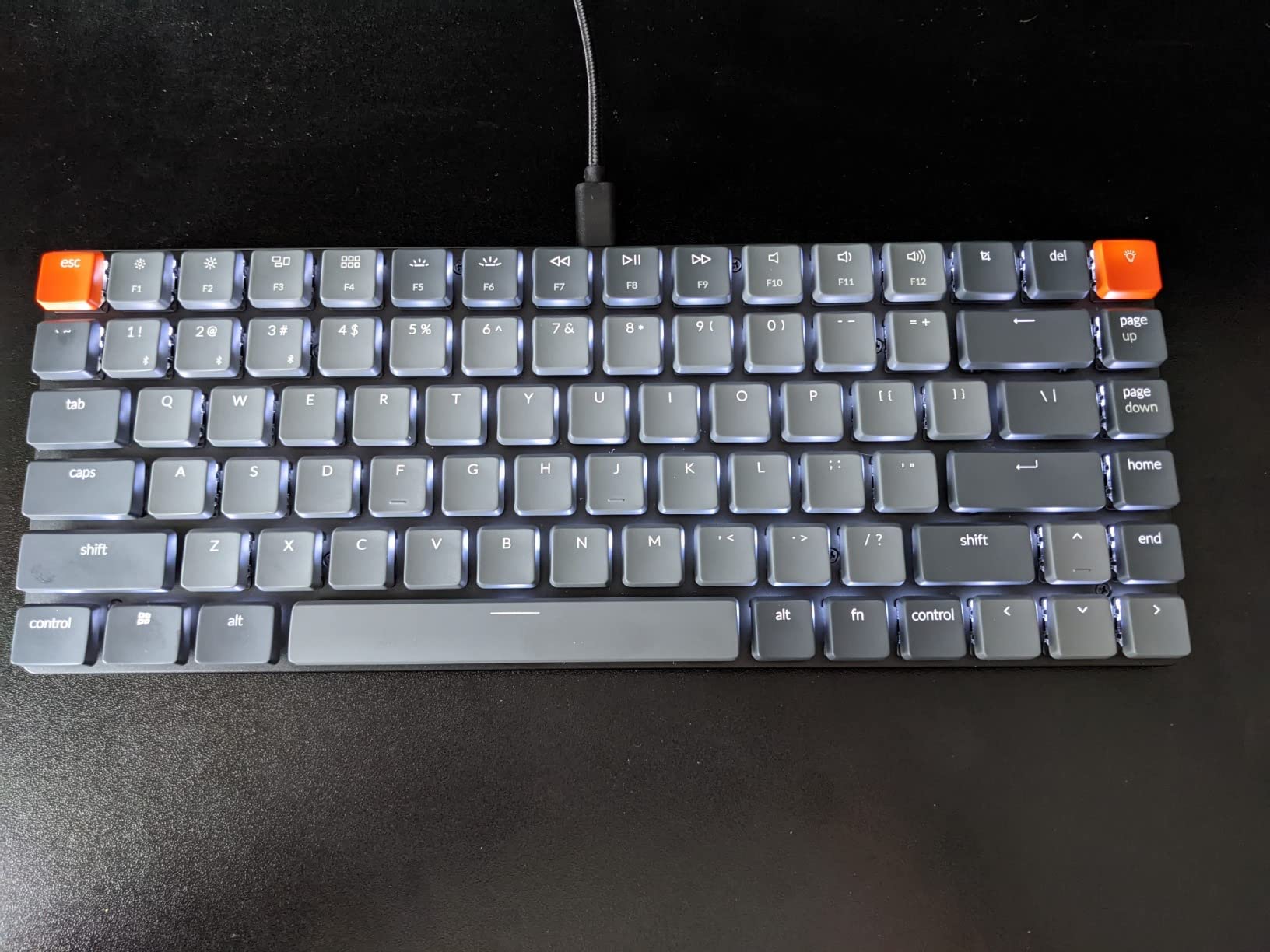
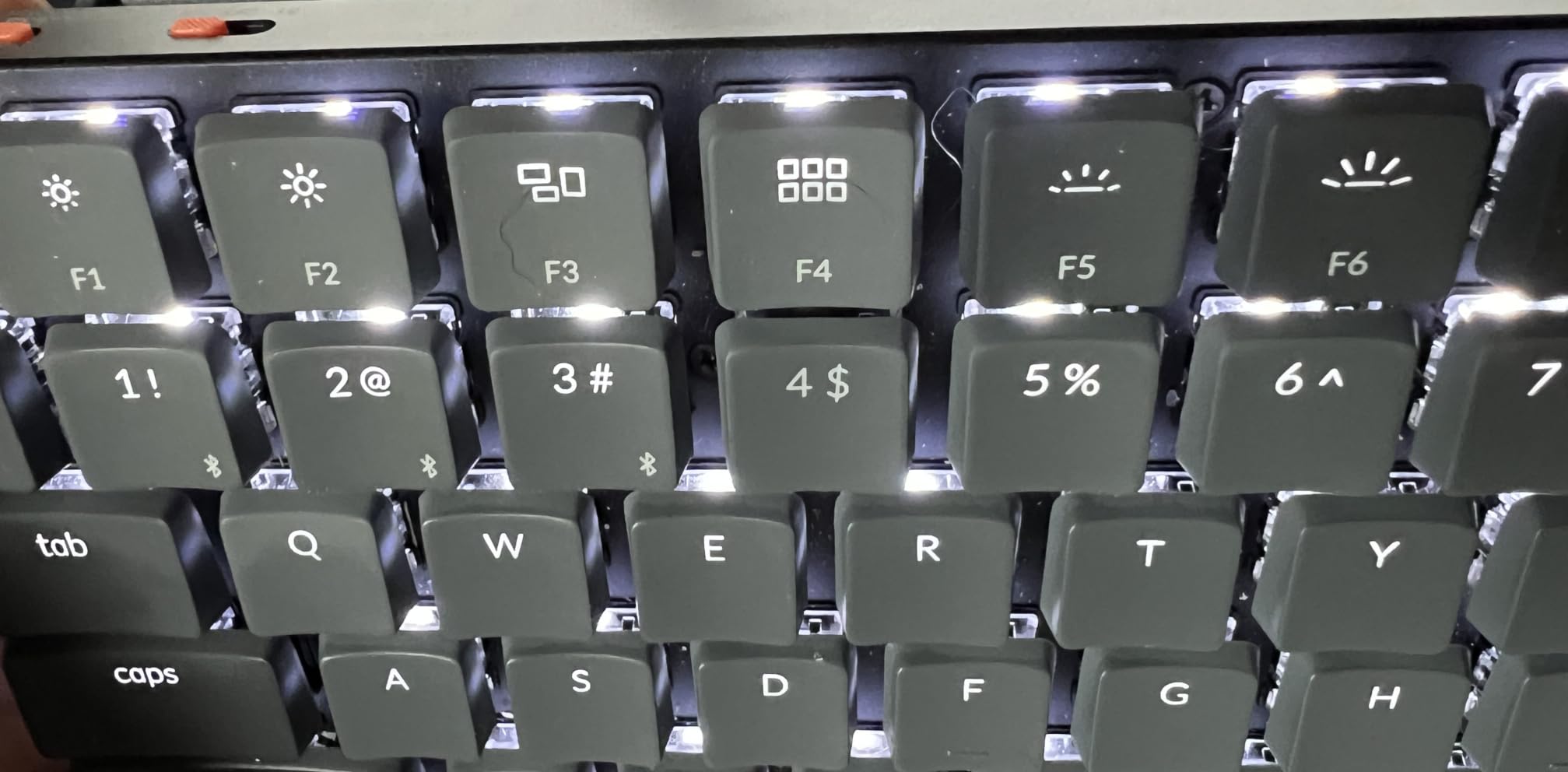
The 75 percent layout gives you 84 keys, so arrows and a function row survive, and the tactile brown switches are a reasonable middle ground for coders who want a registration bump without a heavy spring. A reinforced aluminium top over a plastic bottom frame handles the flex.
Two real compromises. There are no hot-swap sockets, so unlike the AULA F99 or the V6 Max you cannot change switches without soldering – you are locked into the feel it ships with. And low-profile travel is shallow, which owners with full-height mechanicals describe as a distinctly thinner feel, plus the backlight is white LED only, with no RGB.
Who the Keychron K3 Version 2 suits
It suits a developer who wants real mechanical switches and remappable layers but travels, hot-desks or works from a cafe, and needs a keyboard that fits in a bag. At half the height of a full-height board it also takes the strain off a wrist better than most full-height mechanicals.
It suits Mac users moving between operating systems, because the extra keycaps for both platforms are in the box and the keymap is written in firmware rather than an app.
Who should skip the Keychron K3 Version 2
Skip it if you are still deciding whether you like mechanical switches. With no hot-swap sockets, the K3 is a commitment, and a heavier or tactile board you can swap freely is the safer first mechanical.
Skip it if you want a deep, full-travel typing feel. This is a thin board by design, and the shallow travel is a matter of taste rather than a defect. If you want low profile with more travel, compare it against the MX Keys S instead – it is a scissor board, so it is thinner still, but it is quieter and far more widely reviewed.
How to Choose the Best Keyboard for Programming
Five decisions stand between you and the right board, and the order matters. Start with layout, because it is the choice you cannot undo later, then switches, then ergonomics, then connectivity, and only then the refinements.
1. Pick the layout by where your hands need to go
Work out whether you need a number pad before anything else. If you build spreadsheets, do CAD or enter data, take the full-size or 96 percent option – the Logitech MX Keys S, the AULA F99 or the Keychron V6 Max. If you do not, a 75 percent layout like the R87 Pro or the K3 gives back four inches of desk while keeping the function row and arrow keys physically present.
Only drop to 60 percent if you already think in layers or use Vim motions constantly. The HHKB is the best board here for it, but the cost of a two-week slowdown to relearn navigation is real, and a 75 percent board removes most of that pain.
2. Choose the switch by how you type, not by how it sounds
Light typists who fire keys fast should avoid very light linear switches, because the fastest way to miss a keystroke is to press one you are not looking at. Two answers work: a heavier linear spring, or a tactile switch where the bump tells you the key registered before you bottom out. Tactile is the more forgiving option and the one most coders settle on.
For a shared room, silent variants of either family are the compromise that keeps the feel and removes the friction. A user on r/BuyItForLife who switched to an ergonomic board for tendinitis relief makes the same point from the other direction – relief is real, and so is the complaint from colleagues about the noise.
3. Treat ergonomics as a current cost, not a future one
Wrist pain is cumulative, and the cheapest intervention is a keyboard that keeps your wrists neutral from day one. Low-profile boards – the MX Keys S and the Keychron K3 – do this by reducing the angle your wrist has to bend upward. Split frames – the Perixx and the ERGO K860 – do it by opening the angle between your forearms. A flat, full-height board at desk height with no palm rest is the option most likely to cause trouble over years.
Split and column-stagger boards, where each half is angled and offset like the halves of a normal keyboard, go further. They are not in this roundup because the two picks here use a one-piece curved frame rather than a true split, but they are the next step if you already have symptoms that a curved frame does not fix. Expect several days of slow typing before they pay off.
4. Decide whether wireless is a convenience or a requirement
Wireless across three devices is what makes the MX Keys S our overall pick, and it is the difference between a board that follows you between a laptop and a desktop and one that needs a cable. If your setup is a single fixed machine, wireless adds battery management and a failure mode for little gain, and a wired board like the R87 Pro is the better call.
Check the connection type as well as the count. Bluetooth is for phones and tablets, a 2.4GHz dongle is for a desktop, and a USB-C cable is for the machine you type on. A board that lists Bluetooth but not 2.4GHz will feel sluggish on a desktop.
5. Ask whether you should buy a mechanical keyboard at all
Sometimes the honest answer is no. If you type eight hours a day in a quiet room, a well-made scissor board is quieter, thinner, lighter and cheaper than a mechanical, and nothing on this list is a clear improvement for a developer who never remaps a key. The MX Keys S is the best example of a board that beats a mechanical on comfort and noise for a large share of programmers.
Buy a mechanical when you want layers, when you want to choose the feel, or when you spend your day in Vim and your terminal rather than in documents. Skip the RGB-heavy gaming boards entirely: they add backlight you will turn off and, in most cases, a louder board than the one you already like.
Frequently Asked Questions
What keyboard do most programmers use?
Most programmers start on their laptop keyboard and move to a mechanical or well-built scissor board when they want to remap keys. The most popular choices among working developers are 75 percent and TKL layouts with a function row, because they keep the keys a developer actually presses without the width of a numpad. A low-profile scissor board wins when the priority is quiet and comfort over customisation.
What is the best keyboard for programmers overall?
For most developers the best all-round choice is a full-size low-profile board with wireless multi-device pairing, because it is quiet, comfortable for a full day and switches between a laptop and desktop in one keypress. If you want mechanical switches and remappable layers, a 75 percent hot-swappable board with QMK or VIA firmware is the better pick.
Is tactile or linear better for coding?
Tactile is generally better for coding because the bump confirms a keystroke registered before you bottom out, which reduces accidental inputs during long sessions. Linear switches feel smoother and faster, which suits fast typists and gaming, but light linear springs let a key fire without registering. If you mistype often on a linear board, move to a heavier spring or a tactile switch rather than changing layout.
Are linear switches better than tactile switches?
Neither is better in the abstract – it depends on your typing speed and error rate. Linear switches are quieter and smoother and suit fast typists who want an uninterrupted press. Tactile switches give per-key feedback that catches mistyped keys, which is why many coders prefer them. Both families are widely available in silent variants for shared workspaces, so you rarely have to choose between feel and noise.
What type of keyboard is best for avoiding wrist pain?
A low-profile board or a split ergonomic keyboard is the most common answer because both reduce the upward bend in the wrist. A split frame opens the angle between your forearms, while a low-profile design keeps the hand flatter than a full-height mechanical. Adding a memory foam wrist rest and setting the board flat or at a negative tilt helps further, and if pain is already present, a curved split board is worth trying before a true column-stagger split.
Are split keyboards really worth it?
Split keyboards are worth it if you already have wrist or forearm discomfort, because a split frame stops you bending your wrists outward all day. They are not always worth it for someone with no symptoms, because the angled halves and column stagger mean several days of slower typing while you relearn. A one-piece curved frame is a gentler first step, and most people adapt within one to two weeks.
Final Verdict: Which Keyboard Should You Buy in 2026?
The best keyboard for programmers is the Logitech MX Keys S, and it wins for a plain reason: it is quiet, comfortable across a full working day, and switches between three machines without you thinking about it. That combination is what daily development actually demands, and the mechanical boards here offer more personality at the cost of noise or desk width.
Choose differently and the answer is still clear. Buy the Logitech ERGO K860 if your wrists hurt. Buy the AULA F99 if you want a mechanical feel, a number pad and hot-swap sockets in a compact frame. Buy the Royal Kludge R87 Pro if you want a function row and arrow keys without a numpad. Buy the Keychron V6 Max or K3 if remapping layers is the whole point, and the HHKB if you are already sure you never need a number pad again.
Whatever you pick, buy it for the layout you will live with rather than the switches you find exciting – the layout is the decision that ages worst, and everything else on these boards you can change later. Last reviewed in October 2026; the eight picks above are the ones we would still have on the desk in 2026.
Our related reading covers the rest of the desk: the best workstation keyboards for anyone who plays by ear, and the best Donner keyboards if you are budgeting for a first board.