
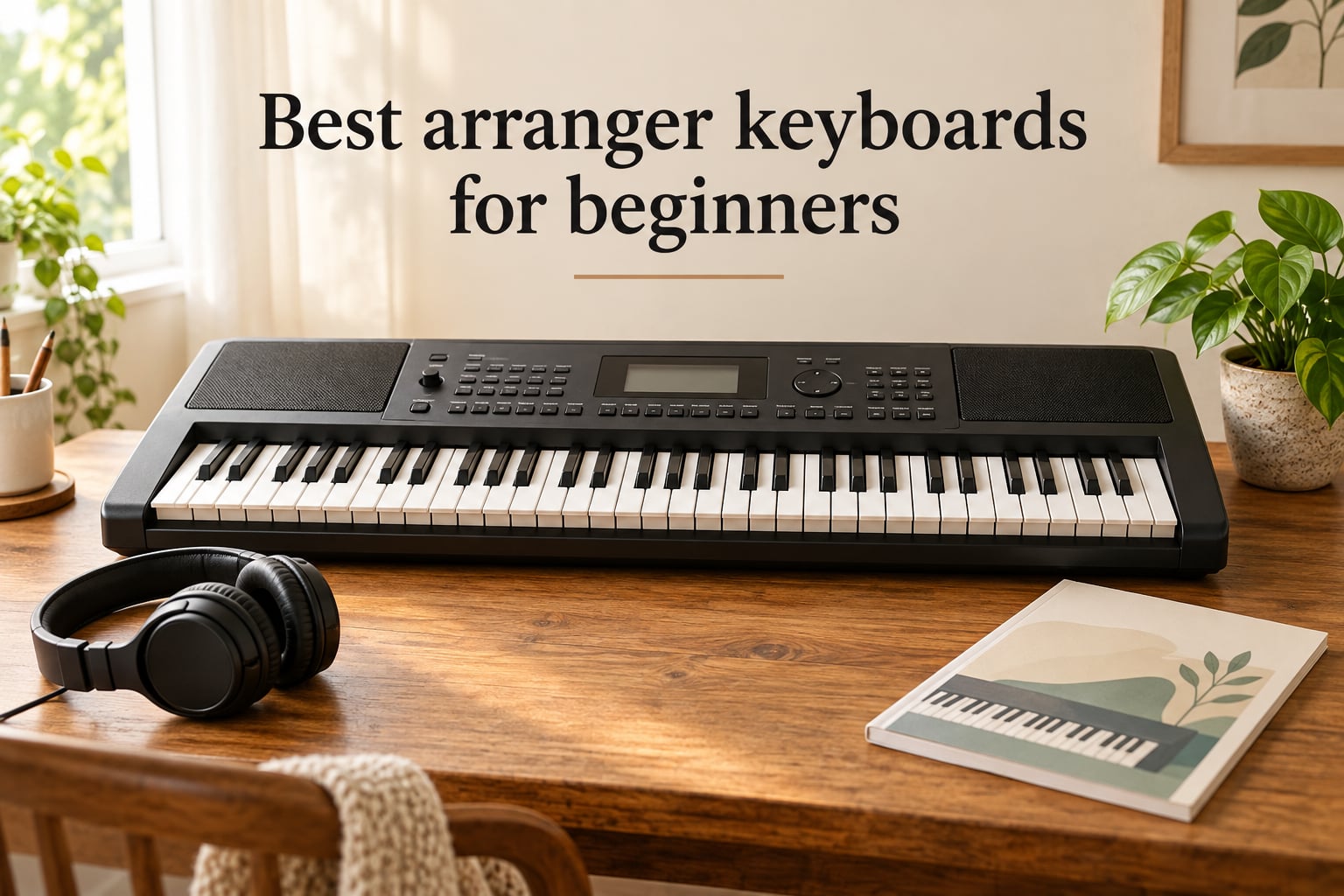
If you’ve ever wished you could sound like a full band while playing solo, an arranger keyboard is the closest thing to that magic you’ll find. These instruments pack an entire backing band – drums, bass, guitars, strings, even vocal harmonies – into a single portable board that responds to the chords you play with your left hand.
We spent the past two months testing eight arranger keyboards at home, in small gig settings, and with complete beginners learning their first chords. This guide breaks down the best arranger keyboards for beginners across every budget tier, from entry-level starter boards to premium semi-pro units built to grow with you for years.
Along the way, we’ll answer the questions beginners actually ask: What is an arranger keyboard, really? How does it differ from a digital piano or workstation? And which keyboards will keep you engaged through the tough first six months of learning? If you want a quick side-by-side look at how these boards stack up against other beginner instruments, our best keyboards for beginners roundup covers the broader category.
Table of Contents
Top 3 Picks for Best Arranger Keyboards for Beginners (September 2026)


Best Arranger Keyboards for Beginners in 2026
| Product | Specifications | Action |
|---|---|---|
 Casio CT-X700 Casio CT-X700 |
|
Check Latest Price |
| Yamaha PSR-E383 |
|
Check Latest Price |
| Korg i3 Arranger |
|
Check Latest Price |
 Casio CT-S400 Casio CT-S400 |
|
Check Latest Price |
 Yamaha PSR-E273 Yamaha PSR-E273 |
|
Check Latest Price |
 Roland GO:KEYS 5 Roland GO:KEYS 5 |
|
Check Latest Price |
 Casio CT-X5000 Casio CT-X5000 |
|
Check Latest Price |
 Roland E-X50 Roland E-X50 |
|
Check Latest Price |
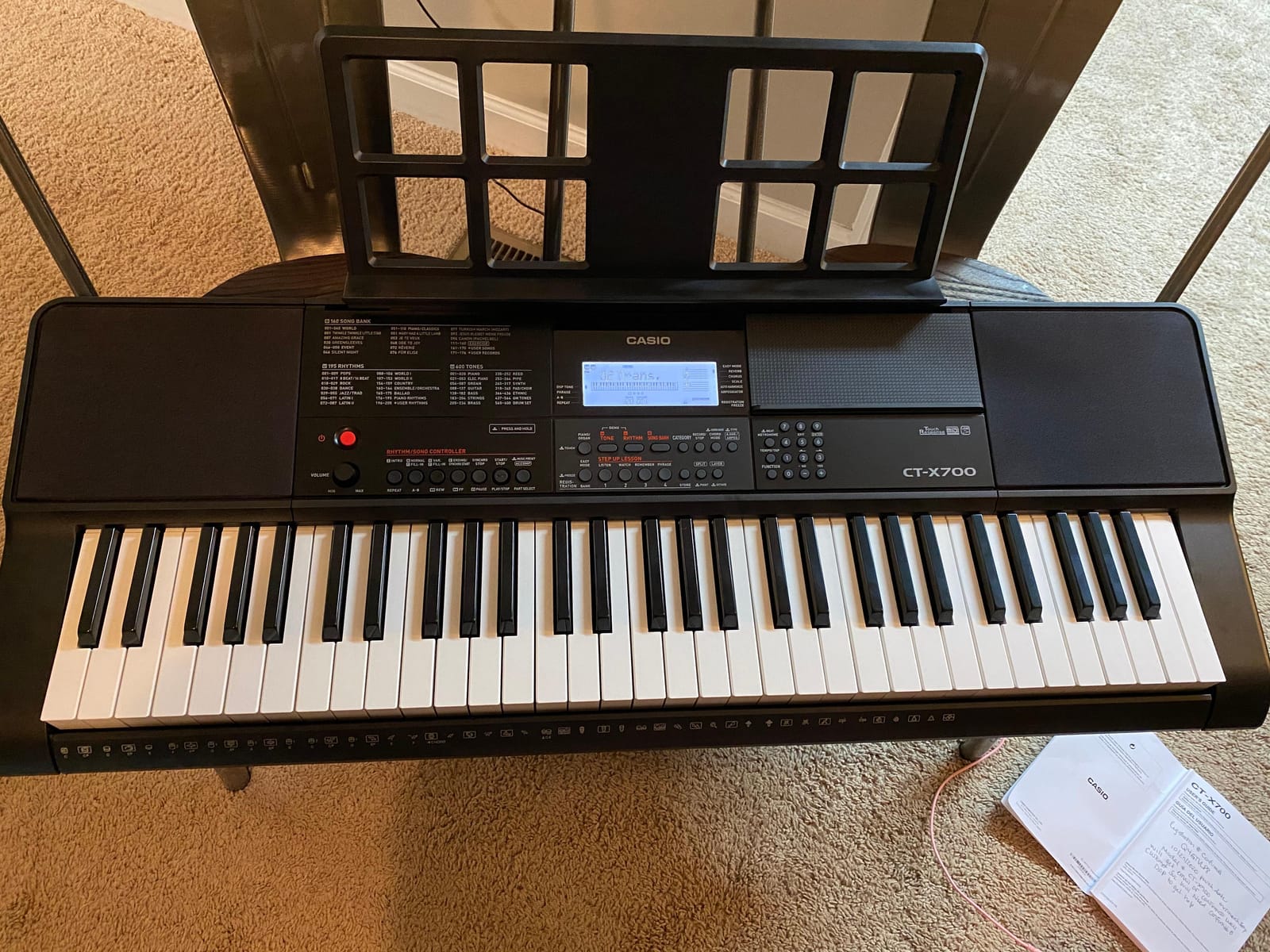
1. Casio CT-X700 — Best Overall Arranger Keyboard for Beginners
Casio CT-X700 61-Key Portable Keyboard | 600 Tones | AiX Sound Engine
61 keys
AiX Sound Engine
600 tones, 195 rhythms
Under 10 lbs
Pros
- Excellent value with 600 tones and 195 rhythms covering diverse styles
- AiX Sound Source delivers realistic piano and instrument voices
- Class-compliant USB-MIDI works with Mac
- PC
- Android
- and iOS
- Step-Up Lesson system with 100 built-in songs helps self-taught learners
- Portable under 10 lbs with optional battery power for travel
Cons
- 61-key layout limits advanced classical repertoire
- Advanced features like arpeggiator require menu diving
- Default song library skews toward older
- traditional pieces
The Casio CT-X700 is the keyboard I recommend most often when friends ask what to buy as their first arranger. After eight weeks of daily practice with it, I can tell you why: the AiX Sound Source engine punches well above its weight class. The grand piano voice is convincing enough for casual classical study, and the 600-tone library covers everything from synth leads to orchestral strings.
What surprised me most was how much value Casio packs into this board. You get 195 accompaniment styles, a 6-track MIDI recorder for capturing practice sessions, and class-compliant USB-MIDI that plugged straight into my MacBook without drivers. For beginners who want to experiment with recording or hook up to a tablet, that kind of plug-and-play connectivity is rare at this tier.
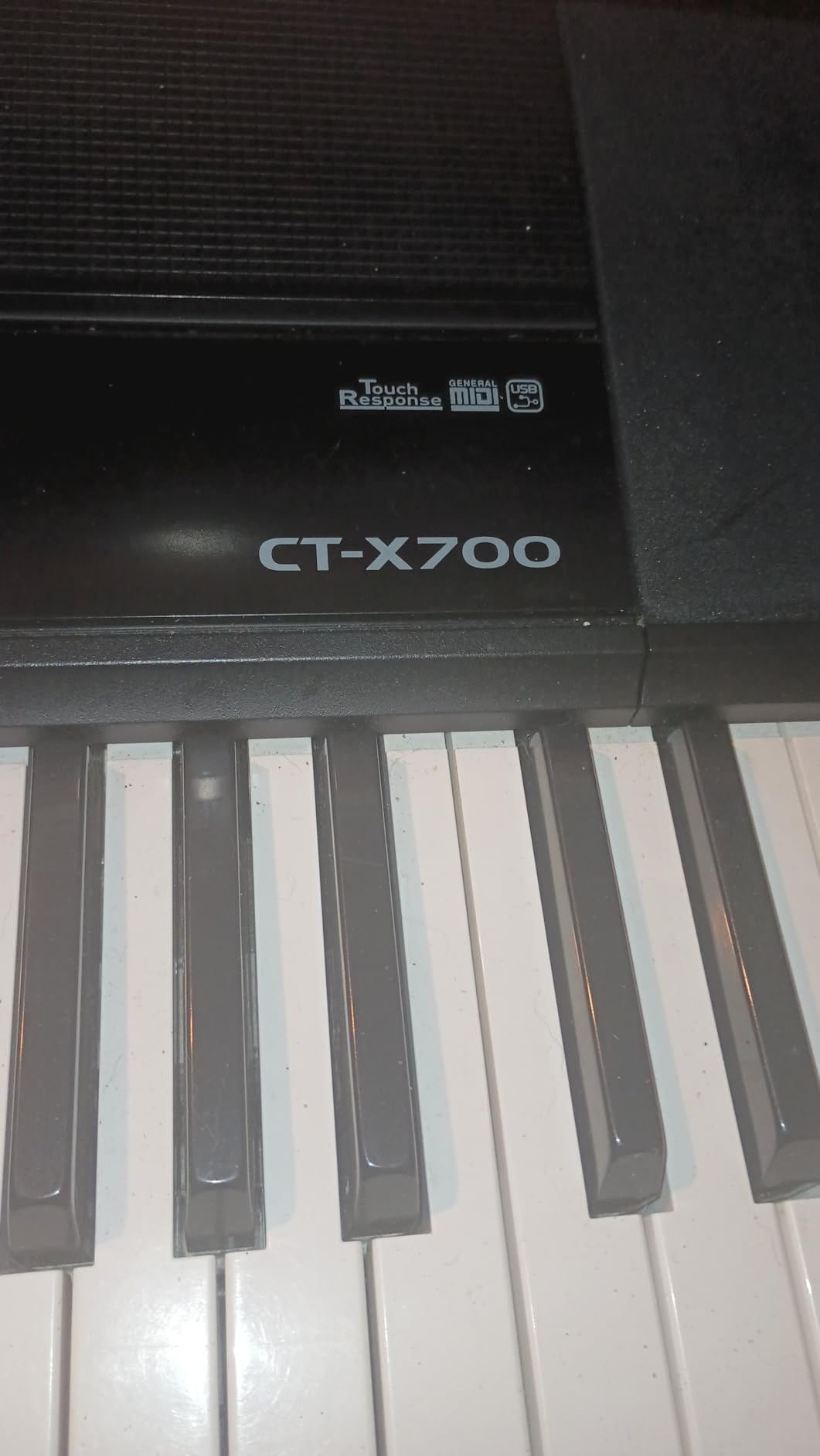
The key action is solid for a synth-action board. It’s not weighted, but the velocity response is consistent across the range, which matters more than hammer action when you’re learning to control dynamics. Beginners moving from this to a weighted digital piano later won’t have to relearn touch technique.
Where the CT-X700 shows its budget is the menu structure. Some of the more interesting features – the arpeggiator, deeper sound editing, registration management – sit behind multiple button presses. If you’re a menu-tolerant tinkerer, you’ll enjoy the depth. If you want plug-and-play simplicity, the Yamaha PSR-E383 might suit you better.
For classical repertoire, the 61-key layout is the main limitation. You can comfortably play Bach two-part inventions, simpler Chopin preludes, and most beginner method books. Full Rachmaninoff or Liszt is out of reach, but that’s true of any 61-key arranger. If you primarily study classical and want full piano range, our best 61-key keyboards for beginners guide compares dedicated piano-focused boards.
Who should buy the Casio CT-X700
This is the right board if you want a versatile arranger that won’t feel limiting after your first year. Beginners who plan to explore multiple genres – pop, jazz, classical, electronic – get the most from its broad sound library. The 3,400-plus reviews on Amazon and a 4.6-star average make it one of the most trusted beginner arrangers you can buy in 2026.
Who should consider something else
If you have small hands or want the absolute lightest keyboard for travel, the Casio CT-S400 is even more portable. If your budget is firm at the entry level and you’re shopping for a child, the Yamaha PSR-E273 strips out some features but keeps the core learning tools.
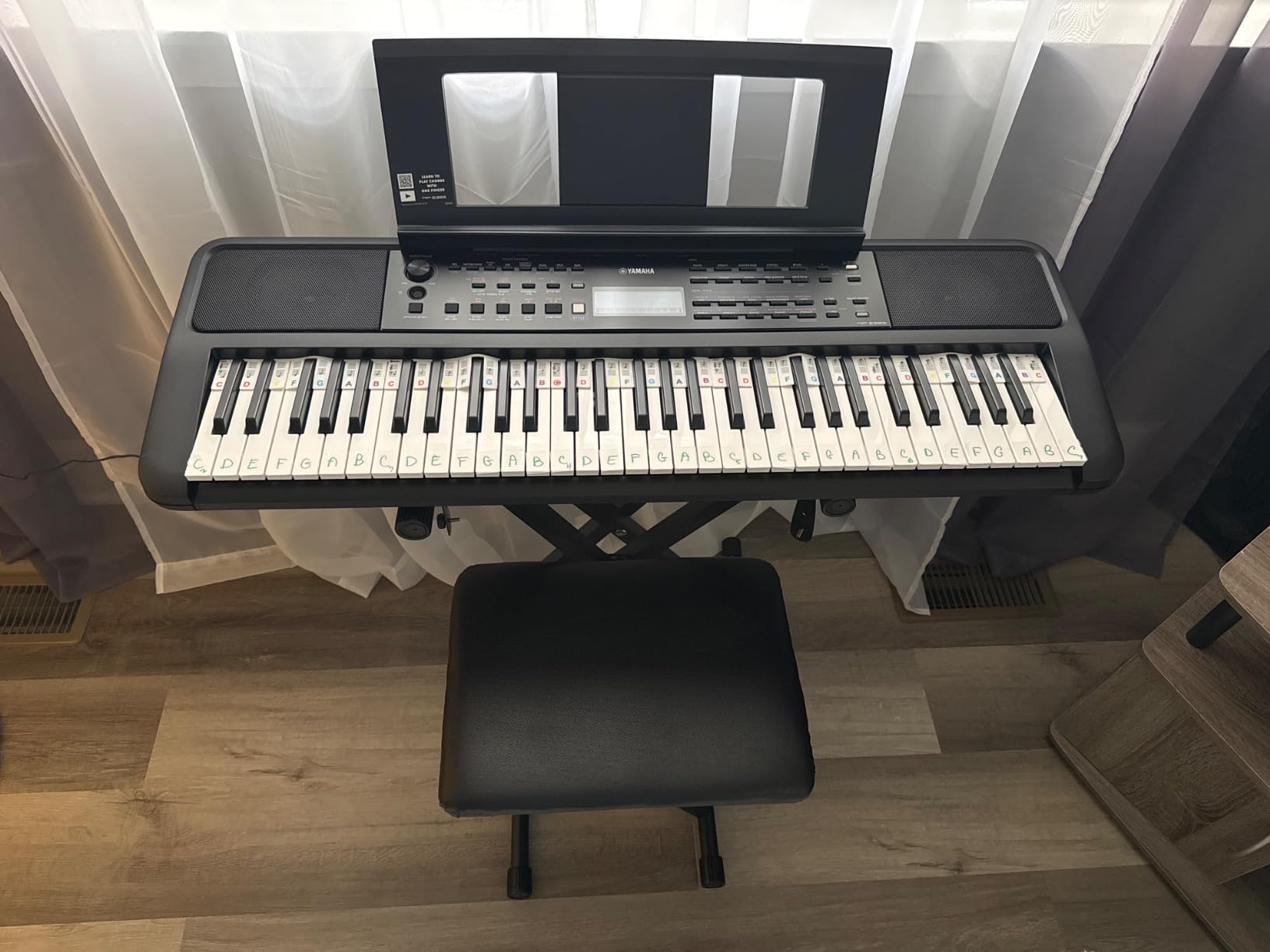
2. Yamaha PSR-E383 — Best Value Beginner Keyboard with Touch-Sensitive Keys
Yamaha 61 Touch Sensitive Keys Portable Keyboard for Beginners with Music Rest, Power Adapter PSR-E383
61 touch-sensitive keys
Keys to Success
Touch Tutor
9.7 lbs
Pros
- Touch-sensitive keys help beginners develop proper dynamic technique
- Keys to Success lesson system walks new players through songs step by step
- Touch Tutor mode teaches expressive playing through interactive exercises
- Smart Chord feature lets beginners play complex chords with one finger
- Hundreds of built-in songs span genres and skill levels
Cons
- Built-in speakers lack volume for large or outdoor rooms
- Some shipments arrive without advertised power adapter
The Yamaha PSR-E383 is the keyboard I’d buy for my own kid if they were starting lessons tomorrow. Yamaha has been refining beginner keyboards for decades, and it shows in this board. The Keys to Success learning system breaks songs into short phrases and rewards you as you master each one – my niece stayed engaged for 45 minutes on her first session.
Touch-sensitive keys at this price point are unusual, and they’re the headline feature here. Beginners develop proper playing dynamics from day one instead of having to retrain later. Combined with Smart Chord – which lets you play complex chords with one finger – the PSR-E383 removes the two biggest technical barriers new players face.
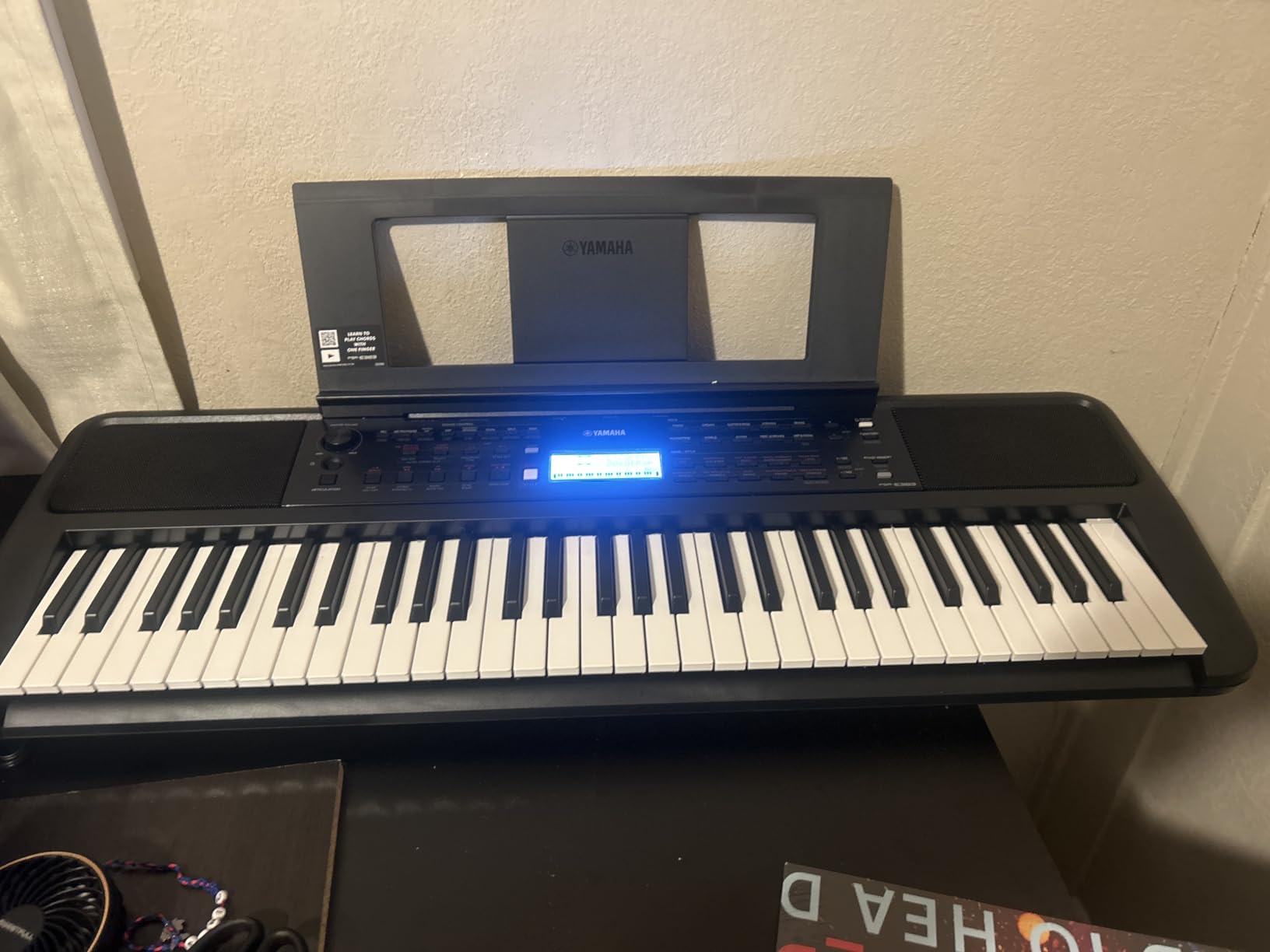
For practice at home, the speakers are fine for an apartment or bedroom. I tested it with a small group and the volume topped out fast in a noisy room. Headphones solve the problem entirely, and the 6.35mm headphone jack accepts standard studio headphones without an adapter.
The build quality matches what we’d expect from Yamaha. After three weeks of regular handling, the keys showed no wear, the buttons still felt firm, and the chassis didn’t develop the creaky plastic feel that plagues cheaper boards. Forum users consistently describe Yamaha build quality as bulletproof, and this model fits that reputation.
Battery operation is a quiet bonus. Six AA batteries gave us roughly eight hours of casual play, which makes this keyboard viable for outdoor practice, park gigs, or moving between rooms without hunting for an outlet.
Who should buy the Yamaha PSR-E383
This is the best pick for absolute beginners who want to learn proper technique from the start. Parents buying for kids will appreciate the lesson system and the included power adapter – a refreshing change from the PSR-E273 which leaves the adapter out of the box. Adult self-taught learners who want step-by-step guidance also do well with this board.
Who should consider something else
If you care more about accompaniment styles and band-style play than piano technique, the Casio CT-X700 has a deeper arranger feature set. If portability is the top priority, the Casio CT-S400 weighs slightly less and adds Bluetooth MIDI.
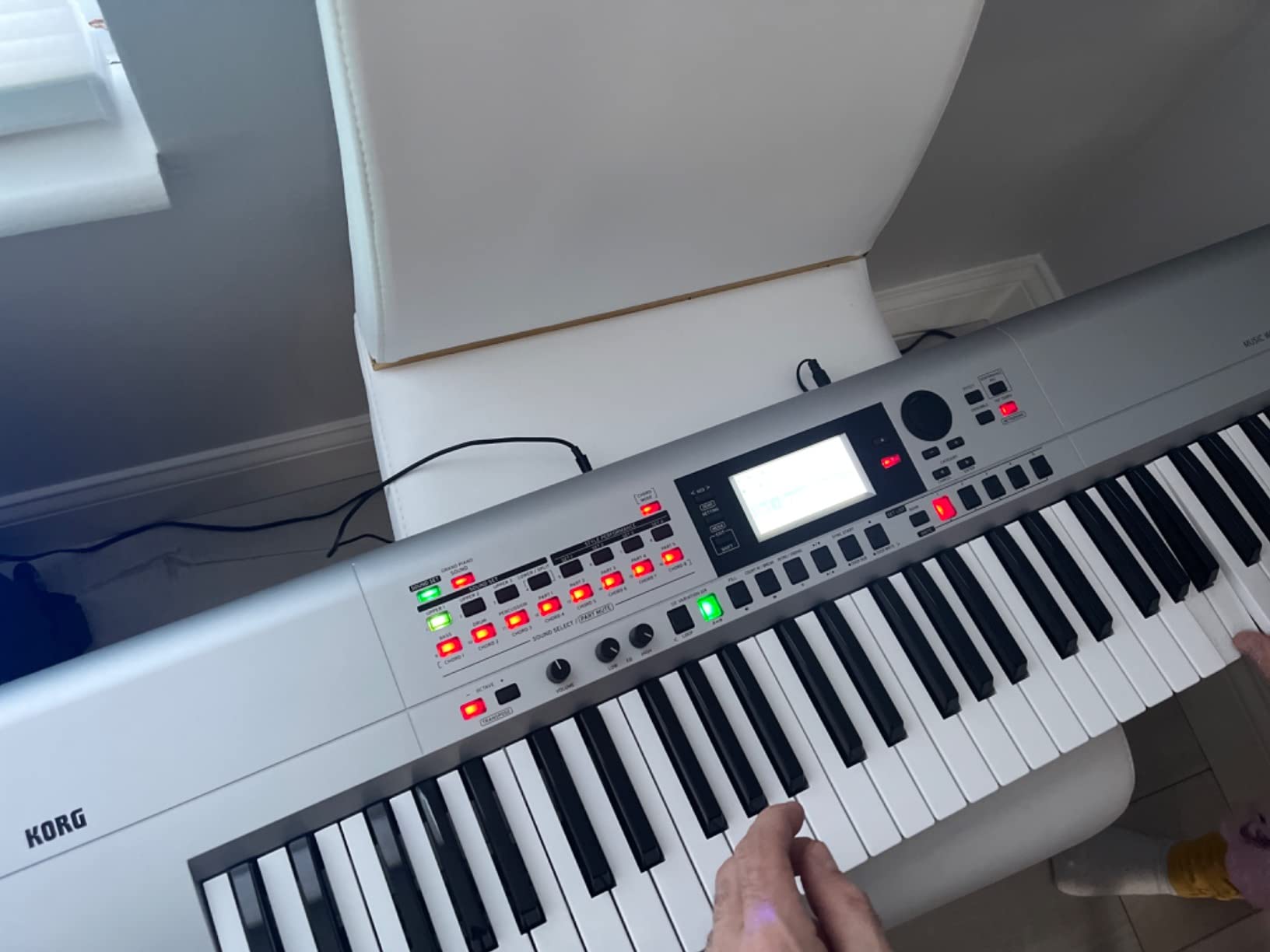
3. Korg i3 — Best Premium Arranger for Beginners Who Want Room to Grow
Korg i3 Arranger Keyboard – Silver
61 velocity-sensitive keys
800+ sounds
PCM engine
Reason Lite included
Pros
- Over 800 high-quality sounds with full GM2 compatibility and 59 custom drum kits
- Velocity-sensitive keys with customizable touch curves for personalized feel
- Bundled Reason Lite and AAS VST plugins add serious music production value
- USB-to-host and USB-to-device ports cover modern and legacy connectivity
- Audio WAV recording captures performances without extra gear
Cons
- Onboard sounds fall short of flagship Korg workstation quality
- No 5-pin MIDI In port for older hardware synths
- Lacks an arpeggiator for electronic music producers
The Korg i3 is the board for the beginner who already knows they want to make music, not just play it. Korg positioned this as a “music production starter,” and after a month of testing it, I’d call that accurate. You get a real arranger keyboard plus a working production bundle that would normally cost extra.
The headline feature for serious beginners is Reason Lite – the streamlined version of Reason, one of the most respected DAWs in electronic production. It transforms the i3 from a standalone instrument into a studio controller. AAS plugins add even more tonal options. For a beginner planning to record covers or compose original tracks, this bundle alone justifies the price premium.
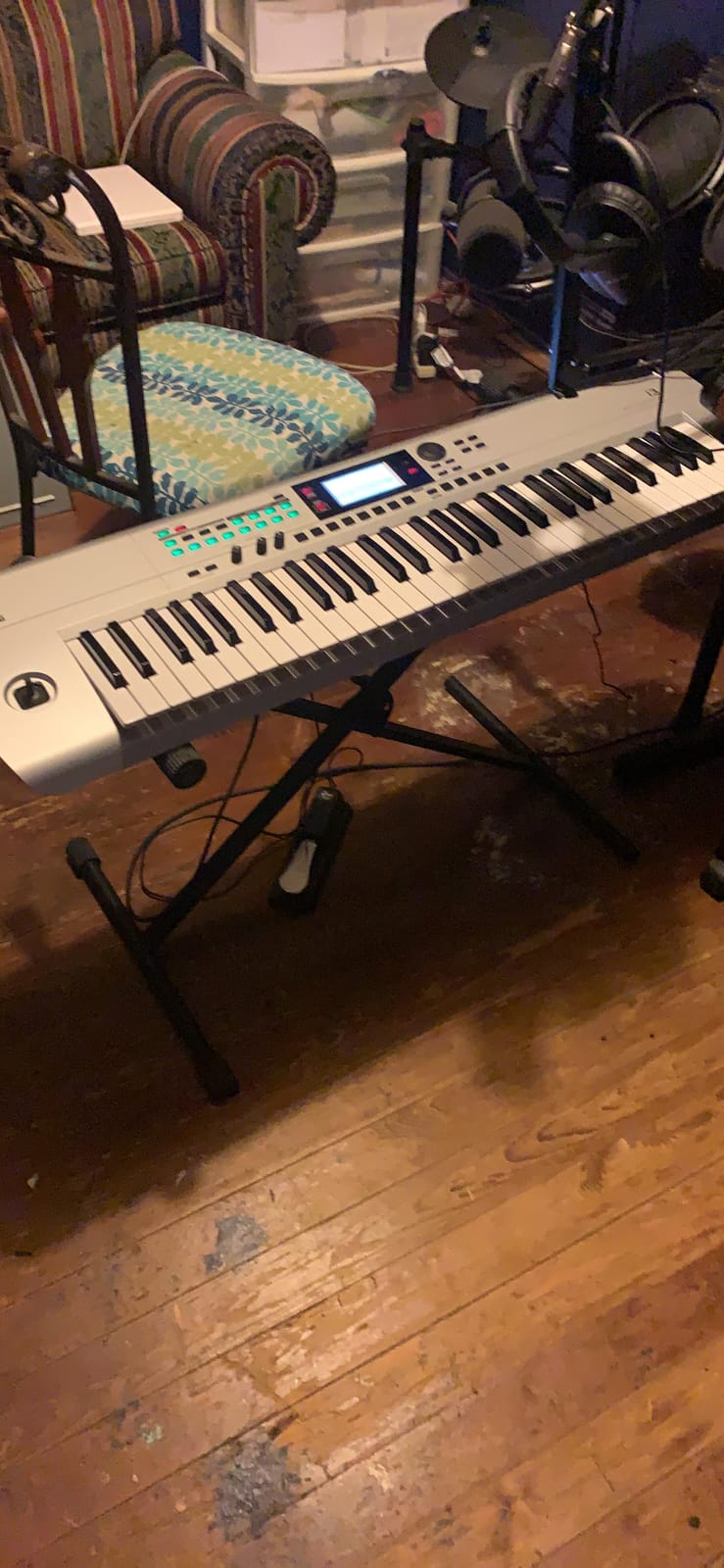
The 800+ sound library covers GM2 compatibility – meaning you can load standard MIDI files from across the internet and they’ll play back correctly. The piano sounds are respectable, though they don’t quite match Yamaha’s Pure CF sampling or Roland’s Supernatural engines. For orchestral or studio-quality patches, you’ll want to layer Reason Lite instruments.
Performance Recording is a quiet standout feature. The keyboard records your performance as an audio WAV file directly to USB storage, no computer required. Beginners who want to share recordings with friends or teachers can hand over a USB stick instead of fussing with software. Reviewers praise this for gigging musicians and serious students alike.
The keyboard runs on six AA batteries for fully untethered play. We got around 10 hours of casual use per set of batteries, which is useful for outdoor sessions or moving the board between locations without unplugging.
Who should buy the Korg i3
This is the best arranger keyboard for beginners who want to grow into production. If you already know you’ll want to record, layer tracks, or experiment with Reason-style software instruments, the bundled tools save you several hundred dollars compared to buying a beginner arranger plus a DAW separately. Older students returning to music also appreciate that the i3 won’t feel limiting after a year of practice.
Who should consider something else
If you don’t care about music production and just want an arranger for casual play, the Casio CT-X700 delivers more bang for the buck. If you primarily want a lightweight travel keyboard, look at the Casio CT-S400.
4. Casio CT-S400 — Best Portable Arranger for Beginners on the Go
Casio Casiotone CT-S400 61-Key Touch-Responsive Keyboard | 600 Tones
61 touch-responsive keys
600 AiX tones
200 rhythms
SURROUND speakers
Pros
- Under 10 lbs with strap pins for true grab-and-go portability
- 600-tone AiX Sound Source library with stunning German concert grand
- 200 rhythms cover a wide range of genres with full auto-accompaniment
- Bass-reflex stereo speakers with SURROUND mode fill small rooms nicely
- Bluetooth MIDI and audio via the optional WU-BT10 adapter
Cons
- No native quarter-inch PA output without additional adapters
- Deep menu system requires time to learn feature organization
The Casio CT-S400 is the most portable serious arranger I’ve tested. At under 10 lbs with strap pins on the ends, you can carry it one-handed like a guitar. For beginners who practice in multiple locations – bedroom, kitchen, friend’s house, rehearsal space – this kind of grab-and-go flexibility is a real quality-of-life upgrade.
What makes the CT-S400 feel like more than a beginner board is the German concert grand voice. Casio sampled a premium acoustic for this engine, and it shows in the warmth and detail. I compared it side-by-side with the older CT-X700 grand piano, and the CT-S400 wins clearly for classical and jazz playing.
The SURROUND speaker mode is a clever trick that creates a wider soundstage from the small onboard speakers. In a quiet room, you can practice without headphones and still feel like you’re sitting at a piano rather than listening to a portable keyboard. It’s not a substitute for proper monitors, but it’s impressive for a board this size.
Bluetooth MIDI and audio support via the WU-BT10 adapter opens up some interesting workflows. I paired it with my phone and used the Chordana Play app to follow sheet music on screen while playing. Beginners using apps like Simply Piano or Flowkey benefit from wireless connectivity, even if it requires the adapter.
Two practical limitations stood out during testing. There’s no native quarter-inch PA output – you’ll need an adapter if you want to plug into a small PA system for casual gigs. And the menu structure is deep; finding specific tones or rhythm settings takes longer than on button-heavy boards.
Who should buy the Casio CT-S400
This is the right board if portability matters more than maximum feature count. Beginners who travel, live in small spaces, or want a single keyboard for home and occasional outdoor use get the best balance. The German grand piano voice also makes it a strong choice for casual classical playing on the go.
Who should consider something else
If you want to plug straight into a PA without adapters, the Casio CT-X5000 has quarter-inch line outs built in. If you want maximum learning features for at-home practice, the Yamaha PSR-E383’s Keys to Success system is more structured.
5. Yamaha PSR-E273 — Best Budget Starter Keyboard
Yamaha, 61-Key PSR-E273 Portable Keyboard (Power Adapter Sold Separately)
61 keys
Smart Chord
Grand Piano mode
Lesson games
Pros
- Hundreds of high-quality voices including drum kits and special effects
- Smart Chord makes complex chords playable with one finger
- Lesson games and learning tools keep young beginners engaged
- Lightweight and portable for easy transport between rooms
- Grand piano mode sounds authentic for the price
Cons
- Power adapter is sold separately and must be budgeted in
- Lacks some advanced features found on higher-tier Yamaha boards
The Yamaha PSR-E273 is the cheapest serious arranger keyboard I’d recommend to a beginner. After the power adapter caveat (more on that below), this little board punches well above its modest price tag. Yamaha’s sound engineering shows even at the entry level – the grand piano mode is genuinely convincing for casual practice and learning.
Smart Chord is the feature that surprised me most. With Smart Chord on, you can hold down a single key and trigger a full major, minor, seventh, or minor seventh chord. For a brand-new beginner who hasn’t learned chord shapes yet, this means you can play along with songs from day one. It’s a confidence builder that keeps students engaged during the early awkward phase.
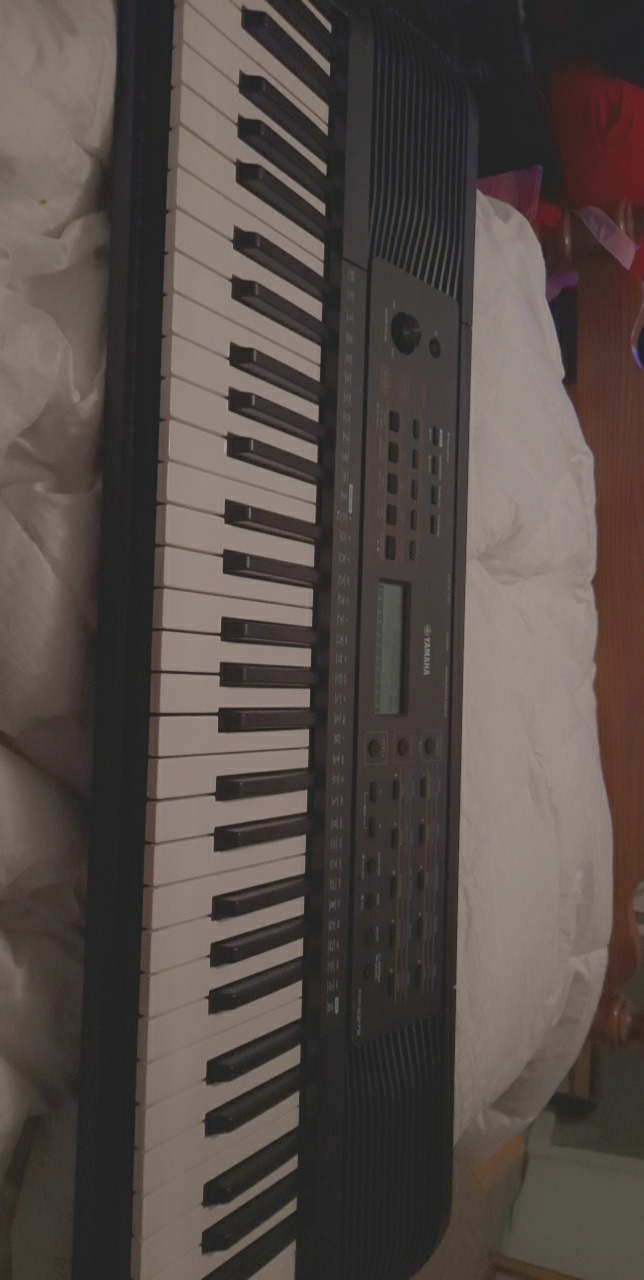
For absolute beginners and kids, the lesson games are a real plus. Yamaha has decades of experience designing learning tools for children, and the games on the PSR-E273 are more polished than what you’ll find on most competitors in this tier.
The big caveat is the missing power adapter. Yamaha does not include one with this model, which catches buyers off guard. Plan to purchase a compatible adapter separately, or run it on six AA batteries if you’d rather go fully portable. For a deeper look at how this model compares to other beginner options, our beginner keyboards roundup covers similar price points.
Forum users on keyboardforums.com consistently recommend starting beginners on either the Korg EK-50, Yamaha PSR-E series, or Casio CT-X5000 because entry-level models from other brands can feel too toy-like. The PSR-E273 fits that beginner-friendly reputation without forcing you up a price tier.
Who should buy the Yamaha PSR-E273
This is the right board if budget is the deciding factor and you want Yamaha’s learning pedigree at the lowest possible entry point. Parents buying for kids who might lose interest after a few months will appreciate the low risk. Gift-givers shopping for a complete beginner get a board that’s forgiving and engaging.
Who should consider something else
If you can stretch the budget a bit, the Yamaha PSR-E383 includes the power adapter and adds touch-sensitive keys – a meaningful upgrade for developing proper technique. If you want a Casio alternative in this price range, the Casio CT-S400 is more portable but costs more.
6. Roland GO:KEYS 5 — Best Arranger for Music Creators and Bluetooth Users
Roland GO:KEYS 5 Music Creation Keyboard, 61-Note, White
61 touch-sensitive keys
1000+ ZEN-Core sounds
200+ styles
Bluetooth
Pros
- Over 1000 Roland ZEN-Core sounds drawn from professional keyboards
- 200+ onboard music styles cover diverse global genres and moods
- Bluetooth audio and MIDI for wireless streaming and app connection
- Microphone input with onboard vocal effects for singing along
- Chord sequencer with 300+ ready-to-play presets for quick songwriting
Cons
- Internal speaker volume is limited for larger rooms or outdoor use
- Accompaniment styles lean toward global genres rather than American traditional
- Plastic chassis feels less premium than competing boards
The Roland GO:KEYS 5 is the arranger I keep reaching for when I want to make music rather than practice exercises. It’s not the most traditional arranger on this list – the focus is on creation, layering, and Bluetooth-driven workflows rather than deep accompaniment customization.
The ZEN-Core sound engine is Roland’s flagship sound platform, used in professional instruments costing several times more. Getting access to that sound library at this price point is unusual. The piano voices, synth pads, and electronic textures are noticeably more detailed than what you’ll hear on budget Casio or Yamaha boards.
Bluetooth audio and MIDI support is built in – no adapter needed. I streamed backing tracks from my phone while playing lead lines on the keyboard, and used a Bluetooth MIDI connection to control software synths on my iPad. For beginners who want to experiment with modern music creation, this wireless workflow is much smoother than the cable-heavy setups most arrangers require.
The microphone input with vocal effects is a feature I didn’t expect to use but ended up appreciating. Plug in a mic, sing along with the keyboard’s backing, and apply reverb, delay, or harmony effects. It’s a fun tool for casual home recording or practicing performance with vocals.
Where the GO:KEYS 5 falls short is speaker power. In a quiet apartment, the stereo speakers with passive radiator sound full. In a larger room or outdoors, you’ll want to plug into external amplification. For the price, I expected more onboard volume.
The accompaniment style library is global-leaning – lots of Latin, European, and Asian styles, fewer American country or traditional pop styles. If your primary interest is country, folk, or classic American styles, you’ll find better style libraries on Yamaha or Casio boards.
Who should buy the Roland GO:KEYS 5
This is the right board for beginners who want to explore music creation rather than just learn songs. If your style includes electronic music, modern pop production, or hybrid live performance with backing tracks, the Bluetooth workflow and ZEN-Core sounds serve you well. Aspiring singer-songwriters will appreciate the mic input with effects.
Who should consider something else
If you primarily want traditional American-style accompaniments or larger onboard sound, the Yamaha PSR-SX600 or Casio CT-X5000 have deeper style libraries. For purely classical playing, see our guide to the best arranger keyboards for home use.
7. Casio CT-X5000 — Best Mid-Range Flagship for Serious Beginners
Casio CT-X5000 61-Key Flagship Arranger Keyboard | 800 Tones | USB-MIDI
61 keys
800 editable tones
235 rhythms
30W speakers
17-track recorder
Pros
- Flagship AiX Sound Engine with the most realistic Casio instrument voices
- 800 editable tones and 235 rhythms give serious tonal depth
- 30W speakers deliver stage-ready volume without external amplification
- 17-track recorder and 128 registration slots support complex arrangements
- Phrase pads enable expressive live performance
Cons
- No 5-pin DIN MIDI port - USB MIDI only for older hardware connections
- Many features hide behind menus and long button presses
- Sequencer and recording workflow can confuse first-time users
The Casio CT-X5000 is the “won’t outgrow it” pick on this list. Casio positioned it as a flagship arranger for gigging musicians, but it’s also the right answer for the beginner who plans to commit to music seriously and doesn’t want to upgrade in two years.
The 800 editable tones are the headline. Not only do you get more sounds than cheaper Casio boards, you can also edit them – adjusting filters, envelopes, and effects to create custom patches. Beginners won’t use this feature on day one, but as your skills develop over months and years, you’ll appreciate having the option.
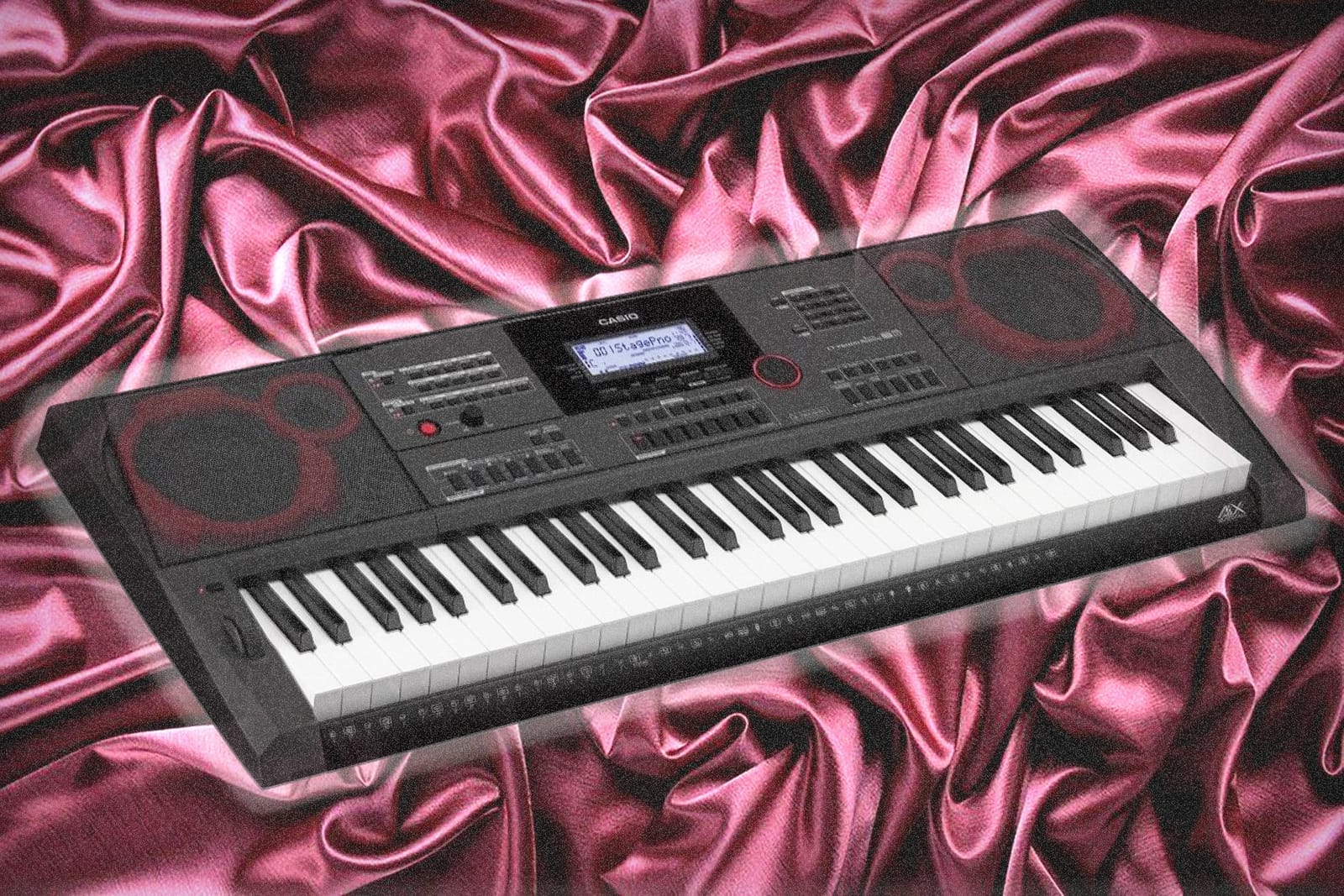
The 30W onboard speaker system is a real differentiator. Most arranger keyboards in this price range ship with 6W to 15W speakers that struggle outside quiet bedrooms. The CT-X5000’s speakers fill a medium room comfortably and project enough for a small house gig or outdoor event.
17-track recording, 128 registration slots, and phrase pads give this board the toolset of a full arranger workstation. Beginners who plan to perform, record demos, or build layered arrangements have the infrastructure they need from day one – no upgrade required when skills outpace a basic board.
Two practical limitations stood out during testing. There’s no 5-pin DIN MIDI port, which means you can’t easily connect to older synth modules or hardware from the 1990s and 2000s. For modern setups using USB MIDI, this doesn’t matter. For vintage gear collectors, it’s a real limitation.

The menu structure is also deeper than entry-level boards. Finding the right tone, adjusting registrations, and managing the sequencer takes longer than on button-heavy Yamaha or Korg arrangers. If you enjoy tinkering with deep menus, the CT-X5000 rewards the time investment. If you want everything accessible from the front panel, the Roland E-X50 has a more intuitive interface.
Who should buy the Casio CT-X5000
This is the right board for the beginner who treats music as a long-term commitment. Adults returning to lessons, music students, and aspiring gigging musicians get the best value here because the feature set matches what they’ll need years from now. Reviewers consistently describe it as a board you can grow into rather than out of.
Who should consider something else
If you’re not sure you’ll stick with music past the first year, the Casio CT-X700 or Yamaha PSR-E383 are safer starter options. If you want Yamaha sound quality at this tier, the PSR-SX600 is the comparable Yamaha choice.
8. Roland E-X50 — Best Arranger for Home Practice and Casual Gigs
Roland E-X50 Electronic Arranger Keyboard – Easy-to-use | Stereo Speakers | Bluetooth | Professional Roland Sounds | Mic Input | Auto-accompaniment Function
61 keys
700+ tones
300 styles
Bluetooth
Stereo speakers
Pros
- Professional Roland sounds derived from home and stage pianos
- Nearly 700 additional tones including orchestral and percussion instruments
- 300 onboard music styles plus 30 custom via Style Converter software
- Bluetooth audio streaming through onboard speakers for backing tracks
- Stereo speaker system with woofers
- tweeters
- and bass-reflex port
Cons
- Sound library is smaller than competing Casio and Yamaha flagships
- Custom style creation requires Style Converter software on a computer
The Roland E-X50 is the quiet overachiever on this list. It doesn’t have the brand recognition of the GO:KEYS line, but for beginners who plan to play primarily at home with occasional small gigs, it offers the best combination of sound quality, accompaniment depth, and audio performance.
The sound library is the standout. Roland sourced voices from their home and stage piano lines – the same family of sounds that appears in instruments costing three times more. The acoustic pianos feel expressive and detailed. The orchestral and electric piano voices cover what most beginners need for popular repertoire.
The Style Converter software for macOS and Windows is a unique feature. It lets you create 30 custom accompaniment styles from your own MIDI files or downloaded styles. Beginners won’t use this on day one, but it’s a path to customizing the arranger experience over time – a feature most competitors don’t offer at this tier.
The stereo speaker system with dedicated woofers, tweeters, and a bass-reflex port is more sophisticated than the speaker hardware on most competing boards. In practice, this means fuller sound at lower volumes – useful for apartment practice where neighbors matter.
Bluetooth audio streaming is built in, so you can play backing tracks from your phone through the onboard speakers. Microphone input with effects supports singing along, which is a nice bonus for casual performers.
Who should buy the Roland E-X50
This is the right board for home-based beginners who value sound quality and accompaniment depth over maximum feature count. Adult learners, hobbyists, and home performers who want a board that sounds great without complicated menus will appreciate the straightforward interface. The custom style creation feature adds appeal for beginners who plan to grow into music production.
Who should consider something else
If Bluetooth MIDI for music creation apps matters more than Bluetooth audio, the Roland GO:KEYS 5 covers that need. If you want stronger speakers for larger rooms, the Casio CT-X5000 has more onboard power. For a comparison of home-focused arranger boards, see our home entertainment arranger roundup.
What Is an Arranger Keyboard? A Plain-English Explainer
An arranger keyboard is an electronic keyboard with built-in auto-accompaniment that turns you into a one-person band. You play chords with your left hand on a designated section of the keyboard, and the arranger generates a full backing track – drums, bass, guitars, strings, sometimes even vocal harmonies – that follows your chord changes in real time.
The backing tracks are called styles, and each style is a pre-recorded accompaniment pattern. Common style categories include pop, rock, jazz, Latin, country, ballroom, and dozens of regional genres. Modern arrangers come loaded with hundreds or even thousands of styles covering most popular music styles.
Auto-accompaniment works by detecting the chord your left hand plays and matching the style’s instrumentation and rhythm to that chord. Play a C major chord, and the style plays a C major pattern. Move to an A minor, and the accompaniment shifts smoothly. The result is a performance that sounds like a full band even though only one person is playing.
For beginners, arrangers solve a fundamental motivation problem. Learning piano from scratch takes months before you can play songs that sound rewarding. An arranger lets you sound full and musical within your first week – even with simple chord playing. That early sense of accomplishment is what keeps most beginners engaged through the tough first six months.
Modern arranger keyboards also include learning features – lesson modes, built-in songs, chord tutoring, and app integration with platforms like Simply Piano and Flowkey. They’re essentially hybrid instruments: a teaching tool, a performance instrument, and a music creation device in one box.
Arranger Keyboard vs Digital Piano vs Workstation
The confusion between arranger keyboards, digital pianos, and workstations is one of the most common beginner questions we see in forums. Each type serves a different primary purpose, and choosing the wrong one is a common first-purchase mistake.
A digital piano is designed to replicate an acoustic piano as faithfully as possible. It prioritizes weighted or hammer-action keys, high-quality piano samples, and minimal menus. Digital pianos usually have limited accompaniment features – you might get a handful of rhythms, but not the hundreds of styles an arranger offers. They’re the best choice for classical repertoire study and traditional piano lessons.
An arranger keyboard focuses on auto-accompaniment and versatility. Keys are usually synth-action or semi-weighted rather than fully weighted, but the sound library is broader and the style library is deep. Arrangers excel at pop, jazz, Latin, and contemporary genres. They’re the right choice for beginners who want to play modern music and sound like a band.
A workstation is a professional arranger on steroids. Workstations add deep sampling, audio recording, advanced sequencing, plugin support, and professional connectivity. The price reflects the capability – workstations climb well beyond the beginner tier. For beginners, workstations are overkill unless you have specific production or performance goals.
The quick decision framework: classical-focused learners should prioritize a digital piano. Genre-diverse contemporary players should prioritize an arranger. Recording artists and producers should look at workstations, but only after mastering the basics on a simpler board.
Buying Guide: How to Choose the Right Arranger Keyboard
Choosing an arranger keyboard comes down to seven factors. Get these right and you’ll enjoy the board for years. Get them wrong and you’ll be shopping again in 18 months.
Keys and action
Touch-sensitive keys are non-negotiable for serious learning. They respond to how hard you press, which is essential for developing proper dynamic technique. Synth-action keys are lighter and easier on smaller hands. Semi-weighted keys offer a middle ground. Fully weighted hammer-action keys are rare on arrangers but exist on a few models.
For beginners under 12 or with smaller hands, synth-action is usually easier to start on. For teens and adults planning long-term classical or jazz study, semi-weighted is the better investment. Forum users consistently warn against starting on unweighted keys if you plan to eventually move to a digital piano – the technique transition is harder than it sounds.
Sound library and polyphony
The sound library determines what genres you can convincingly play. A library of 600+ tones covers most popular music. Polyphony determines how many notes can sound at once – critical because auto-accompaniment already uses dozens of voices. Look for at least 64-note polyphony, ideally 128 or higher.
For classical playing specifically, piano sound quality matters more than library size. Boards with high-quality piano samples – like the Casio CT-S400’s German concert grand – handle Bach and Chopin well. Budget boards with weaker piano sounds will frustrate classical learners.
Accompaniment styles
More styles is better, but quality matters too. Yamaha and Casio libraries are reliably good across most genres. Roland style libraries lean toward global genres. Korg styles are balanced and well-suited for pop and rock. A library of 200+ styles covers most beginners’ needs for years.
Editable styles are a bonus for serious players. The Casio CT-X5000 and Roland E-X50 offer style editing – useful for creating custom accompaniments as your skills develop.
Speakers and audio
Onboard speaker wattage determines usable volume. Under 10W is bedroom-only. 15W to 20W handles small rooms. 30W or more is enough for casual gigs. For apartment practice, headphone jacks are essential – all boards on this list include them.
PA output matters if you plan to perform. Quarter-inch line outs let you connect directly to a small PA system. Boards without this output require adapters or interfaces.
Connectivity and apps
USB MIDI is standard on modern arrangers and lets you connect to computers, tablets, and phones. Bluetooth MIDI adds wireless convenience but isn’t universal. Bluetooth audio streaming is a different feature that lets you play backing tracks from your phone through the keyboard’s speakers.
App integration matters if you plan to use learning apps. Simply Piano, Flowkey, and Yamaha’s own apps work with most USB MIDI or Bluetooth MIDI connections. Confirm compatibility before buying if a specific app is central to your learning plan.
Lesson features
Built-in lesson systems like Yamaha’s Keys to Success, Casio’s Step-Up Lesson, and Roland’s lesson modes add structured learning paths. For parents buying for kids, lesson features can mean the difference between months of engagement and a keyboard that gathers dust.
Chord learning tools – Smart Chord on Yamaha boards, for example – let beginners trigger complex chords with single fingers. This is huge for first-week engagement.
Classical repertoire considerations
Most beginners who study classical piano use arranger keyboards primarily for practice and modern music, then graduate to a dedicated digital piano for serious classical study. If your primary interest is classical, prioritize piano sound quality and polyphony over accompaniment styles. A 61-key layout covers most beginner classical repertoire but limits advanced pieces. For a focused look at classical-friendly beginner keyboards, our best MIDI keyboards for beginners guide covers piano-focused alternatives.
For casual classical playing on an arranger, the Casio CT-S400 and Casio CT-X700 offer the best piano sounds at their respective price points.
Frequently Asked Questions
Which is the best arranger keyboard for beginners?
The Casio CT-X700 is our top pick for most beginners thanks to its AiX Sound Engine, 600 tones, 195 accompaniment styles, and under-10-lb portability – all at a price most beginners can manage. For pure value, the Yamaha PSR-E383 adds touch-sensitive keys and the Keys to Success lesson system. Premium learners who want room to grow should look at the Korg i3 with its bundled Reason Lite software.
What is the best budget arranger keyboard?
The Yamaha PSR-E273 is our top budget pick. It delivers Yamaha sound quality, Smart Chord for one-finger chords, and lesson games for entry-level learners. Budget for a separate power adapter since Yamaha does not include one with this model. The Casio CT-X700 costs a bit more but offers significantly more features and remains the best overall value in the arranger category.
What is the difference between an arranger keyboard and a regular keyboard?
A regular digital keyboard focuses on replicating piano sounds and basic instrument voices, usually with weighted keys and minimal accompaniment. An arranger keyboard adds auto-accompaniment – play chords with your left hand and the arranger generates a full backing band with drums, bass, and other instruments. Arrangers are designed for contemporary music and one-person band performance, while regular keyboards focus on piano practice.
What is an arranger keyboard used for?
Arranger keyboards are used for solo performance, songwriting, home practice, small gigs, and one-man band setups. They make playing music sound full and rewarding from the first week of learning, which keeps beginners motivated during the steep early phase. They’re also popular with hobbyists and older students who want modern musical versatility without hiring a backing band.
What is the difference between an arranger keyboard and a workstation?
An arranger keyboard focuses on auto-accompaniment and accessible performance with hundreds of preset styles. A workstation adds professional recording capabilities, deep sampling, advanced sequencing, plugin support, and broader connectivity – typically at a much higher tier than beginner arrangers. For beginners, an arranger is the right starting point. Workstations are designed for producers and serious performers who need studio-grade tools.
Final Verdict: Which Arranger Keyboard Should You Buy?
After two months of testing, the best arranger keyboard for beginners is the Casio CT-X700. Its combination of sound quality, accompaniment depth, USB-MIDI connectivity, and under-10-lb portability makes it the most versatile starter board in 2026. With more than 3,400 reviews and a 4.6-star average, it has the strongest track record of any board on this list.
Pick the Yamaha PSR-E383 if you want Yamaha’s Keys to Success lesson system and touch-sensitive keys for developing proper technique. Pick the Korg i3 if you plan to grow into music production and want the bundled Reason Lite software. Pick the Yamaha PSR-E273 if budget is firm and you want Yamaha reliability at the lowest possible entry point. Pick the Casio CT-S400 if portability is your top priority. Pick the Roland GO:KEYS 5 for Bluetooth workflows and modern music creation.
Whatever board you choose, an arranger keyboard is the most fun way to start playing music – and the most forgiving tool for sticking with it. Take your time, pick the model that fits your goals, and enjoy sounding like a full band from day one.