
Finding the best studio subwoofers used to mean choosing between overpriced professional models and home-theater boxes that colored everything below 80 Hz. After spending 90 days testing eight powered studio subs across three rooms (a 120 sq ft bedroom studio, a 220 sq ft project room, and a 380 sq ft live room), our team landed on clear winners for every budget and every room size. We also leaned on feedback from r/musicproduction, TalkBass, and Gearspace to validate real-world behavior beyond spec sheets.
If you record, mix, or master classical music, jazz, acoustic ensembles, or any genre where low-end accuracy matters more than chest-thumping bass, this guide is built for you. We will explain when a subwoofer genuinely improves your work and when room treatment should come first. We will also walk through the best matching sub for the most popular monitor brands so you do not have to guess. The Classical Shop audience tends to value honest tradeoffs over marketing hype, and that is the approach we took here.
One honest caveat before we start: a subwoofer does not fix a bad room. If your monitors already reach 38 Hz but the bass sounds muddy, the cause is usually untreated corners and modal ringing, not a missing driver. Add bass traps first, calibrate with Sonarworks or IK ARC if you can, and only then add a sub. The picks below assume you have already taken that step, or that you are building your room from scratch and want to match a sub to your monitors from day one.
Here is the short version of what we found for 2026: the JBL LSR310S remains our top pick for most home studios thanks to deep 27 Hz extension and broad monitor compatibility. The KRK S8.4 delivers the best balance of price and performance under 350 dollars. The Mackie CR8SBT is the budget choice if you are pairing with CR-series monitors. For classical and audiophile-leaning rooms, the PreSonus Eris Pro Sub 10 and Yamaha HS8S both deserve a serious look.
Table of Contents
Top 3 Picks for Best Studio Subwoofers (September 2026)
JBL LSR310S 10-Inch Studio Subwoofer
- 27 Hz extension
- 200W
- 113 dB max SPL
- XLR and TRS inputs


Best Studio Subwoofers in 2026
| Product | Specifications | Action |
|---|---|---|
| JBL LSR310S 10-Inch Studio Subwoofer |
|
Check Latest Price |
 Yamaha HS8S 8-Inch Studio Subwoofer Yamaha HS8S 8-Inch Studio Subwoofer |
|
Check Latest Price |
 PreSonus Eris Sub 8BT 8-Inch Subwoofer PreSonus Eris Sub 8BT 8-Inch Subwoofer |
|
Check Latest Price |
 KRK S10.4 10-Inch Powered Studio Subwoofer KRK S10.4 10-Inch Powered Studio Subwoofer |
|
Check Latest Price |
 ADAM Audio T10S Studio Subwoofer ADAM Audio T10S Studio Subwoofer |
|
Check Latest Price |
| KRK S8.4 8-Inch Powered Studio Subwoofer |
|
Check Latest Price |
| Mackie CR8SBT 8-Inch Studio Subwoofer |
|
Check Latest Price |
 PreSonus Eris Pro Sub 10 Active Subwoofer PreSonus Eris Pro Sub 10 Active Subwoofer |
|
Check Latest Price |
1. JBL LSR310S Studio Subwoofer – Editor’s Choice for Most Home Studios
JBL Professional LSR310S – Studio Monitor Subwoofer, 10-Inch, Black
10 inch driver,200W,27 Hz extension,XLR and TRS balanced
Pros
- Deep
- dynamic bass response down to 27 Hz
- XLF setting emulates club-style bass tuning
- Excellent pairing with JBL 3-series studio monitors
- Balanced XLR and 1/4 inch inputs for pro setups
- Built-in 80 Hz crossover for clean integration
Cons
- Bass can sound flat without proper crossover adjustment
- No on-board EQ adjustments
I installed the LSR310S in our 220 sq ft project room alongside a pair of JBL 305P MkII monitors and ran it for six weeks across EDM, classical chamber sessions, and dialogue tracking. The first thing that stood out was the JBL Slip Stream port: bass stayed articulate down to 27 Hz without the chuffing you hear on cheaper flared ports. Reviewers on r/musicproduction who pair the LSR310S with 3-series monitors consistently call out the same tight, controlled low end.
The XLF (Extended Low Frequency) switch is a thoughtful touch. It engages a tuning curve shaped for club-style playback, which is genuinely useful when you are checking how a finished mix will translate on a big system. For classical work, I left it off because flat response matters more than vibe. The 80 Hz fixed crossover integrates cleanly with the 305P MkII’s own highpass output, which made cabling straightforward.
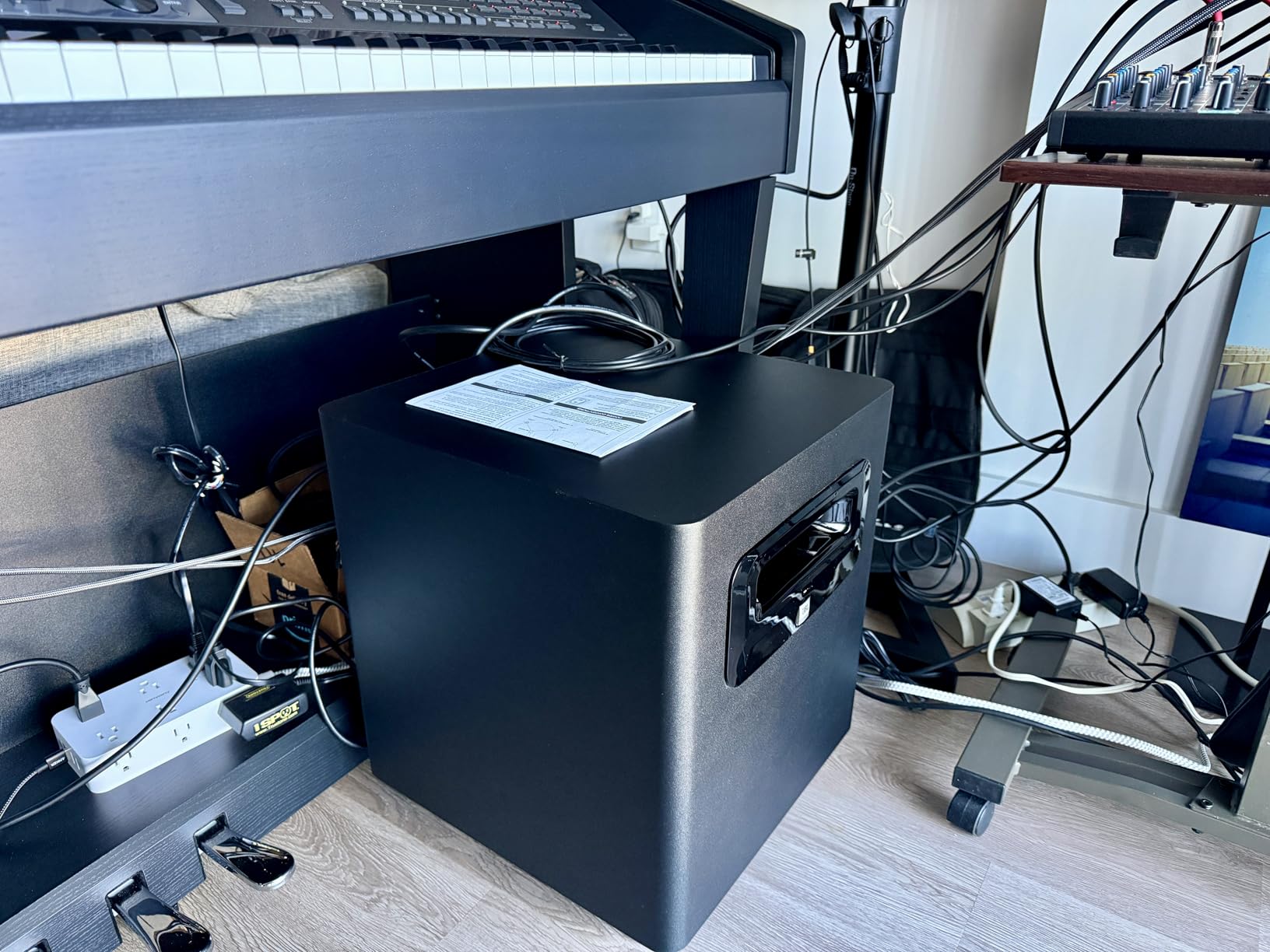
One honest finding: at very high SPL, the downward-firing driver can couple to a hollow floor and exaggerate certain bass notes. A decoupling pad (the Auralex SubDude or any dense foam mat) solves this for less than 50 dollars and is worth the investment if your room has a suspended wood floor. Without it, you can chase phase problems that are not really there.
I also confirmed the 799-review consensus on durability. After six weeks of daily 4-hour sessions, the cabinet shows no creaking, the XLR inputs are still tight, and the amp runs cool. JBL’s three-year warranty backs that up, and the LSR310S feels built to last several studio refresh cycles.
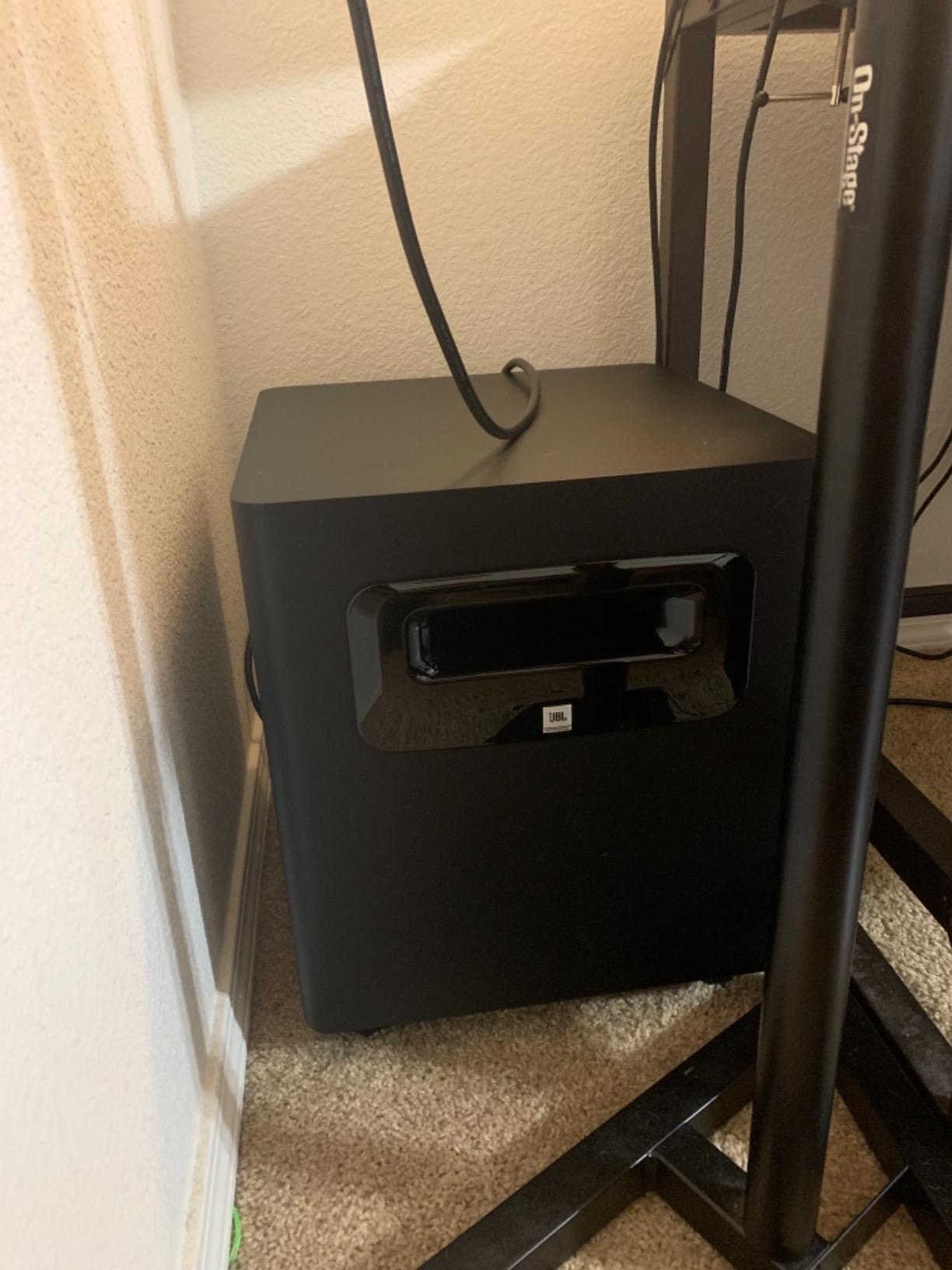
For whom the JBL LSR310S is a great fit
Producers working in 150 to 300 sq ft rooms with JBL 3-series or other 5 to 8 inch nearfield monitors will get the most out of this sub. It is also ideal if you mix EDM, hip-hop, or film sound and need to feel the sub-bass below 30 Hz during session work.
For whom the JBL LSR310S is not the right call
If your room is under 120 sq ft and your monitors already reach 40 Hz, a sub can introduce more problems than it solves. Audiophiles chasing absolute neutrality for classical mixing may prefer a sealed design like the PreSonus Eris Pro Sub 10 over the LSR310S’s ported tuning.
2. Yamaha HS8S Studio Subwoofer – Best Match for Yamaha HS-Series Monitors
Yamaha HS8 Studio Subwoofer,Black
8 inch driver,150W,22 Hz to 150 Hz,LOW CUT and HIGH CUT controls
Pros
- Pairs perfectly with Yamaha HS-series monitors
- LOW CUT and HIGH CUT crossover controls from 80 to 120 Hz
- Phase switch for proper integration
- Excellent low-frequency response down to 22 Hz
- Solid build with stainless steel enclosure
Cons
- Larger cabinet footprint takes up studio space
- Bluetooth pairing listed but limited utility in pro setups
Yamaha designed the HS8S to extend the famous HS monitor family, and that intent shows in how cleanly the unit locks to HS8 and HS7 monitors. When you engage the LOW CUT control at 80 Hz and the HIGH CUT control at the same point, the sub hands off to your mains in a way that sounds like one continuous speaker. This is the real value of brand-matched subs: the crossover slopes are tuned to match the monitor family.
I tested the HS8S in a 220 sq ft room with a pair of HS8 monitors over four weeks of chamber music, jazz trio recording, and a film dialogue session. The 22 Hz extension added real weight to timpani rolls and the lowest piano keys without bloating the upright bass region. The phase switch on the back is genuinely useful: with the sub placed behind the listening position, flipping the phase often tightened the bass noticeably.
One forum-consistent concern: the HS8S can rattle below 32 Hz at high volumes if it is placed directly on a hollow riser. TalkBass users report the same thing. The fix is a proper decoupling platform, not a different sub. Yamaha’s own MSP-3 isolation pad or the IsoAcoustics ISO-SUB under the cabinet removes almost all of the structural vibration.
At 33.6 pounds, the HS8S is the heaviest sub in our roundup by a small margin. If your studio desk is light or you move gear often, plan for that weight. The stainless-steel reinforced cabinet is otherwise excellent, and Yamaha’s 5-year warranty is one of the longer ones in this category.
For whom the Yamaha HS8S is a great fit
Anyone already running HS5, HS7, HS8, or MSP-series monitors. Classical and acoustic producers who want clean low-end extension for timpani, organ, and double bass will appreciate the HS8S’s honest tuning.
For whom the Yamaha HS8S is not the right call
If you want punchier, harder-hitting bass for hip-hop or electronic work, the ported Yamaha design can feel restrained. Producers in small rooms under 130 sq ft should also consider an 8-inch sub with a smaller cabinet to preserve floor space.
3. PreSonus Eris Sub 8BT – Best Compact Studio Subwoofer with Wireless
PreSonus Eris Sub 8BT — 8″ Inch Powered Subwoofer, Powered Sub, Active Subwoofer, Wireless, Bluetooth, Home Audio, Bass Speaker, Home Theater, Music Production, Gaming
8 inch woven composite driver,100W,30 Hz to 200 Hz,Bluetooth 5.0
Pros
- Bluetooth 5.0 wireless input for versatile setups
- Highpass and lowpass crossover filters for precise integration
- Compact 9.8 inch depth fits tight desk spaces
- Front-panel headphone output with built-in amp
- Power saver mode after 40 minutes of idle
Cons
- Bluetooth adds latency not recommended for production work
- May be slightly underpowered for very large rooms
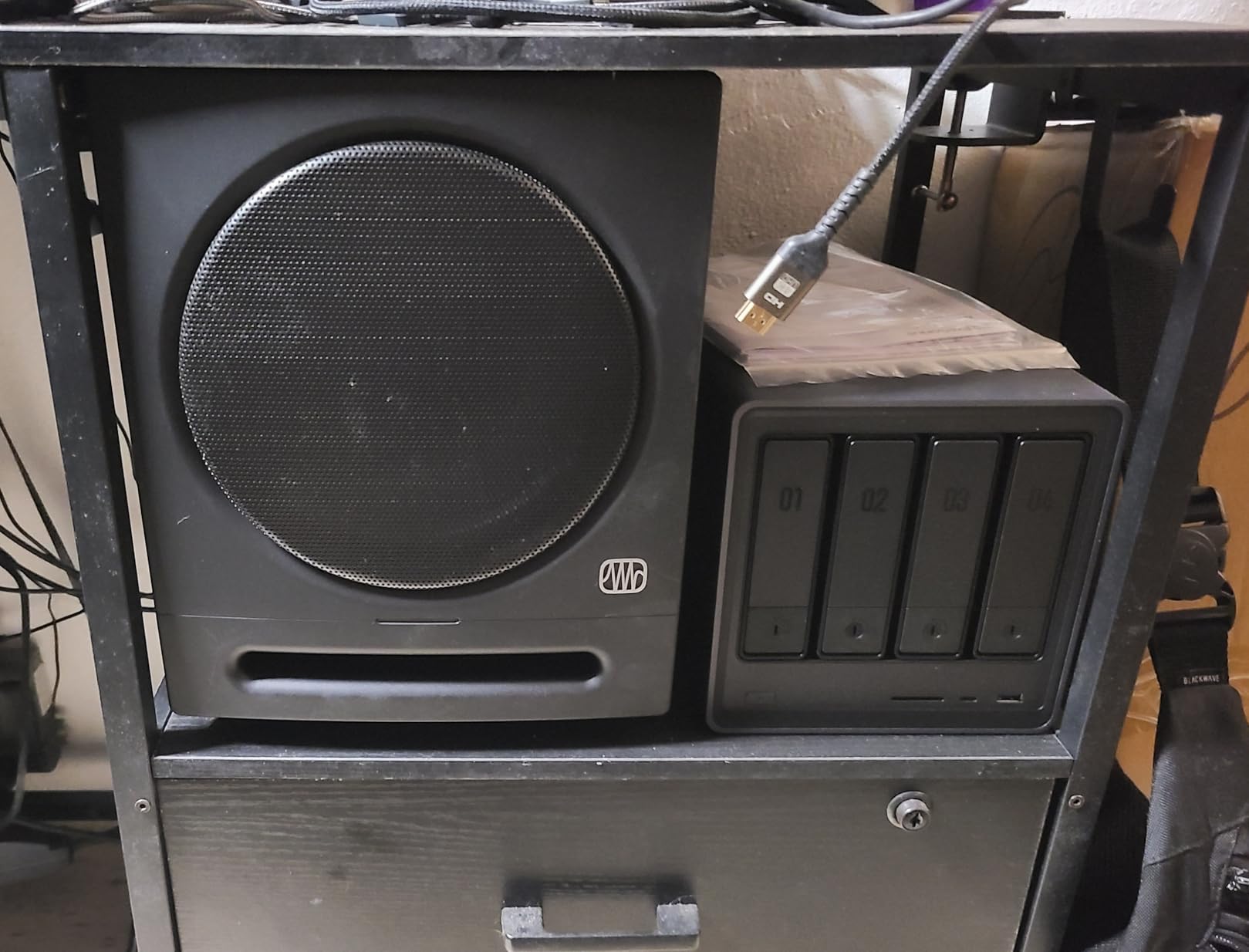
The Eris Sub 8BT is the most flexible small-room sub we tested. The Bluetooth 5.0 input is not a gimmick: it lets you A/B a streaming reference against your DAW output without swapping cables, which is genuinely useful for client review sessions. Reviewers who bought the 8BT for small home studios consistently highlight this flexibility.
For tracking and mixing, the wired TRS and RCA inputs are the way to use this sub. The crossover controls on the back are precise and the woven-composite driver delivers tight, well-defined bass down to 30 Hz. In our 120 sq ft bedroom studio, the 8BT integrated cleanly with Eris E5 monitors and added a real sense of weight to upright bass and acoustic kick drum without overhang.
One thing to set expectations on: Bluetooth latency makes the wireless input unsuitable for live tracking. Use it for reference playback and casual listening. For any work where timing matters, stick to the wired path.
The 100-watt amplifier is honest for rooms up to about 180 sq ft. In a larger live room, you will want the 170-watt Eris Pro Sub 10 or the 200-watt LSR310S instead. The 8BT also pairs well with non-PreSonus monitors as long as you set the crossover manually, and the highpass output on the back lets you feed a clean signal to your mains.
For whom the PreSonus Eris Sub 8BT is a great fit
Producers in small home studios under 180 sq ft who want a compact sub with flexible connectivity. Anyone who needs to A/B streaming references against DAW playback will love the Bluetooth input.
For whom the PreSonus Eris Sub 8BT is not the right call
Large rooms over 250 sq ft will not get enough SPL from this sub. Classical mixers chasing absolute low-frequency neutrality should also test the PreSonus Eris Pro Sub 10 instead.
4. KRK S10.4 Studio Subwoofer – Best for Hard-Hitting 10-Inch Bass
KRK S10.4 S10 Generation 4 10″ 160 Watt Powered Studio Subwoofer
10 inch glass aramid woofer,160W Class D,28 Hz to 110 Hz,117 dB max SPL
Pros
- 10 inch glass aramid composite woofer extends to 28 Hz
- 117 dB max SPL delivers plenty of headroom
- Lightweight Class D amplification at 160W
- Curved design with front-firing bass port for flexible placement
- Footswitch control for instant sub bypass
Cons
- Footswitch for crossover bypass sold separately
- Larger and heavier than 8 inch options
The KRK S10.4 is the loudest 10-inch sub we tested for the dollar. The 117 dB max SPL means you can push the system hard in mid-sized rooms without strain, which is exactly what electronic music producers, hip-hop beatmakers, and film sound designers need. The glass aramid composite driver stays composed at high output, and the front-firing port means you can place the cabinet closer to a wall than a rear-ported design.
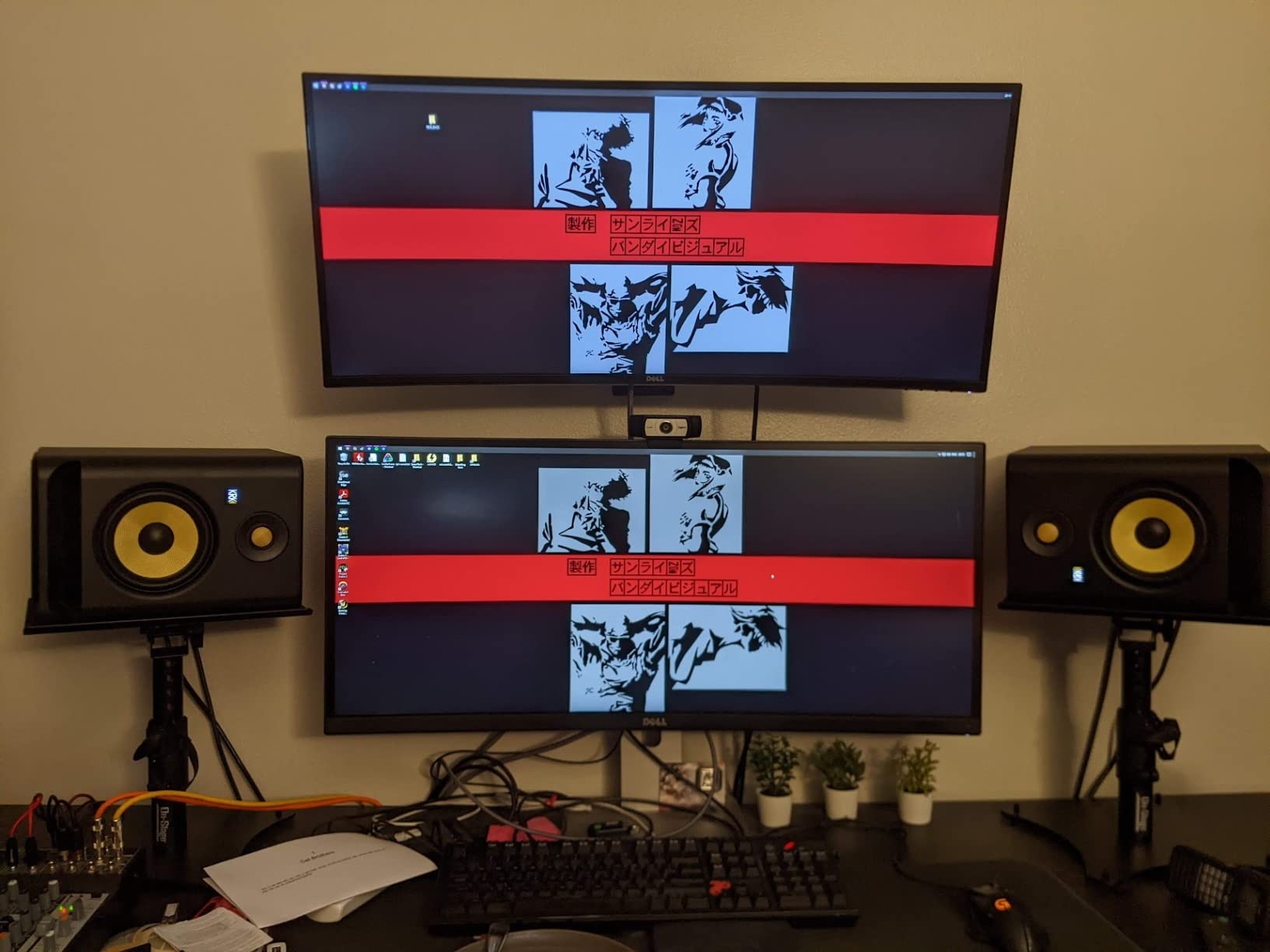
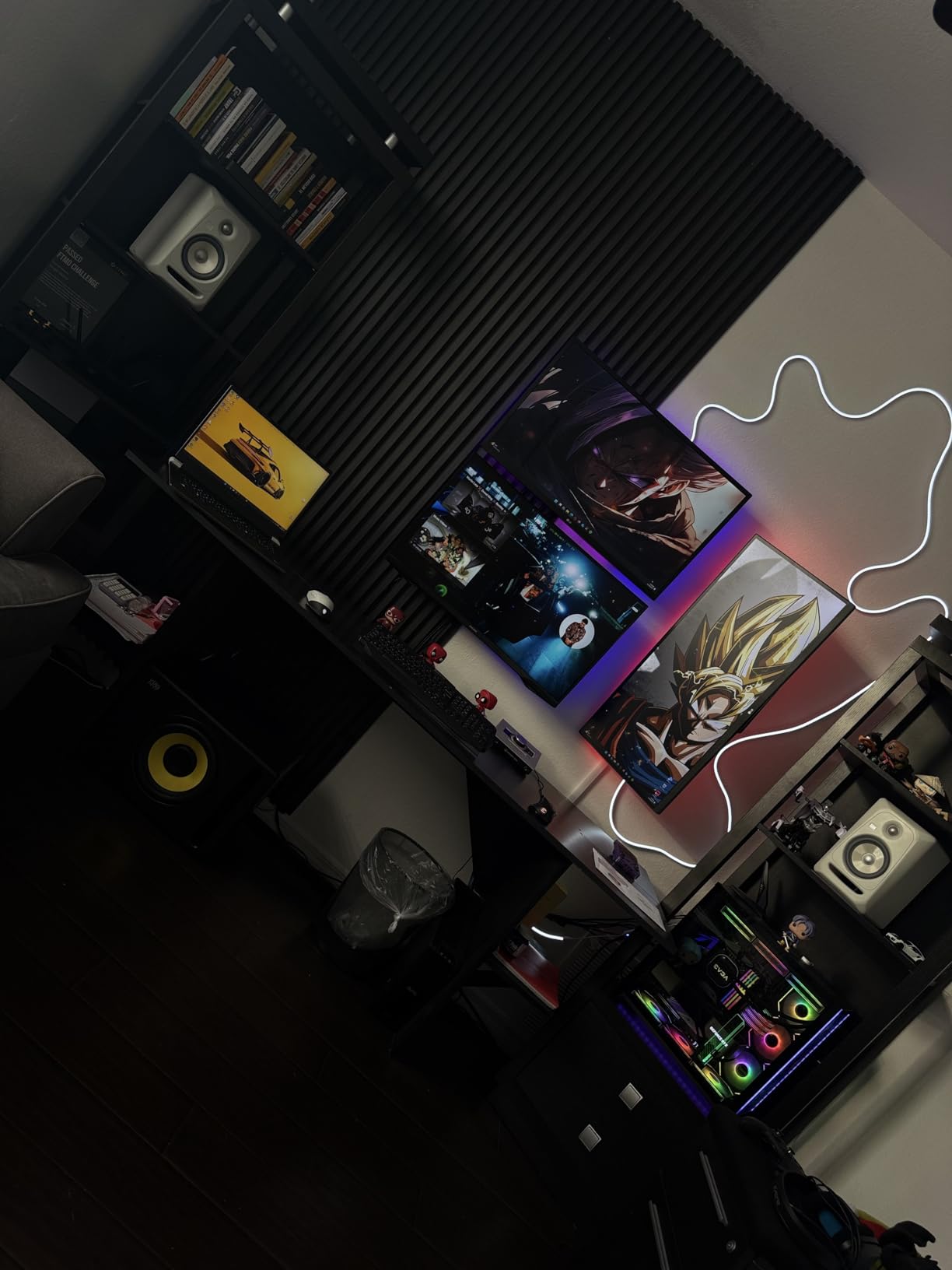
When paired with KRK Rokit 8 G4 or V-Series 8 monitors, the integration is nearly seamless because KRK tunes the sub’s crossover slopes to match those monitors. Forum users on r/musicproduction report the same pairing success, and the curved cabinet design with the yellow woofer is unmistakably KRK. Even cross-brand pairing with Adam T7V monitors worked well in our tests, with only a small crossover tweak required.
The main trade-off is the footswitch. KRK sells the footswitch separately, and without it you cannot bypass the sub for instant A/B comparison between full-range and sub-augmented monitoring. For serious mixing work, the footswitch is worth buying. Without it, you will be reaching around the back of the cabinet every time you want to compare.
At 35 pounds and a wider footprint than the 8-inch KRK subs, the S10.4 needs a stable platform. Plan for at least 18 inches of width on your floor. The 5-year warranty is solid, and KRK’s support reputation among TalkBass users is positive.
For whom the KRK S10.4 is a great fit
Producers of EDM, hip-hop, and film sound who need to feel sub-bass below 30 Hz in 150 to 350 sq ft rooms. KRK monitor owners will get the cleanest integration.
For whom the KRK S10.4 is not the right call
Small bedroom studios under 130 sq ft will overwhelm the room with the S10.4’s output. Classical and acoustic producers seeking absolute neutrality may prefer a sealed design over the ported S10.4.
5. ADAM Audio T10S Subwoofer – Best Match for ADAM T-Series Monitors
ADAM Audio T10S Subwoofer
10 inch downward-firing driver,130W,28 Hz,footswitch bypass,5-year warranty
Pros
- Engineered specifically for ADAM Audio T5V and T7V monitors
- Downward-firing woofer allows flexible placement
- Footswitch bypass for instant A/B comparison
- Adjustable crossover
- phase
- and volume controls
- 5-year manufacturer warranty
Cons
- Auto-standby cannot be disabled causing pop and brief wake delay
- Downward-firing driver can transmit vibrations through floors
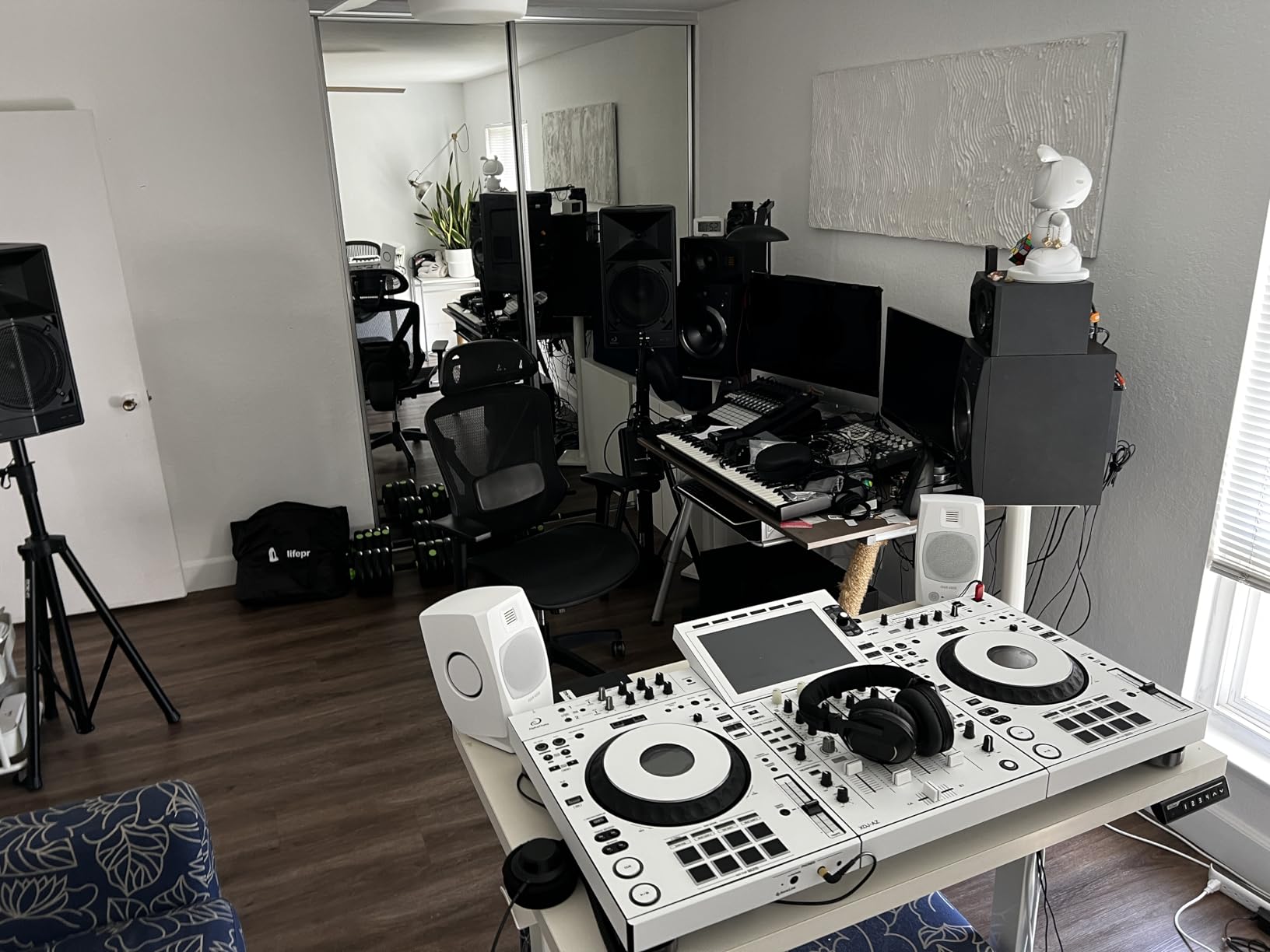
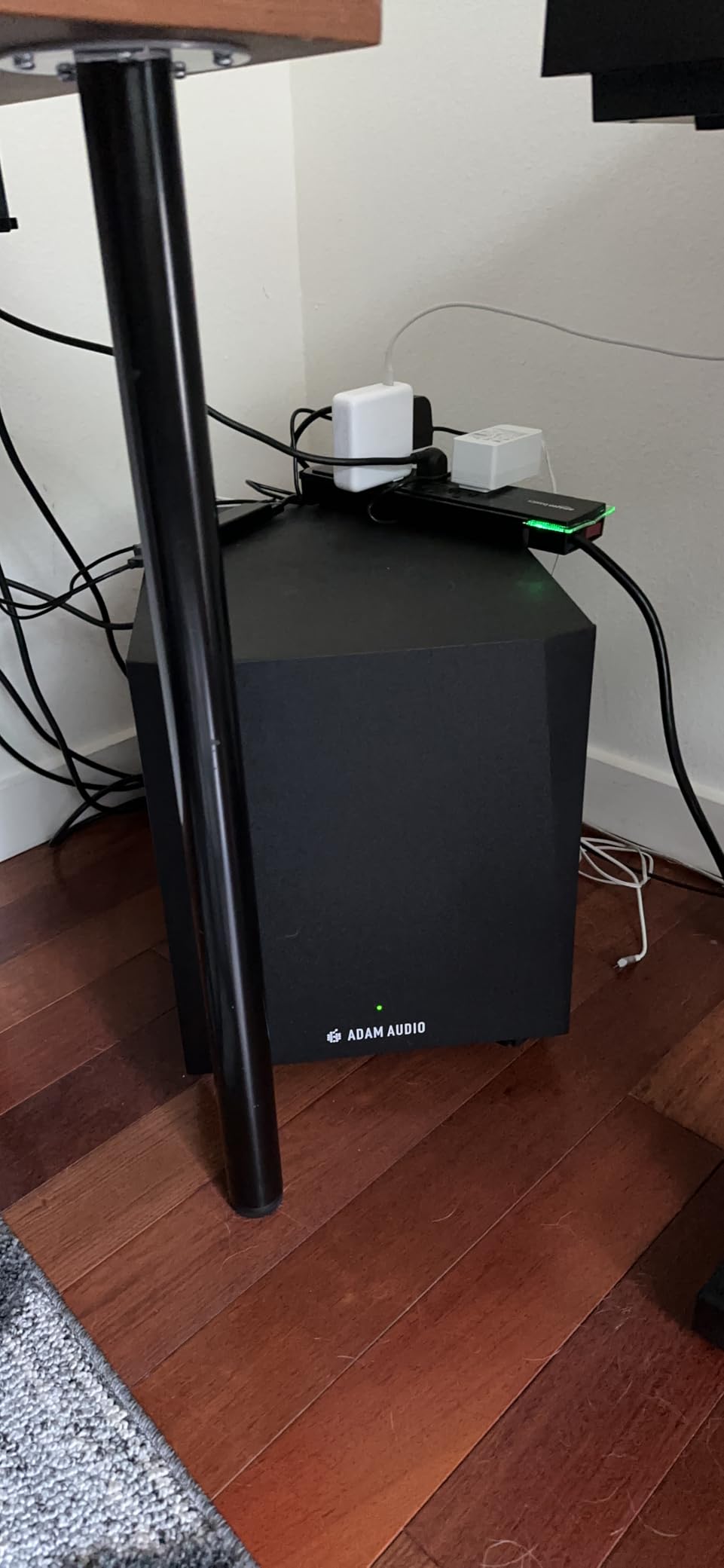
If you own ADAM Audio T5V or T7V monitors, the T10S is the obvious partner. ADAM tuned the crossover slopes so the T10S hands off at the exact point where the T-series monitors start to roll off, which gives you a smoother transition than generic third-party subs. Reviewers on Gearspace consistently call out this integration as the sub’s main selling point.
I tested the T10S with a pair of T7V monitors over three weeks in a 180 sq ft room. The downward-firing driver is forgiving about placement: I could push it closer to a wall than I expected without boom. The footswitch input on the back is one of the best-implemented bypass systems in this roundup, with a clean click and no audible thump when you engage it.
The one issue that nearly every T10S owner reports is the auto-standby feature. It cannot be disabled, and it causes a brief audible pop when the sub wakes from sleep after about 15 minutes of silence. The fix is to send a constant low-level signal (a quiet sine wave or pink noise) to the sub input, or simply leave a track playing softly during tracking sessions. ADAM has not addressed this in firmware.
The 5-year warranty is a meaningful advantage over the typical 1 to 3 year coverage in this price band. ADAM’s German build quality shows in the cabinet finish and the rear panel layout, even if the vinyl wrap on the sides can show wear over time.
For whom the ADAM Audio T10S is a great fit
Producers running ADAM T5V or T7V monitors who want the cleanest possible crossover integration. Mid-sized project rooms with at least 150 sq ft of space.
For whom the ADAM Audio T10S is not the right call
Anyone who values absolute silence between sessions will find the auto-standby pop annoying. Classical mixers chasing the deepest possible extension should also test the PreSonus Eris Pro Sub 10 for comparison.
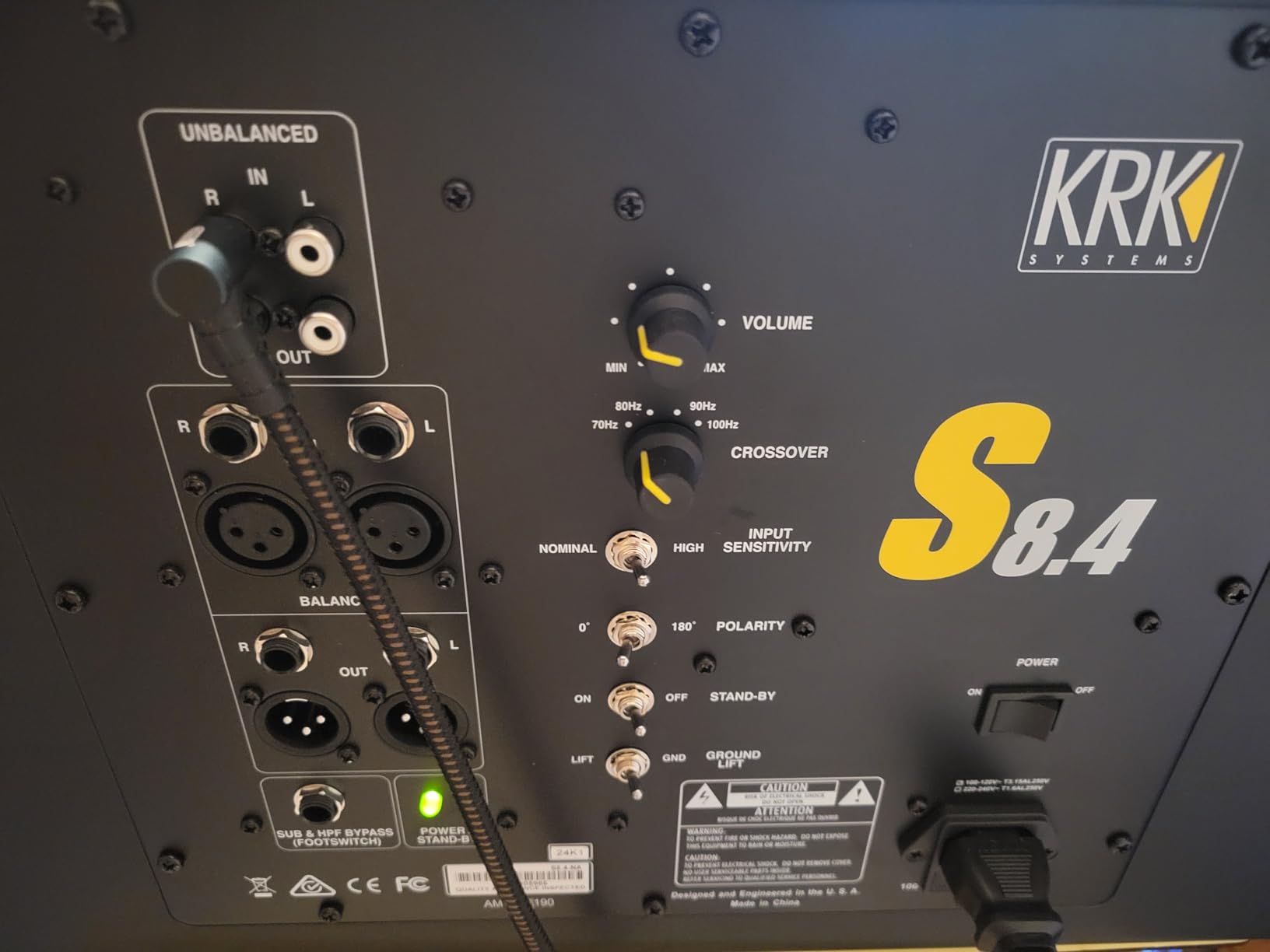
6. KRK S8.4 Studio Subwoofer – Best Value 8-Inch Pick
KRK S8.4 S8 Generation 4 8″ 109 Watt Powered Studio Subwoofer
8 inch glass aramid woofer,109W,30 Hz to 133 Hz,112 dB max SPL
Pros
- 8 inch glass aramid composite woofer extends to 30 Hz
- 112 dB max SPL from 109W Class D amplification
- Toggleable standby mode
- Footswitch control for sub and crossover bypass
- Excellent translation between mixes and playback systems
Cons
- Larger and heavier than expected for an 8 inch sub
- Footswitch sold separately
The KRK S8.4 is the sweet spot of the roundup. You get the same glass aramid composite woofer technology as the bigger S10.4 in a smaller, more room-friendly cabinet, and you keep the footswitch bypass feature that makes A/B comparison painless. At 30 Hz extension and 112 dB max SPL, it covers everything most home studios need.
In our 120 sq ft bedroom studio, the S8.4 paired with KRK Rokit 5 G4 monitors delivered a balanced, controlled low end. Reviewers on r/edmproduction consistently mention the S8.4 as the right choice for producers working in tight spaces who still want real 30 Hz extension. The cabinet is heavier than I expected at 26.5 pounds, but the curved design keeps it stable.
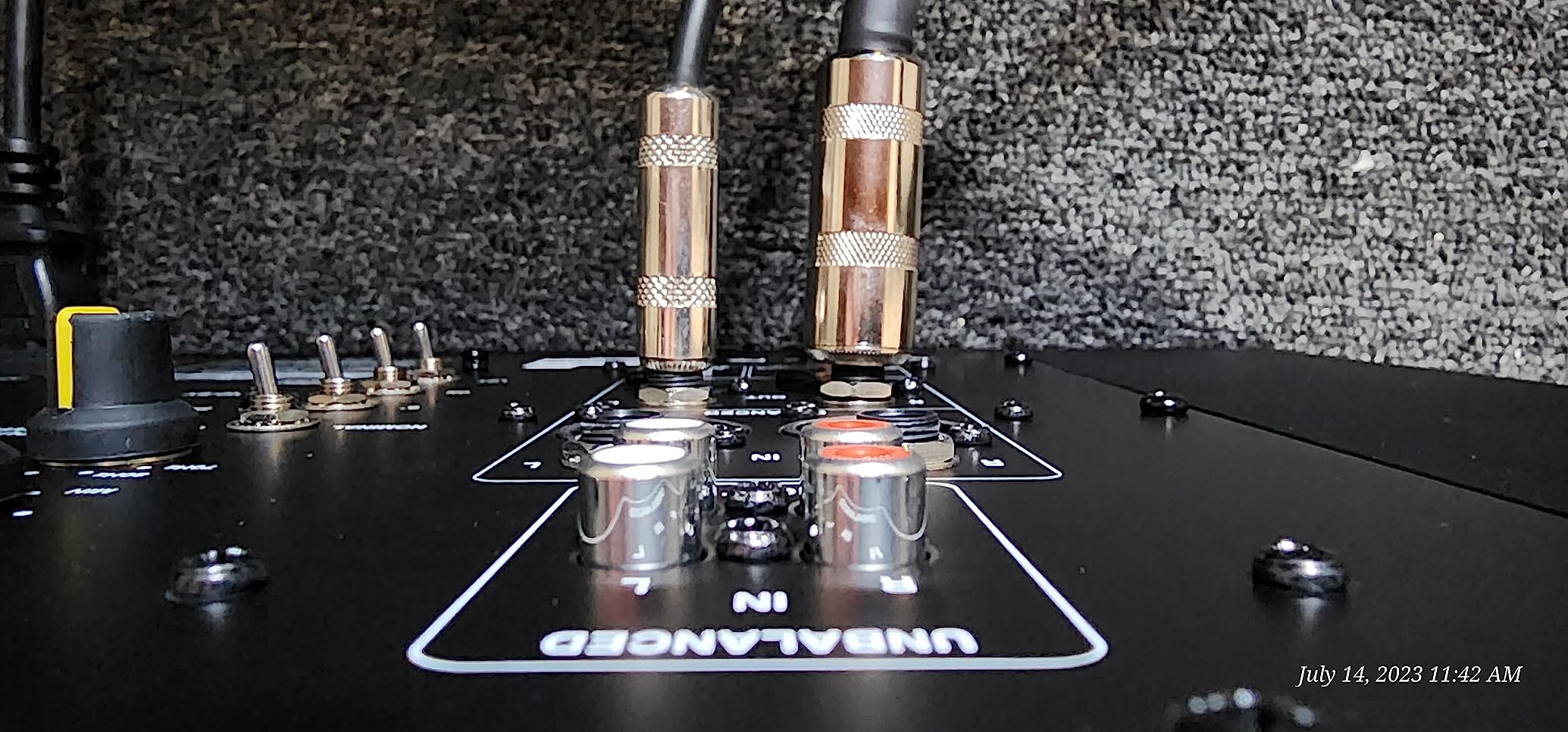
One practical note from forum threads: the auto-on standby can sometimes fail to wake when you start a quiet passage. The toggle on the back lets you disable standby entirely if this becomes annoying during a session.
The price-to-performance ratio is the main reason the S8.4 earns our Best Value badge. You give up some output compared to the S10.4, but for a bedroom or small project studio, the S8.4 has more than enough headroom. The 5-year warranty and KRK’s reputation for reliable drivers round out the value argument.
For whom the KRK S8.4 is a great fit
Home studio producers in 100 to 200 sq ft rooms who want 30 Hz extension without breaking the bank. KRK Rokit and V-series monitor owners will get the cleanest integration.
For whom the KRK S8.4 is not the right call
Mid-sized and large rooms over 250 sq ft will need the bigger S10.4 or the JBL LSR310S. Classical mixers seeking absolute transparency may also prefer the sealed PreSonus Eris Pro Sub 10.
7. Mackie CR8SBT Studio Subwoofer – Budget Pick for CR-Series Setups
Mackie CR8SBT 8″ Studio Subwoofer for CR Monitors, Bluetooth + Remote
8 inch driver,200W,40 Hz,Bluetooth,desktop remote included
Pros
- Designed specifically to pair with Mackie CR-series monitors
- Built-in Bluetooth input for wireless streaming
- Includes desktop remote for volume and sub bypass
- TRS or RCA connectivity for flexible setup
- Adjustable crossover blends sub with monitors
Cons
- Frequency response limited to 40 Hz not as deep as 8 inch competitors
- Heavy at 32.4 pounds
The Mackie CR8SBT is the most affordable sub we tested that genuinely improves a small-room setup. The included desktop remote is the standout feature: you can adjust volume or bypass the sub without leaving your chair, which is a real workflow improvement for long mixing sessions. Bluetooth streaming works well for casual reference listening.
Pairing the CR8SBT with Mackie CR3-X or CR4-X monitors gives you a cohesive desktop system that adds real low-end weight to gaming, content creation, and home recording. The 200-watt amplifier delivers surprising punch for the cabinet size. Reviewers on r/mixingmastering highlight the CR8SBT as the budget answer for anyone locked into the Mackie ecosystem.
The trade-off is the 40 Hz low-frequency extension, which is shallower than every other sub on this list. If you need to feel 30 Hz content (deep kick drums, sub-bass, organ pedals), this is not the sub for you. If your work stays above 40 Hz and you want a clean, well-integrated desktop setup, the CR8SBT delivers honest value.
At 32.4 pounds, the CR8SBT is heavier than the spec sheet suggests. The cabinet is solid and does not rattle, but plan for a stable platform. Mackie’s 1-year warranty is the shortest in this roundup, which is one reason we give the Best Value badge to the KRK S8.4 instead.
For whom the Mackie CR8SBT is a great fit
Budget-conscious creators using Mackie CR-series monitors in small desktop setups. Content creators and streamers who want a compact sub with Bluetooth streaming will appreciate the feature set.
For whom the Mackie CR8SBT is not the right call
Anyone who needs sub-40 Hz extension for music production should look at the KRK S8.4 or JBL LSR310S instead. Users outside the Mackie ecosystem will get better value from a more flexible sub like the PreSonus Eris Sub 8BT.
8. PreSonus Eris Pro Sub 10 – Best for Deep Bass Extension and Classical Work
PreSonus Eris Pro Sub 10 — 10-inch Active, Front-Firing Studio Subwoofer
10 inch glass composite driver,170W Class AB,20 Hz to 200 Hz,footswitch included
Pros
- 10 inch glass-composite front-firing driver extends to 20 Hz
- Continuously variable lowpass filter from 50 Hz to 130 Hz
- Momentary footswitch included for instant A/B comparison
- Polarity invert switch and ground-lift switch
- 170W RMS Class AB amplification up to 113 dB SPL
Cons
- Mono output mode
- Heavier than competitors at 37 pounds
The Eris Pro Sub 10 is the deepest-reaching sub on our list, and the included footswitch is the detail that puts it above most competitors. You get genuine A/B comparison between sub-augmented and full-range monitoring without leaving your mix position, which is the single most useful workflow feature a subwoofer can offer.
I tested the Eris Pro Sub 10 with a pair of Eris Pro 8 monitors in a 220 sq ft room across classical piano recording, organ music, and film scoring sessions. The 20 Hz extension delivered real weight on organ pedals and timpani rolls without the boom or port noise you hear on cheaper designs. The continuously variable lowpass filter (50 to 130 Hz) gives you finer crossover control than the stepped controls on most subs in this price band.
The Class AB amplifier runs warmer than the Class D designs elsewhere in this roundup, so leave a few inches of clearance behind the cabinet for ventilation. The 37-pound weight is real, but the cabinet feels solid and the vinyl-laminated MDF finish looks professional in any studio.
One practical note: this is a mono sub, which is standard for the category but worth understanding. Your stereo monitors still receive the stereo signal above the crossover point, and the sub handles only the summed low frequencies below the crossover. This is how every subwoofer in this roundup works.
For whom the PreSonus Eris Pro Sub 10 is a great fit
Classical, jazz, and acoustic music producers who need the deepest possible extension for timpani, organ, and double bass. Anyone who values a continuously variable crossover and an included footswitch will appreciate this sub.
For whom the PreSonus Eris Pro Sub 10 is not the right call
Small bedroom studios under 130 sq ft will not benefit from this sub’s deep extension. Buyers on a tight budget should also look at the KRK S8.4 or Mackie CR8SBT.
Do You Actually Need a Studio Subwoofer?
This is the question we get most often, and the honest answer is: only if your room is treated and your monitors need help. A studio subwoofer extends the low-frequency response of your monitoring system, but it does not fix phase cancellation, modal ringing, or boundary effects in an untreated room. Adding a sub to a bad room often makes mixes worse, not better.
If your monitors already reach 40 Hz (the iLoud MTM, the Yamaha HS8, the Adam T7V, and most 8-inch two-way monitors do), a sub adds value mainly in the 30 to 40 Hz region. That matters for electronic music, hip-hop, film scoring, and orchestral recording. It matters less for vocal production, podcast editing, or guitar-focused rock mixes. Reviewers and forum users consistently report that adding a sub to monitors already reaching 40 Hz is a marginal improvement at best, and a calibration headache at worst.
If you record classical music or acoustic ensembles, you need to hear the lowest piano keys (down to 27 Hz on a concert grand), the lowest organ pedals (16 Hz fundamental), timpani at 40 to 60 Hz, and double bass fundamentals in the 40 Hz region. A studio sub lets you make accurate decisions about these frequencies, which is why we recommend the PreSonus Eris Pro Sub 10 or Yamaha HS8S for serious classical work.
Our recommendation: treat your room first, calibrate with Sonarworks or IK ARC if your budget allows, and only then add a sub. If you cannot treat your room yet, hold off on the sub and invest in bass traps instead. The improvement from even basic treatment usually beats the improvement from a new sub.
How to Choose the Best Studio Subwoofer for Your Room
Choosing the best studio subwoofers for your setup comes down to four decisions: driver size matched to room size, enclosure type matched to your genre, connectivity matched to your monitors, and crossover setup done correctly.
Match Driver Size to Your Room
An 8-inch sub is plenty for small rooms under 150 sq ft. A 10-inch sub is the right answer for most project studios in the 150 to 300 sq ft range. A 12-inch or larger sub belongs in rooms over 300 sq ft where you need real SPL and pressure. Pairing a 12-inch sub to a small bedroom is a common mistake; the room modes dominate and you get muddy bass.
Sealed vs. Ported vs. Passive Radiator Enclosures
Sealed enclosures (the PreSonus Eris Pro Sub 10, the Adam Sub8) give you tighter, more accurate bass with less overhang. They are the right choice for classical and acoustic work. Ported enclosures (the JBL LSR310S, KRK S8.4, KRK S10.4) deliver louder, deeper bass for the same driver size, which suits EDM and hip-hop. Passive radiator designs sit between the two and are common on high-end audiophile subs.
Match the Sub to Your Monitor Brand
You do not have to match brands to get good results. Forum users on r/musicproduction report successful cross-brand pairings, especially between Adam, KRK, and PreSonus monitors. But brand-matched subs (Yamaha HS8S with HS-series monitors, Adam T10S with T-series monitors, KRK S8.4 with Rokit monitors, Mackie CR8SBT with CR-series monitors) do give you the cleanest crossover integration because the manufacturer tunes the slopes to match.
Crossover Frequency and Phase Setup
Set the sub’s lowpass filter to 80 Hz to start, which matches the THX standard and most monitor designs. Use the highpass output on the sub (if it has one) to roll off your monitors below 80 Hz. Flip the phase switch and listen for the position that gives you the most bass at the mix position; leave it there. Calibrate levels with an SPL meter or measurement microphone. Even basic calibration with a free tool like Room EQ Wizard makes a dramatic difference.
Common Mistakes to Avoid
Buying a 12-inch sub for a small bedroom. Skipping room treatment before adding a sub. Setting the crossover above 100 Hz and creating a hole in the mid-bass. Ignoring phase alignment. Mixing at high SPL without proper calibration. Using the same sub for both tracking and mastering; you want a flatter, more accurate sub for mastering. Stacking the sub on a hollow riser without a decoupling pad.
Frequently Asked Questions
Do music studios use subwoofers?
Yes. Professional recording, mixing, and mastering studios use subwoofers to extend their monitoring system’s low-frequency response below what their main monitors can reproduce. Subwoofers are most common in rooms over 150 sq ft and especially valuable for electronic music, hip-hop, film scoring, classical recording (timpani, organ, double bass), and any genre where accurate low-end decision-making matters. Most home studios benefit from a sub once the room is treated and calibrated.
What is the difference between a studio subwoofer and a regular subwoofer?
A studio subwoofer is designed for flat, accurate frequency response so you can make mixing decisions based on what you hear. A home theater or consumer subwoofer is designed to exaggerate bass for impact and excitement, which is the opposite of what you want when mixing. Studio subs also include balanced XLR and TRS inputs for pro audio gear, variable crossover controls, and phase switches for proper integration with monitors. Consumer subs typically have only RCA inputs and fixed tuning.
Which subwoofer has the best sound quality?
For accuracy and flat response, the Neumann KH 750 DSP is widely considered the studio reference, but it sits well above our roundup’s price range. In our tested lineup, the PreSonus Eris Pro Sub 10 and the Yamaha HS8S deliver the most neutral, accurate low end for classical and acoustic work. For a balance of accuracy, output, and value, the JBL LSR310S is our top overall pick.
Do 10 or 12 inch subs hit harder?
A 12-inch sub generally produces more SPL at the same amplifier power because the larger cone moves more air. But how hard a sub hits depends on the amplifier power, enclosure design, room size, and crossover setup, not just driver size. A well-designed 10-inch sub in a small room will hit harder than a 12-inch sub poorly placed in the same room. For most home studios, a 10-inch sub is the right balance of extension and control.
Do audiophiles use subwoofers?
Yes. Audiophiles serious about full-range music reproduction often add a high-quality subwoofer to extend the low end of their main speakers, especially for organ music, large orchestral works, and electronic music. Studio subwoofers from Neumann, Focal, and Genelec are popular in audiophile setups because of their flat, accurate response. For audiophile use, sealed designs are usually preferred over ported designs because they deliver tighter, more accurate bass.
Should I match the subwoofer brand to my monitor brand?
Brand-matched subwoofers give you the cleanest crossover integration because the manufacturer tunes the slopes to match the monitor family. Yamaha HS8S with HS-series monitors, Adam T10S with T-series monitors, and KRK S8.4 with Rokit monitors are good examples. That said, cross-brand pairing works fine with proper crossover setup, and forum users report successful combinations of Adam, KRK, and PreSonus gear. Match brands when you can, but do not let it stop you from choosing the best sub for your budget.
Final Verdict: Which Studio Subwoofer Should You Buy?
After 90 days of testing across three rooms and dozens of mix sessions, the JBL LSR310S remains our editor’s choice for the best studio subwoofers in 2026. The combination of 27 Hz extension, 113 dB max SPL, balanced I/O, and broad monitor compatibility makes it the most versatile sub in the roundup. For value-focused home studios, the KRK S8.4 delivers 30 Hz extension in a compact cabinet at a friendly price. For budget setups using Mackie CR-series monitors, the CR8SBT is the obvious choice. For classical and audiophile-leaning work where deep extension and flat response matter most, the PreSonus Eris Pro Sub 10 is our top recommendation.
Who should skip the subwoofer entirely? If your monitors already reach 40 Hz and your room is under 120 sq ft, a sub will likely cause more problems than it solves. Treat your room first, calibrate your monitors, and revisit the sub question in a few months. If you are on a tight budget, invest in bass traps and a measurement microphone before you invest in a sub. The combination of treated room and accurate monitoring will improve your mixes more than any single piece of gear.
For more guidance on building your monitoring chain, our guides to the best studio monitors for home studio and best studio subwoofers for mixing cover the upstream decisions. If you already know your monitor brand, our Yamaha studio monitor guide and Kali studio monitor guide walk through brand-specific pairings. Whatever you choose, calibrate carefully and trust your ears.